
Reviewed · RYNEK UNDERGROUND TOURS
Old Town, St. Mary’s Basilica and Rynek Underground Tour
Kraków’s best history lesson is split between the buildings above the Main Square and the medieval streets buried below it. This three-hour tour links both worlds, from St. Mary’s Basilica and its Veit Stoss altar to the atmospheric Rynek Underground Museum.
I like the clear route and the mix of art, architecture, and archaeology. I also like having a licensed local guide explain why the Cloth Hall, university courtyard, and market square matter instead of simply pointing at them. The main consideration is pace: with up to 30 people and several major stops, this is an introduction rather than a slow, quiet study of each site.
Key points to know before booking
- The tour connects two levels of Kraków: You explore the Old Town above ground, then follow medieval streets and trade remains beneath the Main Square.
- St. Mary’s Basilica is the artistic high point: The Gothic interior includes the famous Veit Stoss altar, a major work of medieval sculpture.
- The Rynek Underground Museum uses modern effects: Holograms, sounds, and projections help recreate the activity of the old market.
- Collegium Maius is viewed from outside: You visit its historic courtyard, but the tour does not include every university exhibition.
- The group can reach 30 people: Arrive 10 minutes early so you are not left behind at the meeting point.
- Modest clothing is required: Cover your knees and shoulders for the basilica and selected museum areas.
Starting at St. Mary Magdalene Square
Your meeting point is St. Mary Magdalene Square, beside the Piotr Skarga Monument. Look for the guide holding an Old Town Guided Tour sign.
This is a useful starting place because it puts you close to Kraków’s historic core without asking you to find a museum entrance or a narrow church door on your own. Still, give yourself extra time to get there. The tour asks you to arrive 10 minutes before departure, and latecomers cannot join after the group has left. Those missed tickets are not refundable.
The tour is offered in Polish, English, French, German, Italian, and Spanish. You select one language when booking, and each group operates in only that language. That is worth noting if you are used to multilingual walks where the guide repeats everything several times.
The guide is central to the experience. The strongest feedback available praises the guide as friendly, well prepared, and very good at explaining the sights. That matters here because many of Kraków’s details are easy to miss without context. A carved figure, a merchant’s symbol, or a change in paving can seem ordinary until someone explains its place in the city’s story.
More Old Town Walking Tours in Krakow
- Old Town Krakow & Wawel Castle Walking Tour
★ 5.0 · 1,508 reviews - Krakow: Bike Tour of Old Town, Jewish Quarter and the Ghetto
★ 4.9 · 1,155 reviews - Krakow: The Old Town Walking Tour
★ 4.8 · 794 reviews
The Main Market Square and Kraków’s public stage
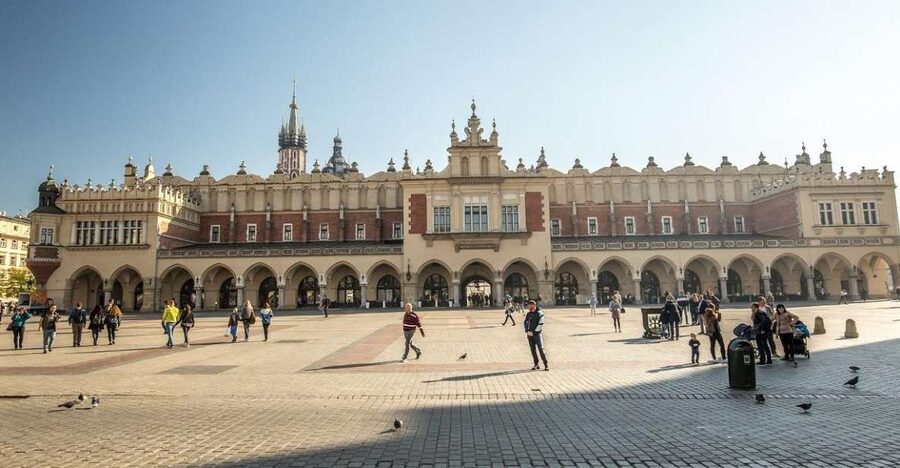
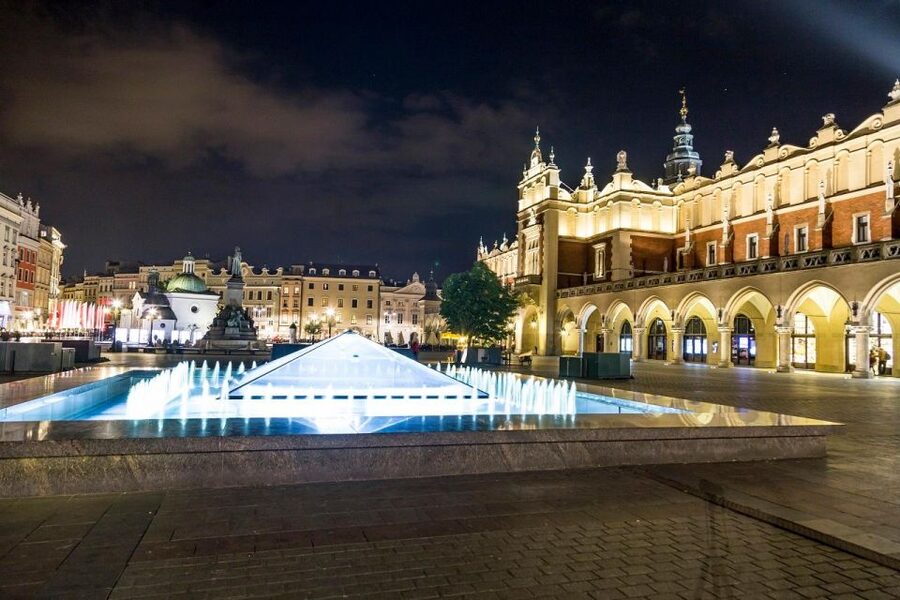
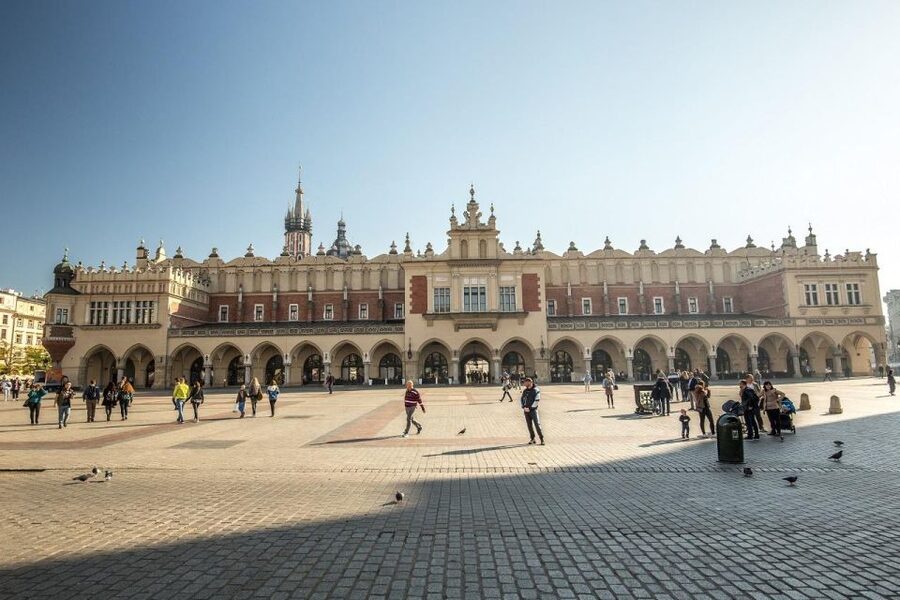
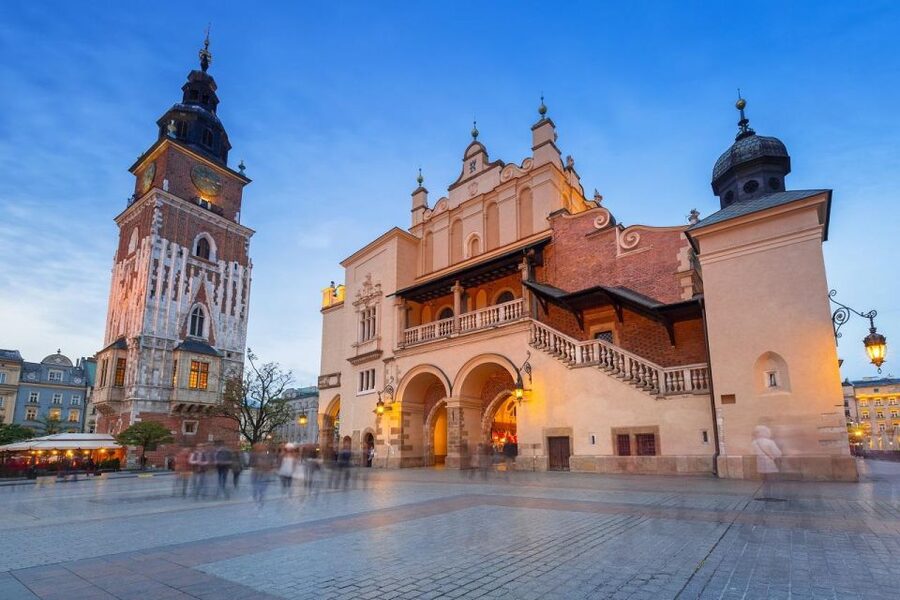
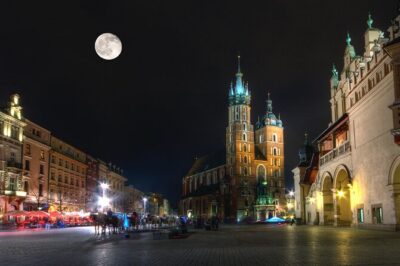
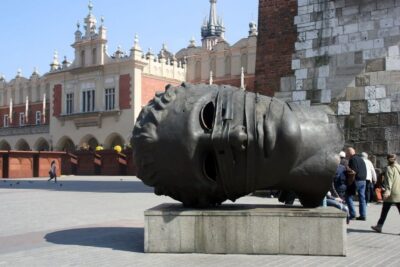
The walk moves into Kraków’s Main Market Square, one of the city’s defining spaces. You see the Cloth Hall and learn how merchants and guilds shaped the square’s daily life.
The Cloth Hall is more than a handsome Renaissance building in the middle of the plaza. Its purpose was practical: trade. Your guide uses it to explain the merchants who brought goods into Kraków, the craftsmen who worked in the city, and the commercial rules that helped the market function.
I like this part because it gives the square a human scale. Instead of seeing only grand facades, you begin to picture carts, stalls, negotiations, and royal processions moving through the same open space. The guide also helps connect the square to Kraków’s golden age, when trade, religion, education, and royal power all met within a compact area.
You view the Cloth Hall from outside, so do not book this tour expecting a full visit to every shop or interior space. The value is the setting and the explanation. If you want a long shopping stop, you will need to return on your own.
St. Mary’s Basilica and the Veit Stoss altar
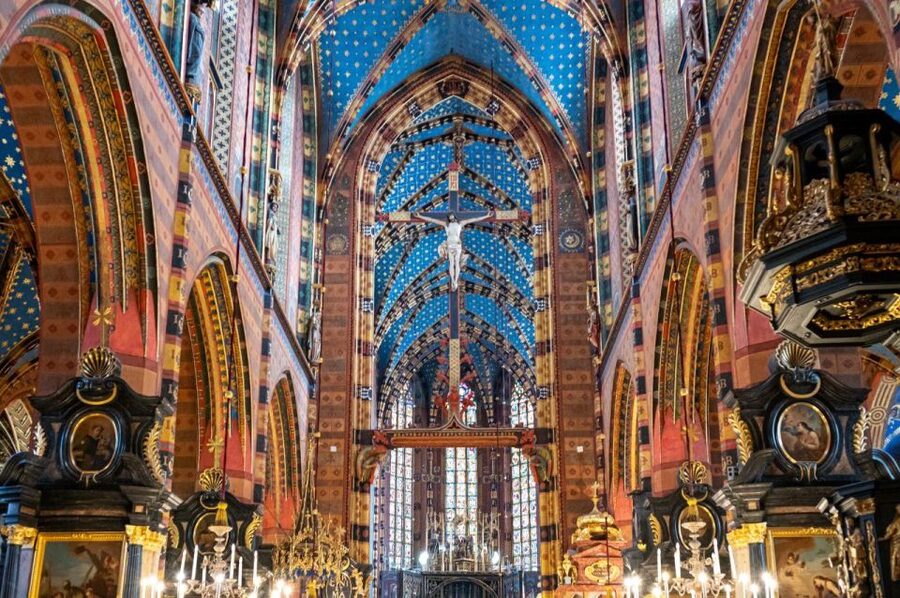
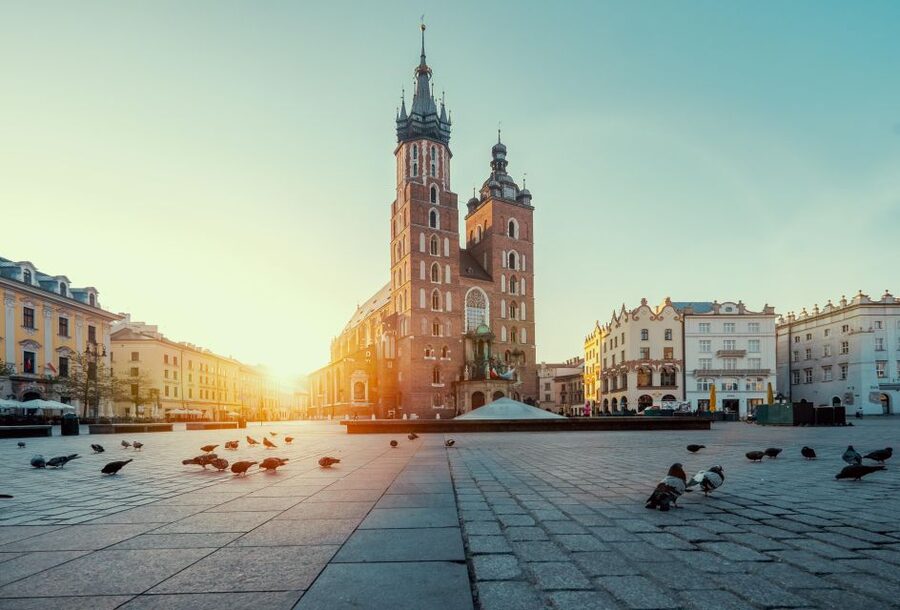
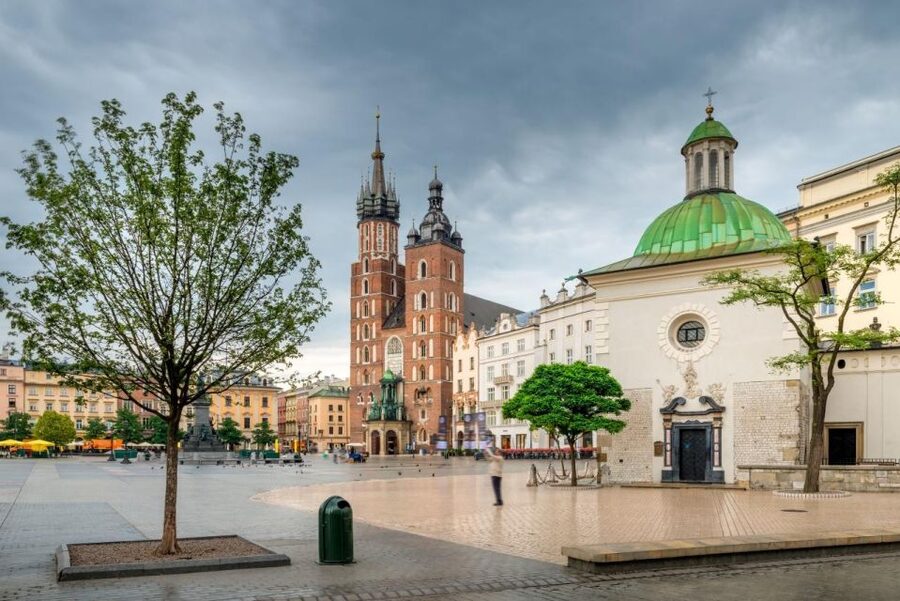
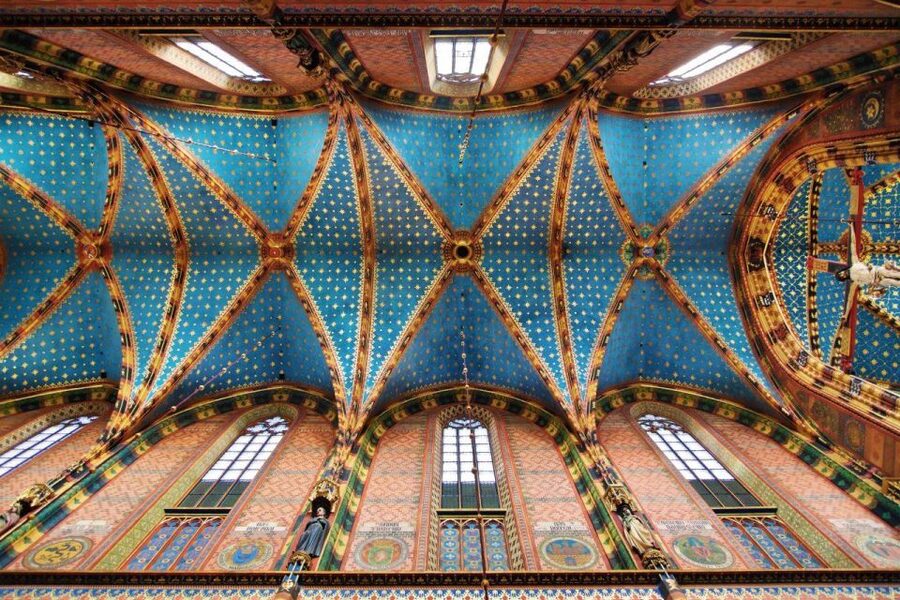
The visit to St. Mary’s Basilica is the tour’s most important indoor stop. This Gothic church is closely tied to Kraków’s identity, and its most famous treasure is the wooden altar carved by Veit Stoss.
The altar is not simply a decorative backdrop. Its carved scenes tell religious stories through movement, gestures, faces, and layers of figures. Your guide points out details that are easy to overlook from a distance, helping you read the work as a visual story rather than one large block of medieval art.
I especially like the way this stop balances the wider city walk. The Main Square introduces commerce and public life. The basilica turns your attention to worship, art, and the power of visual storytelling in a period when many people encountered sacred stories through sculpture and painting.
You need to dress properly to enter. Shorts and sleeveless tops are not allowed, and both men and women must cover their knees and shoulders. This is a simple point, but it can decide whether you enter the church or wait outside, so check your clothing before leaving your hotel.
The basilica visit is guided, which is useful if you want more than a quick look inside. At the same time, a group tour cannot provide unlimited quiet time. If you are deeply interested in Gothic art or church architecture, note the explanations carefully and consider returning later for a longer independent visit.
Collegium Maius and the world of Copernicus
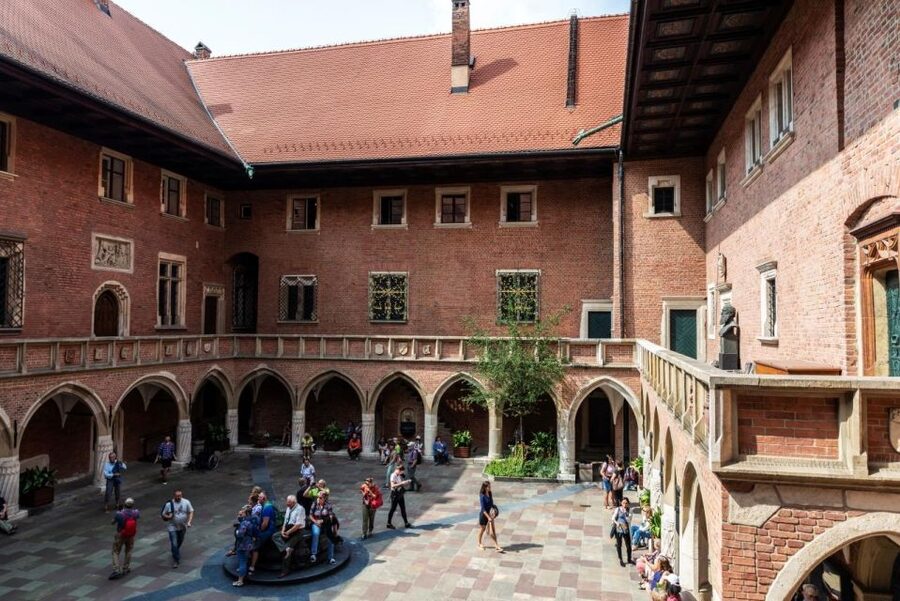
The route continues to Collegium Maius, the oldest university building in Poland. You visit the courtyard and hear about the university’s famous student, Nicolaus Copernicus.
This stop adds an academic side to Kraków’s story. The city was not only a royal center and trading town. It was also a place where scholars studied, taught, and questioned the world around them. Connecting Collegium Maius with Copernicus gives the building a memorable human link.
The courtyard is a good pause between the large Main Square and the underground museum. You get a look at one of the university’s oldest settings without committing to a long museum visit.
Be clear about what is included. The tour provides an outside view of Collegium Maius and a courtyard visit, not a full tour of all university rooms or exhibitions. The same limit applies to exhibitions beyond those specifically listed. If you want an extensive look at university collections, you will need a separate ticket and visit.
Same country, a completely different kind of day:
- From Krakow: Auschwitz-Birkenau Guided Tour & Hotel Pickup
★ 4.5 · 33,358 reviews - From Krakow: Auschwitz-Birkenau Guided Tour & Hotel Pickup
★ 4.5 · 29,340 reviews - Krakow: Auschwitz Guided Tour with Optional Hotel Pickup
★ 4.5 · 15,280 reviews - Krakow–Zakopane: Cable Car, Chocholow Baths, Cheese & Vodka
★ 5.0 · 10,720 reviews
Entering the Rynek Underground Museum
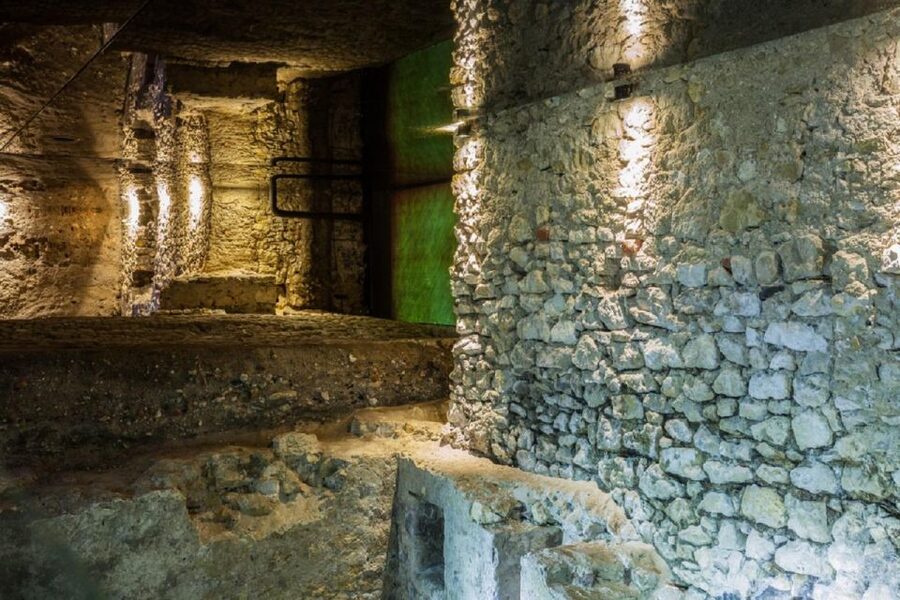
The tour’s most distinctive section begins beneath the Main Square. With fast-track admission, you enter the Rynek Underground Museum and follow archaeological remains below the modern city.
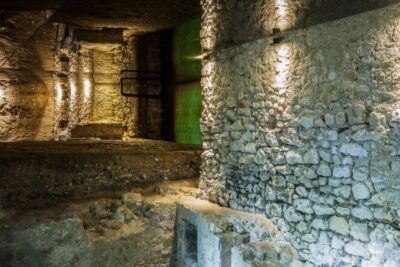
The museum reveals fragments of Kraków’s older market: buried streets, former stalls, trade-related remains, and traces of the people who worked and passed through the square. The experience changes the way you see the buildings above. The Cloth Hall is no longer only a landmark, and the Main Square is no longer only a place for photographs. Both sit over layers of earlier city life.
The underground route is designed as an archaeological museum, but it does not rely only on stones and display cases. Holograms, sounds, and projections recreate the movement of the medieval marketplace. You might hear the clatter of carts, sense the noise of trading, and see how the market changed over time through multimedia displays.
That modern approach will appeal to you if you like history presented through atmosphere and reconstruction. It also makes the museum approachable for children and for anyone who finds traditional archaeological displays a little dry.
There is a trade-off. Multimedia presentations can make the past easier to picture, but they may feel less intimate than a quiet museum filled with original objects. The guide helps tie the effects back to the actual remains, which keeps the visit from becoming a simple visual show.
Fast-track admission is useful here because the museum can be one of the harder Old Town attractions to fit into a short visit. You still follow the museum’s selected route and included areas, since exhibitions beyond those listed are not part of the experience.
Why the above-and-below route works
The tour is strongest when the stops are considered as one connected story. Above ground, you see the square as Kraków presents it today: a grand public space framed by the basilica, Cloth Hall, and historic streets.
Below ground, you see the practical city that supported that grandeur. Merchants needed stalls, craftspeople needed work areas, and visitors needed paths through the market. Archaeology gives you the older, less polished version of the same place.
I like this structure because it prevents the Old Town from becoming a parade of pretty facades. You get art in the basilica, education at Collegium Maius, commerce at the Cloth Hall, and archaeological evidence under the paving stones.
The three-hour length is also sensible for a first visit. It is long enough to cover the main sights without taking an entire day. You should expect regular walking through historic streets and time spent standing inside the basilica and museum.
A group of up to 30 people is manageable, but it is not a private tour. Stay close to the guide, especially when moving between narrow streets and busy public spaces. If you prefer frequent stops for photographs or extended time at one object, a smaller private walk may suit you better.
What the $63 price buys you
At $63 per person, this is not the cheapest way to see Kraków’s Old Town. The price makes more sense when you count the guide, the basilica entrance, the guided walk, and fast-track admission to the Rynek Underground Museum.
The key value is organization. You do not need to work out how to combine a church visit, a university courtyard, a market-square walk, and an underground museum on your own. You also receive explanations at the exact places where they are most useful.
The guide is especially important at the basilica and underground museum. Without context, the Veit Stoss altar can become a quick photograph, and the archaeological remains can look like scattered old foundations. A strong guide turns both into readable parts of Kraków’s story.
The price is less attractive if you already plan to visit the same sights independently, dislike group tours, or want full access to exhibitions not included here. It is also not designed for visitors who need wheelchair access, as the experience is listed as unsuitable for wheelchair users.
For a first visit, I see the cost as reasonable if you value a compact route and live explanations. If you are staying several days, you might prefer to use this as your orientation walk, then return to the basilica, Cloth Hall, or museum at your own pace.
Who will get the most from this tour
This experience suits first-time visitors who want a clear introduction to Kraków’s historic center. You see the city’s most important square, a major church, a famous university building, and a museum below the pavement in one outing.
It is also a good match for you if you enjoy connections between different kinds of history. The tour does not focus only on royal monuments. It includes merchants, guilds, craftsmen, scholars, worshippers, and ordinary movement through the market.
Families may appreciate the museum’s sounds, projections, and holograms, though the group format means children need to stay with the guide. Art lovers will value the Veit Stoss altar, while architecture fans will enjoy the Gothic basilica and Collegium Maius courtyard.
This is less suitable for wheelchair users, people who cannot walk or stand for three hours, and visitors who want a slow specialist tour. The maximum group size is 30, and the schedule needs to keep moving.
Bring comfortable walking shoes and clothing that meets the basilica’s dress code. There is no need to bring a pet, since pets are not allowed.
Booking details that matter
The tour lasts three hours, with starting times available according to the date you choose. You can reserve now and pay later, which helps if your Kraków schedule is still changing.
Free cancellation is available up to 24 hours before the tour for a full refund. After that point, late arrival is the bigger practical risk. Arrive at the Piotr Skarga Monument at least 10 minutes early, find the guide with the Old Town Guided Tour sign, and keep your booking details ready.
Choose your language carefully. The group is conducted in one selected language, not in all six at once. English, Polish, French, German, Italian, and Spanish are available.
Should you book the Old Town, Basilica, and Underground Tour?
Book it if you want Kraków’s essential sights arranged into one well-explained morning or afternoon. The combination of the Veit Stoss altar and the Rynek Underground Museum gives the tour more substance than a standard Old Town photo walk.
I would choose it for a first visit, especially if you have only a short stay and want help understanding what you are seeing. The guide’s friendly, well-prepared style is a major part of the value.
Skip it if you want a private pace, full access to every exhibition, or a wheelchair-accessible route. Otherwise, the three-hour plan offers a useful balance: Kraków above the stones, Kraków below them, and enough context to make both sides memorable.
FAQ
How long does the tour last?
The tour lasts three hours.
What language is the tour offered in?
You can book the tour in Polish, French, German, Italian, Spanish, or English. Each group operates in one selected language.
Where does the tour meet?
Meet at St. Mary Magdalene Square by the Piotr Skarga Monument. The guide will hold an Old Town Guided Tour sign.
How early should I arrive?
Arrive 10 minutes before the scheduled start. Latecomers cannot join after the group leaves, and their tickets cannot be refunded.
Is entry to St. Mary’s Basilica included?
Yes. The entrance ticket to St. Mary’s Basilica is included.
Is the Veit Stoss altar part of the visit?
Yes. The tour visits St. Mary’s Basilica, home of the Gothic Veit Stoss altar.
Is entry to the Rynek Underground Museum included?
Yes. Fast-track admission to the Rynek Underground Museum is included.
Is the tour suitable for wheelchair users?
No. The activity is listed as unsuitable for wheelchair users.
More Rynek Underground Tours in Krakow
- Krakow: Rynek Underground Museum Guided Tour
★ 4.6 · 1,122 reviews - Krakow: Guided Tour of Rynek Underground
★ 4.6 · 113 reviews - Krakow: Rynek Underground Museum Skip-the-line Guided Tour
★ 4.5 · 101 reviews - Krakow: Rynek Underground Guided Tour with Skip-the-Line
★ 4.4 · 55 reviews
Just added around Krakow
- Tour to Wadowice: Hometown of Pope Saint John Paul II★ 4.6 · 12 reviews
- The Jewish Quarter – Walking Tour★ 5.0 · 4 reviews
- From Kraków; to Białka Thermal Baths private tour★ 5.0 · 5 reviews
- St. Mary’s Basilica and more – a short walk with a guide★ 4.7 · 56 reviews
- Krakow: Auschwitz-Birkenau and Wieliczka Salt Mine Day Trip★ 4.7 · 84 reviews
- Krakow: Skip-the-Line Wawel Castle & Old Town Guided Tour★ 4.9 · 23 reviews
- Shooting Range Experience!★ 4.8 · 66 reviews
- Krakow: Schindler’s Factory Guided Tour★ 4.2 · 12 reviews
Rynek Underground Tours, compared.
Rynek Underground Museum Skip-the-line Guided Tour
Read our review →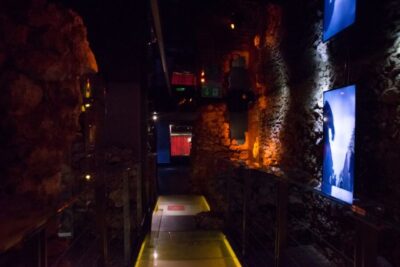
Rynek Underground Guided Tour with Skip-the-Line
Read our review →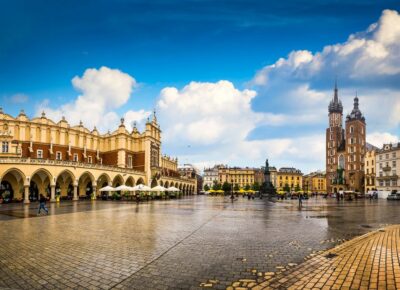
Old Town Rynek Underground Entry and Guided Tour
Read our review →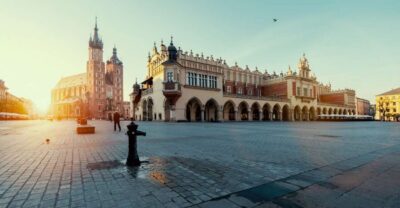
Skip-the-Line Rynek Underground Museum Guided Tour
Read our review →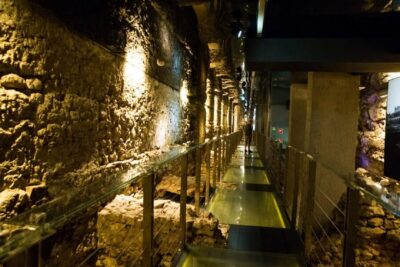
Krakow’s Rynek Underground Museum Tour with Ticket and Guide
Read our review →Browse the lists this tour appears in