Reviewed · KRAKOW TOURS
WOMAI Cracow – Into the darkness experience
At WOMAI Krakow, you switch off your sight and let a blind guide lead you through ordinary situations in total darkness. You may reach for objects, follow sounds, and find yourself unsure of what is in front of you. It is a simple idea, but it gives you a sharp sense of how much work sight normally does.
I like the way this experience turns empathy into something practical rather than offering a lecture. I also like the chance to ask questions afterward and see how Braille works. The main caution is clear: severe claustrophobia, major mobility limits, or hearing problems may make this a poor fit.
Key points to know before booking
- About one hour in complete darkness: The experience is short enough to fit between other Krakow plans, but substantial enough to leave an impression.
- A blind guide leads the way: You explore from a perspective shaped by lived experience, with time for questions.
- Everyday tasks become difficult: You depend on senses such as touch and hearing rather than simply listening to an explanation.
- Braille is included afterward: The visit does not end when the lights stay off. You also get a chance to learn how Braille works.
- English-language access: The experience is offered in English, useful for international visitors.
- Good value at $17.33: For roughly an hour of guided activity plus discussion, the price is modest, especially if you want something beyond Krakow’s usual sights.
What happens when the lights go out
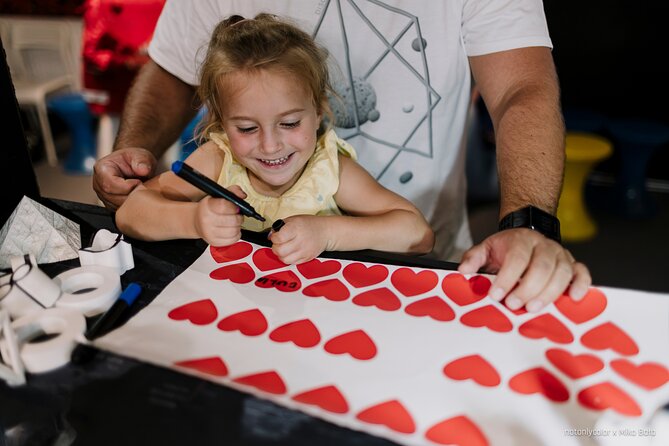
The central experience at WOMAI is direct and easy to understand: you enter a world with no useful light and attempt familiar activities without sight. Your blind guide takes you through the setting and helps you make sense of what is happening.
That change affects more than your eyes. You may notice sounds more carefully, use your hands to identify objects, and pay close attention to the position of the people around you. One particularly telling part is the feeling of reaching toward something, or someone, and not knowing exactly where it is. A person nearby can seem completely absent if you cannot hear or touch them.
This is not a haunted-house scare attraction. The challenge comes from uncertainty and dependence, not from actors jumping out at you. That makes it a better choice for visitors who want a thoughtful activity rather than a thrill ride.
The experience includes everyday tasks in the dark. The supplied details do not list every task in advance, so you should not expect a precise menu of activities. Instead, go in ready to test how you respond when routine actions no longer feel routine.
I find that approach more useful than a long explanation about visual impairment. A description can tell you that blindness changes daily life. An hour without sight gives you a small, controlled sense of why simple actions can require planning, touch, communication, and trust.
Other Krakow days people book alongside this one:
- From Krakow: Auschwitz-Birkenau Guided Tour & Hotel Pickup
★ 4.5 · 33,358 reviews - From Krakow: Auschwitz-Birkenau Guided Tour & Hotel Pickup
★ 4.5 · 29,340 reviews - Krakow: Auschwitz Guided Tour with Optional Hotel Pickup
★ 4.5 · 15,280 reviews
Why the blind guide matters
Your guide is not simply there to explain the rooms or keep the group moving. The guide is blind and leads you through the experience from personal experience of navigating a sighted world.
That changes the tone. You are not being asked to guess what blindness might be like from a museum label. You can ask questions directly and hear practical answers from someone who knows the subject firsthand.
The guide also provides structure in a situation where you may feel disoriented. In the dark, even a short movement can feel uncertain. Clear instructions matter, and the guide’s role helps keep the activity focused rather than allowing confusion to take over.
The experience is offered in English, and the guide’s explanations and question time are an important part of the visit. The post-activity discussion is especially useful if you want to understand more than your own immediate reactions.
The surprising work done by your other senses
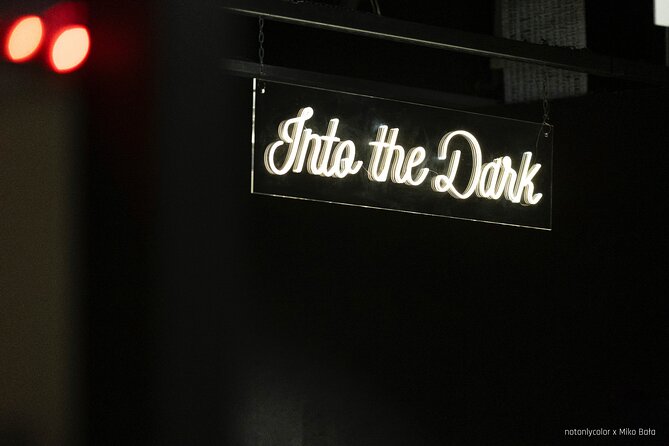
With sight removed, you start paying attention to details that usually sit in the background. You may listen for footsteps, voices, or movement. You may use your hands to work out where you are. You may become more aware of distance and personal space.
The point is not that your other senses suddenly become superhuman. It is that you begin using them more deliberately. Even a familiar action can feel slow when you cannot confirm what you are doing visually.
The experience can also reveal how quickly you rely on sight for confidence. You might know, in theory, that a table or person is nearby, but without seeing it, that knowledge feels incomplete. The moment someone cannot be felt or heard can create a strong sense of being alone, even when other people are close.
That is one reason the activity has more staying power than a standard indoor attraction. You carry the lesson back into the street, the hotel, and the next museum. Steps, signs, crossings, and crowded rooms can look different once you have considered how much visual information you use without thinking.
The Braille lesson at the end
The visit includes an opportunity to ask questions and learn how Braille works. This gives the experience a useful second half.
The time in darkness is personal and physical. The Braille explanation adds context. It shows one of the ways people who are blind or partially sighted read and handle written information.
I appreciate that the visit does not simply leave you with a dramatic memory of being unable to see. The question period lets you move from your own temporary discomfort to a broader understanding of everyday access and communication.
You may want to save your questions for this part. Ask about the tasks you found hardest, how Braille is read, or how the guide approaches ordinary situations. The supplied information confirms that there is time for plenty of questions, so this is not a rushed exit.
Same country, a completely different kind of day:
- Krakow–Zakopane: Cable Car, Chocholow Baths, Cheese & Vodka
★ 5.0 · 10,720 reviews - Krakow: Auschwitz-Birkenau Guided Tour with Pickup & Lunch
★ 4.5 · 9,800 reviews - From Krakow: Wieliczka Salt Mine Tour
★ 4.6 · 9,393 reviews - Krakow: Auschwitz-Birkenau Guided Tour Pickup/Lunch Options
★ 4.5 · 9,057 reviews
Is $17.33 a fair price?
At $17.33 per person, the experience is priced below many major Krakow attractions and organized sightseeing tours. The value comes from the format: you get about an hour of guided participation, not just an exhibit that you walk through at your own pace.
The price makes the activity easy to add to a Krakow itinerary. It can fill a spare hour, work as a break from churches and museums, or give you something different to do if the weather is poor. One person even found it useful while waiting for an airport transfer, though you should allow enough time for your own plans rather than cutting it close.
You should also judge the value by the kind of activity you want. If you prefer facts, displays, and a self-guided visit, this may feel unusual and less predictable. If you want a personal challenge followed by conversation, the price is reasonable.
The experience is not a full-day tour or a broad introduction to Krakow. It is a focused one-hour activity. That narrow scope is part of its appeal, but it also means you should book it for the quality of the idea, not for the amount of time involved.
Who will enjoy this Krakow activity
I would recommend WOMAI to curious adults, older children who can follow instructions, and anyone looking for an activity with a social and educational purpose. It is also a good choice if you have already seen Krakow’s main historic sights and want to add a different kind of memory to your visit.
It suits people who are willing to feel briefly uncertain. You do not need special expertise, but you should be comfortable listening carefully and moving through an unfamiliar setting without visual information.
The experience is not recommended for people with hearing problems, significant mobility disabilities, or severe claustrophobia. A moderate level of physical fitness is expected. Those limits are worth taking seriously because communication and movement are central to the activity.
If you are booking for a mixed group, talk about these points first. One person’s discomfort can affect the whole experience, especially in darkness. A visitor who dislikes enclosed spaces may find the loss of visual control more difficult than expected.
Planning the visit in Krakow
WOMAI is near public transportation, so it is practical to reach without relying on a car. The supplied information does not give a specific tram or bus route, so check the current local directions before setting out.
The activity lasts approximately one hour. I would place it between larger plans rather than immediately before an important timed departure. The darkness itself is the main event, but you may want a few quiet minutes afterward to talk about it or reset before moving on.
The experience is offered in English and uses a mobile ticket. Confirmation is normally received at booking, though a reservation made within three hours of the start time may require a little patience while availability is checked.
It is often booked about 18 days ahead. That does not mean you must reserve that early, but it is a useful warning for a tightly planned visit. If you know you want to go, booking before your Krakow schedule fills up is sensible.
Free cancellation is available up to 24 hours before the start time for a full refund. Changes or cancellations inside that 24-hour window are not accepted and are not refunded. The activity also requires a minimum number of participants, so if WOMAI cancels for that reason, you are offered another date or experience, or a full refund.
What makes this more than a novelty
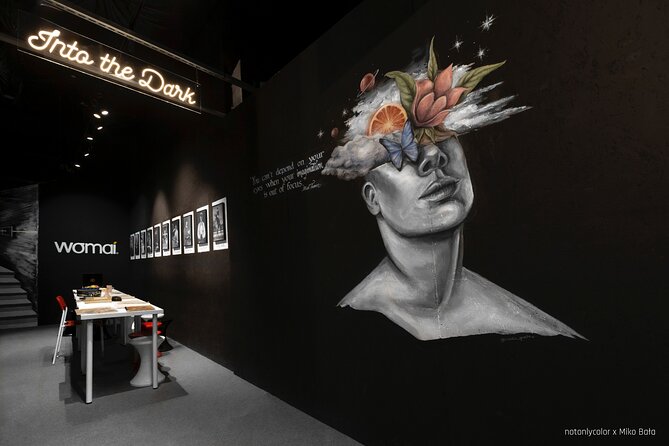
Many unusual attractions give you a story to tell for an afternoon. WOMAI adds a reason to think about the experience after you leave.
The most useful lesson is not simply that darkness feels strange. It is the realization that tasks become harder when signs, obstacles, faces, and distances cannot be checked visually. You may become more patient with the time and concentration that accessible design can save.
The visit also gives you a chance to ask rather than assume. That matters. Blindness and partial sight are not one single experience, and a short activity cannot represent every person’s daily life. WOMAI offers a limited, temporary simulation, but the guide’s personal perspective keeps it from being only a game.
Keep that limit in mind and the experience works well. You are not becoming blind for an hour, and you are not learning everything about visual impairment. You are getting a brief lesson in dependence, communication, and the importance of senses you normally overlook.
Should you book WOMAI Into the Darkness?
Book it if you want a compact, unusual Krakow experience that combines a physical challenge with a chance to ask honest questions. The blind guide, the complete darkness, and the Braille lesson give the hour a clear purpose.
Skip it if enclosed darkness makes you panicky, or if hearing and mobility limitations would make the instructions hard to follow. For everyone else, $17.33 is a fair price for an activity that can change the way you notice ordinary surroundings long after you leave WOMAI.
FAQ
Where does the Into the Darkness experience take place?
It takes place at WOMAI in Krakow, Poland.
How long does the experience last?
The activity lasts approximately one hour.
What language is the experience offered in?
It is offered in English.
Who leads the experience?
A blind guide leads you through the experience and answers questions afterward.
What happens during the experience?
You enter total darkness and handle everyday tasks while relying on senses other than sight, including touch and hearing.
Is Braille included?
Yes. At the end, you have an opportunity to learn how Braille works and ask questions.
Is the experience suitable for everyone?
No. It is not recommended for people with hearing problems, significant mobility disabilities, or severe claustrophobia. A moderate level of physical fitness is advised.
Can I cancel for a full refund?
Yes. You can cancel at least 24 hours before the local start time for a full refund. Cancellations or changes made within 24 hours are not accepted and are not refunded.
Just added around Krakow
- Tour to Wadowice: Hometown of Pope Saint John Paul II★ 4.6 · 12 reviews
- The Jewish Quarter – Walking Tour★ 5.0 · 4 reviews
- From Kraków; to Białka Thermal Baths private tour★ 5.0 · 5 reviews
- St. Mary’s Basilica and more – a short walk with a guide★ 4.7 · 56 reviews
- Krakow: Auschwitz-Birkenau and Wieliczka Salt Mine Day Trip★ 4.7 · 84 reviews
- Krakow: Skip-the-Line Wawel Castle & Old Town Guided Tour★ 4.9 · 23 reviews
- Shooting Range Experience!★ 4.8 · 66 reviews
- Krakow: Schindler’s Factory Guided Tour★ 4.2 · 12 reviews
Krakow Tours, compared.
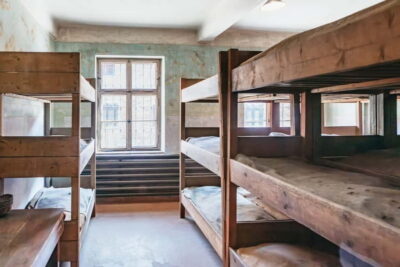
Auschwitz-Birkenau Guided Tour & Hotel Pickup
Read our review →Auschwitz-Birkenau Guided Tour & Hotel Pickup
Read our review →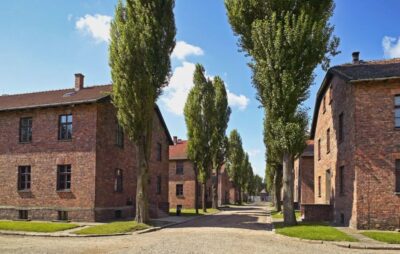
Auschwitz Guided Tour with Optional Hotel Pickup
Read our review →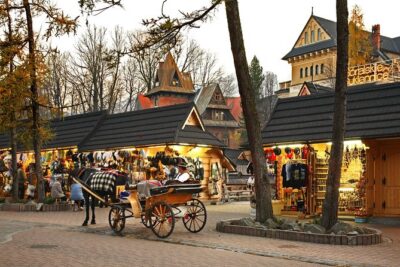
Zakopane: Cable Car, Chocholow Baths, Cheese & Vodka
Read our review →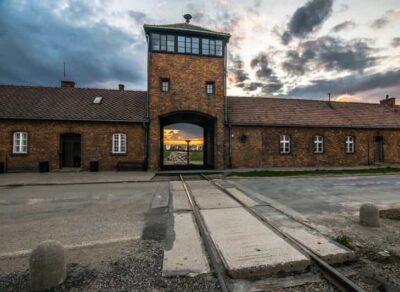
Auschwitz-Birkenau Guided Tour with Pickup & Lunch
Read our review →
Auschwitz-Birkenau Guided Tour Pickup/Lunch Options
Read our review →