Reviewed · KRAKOW TOURS
Kraków Holocaust Tour
Kraków’s former Jewish ghetto is not just a collection of memorials. Much of the district still looks as it did between 1941 and 1943, making this two-hour walk a powerful way to see how Nazi policy shaped an entire neighborhood. The Spanish-speaking guide explains the system, then connects it to the buildings around you.
I like two things here: the route covers the whole ghetto, not only the best-known square, and the guide deals with daily life as well as Nazi policy. I also like the finish at the Pharmacy Under the Eagle, one of Kraków’s key museums on this subject.
The main limitation is the language. The tour is offered in Spanish only, so it is a poor fit if you need English or another language. The subject is also grim, and the walking tour asks you to give two focused hours to difficult material.
Key points at a glance
- The full former ghetto route: Visit the two surviving wall fragments, old gates, institutional buildings, work sites, hospitals, prison, synagogue, factories, and orphanages.
- A lesson in how ghettos worked: Learn why the Nazis created ghettos, how they were organized, and how Kraków compared with other ghettos in Poland.
- Daily life takes center stage: The guide looks at labor, housing, social organizations, medical care, policing, resistance, and Jewish administrative bodies.
- A preserved urban setting: Much of the district still has the appearance it had during the final years of the war.
- A museum finish: The route ends at the Pharmacy Under the Eagle, a major Kraków museum connected with the ghetto.
- Low-cost, flexible booking: The price is $16 per person, with free cancellation up to 24 hours before the tour and a reserve-now, pay-later option.
Walking through Kraków’s former Jewish ghetto
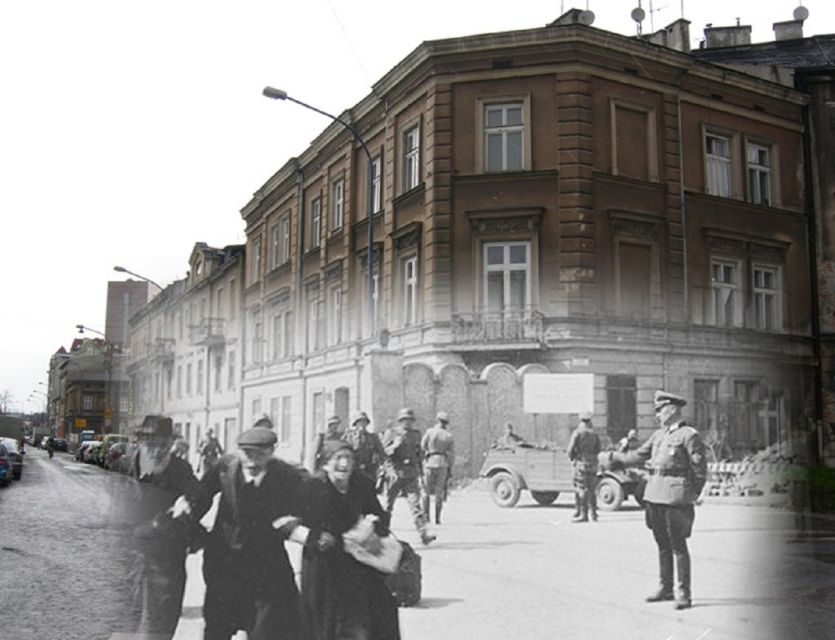
The strength of this Kraków Holocaust Tour is its setting. You are not being shown only a monument or a single museum room. You walk through the former ghetto as a functioning district, with streets and buildings that help explain how an imposed system operated.
The area has retained much of its wartime appearance. Old houses remain, along with many of the buildings once used for administration, health care, labor, policing, and community life. That continuity gives the tour a serious visual force. The guide can point to a building and explain its role, rather than asking you to picture the whole system from a modern street with no visible connection to the past.
The tone is likely to feel subdued from the start. This is a memorial and educational walk, not a light city tour with a short historical aside. I would schedule it when you have enough time afterward to process what you have seen.
Other Krakow days people book alongside this one:
- From Krakow: Auschwitz-Birkenau Guided Tour & Hotel Pickup
★ 4.5 · 33,358 reviews - From Krakow: Auschwitz-Birkenau Guided Tour & Hotel Pickup
★ 4.5 · 29,340 reviews - Krakow: Auschwitz Guided Tour with Optional Hotel Pickup
★ 4.5 · 15,280 reviews
Seeing the two surviving fragments of the wall
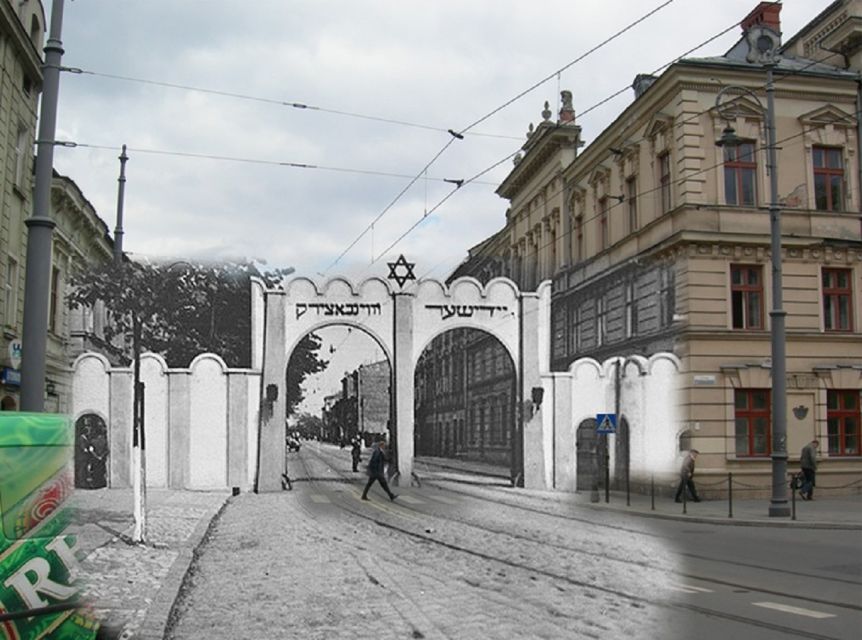
The two fragments of the ghetto wall are among the clearest places to begin. A wall can look simple in a modern city, but here it helps explain the physical act of confinement. The tour uses these remains to move from abstract terms such as ghettoization and occupation to the actual limits placed around people.
You will learn about the purpose of Nazi ghettos and how they fit into the wider occupation system. The walk also asks practical questions: How were residents controlled? Which institutions managed daily affairs? How did work, food, medicine, and movement function inside a closed district?
The surviving wall fragments are only part of the story. The route also identifies the locations of the old gates, helping you understand that the district was bounded and managed through specific entry points. That is useful because it turns the ghetto from a vague area on a map into an organized enclosure.
Ghetto Heroes Square and the chairs
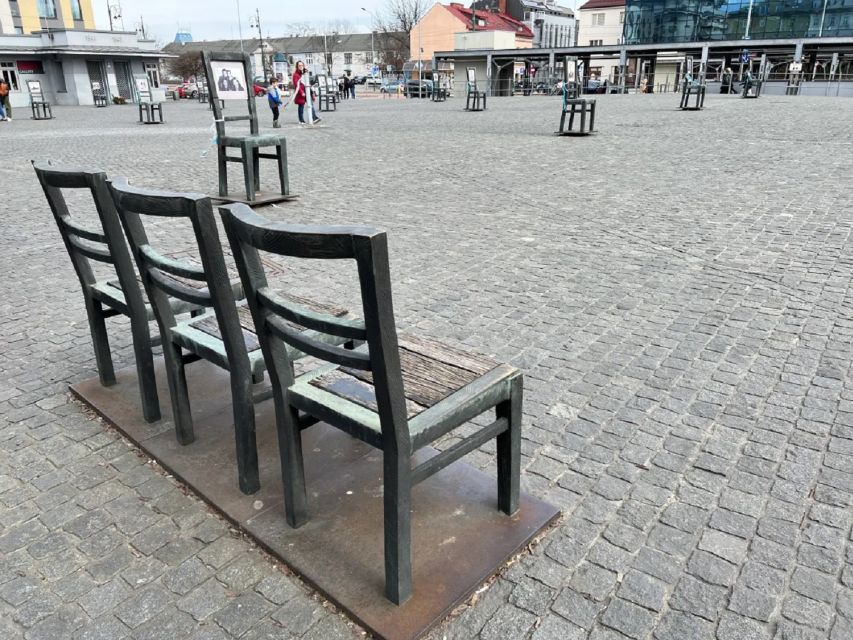
Ghetto Heroes Square, often called the Square of Chairs, is one of the tour’s central stops. The chairs are a stark memorial, and the square gives the guide a natural place to explain deportation, removal, and the role of public space in the ghetto.
The value of this stop comes from the connection between symbol and place. You are not simply looking at a memorial and moving on. You are standing in the former district while hearing about the people who lived, worked, waited, were controlled, and were ultimately forced from it.
Expect the guide to give the square a wider role in the story. It is linked to the surrounding buildings and streets, so the stop should make more sense after you have seen the wall fragments and old gates. If you prefer fast sightseeing, the pace may feel slow. If you want context, this is one of the most important points on the route.
The buildings that made the system work
A major benefit of covering the entire former ghetto is the attention given to ordinary institutional buildings. The tour identifies sites linked to intellectual meetings, resistance activity, police agencies, labor organizations, hospitals, prisons, orphanages, factories, and the Jewish councils known as Judenrats.
These stops show that the ghetto was not only a place where people were confined. It was also a forced administrative system. Jewish bodies were made to handle parts of daily organization under Nazi control, while police agencies and other authorities enforced the occupation’s rules.
The tour’s focus on labor is especially useful. Factories and labor organizations reveal how work was tied to survival and control. A factory site may look unremarkable today, but learning its wartime role helps you see why employment mattered inside the ghetto and how labor fit into the wider Nazi system.
Hospitals and orphanages add another layer. They point to the needs of a trapped population, including illness, children, and care. The guide can use these locations to explain daily life without reducing the story to dates and military events.
Prisons and police-related sites show the other side of the system. They make clear that control operated through institutions, rules, threats, and physical boundaries. This is where a full-area walk gives you more than a short memorial visit.
Same country, a completely different kind of day:
- Krakow–Zakopane: Cable Car, Chocholow Baths, Cheese & Vodka
★ 5.0 · 10,720 reviews - Krakow: Auschwitz-Birkenau Guided Tour with Pickup & Lunch
★ 4.5 · 9,800 reviews - From Krakow: Wieliczka Salt Mine Tour
★ 4.6 · 9,393 reviews - Krakow: Auschwitz-Birkenau Guided Tour Pickup/Lunch Options
★ 4.5 · 9,057 reviews
What daily life in the ghetto means on this walk
The tour promises an examination of daily life, and that is important. Many historical tours focus so heavily on Nazi decisions that the people living under them disappear from view. This route keeps attention on how those decisions affected work, health, family life, religion, education, administration, and movement.
You will hear about the Jewish councils, labor groups, hospitals, prison, synagogue, and orphanages as parts of one connected district. The guide also places Kraków’s ghetto beside other ghettos in Poland, pointing out both shared features and local differences.
That comparison helps you avoid two common mistakes. First, it shows that Kraków was part of a larger occupation policy, not an isolated case. Second, it leaves room for the district’s own character and institutions, rather than treating every ghetto as identical.
The tour is led in Spanish by a guide with graduate training in Geography and History. That background suits a route where physical space matters as much as the narrative. You are looking at streets and buildings, so a guide who can connect geography with historical events is especially useful.
Finishing at the Pharmacy Under the Eagle
The final stop is the Pharmacy Under the Eagle, a famous museum in Kraków devoted to the ghetto and its wartime story. Ending indoors gives the walk a clear final chapter after the streets, walls, squares, and institutional sites.
The pharmacy is important because it links one place of business with the lives of people trapped in the district. On a tour centered on how the ghetto operated, a pharmacy offers a direct way to consider medicine, care, and human contact within a brutal system.
Check the exact booking details to understand how the museum portion is handled. The supplied tour information says the route finishes by visiting the pharmacy, but it does not provide separate information about admission arrangements or the amount of time spent inside. I would not assume that every museum room or separate exhibit is included beyond the stated visit.
Is two hours enough for the full area?
Two hours is a useful length for a first visit. It gives the guide time to connect the major sites without turning the outing into a half-day commitment. For many people, the short format is a practical choice in a busy Kraków schedule.
At the same time, a full ghetto route in two hours means the pace may be steady. You should expect a focused walk with explanations at many locations, not a long pause at every building. Comfortable shoes are specifically recommended, and you should plan for an outdoor tour.
The walk is wheelchair accessible according to the activity details. No group size is provided, so I would not book this expecting either a private tour or a guaranteed small group. Ask the provider if group size matters to you.
The meeting point is marked by the guide carrying a gray umbrella. That is a simple but useful detail, especially in a crowded city or on a day when several walking groups gather nearby.
Spanish guidance and the tone of the tour
The guide speaks Spanish, and that should be your first booking check. The subject includes difficult ideas, administrative terms, and place-specific details. You will get more from the experience if you understand the language comfortably enough to follow a sustained explanation.
The guide’s job is not merely to point at buildings. The route requires an explanation of how ghettos were created, what they were intended to do, how they were policed, and how people tried to maintain daily life under those conditions.
The available feedback is strongly positive, with a 4.9 rating from five reviews. The clearest praise concerns the guide: one person called the tour very interesting and another specifically noted that the guide made it engaging. A third highlighted the guide’s wide grasp of many subjects. That suggests the human explanation is the main reason to choose this experience.
Still, five ratings are a small sample. I would treat the score as encouraging rather than final proof of a perfect fit. The Spanish language, serious tone, and fairly concentrated pace matter more than the number.
What the $16 price buys you
At $16 per person, this is an inexpensive way to add historical context to a Kraków visit. You are paying for two hours with a live guide trained in Geography and History, plus a route that covers more than the square and the wall fragments.
The value is strongest if you would otherwise walk through the district without understanding what the buildings were used for. The tour gives you a framework for reading the area, then sends you to a major museum connected with the same subject.
Food and drinks are not included, but that is hardly a concern for a two-hour city walk. You can plan a meal before or after rather than paying for a package you do not need.
The reserve-now, pay-later option is helpful if your Kraków schedule is still changing. Free cancellation up to 24 hours in advance also reduces the risk of booking a sensitive, weather-dependent walking activity too early.
Who should book this Kraków Holocaust Tour?
I would choose this tour if you want the former ghetto explained as a complete district rather than as a short stop between other attractions. It suits you if you care about how institutions, labor, policing, health care, religion, and family life fit into the Nazi occupation.
It is also a good match if you prefer a walking lesson led by a historian instead of visiting a museum on your own. The surviving buildings provide the setting, while the guide supplies the connections that are easy to miss.
This is not the best choice if you want an English tour, a broad overview of all Kraków attractions, or a cheerful break from sightseeing. It is also not ideal if you are uncomfortable spending two hours on wartime persecution and the final solution.
Practical details before you go
Wear comfortable shoes. The activity is two hours long and takes place across the former ghetto district, with several stops along the way.
The live tour is in Spanish. The guide carries a gray umbrella at the meeting point, so look for that clear marker.
You can cancel up to 24 hours ahead for a full refund, and you can reserve now while paying later. The tour is listed as wheelchair accessible. Food and drinks are not included.
Should you book it?
Book this Kraków Holocaust Tour if you want a serious, place-based account of the ghetto and you can follow Spanish. The full route, preserved streets, institutional sites, and Pharmacy Under the Eagle make the $16 price good value, especially for a first visit to this part of Kraków.
Skip it if you need English or want only a quick memorial stop. For the right audience, though, this is a focused and thoughtfully structured way to understand how the ghetto functioned and what daily life inside it meant.
FAQ
Where does the Kraków Holocaust Tour take place?
The tour takes place in the former Jewish ghetto district of Kraków, in Lesser Poland, Poland. It covers the entire old ghetto area described for the activity.
How long does the tour last?
The tour lasts two hours. Starting times depend on availability when you book.
What language is the tour in?
The live guide conducts the tour in Spanish.
What sites are included on the route?
The route includes two fragments of the ghetto wall, Ghetto Heroes Square, old gate locations, and buildings connected with intellectual meetings, resistance, police agencies, Jewish councils, labor organizations, hospitals, prison, synagogue, factories, and orphanages.
Does the tour visit the Pharmacy Under the Eagle?
Yes. The tour finishes with a visit to the Pharmacy Under the Eagle, an important Kraków museum on the subject.
Is the tour wheelchair accessible?
Yes. The activity is listed as wheelchair accessible.
Can I cancel or pay later?
You can cancel up to 24 hours in advance for a full refund. You can also reserve your place and pay later, so you do not need to pay at the time of booking.
Just added around Krakow
- From Krakow: Zakopane and Dunajec River Rafting Tour★ 4.6 · 31 reviews
- From Krakow: Zakopane and Gubałówka Cable Car Private Tour★ 4.3 · 12 reviews
- From Krakow: Zakopane Full-Day Tour with Lunch Option★ 4.4 · 62 reviews
- From Krakow: Zalipie and Painted Village Guided Tour★ 4.0 · 4 reviews
- From Krakow: Zakopane Tatra Mountains & Hot Springs Tour★ 3.0 · 29 reviews
- From Krakow: Zakopane and the Tatra Mountains★ 4.7 · 36 reviews
- From Krakow: Hot Springs and Zakopane with Gubałówka★ 4.7 · 25 reviews
- Zakopane & Tatra Mountains Private Full-Day Tour from Krakow★ 4.5 · 33 reviews
Krakow Tours, compared.
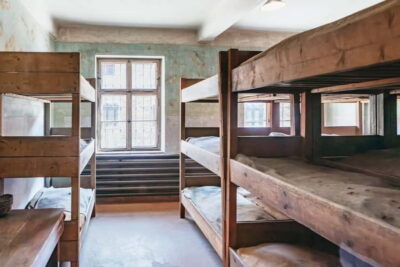
Auschwitz-Birkenau Guided Tour & Hotel Pickup
Read our review →Auschwitz-Birkenau Guided Tour & Hotel Pickup
Read our review →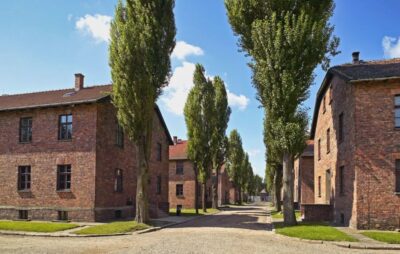
Auschwitz Guided Tour with Optional Hotel Pickup
Read our review →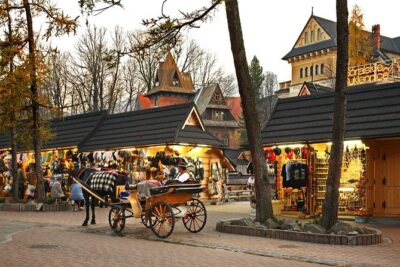
Zakopane: Cable Car, Chocholow Baths, Cheese & Vodka
Read our review →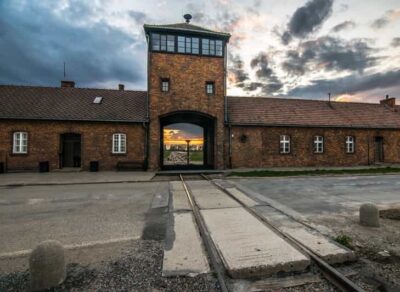
Auschwitz-Birkenau Guided Tour with Pickup & Lunch
Read our review →
Auschwitz-Birkenau Guided Tour Pickup/Lunch Options
Read our review →