
Reviewed · 1-HOUR EXPERIENCES
Explore Katowice in 60 minutes with a Local
Katowice reveals its story quickly on this one-hour walking tour, moving from the grand Christ the King Cathedral to the Silesian Theatre in the city center. Along the way, you see major landmarks, hear about Katowice’s changes, and get a local view of daily life rather than simply ticking off sights.
I like the small group limit of eight, which gives you a better chance to ask questions and shape the walk. I also like the personal touch promised by the format, including local recommendations and, in one particularly warm visit, Polish sweets offered by a guide named Agnieszka. The main drawback is time: one hour is enough for orientation, not a full study of Katowice.
Key points at a glance
- Five useful city-center stops: The route links Christ the King Cathedral, Goldstein Palace, Market Square, the Silesian Insurgents Monument, and the Silesian Theatre.
- A genuinely small group: Up to eight people should make conversation easier than on a large city tour.
- A quick first look at Katowice: The hour works best as an introduction before exploring more on your own.
- A flexible walking pace: The route can adapt to the group’s interests and speed, with stops changing in poor weather.
- Personal city advice included: Your guide can offer recommendations beyond the marked sights.
- A high price for a short walk: At $80.14 per person, the value depends heavily on the quality of the guide and the usefulness of the conversation.
What this compact Katowice walk is really for

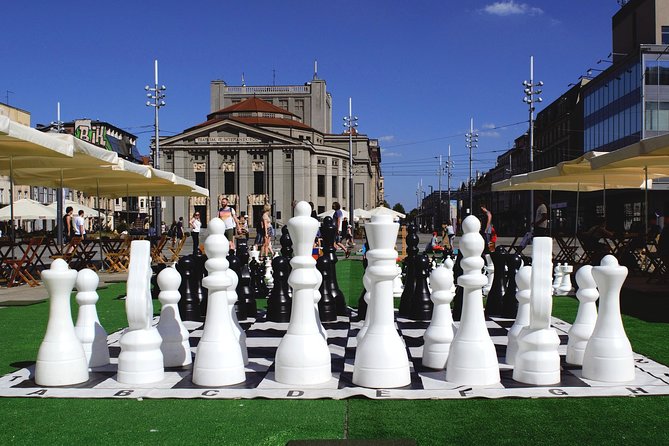
Katowice is a city of contrasts. Monumental religious buildings, 19th-century architecture, public squares, modern shopping areas, and reminders of Silesian political history all sit within a fairly manageable central area. This tour gives you a fast introduction to that mix.
You are not signing up for a museum visit or a long historical lecture. You are signing up for a local person to help you understand what you are seeing, point out details you could miss, and suggest where to go next.
That distinction matters. A one-hour route cannot explain every turn in Katowice’s industrial past or give you enough time inside major buildings. It can, however, help you get your bearings early in a short stay.
The route begins at the Archcathedral of Christ the King and ends at the Silesian Theatre. The stated location is Katowice, even though the tour information also lists Krakow as its broader location, so check your confirmation carefully and make sure you are planning for Katowice, not Krakow.
A few more Krakow trips to weigh up
- Krakow: 1-Hour Evening Vistula River Cruise
★ 4.1 · 952 reviews - Krakow: Pub Crawl with 1 Hour of Unlimited Alcoholic Drinks
★ 4.7 · 651 reviews - Krakow by night 60 minutes cruise The Vistula River Krakow
★ 3.5 · 245 reviews
Starting at Christ the King Cathedral
Meet your guide in front of the Archcathedral of Christ the King at Plebiscytowa 49A. This is a practical starting point because the cathedral gives the walk a clear landmark and an immediate sense of scale.
The cathedral is Katowice’s main religious site and is known for its commanding design and quiet spiritual setting. You should expect to view it as part of the walking route rather than assume that an interior visit is included. Entry tickets for museums, monuments, and transportation are not part of the price.
This first stop also sets up the city’s architectural story. The cathedral is formal and imposing, while later stops shift toward civic buildings, public spaces, and symbols of regional identity. Ask your guide how the cathedral fits into Katowice’s transformation, since that broader theme is one of the main subjects of the walk.
The meeting point is near public transportation, which helps if you are arriving from another part of the city. Still, allow enough time to find the exact entrance area. A one-hour tour leaves little room for a late arrival.
Goldstein Palace and Katowice’s older face
From the cathedral, the walk continues to Goldstein Palace. The building offers a change of mood and scale, with architectural detail that reflects Katowice’s 19th-century growth and cultural life.
This is one of the places where a local guide can add real value. A quick look at a historic facade tells you only so much. Your guide may explain who built it, how the building has been used, or how it fits into the city’s changing identity. The supplied tour details promise information about the city’s transformation, so this is a good place to ask for that context.
Do not expect a full palace tour unless your guide specifically confirms one. The experience is designed as a walking overview, and admission costs are excluded. You will likely spend more time looking, listening, and discussing than entering sites.
One caution comes from the short format. Architectural explanations can easily take over the entire hour. That happened for at least one participant who felt the walk focused too much on building design. If you prefer stories about food, neighborhoods, politics, or present-day life, say so early. The itinerary is meant to adjust to your interests.
Market Square, the city’s public living room
The next stop is Katowice’s Market Square, the central public space where local activity gathers. Depending on the day and season, you may encounter markets or other public events, though the exact atmosphere cannot be guaranteed.
This is a useful stop for getting practical advice. Ask your guide where to eat, which parts of the center are worth returning to, and what to see after the tour. The included personal recommendations are more useful here than at a monument because the square can serve as a starting point for your own afternoon.
A market square also helps you read a city beyond its official history. Watch how people use the space. Notice whether it feels like a place for shopping, meeting friends, public events, or simply crossing town. Your guide is there to explain local habits and everyday life, not just dates and names.
The walk’s timing is important here. A short stop can give you orientation, but it will not allow for a slow market browse, a meal, or serious shopping. If you want to return, note the location before moving on.
The city center also includes modern retail areas. One participant particularly liked Katowice’s malls and mentioned TK Maxx as a source of inexpensive shopping. That is not a formal tour stop or a guaranteed recommendation from your guide, but it is a useful reminder that Katowice is not only about old buildings and monuments.
Same country, a completely different kind of day:
- From Krakow: Auschwitz-Birkenau Guided Tour & Hotel Pickup
★ 4.5 · 33,358 reviews - From Krakow: Auschwitz-Birkenau Guided Tour & Hotel Pickup
★ 4.5 · 29,340 reviews - Krakow: Auschwitz Guided Tour with Optional Hotel Pickup
★ 4.5 · 15,280 reviews - Krakow–Zakopane: Cable Car, Chocholow Baths, Cheese & Vodka
★ 5.0 · 10,720 reviews
The Silesian Insurgents Monument
The Silesian Insurgents Monument is the most direct historical statement on the route. This large tribute honors the Silesian insurgents and represents local pride and political memory.
For many people, this is the stop that gives the tour its strongest sense of place. Katowice is part of Silesia, a region with its own identity and complicated relationship with Poland’s wider story. The monument provides a chance to ask your guide what the uprisings mean locally and how people in the region view that past today.
The tour description does not promise a detailed historical lecture, so manage your expectations. You will get an introduction, not a university course. If this subject interests you, ask focused questions and use the guide’s recommendations to plan a longer visit elsewhere.
This stop also shows why a local-led tour can be more helpful than a route viewed alone. A monument can look impressive without being easy to interpret. The guide can connect its design and location to the city around it, giving you a reason to remember what you saw.
Ending at the Silesian Theatre
The walk finishes at the Silesian Theatre on Rynek 10. This historic venue is a major cultural site and hosts performances in a preserved setting.
Ending here is convenient. You finish in the central area rather than at an out-of-the-way location, and you can continue exploring on foot. The theatre may also help you decide how to spend the evening, though a performance ticket is not included and no entry should be assumed.
The final stop brings the tour back to present-day culture. After seeing a cathedral, palace, square, and political monument, you end with a working arts venue. That gives the hour a sensible arc: faith, architecture, public life, regional history, and culture.
The tour provider encourages you to continue discovering the city after the walk. Take that seriously. The experience is best used as a launch point, not as your complete Katowice program.
How much value do you get for $80.14?
At $80.14 per person, this is expensive for a one-hour walk. The price becomes easier to justify if you value a private-feeling small group, a flexible route, and direct advice from a local. It is harder to justify if you are mainly paying for access to famous sights, since admission is not included and the route is short.
The group limit of eight is important. You are not paying for a large coach tour, and the guide should have more room to respond to your questions. If the group is only a few people, the experience may feel close to a private walk. If it reaches eight, it should still remain manageable, but personal attention will be more limited.
The price also places pressure on the guide. A good hour should feel focused and lively, with a balance of architecture, history, local life, and practical suggestions. If the conversation becomes mostly a series of building descriptions, you may feel the cost is too high.
I would compare this tour with the price of a longer city walk before booking. The strongest case for this experience is convenience: you get a compact introduction and can fit it into a busy schedule. The weakest case is depth: you may finish wanting much more, without having saved much money.
The guide makes or breaks the hour
This format depends heavily on the individual host. The tour is run by an independent local, and the guide’s personality and preparation will shape the experience more than the fixed route will.
Agnieszka received especially warm praise for being friendly, kind, and welcoming guests with typical Polish sweets. That small gesture gives you an idea of the best version of this format: personal, relaxed, and connected to local life.
At the same time, a guide can be passionate and still misjudge what you want. One visit became too focused on architecture for the participant’s taste. You can reduce that risk by explaining your interests at the beginning. Ask for more local-life stories if that is what you want, or request extra historical detail if monuments and political history are your priority.
The guide is also your best source for decisions after the tour. Ask for recommendations that match your plans, not a general list. Mention your budget, food preferences, interest in shopping, or desire to see more Silesian culture.
Timing, walking conditions, and who should book
The walk lasts about one hour, and the itinerary can change based on weather. The guide may also adjust the route to the group’s walking pace and interests. That flexibility is helpful, but it means you should not treat every stop as absolutely fixed.
This is not recommended for people with impaired mobility. The tour moves between several central sights on foot, and the route may involve ordinary city walking conditions. Service animals are allowed, and most people can participate.
I would book it near the beginning of your Katowice stay if you want help planning the rest of your visit. I would not book it as the only Katowice activity you have time for. The route introduces several important places, but it does not replace time spent exploring them.
The tour is also suitable for someone with only a short window in the city. If you have a train connection or one free hour before another commitment, the compact route can be useful. Just allow extra time before and after, since the scheduled hour does not include delays, extended questions, or site visits.
Free cancellation is available up to 24 hours before the start time. Within 24 hours, you do not receive a refund, and changes are not accepted. One past booking was cancelled shortly before departure after a host received a health test result, so you may want a backup plan if this walk is central to your day.
What to ask before and during the walk
You can get more from the hour with a few simple questions:
- Ask how Katowice has changed and what parts of that change are most visible today.
- Ask what the Silesian Insurgents Monument means to local people.
- Ask for one food recommendation and one place to continue sightseeing.
- Ask if any building can be entered during your visit, since admission is not included.
- Tell the guide if you want less architecture and more local life, or the reverse.
- Confirm the end point at the Silesian Theatre if you have plans afterward.
These questions help keep the experience tailored. The route already supplies the framework. Your conversation determines how useful it becomes.
Should you book Explore Katowice in 60 Minutes?
Book it if you want a fast orientation, prefer a small group, and enjoy asking a local guide practical questions. It suits first-time visitors with limited time, people who want a gentle introduction before exploring alone, and anyone who values a flexible pace.
Think twice if you expect detailed historical teaching, interior visits, or strong value from a one-hour sightseeing walk. At $80.14, the price is high enough that the guide’s personal input needs to be the main attraction.
My call: this is a sensible introduction, but not a complete Katowice experience. Book it early in your visit, arrive ready to steer the conversation, and treat the cathedral-to-theatre route as your starting map for the city.
FAQ
Where does the Katowice tour begin?
It begins in front of the Archcathedral of Christ the King at Plebiscytowa 49A, 40-041 Katowice, Poland.
Where does the tour end?
The walk ends at the Silesian Theatre at Rynek 10, 40-003 Katowice, Poland.
How long does the experience last?
The walking tour lasts approximately one hour.
How many people can join the tour?
The maximum group size is eight people.
Are entry tickets included?
No. Tickets for transportation, museums, and monuments are excluded, as are personal expenses.
Can I cancel for a refund?
Yes. You can cancel at least 24 hours before the local start time for a full refund. Cancellations or changes made within 24 hours are not refunded or accepted.
Just added around Krakow
- From Krakow: Zakopane and Dunajec River Rafting Tour★ 4.6 · 31 reviews
- From Krakow: Zakopane and Gubałówka Cable Car Private Tour★ 4.3 · 12 reviews
- From Krakow: Zakopane Full-Day Tour with Lunch Option★ 4.4 · 62 reviews
- From Krakow: Zalipie and Painted Village Guided Tour★ 4.0 · 4 reviews
- From Krakow: Zakopane Tatra Mountains & Hot Springs Tour★ 3.0 · 29 reviews
- From Krakow: Zakopane and the Tatra Mountains★ 4.7 · 36 reviews
- From Krakow: Hot Springs and Zakopane with Gubałówka★ 4.7 · 25 reviews
- Zakopane & Tatra Mountains Private Full-Day Tour from Krakow★ 4.5 · 33 reviews
1-Hour Experiences, compared.


#1 Pub Crawl Warsaw with Optional Premium 1 Hour Open Bar
Read our review →
Pub Crawl with 1 Hour of Unlimited Alcoholic Drinks
Read our review →
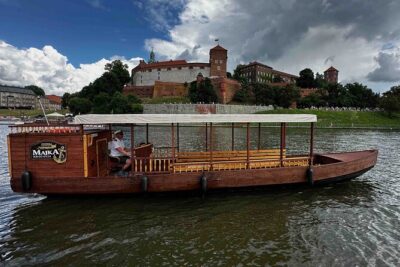
Krakow by night 60 minutes cruise The Vistula River Krakow
Read our review →
City Sightseeing Tour by Buggy/Golf Cart LIVE GUIDED 1H
Read our review →

1 Hour of Open Bar Pub Crawl + Karaoke + VIP Entry to Best Clubs
Read our review →Browse the lists this tour appears in