

Reviewed · WIELICZKA SALT MINE TOURS
From Krakow: Half-Day Salt Mine and Schindler’s Factory Tour
Wieliczka Salt Mine is the star here: a medieval underground world of salt chambers, chapels, lakes, and nearly 300 kilometers of passages spread over nine levels. I like that this tour pairs it with Oskar Schindler’s Factory, giving you both an extraordinary underground monument and a serious look at Krakow under Nazi occupation.
I also like the practical setup. Transport, entry tickets, guides, and mine headsets are covered, and there is a break in Podgórze for lunch or coffee. The main drawback is the pace: seven hours and a lot of walking can be tiring, while crowding at either site may make it hard to hear or see the guide.
Key points to know before booking
- Wieliczka reaches 327 meters underground: The standard route reveals chapels, salt lakes, sculptures, and old mining spaces over about two and a half hours.
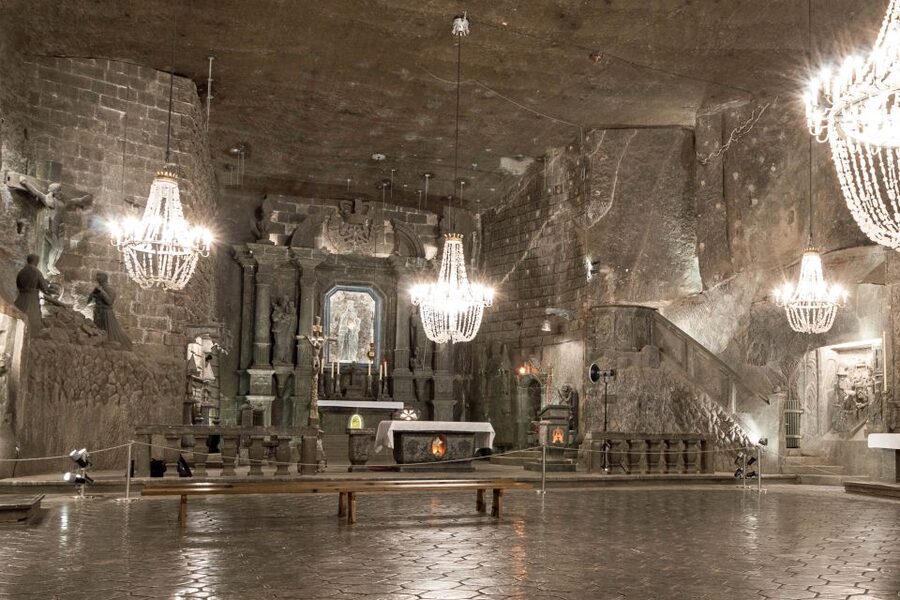
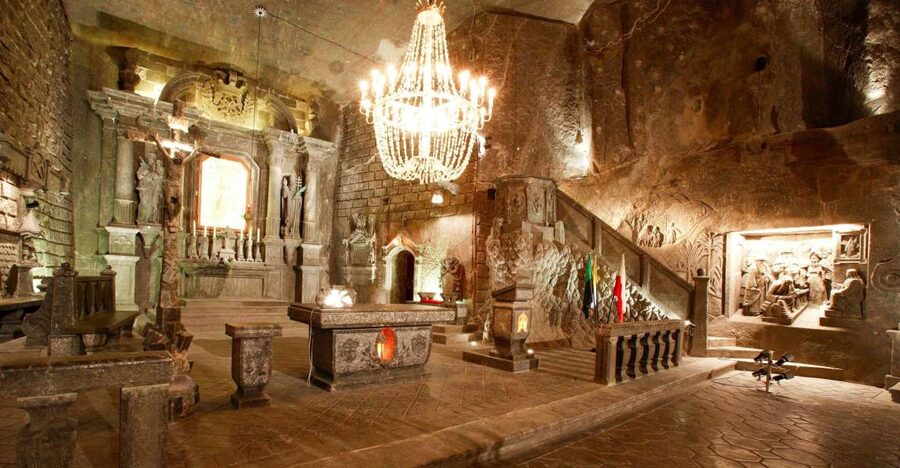
- St. King’s Chapel is the visual highlight: Salt-carved decoration and a large underground church make this the mine’s most memorable stop.
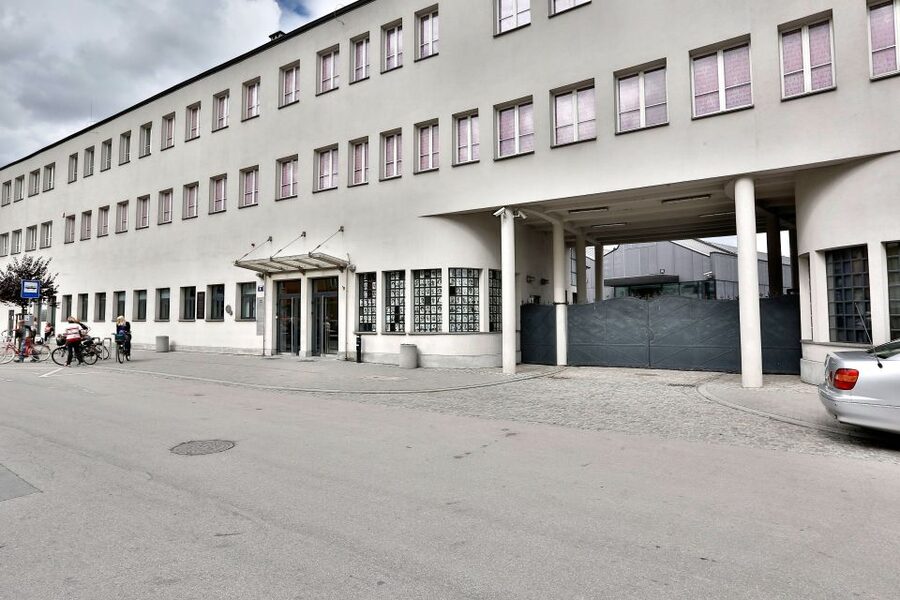
- Schindler’s Factory is mainly a wartime Krakow museum: You will learn about occupation and daily life during World War II, not simply tour Schindler’s former production floor.
- The lunch break is flexible: A one-hour pause in Podgórze is usually arranged, but traffic and the timing of the first visit can affect its length.
- The day ends at the factory: You do not return to the original pickup point, though a taxi back to your hotel is easy to arrange for a few euros.
- Comfortable shoes matter: Stairs, corridors, and long periods on foot make this a poor choice for anyone with limited mobility or claustrophobia.
Why this pairing works in one Krakow day
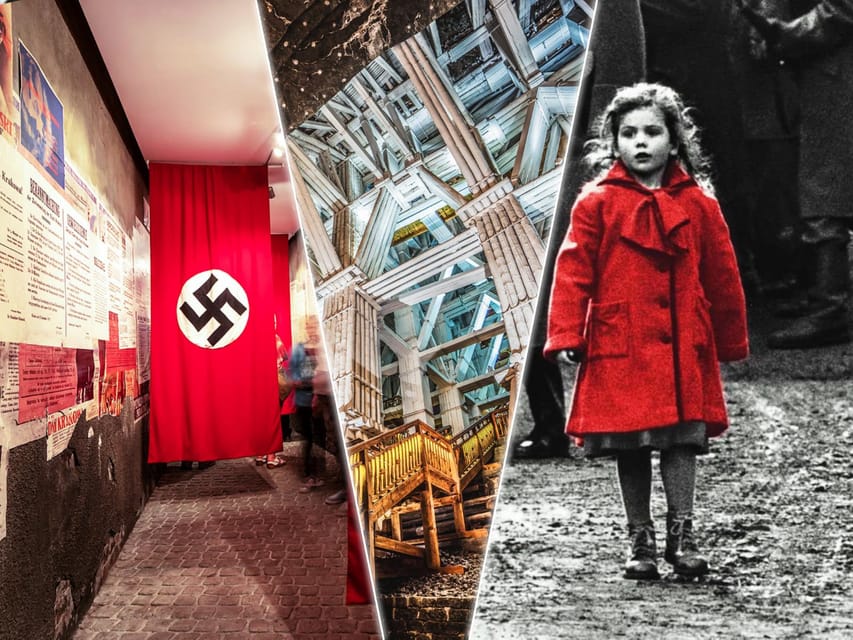
Krakow offers two very different places connected to Poland’s past. Wieliczka shows centuries of labor, faith, and engineering below the ground. Schindler’s Factory deals with the human cost of war and the Nazi occupation of Krakow.
That contrast gives the day a useful shape. The salt mine is visually striking and often surprising. The factory museum is more sober and demands attention to photographs, documents, reconstructions, and explanations about life during World War II.
I like the pairing because it saves you from arranging two separate outings. You ride in one modern vehicle, use a tour host throughout the day, and have entry tickets arranged in advance. At $89 per person, the cost is not bargain-basement, but it can be fair if you value direct transport and organized admission at two of Krakow’s best-known sights.
The tradeoff is that you give both places only a set amount of time. If you prefer to read every panel or stop for long stretches, an independent visit to each site may suit you better.
More Wieliczka Salt Mine Tours in Krakow:
- From Krakow: Wieliczka Salt Mine Tour
★ 4.6 · 9,393 reviews - Krakow: Auschwitz-Birkenau and Salt Mine Guided Tour
★ 4.7 · 9,020 reviews - Krakow: Wieliczka Salt Mine Guided Tour with Transport
★ 4.4 · 7,429 reviews
The ride from Krakow to Wieliczka
Pickup depends on the option you select. You may be collected at your hotel or apartment, or asked to meet at the entrance of the Radisson Blu Hotel Krakow at the tourist bus stop.
Plan to be ready 15 minutes early. Pickup times can shift by up to an hour, and the operator may notify you by email or WhatsApp if the time changes. That flexible window is worth taking seriously, especially if you have booked breakfast, another tour, or a train later in the day.
The drive to Wieliczka takes about 40 minutes. Your English-speaking tour host handles the transfer and helps keep the day moving, while the official guide leads the mine visit once you arrive.
Entering Wieliczka’s medieval salt mine
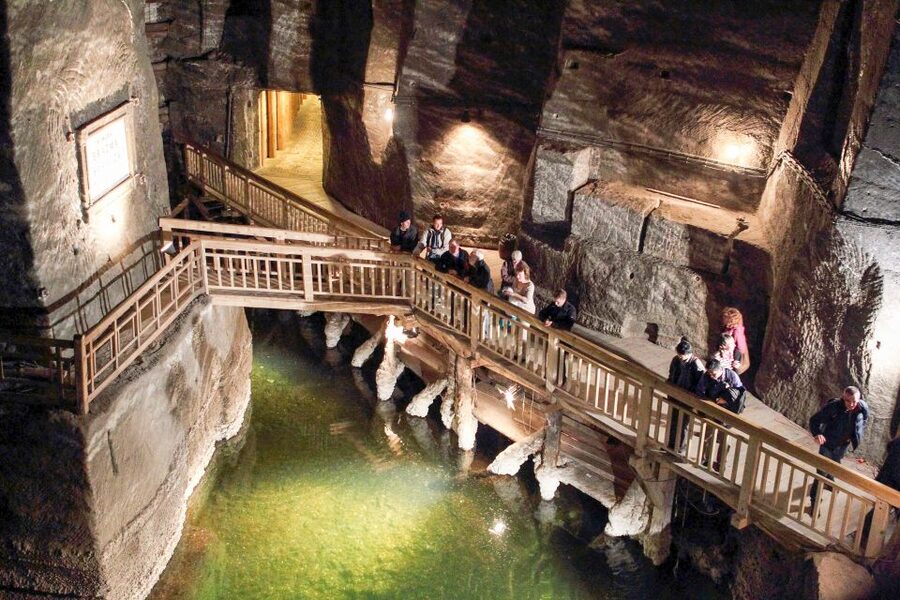
The mine was founded around 1044 and has operated continuously since the 11th century. It is presented as one of Poland’s most valuable historic monuments, and the scale is hard to grasp from the surface: almost 300 kilometers of corridors run through nine levels, with the deepest parts reaching 327 meters.
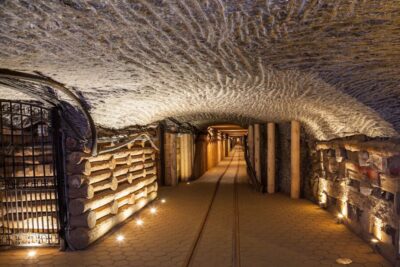
You will not walk all of those passages. The public route takes you through a carefully selected section of the underground complex, showing how salt mining changed over time.
Expect about two and a half hours underground, including stairs, corridors, chambers, and stops for explanations. The exact length and pace are controlled by visitor services and mine regulations, so the published schedule is approximate rather than a promise to the minute.
This is not a quick photo stop. You need comfortable shoes and enough energy for a long walk. The mine is not suitable for wheelchair users, and anyone with claustrophobia should think carefully before booking. The lifts and underground spaces can feel tight, and the route includes many stairs.
Salt lakes, chapels, and St. King’s Chapel
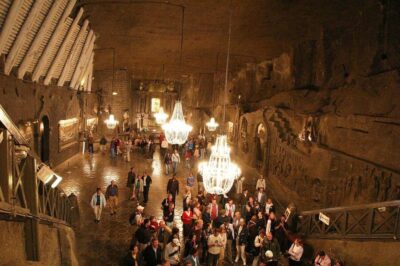
The mine’s appeal comes from the way practical mining spaces lead into grand religious rooms. Salt lakes and caves give the visit a slightly strange, otherworldly feel, while carved figures and chapels show how miners shaped their workplace into a place of worship.
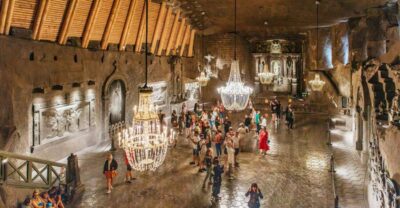
St. King’s Chapel is the main event. The chapel is decorated with salt carvings and is large enough to feel like an underground church rather than a small devotional room. It is visited by more than one million people each year, and it is easy to understand why it receives so much attention.
A guide adds useful context here. You learn not just what a chamber looks like, but how the mine developed and how mining, religion, and daily work were connected. The official route also keeps the group moving through a site that can become crowded.
Crowds are the biggest weakness. Several groups may be moving through the same chambers at once, and the guide may be difficult to hear if you fall behind. Headsets are supplied, which helps, but they do not solve every problem. Stay close to the guide and tell them promptly if the sound is low.
One practical point: the route can feel rushed when the mine is busy. You may have enough time to see the major chambers, but not enough time to pause at every detail or browse at the short café stops. Keep your attention on the guide, then take your photographs when the group pauses.
More Schindlers Factory Tours in Krakow:
- Krakow: Oskar Schindler’s Factory Entry Ticket & Guided Tour
★ 4.2 · 3,793 reviews - Krakow: Schindler’s Factory Tour with Entrance Ticket
★ 4.5 · 3,182 reviews - Krakow: Schindler’s Factory Skip-the-Line Ticket
★ 4.4 · 3,105 reviews - Krakow: Schindler’s Factory Tour with Entrance Ticket
★ 4.6 · 1,737 reviews
The Podgórze break between the two sites
After Wieliczka, the vehicle takes about 30 minutes to reach Podgórze. A break of roughly one hour is usually arranged before the factory visit.
This is your chance to eat, get coffee or tea, and reset after the underground walk. Food and drinks are not included, so budget for lunch separately. The actual length can change with traffic and with how long the mine visit takes.
I would not plan anything demanding during this pause. Use it to sit down, eat something simple, and prepare for another museum visit. The morning is physically active, and the afternoon is mentally heavier.
What Schindler’s Factory actually shows
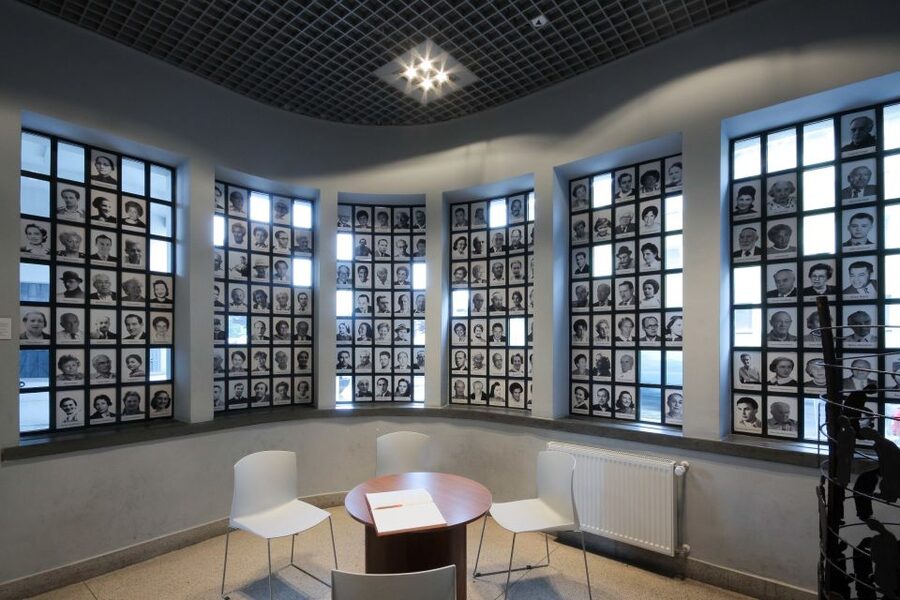
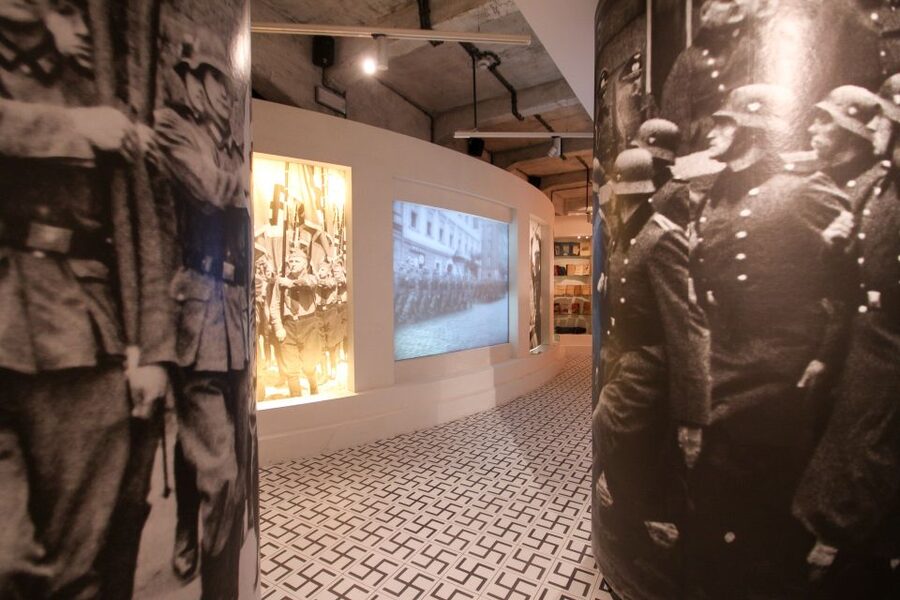
The factory is in the former workplace of Oskar Schindler, the industrialist who helped save more than 1,000 people during the Holocaust. The site became widely known through the film Schindler’s List, but the museum experience is broader than a film-related visit.
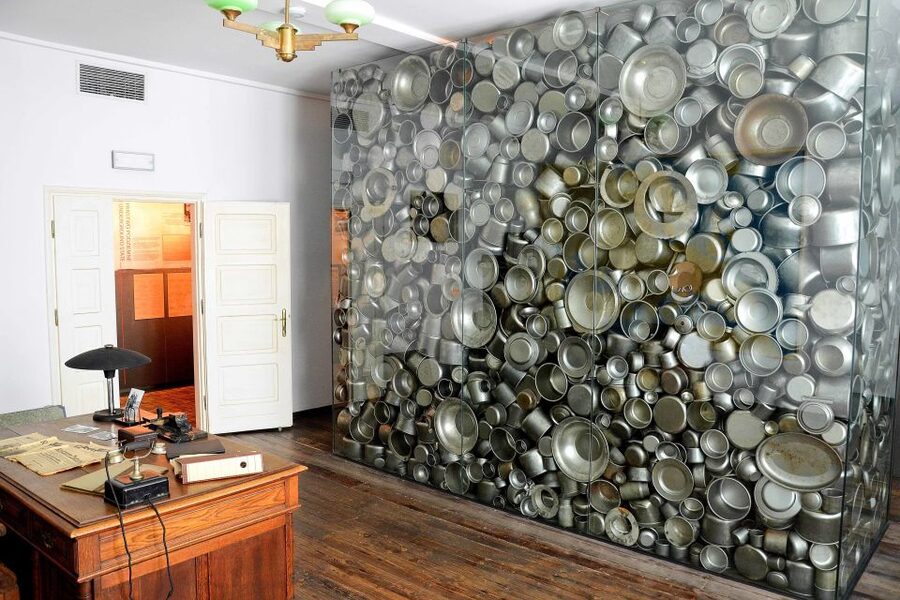
You should expect an exhibition about Krakow during World War II, especially the Nazi occupation and its effect on the city’s Jewish population and wider society. Displays include photographs, historical material, reconstructions, and objects connected to wartime life.
This distinction matters. If you expect to walk through an unchanged 1940s factory floor and see Schindler’s production operation in detail, you may be disappointed. The museum is primarily an exhibition about wartime Krakow, with Schindler’s story forming an important part of that account.
The material is sobering. You will need time to read and absorb it, and the experience is less visually spectacular than Wieliczka. That is also its value. The mine gives you dramatic spaces; the factory gives you human stories and a clearer sense of what occupation meant in everyday life.
Guided commentary and group size
The mine includes an official guided route and headsets. The factory visit includes entry to the interactive exhibition, with a guided format listed for about an hour and a half. In practice, the exact arrangement can depend on museum operations and the size of the group.
Your main job is to stay with the group and keep the guide in sight. At the factory, narrow corridors and busy display areas can make it hard for people at the back to see what is being discussed. Larger groups are especially awkward in tight spaces.
The strongest part of the tour is the quality of the guiding when the group can hear it. Guides such as Jacob and Andrew have been singled out for being helpful, clear, and well prepared. One driver was also praised for local advice, including suggestions for places to try afterward.
That personal help is useful on a combined tour. You are not simply dropped at two entrances and left to work out the day alone. The host manages transfers, timing, and practical questions, while the site guides supply the historical explanation.
Still, do not assume every group will feel equally intimate. A small-group option is available, but group size at Schindler’s Factory can also be affected by the museum itself. If seeing every display and hearing every explanation is your top priority, ask for the smallest group option offered.
Timing, walking, and the final drop-off
The advertised duration is seven hours. A typical day includes a 40-minute transfer to Wieliczka, a guided mine visit of about two and a half hours, a 30-minute transfer, a break of around one hour, and a factory visit lasting roughly one and a half hours.
That schedule leaves little spare time. Traffic, queues inside the venues, and the mine’s operating rules can all alter the plan. The skip-the-line tickets help with entry, but they cannot remove every delay once you are inside a busy museum or mine.
The walking is substantial at both locations, particularly at Wieliczka. Older visitors or anyone with limited stamina should take this seriously. This is not a relaxed bus outing with occasional short walks.
The final drop-off is at Schindler’s Factory rather than the original meeting point. That is convenient if you plan to continue into the Podgórze or Jewish Quarter areas. If you want to return to your hotel, a taxi should cost only a few euros according to the tour information, but the ride back is not included.
Is $89 a fair price?
At $89, you are paying for convenience as much as admission. The price includes pickup or meeting-point service, round-trip transport during the tour, skip-the-line tickets, the mine guide, the factory visit, headsets underground, an English-speaking host, and insurance.
Buying separate tickets and arranging transport may cost less, but it also takes more planning. You would need to coordinate two sites, allow for road time, and manage admission schedules yourself. For a first Krakow visit with limited time, the organized structure can justify the price.
The value drops if you dislike fixed schedules. The mine may feel rushed, and the factory may not leave enough time to read every display. You are also responsible for food and drinks, and you need to arrange your own return from the final stop.
Free cancellation up to 24 hours before departure and the reserve-now, pay-later option make the booking less rigid. Just remember that pickup details can change, so check your messages before the day begins.
Who should book this Krakow tour?
I would choose this tour if you want to see both sites without handling transport and ticket planning. It suits first-time visitors, couples, and families with older children who can manage a long walking day.
It also works well if you want historical variety. The mine provides grand spaces and unusual engineering; the factory offers a direct account of wartime Krakow. The two experiences feel very different, which keeps the day from becoming repetitive.
I would hesitate if you use a wheelchair, have limited mobility, or feel uneasy in confined spaces. I would also hesitate if your ideal museum visit means reading every label at your own speed.
For the best chance of hearing the guides, stay near the front of the group, keep your headset close, and speak up if the sound drops. Wear sturdy shoes, carry only a small bag, and leave your luggage at your accommodation. Large bags are not allowed.
Should you book it?
Book this tour if you want an efficient, guided introduction to Wieliczka and Schindler’s Factory in one day. The mine is the visual highlight, while the factory supplies the emotional and historical weight. Transport and skip-the-line entry remove much of the usual fuss.
Skip it if you need a slow pace or want to study the factory exhibition in detail. In that case, separate visits may give you more control.
For most reasonably mobile visitors with one free day in Krakow, this is a strong pairing. Go prepared for crowds, plenty of stairs, and a final drop-off at the factory, and the $89 price can feel like a fair exchange for a full, well-managed day.
FAQ
How long does the tour last?
The tour lasts about seven hours. The schedule includes transfers, a guided visit to Wieliczka Salt Mine, a break in Podgórze, and a visit to Schindler’s Factory.
Is transportation from Krakow included?
Yes. The tour includes pickup from your hotel or a Krakow meeting point, depending on the option selected, along with transport between the sites.
Are entry tickets included?
Yes. Skip-the-line entry tickets for both Wieliczka Salt Mine and Schindler’s Factory are included.
Is the tour available in English?
Yes. The tour language is English, with an English-speaking host and professional guides at the attractions.
Is the tour suitable for wheelchair users?
No. The experience is not recommended for wheelchair users. It also is not suitable for people with claustrophobia, and comfortable shoes are essential.
Where does the tour finish?
The tour finishes at Fabryka Emalia Oskara Schindlera, the Schindler’s Factory site. A taxi back to your hotel can be ordered from there for a few euros.
More Half-Day in Krakow
- From Krakow: Wieliczka Salt Mine Half-Day Guided Tour
★ 4.5 · 724 reviews - Half-Day Krakow Food Tour in Old Town and Kazimierz
★ 5.0 · 186 reviews - Unesco List; Wieliczka Salt Mine Half-Day Tour from Kraków
★ 4.2 · 95 reviews - Half-Day Czestochowa Black Madonna Tour from Krakow
★ 4.9 · 19 reviews
Just added around Krakow
- Tour to Wadowice: Hometown of Pope Saint John Paul II★ 4.6 · 12 reviews
- The Jewish Quarter – Walking Tour★ 5.0 · 4 reviews
- From Kraków; to Białka Thermal Baths private tour★ 5.0 · 5 reviews
- St. Mary’s Basilica and more – a short walk with a guide★ 4.7 · 56 reviews
- Krakow: Auschwitz-Birkenau and Wieliczka Salt Mine Day Trip★ 4.7 · 84 reviews
- Krakow: Skip-the-Line Wawel Castle & Old Town Guided Tour★ 4.9 · 23 reviews
- Krakow: Schindler’s Factory Guided Tour★ 4.2 · 12 reviews
- Shooting Range Experience!★ 4.8 · 66 reviews
Wieliczka Salt Mine Tours, compared.
Wieliczka Salt Mine Guided Tour with Transport
Read our review →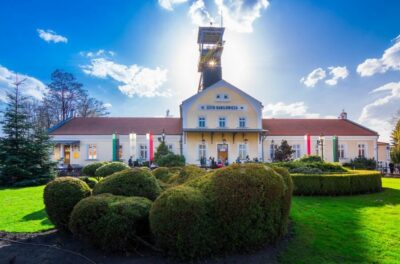
Wieliczka Salt Mine Fast-Track Ticket & Guided Tour
Read our review →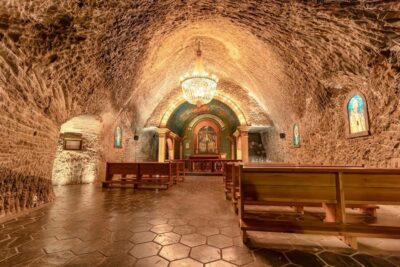
Wieliczka Salt Mine Tour & Skip the Line Ticket
Read our review →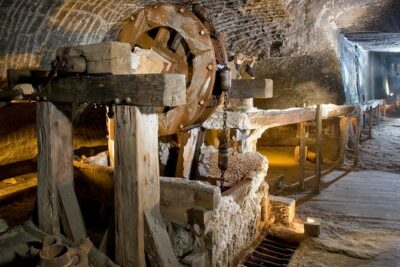
Krakow to Wieliczka: Salt Mine Guided Tour with Ticket & Transfer
Read our review →
Auschwitz-Birkenau & Salt Mine Full-Day Guided Tour
Read our review →
Auschwitz Birkenau and Wieliczka Salt Mine Guided Full Day Tour
Read our review →Browse the lists this tour appears in