
Reviewed · CONCERTS
Kraków: Romantic Candlelight Chopin Piano Concert
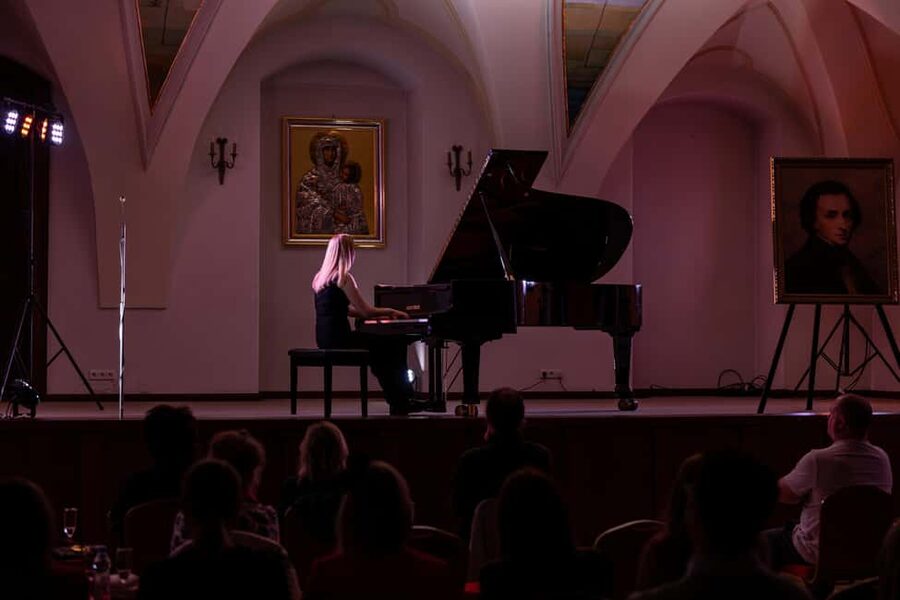
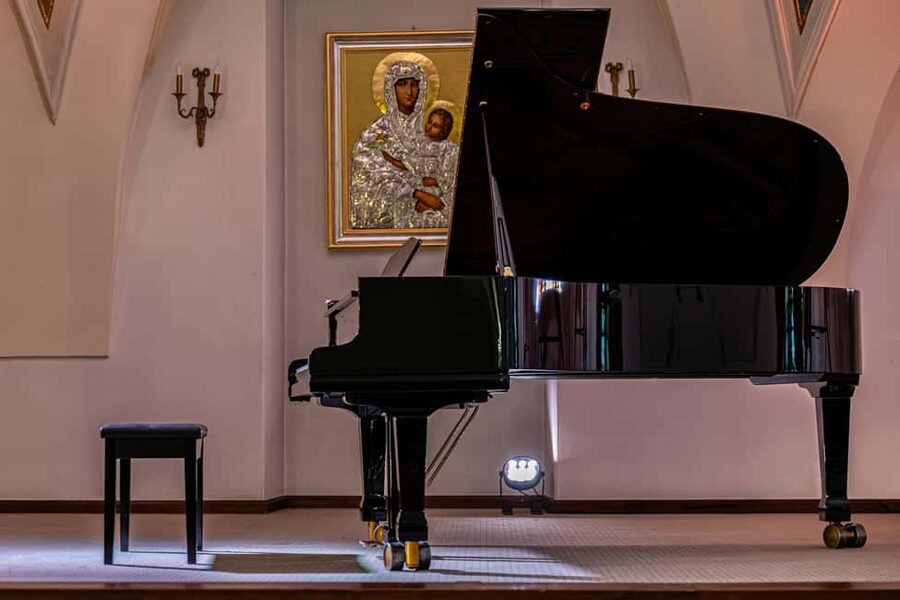
Kraków’s Church of St. Bernardine of Siena gives this concert its special appeal. You hear Chopin in a 17th-century church section normally closed to the public, surrounded by Baroque altars, frescoes, and stained glass. The candles and sacred setting make the hour feel far removed from an ordinary concert hall.
I like the short one-hour format, which fits neatly into an evening of sightseeing. I also like the program’s range: Chopin gets the spotlight, but Beethoven, Ravel, Rachmaninov, Debussy, and Polish composer Grażyna Bacewicz add contrast. The main caution is practical: the hall is not wheelchair accessible, and the quiet setting is not suitable for young children or anyone who needs easy mobility.
Key points to know before booking
- A rare Kraków venue: The concert takes place in a part of the Church of St. Bernardine of Siena that is usually closed to visitors.
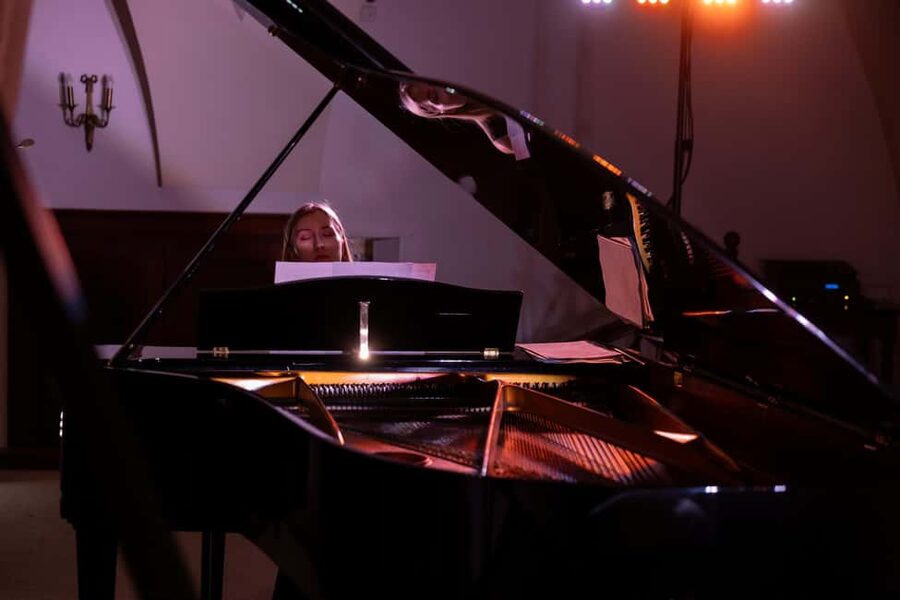
- Chopin is central: Expect the G minor Ballade, an Etude, a Mazurka, and two Preludes, among other works.
- A wider classical program: Beethoven, Ravel, Rachmaninov, Debussy, and Bacewicz give the recital variety.
- One hour with an intermission: The evening includes an introduction, a first performance, a short break, and a second performance.
- Best for adults and older children: Children under 10 are not admitted, and the setting requires quiet behavior.
- Check access needs carefully: The concert hall is not wheelchair accessible and is not suitable for people with mobility impairments.
Why the church matters as much as the music
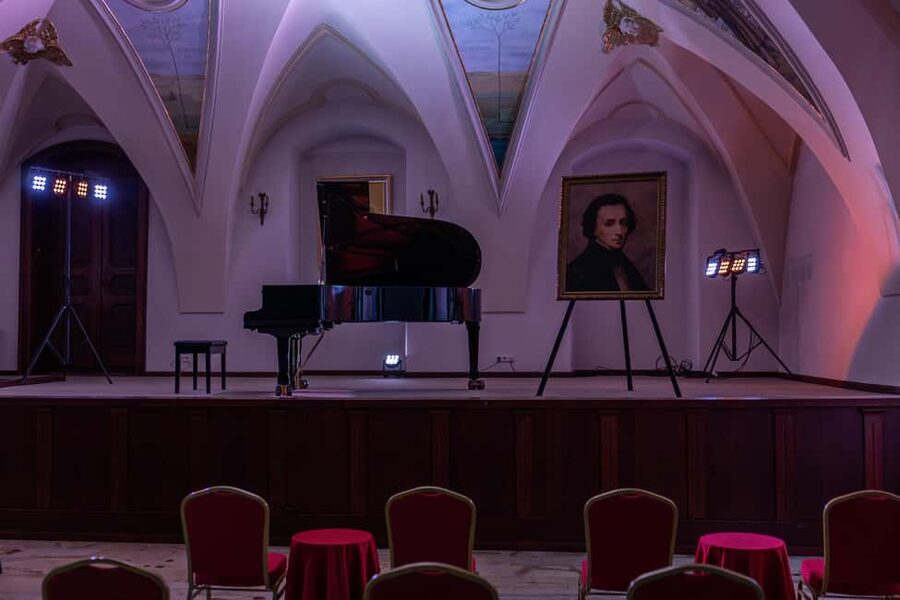
Many piano concerts depend on the performer alone to create atmosphere. Here, the building does some of that work before the first note. The Church of St. Bernardine of Siena dates from the 17th century, and the concert uses a part of the complex that is not normally open to the public.
That gives you a rare look at a Baroque religious interior while listening to music written for very different settings. Candlelight picks out the church’s altars, painted surfaces, and stained glass without turning the evening into a sightseeing lecture. You are there for the piano, but the surroundings help you listen with more attention.
The setting also changes how Chopin feels. His music can sound polished and distant in a large formal hall. In a smaller church space, the emotional turns of a Ballade or Mazurka can feel more immediate. The supplied comments place particular emphasis on the pianist’s elegance, sensitivity, and emotional force. That is useful context for choosing this event: it is aimed at attentive listening, not background entertainment.
Do keep your expectations sensible. The venue is described as stunning, but the information does not promise a full church tour, a long architectural talk, or access to every part of the monastery. You should think of the building as the concert setting and a rare visual bonus, rather than booking a dedicated architecture visit.
A few more Krakow trips to weigh up
- Krakow: Chopin Piano Recital at Chopin Concert Hall
★ 4.7 · 2,330 reviews - Krakow: Frédéric Chopin Classical Music Candlelight Concert
★ 4.6 · 413 reviews - Chopin Piano Concert at Chopin Gallery with a Glass of Wine
★ 4.5 · 283 reviews
The one-hour program, from welcome to final notes
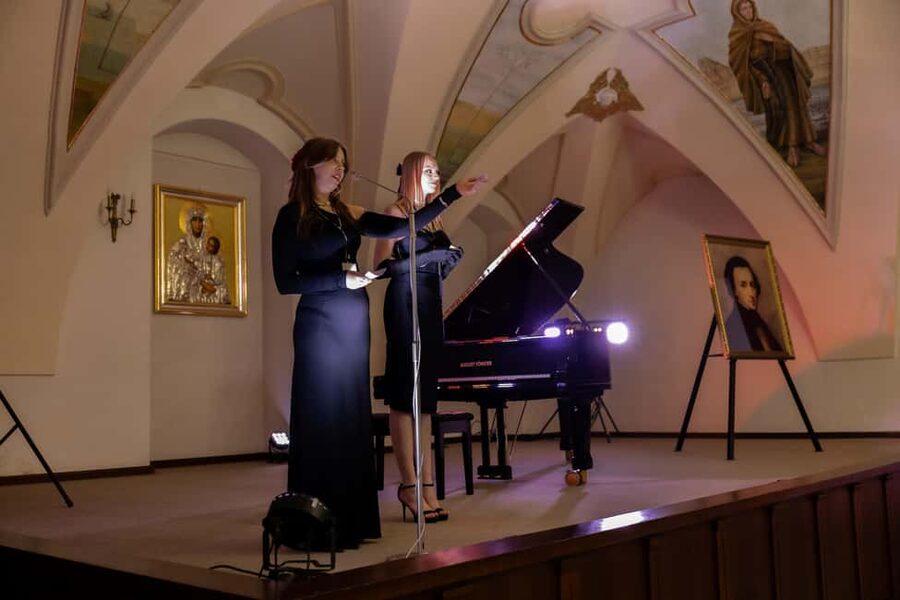
The evening begins with a welcome and an introduction to the composers featured in the program. An English-speaking instructor handles the presentation, which should help you follow the musical choices even if you do not know classical music well.
You also receive an introduction to the evening’s pianist. The information allows for a variety of talented pianists, so the exact performer may differ depending on the date. That means you should check the selected time and booking details if the identity of the musician matters to you.
The music then comes in two parts. The first concert performance is followed by a short intermission, then the second performance. This format gives you a natural pause without making the evening feel drawn out. At one hour, the program is long enough to feel worthwhile but short enough to pair with dinner or another Kraków activity.
The listed program includes:
- Beethoven’s Sonata in E-flat Major, Op. 31 No. 3, first movement
- Chopin’s Etude Op. 10 No. 8
- Chopin’s Ballade No. 1 in G minor, Op. 23
- Chopin’s Mazurka Op. 17 No. 4
- Chopin’s Preludes Op. 28, Nos. 4 and 6
- Ravel’s Valses nobles et sentimentales, Nos. 1 and 2
- Rachmaninov’s Étude-Tableau Op. 39 No. 8
- Debussy’s Étude No. 1, Pour les cinq doigts d’après Monsieur Czerny
- Grażyna Bacewicz’s Piano Sonata No. 2
The exact order is not provided, but the selection gives you a useful sense of the evening. Chopin supplies the main emotional thread. Beethoven brings classical structure, while Ravel and Debussy offer color and lighter shifts in mood. Rachmaninov adds weight and intensity. Bacewicz brings a Polish voice from a later period and gives the program a welcome point of difference.
Chopin’s music gets the strongest share of attention
If you are booking this mainly for Chopin, the program gives you good reasons to go. The G minor Ballade is the centerpiece. It is one of Chopin’s best-known large piano works, with a dramatic shape that can carry a short recital by itself.
The Etude Op. 10 No. 8 is a more compact display of movement and control. The two Preludes, Op. 28, Nos. 4 and 6, offer a sharp contrast. They are brief, concentrated pieces, showing how much Chopin could express without a long performance.
The Mazurka adds another side of Chopin’s writing. These Polish dance-based works are not simply light folk pieces. Their shifting accents and personal character require a pianist to make careful choices about rhythm and feeling. In a church with a quiet audience, that detail should be easier to appreciate.
The strongest praise attached to this event focuses on how the pianist handles Chopin’s emotion. One comment describes the music as feeling newly alive. Another highlights depth, sensitivity, elegance, and an affectionate tribute to Chopin’s ability. Those points suggest that the quality of interpretation is the heart of the experience, so this is a better choice for someone who cares about phrasing and mood than for someone seeking a big theatrical production.
The other composers keep the evening from feeling narrow
The concert is not a Chopin-only recital. That is good news if you enjoy variety or are attending with someone who is less devoted to Chopin.
Beethoven’s first movement comes from Sonata in E-flat Major, Op. 31 No. 3. Placing Beethoven beside Chopin lets you hear a change in musical language and structure. Ravel’s Valses nobles et sentimentales introduces a more refined, shifting sound, while Debussy’s étude gives you a different kind of piano writing, with attention to texture and color.
Rachmaninov’s Étude-Tableau Op. 39 No. 8 brings a darker, more forceful character. The inclusion of Bacewicz’s Piano Sonata No. 2 is especially interesting for anyone who wants more than the standard concert favorites. Bacewicz was a major Polish composer and violinist, and her work connects the recital to Poland beyond Chopin.
This range also helps the one-hour length. You are not asked to listen to a single composer for the full program. Instead, the pieces create shifts in pace, sound, and intensity. I would choose this event over a generic classical recital if you want a program with a clear Chopin focus but enough contrast to keep the hour fresh.
Same country, a completely different kind of day:
- From Krakow: Auschwitz-Birkenau Guided Tour & Hotel Pickup
★ 4.5 · 33,358 reviews - From Krakow: Auschwitz-Birkenau Guided Tour & Hotel Pickup
★ 4.5 · 29,340 reviews - Krakow: Auschwitz Guided Tour with Optional Hotel Pickup
★ 4.5 · 15,280 reviews - Krakow–Zakopane: Cable Car, Chocholow Baths, Cheese & Vodka
★ 5.0 · 10,720 reviews
Candlelight adds mood, but it is not a wine tasting
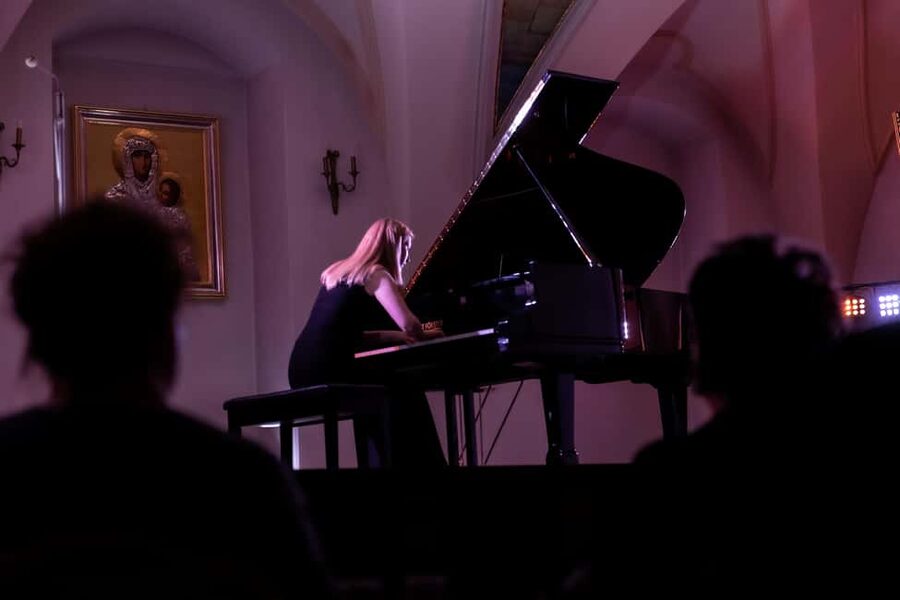
The candlelit presentation is a central part of the experience. It softens the church interior and gives the piano a quiet, intimate setting. You are not simply sitting in a bright concert room with rows of seats. The light, the artwork, and the sound work together.
The highlights refer to celebrating Chopin with wine, but the practical information says you cannot bring your own alcohol into the hall. Food is not included either. Because of that, I would not book this expecting a drinks reception or a concert with refreshments. Treat it as a music and architecture experience, then plan any wine or meal for before or after, outside the venue.
This distinction matters when you compare the $44 price with other evening activities. You are paying for a live piano performance, admission to the Bernardine Monastery area used for the event, and access to a concert setting that is normally closed to the public. You are not paying for dinner, a full guided tour of the church, or a drinks package.
For a visitor already interested in Chopin and classical music, the price can be fair. The rare venue gives it more character than a standard recital, and the one-hour duration keeps the commitment manageable. If you mainly want a casual night out with drinks, you may find better value elsewhere.
Who will get the most from this concert
I would recommend this concert to you if you enjoy:
- Chopin, Romantic piano music, or intimate classical recitals
- Historic religious interiors and Baroque decoration
- Quiet evening activities in central Kraków
- A short cultural event that fits around dinner
- Programs that mix familiar names with less common Polish music
- Special occasions where atmosphere matters as much as length
It also works well for couples because of the candlelight and compact format. The word romantic in the title refers to mood, not to a special private performance or a meal, so keep the experience in that frame.
Families need to read the age rule carefully. Children under 10 are not suitable for the event, and the list of restrictions includes noise, chewing gum, and other distractions. This is a place for quiet listening. An older child who already enjoys piano music may be fine, but the setting is not designed as a family entertainment show.
The event is also not suitable for people with epilepsy, hearing impairments, colds, or mobility impairments according to the stated conditions. The candlelit environment and close attention to music may be difficult for some people. The hall is not wheelchair accessible, and baby strollers or carriages are not allowed.
Practical details that can affect your evening
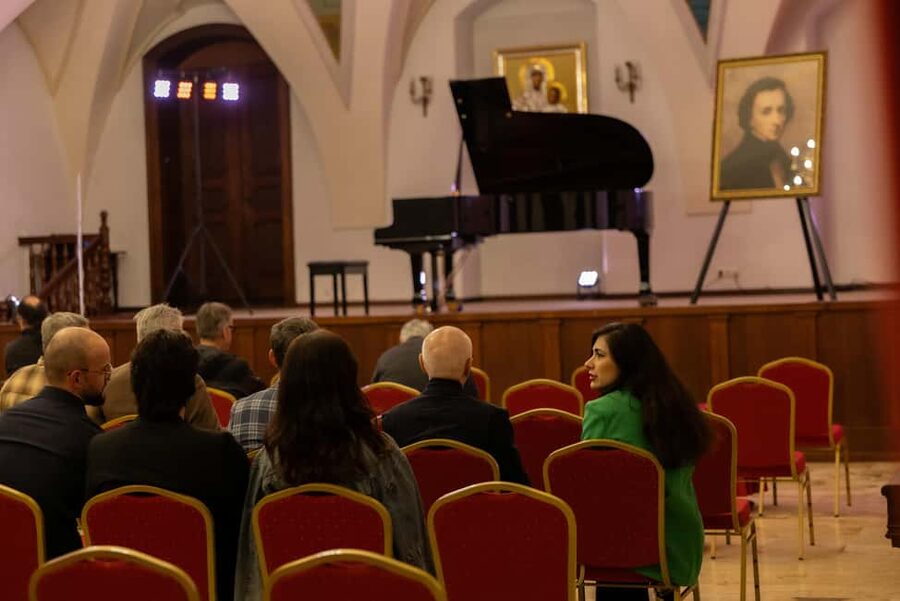
The concert lasts one hour, but you should allow extra time around it for arrival and departure. The starting time varies, so check availability for the date you want rather than planning around a fixed hour.
The language is English for the welcome and composer introductions. The music itself needs no translation, but the spoken introduction can help you place the works in context. If you know little about classical music, you can still follow the program without preparation.
Large bags and luggage are not permitted. Neither are pets, bikes, baby strollers, weapons, sharp objects, flashlights, explosive substances, hats, or bare feet. Smoking and vaping are forbidden, including indoors, and flash photography is not allowed. The ban on making noise is worth taking seriously because the venue depends on silence.
You also cannot bring your own alcohol. Food is not included, so plan around the concert rather than expecting a refreshment service. The information does not provide a dress code beyond the ban on hats, so you should choose comfortable, respectful clothing suitable for a church and an evening performance.
The booking terms are flexible. You can cancel up to 24 hours before the activity for a full refund, and a reserve-now, pay-later option is available. That helps if your Kraków schedule is still changing, though the concert’s limited starting times may still shape your evening plans.
What the strongest praise tells you
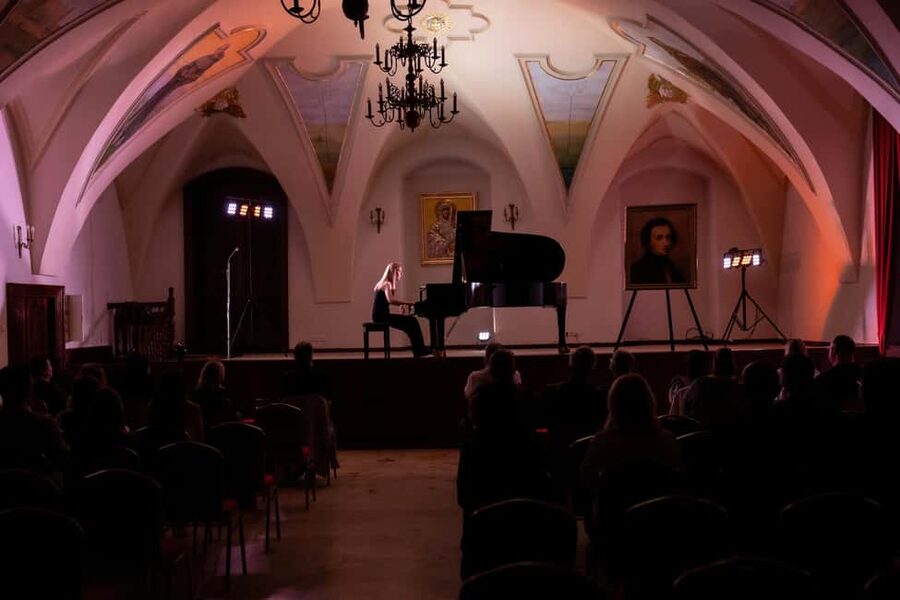
The highest praise is remarkably consistent. The music is described as emotionally powerful, peaceful, and beautiful, with the pianist praised for elegance and sensitivity. One short comment calls the event pure magic and says each note felt alive.
I would read that praise in a practical way. The concert’s success depends on the performance, and the available comments suggest that the pianist does not treat Chopin as a mechanical exercise. The emotional side of the music receives real attention.
The quiet atmosphere is another major strength. A peaceful concert in a candlelit church can be a welcome change after a day spent on Kraków’s busy streets. You get a clear hour to sit still, listen, and look around. That may sound simple, but it is often what makes a short cultural event memorable.
The limitation is that the available praise does not give much information about seating, the precise location within the church, or the exact pianist for each performance. If those details are important to you, check the booking information before committing. The program can also change by performer or date, so confirm the current selection if you are attending for one particular piece.
Is this Kraków concert worth booking?
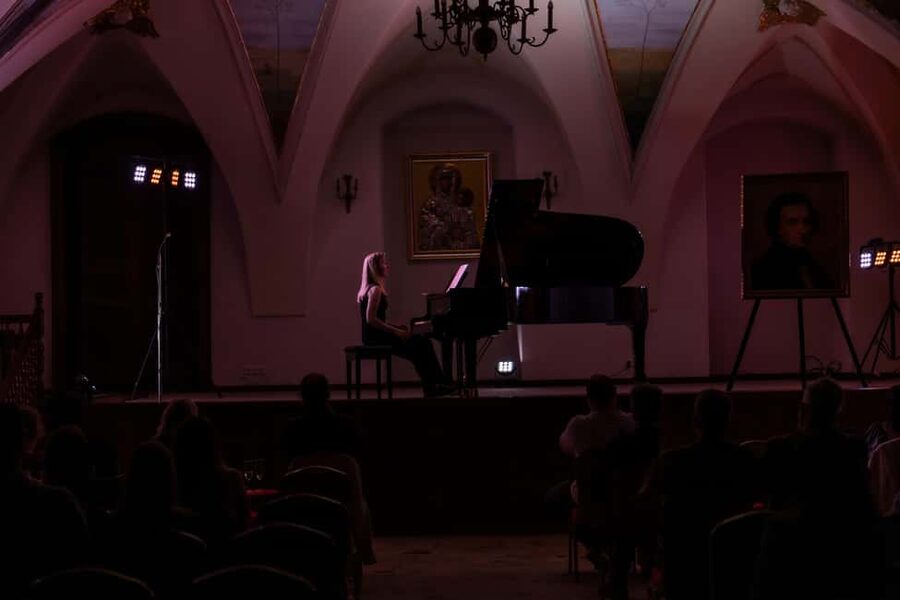
Book it if you want a short, atmospheric Chopin recital with a rare church setting. The $44 cost is reasonable for a live performance in a normally closed part of the Bernardine complex, especially if you value music, architecture, and a calm evening more than food or added services.
Skip it if you need wheelchair access, want a full architectural tour, expect wine or snacks inside, or prefer a lively show with conversation and movement. The rules are strict because the space is quiet and sensitive.
For the right audience, this is a fine way to hear Chopin in Poland: focused, intimate, and shaped by the Baroque room around the piano.
FAQ
How long does the Chopin concert last?
The concert lasts one hour. The program includes an introduction, a first performance, a short intermission, and a second performance.
Where does the concert take place?
It takes place in a part of the 17th-century Church of St. Bernardine of Siena in Kraków. This area is normally closed to the public.
Is the concert only Chopin music?
No. Chopin is a central part of the program, but the listed works also include music by Beethoven, Ravel, Rachmaninov, Debussy, and Grażyna Bacewicz.
Is the concert suitable for children?
Children under 10 are not suitable for this activity. The venue also requires quiet behavior, and baby strollers or carriages are not allowed.
Is the concert wheelchair accessible?
No. The concert hall is not wheelchair accessible and is not suitable for people with mobility impairments.
Can I bring food or alcohol into the hall?
Food is not included, and you cannot bring your own alcohol into the hall. Smoking and vaping are also forbidden.
Just added around Krakow
- Tour to Wadowice: Hometown of Pope Saint John Paul II★ 4.6 · 12 reviews
- The Jewish Quarter – Walking Tour★ 5.0 · 4 reviews
- From Kraków; to Białka Thermal Baths private tour★ 5.0 · 5 reviews
- St. Mary’s Basilica and more – a short walk with a guide★ 4.7 · 56 reviews
- Krakow: Auschwitz-Birkenau and Wieliczka Salt Mine Day Trip★ 4.7 · 84 reviews
- Krakow: Skip-the-Line Wawel Castle & Old Town Guided Tour★ 4.9 · 23 reviews
- Krakow: Schindler’s Factory Guided Tour★ 4.2 · 12 reviews
- Shooting Range Experience!★ 4.8 · 66 reviews
Concerts, compared.
Warsaw Concert: Chopin – Painted by Candlelights with Wine
Read our review →
Frédéric Chopin Classical Music Candlelight Concert
Read our review →
Chopin Concerts everyday at the Fryderyk Concert Hall
Read our review →Browse the lists this tour appears in