
Reviewed · AUDIO TOURS
Warsaw at War 1939-1945: A Self-guided Audio Tour
Warsaw’s wartime story is told best on foot, where rebuilt streets, solemn memorials, and open squares reveal how the city survived Nazi Germany and Communist Russia. This 90-minute audio walk begins near the Old Town and ends at the statue of Józef Piłsudski, linking the Second World War with Poland’s longer fight for freedom.
I like the tour’s freedom to pause, since you can stop for lunch, photos, the Vodka Museum, or a wander through Saxon Garden without holding up a group. I also like the polished narration, which uses music and sound effects rather than giving you a flat list of dates.
The main drawback is navigation. The audio is easy to follow in principle, but the map can be less clear than it should be. The off-route warning may sound even when you are simply walking on the opposite side of the street, so you need to keep an eye on your position.
Key points at a glance
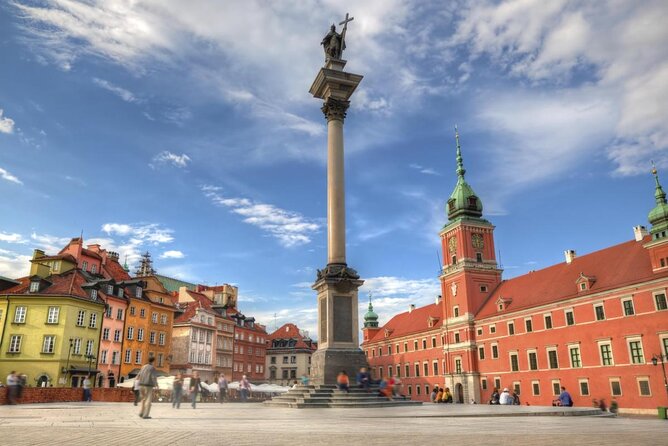
- A 3-kilometer route through central Warsaw: You walk from St. Anne’s Academic Church to the statue of Józef Piłsudski in about 90 minutes.
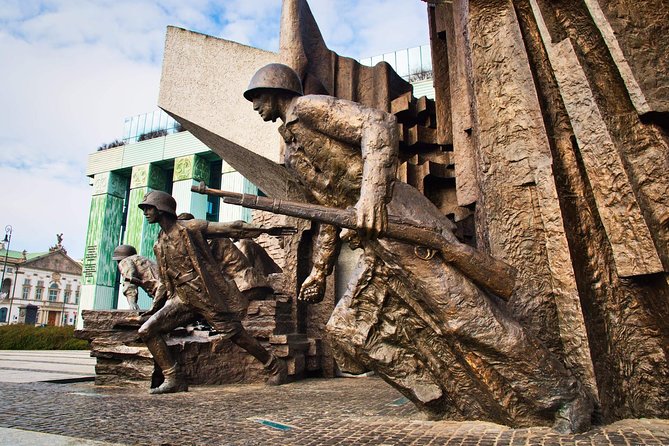
- The Little Insurgent memorial: You learn about the Mały Powstaniec, a small monument honoring child soldiers who fought and died in the 1944 Warsaw Uprising.
- The Tomb of the Unknown Soldier: The stop explains why this memorial contains ashes and soil from 20th-century battlefields where Polish soldiers died.
- A self-guided format: You start the tour in the VoiceMap app, then move at your own pace with offline audio, maps, and location data.
- A serious story with theatrical touches: Professional audio production, music, and sound effects make the history easier to follow.
- A low-cost option for independent sightseeing: At $9.99 per person, the tour costs less than many guided walks, but you must bring your own phone and manage the route yourself.
Warsaw’s wartime story begins outside the Old Town
The walk starts at Kościół Akademicki św. Anny, or St. Anne’s Academic Church, at Krakowskie Przedmieście 68. This places you just outside Warsaw’s famous Old Town, a useful starting point for a route about a city repeatedly damaged, controlled, and rebuilt.
The tour focuses on Poland’s struggles during the Second World War, especially the pressure created by Nazi Germany and Communist Russia. That broad frame matters. You are not hearing only about one battle or one monument. You are following a story about national identity, resistance, sacrifice, and the effort to preserve Polish culture during years of violence.
I like this approach because Warsaw can otherwise seem polished and modern enough to hide much of what happened here. The audio gives the streets a second layer. You walk through a functioning capital while listening to the story of a city that rose from wartime destruction.
The narration is in English and was professionally recorded and edited. Music and sound effects are added to the spoken material, creating a more dramatic presentation than a basic museum-style recording. That can help younger listeners and anyone who finds long historical explanations difficult to hold in mind.
You can use earbuds or headphones, or carry a small speaker if you are with a small group. The tour is designed for up to 10 people, but it remains a self-guided experience rather than a live walk with a person leading from place to place.
A few more Warsaw trips to weigh up
- Warsaw’s Old Town A Self-Guided Audio Tour
★ 4.5 · 10 reviews - Wroclaw: E-Car Tour and Audio Guide
★ 4.6 · 1,738 reviews - Krakow: Vistula River Sightseeing Cruise with Audio Guide
★ 4.4 · 820 reviews
The Little Insurgent and the cost of the 1944 uprising
One of the most important stops is the Mały Powstaniec, or Little Insurgent, memorial. The monument recalls child soldiers who fought and died during the Warsaw Uprising of 1944.
This is a powerful point in the route because it puts a human face on a national struggle. Instead of hearing only about armies and political decisions, you are asked to think about children caught up in the defense of their city. The subject is difficult, but the stop gives the wider wartime story an emotional center.
The tour description presents the Polish fight as one for heritage, independence, and honor. That language may appeal to you if you enjoy stories of brave resistance and national survival. It also means the tone is serious and patriotic. I would not choose this walk if you want a light introduction to Warsaw with only occasional historical detail.
The memorial is also a reminder that the city’s wartime story cannot be separated from ordinary people. The route is not limited to grand government buildings or famous commanders. It points you toward the personal cost of the conflict, which gives the walk more weight.
Take your time here. The audio walk lasts about 90 minutes, but the app allows you to pause. You can stop the narration, look closely at the memorial, and restart when you are ready. That is one of the better reasons to choose this format over a fixed group tour.
The Tomb of the Unknown Soldier and Poland’s fallen
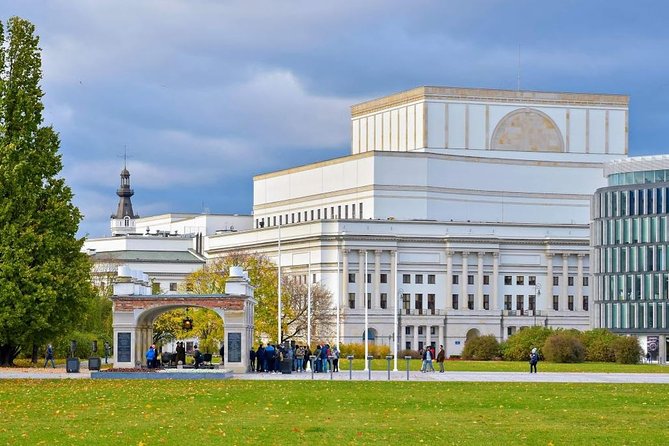
The route continues to the Tomb of the Unknown Soldier. The tour explains the monument’s history and its role as a place of respect for those who died fighting for Poland.
The most distinctive detail is that the tomb contains ashes and soil from every 20th-century battlefield where Polish soldiers lost their lives. That turns the monument into more than a memorial to one unidentified person. It represents many battlefields and many unnamed deaths.
I value stops like this because they help you understand how public memory works in Poland. A single site can carry the stories of soldiers whose names were lost, forgotten, or never recorded. You do not need a long visit to grasp the meaning, but the audio gives you enough context to make the pause worthwhile.
The stop also broadens the tour beyond the years from 1939 to 1945. The walk is titled around the Second World War, yet its final section reaches back to Poland’s earlier struggle against Russian control. That link is important for understanding why independence and military resistance carry such strong meaning in the country.
The route passes through central public spaces, and you may want to allow extra time around the scheduled audio. You can take photographs, pause for a quiet moment, or simply let the next section begin when you are ready. The ticket does not include entry to museums or other attractions, so any interior visit along the way costs extra.
Saxon Garden, lunch, and room to make the walk your own
This is not a rigid point-to-point march. The route is about 3 kilometers, but you can stop along the way for lunch, photographs, or further exploring.
Saxon Garden is mentioned as an optional place to wander. You can also visit the Vodka Museum if it fits your plans. Neither is included in the $9.99 price, and the audio tour does not provide admission to museums, but the ability to add your own stops makes the route easier to fit into a day in Warsaw.
I like this flexibility for independent sightseeing. You can begin around midday, pause when you need coffee, and continue later. The listed opening hours run all day, every day, so the tour is not tied to a morning departure or a limited meeting window.
Still, you need to manage your own timing. If you stop for a full meal or enter a museum, the 90-minute estimate no longer applies. That is not a problem, but you should treat the duration as the walking and listening time, not the length of a complete outing.
The route passes near public transportation, which makes the starting point practical. You do not need to arrange a private transfer. Transportation itself is not included, and you need a smartphone to run the VoiceMap application.
Same country, a completely different kind of day:
- Warsaw: Chopin Concert in the Old Town
★ 4.8 · 2,287 reviews - Warsaw: Traditional Galar Cruise on The Vistula River
★ 4.6 · 1,640 reviews - Warsaw: Old Town Highlights Walking Tour in English
★ 4.7 · 1,516 reviews - Warsaw Concert: Chopin – Painted by Candlelights with Wine
★ 4.8 · 1,442 reviews
Why the self-guided format works well
The tour is built around the VoiceMap app. After booking, you receive access to the tour and can use the audio, map, and geodata offline. Downloading the material before you begin is a sensible step, especially if you want to avoid relying on a mobile connection during the walk.
The strongest benefit is independence. You do not need to match a guide’s pace or join a large crowd. You can stop the story, look around, take a photo, or step into a restaurant without asking anyone else to wait.
The audio also directs you as you walk, so you can keep your phone in your pocket much of the time. That helps you pay attention to the streets rather than stare at a screen.
Navigation is the weak point. A past booking gave the tour a middling score specifically because the map was difficult to follow, the direction arrow was not clear enough, and the alert sounded too easily when the person moved off the exact route. Walking on the opposite side of the street could trigger the warning.
For that reason, I recommend checking the map at the start of each section and keeping your bearings. Do not assume every alert means you are genuinely lost. The route is short, and a little patience should help, but this is not the best choice for someone who dislikes app-based directions.
What $9.99 buys you
At $9.99 per person, this is an inexpensive way to add structure to a walk through central Warsaw. You receive lifetime access to the tour, the VoiceMap app, and offline access to the audio, maps, and location data.
The value is strongest if you already plan to walk around the Old Town area. The tour adds meaning to places you might otherwise pass quickly, especially the Little Insurgent memorial and the Tomb of the Unknown Soldier.
It is less valuable if you want personal conversation, detailed questions answered on the spot, or a guide who can adjust the route in real time. There is no live guide included, and tickets for museums or other attractions are separate.
The lifetime access is useful for flexible planning. You can listen at your own pace and return to parts of the material later, rather than trying to remember everything during one fast walk. The price also makes it easy to pair with a separate museum visit or a live tour on another day.
The booking record shows that people often reserve this about 11 days ahead. Since the tour is self-guided and available throughout the day, you do not need to treat that as a strict planning rule. It is simply a sign that this activity is often added to a Warsaw itinerary before arrival.
Who will enjoy this Warsaw audio walk
I would recommend the tour to independent visitors who want a clear route and a serious introduction to Warsaw’s wartime experience. It suits solo visitors particularly well because you can explore without paying for a private guide or joining a group.
It also works for couples and small groups who enjoy listening together. A small speaker is allowed for a small group, though headphones or earbuds may be more practical in busy public areas.
History fans will find plenty to hold their attention: the 1944 Warsaw Uprising, child soldiers, the Tomb of the Unknown Soldier, the conflict with Nazi Germany and Communist Russia, and Józef Piłsudski’s earlier fight for Polish freedom.
Families should consider the tone and subject matter. The audio is suitable for all ages who can wear earbuds or headphones, but the themes include death, war, sacrifice, and child soldiers. Parents may want to decide in advance how much historical detail is right for their children.
The walk is also suitable for most people, and service animals are allowed. The information does not give a detailed accessibility assessment, so anyone with specific mobility needs should check the route conditions before booking.
Ending with Józef Piłsudski
The final stop is the statue of Józef Piłsudski at Plac Marszałka Józefa Piłsudskiego. This gives the tour an interesting ending because Piłsudski belongs to an earlier chapter of Polish independence.
He is presented as a political and military hero who fought to free Poland from Russian control. The narration also covers his defeat of Lenin’s Red Army at the gates of Warsaw in 1920.
That final connection helps explain why the Second World War was not an isolated disaster for Poland. The country’s struggle for freedom had earlier chapters, and Piłsudski represents the determination to regain and protect independence.
The ending is a face-to-face meeting with a famous Polish statesman and warrior, though in the form of a statue rather than a live encounter. It is a fitting place to finish because the tour moves from wartime suffering toward the wider idea of Polish sovereignty.
You can end the audio there or continue exploring the surrounding area. Since the tour has lifetime access, you can also return to any section later if you want to hear a passage again.
Practical details before you book
The start point is St. Anne’s Academic Church, Krakowskie Przedmieście 68, 00-322 Warsaw. The endpoint is the Józef Piłsudski statue at Plac Marszałka Józefa Piłsudskiego, 00-073 Warsaw.
Bring your own smartphone. The phone, transportation, food, drinks, and admission fees are not included. Downloading the offline content in advance should make the walk easier and reduce the need to check your connection.
The tour is offered in English. Confirmation is provided at booking, and the activity has a maximum group size of 10 people, though the experience remains self-guided.
The booking is non-refundable and cannot be changed for any reason. I would only purchase once your Warsaw dates and walking plans are firm.
Should you book Warsaw at War?
Book this tour if you want an affordable, independent walk that connects Warsaw’s memorials with the city’s wartime struggle. The strongest points are the emotional stop at the Little Insurgent, the thoughtful explanation of the Tomb of the Unknown Soldier, and the freedom to pause whenever you like.
Skip it if you need flawless navigation, a live guide, or a relaxed sightseeing walk with little mention of death and conflict. The map and off-route alert require attention, and the subject matter is solemn.
For $9.99, I think it offers good value for a history-minded visitor who already plans to explore central Warsaw. Keep your phone handy for navigation, give yourself more than 90 minutes if you want to stop along the way, and let the audio add meaning to the streets around you.
FAQ
Where does the Warsaw at War audio tour start?
It starts at Kościół Akademicki św. Anny, or St. Anne’s Academic Church, at Krakowskie Przedmieście 68 in Warsaw.
Where does the tour end?
The tour ends at the statue of Józef Piłsudski at Plac Marszałka Józefa Piłsudskiego.
How long is the tour?
The walking and listening portion takes about 1 hour and 30 minutes.
How far do you walk?
The total route is approximately 3 kilometers.
What language is the audio tour offered in?
The tour is offered in English.
Do I need a smartphone?
Yes. A smartphone is not included, and you need it to use the VoiceMap application.
Can I use the tour offline?
Yes. The package includes offline access to the audio, maps, and geodata.
Are museum tickets included?
No. Admission fees for museums and other attractions along the route are not included. Food, drinks, and transportation are also separate.
Just added around Warsaw
- World War II Warsaw Old Town, Military Cemetery Walking Tour★ 4.7 · 3 reviews
- Warsaw: Wolf’s Lair & Swieta Lipka Small-Group Tour + Lunch★ 5.0 · 3 reviews
- Wilanów Palace: 2-Hour Guided Tour with Entrance Tickets★ 4.8 · 8 reviews
- Warsaw Zoo Skip-the-Line Entry Ticket with Private Transport★ 4.8 · 3 reviews
- Warsaw Wolf’s Lair with St. Lipka and Mamerki Private Guided★ 4.2 · 3 reviews
- Warsaw: Vistula River Cruise with Your Music & City Views★ 4.6 · 78 reviews
- Warsaw: Private Vodka Tasting Night with Snacks and Pickup★ 5.0 · 7 reviews
- Warsaw Private Wilanow Palace & Garden Tour★ 4.6 · 30 reviews
Audio Tours, compared.
Vistula River Sightseeing Cruise with Audio Guide
Read our review →
Sightseeing Cruise on Vistula River with Audio Guide
Read our review →Vistula River Sightseeing Cruise with Audio Guide
Read our review →
Vistula Night Cruise by Gondola w/ Audio Commentary
Read our review →
The Birthplace of Poland: A Self-Guided Audio Tour of Poznań
Read our review →Browse the lists this tour appears in