
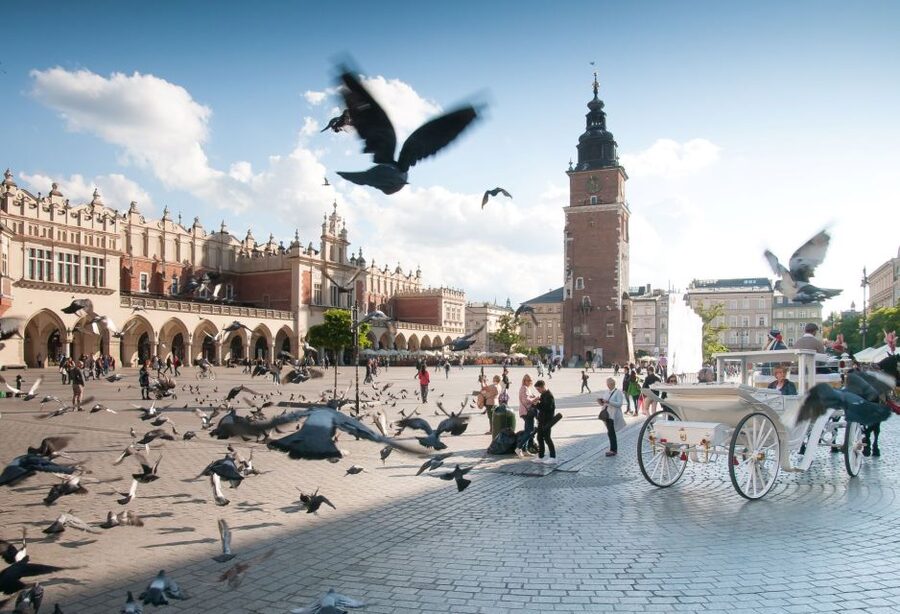
Reviewed · OLD TOWN WALKING TOURS
Krakow: Old Town Private Guided Walking Tour
Krakow’s story unfolds on foot, from the medieval gate at Florian’s Gate to royal Wawel Hill and the market stalls of Sukiennice. This private four-hour walk brings together the city’s biggest sights, plus legends such as the Wawel Dragon and the tale of Krakow’s royal processions.
I like the private format, since you can ask questions and set a pace that works for your group. I also like the route itself: it connects the Old Town, Jagiellonian University, Wawel, and the Barbican without wasting time on transport. The main consideration is that entrance fees are not included, so this is primarily a guided city walk rather than a package of museum visits.
Key points to know
- Florian’s Gate is the starting point: Your guide waits with your name on Florian Street.
- The route covers Krakow’s essential sights: Florianska Street, the Main Market Square, Collegium Maius, Wawel Hill, St. Mary’s Basilica, Sukiennice, and the Barbican.
- Wawel adds royal drama: You see the castle, cathedral, bell tower, royal tombs, catacombs, Dragon statue, and legendary cave area.
- The tour costs $16 per person: That is strong value for four hours of private guiding, but attraction entrances cost extra.
- You can book in seven languages: English, Polish, German, Spanish, Italian, Portuguese, and Russian are available.
- The walk suits a wide range of visitors: It is wheelchair accessible, private, and flexible enough for questions and conversation.
Starting at Florian’s Gate in Krakow

Your meeting point is Florian’s Gate, the historic entrance at the northern edge of Krakow’s Old Town. Look for the guide holding your name on Florian Street, and arrive ready to begin on time. This is a useful starting place because the route immediately puts you among the old city walls and the streets that lead toward the Main Market Square.
The guide leads a private group, so you do not have to follow a large crowd or wait while a guide gathers people from several hotels. That matters in Krakow, where the most rewarding parts of the Old Town are often found in the details: a carved facade, a side street, a change in street plan, or a story tied to a building.
The walk lasts four hours, which gives the guide time to explain the city instead of simply pointing at monuments. You should still expect a walking tour, not a slow museum visit. Wear comfortable shoes, since the route includes medieval streets and cobblestones.
More Old Town Walking Tours in Krakow
- Old Town Krakow & Wawel Castle Walking Tour
★ 5.0 · 1,508 reviews - Krakow: Bike Tour of Old Town, Jewish Quarter and the Ghetto
★ 4.9 · 1,155 reviews - Krakow: The Old Town Walking Tour
★ 4.8 · 794 reviews
Florianska Street and the road to the Main Market Square
The first major stretch runs along Florianska, one of Krakow’s best-known streets. It leads directly toward the Main Market Square, making it an easy way to understand the basic shape of the Old Town.
Today, Florianska is lined with shops, restaurants, and clubs. Your guide also connects the street to its more formal past, when it formed part of coronation and funeral processions for Polish monarchs. That contrast is one of the pleasures of Krakow: an ordinary shopping street can also be part of a route once used for solemn royal events.
This section is a good place to ask your guide how Krakow developed around its central square. A private walk gives you room to pause for questions rather than saving every question for the end. Guides such as Jadwiga, who led one tour in excellent Italian, have also explained less familiar parts of Krakow’s past, not just the headline monuments.
The Main Market Square, Krakow’s great public room
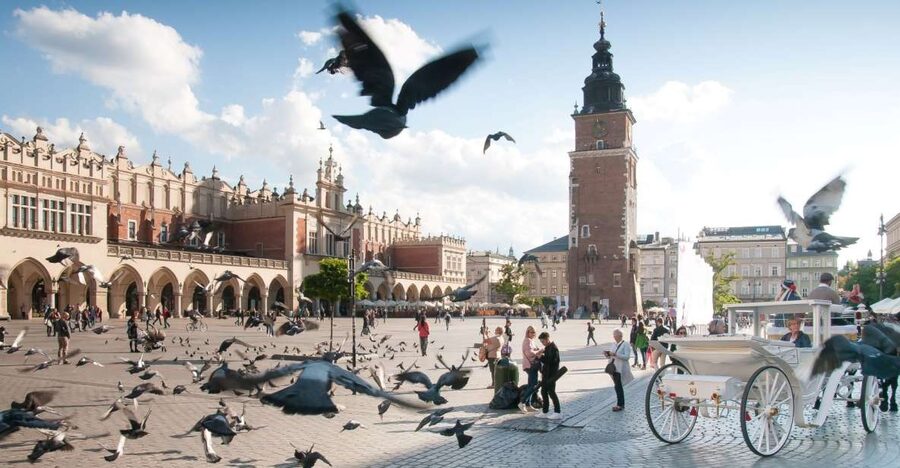
The Main Market Square is the center of the tour and the city. It is described as the largest medieval market square in Europe, and its scale becomes clear when you stand in the open space and look across to the surrounding buildings.
The square gathers many of Krakow’s most recognizable sights in one place. It is also where the city feels most social, with restaurants, shops, historic buildings, and steady movement around the open space. Your guide helps separate the important details from the visual overload.
I like having a guide here because the square can otherwise become a quick photo stop. You can learn why it mattered to trade, public ceremony, and royal life, then look at the buildings with a better sense of purpose. The guide’s job is not only to name what you see, but to explain how the square worked as part of the city.
The tradeoff is noise and activity. A private guide can keep the experience personal, but you are still in Krakow’s most popular public space. If you want quiet photographs, take a few minutes after the tour to return to the square on your own.
Collegium Maius and Poland’s oldest university
The route stops at Collegium Maius and the Jagiellonian University, identified as the oldest university in Poland and in this part of Europe. This gives the tour a welcome change of mood after the commercial energy of Florianska and the Main Market Square.
University buildings tell a different part of Krakow’s story. They show the city as a place of study and public thought, not only royal ceremony and trade. Your guide discusses the architecture and the institution’s place in local history.
Do not assume that this walking tour includes entry to university interiors. Entrance fees are not included, so ask the guide what you can see from the route and what would require a separate ticket. If you are especially interested in Collegium Maius, you may want to note it as a place to revisit after the walk.
Same country, a completely different kind of day:
- From Krakow: Auschwitz-Birkenau Guided Tour & Hotel Pickup
★ 4.5 · 33,358 reviews - From Krakow: Auschwitz-Birkenau Guided Tour & Hotel Pickup
★ 4.5 · 29,340 reviews - Krakow: Auschwitz Guided Tour with Optional Hotel Pickup
★ 4.5 · 15,280 reviews - Krakow–Zakopane: Cable Car, Chocholow Baths, Cheese & Vodka
★ 5.0 · 10,720 reviews
Wawel Hill, royal tombs, and the cathedral
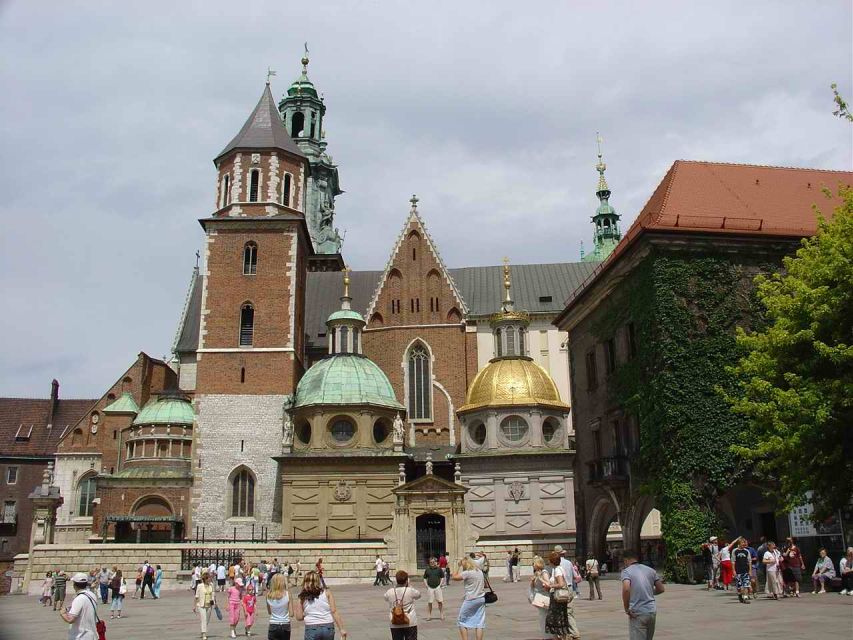
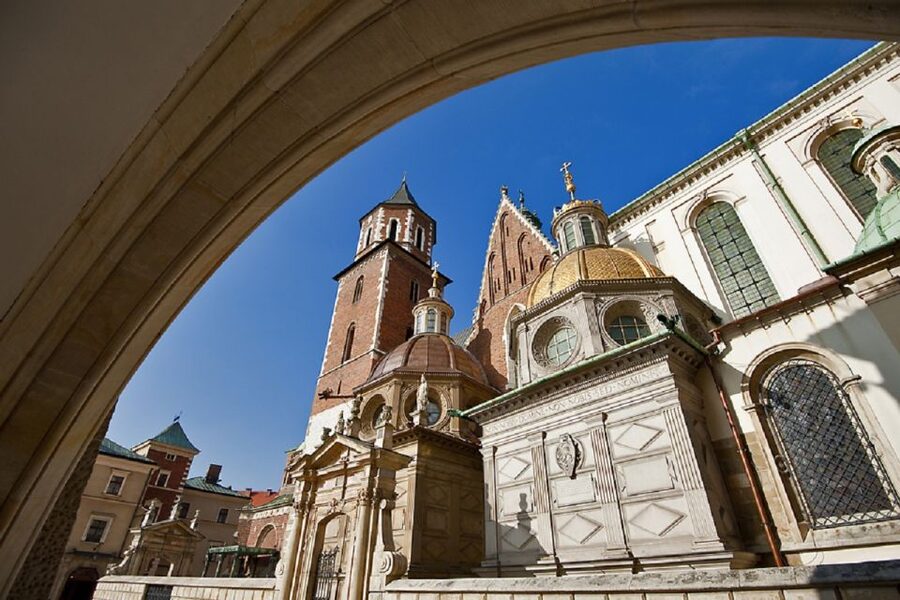
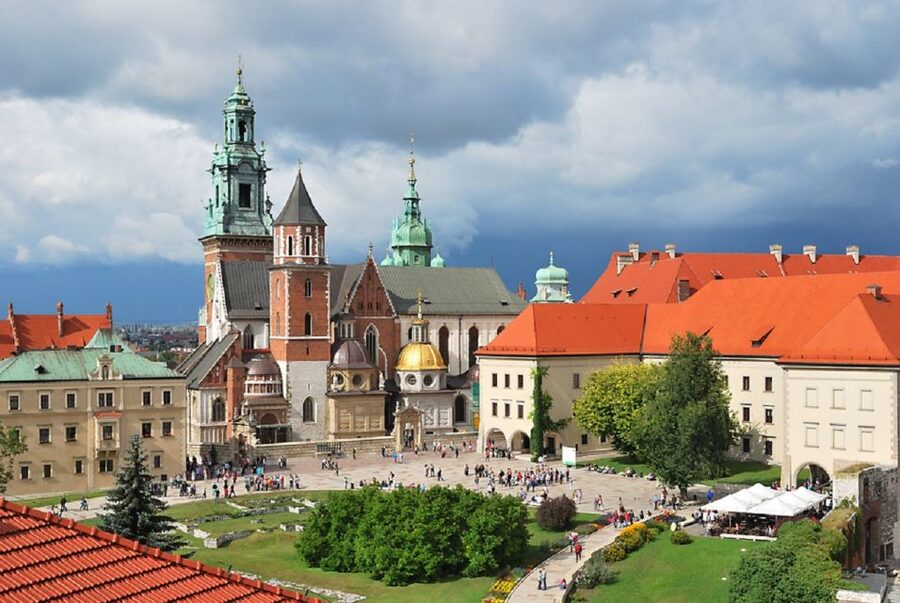
Wawel Hill is the emotional center of the tour. It has served as a seat of power in several forms: legendary, ducal, princely, ecclesiastical, and royal. The guide links the hill to Krak, or Krakus, the mythical founder of the stronghold, then moves from legend into documented Polish history.
You see the Wawel Castle and the cathedral, including the bell tower and the catacomb area associated with Polish monarchs. The royal tombs give the hill weight. This is not simply a fine viewpoint or attractive group of buildings. It is the place where Poland’s political and religious story gathered for centuries.
The tour information describes these sights as part of the route, but entrance fees are separate. That means you should treat the four-hour experience as an escorted introduction to Wawel unless you arrange and pay for interior access yourself. The guide can still make the exterior spaces meaningful, but visitors hoping for a full castle or cathedral interior tour should check the available entry options before booking.
Wawel also rewards a slower pace, and this is where a private group can be useful. You can ask about the monarchs buried here, the relationship between the castle and cathedral, and how the hill changed from a royal center into a major historic site.
The Wawel Dragon and the Vistula-side legend
Near the hill, you see the six-metre Wawel Dragon statue and the cave area beside the Vistula. The legend says the dragon lived in the cave, frightened local people, and demanded cattle as offerings. In another version, the demanded offerings were virgins.
The statue is a lighter moment in a tour that includes royal burials and difficult chapters of Polish history. It is also a practical photo stop, especially for families and anyone who enjoys the city’s folklore.
The dragon story helps explain why Krakow’s identity is not built only on grand churches and rulers. Local legends remain part of the city’s public life. You can look at the statue, hear the competing versions of the tale, and then connect the story to the river and hill that make the setting memorable.
St. Mary’s Basilica and the bugle call
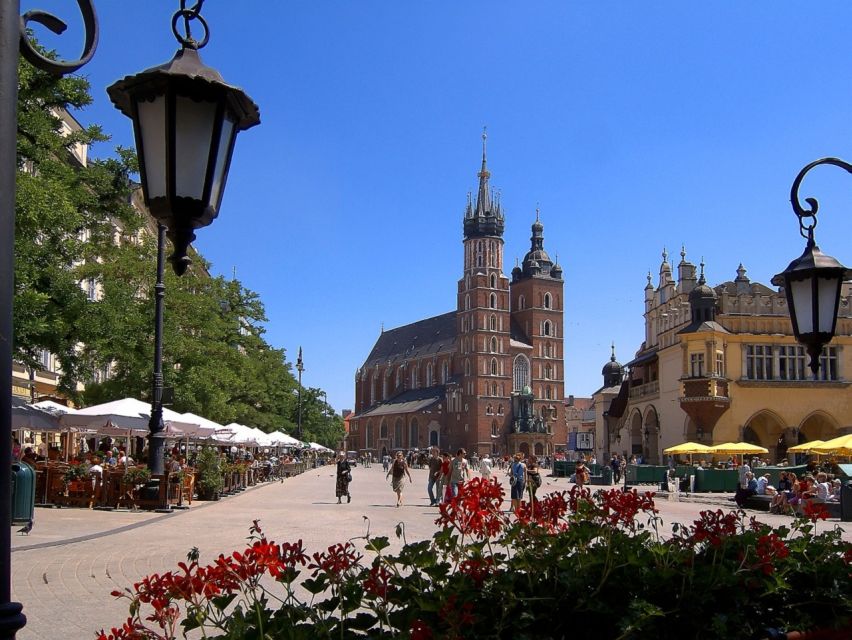
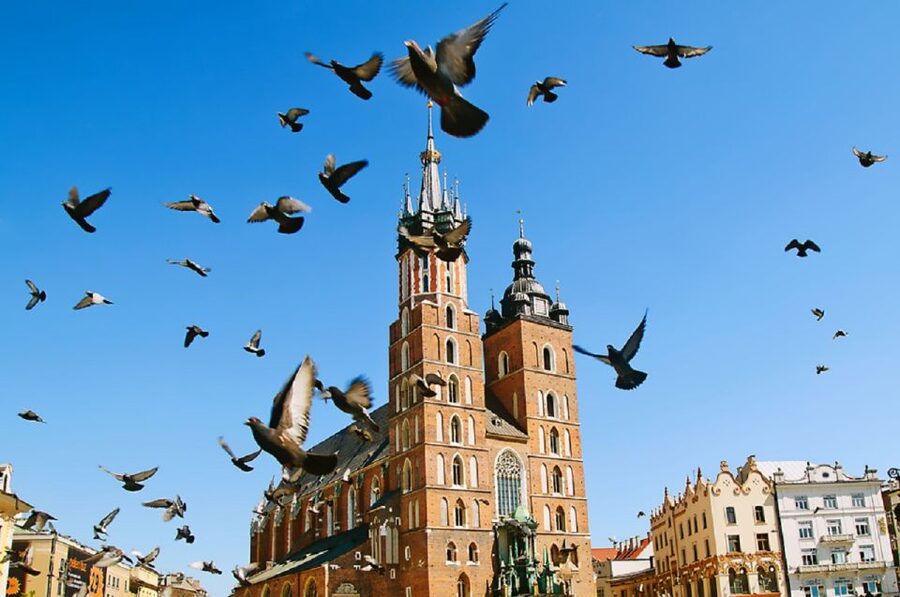
Back in the Old Town, the walk continues through medieval streets to St. Mary’s Basilica. Its high altar was made by Veit Stoss, also known as Wit Stwosz, and the basilica is associated with a famous bugle call. The ceiling murals by Jan Matejko add another strong visual feature.
This is one of the tour’s most rewarding stops because several parts of Krakow’s culture meet in one building: religious art, civic tradition, music, and national memory. The guide can give you a framework for looking at the altar and murals, rather than leaving you to treat them as a quick church visit.
As with Wawel and Collegium Maius, keep the entrance policy in mind. The tour price covers the guide, not attraction tickets. The route may show you the basilica and explain its key features, but any paid interior access is your responsibility.
Sukiennice, Krakow’s historic shopping hall
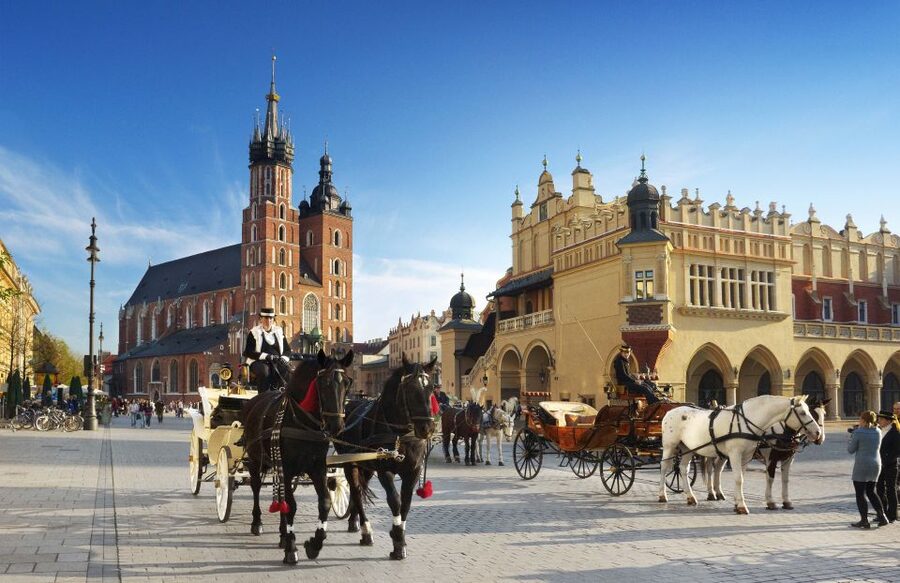
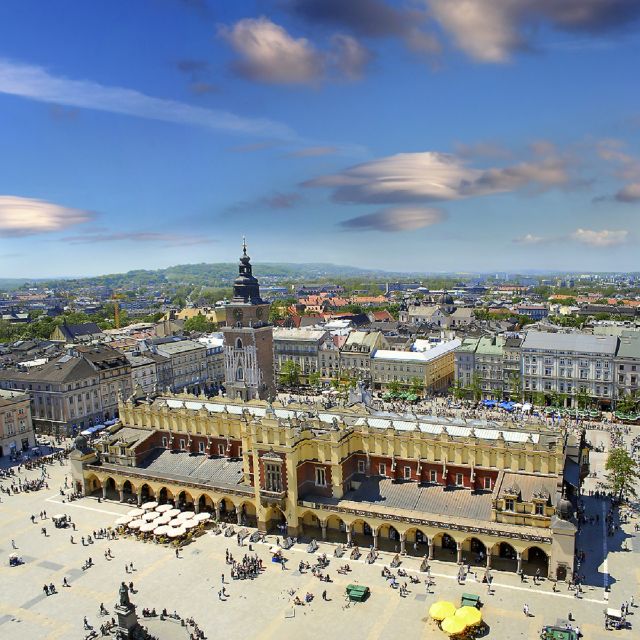
Sukiennice, or the Cloth Hall, occupies the middle of the Main Market Square. It is one of Krakow’s clearest symbols and was once the city’s main commercial center. Today, its stalls offer typical Krakow souvenirs.
This stop works well after the cultural weight of St. Mary’s Basilica. You can browse amber, crafts, and other local-style keepsakes, though you should compare prices and remember that a historic setting does not automatically make every item a bargain.
The building also shows how Krakow’s past remains part of daily commerce. The Cloth Hall is not only an old facade for photographs. It continues to function as a place where people shop, meet, and pass through the center of the city.
You will have time to take a photograph of Sukiennice, but the tour is not a dedicated shopping excursion. If you want to buy gifts, ask the guide for practical advice and plan to return after the formal walk ends. The guide can also point out which parts of the market are most useful for browsing.
The Barbican and Krakow’s old defenses
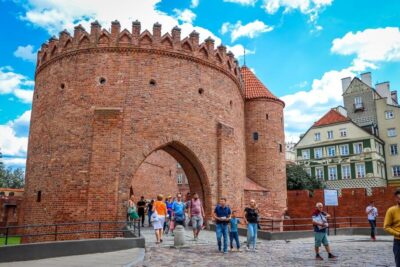
The final major sight is the Barbican, the rounded fortress connected with Krakow’s former defensive walls. Its heavy masonry makes a sharp contrast with the elegant market buildings and university courtyards seen earlier.
The Barbican helps you picture the Old Town as a protected medieval settlement rather than only a handsome historic district. It also brings the route back toward Florian’s Gate, creating a natural ending for a walk that began at the city’s northern entrance.
You should expect an exterior visit unless you purchase a separate entrance. The listed price does not cover admission fees. Even from outside, the Barbican is a useful stop because the guide can explain how the gate, walls, and fortress worked together.
After this point, you part from the guide and continue on your own. That is a practical design. You finish with a clear mental map of central Krakow and can choose your next stop instead of being carried directly to another scheduled activity.
What $16 buys you, and what it does not
At $16 per person, this tour offers good value if you want context and a private guide rather than simply a route map. Four hours is a substantial amount of time for a central Krakow walk, and the itinerary includes the city’s main historic sights.
The price covers the guide only. It does not include entrance fees, so your final cost can rise if you decide to enter Wawel attractions, the cathedral areas, Collegium Maius, or other paid sites. That is not a flaw, but you should budget for it instead of assuming the advertised price covers every interior.
The value is strongest for first-time visitors, families, and small groups who want to ask questions freely. It is also useful early in a Krakow stay because the route introduces the Old Town, Wawel Hill, and the main public spaces in one session.
If you already know Krakow well, the standard sights may feel familiar. In that case, the private format matters most if you want historical interpretation, a guide in your preferred language, or a chance to ask about lesser-known parts of the city.
Guides, languages, and the tone of the walk
The tour is available in English, Polish, German, Spanish, Italian, Portuguese, and Russian. That is important for a history-heavy walk, since a clear explanation makes a major difference when the route moves between Polish monarchs, university history, church art, and local legends.
The named guides in the feedback include Ranadaa, Agnesz, Enrique, Jadwiga, and other guides praised for clear explanations, good pacing, warmth, and flexibility. One Italian-language guide answered questions and helped a couple arrange another tour by translating into Polish. Another guide suggested a restaurant for the evening.
Those details point to a useful strength: the experience can extend beyond a memorized list of monuments. A private guide may help you plan the rest of your day, answer practical questions, and adjust the conversation to your interests. Still, guide quality can vary from person to person, as it does with any human-led tour. The overall rating is 4.1 from 12 reviews, while the supplied comments are strongly positive, especially about explanation, pacing, language skills, and personal attention.
Who should book this Krakow walking tour?
I would recommend it to first-time visitors who want a firm introduction to Krakow in half a day. It is also a good fit for families and small groups, since a private guide can respond to questions and avoid the rigid feel of a large group.
History fans will appreciate the range. The route covers medieval city planning, university life, royal power, church art, military defenses, and folklore. One tour also brought in Krakow’s grim Second World War story, showing that a good guide may connect the older monuments to the city’s later history, even though the listed route focuses on the Old Town and Wawel.
The walk is wheelchair accessible, but the route still includes medieval streets and cobblestones. If mobility is a concern, discuss the pace and exact route with the provider before the tour. The private setup should make adjustments easier, but the supplied details do not promise access to every historic interior.
Practical advice before you go
Meet at Florian’s Gate with enough time to identify your guide. Since the guide will be waiting with your name, arriving late can disrupt a private four-hour schedule.
Wear shoes suitable for a long city walk and check the weather before leaving. The experience is outdoors for much of its length, and the route includes open squares, streets, the hill at Wawel, and the area by the Vistula.
Decide in advance which interiors matter most to you. Since entrance fees are not included, you can use the tour as a broad introduction, then return to one or two sights for a fuller visit. This often makes better use of your time than trying to see every interior during one busy morning.
The booking terms are flexible: you can cancel up to 24 hours ahead for a full refund, and reserve now while paying later. That is useful if your Krakow plans are still shifting.
Should you book it?
Book this tour if you want a private, well-paced introduction to Krakow’s essential sights for $16 per person. The route is broad, the four-hour length gives the guide room to explain the city, and the available languages make it accessible to many visitors.
Choose something else if you want a tour focused mainly on museum interiors or included admission tickets. Here, you pay extra for entry, and the real product is the guide’s interpretation of the Old Town, Wawel Hill, royal tombs, basilicas, legends, and city defenses.
For most first visits, I would use this as a foundation. Let the guide show you how Krakow fits together, ask about the places that catch your attention, then spend the rest of your day returning to the interiors or neighborhoods you want to explore more closely.
FAQ
How long does the Krakow Old Town private walking tour last?
The tour lasts four hours, or roughly half a day. Starting times vary, so check availability when booking.
Where does the tour meet?
The guide waits for you by Florian’s Gate on Florian Street, holding a sign with your name.
What sights are included in the walking route?
The route includes Florianska Street, the Main Market Square, Collegium Maius, Jagiellonian University, Wawel Hill, Wawel Castle, the cathedral, royal tombs and catacombs, the Wawel Dragon, St. Mary’s Basilica, Sukiennice, the old defensive walls, and the Barbican.
Are entrance fees included?
No. The tour includes the guide, but entrance fees are not included.
Which languages are available?
The tour is offered in English, Polish, German, Spanish, Italian, Portuguese, and Russian.
Is the tour private and wheelchair accessible?
Yes. It is designed for a private group and is listed as wheelchair accessible.
More Walking Tours in Krakow
- Creepy Krakow: 2-Hour City Walking Tour
★ 4.7 · 1,131 reviews - Krakow: Kazimierz Jewish Quarter Walking Tour
★ 4.8 · 571 reviews - Kraków: Old Town & Wawel Castle Walking Tour in English
★ 4.8 · 532 reviews - Krakow: Evening Walking Tour with Spooky Stories
★ 4.7 · 500 reviews
Just added around Krakow
- Tour to Wadowice: Hometown of Pope Saint John Paul II★ 4.6 · 12 reviews
- The Jewish Quarter – Walking Tour★ 5.0 · 4 reviews
- From Kraków; to Białka Thermal Baths private tour★ 5.0 · 5 reviews
- St. Mary’s Basilica and more – a short walk with a guide★ 4.7 · 56 reviews
- Krakow: Auschwitz-Birkenau and Wieliczka Salt Mine Day Trip★ 4.7 · 84 reviews
- Krakow: Skip-the-Line Wawel Castle & Old Town Guided Tour★ 4.9 · 23 reviews
- Shooting Range Experience!★ 4.8 · 66 reviews
- Krakow: Schindler’s Factory Guided Tour★ 4.2 · 12 reviews
Old Town Walking Tours, compared.

Bike Tour of Old Town, Jewish Quarter and the Ghetto
Read our review →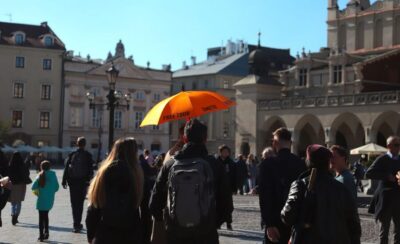

Sightseeing EcoCruise around the Old Town of Gdansk
Read our review →
Browse the lists this tour appears in