
Reviewed · OLD TOWN WALKING TOURS
Warsaw: Old Town Guided Walking Tour
Warsaw’s Old Town looks centuries old, but much of what you see was rebuilt after World War II. That contrast gives this walk its real force: pretty squares and royal buildings sit beside stories of destruction, Jewish life, resistance, and a city rebuilt almost from the ground up. The tour connects the beauty to the loss, rather than treating the Old Town as a simple photo stop.
I like the mix of major sights and quieter paths, and I like the guides’ balance of humor with serious history. Anthony, Antek, Thomas, and Anton are among the guides praised for clear explanations, personal stories, and good local advice. The main consideration is pace: two hours covers a lot, and a group of up to 25 to 30 people can feel brisk at busy stops.
Key points at a glance
- Rebuilt Old Town: See a UNESCO-listed center reconstructed after wartime destruction.
- Royal starting point: Begin beside the 22-meter Sigismund’s Column on Castle Square.
- History beyond the postcard: Connect the Royal Castle, Jewish heritage, and the 1944 Warsaw Uprising.
- Useful local advice: Finish with suggestions for Polish food, cafés, and a traditional pastry shop.
- Good guide style: Expect clear storytelling, humor, personal anecdotes, and time for questions.
- Practical value: Two hours and a $13 reservation fee make this a useful first look at Warsaw.
Why Warsaw Old Town needs a guided walk
At first glance, Warsaw’s Old Town can seem easy to understand. You have Castle Square, colorful buildings around the Market Square, church towers, old defensive walls, and the river view. But the central fact is easy to miss without explanation: this historic quarter was almost entirely destroyed during World War II and rebuilt afterward.
That makes the tour different from a stroll through an untouched medieval center. Your guide can point out how Warsaw recreated lost buildings, used old plans and paintings, and treated the restoration as part of the city’s identity. The result is not only a pleasant old quarter. It is also a powerful account of survival and civic pride.
The history is handled across several periods. You hear about Polish kings and the Royal Castle, the Jewish population that once formed a major part of Warsaw’s life, the Jewish Uprising of 1943, and the Warsaw Uprising of 1944. These are heavy subjects, but the guides are praised for making them understandable without turning the entire walk into a lecture.
I would use this tour early in a Warsaw visit. It gives you a map of the center, explains the symbols you will keep seeing, and ends with practical suggestions for what to eat and where to continue walking.
More Old Town Walking Tours in Warsaw
- Warsaw: Chopin Concert in the Old Town
★ 4.8 · 2,287 reviews - Warsaw: Old Town Highlights Walking Tour in English
★ 4.7 · 1,516 reviews - Warsaw: Chopin Concert at Historical Venue in Old Town
★ 4.7 · 445 reviews
Starting at Sigismund’s Column and Castle Square
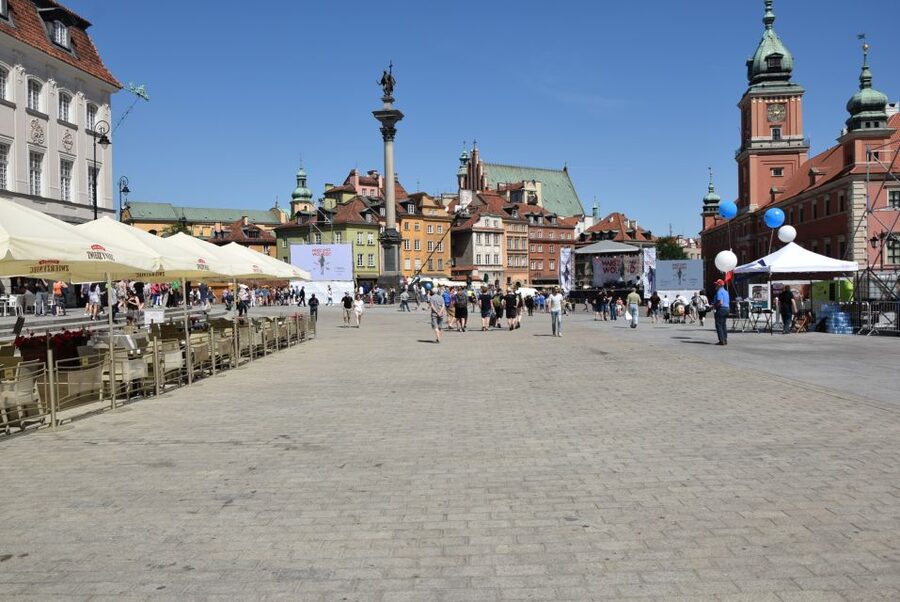
Meet your guide in front of the tall Sigismund’s Column on Castle Square. The column rises 22 meters and is one of the easiest meeting points in central Warsaw. Look for the white umbrella, and arrive five to ten minutes before the start.
Castle Square is a fitting place to begin. The Royal Castle is nearby, and the square opens toward the Old Town streets. Your guide sets the political and royal background here before leading you into the compact historic center.
The tour includes the Royal Castle Gardens. This is a welcome change of pace from the square and its crowds. The gardens give you a calmer view of the royal setting and help explain how the castle functioned as a center of power.
The schedule names the Royal Castle as a visit, but this is a walking tour, not a dedicated interior tour. You should think of this section as an introduction to the castle and its setting rather than a substitute for buying an admission ticket and spending time inside.
The Market Square and Warsaw Mermaid
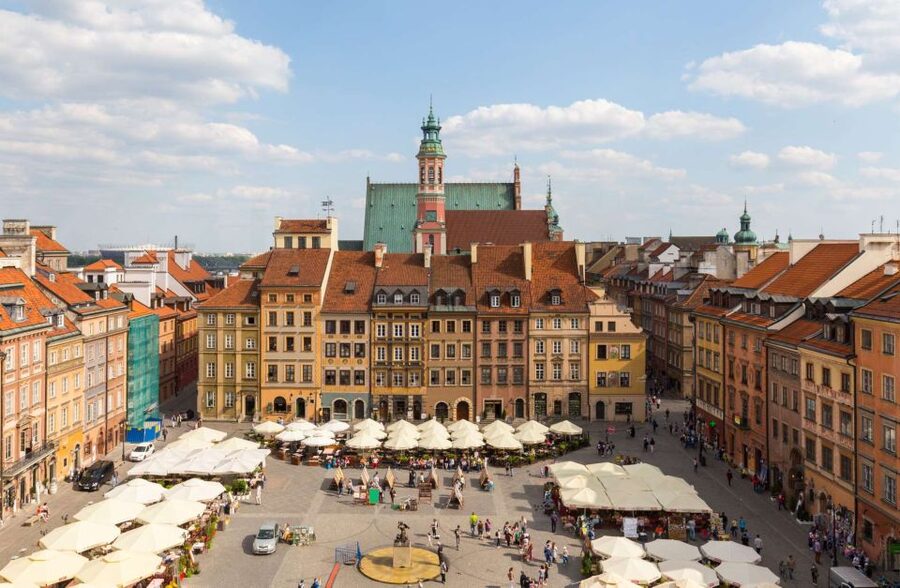
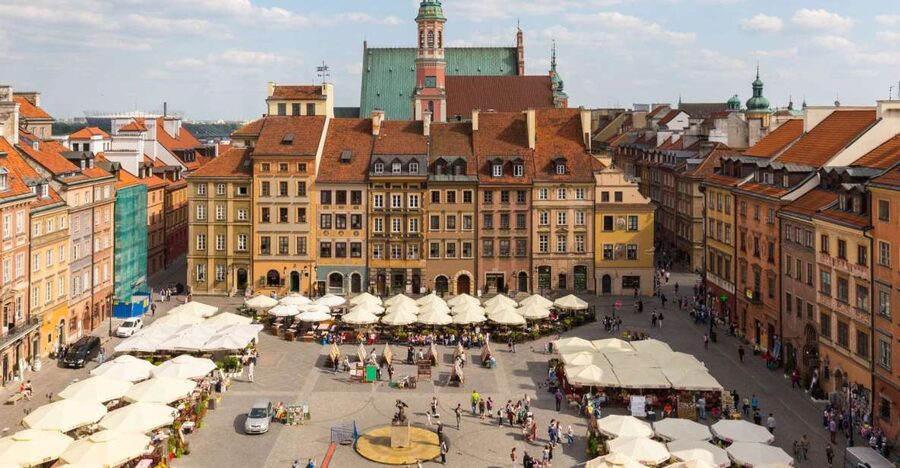
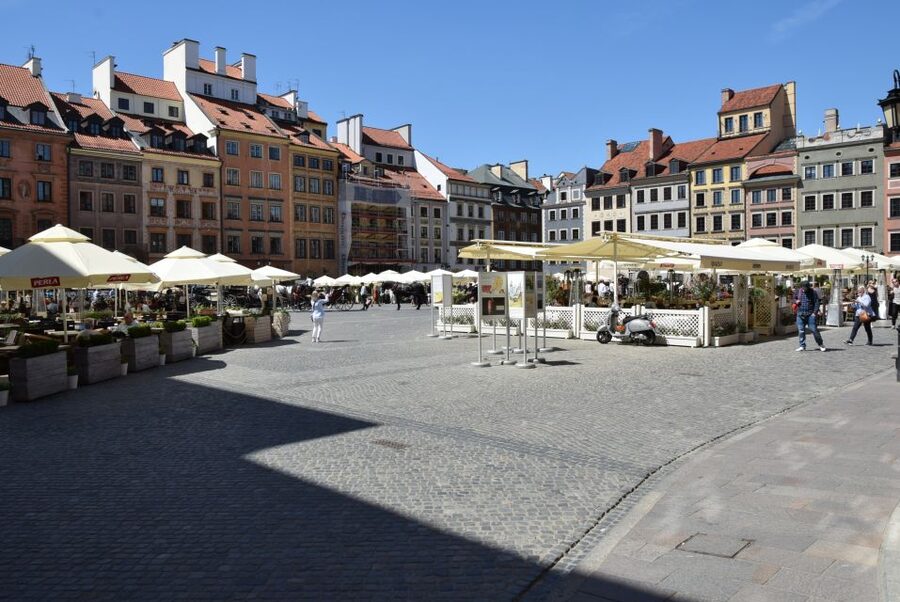
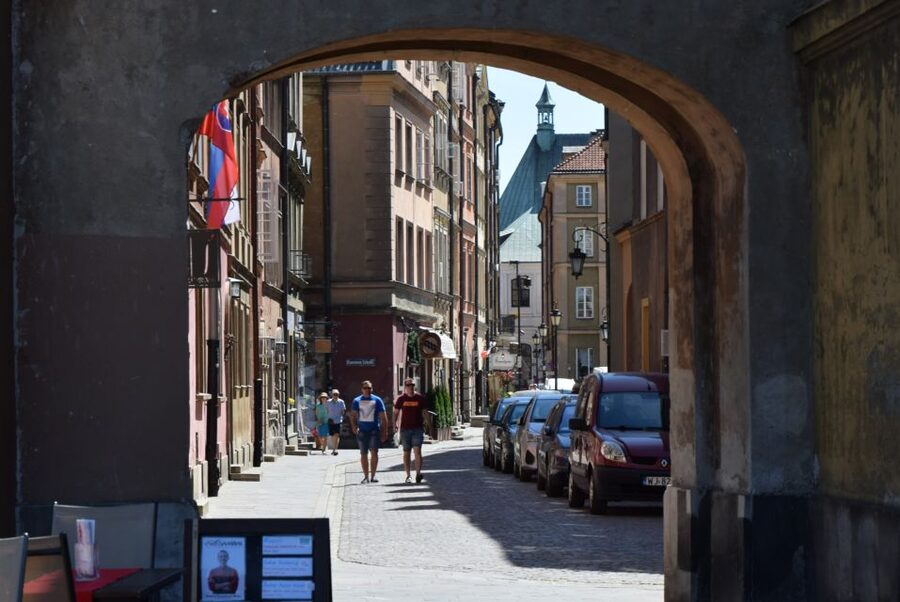
From the royal area, the walk moves into the Old Town Market Square. This is the center of the district, with colorful façades, restaurants, and the statue of the Warsaw Mermaid. You will have the obvious chance to take a picture with the mermaid, but the guide adds the meaning behind the city symbol.
The square is compact enough to explore on foot, yet it rewards a closer look. Your guide may draw your attention to the rebuilt façades and explain how the appearance of the square was restored after the war. That context matters. Without it, you may assume every building is an untouched survivor.
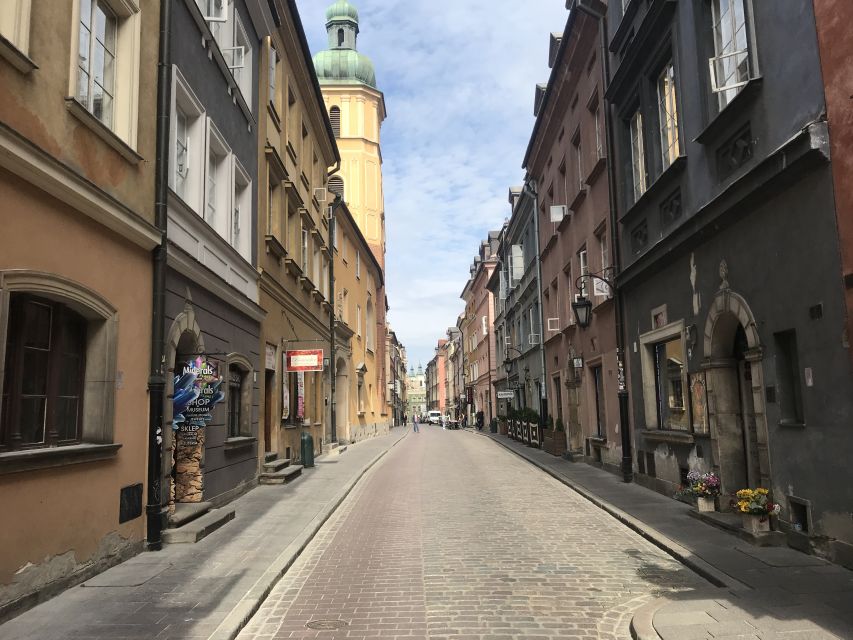
One appealing feature is the use of less crowded routes. The guides know side paths through the Old Town, so the walk is not limited to the busiest photo spots. Still, the Market Square can be crowded, especially during popular visiting hours, so keep close to the white umbrella and listen for meeting instructions.
The narrowest house façade is another small but memorable stop. It is an architectural oddity that adds some lightness to a tour otherwise filled with war and loss. I like these details because they make the walk feel like an exploration of a real neighborhood, not only a sequence of monuments.
St. John’s Cathedral and the Jesuit Church
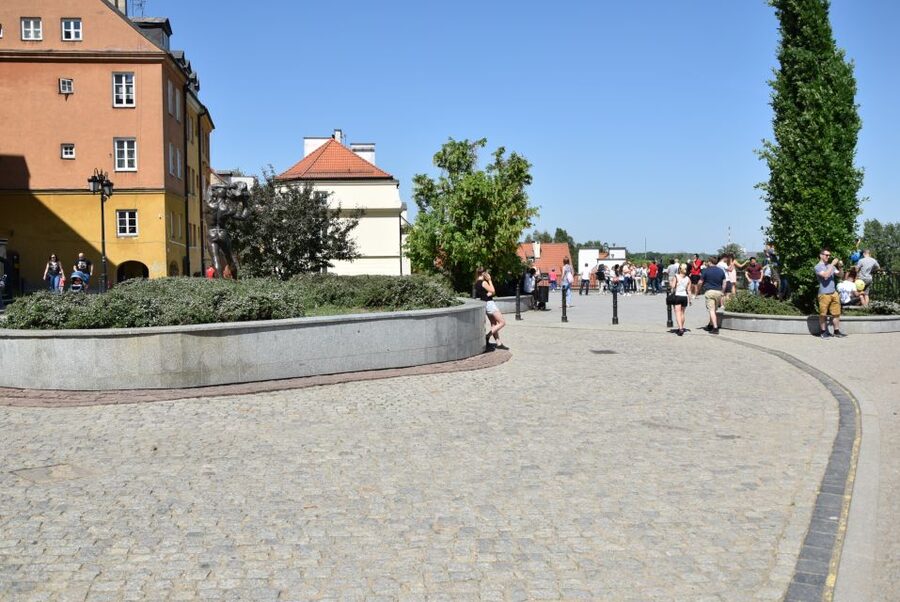
The religious stops give the tour a chance to explain Warsaw’s older identity. St. John’s Cathedral and the Jesuit Church are close to the main Old Town route, but each has its own character and story.
At St. John’s, you can expect an explanation of the cathedral’s place in Polish public and religious life. The Jesuit Church offers a second architectural and historical reference point. The tour is not designed as a long church study, so the emphasis is likely to be on the buildings’ role in the city and on the events connected with them.
This part suits you if you like to understand how a city’s buildings fit together. It is less useful if you want extended quiet time inside each church. The walk keeps moving, and the two-hour limit means the guide must choose the most important points.
Same country, a completely different kind of day:
- Warsaw: Traditional Galar Cruise on The Vistula River
★ 4.6 · 1,640 reviews - Warsaw Concert: Chopin – Painted by Candlelights with Wine
★ 4.8 · 1,442 reviews - Warsaw: City Sightseeing Hop-On Hop-Off Bus Tour
★ 3.6 · 1,415 reviews - Warsaw: POLIN Museum of the History of Polish Jews Ticket
★ 4.7 · 1,142 reviews
City walls, the Barbican, and the river view
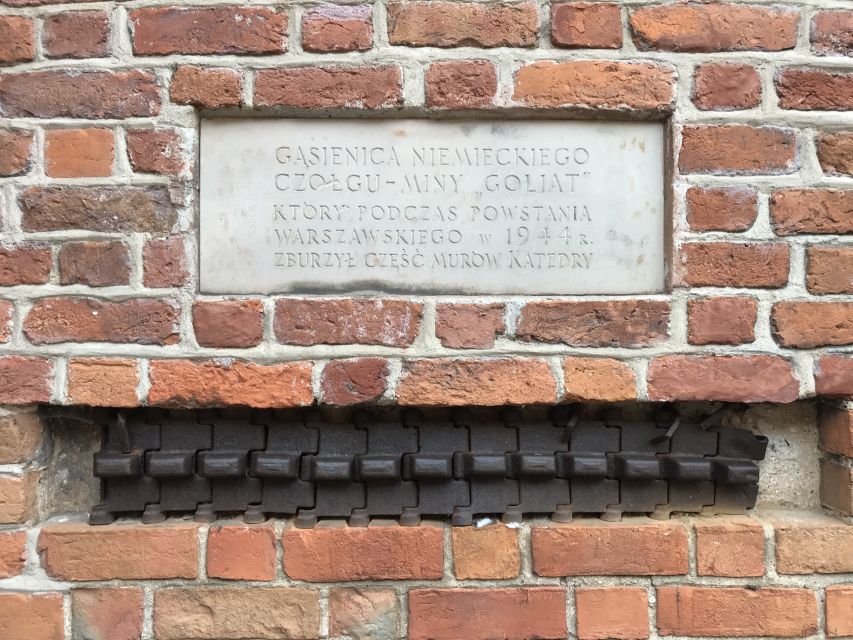
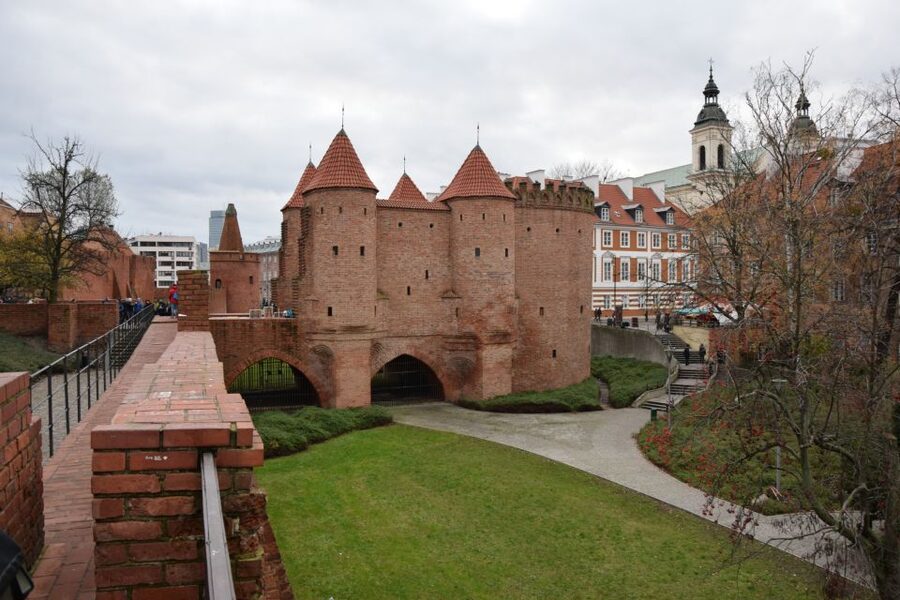
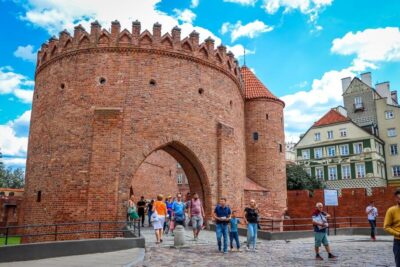
The remaining city wall and Barbican show Warsaw in defensive mode. These structures help you picture the limits of the old city and explain why the Old Town developed as a compact, protected settlement.
The Barbican is one of the route’s most recognizable architectural features. It is also a good place for your guide to shift from royal and religious history to the practical life of a fortified city. Look for the change in scale as the narrow streets meet the heavier defensive structures.
The tour also includes a viewing terrace in the Old Town. From here, you can take in the river and the wider city. The view offers a useful pause after the close streets and crowded squares, and it gives you a sense of Warsaw beyond the reconstructed center.
Bring shoes you can comfortably walk in. The route covers several districts and includes standing at outdoor sites, so comfort matters more than dressing for a formal castle visit. In cold or wet weather, the experience can be demanding. Yet guides such as Anthony have been praised for watching the group’s comfort, stopping in shade during hot weather, and waiting for slower walkers.
New Town and Marie Curie’s Warsaw
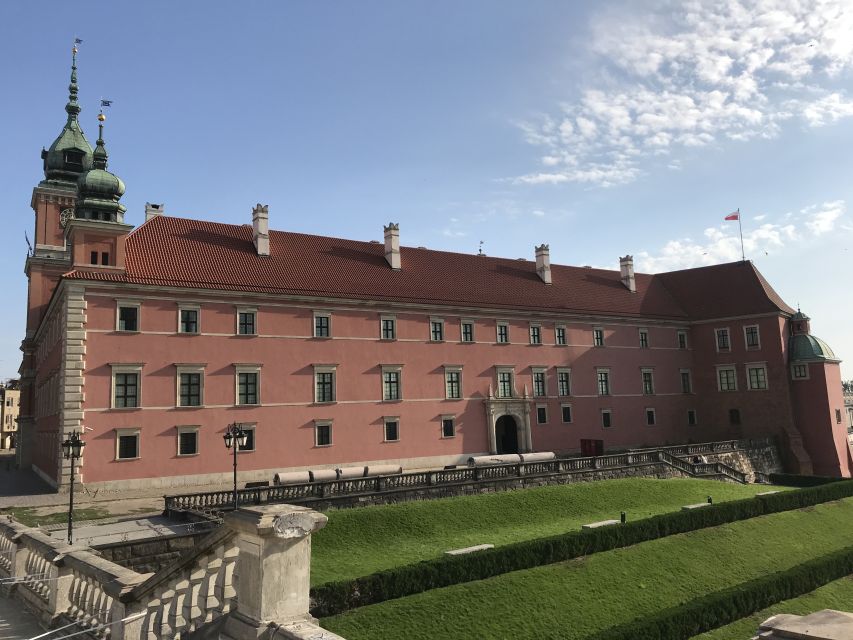
The walk continues into New Town, often called Nowe Miasto. This area gives you another piece of Warsaw’s older street pattern and keeps the tour from ending with only the classic Old Town sights.
One special point is the birthplace of Marie Curie. The stop links Warsaw to one of its most famous scientists and adds a personal story to the city’s intellectual past. You will not get a full museum visit from this walking tour, but you do gain a location and a reason to explore more on your own.
New Town also helps you see how close Warsaw’s historic districts are to one another. The route is broad in subject, but not scattered across the whole city. That is one reason the two-hour format works: the sights are connected on foot.
Jewish heritage and the Ghetto boundary markers
The section on Jewish Warsaw is one of the most important parts of the walk. The Ghetto Wall Monument and boundary markers point to a community that once shaped the city’s culture, commerce, and daily life, then suffered under Nazi persecution.
Your guide explains the Jewish Uprising of 1943 and the wartime conditions behind it. This is difficult history, and the value of having a guide is clear here. A marker or monument alone cannot explain the scale of what happened or how the sites relate to the city around them.
The tour’s treatment of Jewish history is part of a larger story about Warsaw, not an isolated stop. You hear how the war changed the city, how Jewish residents were targeted, and how the surviving traces fit into today’s streets.
Allow yourself to slow down emotionally here. The route covers a lot, but you do not need to treat every monument as a quick photograph. The strongest guides, including Thomas and Antek, are described as careful with tragic subjects while still keeping the group engaged.
The Warsaw Uprising Monument at plac Krasińskich
The walk finishes at the Warsaw Uprising Monument on plac Krasińskich. A 15-minute guided explanation is scheduled here, making it the one stop with a clearly defined block of storytelling.
The Warsaw Uprising of 1944 is central to understanding the city’s modern character. Your guide explains what the uprising was, why it happened, and how the fighting and its aftermath affected Warsaw. The monument gives the account a physical focus, with sculpted figures emerging into action.
This is also where the tour’s themes come together. The royal city, the Jewish community, wartime destruction, and postwar rebuilding are not separate chapters. They form the difficult story behind the capital you see today.
The tour ends at plac Krasińskich, near the monument. That is useful if you want to continue exploring Warsaw’s wartime history, but the experience does not return you to Castle Square. Note the ending point before you book, especially if you have a meal reservation or another timed activity immediately afterward.
How the guides make the two hours work
The strongest feature of this walk is the guide style. Anthony and Antek are repeatedly praised for combining humor with solid explanations. Thomas is noted for presenting Warsaw’s recent past in a compelling and respectful way. Anton is described as friendly, approachable, and ready to answer questions.
Personal stories can make the historical material easier to grasp. One guide used family experiences to connect the past with present-day Warsaw, while others added anecdotes that made the facts easier to remember. You should expect an active presentation rather than a silent walk between landmarks.
The guides also offer practical advice for the rest of your stay. Ask about Polish restaurants, cafés, and the traditional pastry shop in the Old Town. This is especially useful on your first day, when you may want a quick answer to the basic question of where to eat next.
English and German tours are offered. The group limit is listed as 25 to 30 people, which is modest enough for questions but not truly private. If you want a private, slow-paced history lesson, this is not that product. If you want company and a strong overview at a low price, the format makes sense.
Is $13 good value?
At $13 per person, this is a low-cost way to orient yourself in Warsaw. You receive a two-hour guided walk covering the Old Town, Royal Castle area, New Town, Jewish heritage sites, and the Warsaw Uprising Monument. You also get local food suggestions that can save time later.
There is an important pricing detail. This is presented as a pay-as-you-wish tour, and the reservation fee covers your booking and the guide’s payment. That wording can feel unclear if you expect the $13 to be the entire traditional tour price. Read the payment explanation carefully so you understand what is included and whether you are expected to reward the guide separately.
The value depends on how you use it. You are not paying for castle admission, a meal, or transport. You are paying for a guide who explains why the places matter and helps you read the city. For a first visit, that context can be worth far more than the fee.
Who should book this walk?
I would recommend it to first-time visitors, history fans, and anyone with only a short stay in Warsaw. It is also a good fit if you want to understand the Polish view of wartime destruction and rebuilding instead of seeing only attractive streets.
Families and mixed-age groups can manage it if everyone is comfortable walking and standing for two hours. One guide was praised for waiting for a slower parent, but you should still expect a fairly fast-moving route because many sites are included.
This may be less suitable if you want a relaxed photography walk, extensive church interiors, or a long visit inside the Royal Castle. It also may not be ideal in freezing rain or snow. Recent walks have gone ahead in cold, snowy, and wet conditions, with the guides keeping spirits up, but outdoor comfort remains your responsibility.
Book an English or German departure according to your needs, and use the tour early enough in your trip to act on the restaurant and café tips. Keep the rest of the day flexible if you want to pause at the sites that affect you most.
Should you book the Warsaw Old Town walk?
Yes, if you want a compact, serious introduction to Warsaw with enough humor to keep the history moving. The combination of royal landmarks, reconstructed Old Town streets, Jewish heritage, and the 1944 Uprising gives you a much fuller picture than a simple castle-and-market stroll.
I would book it for the guide-led context, the hidden side paths, and the final monument explanation. Just remember that two hours is a brisk survey, the group may reach 25 to 30 people, and the $13 fee has a pay-as-you-wish arrangement that you should understand before arrival.
FAQ
Where does the Warsaw Old Town walking tour start?
It starts in Castle Square, in front of the 22-meter-high Sigismund’s Column.
How do I recognize the guide?
Look for a guide holding a white umbrella. Arriving five to ten minutes before the start is sufficient.
Where does the tour finish?
The walk finishes at plac Krasińskich 01, near the Warsaw Uprising Monument.
How long does the tour last?
The tour lasts two hours.
Which languages are available?
The live tour is available in English and German.
What sights are covered?
The walk includes the Royal Castle Gardens, the Royal Castle area, Old Town Market Square, the narrowest house façade, St. John’s Cathedral, the Jesuit Church, the city wall, the Barbican, a viewing terrace, New Town, Marie Curie’s birthplace, Warsaw Ghetto boundary markers, and the Warsaw Uprising Monument.
What does the $13 payment cover?
The $13 payment covers the reservation fee and the guide’s payment as part of the general pay-as-you-wish tour arrangement.
Can I cancel the booking?
You can cancel up to 24 hours in advance for a full refund. You can also reserve now and pay later.
More Walking Tours in Warsaw
- Half-Day Polish Food Walking Tour with Guide and Dinner
★ 4.5 · 381 reviews - Warsaw: Warsaw Ghetto Private Walking Tour with Hotel Pickup
★ 4.9 · 369 reviews - Old Town Warsaw Walking Tour
★ 4.5 · 333 reviews - Warsaw: Jewish History Guided Walking Tour in English
★ 4.7 · 324 reviews
Just added around Warsaw
- Taste of Poland, food tour and guided walk with 12 tasting★ 5.0 · 3 reviews
- Skip-the-Line Warsaw Royal Castle Private Guided Tour★ 5.0 · 4 reviews
- Secrets of Warsaw 4-hour Bike Tour★ 5.0 · 25 reviews
- Warsaw: Live Show at Sabat Theatre★ 4.5 · 11 reviews
- Private Warsaw City Tour★ 4.9 · 4 reviews
- Warsaw: WWII Private Tour by Retro Minibus with Hotel Pickup★ 5.0 · 7 reviews
- Private Tour From Warsaw: Łowicz Mazovian Countryside★ 5.0 · 10 reviews
- Packrafting kayaking guided tour Vistula river Warsaw Poland★ 4.5 · 14 reviews
Old Town Walking Tours, compared.

Bike Tour of Old Town, Jewish Quarter and the Ghetto
Read our review →


Sightseeing EcoCruise around the Old Town of Gdansk
Read our review →
Old Town & Wawel Castle Walking Tour in English
Read our review →Browse the lists this tour appears in