
Reviewed · CITY TOURS
Nowa Huta – a guided tour of a utopian socialist city
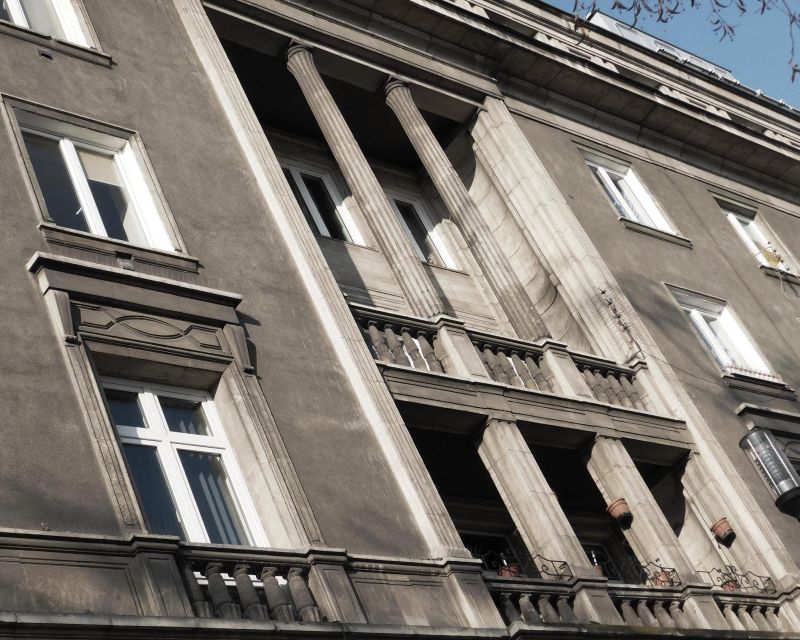
Nowa Huta was built to challenge old Kraków. Its grand avenues, workers’ housing, steel mill, and carefully planned civic spaces were meant to create a new socialist citizen, far from the old city’s churches and traditions. This tour shows you that political idea in brick, concrete, and broad open streets, then follows the resistance that pushed back.
I like the clear historical storyline, which connects Stalinist planning with the later battle for a church and the legacy of Solidarność. I also like the route itself: Central Square, Avenue of Roses, an IS-2 tank, the church, and Ludowy Theatre give you several different ways to read Nowa Huta. A possible drawback is transport: getting from Kraków city centre to the meeting point is not included, so you need to arrange that yourself.
Key points
- Central Square reveals the city’s grand socialist plan, including its former Lenin-era identity.
- Avenue of Roses offers the most representative view of Nowa Huta’s monumental design.
- The battle for a cross and the first church explain why religion mattered so much in a planned godless city.
- The IS-2 tank monument connects the district to its military and industrial age.
- Ludowy Theatre adds a cultural stop to a route otherwise shaped by politics, housing, and protest.
- A licensed private English-speaking guide leads the two-hour walk and returns you to the Solidarity monument.
Why Nowa Huta matters beyond its concrete facades
If you only see Kraków’s Old Town, you get medieval streets, churches, royal history, and polished squares. Nowa Huta gives you the other Kraków, a postwar project built around steel production and communist social engineering.
The name Nowa Huta means new steel mill. The steel works came first in the political imagination, followed by housing for the people who would work there. The district was intended to contrast sharply with old Kraków, which the communist authorities associated with faith, inherited customs, and anti-socialist feeling.
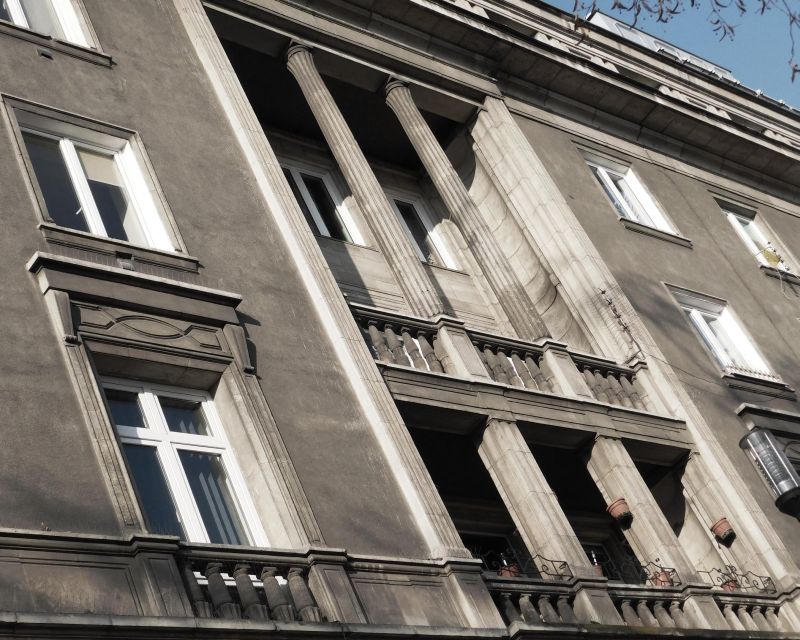
You can read that contrast in the scale of the place. The streets and civic spaces were not designed as a picturesque medieval quarter. They were planned to express order, strength, collective life, and confidence in the communist future.
That makes the tour useful even if you do not usually seek out architecture. You are not simply looking at large buildings. You are asking who built them, for whom, and what sort of person the city was supposed to produce.
The tour also avoids treating Nowa Huta as a frozen communist relic. Its story changes as you walk. The state planned a city without God, yet residents fought for a church. The district was built to serve the system, yet it became connected with protest and Solidarność. That tension is the heart of the experience.
A few more Krakow trips to weigh up
- From Krakow: Auschwitz-Birkenau Guided Tour & Hotel Pickup
★ 4.5 · 33,358 reviews - From Krakow: Auschwitz-Birkenau Guided Tour & Hotel Pickup
★ 4.5 · 29,340 reviews - Krakow: Auschwitz Guided Tour with Optional Hotel Pickup
★ 4.5 · 15,280 reviews
Meeting the guide at the Solidarity monument
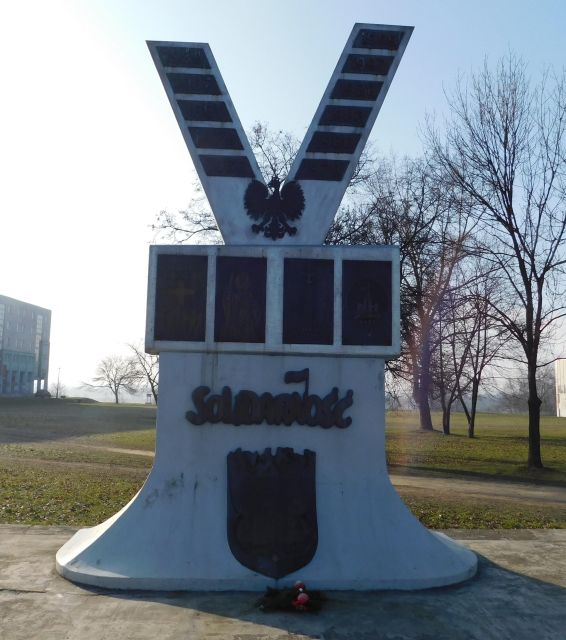
The walk begins beside the Solidarity monument, identified by the words Bądź wierny, idź. Look for the guide waiting directly by the monument. The route also ends there, which is useful because you finish where you started rather than needing to find a new return point.
The guide is a licensed private guide, and the tour is conducted in English. The supplied information does not give a guide’s personal name, so you should not expect to select a particular guide in advance.
The meeting point is in Nowa Huta, not in Kraków’s central Old Town. Transportation from the city centre is not included, and this is an important practical point when planning your morning or afternoon. Allow enough time to reach the monument before the scheduled start.
The activity lasts two hours. That is long enough for a strong introduction and a useful walk, but not long enough to inspect every corner of the district. I see that as a strength for many visitors. Nowa Huta can seem sprawling, and a tightly focused route gives you a framework without turning the outing into an all-day commitment.
Central Square and the former Lenin connection
Central Square receives the longest stop, about 40 minutes. That makes sense. This is where the city’s planning logic is easiest to grasp.
The square once carried Lenin’s name, a reminder of how public space could serve as political instruction. Its scale and formal design point to a system that wanted the city to communicate from the moment people entered it. You can expect the guide to explain how the square fitted into the original plan and why it mattered as a public symbol.
This is the place to pay attention to the relationship between open space and power. Monumental architecture is not only about decoration. It can direct movement, create a sense of ceremony, and tell residents which figures and ideas deserve public honor.
The stop is also a good reset if you arrive knowing little about communist urban planning. Instead of beginning with scattered details, you get the main idea first: Nowa Huta was designed as a planned socialist city linked to a massive industrial project.
The drawback is that a large square can feel less intimate than Kraków’s older streets. If your ideal tour involves small lanes and ornate medieval interiors, this may feel stark. Give it time. The broadness is part of the message.
Avenue of Roses and the representative face of Nowa Huta
The next stop, Avenue of Roses, lasts about 15 minutes. This was the representative street of Nowa Huta, so it helps you see how the district presented itself to the public.
Avenue of Roses is valuable because it shifts the discussion from one symbolic square to a longer urban view. Here, you can consider how buildings, roads, and public space worked together. The route is not only about isolated monuments. It is about the planned city as a complete statement.
I would listen for the contrast between the ideal and daily life. Socialist planning promised a rational city for a new society, but people still brought their own beliefs, habits, and demands. That clash becomes clearer later at the church and Solidarity-related sites.
The stop is short, so you should not expect a detailed architectural survey. Instead, treat it as a visual bridge between Central Square and the more specific political stories that follow.
Same country, a completely different kind of day:
- Krakow–Zakopane: Cable Car, Chocholow Baths, Cheese & Vodka
★ 5.0 · 10,720 reviews - Krakow: Auschwitz-Birkenau Guided Tour with Pickup & Lunch
★ 4.5 · 9,800 reviews - From Krakow: Wieliczka Salt Mine Tour
★ 4.6 · 9,393 reviews - Krakow: Auschwitz-Birkenau Guided Tour Pickup/Lunch Options
★ 4.5 · 9,057 reviews
The IS-2 tank and Nowa Huta’s industrial identity
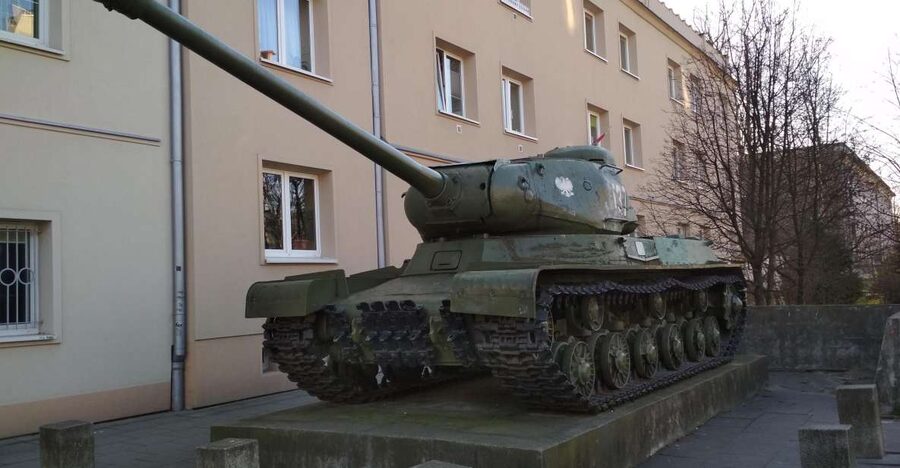
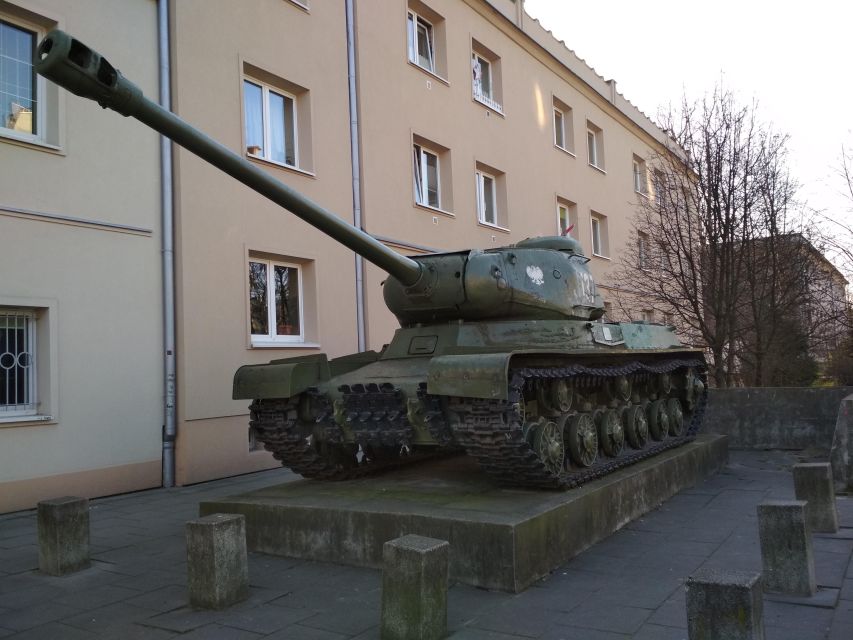
The tour then pauses for about 10 minutes at the Monument of the IS-2 Tank. This adds a military and industrial note to the route.
The tank is a reminder that Nowa Huta’s identity was tied to the wider power structure of the postwar state. The district was not built as an ordinary suburb. It was connected to heavy industry, workers, political loyalty, and the official memory of the era.
This is a brief stop, but it breaks up the monumental civic architecture with an object that is more direct and physical. You do not have to be a military-history enthusiast to see its value. It helps explain the practical world behind the slogans: factories, labor, production, and the power of the state.
Because the stop lasts only 10 minutes, expect context rather than an extended military discussion. The guide’s larger story remains the making of Nowa Huta and the people who challenged its original purpose.
The church that challenged a godless city
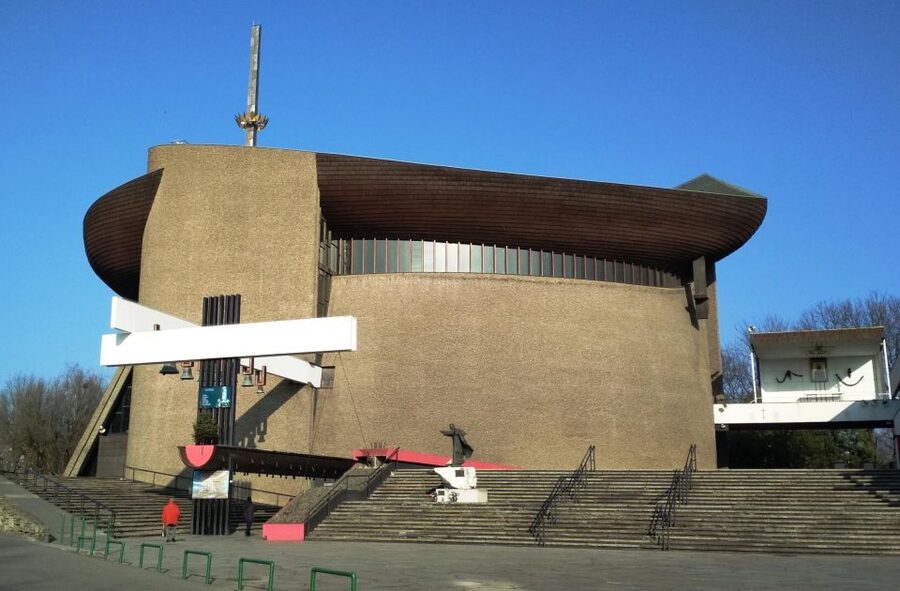
The visit to Our Lady Queen of Poland Church lasts about 20 minutes. It is one of the most important stops because it brings the conflict between communist planning and religious life into focus.
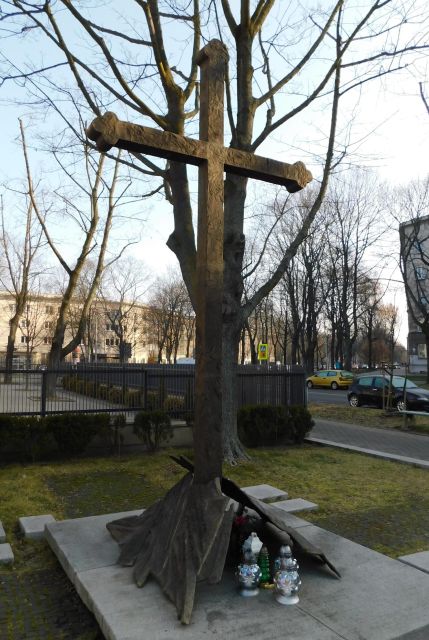
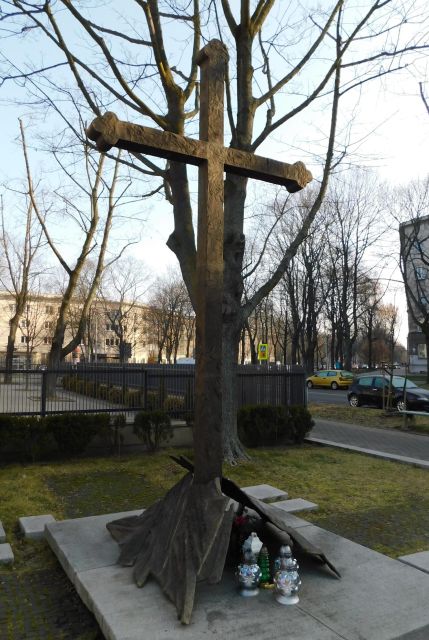
Nowa Huta was intended to be a city of people living without God. Yet residents wanted a church, and the struggle over a cross became a defining episode in the district’s history. The site connected with the battle for the cross shows that religion was not a private footnote. It was a public demand, a question of identity, and a challenge to the authority of the state.
This is where the tour’s central contrast becomes personal. At Central Square, you see the official vision of the ideal socialist city. At the church, you see residents asserting that their city should also reflect faith and tradition.
I especially value this stop because it prevents the tour from becoming a simple architectural walk. The buildings matter, but the people who used them, resisted them, and demanded something different matter more.
The provided details do not specify whether the interior is entered or viewed from outside, so you should plan for a guided stop at the church and its surrounding history rather than assume a full indoor visit.
Ludowy Theatre and the cultural side of the planned city
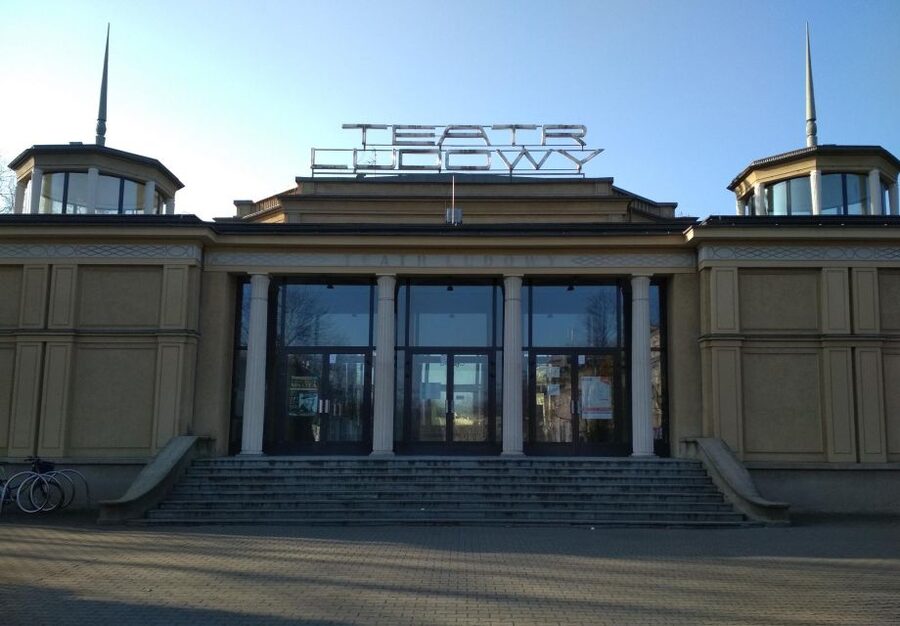
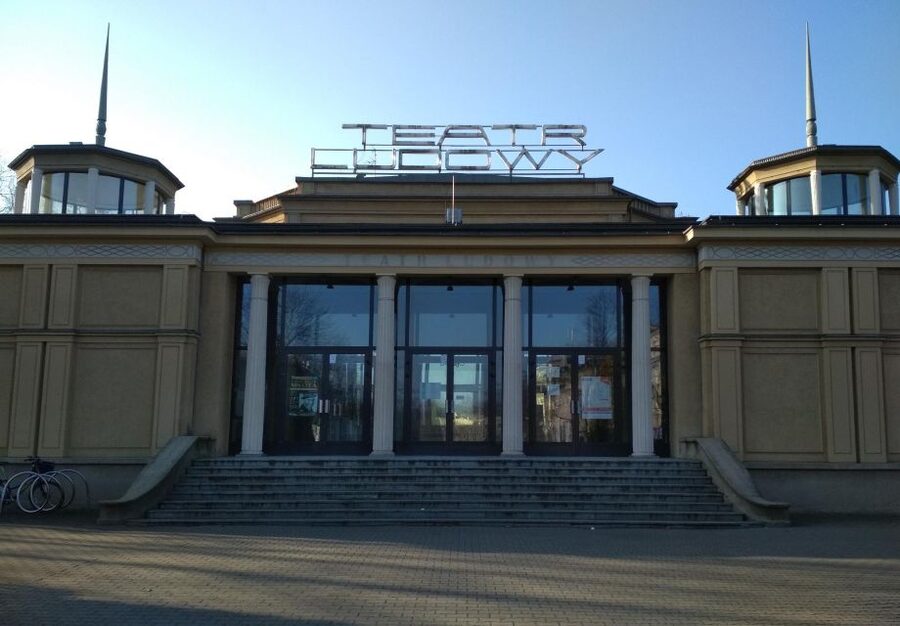
The final major stop is Ludowy Theatre, with about 35 minutes of guided attention. This gives the tour a cultural finish after its focus on squares, streets, industry, religion, and protest.
A theatre has a different role from a government building or a workers’ housing block. It shows how the city’s planners also thought about culture and public life. In a socialist city, theatres and other institutions could help shape the habits and outlook of the new society.
The stop also rounds out the district’s story. Nowa Huta was not only a place to work and demonstrate political loyalty. It was meant to function as a complete city, with spaces for public gatherings, entertainment, and civic identity.
Thirty-five minutes is a substantial portion of a two-hour tour. That suggests the guide will give this stop real attention rather than treating it as a quick photograph. If theatre architecture or cultural history interests you, this may be one of the most rewarding parts of the walk.
At the same time, the available information does not promise a performance or a theatrical presentation. You are booking a guided historical walk, not a show.
How the stops fit together
The route works because each location adds a different piece:
- Central Square explains the official plan and political symbolism.
- Avenue of Roses shows the city’s representative public face.
- The IS-2 tank points to industry, military power, and the postwar state.
- Our Lady Queen of Poland Church shows the struggle over religion.
- Ludowy Theatre adds culture and the idea of a complete socialist community.
- The Solidarity monument frames the walk with the later history of opposition.
That sequence gives you a compact introduction to a complicated district. You begin with the state’s grand idea and finish with a stronger sense of how real residents could challenge it.
The route also helps you avoid a common mistake: treating communist architecture as merely ugly or imposing. You can dislike the style and still understand what it was trying to do. The guide’s job is to connect the visual experience to ideology, labor, religion, and protest.
Is $69 good value for two hours?
The price is $69 per person. For a two-hour walking tour, that is not bargain pricing, especially since transportation from Kraków city centre is extra and gratuities are not included.
The value depends on what you want from Nowa Huta. If you only want to see the main square and take a few photographs, you could find the cost hard to justify. The district’s meaning is not obvious at first glance, and the tour earns its price through interpretation rather than admission tickets or included transport.
A licensed private guide can make the difference. You get a focused English-language explanation of places that may otherwise seem disconnected. The route also covers several themes in a short time: Stalinist planning, industrial work, religion, public symbolism, theatre, and Solidarność.
The experience has a perfect rating from three verified reviews, including a June 2025 review from David in the United Kingdom, who specifically praised the guide and found the area fascinating. That is a small sample, so I would not treat it as proof of a universal experience. Still, it supports the main reason to book: the quality of the explanation and the unusual subject matter.
Who should book this Nowa Huta walk?
I would recommend it most strongly to you if you:
- Have already seen Kraków’s Old Town and want a different side of the city.
- Like architecture when it comes with political and social context.
- Want to understand communist-era Poland through a real urban project.
- Are interested in the clash between official atheism and Catholic identity.
- Prefer a focused two-hour experience over a full-day excursion.
- Want an English-speaking private guide rather than an unguided visit.
You may want to skip it if your Kraków plans are already packed with medieval sights and you have little interest in 20th-century history. The route is also less suitable if you expect a scenic stroll through picturesque streets. Nowa Huta’s appeal lies in its ideas, scale, and conflicts.
Wear comfortable shoes, and plan your journey to the meeting point before booking. The tour begins and ends by the Solidarity monument, but getting there from the city centre is your responsibility.
Should you book it?
Book this tour if you want Kraków to make sense beyond its postcard centre. Nowa Huta gives you monumental socialist planning, a steel-worker city, a church struggle, and the memory of Solidarność in one compact route.
At $69, it is best viewed as a paid history lesson with a walk attached, not as a cheap sightseeing loop. The price makes sense for you if a licensed guide can turn unfamiliar streets into a clear story. If that is what you want, this is one of the more useful ways to spend two hours in Kraków.
FAQ
Where does the Nowa Huta tour begin?
The tour begins by the Solidarity monument, identified by the words Bądź wierny, idź. Look for the guide waiting beside it.
Where does the tour end?
The route returns to the Solidarity monument, the same place where it begins.
How long does the tour last?
The guided walking tour lasts two hours.
What language is the tour conducted in?
The tour is conducted in English by a live guide.
Is transportation from Kraków city centre included?
No. Transportation from Kraków city centre to Nowa Huta is not included.
What is included in the price?
The experience includes a licensed private guide.
Is gratuity included?
No. Gratuities are not included.
Can I cancel the booking for a full refund?
Yes. You can cancel up to 24 hours in advance for a full refund.
Just added around Krakow
- Tour to Wadowice: Hometown of Pope Saint John Paul II★ 4.6 · 12 reviews
- The Jewish Quarter – Walking Tour★ 5.0 · 4 reviews
- From Kraków; to Białka Thermal Baths private tour★ 5.0 · 5 reviews
- St. Mary’s Basilica and more – a short walk with a guide★ 4.7 · 56 reviews
- Krakow: Auschwitz-Birkenau and Wieliczka Salt Mine Day Trip★ 4.7 · 84 reviews
- Krakow: Skip-the-Line Wawel Castle & Old Town Guided Tour★ 4.9 · 23 reviews
- Shooting Range Experience!★ 4.8 · 66 reviews
- Krakow: Schindler’s Factory Guided Tour★ 4.2 · 12 reviews
City Tours, compared.
City Sightseeing Tour Eco Electric Buggy Golf Cart
Read our review →
Gdańsk City Sights & History Guided Walking Tour in English
Read our review →
Extended City Sightseeing Tour – Eco Buggy Golf Cart
Read our review →
Browse the lists this tour appears in