
Reviewed · HISTORICAL TOURS
Gdańsk City Sights & History Guided Walking Tour in English
Gdańsk’s prettiest streets tell only half the story. This 150-minute walking tour connects the grand merchant houses and royal route with the harder chapters: the start of World War II, postwar rebuilding, and the Solidarity movement that helped bring down communism in Eastern Europe. It is a useful way to see the city as more than a handsome Baltic postcard.
I like two things here. First, the route hits the essential sights without wasting time on transport. Second, the guides make room for stories, questions, coffee breaks, and practical advice. Tufi, Sandra, Kate, Marcin, Philip, and others are praised for clear English, humor, and a real feel for Gdańsk. The main consideration is the group size: it can be large, and a big crowd may feel awkward at narrow or busy stops.
Key points to know before you book
- The tour begins at Golden Gate: Look for the yellow umbrella at Złota Brama, though you should check which side of the gate is intended.
- The route covers Gdańsk’s essential center: Expect Long Market, Neptune Fountain, St. Mary’s Basilica, canals, rivers, and the Żuraw crane.
- The history has real weight: Your guide explains WWII, the city’s repeated push for independence, and the Solidarity movement.
- Guide quality is a major strength: Tufi, Sandra, Kate, Marcin, Philip, and other guides are praised for humor, clear English, and strong storytelling.
- Weather matters: The walk goes ahead in rain, snow, wind, and cold, so dress properly and expect an outdoor tour.
- At $26, the value is strong: You receive two and a half hours of guided sightseeing without hotel transfers or added transport costs.
Why Gdańsk makes sense on foot
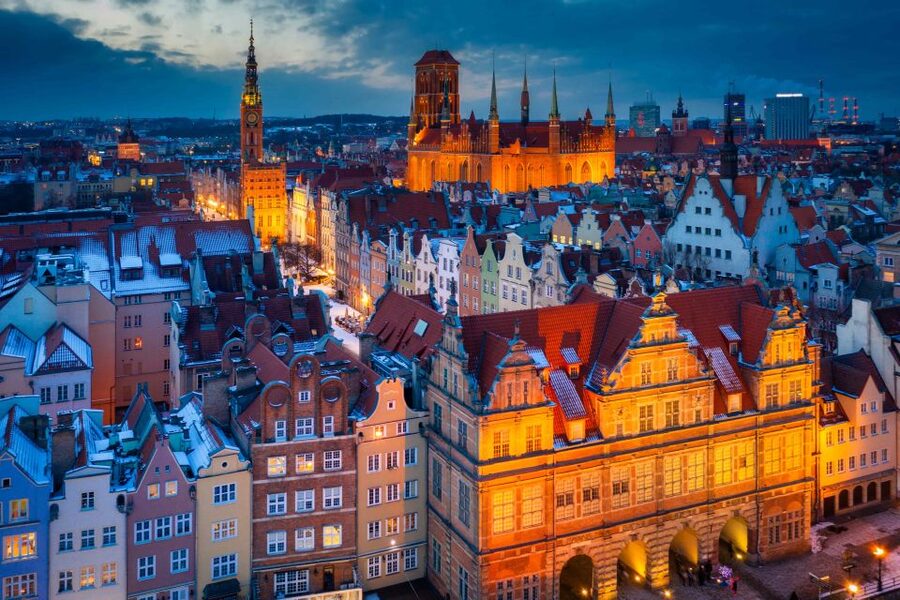
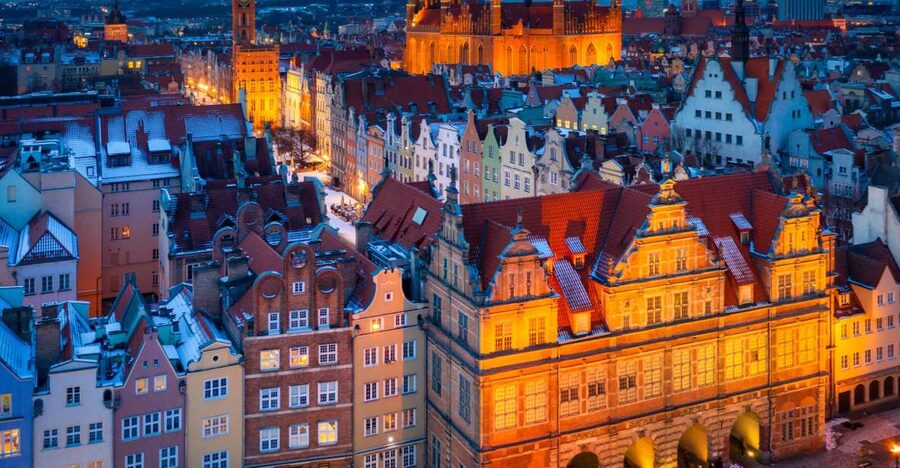
Gdańsk is unusually rewarding for a walking tour because its central sights sit close together. The route follows the historic path used by Polish kings, passing through the old merchant quarter and along the waterways that helped make the city one of the Baltic’s great trading centers.
That compact layout also lets the guide explain how the city changed hands and identities over time. Polish, Dutch, and German influences appear in the architecture, trade, language, and political story. You are not simply moving from one monument to the next. You are watching a city wrestle with who it was, who controlled it, and what independence meant.
I would book this early in your stay. The route gives you a useful map of the center, and guides often suggest restaurants and other places to visit afterward. One guide even offered recommendations for different budgets and tastes, which is exactly the sort of practical help that can save you from a mediocre meal.
A few more Gdansk trips to weigh up
- Gdansk: City Cruise on Historical Polish Boat
★ 4.8 · 2,913 reviews - Gdańsk: Sunset Cruise on a Historic Polish Boat
★ 4.9 · 977 reviews - Historic City Center Tour Gdansk in German
★ 4.6 · 455 reviews
Starting under the Golden Gate
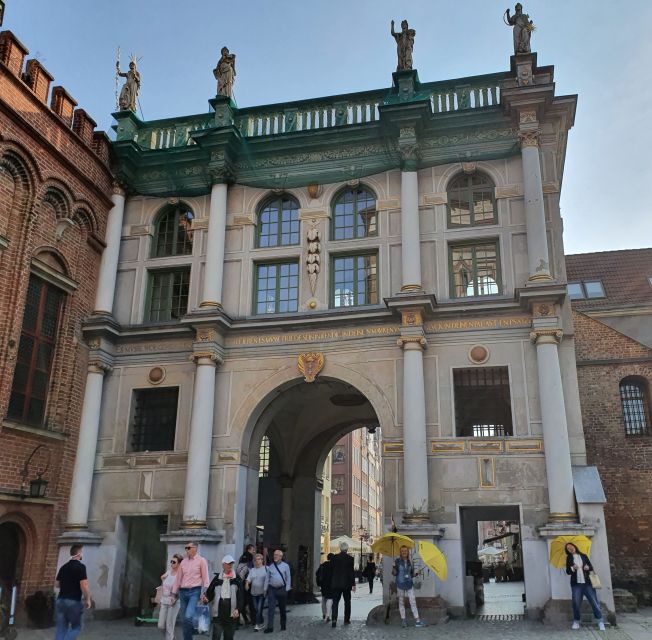
The meeting point is the Golden Gate, or Złota Brama, at the edge of the historic center. Look for the yellow umbrella. One useful warning: the gate has more than one side, and one person specifically found the instructions unclear, so check the precise meeting details before you set off.
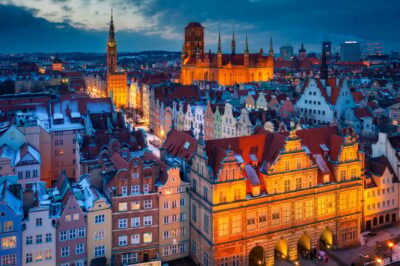
From here, the tour moves into the part of Gdańsk that most people come to see first: the colorful townhouses and formal streets of the old merchant city. The buildings look old, but much of the center was destroyed during World War II and rebuilt with painstaking care. That fact changes how you see the ornate façades. They are not untouched relics. They are part of a major act of reconstruction.
Your guide explains how merchants built wealth through Baltic trade and how Gdańsk became one of the area’s most important ports. The commercial past gives the architecture some purpose. These houses were not decorated merely to look nice. They belonged to a city that wanted to display its money, status, and connections.
Long Market and Neptune’s polished symbol
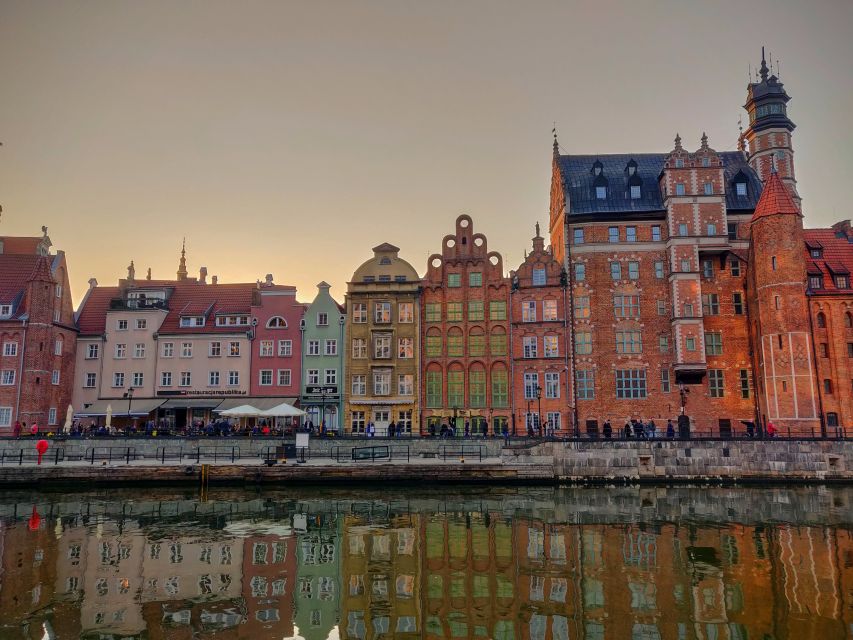
The walk continues along Long Market, one of the city’s grandest public spaces. This is the place to pause and take in the long row of narrow façades, varied rooflines, and carefully restored details.
Neptune Fountain is the obvious focal point. The trident-wielding god reflects Gdańsk’s maritime identity and its links with trade and the sea. Your guide uses the fountain as more than a photo stop, placing it in the story of the city’s wealth and public image.
This part of the walk can feel busy, especially if the group is large. You may need to position yourself close to the guide to hear every explanation. The upside is that the open space gives you time for photographs, and several guides make a point of allowing the group to stop rather than rushing from one landmark to another.
St. Mary’s Basilica and the famous clock
St. Mary’s Basilica is one of the tour’s strongest stops. Its brick Gothic construction gives it a different character from the painted merchant houses, and it is widely recognized as the largest brick Gothic church in the world.
The outside alone is impressive, but the guide’s context makes the building easier to appreciate. You learn how the church fits into the city’s medieval growth and why brick, rather than carved stone, became such a defining material in northern Europe.
Timing can add a small bonus. Guides have arranged the walk so the group could see the figurines move on the church clock, and one tour reached the church in time for noon. This is not something you should treat as guaranteed, since starting times and daily conditions can vary, but it is worth asking your guide about.
The basilica is also a useful place to escape bad weather for a few minutes. That matters more than it sounds. Several tours took place in freezing conditions, and guides adjusted the route by doing some explanations indoors or adding a short coffee or warming break. The walk remains outdoors, but a considerate guide can make a cold day manageable.
Same country, a completely different kind of day:
- Gdansk: Firearm Shooting Experience with Instructor
★ 4.8 · 866 reviews - Gdansk: Guided Round-Trip Cruise to Westerplatte
★ 4.3 · 865 reviews - Gdańsk: Sightseeing EcoCruise around the Old Town of Gdansk
★ 4.6 · 719 reviews - Main Town Gdańsk Walking Tour
★ 5.0 · 644 reviews
Żuraw crane, canals, and the port city
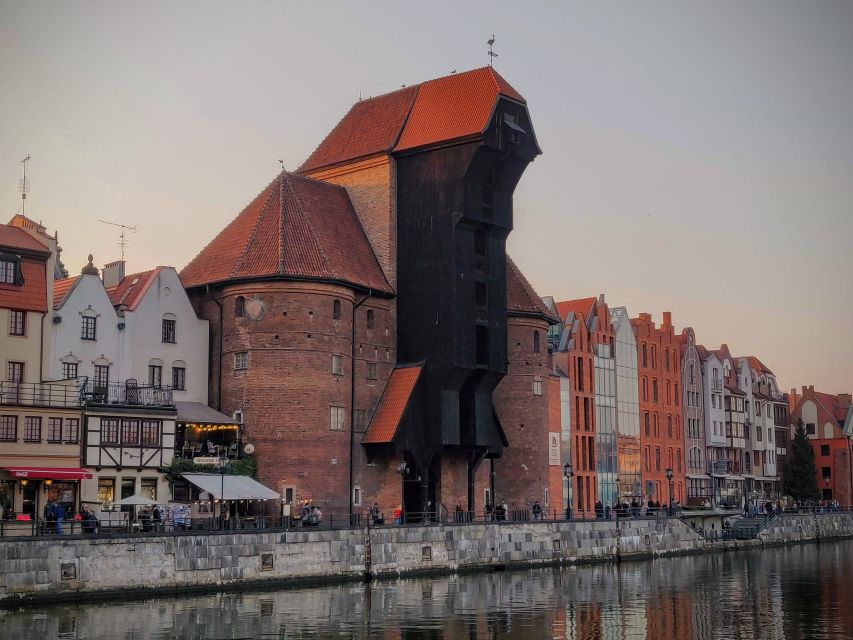
At the harbor, the medieval Żuraw crane gives the tour a strong visual change. This enormous wooden treadwheel crane was used to lift cargo and load ships, and it remains one of Gdańsk’s best-known symbols.
Its importance is practical, not just decorative. The crane helps you understand how the city’s trade worked before modern machinery. Workers powered the lifting system by walking inside the great wheel, a simple but demanding piece of medieval engineering.
The waterfront also gives you a chance to see Gdańsk through its rivers and canals. Water shaped the city’s fortunes, carried goods, and linked the merchant quarter to the wider Baltic world. After the formal streets of Long Market, the harbor makes the commercial story feel more concrete.
The route does not include hotel pickup, transport, or a separate harbor cruise. That keeps the cost down, but you should expect to walk between the sights under your own power. The tour is listed as wheelchair accessible, though a large group and busy public areas may still make close attention to the guide important.
WWII in Gdańsk, told where it matters
The history becomes darker as the guide explains how World War II began in and around Gdańsk. This is one of the reasons I would choose a guided walk instead of relying only on a photo guide. A monument can show you what remains, but a good guide explains the tension, competing identities, and political pressure behind the event.
The city’s wartime story is not treated as a quick footnote. It is linked to the destruction of the historic center and the difficult decision to rebuild it afterward. That connection helps you see why the restored townhouses matter so much. The city was not simply repaired. Its historic appearance had to be recreated.
Some guides also explain the fighting connected with the post office, a subject that one guest found especially powerful. Specific stories like this give scale to the broader history. Instead of hearing only about armies and borders, you encounter the people caught in the first days of the war.
You should expect a lot of information. One person felt there was almost too much history to absorb, while another called it one of the most detailed city tours they had taken. If you prefer a light stroll with occasional facts, this may feel intense. If you want a solid introduction to Gdańsk’s past, the detail is a benefit.
Solidarity and the road out of communism
The final historical theme is the Solidarity movement and its role in the fall of communism across the Eastern Bloc. This gives the tour a modern political ending rather than stopping in the medieval period.
Gdańsk’s story of independence is long and repeated. The guide connects the medieval trading city, the wartime struggle, the postwar period, and the pressure for political freedom in the late twentieth century. You leave with a clearer sense that the city’s identity has never been fixed or simple.
This section may be especially useful if you know little about Poland’s twentieth-century history. The guide can place local events in a wider European setting while keeping the focus on Gdańsk. Several guides are described as passionate about the subject, and that enthusiasm helps keep a serious topic from becoming a dry list of dates.
The guides make or break the experience
The strongest part of this tour is the human element. Names that come up repeatedly include Tufi, Sandra, Kate, Marcin, Philip, Paul, Filip, Katie, Sophia, Zosia, and Isabella. The exact guide depends on the date, but the pattern is clear: the best guides explain difficult material in plain English, answer questions, and use humor without turning the past into a joke.
Tufi is praised for his energy and passion. Sandra is noted for adapting to severe cold and offering a warming pause. Kate is described as especially clear, funny, and able to handle centuries of history without losing the thread. Marcin is praised for animated narration and good suggestions for the rest of a Gdańsk visit.
You should also expect the regular public walking-tour format rather than a guaranteed private experience. Your payment covers the reservation and guide fee, but you join the general group. Some groups are small, around eight or nine people, while others can be cumbersome in crowded places. If you want a private or smaller tour, contact the provider after booking to ask about arranging one.
Is $26 good value?
At $26 per person, I consider this a good buy for a first visit. The tour lasts 150 minutes and covers the city’s central sights, with a guide who provides historical context that would take considerable reading to assemble on your own.
The price does not include hotel pickup, drop-off, entrance fees, food, or drinks. That is not a problem for this route, since the main appeal is the outdoor architecture and public landmarks. You are paying for structure, interpretation, and the chance to ask questions while you walk.
The value is greatest if you are new to Gdańsk, have only a day or two, or want help sorting out the city’s Polish, German, Dutch, wartime, and communist-era connections. It is less useful if you already know the Old Town well or want long interior visits. This is a city orientation with serious history, not a museum tour.
Weather, pace, and what to bring
The tour runs rain or shine. Bring weather-appropriate clothing, and take that instruction seriously in winter. Recent walks went ahead in snow, freezing temperatures, and strong wind, yet guides adjusted with indoor explanations and short coffee or bathroom breaks.
Wear comfortable shoes. The experience is entirely on foot, and 150 minutes is long enough for poor footwear to become a real nuisance. If you need a bathroom stop, carry some change to make the process quicker.
The pace is generally relaxed, with time for photos and questions. Still, this is a group tour, so the guide cannot wait indefinitely at every façade. Stay near the yellow umbrella and listen carefully when the group moves through narrow or crowded areas.
Free cancellation up to 24 hours before the start gives you some room to change plans, and the reserve-now, pay-later option helps if your schedule is still shifting. The tour is wheelchair accessible, though you should still consider the practical challenge of moving through busy historic streets with a group.
Who should book this Gdańsk walk?
I would recommend it to first-time visitors, history-minded couples, solo visitors who want local orientation, and anyone arriving by cruise or short city break. Families with older children may also find the stories more engaging than a formal museum visit, especially when the guide adds humor and personal details.
It suits you best if you want the major sights explained in one coherent route. You will see the places you likely planned to visit anyway, but you will understand why they matter.
I would hesitate only if you dislike group walks, need a very slow pace, or want extensive time inside each church and museum. A private option may suit you better in those cases.
My verdict: book it early
Book this tour if you want Gdańsk to make sense quickly. The Golden Gate, Long Market, Neptune Fountain, St. Mary’s Basilica, and Żuraw crane give you the essential visual introduction, while the WWII and Solidarity sections add the meaning that a self-guided stroll can easily miss.
The only real drawbacks are possible group size, a heavy amount of history, and exposure to bad weather. At $26, those are fair trade-offs for two and a half hours with an English-speaking guide who can answer questions and point you toward good places for the rest of your stay. I would take it near the start of a Gdańsk visit, dress for the forecast, and stay close enough to hear the stories.
FAQ
Where does the Gdańsk walking tour meet?
The meeting point is the Golden Gate, known in Polish as Złota Brama. Look for a yellow umbrella.
How long does the tour last?
The walking tour lasts 150 minutes, or two and a half hours. Starting times vary, so check availability when booking.
What language is the tour conducted in?
The tour is conducted in English with a live English-speaking guide.
What sights are included on the route?
The route includes the Golden Gate, Long Market, Neptune Fountain, St. Mary’s Basilica, the Żuraw treadwheel crane, and views of the city’s rivers and canals.
Does the tour run in bad weather?
Yes. The tour takes place rain or shine. You should bring clothing suited to the weather.
Can I cancel the booking?
You can cancel up to 24 hours in advance for a full refund. A reserve-now, pay-later option is also available.
Just added around Gdansk
- Guided Winter Kayak Tour in Gdańsk & Hot Chocolate Treat★ 5.0 · 51 reviews
- Gdansk Highlights Bicycle Tour★ 5.0 · 65 reviews
- Electric Scooter Tour: Old Town Tour – 1,5-Hour of Magic!★ 5.0 · 19 reviews
- Elblag Canal Tour from Gdansk★ 4.5 · 22 reviews
- #1 Polish Vodka Tasting Experience in Gdansk★ 5.0 · 87 reviews
- Delicious Gdansk Craft Beer Tour★ 5.0 · 4 reviews
- DAILY Stutthof Concentration Camp with Guide and Transport★ 4.5 · 10 reviews
- Cruises on the Motlawa River★ 4.5 · 66 reviews
Historical Tours, compared.
POLIN Museum of the History of Polish Jews Ticket
Read our review →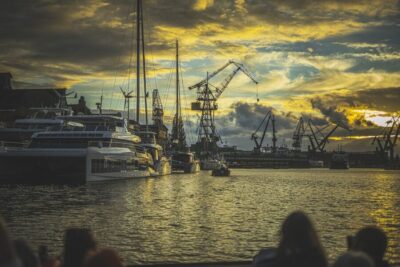

Small-Group Historical Guided Tour of Warsaw with pick up/drop off. Public Tour.
Read our review →
Browse the lists this tour appears in