Reviewed · GUIDED
Guided Tour in Kraków-Płaszów Former Concentration Camp
Kraków’s wartime story does not end at Auschwitz. This two-hour walk takes you to Płaszów, a former concentration camp within the city, then connects it with Ghetto Heroes Square and a surviving section of the Kraków Ghetto wall. The setting is plain and open, which makes the guide’s explanation especially important.
I like the route’s clear connection between the Kraków Ghetto and Płaszów, and I like that it includes places many city tours skip. The main consideration is the outdoor setting: the former camp is a large, uneven area with few visible remains, so this tour suits you best if you want context and remembrance rather than preserved buildings.
Key points to know before booking
- Płaszów sits inside Kraków, making this a useful alternative to a long day trip outside the city.
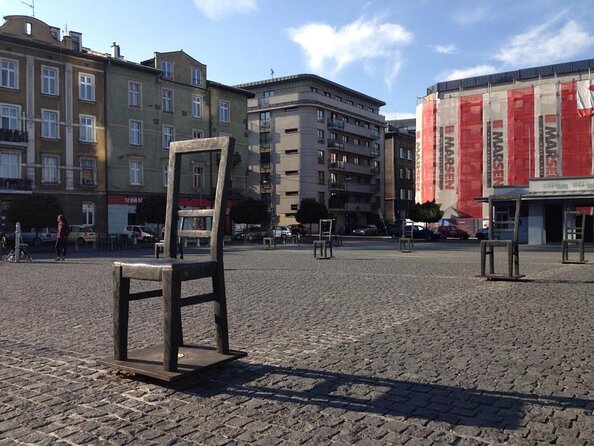
- Ghetto Heroes Square’s 70 metal chairs create a stark memorial to people forced to leave their homes.
- The former camp is largely undeveloped, so the guide’s explanations shape much of what you take from the visit.
- A 12-metre ghetto wall fragment gives you one of the clearest surviving physical links to Kraków’s wartime ghetto.
- The tour lasts about two hours and is offered in English, with groups limited to 25 people.
- Guide Olga has been praised for detailed explanations, kindness, and even helping with tram tickets.
Why Płaszów belongs on your Kraków itinerary
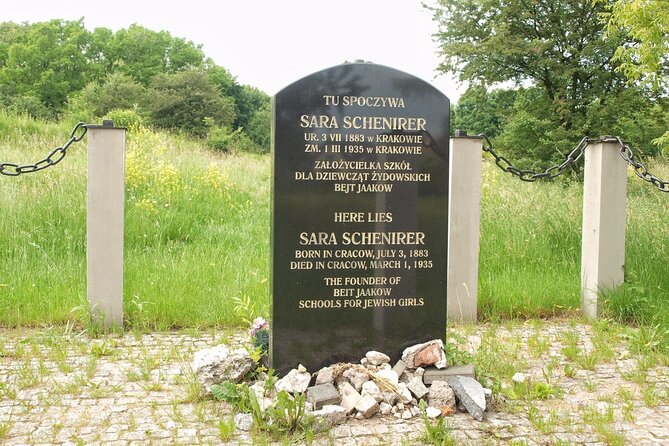
Many people use Kraków as a base for Auschwitz, but Płaszów gives you a different way to understand the city’s wartime past. You are not leaving Kraków for a distant memorial complex. You are crossing the river into Podgórze, a part of the city where ordinary roads, shops, homes, and public transport exist close to the former camp site.
That closeness matters. Płaszów was not an isolated place far from daily life. It operated in and around Kraków, and the tour helps you connect the camp with the city’s Jewish ghetto and the forced movement of people during the German occupation.
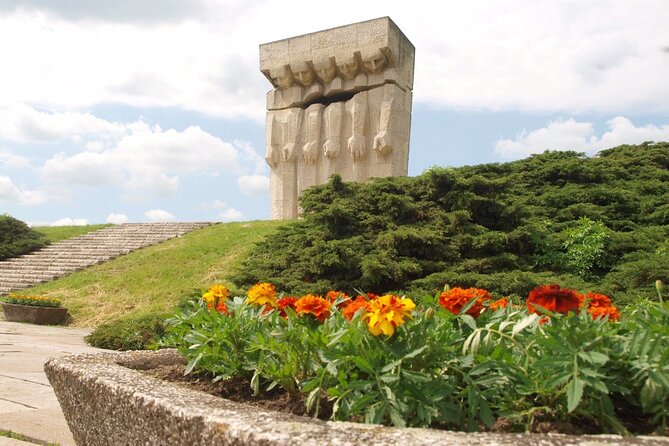
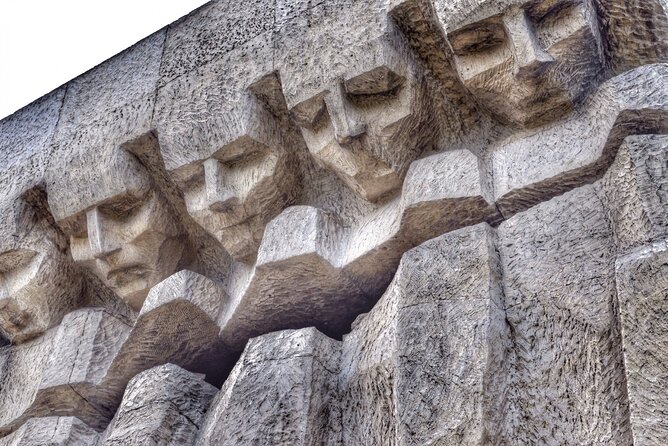
The former camp site is now an uneven, mostly open area. Until recently, it gave little indication of what happened there. You should not arrive expecting a row of preserved barracks or a museum-style display at every turn. The site asks you to listen, picture the past, and pay attention to the ground and surroundings.
I find that kind of visit rewarding, but it is not for everyone. If you need a large collection of original objects and buildings to understand a place, Płaszów may feel spare. If you want a guide to explain how Kraków’s wartime story unfolded in the places where it happened, the setting has real force.
A few more Krakow trips to weigh up
- From Krakow: Auschwitz-Birkenau Guided Tour & Hotel Pickup
★ 4.5 · 33,358 reviews - From Krakow: Auschwitz-Birkenau Guided Tour & Hotel Pickup
★ 4.5 · 29,340 reviews - Krakow: Auschwitz Guided Tour with Optional Hotel Pickup
★ 4.5 · 15,280 reviews
Starting at Ghetto Heroes Square
The tour begins at Apteka pod Orłem, at Plac Bohaterów Getta 18. This puts you beside Ghetto Heroes Square, also known by its former name, Plac Zgody.
The square is now one of Kraków’s most memorable memorial spaces. Its 70 large metal chairs are spread across the open plaza. They represent departure and absence, a simple idea that becomes difficult to ignore as you walk among them. The chairs refer to the people removed from the ghetto and to the homes and lives left behind.
The square’s modern appearance came after decades of neglect. It was once used as a public toilet and parking area, despite its importance. A renovation in 2005 caused debate because of its unusual design, but the result is now an unmistakable part of Kraków’s memorial landscape. I like that the tour does not treat the square as a quick photo stop. It gives you a starting point for thinking about what happened to the people connected to this place.
The location also helps you get your bearings. You are in Podgórze, across the river from central Kraków, rather than at a separate memorial complex removed from city life. That physical setting prepares you for Płaszów, which is also part of the city’s present-day fabric.
Walking to the former Płaszów camp
The main portion of the guided visit takes place at the former Płaszów concentration camp and lasts about one hour. The guide leads the walk and explains the site’s wartime role, helping you read a place that can otherwise appear to be simply open ground.
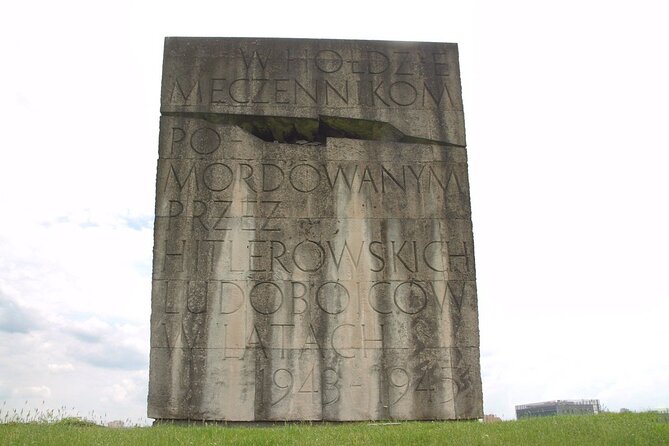
Płaszów was the location of the German Nazi concentration camp known as Konzentrationslager Plaszow bei Krakau. Today, the area is largely undeveloped, despite its position near Wielicka Street, the Bonarka shopping center, and Krakus Mound. That contrast is one of the tour’s most striking features. Commercial Kraków is close by, yet the camp site itself can feel quiet and disconnected from the city.
You will likely notice uneven ground and an absence of obvious structures. That is an important practical point. This is not a polished attraction built around a complete set of remains. It is a place where the guide’s words provide much of the structure.
A strong guide can explain what the site meant, how it related to Kraków, and why the lack of visible buildings should not be mistaken for a lack of importance. The supplied information describes guides who explain the tragic events in detail and place them in context. Olga is singled out for being well prepared, kind, and helpful beyond the historical explanation, including assistance with tram tickets.
The group size can reach 25 people. That is still manageable for a walking tour, though you may find a smaller group easier for questions and personal attention. One booking had only three people, which made the visit especially personal. You should not count on such a small group, but the limited maximum is still useful when comparing this with a large city tour.
What makes the open site difficult, and worthwhile
Płaszów requires more imagination than Auschwitz or a museum with rooms full of original objects. You may find that some parts of the visit feel subdued because the physical evidence is limited. That is the principal drawback, and it is worth considering before you pay.
The benefit is that the guide can help you understand the relationship between place and event. You are not only hearing a general account of the Holocaust. You are standing in Kraków, near streets and landmarks that remain part of the modern city, while learning how the ghetto and camp fit into that setting.
I appreciate tours that do not hide the difficult parts of a site visit. Here, the quiet and undeveloped surroundings are not a flaw to be ignored. They are part of the experience. The site’s lack of obvious markers shows how easily a place of enormous suffering can fade from public memory without careful explanation and memorial work.
The tour is serious by nature. You should allow yourself time to listen rather than treat it as another quick stop between restaurants and museums. The open setting may also be less comfortable in poor weather, although the supplied details do not specify weather arrangements, footwear requirements, or shelter.
Same country, a completely different kind of day:
- Krakow–Zakopane: Cable Car, Chocholow Baths, Cheese & Vodka
★ 5.0 · 10,720 reviews - Krakow: Auschwitz-Birkenau Guided Tour with Pickup & Lunch
★ 4.5 · 9,800 reviews - From Krakow: Wieliczka Salt Mine Tour
★ 4.6 · 9,393 reviews - Krakow: Auschwitz-Birkenau Guided Tour Pickup/Lunch Options
★ 4.5 · 9,057 reviews
The surviving Kraków Ghetto wall fragment
After the camp visit, the route passes a 12-metre section of the original Kraków Ghetto wall. This is one of the clearest remaining physical reminders of the ghetto in the city.
A plaque in Hebrew and Polish explains that people lived, suffered, and died there under German persecution, and that from this place they began their final journey to the death camps. The wall is not large, but its size is part of its power. You can see an actual surviving boundary rather than only a later memorial design.
Placed after Ghetto Heroes Square and Płaszów, the wall fragment helps complete the route. The square represents departure and absence. Płaszów shows the camp site tied to Kraków. The wall gives you a remaining piece of the ghetto itself. Together, the stops create a more connected account than any one site could offer on its own.
This final stop also gives you a moment to slow down. The wall does not need a long visit to make an impression, but the guide’s explanation can help you understand why this modest remnant matters.
The $30.01 price and what you receive
At $30.01 per person, this is not the cheapest way to spend two hours in Kraków, but the value depends on how you approach the former camp. You can walk through the general area without paying an admission fee, yet without a guide you may have little idea what you are seeing or how the locations connect.
The price pays for interpretation, route planning, and a focused explanation of Kraków during the Holocaust. That is more useful here than it would be at a site with extensive signs and preserved rooms. Since Płaszów offers limited visible remains, the guide is the main reason to join a scheduled tour.
The group maximum of 25 keeps the experience from becoming enormous. If your group happens to be small, you may get the chance to ask more questions and receive more direct help. The example involving Olga also shows that a guide may assist with practical matters, such as figuring out tram tickets, though this should be viewed as an added kindness rather than a guaranteed service.
The tour is booked an average of 29 days in advance. That suggests you should think about reserving it early if the timing matters to your Kraków plans. It is offered in English and uses a mobile ticket, so you do not need a printed voucher.
Timing, transport, and the end point
The meeting point is Apteka pod Orłem, Plac Bohaterów Getta 18. The end point is the bus stop at Henryka Kamieńskiego 57, across from the stated address at Kamieńskiego 57.
That difference matters when planning the rest of your day. You do not finish where you started, so allow time to continue by public transport or arrange your next stop from the Kamieńskiego area. The tour information confirms that it is near public transportation, and one guide has helped with tram tickets.
The tour lasts approximately two hours. That is long enough to cover the square, the camp, and the wall fragment without taking up an entire day. You might choose it for a morning or afternoon slot, then leave time before or afterward for other parts of Podgórze.
Most people can participate, but the former camp site is uneven and outdoors. The information does not provide detailed accessibility notes, so you should ask the provider directly if you have mobility concerns or need a specific route.
Who will get the most from this tour
I would recommend this tour to you if you want a closer look at Kraków’s own wartime sites rather than visiting Auschwitz alone. It also suits repeat visitors who have already seen the city center and want a more serious, less polished part of Kraków.
It is a good fit if you value a guide who explains connections between places. The route is not just a camp visit. It starts with the ghetto memorial, continues to Płaszów, and ends at the remaining wall fragment.
You may want to choose another activity if you prefer a museum setting, extensive original structures, or a lighter sightseeing mood. Płaszów is a memorial visit, not casual entertainment, and the open site may feel emotionally and physically demanding.
The tour can also work for independent visitors who want a short, organized introduction before exploring more of Podgórze on their own. The English format makes it practical for international visitors, and the two-hour length keeps the commitment manageable.
Should you book the Płaszów tour?
Book it if you want to understand how the Holocaust affected Kraków itself, and if you are willing to let a guide bring meaning to a place with few visible remains. The combination of Ghetto Heroes Square, Płaszów, and the ghetto wall fragment gives you a strong two-hour route through connected sites.
Skip it if you are looking only for preserved buildings or a large indoor exhibition. For everyone else, $30.01 is a fair price for focused interpretation, especially if you secure a small group and a guide as attentive as Olga. Free cancellation up to 24 hours before the start gives you some flexibility, but changes or cancellations inside that window are not refunded.
FAQ
Where does the tour begin?
The meeting point is Apteka pod Orłem, Plac Bohaterów Getta 18, Kraków, beside Ghetto Heroes Square.
Where does the tour finish?
The tour ends at the bus stop at Henryka Kamieńskiego 57, 30-644 Kraków.
How long does the experience last?
The tour lasts approximately two hours. The visit to the former Płaszów camp itself lasts about one hour.
Is the tour offered in English?
Yes. The experience is offered in English.
How much does the tour cost?
The listed price is $30.01 per person.
What places are included?
The route includes Ghetto Heroes Square, the former Płaszów concentration camp, and a 12-metre fragment of the original Kraków Ghetto wall.
How large can the group be?
The tour has a maximum group size of 25 people.
Is the tour near public transportation?
Yes. The meeting point and end point are near public transportation. The end point is a bus stop on Kamieńskiego Street.
Can I cancel for a full refund?
Yes, if you cancel at least 24 hours before the experience start time. Cancellations or changes made less than 24 hours before the start are not refunded or accepted.
Just added around Krakow
- From Krakow: Zakopane and Dunajec River Rafting Tour★ 4.6 · 31 reviews
- From Krakow: Zakopane and Gubałówka Cable Car Private Tour★ 4.3 · 12 reviews
- From Krakow: Zakopane Full-Day Tour with Lunch Option★ 4.4 · 62 reviews
- From Krakow: Zalipie and Painted Village Guided Tour★ 4.0 · 4 reviews
- From Krakow: Zakopane Tatra Mountains & Hot Springs Tour★ 3.0 · 29 reviews
- From Krakow: Zakopane and the Tatra Mountains★ 4.7 · 36 reviews
- From Krakow: Hot Springs and Zakopane with Gubałówka★ 4.7 · 25 reviews
- Zakopane & Tatra Mountains Private Full-Day Tour from Krakow★ 4.5 · 33 reviews
Guided, compared.
Auschwitz-Birkenau Guided Tour & Hotel Pickup
Read our review →Auschwitz-Birkenau Guided Tour & Hotel Pickup
Read our review →
Auschwitz Guided Tour with Optional Hotel Pickup
Read our review →
Auschwitz-Birkenau Guided Tour with Pickup & Lunch
Read our review →
Auschwitz-Birkenau Guided Tour Pickup/Lunch Options
Read our review →
Krakow to Auschwitz Birkenau Guided Tour with Transfer and Ticket
Read our review →