
Reviewed · KAZIMIERZ JEWISH QUARTER TOURS
Segway Tour of Krakow: Full Tour (Old Town + Jewish Quarter) – 3-Hours of Magic!
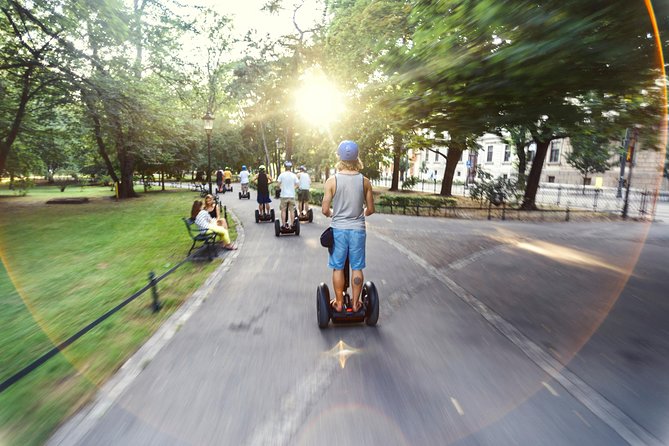
Krakow’s best sightseeing trick is simple: use a Segway to cover the broad sweep from the medieval Old Town to Kazimierz, the former Jewish quarter, without spending three hours marching between stops. You glide past the Main Square, Wawel Castle, old gates, churches, synagogues, and riverfront sights while a guide fills in the stories.
I like the wide mix of sights and the way the Segway saves your legs on a short visit. I also like the practical touch of a training session, helmet, photo stops, and local tips about food, galleries, and other places to visit. The main concern is comfort and confidence: cobbles, curbs, tram lines, busy pavements, cold weather, and fast spoken English can make parts of the ride harder than expected.
Key points before you book
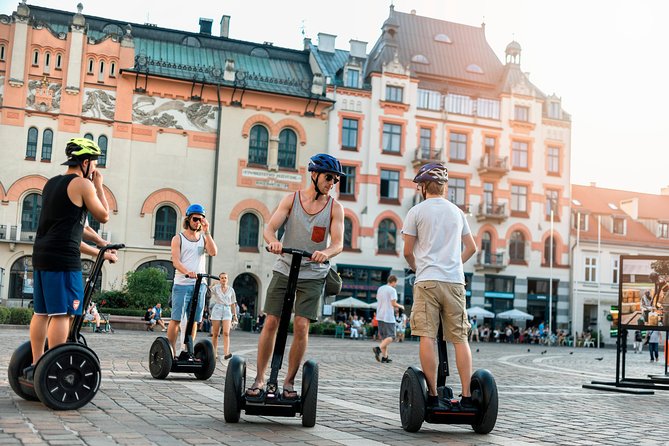
- Two Krakow districts in one ride: Cover the Old Town and Jewish Quarter instead of focusing on only one central area.
- 15-minute Segway lesson: You receive basic instruction before setting off, with a helmet and safety gear included.
- Sixteen stops and stories: Expect short talks at major landmarks, including Wawel Castle, the Old Synagogue, Szeroka Street, and the Father Bernatek Footbridge.
- Guides with different styles: Zee, Constantine, Tomaz, Justyna, and Arthur are among the guides associated with this experience.
- A practical first-day activity: The route can help you get your bearings early in a Krakow visit.
- Weather and road surfaces matter: Rain protection may be available, but cold or wet weather can make the full ride tiring.
Why a Segway works well in Krakow

Krakow’s historic center is compact, but the sights on this tour spread well beyond the Main Square. Walking from the Old Town to Kazimierz and then toward the river takes time, especially when you want to stop for photographs and listen to local stories.
A Segway gives you a quicker way to move between districts. You still travel at street level, so you can notice façades, churches, monuments, and side streets rather than watching the city through a vehicle window. The ride also adds a bit of fun. Several guides have been praised for keeping the mood light while explaining Krakow’s past and present.
The tour lasts about three and a half hours overall. The advertised riding portion is three hours, with 15 minutes of training and a short break in the middle. That is long enough to make the activity more than a quick novelty ride, but it also means you should dress for the weather and be ready to stay upright for an extended period.
More Old Town Walking Tours in Krakow
- Old Town Krakow & Wawel Castle Walking Tour
★ 5.0 · 1,508 reviews - Krakow: Bike Tour of Old Town, Jewish Quarter and the Ghetto
★ 4.9 · 1,155 reviews - Krakow: The Old Town Walking Tour
★ 4.8 · 794 reviews
Starting at Sienna 17
You meet at Segway Point Krakow, at Sienna 17, in central Krakow. The tour returns to this same meeting point, so you do not need to arrange transport from a distant final stop.
The first 15 minutes are for training. You learn how to move, stop, steer, and control the Segway before joining the route. The basic lesson is useful, though one past participant felt the training was too brief, particularly before riding over cobbled areas and around traffic.
If you have never used a Segway, take the practice seriously. Ask for another demonstration if you are unsure about stopping or turning. The machines are often described as easy to control after a few minutes, but balance devices feel different from bicycles or electric carts.
You must weigh at least 30 kilograms, or 65 pounds, and no more than 135 kilograms, or 300 pounds. Anyone under the influence of alcohol cannot join. The group can reach 30 people, although some departures may be much smaller. A small group gives you more room to ask questions and makes it easier to stay close to the guide.
The Old Town route: squares, gates, and royal Krakow
The ride begins with Krakow’s central sights, where the stories move from medieval trade to royal power and Polish culture.
Rynek Główny, Krakow’s Main Square
The Main Square is the natural starting point for understanding Krakow. You hear about the square’s role as the city center and have time to take in its scale before moving on.
This is a good place to look around rather than focus only on the Segway. The square connects many of Krakow’s main sights, and the guide’s short talk helps you place the city’s streets and landmarks on a mental map.
More Kazimierz Jewish Quarter Tours in Krakow:
- Krakow: Jewish Quarter and Former Ghetto Tour
★ 4.9 · 1,441 reviews - Krakow: Kazimierz Jewish Quarter Walking Tour
★ 4.8 · 571 reviews - Krakow: Kazimierz, Schindler’s Factory & Ghetto Guided Tour
★ 4.8 · 460 reviews - Krakow: Bike Tour of the Old Town, Kazimierz, and the Ghetto
★ 4.9 · 350 reviews
The Barbican and St. Florian’s Gate
The Barbican, now linked with the Museum of Krakow, introduces Krakow’s defensive past. Its position near the old entrance to the city makes it an easy stop for a quick explanation and photographs.
The route also includes St. Florian’s Gate, another reminder that this was once a fortified medieval town. You get the useful big picture here: gates, walls, and defensive structures shaped how people entered and left the city.
Slowacki Theatre
The Slowacki Theatre brings a different side of Krakow into the tour. Rather than focusing only on castles and churches, the guide talks about the city’s cultural life and public buildings.
The stop is brief, around 10 minutes, so expect an outside explanation rather than a full theatre visit. That pattern applies to most of the itinerary. This is a sightseeing and storytelling tour, not an entry ticket tour.
Wawel Royal Castle
Wawel Castle is one of the strongest stops on the route. The castle complex sits above the Vistula River and carries centuries of royal, religious, and national meaning.
The tour provides a short story about Wawel rather than admission to the castle interiors. That matters if you want to see the State Rooms, cathedral interiors, or museum collections. You will need a separate visit for those. Still, arriving by Segway makes it easy to include Wawel in a route that also reaches Kazimierz.
One especially enjoyable detail from the ride is the chance to see Krakow’s dragon roar, a reference to the famous Wawel Dragon sculpture and its fire-breathing display. Treat it as a quick sighting, not a scheduled show, since the supplied tour details do not promise a particular timing.
Collegium Novum and the university
Collegium Novum adds Krakow’s academic story to the route. The guide discusses the university and may point out the university clock, which has been singled out as a highlight.
This stop helps balance the tour. You are not only seeing royal buildings and religious sites. You are also getting a sense of Krakow as a university city with a long intellectual tradition.
Grunwaldzki Monument
The Grunwaldzki Monument gives the guide another chance to explain Polish history through a public memorial. The stop is short, but monuments often make more sense once someone explains who and what they commemorate.
Because each stop lasts roughly 10 minutes, you should expect concise context rather than a lecture. Some guides speak at length and in great detail, while others keep the pace brisker. If you prefer short explanations, say so politely at the beginning.
Kazimierz: synagogues, churches, and Szeroka Street
The second major half of the tour moves into Kazimierz, Krakow’s Jewish Quarter. This is where the experience becomes especially useful for someone who wants an introduction to the area before exploring it on foot.
The Old Synagogue and the synagogue district
At the Old Synagogue, the guide talks about the area’s synagogues and the Jewish community that shaped Kazimierz. The stop is not a full museum tour, and admission is not included, but it gives you a framework for seeing the district with more care.
A guide’s delivery matters here. Tomaz, for example, has been associated with detailed explanations about Jewish migration and Krakow’s Jewish history. One issue raised about his guiding style was speed and pronunciation, with Polish names and place names sometimes difficult to follow. If a guide speaks quickly, ask for a pause or repetition. That small step can make the cultural material much easier to absorb.
Szeroka Street
Szeroka Street is one of the most important stops in Kazimierz. It brings together the district’s religious and urban story, with synagogues, cafés, and historic buildings around a central street.
You get time for photographs and a short talk, then can return later on foot for a slower look. I would make a note of Szeroka Street as a place to revisit, since a 10-minute stop cannot cover every detail.
Remuh Cemetery
The Remuh Cemetery adds a quieter and more solemn note. The guide explains its place within the synagogue district and the wider Jewish story of Kazimierz.
This stop deserves respectful attention. The Segway format is lively, but the subject is not light entertainment. Listen closely, avoid rushing, and understand that the tour gives only an introduction. If you want extended time at the cemetery or synagogue interiors, plan a separate visit.
Corpus Christi Church
Corpus Christi Church shows the Catholic side of Kazimierz. Its inclusion prevents the district from being presented as only a Jewish quarter. Krakow’s religious story is layered, and this stop helps you see how different traditions occupied the same urban area.
The tour includes an outside story rather than a promised interior visit. Church access can depend on services or local conditions, so do not book this ride expecting every building to be entered.
Plac Wolnica and the Church on the Rock
Plac Wolnica, once a major square in the separate medieval city of Kazimierz, gives you a sense of the district’s older civic structure. The guide explains the square before continuing to the Church on the Rock, also known as Skałka.
Together, these stops show how Kazimierz developed through public spaces, churches, Jewish institutions, and changing city boundaries. The route is strongest when you use the guide’s comments as a starting point, then return later to explore the places that catch your interest.
Father Bernatek Footbridge
The Father Bernatek Footbridge takes the tour toward the river. It provides a change of scenery after the dense historic streets and another chance for photographs.
The bridge marks the end of the listed route before you return to the starting point. It also helps connect Kazimierz with the area across the Vistula, giving you a broader sense of Krakow’s layout than a tour confined to the Old Town could offer.
What the guide adds to the ride
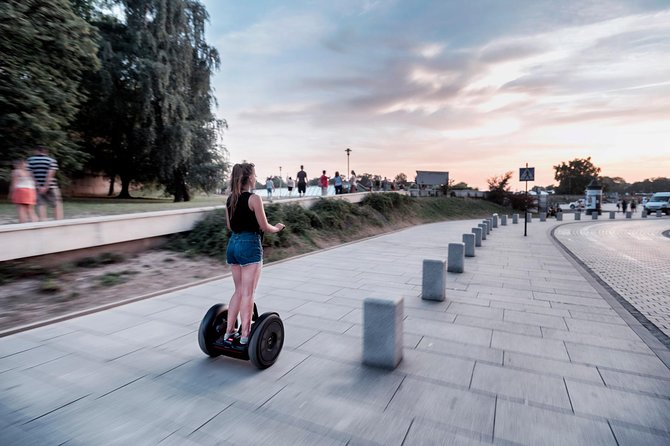
The guide makes or breaks this activity. A Segway can carry you across town, but it cannot explain why a square matters or connect a synagogue, castle, theatre, and university into one understandable story.
Guides named in connection with the experience include Zee, Constantine, Tomaz, Justyna, and Arthur. Zee has been praised for mixing city history with useful suggestions for food, galleries, and other sights. Constantine has been noted for a friendly, capable approach, while Justyna has been associated with giving people time to stop and take photos.
Arthur has been described as engaging and informative. At the same time, some participants felt unsafe on busy pavements, roads, tram lines, curbs, and cobblestones, and one person was left behind more than once. That is worth taking seriously. Tell the guide if you are nervous, have trouble keeping pace, or need another practice run.
English is the listed language. Most of the feedback about communication is positive, but a few people found fast speech, accents, jokes, and Polish names difficult to understand. This tour works best when you are comfortable asking questions rather than silently missing parts of the explanation.
Safety, surfaces, and weather
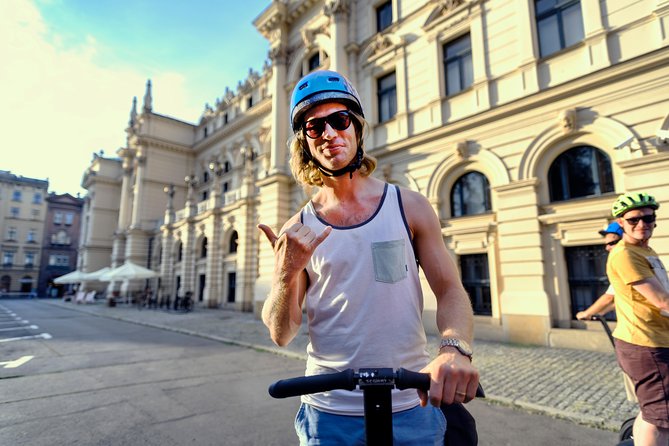
The operator supplies a Segway and helmet, along with required safety equipment. Many people find the machines easy to ride after training, and several accounts describe feeling safe and well looked after.
Still, this is not a smooth-pavement-only ride. The route can include cobbled areas, curbs, busy sidewalks, roads, and tram lines. You should be comfortable steering and stopping in an urban setting. If you are uneasy on wheeled devices, a walking tour may give you more peace of mind.
Weather can change the experience sharply. Light rain has been handled with waterproof ponchos, and guides have even helped people find gloves in very cold conditions. That is thoughtful, but three hours outside in cold or wet weather can still become uncomfortable. Check the forecast, wear warm layers, and do not assume the Segway itself keeps you warm.
Is $101.17 good value?
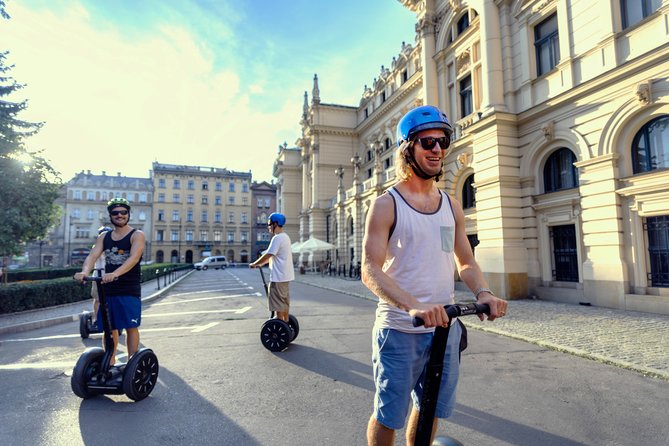
At $101.17 per person, this is not the cheapest way to see Krakow. You are paying for the equipment, helmet, training, guide, and the ability to cover two major districts in one outing.
The value improves if you have only a short stay or want a broad orientation on your first morning. You can see far more than you normally would on foot in three hours, then return to the places that deserve a longer visit. The guide’s restaurant, gallery, and sightseeing suggestions also add value if they are specific and useful.
The price is less appealing if you mainly want long visits inside museums, churches, or synagogues. None of the listed stops includes an admission ticket, and the talks are generally around 10 minutes each. Think of this as a moving introduction to Krakow, not a substitute for detailed site visits.
Free cancellation is available if you cancel at least 24 hours before the start time. Within 24 hours, you do not receive a refund, and changes are not accepted. Confirmation is normally sent at booking, although bookings made within 12 hours of departure are confirmed as soon as possible, subject to availability.
Who should book this Krakow ride?
I would choose this tour if you want to cover ground, enjoy a little action, and learn the basic shape of Krakow quickly. It suits couples, families with eligible older children, and active older adults. Three women in their sixties have completed the route successfully, which shows that age alone is not a barrier.
It is also a strong first-day choice. You get an overview of the Old Town and Kazimierz, then can spend the rest of your stay returning to Szeroka Street, Wawel Castle, the Old Synagogue, or any other stop that interests you.
I would think twice if you dislike balance devices, have difficulty with curbs or uneven surfaces, or are booking during very cold or wet weather. You should also consider a shorter tour if three hours outside sounds tiring.
Should you book the full three-hour tour?
Book it if your priority is seeing a large part of Krakow while learning the city’s basic story. The route is broad, the Segway saves time, and the mix of royal, academic, religious, Jewish, and civic sights gives you a useful first look.
Skip it in favor of a walking tour if you want long, quiet visits inside historic buildings or if urban riding makes you nervous. For most confident riders with limited time, though, the full route offers a lively and efficient introduction to Krakow, with enough local detail to shape the rest of your visit.
FAQ
How long does the Segway tour last?
The experience lasts approximately three and a half hours. This includes a 15-minute training session, about three hours of guided riding, and a short break in the middle.
Where does the tour start?
The tour starts at Segway Point Krakow, Sienna 17, 33-332 Kraków, Poland.
Where does the tour end?
The activity ends back at the meeting point on Sienna Street.
Is Segway training included?
Yes. A 15-minute training session takes place before the guided tour begins.
Is a helmet provided?
Yes. The tour includes a Segway, helmet, and other necessary safety gear.
What language is the tour offered in?
The tour is offered in English with live commentary from a local guide.
What places does the tour visit?
The route includes Krakow’s Main Square, the Barbican, Slowacki Theatre, Wawel Royal Castle, St. Florian’s Gate, Grunwaldzki Monument, Collegium Novum, the Old Synagogue, Plac Wolnica, Corpus Christi Church, the Church on the Rock, Szeroka Street, Remuh Cemetery, and the Father Bernatek Footbridge.
Is there a weight requirement?
Yes. The minimum weight is 30 kilograms, or 65 pounds, and the maximum is 135 kilograms, or 300 pounds.
Can children join the tour?
The supplied tour information says most people can participate but does not give a minimum age. It does specify the minimum and maximum weight requirements.
What happens if I cancel?
You receive a full refund if you cancel at least 24 hours before the start time. Cancellations and changes made within 24 hours are not accepted and are not refunded.
Just added around Krakow
- Tour to Wadowice: Hometown of Pope Saint John Paul II★ 4.6 · 12 reviews
- The Jewish Quarter – Walking Tour★ 5.0 · 4 reviews
- From Kraków; to Białka Thermal Baths private tour★ 5.0 · 5 reviews
- St. Mary’s Basilica and more – a short walk with a guide★ 4.7 · 56 reviews
- Krakow: Auschwitz-Birkenau and Wieliczka Salt Mine Day Trip★ 4.7 · 84 reviews
- Krakow: Skip-the-Line Wawel Castle & Old Town Guided Tour★ 4.9 · 23 reviews
- Krakow: Schindler’s Factory Guided Tour★ 4.2 · 12 reviews
- Shooting Range Experience!★ 4.8 · 66 reviews
Kazimierz Jewish Quarter Tours, compared.
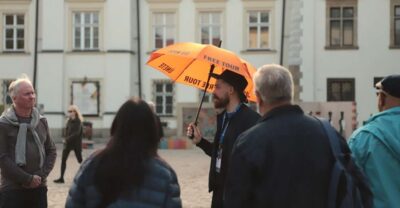

Bike Tour of Old Town, Jewish Quarter and the Ghetto
Read our review →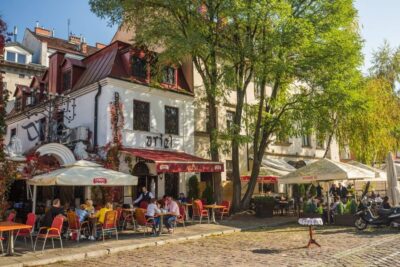
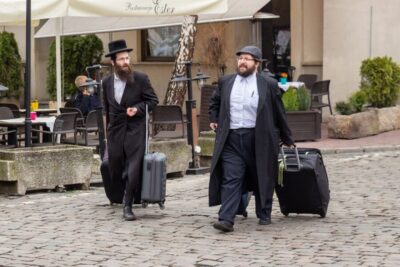
Kazimierz, Schindler’s Factory & Ghetto Guided Tour
Read our review →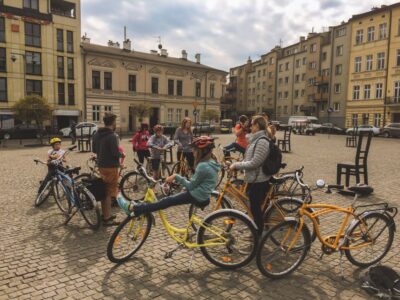
Bike Tour of the Old Town, Kazimierz, and the Ghetto
Read our review →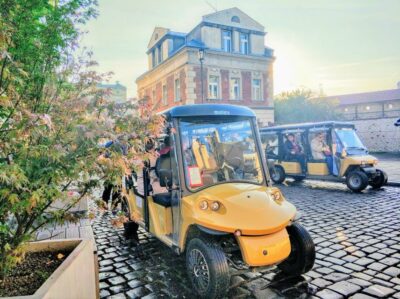
Jewish Quarter and Ghetto Electric Golf Cart Tour
Read our review →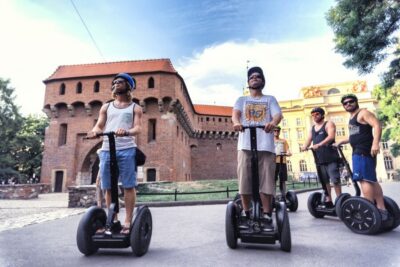
Browse the lists this tour appears in