
Reviewed · KAZIMIERZ JEWISH QUARTER TOURS
Krakow: Jewish Quarter and Former Ghetto Tour
Kazimierz is more than a pretty district of small streets and old synagogues. It was once a separate city, founded near Krakow as a rival, then became a center of Jewish life after Jewish communities began settling there in the Middle Ages. This walking tour connects that long story to the destruction of World War II and the memorials left behind.
I like the way the tour joins Jewish culture before the war with the former ghetto and its Holocaust memorials. I also like the local guide format, especially when you get a strong storyteller such as Bart, Magda, Matt, Slavek, or Emily. The main drawback is the pace: you walk for 2.5 hours, and some visitors may find the amount of information and movement a little rushed.
Key points to know before you go
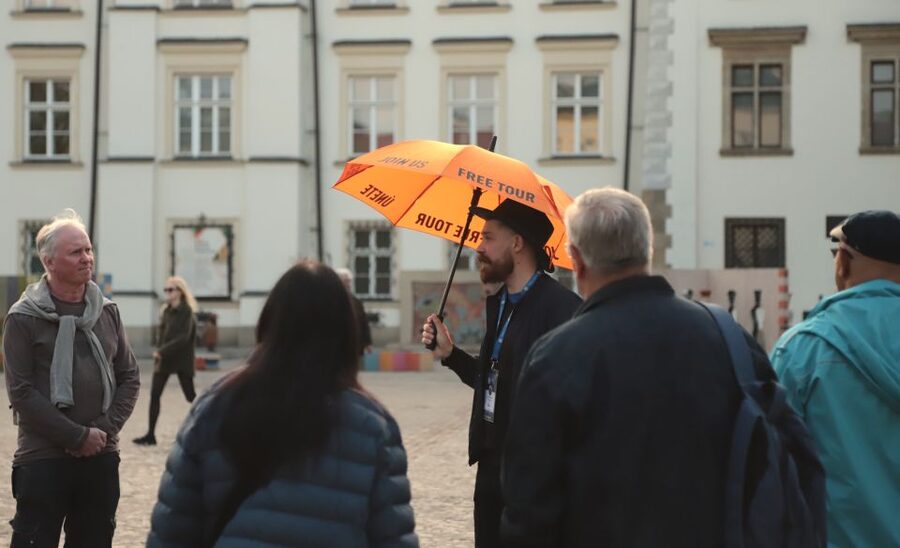
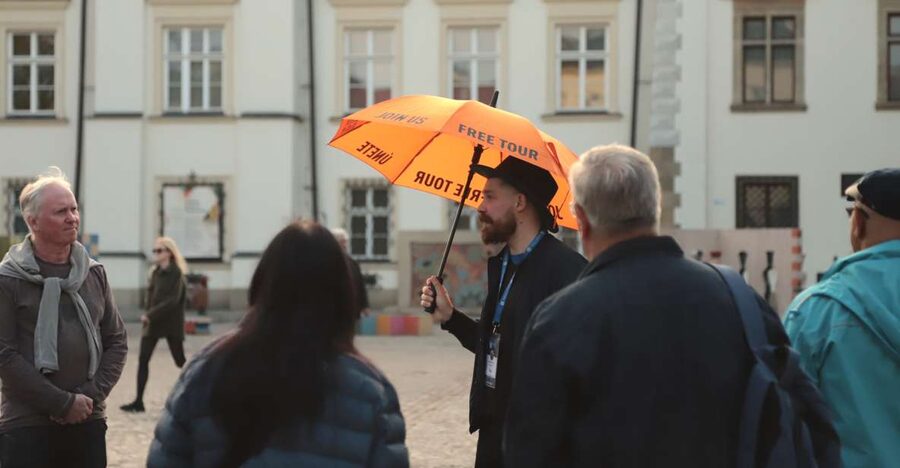
- Start at the Old Synagogue: Meet at ul. Szeroka 24, in front of the synagogue, and look for the orange umbrella.
- See history in layers: The route covers medieval Jewish settlement, prewar daily life, World War II, and modern Krakow.
- Expect an outdoor memorial walk: The Jewish cemetery, Heroes of Ghetto Square, and Holocaust memorials are important stops.
- Schindler’s List connections: You visit filming locations linked with Steven Spielberg’s film, though this is a walking tour rather than a museum visit.
- A guide makes the difference: The best guides use clear storytelling, answer questions, and point out easy-to-miss buildings.
- Good value at $19: You get a 150-minute English walking tour with a local guide, but food, drinks, and indoor museum admission are not included.
Starting beside the Old Synagogue on Szeroka Street
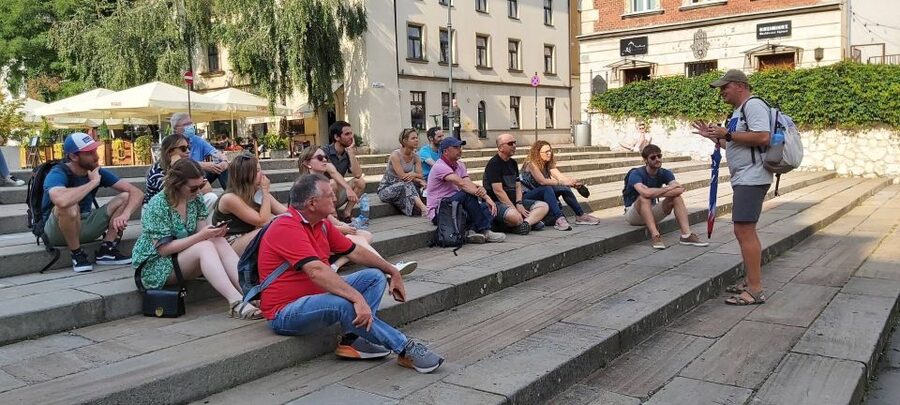
The tour begins in front of the Old Synagogue at ul. Szeroka 24. This is a useful meeting point because Szeroka Street gives you an immediate sense of Kazimierz as a historic Jewish center, not simply a nightlife district.
Look for the guide with an orange umbrella. That detail matters in a busy square, especially when several walking groups gather at the same time. Arrive with comfortable shoes and enough layers for the weather. The whole experience takes place on foot, and a February booking noted that you should wrap up warmly because you will be outside for more than two hours.
The Old Synagogue is presented as the oldest synagogue in Poland and as the second oldest synagogue in Europe. Its importance is not only architectural. It gives the tour a clear starting point for understanding how Jewish religious and community life took root in Kazimierz.
You should not expect a long indoor visit here. The activity is a walking tour, not a synagogue entry ticket or museum tour. The value comes from the guide explaining what you are seeing, how the district developed, and what daily life once looked like around these streets.
More Kazimierz Jewish Quarter Tours in Krakow:
- Krakow: Bike Tour of Old Town, Jewish Quarter and the Ghetto
★ 4.9 · 1,155 reviews - Krakow: Kazimierz Jewish Quarter Walking Tour
★ 4.8 · 571 reviews - Krakow: Kazimierz, Schindler’s Factory & Ghetto Guided Tour
★ 4.8 · 460 reviews
Kazimierz before 1939: a city within a city
The first major part of the walk explains how Kazimierz developed near Krakow. It was established as a separate city on an island and was intended to compete with its larger neighbor. Jewish people who faced persecution in parts of Western Europe began settling here, and over time Kazimierz became a place of Jewish prosperity.
That context is important. Without it, a visitor can walk past a synagogue, cemetery, or narrow lane and see only attractive old buildings. The guide helps connect those places to schools, families, worship, trade, language, and ordinary routines.
You will hear about Ashkenazim and Sephardim, two major Jewish cultural traditions. You will also be introduced to people connected with Krakow and Jewish history, including Helena Rubinstein, Roman Polanski, Ludwik Zamenhof, and Maximilian Faktorowicz.
These names widen the story beyond the Holocaust. Helena Rubinstein and Maximilian Faktorowicz point to Jewish entrepreneurs who built international businesses. Roman Polanski connects Krakow to film and memory. Ludwik Zamenhof, creator of Esperanto, adds another link to Jewish intellectual and cultural life.
This is one of the tour’s strongest features. It does not treat Kazimierz only as a place of tragedy. You get a picture of a living community, its traditions, and the people who shaped Poland and the wider world.
Synagogues, small streets, and details you could miss
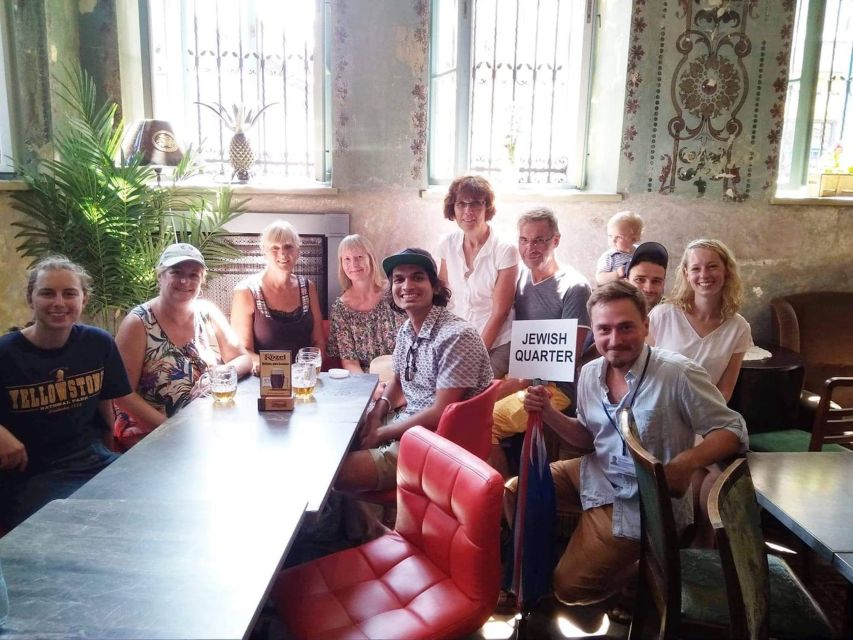
Kazimierz is easy to explore on your own, but it is not always easy to understand. A guide can point out buildings that look ordinary at first glance and explain why they matter.
The route includes synagogues and small streets where Jewish life once unfolded. The physical setting is compact, but the subject is not. A stop may lead from architecture to religious practice, then to family life or the changing political situation in Poland.
I like this kind of walking because it keeps the history tied to real places. You are not sitting in a classroom while someone lists dates. You are standing in the district itself, looking at the buildings and streets that carry the story.
The quality of the guide matters here more than any fixed route. Bart is repeatedly praised for his clear voice, dry humor, passion, and strong command of Krakow’s history. Magda is described as warm, patient, and good at stopping for questions. Matt is praised for making the past feel immediate, while Slavek, Emily, and Chris are also noted for clear, engaging presentations.
Guide assignments can change, so you cannot book a particular person from the information provided. Still, the repeated praise for several guides suggests that the experience depends on a team with strong local preparation rather than a single personality.
The Jewish cemetery and the weight of remembrance
The Jewish cemetery gives the tour a quieter turn. This is one of the places where the subject becomes more personal. Tombstones and burial grounds are not just historic sights. They show the presence of families and generations who lived in Kazimierz before the destruction of World War II.
Your guide explains the cemetery within the wider story of Jewish life in Krakow. That is useful because it prevents the stop from becoming a quick photo break. You begin to understand that the community did not appear suddenly in wartime records. It had roots, institutions, and people whose lives stretched across centuries.
The tour then moves into the history of persecution and the Holocaust. The tone is serious and respectful. One of the strongest aspects of the experience is the balance between clear explanation and emotional restraint. The subject can be upsetting, but the best guides avoid turning it into spectacle.
You should give yourself time after the tour to process what you have heard. The route covers a great deal in 150 minutes, and one visitor found the information slightly rushed, with little time to absorb every story. If you prefer a slow, reflective visit, plan to return to the cemetery or parts of Kazimierz on your own later.
More Jewish Ghetto Tours in Krakow:
- Krakow: Schindler’s Factory & Ghetto Guided Tour
★ 4.7 · 1,694 reviews - Full Bike Tour – the Old Town, Jewish Qtr & the Ghetto NEW BIKES
★ 5.0 · 437 reviews - Krakow: Bike Tour of the Old Town, Kazimierz, and the Ghetto
★ 4.9 · 350 reviews - Krakow: Jewish Ghetto Walking Tour
★ 4.6 · 349 reviews
Crossing into the former ghetto
The second part of the tour focuses on Krakow’s former Jewish ghetto and the events of World War II. The change in subject is sharp. Kazimierz helps you understand the community that existed before the war; the ghetto shows how that community was confined and destroyed.
The walk includes a Holocaust memorial and Heroes of Ghetto Square. These places give the history a public, physical form. Instead of hearing only about deportations and suffering, you see how Krakow marks the people who were forced into the ghetto and those who were murdered.
This is not a light sightseeing stop. You should expect difficult material and a reflective atmosphere. Several guides are praised for handling this part with care, getting the tone right, and explaining events in a way that feels human rather than theatrical.
The route remains accessible to wheelchair users, according to the activity details. Even so, you should be prepared for a substantial amount of outdoor walking and for the possibility that the group will keep moving between stops. The tour includes rest points, according to one detailed account, but it is not a seated experience.
Heroes of Ghetto Square and the Holocaust memorial
Heroes of Ghetto Square is one of the tour’s most memorable locations. The memorial gives you a place to pause and consider the people who were imprisoned in the ghetto. Your guide explains its meaning and connects it to the wider history of Krakow’s Jewish population during the war.
A good guide is especially valuable here. The square can be visited independently, but a short stop without context may leave you unsure what you are looking at or why the design matters. The tour turns the memorial into part of a larger story rather than an isolated monument.
The guide also addresses what happened to Jewish people before and during World War II, along with aspects of Jewish culture before and after the war. That broader view is worth your time. It shows the Holocaust as the destruction of real communities, not as a separate chapter detached from everyday life.
The experience can be moving, and at times traumatic. Go in with the right expectations. This is not a general city stroll with a brief historical aside. The former ghetto section is central to the tour and deserves attention and respect.
Schindler’s List filming locations
The route includes places used in the filming of Schindler’s List. For many people, the film is their first connection with Krakow’s Jewish Quarter and former ghetto, so these locations offer a useful bridge between popular culture and actual history.
The film connection should be treated as an extra layer, not the main purpose of the tour. The guide uses the locations to discuss Krakow, the wartime setting, and the way the area has been represented on screen. You get more from these stops if you already know the film, but you do not need to be a film expert.
Take care when the group reaches a filming location. One solo visitor lost sight of the guide while taking photographs near Schindler’s site and accidentally followed another group. Keep the orange umbrella in view, and do not wander far from the group when stopping for pictures.
The tour does not include food, drinks, or a dedicated visit inside a museum. If you want more time at Schindler’s Factory or another indoor site, plan that separately. This walking experience gives you a strong outdoor introduction, but it does not replace a full museum visit.
How the 150-minute format works
Two and a half hours is enough to connect Kazimierz, the former ghetto, the cemetery, memorials, and filming locations. It is also short enough to fit neatly into a busy Krakow itinerary.
The tradeoff is density. You receive a lot of information while walking, and the tour can run close to three hours depending on the guide and group. One booking described the experience as detailed but slightly rushed, while another found that the time passed quickly because the guide kept the group engaged.
The strongest guides use frequent stops, clear voices, and questions to keep people involved. Bart is praised for being easy to hear and for maintaining a good pace. Magda is noted for stopping to invite questions. Those details matter more than a flashy presentation when you are outdoors in a city street.
Wear comfortable shoes. Bring water, though you cannot count on a food or drink stop being part of the activity. In cold months, dress more warmly than you might expect. In warmer weather, remember that the route is still long enough for sun, thirst, and tired feet to affect your attention.
Is $19 a fair price?
At $19 per person, this is a strong value if you want structure and context. You receive an experienced local guide and 150 minutes of walking, which works out to a modest price for a focused history tour in central Krakow.
The value is not in the number of attractions checked off. It is in the connections between them. The guide explains why Kazimierz mattered, how Jewish life developed there, what changed during World War II, and how the former ghetto is remembered today.
You could walk around the district for free, but you would likely miss many of the buildings and stories that make the area meaningful. The price also saves you from piecing together the route and reading separate background notes at every stop.
There is one point to consider. The same meeting and route may also be available through a donation-based format, according to information shared by one booking. If you prefer paying a fixed amount in advance, the $19 option is straightforward. If you choose a free format, you should decide what you feel the guide’s time and work are worth.
The tour allows cancellation up to 24 hours before departure for a full refund, and you can reserve now and pay later. English is the stated language, and the tour is wheelchair accessible. Alcohol, drugs, and party groups are not allowed, which fits the serious nature of the experience.
Who will get the most from this walk?
I would choose this tour if you are visiting Krakow for the first time and want to understand Kazimierz beyond its restaurants and old streets. It suits anyone interested in Jewish culture, World War II, Holocaust remembrance, architecture, or the history behind Schindler’s List.
It is also useful if you have already walked around Kazimierz and felt that you were seeing the area without understanding it. A guide can add the missing structure and show you places you could easily pass by.
Families with older children and teenagers may find the route worthwhile, but the Holocaust material requires maturity. People who want a relaxed food tour, a nightlife outing, or a short photo walk should choose something else.
You should also be comfortable standing and walking outdoors for at least 2.5 hours. The route is described as wheelchair accessible, but anyone with limited stamina should still check the practical conditions before booking because the tour keeps moving between several locations.
Should you book the Jewish Quarter and Former Ghetto Tour?
I would book it for the first or second day of a Krakow visit. It gives you a useful framework for returning to Kazimierz, visiting museums, or spending more time at the memorials later.
The tour earns its strong 4.9 rating from 1,441 ratings through its guides, subject knowledge, and respectful storytelling. Bart, Magda, Matt, Slavek, Emily, and Chris are all praised for making a difficult subject clear and engaging, though the exact guide cannot be guaranteed.
Book this walk if you want history tied to real streets and memorials, not just a list of sights. Skip it only if you prefer to explore at your own speed, need frequent indoor breaks, or are not ready for the emotional weight of the former ghetto and Holocaust sections.
FAQ
Where does the tour meet?
The tour meets in front of the Old Synagogue at ul. Szeroka 24 in Krakow. Look for the guide carrying an orange umbrella.
How long does the tour last?
The stated duration is 150 minutes, or 2.5 hours. One booking described the actual walk as close to three hours, so allow a little extra time.
What language is the tour in?
The tour is conducted in English by a live local guide.
What sights are included?
The walk includes the Old Synagogue area, Jewish synagogues and streets in Kazimierz, the Jewish cemetery, Holocaust memorials, Heroes of Ghetto Square, the former ghetto, and filming locations connected with Schindler’s List.
Is the tour wheelchair accessible?
Yes. The activity is listed as wheelchair accessible.
Are food and drinks included?
No. Food and drinks are not included in the tour price.
Can I cancel or pay later?
You can cancel up to 24 hours in advance for a full refund. The reserve-now, pay-later option lets you hold a place without paying immediately.
Just added around Krakow
- Tour to Wadowice: Hometown of Pope Saint John Paul II★ 4.6 · 12 reviews
- The Jewish Quarter – Walking Tour★ 5.0 · 4 reviews
- From Kraków; to Białka Thermal Baths private tour★ 5.0 · 5 reviews
- St. Mary’s Basilica and more – a short walk with a guide★ 4.7 · 56 reviews
- Krakow: Auschwitz-Birkenau and Wieliczka Salt Mine Day Trip★ 4.7 · 84 reviews
- Krakow: Skip-the-Line Wawel Castle & Old Town Guided Tour★ 4.9 · 23 reviews
- Krakow: Schindler’s Factory Guided Tour★ 4.2 · 12 reviews
- Shooting Range Experience!★ 4.8 · 66 reviews
Kazimierz Jewish Quarter Tours, compared.
Bike Tour of Old Town, Jewish Quarter and the Ghetto
Read our review →
Kazimierz, Schindler’s Factory & Ghetto Guided Tour
Read our review →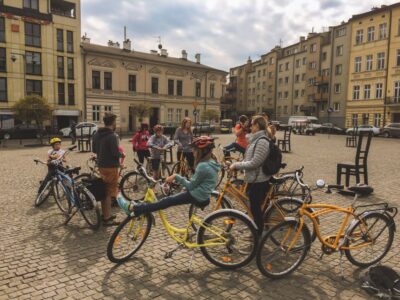
Bike Tour of the Old Town, Kazimierz, and the Ghetto
Read our review →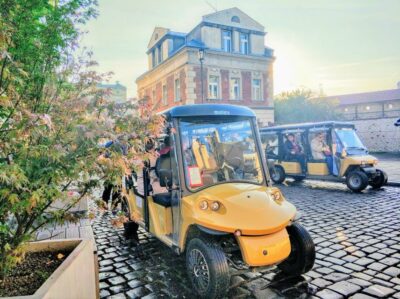
Jewish Quarter and Ghetto Electric Golf Cart Tour
Read our review →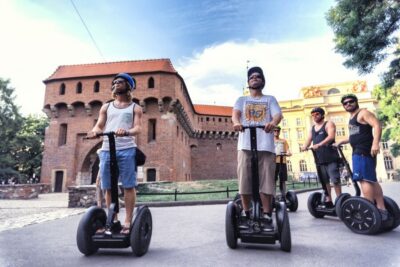
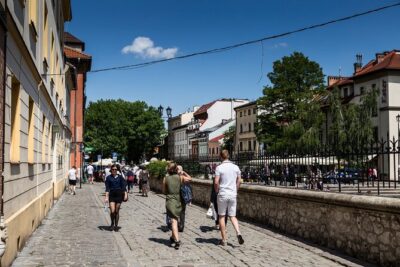

Half-Day Krakow Food Tour in Old Town and Kazimierz
Read our review →Browse the lists this tour appears in