
Reviewed · CITY TOURS
Faces of Warsaw’s 3-hour orientation city tour with hotel pick-up
Warsaw’s story is unusually concentrated on this three-hour private tour. You move from royal gardens to the former Jewish ghetto, then on to the rebuilt Old Town and the communist-era Palace of Culture. I like the way the route shows both beauty and pain without pretending the city has only one identity. I also like the hotel pickup and private vehicle, which save time in a spread-out capital.
The drawback is pace. Fifteen or thirty minutes at a stop gives you an orientation, not a full museum visit. The tour also ends at the Maria Skłodowska-Curie Museum, where admission is not included, so you will need another visit if you want to go inside.
Key points to know before booking
- A private route with hotel pickup: You ride in an air-conditioned car or minibus, with parking included and only your group taking part.
- Warsaw’s major contrasts in one morning or afternoon: Royal Łazienki, the Palace of Culture, Jewish heritage sites, and the UNESCO Old Town all fit into one route.
- Strong focus on twentieth-century Poland: Grzybowski Square, the POLIN area, the ghetto hero monument, and Umschlagplatz add serious historical weight.
- An English-speaking guide leads the experience: Guide Marzena is specifically praised for patient answers, good cheer, and a clear view of Polish life.
- Most stops are exterior visits: Admission is free at the listed landmarks, but the Maria Skłodowska-Curie Museum ticket is not included.
- A useful first look, not a deep museum day: The tour helps you choose where to return, especially if Warsaw is your first stop in Poland.
Why this three-hour Warsaw tour works as an introduction
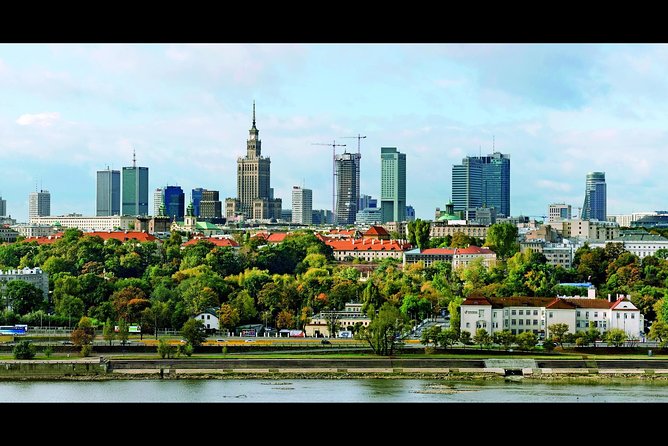
This is best understood as a city orientation by car, with short walks at the places that matter most. Warsaw is not a city you can neatly grasp from one square. Its royal past, wartime destruction, Jewish heritage, communist years, and modern growth sit close together, but not always within an easy walking route.
The private vehicle makes that range practical. You are picked up from your hotel or city-center accommodation, either at reception with a PolinTours sign or in a car waiting near the entrance. Private transportation, parking fees, and return transport are included. The supplied details do not specify the vehicle size for each booking, only that transport is by air-conditioned car or minibus.
You should expect a guide-led introduction rather than a set of long visits inside buildings. Most stops are timed at ten to thirty minutes. That is enough to hear the main story, take photographs, and decide what deserves more of your time later.
The tour is offered in English and is a private activity, so your group does not share the guide with strangers. That matters here because Warsaw’s wartime sites can raise difficult questions. A private setting gives you room to ask them without worrying about holding up a large group.
A few more Warsaw trips to weigh up
- 3-Hour Guided Cycling Tour of Warsaw
★ 4.9 · 624 reviews - Warsaw Old Town 1.5-Hour or Full 3-Hour Segway Tour
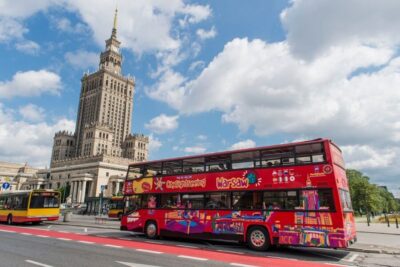
★ 4.9 · 209 reviews - Warsaw: 3-Hour Panoramic City Bus Tour with Pickup
★ 4.5 · 169 reviews
Łazienki Park and the royal beginning
The route includes about thirty minutes at Royal Łazienki Park and Palace Complex, one of Warsaw’s grandest public spaces. The name refers to the Royal Baths, and the complex combines parkland, palaces, and royal residences.
This is the tour’s calm opening scene. After that, the route moves through subjects that are much harder to absorb, so the royal park gives you a clear starting point for Warsaw’s older political and cultural life. Admission to the stop is free.
Thirty minutes will not cover every building or path in the complex. Think of it as a guided introduction to the grounds rather than a full park visit. If you enjoy gardens, palace interiors, or unhurried walks, plan to return on your own.
Parliament, the Palace of Culture, and modern Warsaw
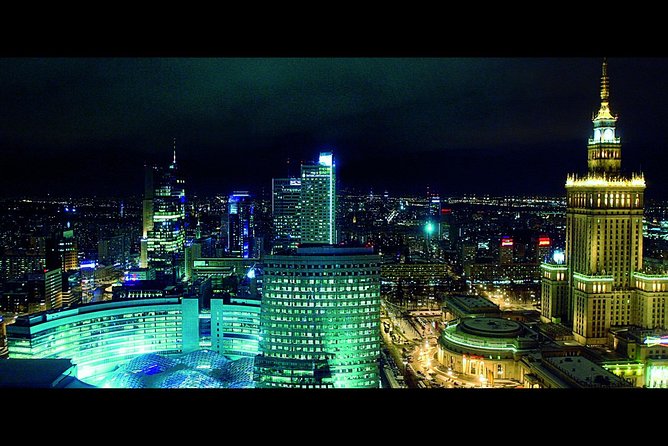
The tour then turns toward the seat of Poland’s parliament and the Palace of Culture and Science. The supplied route describes the parliament as the seat of the Polish Reichstag, but the important point for you is that the guide introduces Poland’s national political center.
The Palace of Culture brings a very different kind of history. It was a controversial gift from Stalin and remains one of the clearest reminders of Poland’s communist period. You will hear how that legacy still shapes the way people see the building.
This section also presents Warsaw as a city of sharp contrasts. Modern development appears beside older buildings and places marked by war. The experience does not treat the capital as a preserved historic town. It shows you a city that was heavily damaged, rebuilt, and still changing.
The tour does not list an interior visit to the Palace of Culture or parliament. You will see the important sites and hear their context from outside or during the drive. That keeps the schedule moving, but it also means you should not book this expecting tower access or a parliamentary tour.
Grzybowski Square and the former Jewish ghetto
At Grzybowski Square, you spend about fifteen minutes learning about the grounds of the former Warsaw ghetto and the history of Warsaw’s Jewish community. The setting can be deceptively ordinary. The guide’s job is to connect the present streets with the events that took place here.
This is one of the most valuable parts of the route because it shifts the focus from grand buildings to a community that was nearly destroyed. The short stop will not tell every part of Warsaw’s Jewish story, but it gives you a place-based introduction before the next sites.
The timing is tight, so listen closely and ask questions as they come to you. If this subject is central to your visit, you will likely want to return to the POLIN Museum for a longer visit.
Same country, a completely different kind of day:
- Warsaw: Chopin Concert in the Old Town
★ 4.8 · 2,287 reviews - Warsaw: Traditional Galar Cruise on The Vistula River
★ 4.6 · 1,640 reviews - Warsaw: Old Town Highlights Walking Tour in English
★ 4.7 · 1,516 reviews - Warsaw Concert: Chopin – Painted by Candlelights with Wine
★ 4.8 · 1,442 reviews
POLIN and the Warsaw Ghetto Heroes Monument
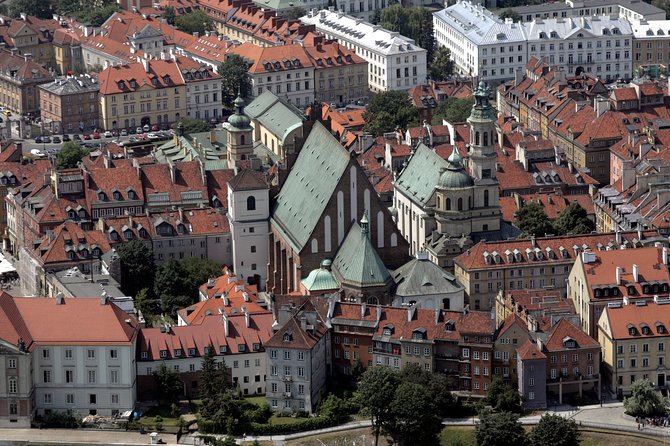
The next stop is the POLIN Museum of the History of Polish Jews area, with about twenty minutes focused on the Warsaw Ghetto Heroes Monument and the ghetto uprisings. The monument is also linked with Willy Brandt’s famous gesture of kneeling there, an act associated with Germany’s postwar reckoning.
The route description places you at the museum and monument, but it does not include museum admission. Do not assume that the twenty-minute stop gives you time to tour the POLIN galleries. It is better to see this as an exterior orientation and a chance to understand why the monument matters.
This is also a useful example of the tour’s style. You are not simply driven past a landmark for a quick photograph. The guide connects the location to the heroic uprisings in the Warsaw ghetto, helping you read the site as more than a monument in a modern city.
Umschlagplatz and the hardest stop
At Umschlagplatz, you spend about fifteen minutes at the place where deportations of Warsaw’s Jews were organized during the Holocaust. The route presents it plainly as one of the places where the Nazi Final Solution was put into practice.
This may be the most emotionally difficult stop. The short time can be an advantage, since the guide gives you a focused explanation without turning the entire tour into a long memorial visit. It can also feel too brief if you want to reflect or ask many questions.
I would keep your schedule flexible after this section. The tour moves on to the Old Town, but the change in mood is abrupt. That contrast is part of Warsaw’s reality, not a flaw in the route, yet you should know that this is a serious history tour as well as a sightseeing trip.
Sigismund’s Column and the rebuilt Old Town
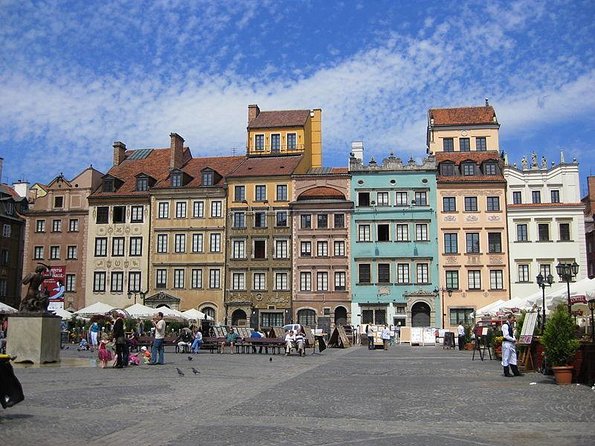
The route reaches King Sigismund’s Column in Castle Square, one of the clearest entry points to historic Warsaw. From here, you begin the Old Town portion and hear about the city’s reconstruction and UNESCO World Heritage status.
The Old Town you see today was rebuilt after wartime destruction. Its painted facades, royal references, and carefully restored streets can look centuries old, but the story behind them is modern and remarkable. The guide helps you understand that this is not simply an untouched medieval quarter.
The stop is listed at about fifteen minutes for the column, followed by about thirty minutes at the Old Town Market Square. That gives you a better chance to walk through the romantic streets, see the architectural details, and get your bearings around the main square.
The route starts at Sigismund’s Column as a listed meeting point, though hotel pickup is offered in the city center. It ends near the Maria Skłodowska-Curie Museum in the Old Town area. Confirm your pickup details when booking, especially if your accommodation is outside the city center.
The Presidential Palace and famous Polish names
At the Presidential Palace, you hear about major Polish figures, including Frederick Chopin, Marie Curie, and Lech Wałęsa. The stop lasts about ten minutes, so expect a concise introduction rather than a long visit.
These names help broaden the tour beyond war and politics. Chopin connects Warsaw with music, Curie with science, and Wałęsa with the modern struggle against communist rule. Together, they show how the guide places Polish culture and public life into the city tour.
The supplied information does not state that you enter the Presidential Palace. Treat it as a landmark stop and a setting for the guide’s explanation.
The Old Town Market Square and Marie Curie’s birthplace
The Old Town Market Square receives the longest walking stop, about thirty minutes. This is where the tour’s visual side becomes strongest: narrow streets, reconstructed facades, royal associations, and the compact square that anchors the historic district.
You can stroll here while the guide explains how the Old Town fits into Warsaw’s larger story. The UNESCO designation is not just a label to collect. It reflects the importance of the reconstruction and the care taken to restore a historic center after devastation.
The final stop is the Maria Skłodowska-Curie Museum at Freta Street, located in the Old Town area. You see the birthplace of the scientist better known internationally as Marie Curie and learn more about Warsaw’s most famous woman.
The tour ends here, which is practical if you want to continue exploring the Old Town on foot. Museum admission is not included, and the stop is listed at about ten minutes. If the museum interests you, check its opening arrangements separately and return with enough time for a proper visit.
What the guide adds to the experience
A short Warsaw route depends heavily on the guide. The most specific feedback available names Marzena, who is praised for her historical perspective, patient answers, and cheerful manner. That combination matters more than a long list of dates. Warsaw’s story includes grief, political argument, and national pride, so a guide who can answer questions calmly is a real advantage.
Another assessment highlights an exceptional guide with a strong understanding of life in Poland. The guide’s local perspective is especially useful at the Palace of Culture, the reconstructed Old Town, and the sites connected with the Jewish community.
Guide assignments can vary, so Marzena may not be the person leading your booking. Still, the experience is designed around an English-speaking guide rather than an audio recording or a self-guided route. You should use the private format to ask about the parts of Polish life that interest you most.
Is $72.72 a fair price?
At $72.72 per person, this is not the cheapest way to see Warsaw’s sights. Its value comes from the combination of private transportation, hotel pickup and return, parking, an English-speaking guide, and a route that covers a wide area in about three hours.
For a solo visitor, the price may feel high because the vehicle and guide cost are not spread across a large group. For two or more people, the private format becomes easier to justify, particularly if you value door-to-door service and want to ask questions freely. Group discounts are offered, though the amount is not specified.
The free admission at most stops also keeps extra costs down. Lunch is not included, but the short duration means you can arrange food before or after the tour. The Curie Museum is the only listed stop with admission not included.
The experience is booked, on average, eleven days ahead. That is a useful sign to plan rather than leave it until the last day, especially if you want a particular date or have limited time in Warsaw. Free cancellation is available up to twenty-four hours before the start time, based on local time.
Who should book this private orientation?
I would choose this tour if Warsaw is your first stop and you want a clear framework before exploring alone. It suits people who prefer a private guide, have only a few hours, or find it difficult to connect separate landmarks on a map.
It is also a good fit for families or mixed-age groups because the air-conditioned vehicle reduces long walks between districts. Most travelers can participate, service animals are allowed, and the tour is near public transportation, according to the supplied details.
You may want a different plan if your main goal is extended museum time. The route does not provide a full visit to POLIN, Łazienki’s palace interiors, the Palace of Culture, or the Curie Museum. It gives you the setting and the story, then leaves you to return.
Should you book Faces of Warsaw?
Book it if you want to see Warsaw’s main themes in one tightly planned outing: royal Poland, Jewish Warsaw, Nazi occupation, communist power, national culture, and the rebuilt Old Town. The private vehicle and hotel pickup are the main reasons to pay more than you would for a basic group walk.
I would especially recommend it for a first visit, a short stay, or anyone who wants a patient English-speaking guide. Skip it if you prefer slow museum visits and long time at each memorial. In that case, use the route as a planning guide and spend separate half-days at POLIN, Łazienki, and the Old Town.
FAQ
How long is the Faces of Warsaw tour?
The tour lasts approximately three hours.
Is hotel pickup included?
Yes. Pickup and return are offered from hotels or accommodations in the city center.
How does the hotel pickup work?
The guide picks you up from reception with a PolinTours sign or waits in the car in front of the entrance to your accommodation.
Is this a private tour?
Yes. Only your group participates in the private activity.
What language is the tour offered in?
The tour is offered in English.
Is transportation included?
Yes. Private transportation by air-conditioned car or minibus is included, along with parking fees.
Is food included?
No. Lunch is not included.
Is admission to the Maria Skłodowska-Curie Museum included?
No. Admission to that museum is not included.
Where does the tour end?
The tour ends at the Maria Skłodowska-Curie Museum on Freta Street, in the Old Town area.
Just added around Warsaw
- World War II Warsaw Old Town, Military Cemetery Walking Tour★ 4.7 · 3 reviews
- Warsaw: Wolf’s Lair & Swieta Lipka Small-Group Tour + Lunch★ 5.0 · 3 reviews
- Wilanów Palace: 2-Hour Guided Tour with Entrance Tickets★ 4.8 · 8 reviews
- Warsaw Zoo Skip-the-Line Entry Ticket with Private Transport★ 4.8 · 3 reviews
- Warsaw Wolf’s Lair with St. Lipka and Mamerki Private Guided★ 4.2 · 3 reviews
- Warsaw: Vistula River Cruise with Your Music & City Views★ 4.6 · 78 reviews
- Warsaw: Private Vodka Tasting Night with Snacks and Pickup★ 5.0 · 7 reviews
- Warsaw Private Wilanow Palace & Garden Tour★ 4.6 · 30 reviews
City Tours, compared.
City Sightseeing Tour Eco Electric Buggy Golf Cart
Read our review →
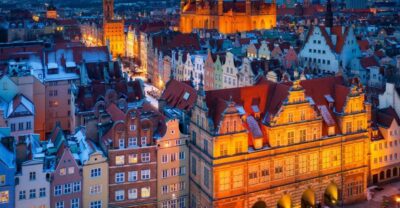
Gdańsk City Sights & History Guided Walking Tour in English
Read our review →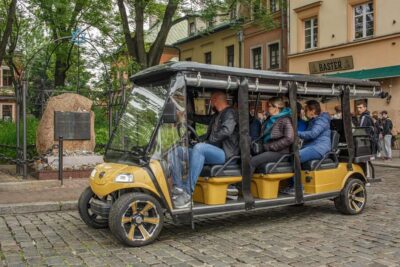
Extended City Sightseeing Tour – Eco Buggy Golf Cart
Read our review →
Browse the lists this tour appears in