
Reviewed · AUSCHWITZ-BIRKENAU MEMORIAL TOURS
From Warsaw Auschwitz and Krakow one day tour by train with pick up and drop off
Auschwitz-Birkenau is the heart of this long day, and the visit is not light sightseeing. You walk through former camp buildings, see the Death Block and Wall of Death, then continue to Birkenau, where the scale of the killing center becomes difficult to grasp. I like the door-to-door coordination and the fact that an English-speaking museum guide handles the most important part. I also like that you get a short look at Krakow’s Old Town instead of spending the entire day at the camp.
The tradeoff is time. With a 5:35 a.m. train from Warsaw, road transfers, three hours in Krakow, and a return train listed for 8:47 p.m., you can expect roughly 16 hours of travel and sightseeing. The schedule works, but delays or late departures can make the day rushed, especially at Birkenau.
Key points to know before booking
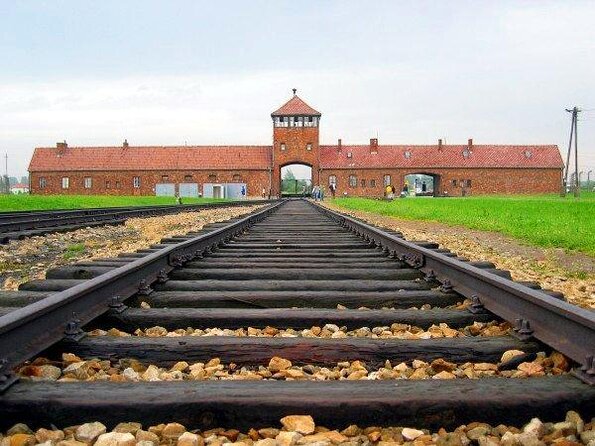
- Auschwitz-Birkenau takes about three hours: The guided visit covers both Auschwitz I and Auschwitz II-Birkenau, with substantial walking and standing.
- Krakow is self-guided: You have about three hours to walk the Main Market Square and nearby Old Town, but no city guide is included.
- The early train sets the pace: The standard plan uses the 5:35 a.m. train from Warsaw and an 8:47 p.m. return from Krakow.
- Hotel pickup may be available: Add your address when booking and wait for confirmation that a driver can collect you there.
- Premium trains cost extra: A faster or more comfortable train option costs 100 PLN, about 25 EUR, per ticket.
- Communication matters: The operator sends the detailed plan one day before, and several strong experiences depended on clear updates and drivers who stayed in contact.
Why this Warsaw to Auschwitz day trip is so long
This is not a simple train ride followed by a museum visit. You are linking Warsaw, Krakow, Oswiecim, Auschwitz-Birkenau, and the return journey in one day. The route works because Poland’s main cities are connected by rail, but the distances still add up.
The advertised schedule includes an early Warsaw departure and a late Krakow return. You should expect an entire day devoted to the excursion, not a casual outing with time for a long lunch or an evening in Krakow. Some journeys have taken longer because of train delays, road traffic, or waiting for late participants.
I see the value in this plan for a short stay in Warsaw. It lets you visit two of Poland’s most important places without changing hotels. You also avoid arranging separate train tickets, local transfers, museum admission, and the return trip yourself.
The price is about $182.23 per person. That is a serious cost for a day trip, but it includes more than admission. The package covers train travel on the stated service, assistance at the stations, transfers around Krakow and Auschwitz, the guided Auschwitz-Birkenau visit, and pickup or drop-off arrangements when confirmed.
Still, do not mistake the price for a fully guided tour of every stop. Krakow is free time. You receive a map and suggestions, then explore on your own. The value is strongest if you want someone else to manage the complicated connections and museum access. If you are comfortable buying train tickets and arranging local transport yourself, an independent visit may cost less.
More Auschwitz-Birkenau Memorial Tours in Warsaw
- Warsaw: Tour to Krakow and Auschwitz by Train with Pickup
★ 4.6 · 603 reviews - From Warsaw: Guided Tour to Auschwitz-Birkenau and Krakow
★ 4.4 · 363 reviews - From Warsaw: Auschwitz-Birkenau Tour by Car
★ 4.5 · 215 reviews
The early train from Warszawa Centralna
The listed meeting point is Warszawa Centralna at Al. Jerozolimskie 54. The standard express train leaves at 5:35 a.m., though your exact pickup time depends on the train selected.
That early start is the main practical challenge. Hotel pickup can make it easier, but only if the operator confirms your address. Drivers carry a card with the lead passenger’s name, which helps at an unfamiliar hotel entrance or station meeting point.
The strongest part of the transport service is personal assistance. Drivers have helped people find the right platform, board the correct train, and reconnect with the group in Krakow. This matters because the day includes several handoffs. You are not simply dropped at a station and forgotten.
Keep your phone charged and save the operator’s contact information. Clear communication has made a real difference when trains were delayed or a passenger needed a new transfer arrangement. WhatsApp has also been used for updates and questions.
The train choice deserves attention. The standard ticket is included, while a premium option costs an extra 100 PLN, or about 25 EUR. The premium service has been described as having Wi-Fi, power outlets, a bar car, and better food choices. One useful tip is to consider upgrading the morning train if you want a more comfortable start. It may be less important on the return, when you may simply want to sleep.
Three hours in Krakow’s Old Town
After arriving in Krakow, you have around three hours for independent sightseeing. The meeting point for the Auschwitz transfer is provided in advance, so read the instructions carefully rather than assuming the driver will collect you at the station entrance.
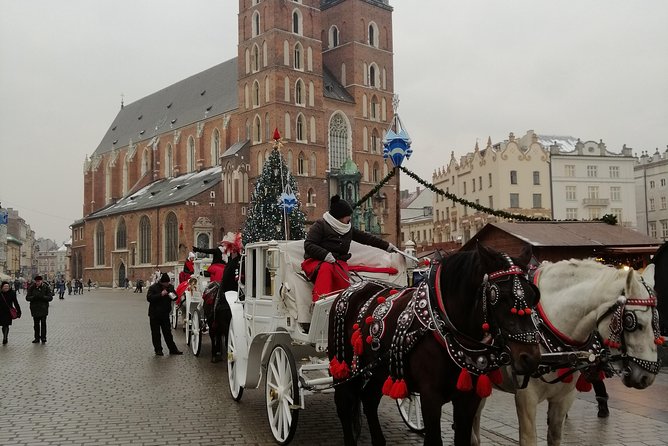
Begin at Krakow’s Main Market Square, one of Europe’s largest medieval squares. The space is broad and easy to use as your base. From here, you can see the Cloth Hall, St. Mary’s Basilica, and the Town Hall Tower, with historic streets leading in every direction.
Wawel Hill is another major sight, with the Royal Castle and Cathedral. Wawel was the formal seat of the Polish monarchy until 1611, and it remains one of the key places for understanding Poland’s royal past. With only three hours, you will likely view the complex from outside rather than attempt a full interior visit.
The Krakow portion is best treated as a focused walk, not a museum program. You can browse the Cloth Hall, pause for a regional meal, and see the main square before meeting your transfer. Horse-drawn cabs, old buildings, restaurants, and bars give the center a pleasant feel, but the time disappears quickly.
One weakness is that the plan may not be obvious to everyone. If you expect a guided city tour, you could be disappointed. Use the free time well by choosing two or three sights before you arrive. I would prioritize the Main Market Square, St. Mary’s Basilica, and a walk toward Wawel rather than trying to cover the whole Old Town.
Road transport from Krakow to Auschwitz can take about 90 minutes or more, depending on traffic and the exact arrangement. That leaves less free time than the simple three-hour figure may suggest. Some schedules include a road journey of roughly an hour and 20 minutes each way.
Entering Auschwitz I
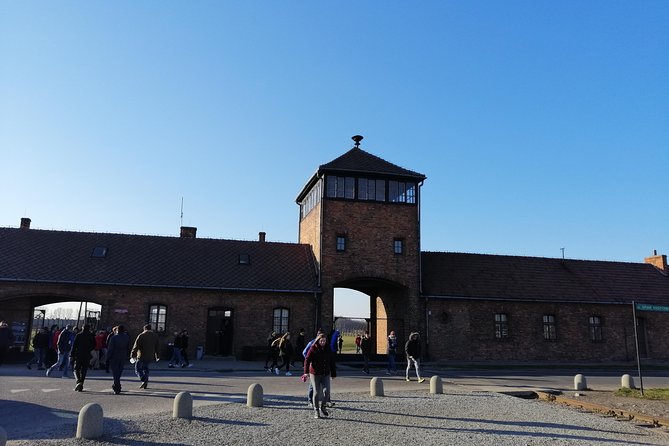
The museum visit lasts about three hours and includes admission. This is the serious center of the day, and you should prepare for a formal, controlled visit rather than a flexible museum stop.
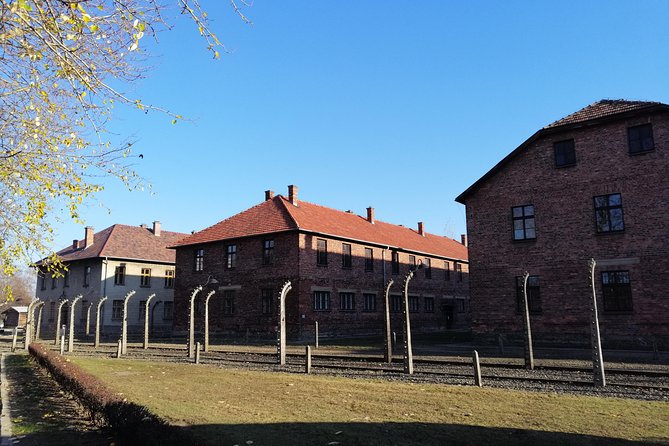
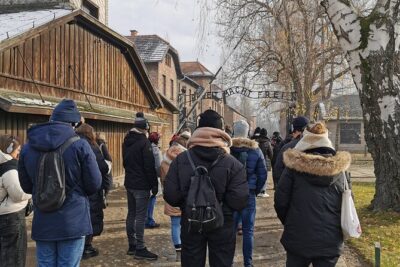
Auschwitz was established by Nazi Germany outside Oswiecim in 1940. The former camp now preserves buildings, objects, documents, and other evidence of the genocide. At Auschwitz I, the route includes Block 11, known as the Death Block, and the Wall of Death, where prisoners were murdered.
The guide provides historical context as you move through the site. English-language guides have been praised for clear explanations, strong command of the subject, and a respectful manner. Guides such as Jacek and Milek have been singled out for answering questions and explaining the setting in a way that helps you understand what you are seeing.
Museum rules and timing shape the visit. Groups have a fixed window, and the guide must keep everyone together. That structure helps the group move through a major site, but it can also limit the time you have to stop at individual displays.
You may encounter long entry lines or equipment problems. One poor experience involved a microphone that cut out for about 20 minutes, leaving some people unable to hear the explanation. That appears to be an operational risk rather than a normal feature, but it is worth speaking up promptly if you cannot hear. Waiting silently can mean missing a large part of the visit.
The setting calls for quiet attention. This is not a place for casual photos, fast commentary, or treating the buildings as ordinary sightseeing stops. I recommend reading a short account of Auschwitz before the tour so the guide’s explanations have a clear frame.
Same country, a completely different kind of day:
- Warsaw: Chopin Concert in the Old Town
★ 4.8 · 2,287 reviews - Warsaw: Traditional Galar Cruise on The Vistula River
★ 4.6 · 1,640 reviews - Warsaw: Old Town Highlights Walking Tour in English
★ 4.7 · 1,516 reviews - Warsaw Concert: Chopin – Painted by Candlelights with Wine
★ 4.8 · 1,442 reviews
The scale of Auschwitz II-Birkenau
The second part takes place at Birkenau, also called Auschwitz II. Nazi Germany established the camp in 1941 near the former village of Brzezinka, about three kilometers from Oswiecim.
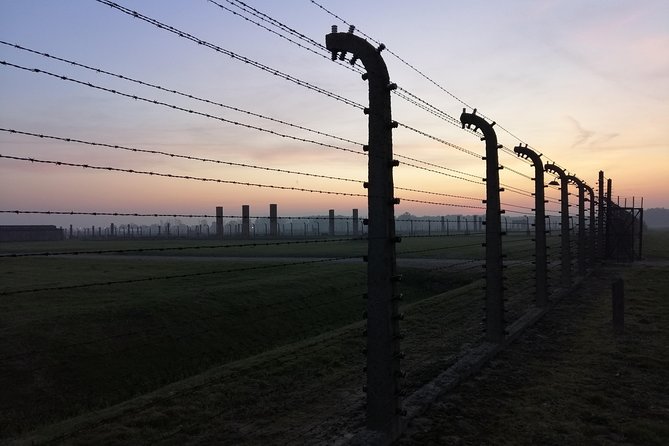
From 1942 to 1945, about 1.5 million people lived and died at Auschwitz-Birkenau. Most were Jewish people. The camp also held Poles, Roma, Russians, and prisoners from many European countries, including people of different political and religious backgrounds.
At Birkenau, the size of the site changes the experience. The Gate of Death and the long rows of barracks show how the camp operated on an industrial scale. Since 1944, trains carrying prisoners from across Europe entered directly through the gate.
The walking can be tiring. The combined visit involves several hours on foot and a great deal of standing. Wear practical shoes and bring water. The site can feel exposed, and weather may make the paths harder to manage, so dress for the conditions of the day.
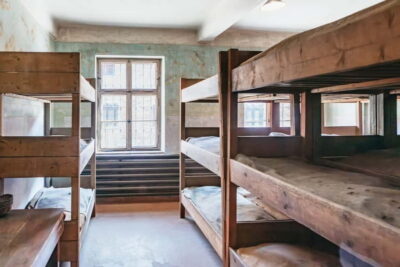
The amount you see at Birkenau can vary. Restoration work, crowd control, timing, and the museum’s own rules can close or change access to parts of the site. A short route through a barrack does not necessarily mean the guide has skipped the rest of the camp. The museum controls the visit, and guides have limited time.
That said, the Birkenau section can feel rushed if the transfer runs late. One delayed bus left too little time for a proper visit. If your schedule slips, tell the guide or driver that you are concerned. The museum portion is the reason for taking this trip, so every minute matters.
Auschwitz-Birkenau was listed as a UNESCO World Culture and National Heritage Site in 1979. The designation is less important during the visit than the preserved evidence itself, but it explains why the site is protected and carefully managed.
How the private format really works
The experience is described as private for you and your party, and that can be appealing if you want a more personal arrangement. Pickup, train assistance, local transfers, and return transport are organized around your booking.
At the same time, the day can involve shared transport or common meeting points. The museum itself uses scheduled group tours, and English-speaking visitors may be combined with people using other languages during a transfer. One reported arrangement placed English and Italian groups on the same bus before separating them at the museum.
This is important when setting expectations. The private element does not mean you receive a dedicated historian for every hour or a private tour of Krakow. The Auschwitz visit is handled by a museum guide, while Krakow is independent time.
The operator’s coordination is often the main service. Drivers have met passengers at hotels, waited at stations, provided directions, and returned people to their accommodation in Warsaw. Several drivers were praised for punctuality and calm help, while other accounts describe late vehicles, unclear meeting points, loud radios, or poor temperature control.
Because several companies or drivers may be involved, service can feel uneven. The best protection is to keep the full schedule, train details, meeting points, and emergency phone number with you.
Who will get the best value
I would choose this trip if you are based in Warsaw, have only one free day, and want Auschwitz-Birkenau without planning a chain of separate bookings. It also suits solo visitors who prefer help with the stations and transfers.
It is a good fit for people who place the camp visit first and see Krakow as a useful extra. History students, families with older children, and anyone with a strong reason to visit Auschwitz may find the long day worthwhile.
I would hesitate if you dislike early starts, long train rides, van transfers, or fixed schedules. You should also reconsider it if Krakow is a major goal. Three hours is enough for the square and a short walk, but not enough for a relaxed city visit.
If possible, plan extra nights in Krakow after this excursion. The Old Town has enough sights, shops, and restaurants to reward a slower stay. Trying to experience it properly during this day trip will leave you wanting more.
The tour is available in English, and most people can participate, but the walking and standing at Auschwitz are substantial. The activity allows up to 99 participants, even though it is marketed as private for your party, so ask for clarification about the specific transport arrangement before paying if group size matters to you.
Free cancellation is available up to 24 hours before the start time. Changes or cancellations inside that window are not accepted for a refund.
Final decision: book it for access, not leisure
I would book this tour when convenience and access matter more than a relaxed pace. The operator takes care of the difficult chain of tickets, drivers, museum entry, and return connections, and the English-speaking Auschwitz guide is the strongest part of the day.
I would not book it expecting a full Krakow tour or a quiet, polished private experience from start to finish. The day can be tiring, delays can cut into Birkenau, and communication between drivers and guides has not always been perfect.
Choose the premium morning train if comfort and reliable timing are worth the extra 100 PLN. Confirm your pickup address, read the one-day-before schedule closely, save the contact number, and arrive early. With those precautions, this is a practical way to make a powerful visit to Auschwitz-Birkenau from Warsaw while getting a brief but worthwhile introduction to Krakow.
FAQ
Where does the tour start?
The listed meeting point is Warszawa Centralna, Al. Jerozolimskie 54, 00-019 Warszawa, Poland. Pickup from your accommodation may be possible if you provide the address and the operator confirms it.
What train times are included?
The standard plan includes an express train departing Warsaw at 5:35 a.m. and a return train leaving Krakow at 8:47 p.m. Your pickup time depends on the train selected.
How long does the full experience last?
The activity lasts approximately 16 hours. This includes train travel, road transfers, about three hours in Krakow, and about three hours at Auschwitz-Birkenau.
Is Krakow guided?
No. The Krakow portion is independent sightseeing. You have about three hours to explore places such as the Main Market Square, the Cloth Hall, St. Mary’s Basilica, and Wawel Hill.
Is the Auschwitz admission ticket included?
Yes. Admission to Panstwowe Muzeum Auschwitz-Birkenau is included, along with the guided museum visit.
Is the tour offered in English?
Yes. English is one of the offered languages, and the Auschwitz visit uses an English-speaking guide.
Can I upgrade the train ticket?
Yes. A premium train option is available for an extra 100 PLN, approximately 25 EUR, per ticket.
What is the cancellation policy?
You can cancel for a full refund up to 24 hours before the experience begins. Cancellations or changes made less than 24 hours before the start time are not accepted for a refund.
More 1-Day Tours in Warsaw
- Warsaw to Auschwitz and Krakow Old Town Full-Day Trip by Car
★ 4.7 · 6 reviews - Krakow: Auschwitz-Birkenau Day Trip with Tour Leader
★ 4.3 · 5,452 reviews - Day Trip: Auschwitz-Birkenau and Wieliczka Salt Mine from Krakow
★ 4.5 · 4,282 reviews - Krakow: Zakopane, Funicular, Cheese, and Highland Day Trip
★ 4.7 · 1,489 reviews
More Train Experiences in Warsaw
- From Warsaw: Auschwitz-Birkenau Guided Tour with Fast Train
★ 4.7 · 50 reviews - From Warsaw: Krakow Sightseeing Tour by Express Train
★ 5.0 · 13 reviews
Just added around Warsaw
- Taste of Poland, food tour and guided walk with 12 tasting★ 5.0 · 3 reviews
- Skip-the-Line Warsaw Royal Castle Private Guided Tour★ 5.0 · 4 reviews
- Secrets of Warsaw 4-hour Bike Tour★ 5.0 · 25 reviews
- Warsaw: Live Show at Sabat Theatre★ 4.5 · 11 reviews
- Private Warsaw City Tour★ 4.9 · 4 reviews
- Warsaw: WWII Private Tour by Retro Minibus with Hotel Pickup★ 5.0 · 7 reviews
- Private Tour From Warsaw: Łowicz Mazovian Countryside★ 5.0 · 10 reviews
- Packrafting kayaking guided tour Vistula river Warsaw Poland★ 4.5 · 14 reviews
Auschwitz-Birkenau Memorial Tours, compared.
Auschwitz-Birkenau Guided Tour & Hotel Pickup
Read our review →Auschwitz-Birkenau Guided Tour & Hotel Pickup
Read our review →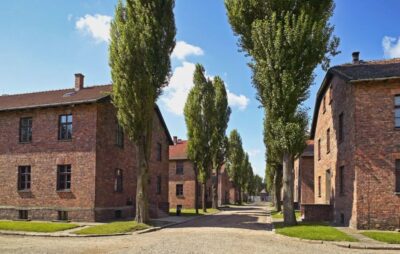
Auschwitz Guided Tour with Optional Hotel Pickup
Read our review →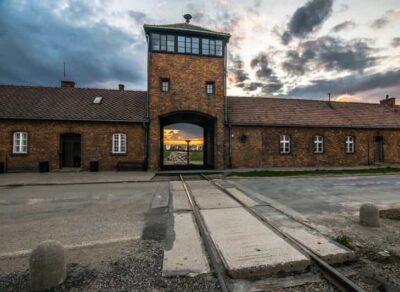
Auschwitz-Birkenau Guided Tour with Pickup & Lunch
Read our review →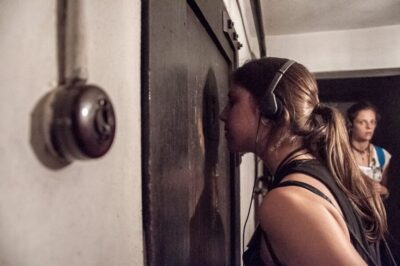
Auschwitz-Birkenau Guided Tour Pickup/Lunch Options
Read our review →
Krakow to Auschwitz Birkenau Guided Tour with Transfer and Ticket
Read our review →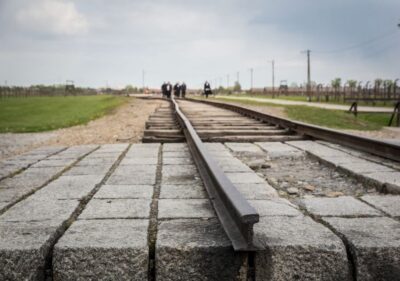
Browse the lists this tour appears in