Reviewed · WARSAW TOURS
Jewish Warsaw
Jewish Warsaw is best understood by moving through the city itself, from Grzybowski Square and the preserved streets of Prozna to the Jewish Cemetery and the Ghetto Heroes Monument. This private, three-hour tour connects ordinary streets, religious sites, literature, and wartime memory in a way that a museum visit alone cannot.
I like the small private format, since your guide can focus on your group, and I like the route’s range, which includes Nozyk Synagogue, Isaac Bashevis Singer’s former neighborhood, the Keret House, and POLIN Museum. The main consideration is cost: at $89.35 per person, plus a separate Jewish Warsaw admission charge of €5, it offers more value for a couple or family that wants a focused guide than for a solo visitor watching every euro.
Key points to know before booking
- Grzybowski Square begins the story in the center of prewar Jewish Warsaw, before the route moves through surviving streets and buildings.
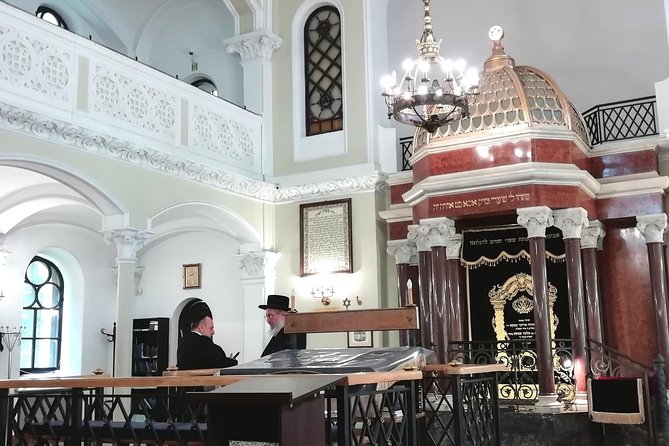
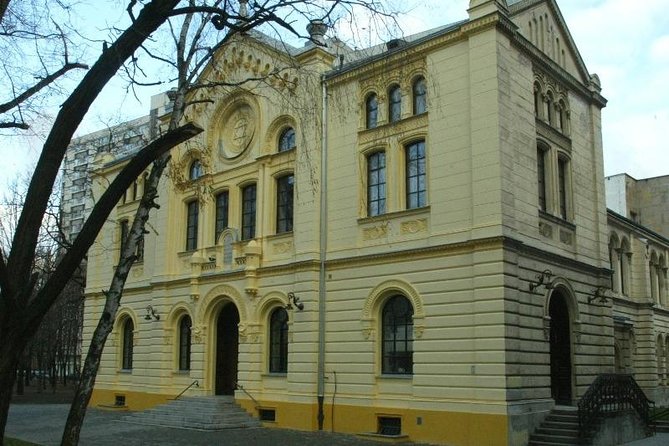
- Nozyk Synagogue is still active, and it is the only Warsaw synagogue to have survived World War II and remain in operation.
- The Jewish Cemetery gets the most time, with about 40 minutes for graves, burial traditions, rabbis, zaddiks, and Jewish families.
- Hotel pickup is offered, with the tour ending at POLIN Museum of the History of Polish Jews.
- The tour is private and offered in English, so only your group participates.
- Book ahead if your dates are fixed, since this experience is commonly reserved about 76 days in advance.
Why this three-hour route matters
Warsaw’s Jewish past is not confined to one museum room. It is spread across squares, alleys, surviving walls, religious buildings, memorials, and places that look ordinary until a guide explains what happened there.
This tour gives you that street-level setting first. You begin at Grzybowski Square, once part of the heart of Jewish Warsaw, and finish at POLIN Museum, where you can continue with the museum’s audio guides after the tour. That order makes sense: first you see the city, then you have a place to gather the larger story.
The route also reaches beyond the Holocaust alone. You hear about Jewish commerce, family names, religious life, literature, burial customs, Esperanto, Janusz Korczak’s orphanage, and Jewish theater. That wider frame matters because it presents Jewish Warsaw as a living community, not only as a place defined by its destruction.
The experience has a 5.0 rating from seven published ratings. One named guide is Mary, and a booking note praises her ability to explain both familiar and less obvious parts of Jewish life. Guide assignments can change, but the important point is that this is designed as a guided history walk by vehicle, not as a simple drive past memorials.
Other Warsaw days people book alongside this one:
- Warsaw: Chopin Concert in the Old Town
★ 4.8 · 2,287 reviews - Warsaw: Traditional Galar Cruise on The Vistula River
★ 4.6 · 1,640 reviews - Warsaw: Old Town Highlights Walking Tour in English
★ 4.7 · 1,516 reviews
Grzybowski Square and the vanished city
Your starting point is Grzybowski Square, at Pl. Grzybowski 2. The first 15 minutes are used to establish what Jewish Warsaw looked like before World War II, when the city was home to the largest Jewish community in Europe.
That opening is valuable because the modern city can make the past hard to picture. Your guide helps you connect the square to the wider Jewish quarter and introduces the history of Warsaw’s Jewish population before the tour moves into more specific sites.
Do not expect a long stop here. The purpose is orientation, not a full visit to one monument. If you like to take notes or photographs, use this first pause to get your bearings and listen for the names and themes that return later.
Prozna Street and the traces of daily life
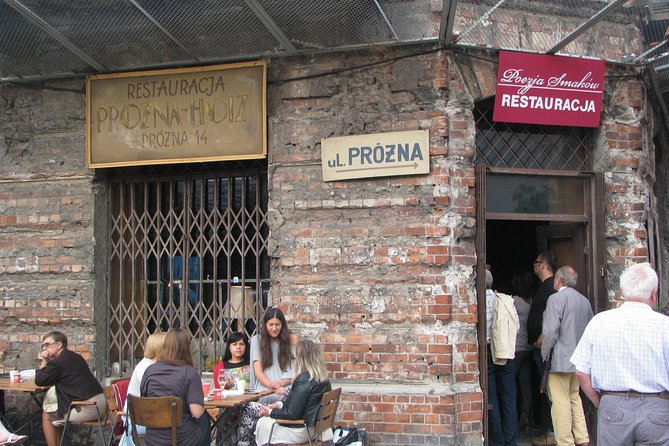
The next stop, Prozna Street, lasts about 10 minutes. This is a preserved Jewish commercial street, and the original buildings offer a rare sense of the physical setting in which Jewish families worked and lived.
The guide discusses the people connected with the street, including well-known families and major names from Warsaw’s past. I find this kind of stop especially useful because it shifts the focus from dates and battles to daily urban life. A street can tell you about shops, homes, movement, and social ties in a way a list of historical events cannot.
The visit is brief, so you will not have time for a long independent exploration. Think of Prozna as a close look at one surviving fragment rather than a complete picture of prewar Jewish commerce.
Nozyk Synagogue, a living religious site
Nozyk Synagogue is one of the most important stops because it is the only synagogue in Warsaw that survived World War II and is still in operation. The visit takes about 15 minutes.
This is not simply an exterior photo stop. You visit the synagogue and hear about its place in Jewish Warsaw. Since it remains an active religious building, you should treat the setting with care and follow any instructions from your guide or synagogue staff.
Admission is not included. The supplied tour information lists a Jewish Warsaw entrance charge of €5 per person, so check how that fee is collected and which sites it covers before you set out. The tour price itself is $89.35 per person, and this extra charge should be included in your planning.
The short visit will suit you if you want a meaningful introduction without spending a large part of the morning inside one building. If religious architecture is your main interest, you may wish the stop were longer.
Same country, a completely different kind of day:
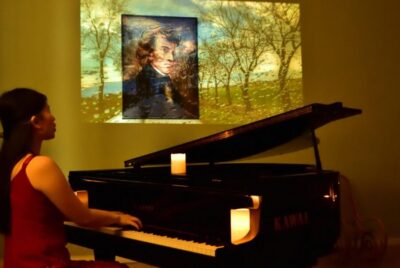
- Warsaw Concert: Chopin – Painted by Candlelights with Wine
★ 4.8 · 1,442 reviews - Warsaw: City Sightseeing Hop-On Hop-Off Bus Tour
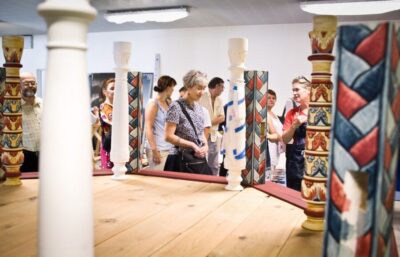
★ 3.6 · 1,415 reviews - Warsaw: POLIN Museum of the History of Polish Jews Ticket
★ 4.7 · 1,142 reviews - #1 Pub Crawl Warsaw with Optional Premium 1 Hour Open Bar
★ 5.0 · 790 reviews
Krochmalna and the Warsaw of Isaac Bashevis Singer
At Krochmalna, the vehicle passes streets and places associated with the writing of Isaac Bashevis Singer, the Nobel Prize-winning author. The scheduled stop is only about five minutes, so this is more of a narrated passage than a full walking visit.
That brevity is worth knowing. You will not get an extended literary tour, but the reference to Singer adds a human voice to the streets. His work helps place Jewish Warsaw in the world of characters, family life, ambition, poverty, and neighborhood ties.
This is one of the route’s more atmospheric moments. It may mean more to you if you have read Singer, though the guide’s explanation can still give the area context if you have not.
Chlodna Street and Warsaw’s courtyards
The 10-minute stop on Chlodna Street focuses on houses that remain in their original condition and on Warsaw’s backyards. The courtyards are important because they offer a look at the less formal spaces behind the main streets.
I like this part of the route for its scale. Grand memorials explain major events, but old houses and courtyards suggest how people actually moved through their neighborhoods. Your guide uses the buildings to connect architecture with the lives once lived there.
The condition and appearance of historic buildings can vary, and the tour does not promise a preserved district at every turn. You should expect fragments, not an untouched neighborhood. That is also part of the lesson: modern Warsaw was heavily damaged and rebuilt, so surviving pieces carry unusual weight.
Keret House, an unusual modern landmark
The Keret House stop takes about 10 minutes. You see the narrowest house in the world and learn how it came to be part of Warsaw’s modern architectural story.
This is a sharp change of mood from the cemetery and memorial sites. The house is a contemporary intervention in a city marked by absence, reconstruction, and memory. Its narrow form catches the eye, but the guide’s explanation is what gives the stop meaning.
Do not book this tour only for access inside the house. The information provided describes discovering it and learning its history, not an interior visit. It works best as a short visual pause within a much larger historical route.
The Jewish Cemetery and its many stories
The Jewish Cemetery receives roughly 40 minutes, the longest stop on the tour. Admission is not included, so remember the separate entrance cost when comparing the overall price.
Here you see the resting places of famous rabbis, zaddiks, and Jewish families. Your guide explains Jewish burial customs and traditions, helping you read the cemetery as more than a collection of old stones.
The stop also brings in several subjects that might otherwise seem separate: the history of Esperanto, Janusz Korczak’s orphanage, and Jewish theater. These connections show the range of Jewish life in Warsaw, from religious leadership to education, language, and the arts.
Allow yourself to move at a respectful pace. Forty minutes is enough for a guided introduction, but not enough to see every corner or study every grave. If you have a particular family name or figure in mind, tell your guide at the start of the tour so you can learn if that person fits the route.
The cemetery can be one of the most affecting parts of the experience, but it may also feel heavy. This is not a light sightseeing stop, and you should be prepared for a quiet, reflective setting.
The Ghetto Heroes Monument and Willy Brandt’s gesture
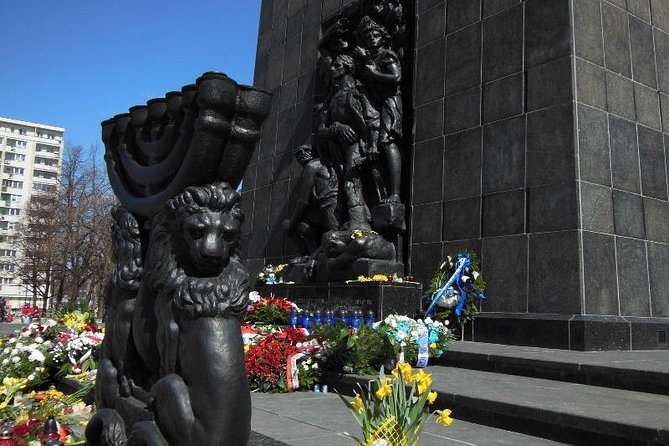
At the Ghetto Heroes Monument, the tour pauses for about 15 minutes. This is the place connected with Willy Brandt’s famous gesture of kneeling, an act remembered for its symbolism and emotional force.
The monument gives the tour a clear wartime focus. By this point, you have already seen the religious, commercial, literary, and domestic sides of Jewish Warsaw. Here the guide places those earlier stories against the destruction of the Jewish community and the memory that followed.
A 15-minute stop is enough for an explanation and photographs, but not for a long independent visit. The monument is also beside POLIN Museum, so you can return later if you want more time after the guided portion.
Ending at POLIN Museum
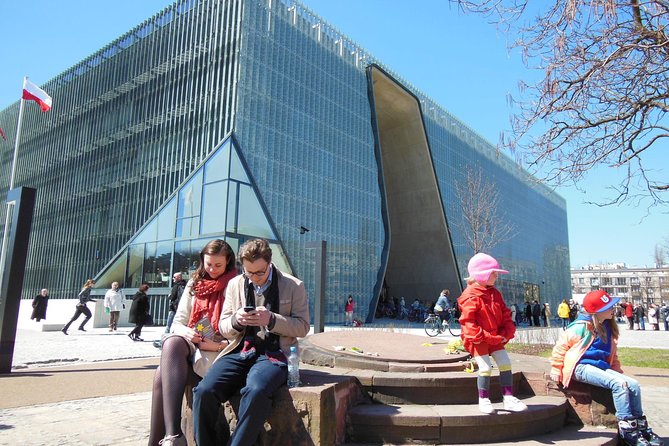
The final stop is POLIN Museum of the History of Polish Jews, at Mordechaja Anielewicza 6. The tour ends here after about 15 minutes focused on the building’s architecture and symbolism.
The building itself is part of the experience. Your guide explains what its form is intended to express, giving you a useful introduction before you decide whether to go inside.
Museum admission is not included in the tour. The tour ends at the entrance, and you can continue with the museum’s audio guides on your own. This is a practical arrangement: the three-hour route gives you the city context, while the museum can provide a longer, more detailed visit at your own pace.
Plan your day carefully if you want to enter POLIN. The tour’s stated duration is approximately three hours, but the museum visit is an additional activity and should not be treated as part of the guided time.
Private transport, pickup, and pacing
The experience is private, so only your group takes part. That is a major advantage for families, couples, or friends who prefer to ask questions freely and avoid a large group moving through solemn sites together.
An air-conditioned vehicle is included, and hotel pickup is offered. The guide either meets you at reception with a PolinTours sign or waits in the car outside your hotel entrance. If your hotel is far outside the city center, the meeting point is arranged by email.
The information also mentions a public transport-based version and recommends buying a ticket in advance or carrying small change. Since the standard inclusion specifies an air-conditioned vehicle, confirm the transport plan when booking if the public transport option matters to you.
The route has several short stops, so wear comfortable shoes even though you are not walking the entire distance. The cemetery is the one place where you will want enough time to walk and listen without rushing.
Is $89.35 per person a fair price?
At $89.35 per person, this is not a budget sightseeing loop. You are paying for a private guide, transport, hotel pickup, and a carefully connected route through sites that can be difficult to interpret alone.
The value improves when two or more people share the experience. A private format lets you ask about family history, literature, religious practice, or specific Warsaw sites without waiting for a large group. Group discounts are also offered, though the exact reduction is not stated.
You should add the separate €5 Jewish Warsaw admission charge, along with any entrance costs for POLIN Museum if you continue inside. Lunch is not included, but the tour is only about three hours, so you can easily plan a meal before or after.
For a solo visitor who has already studied Jewish Warsaw and is comfortable using public transport, the price may feel high. For a first visit, a family, or anyone wanting a guide to connect scattered places, the private structure makes the cost easier to justify.
Who should book Jewish Warsaw?
I would recommend this experience if you want a focused introduction to Warsaw’s Jewish past and prefer seeing real streets and buildings before entering a museum. It suits people who value context, want hotel pickup, and like the flexibility of a private group.
It is also a good choice if you have limited time. In three hours, you cover religious life, commerce, literature, domestic architecture, the cemetery, wartime memory, and POLIN Museum. You will not master every part of the subject, but you will leave with a clear map of where to continue.
This may not be right for you if you want a leisurely walking tour, extensive time inside each site, or a full museum visit included in the price. The route is a sampler with a strong guide component, and several stops are intentionally short.
The experience requires good weather. You can cancel up to 24 hours before the start for a full refund, while a weather cancellation brings the option of another date or a full refund. Since the tour is often booked well ahead, reserve early if your Warsaw dates are fixed.
Should you book this tour?
Book it if you want Jewish Warsaw explained through its streets, cemetery, synagogue, memorials, and literature, rather than treated as a single museum topic. The strongest features are the private format, hotel pickup, the long cemetery visit, and the route’s attention to ordinary places such as Prozna, Krochmalna, and Chlodna.
Before paying, confirm the guide, transport arrangement, and the €5 admission charge. If those details suit your plans, this is a thoughtful and efficient way to begin understanding Warsaw’s Jewish past, with POLIN Museum waiting at the end for a longer follow-up visit.
FAQ
How long does the Jewish Warsaw tour last?
The tour lasts approximately three hours.
Where does the tour start?
It starts at Grzybowski Square, Pl. Grzybowski 2, 00-824 Warszawa, Poland. Hotel pickup is also offered.
Where does the tour end?
The tour ends at POLIN Museum of the History of Polish Jews, Mordechaja Anielewicza 6, 00-157 Warszawa, Poland.
Is hotel pickup available?
Yes. The guide can meet you at your hotel reception with a PolinTours sign or wait in a car outside the entrance. If your hotel is far outside the city center, the meeting point is arranged by email.
Is admission included?
The tour price does not include admission to Nozyk Synagogue or the Jewish Cemetery. A Jewish Warsaw entrance charge of €5 per person is listed separately. Admission to POLIN Museum is also not included.
Is this a private tour?
Yes. Only your group participates, and the tour is offered in English.
Just added around Warsaw
- World War II Warsaw Old Town, Military Cemetery Walking Tour★ 4.7 · 3 reviews
- Warsaw: Wolf’s Lair & Swieta Lipka Small-Group Tour + Lunch★ 5.0 · 3 reviews
- Wilanów Palace: 2-Hour Guided Tour with Entrance Tickets★ 4.8 · 8 reviews
- Warsaw Zoo Skip-the-Line Entry Ticket with Private Transport★ 4.8 · 3 reviews
- Warsaw Wolf’s Lair with St. Lipka and Mamerki Private Guided★ 4.2 · 3 reviews
- Warsaw: Vistula River Cruise with Your Music & City Views★ 4.6 · 78 reviews
- Warsaw: Private Vodka Tasting Night with Snacks and Pickup★ 5.0 · 7 reviews
- Warsaw Private Wilanow Palace & Garden Tour★ 4.6 · 30 reviews
Warsaw Tours, compared.
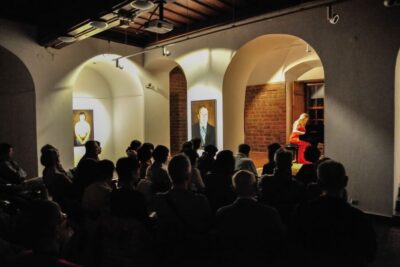
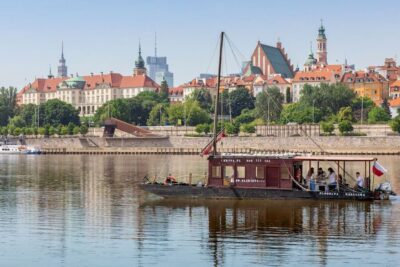
Traditional Galar Cruise on The Vistula River
Read our review →
Warsaw Concert: Chopin – Painted by Candlelights with Wine
Read our review →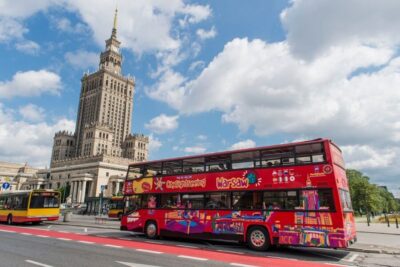
POLIN Museum of the History of Polish Jews Ticket
Read our review →
#1 Pub Crawl Warsaw with Optional Premium 1 Hour Open Bar
Read our review →