
Reviewed · WARSAW TOURS
Warsaw Behind the Scenes – small group tour with hotel pickup
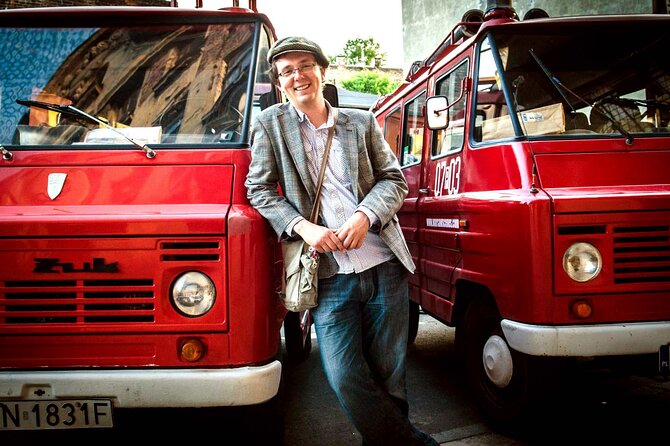
Warsaw’s story is unusually visible in its streets. A postwar apartment block may sit above the former Jewish Ghetto, while a quiet intersection recalls a wooden bridge seen in The Pianist. This tour connects those pieces in a vintage Zuk minibus, taking you beyond the city center’s polished sights.
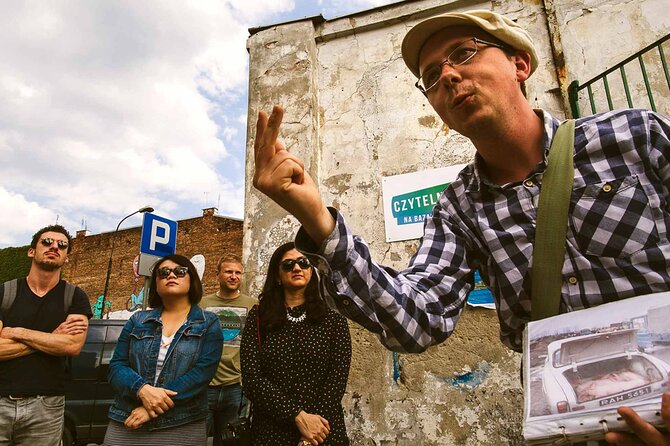
I like the small-group format, with each minibus holding up to eight people, and I like the way guides such as Tom, Marcin, Mark, and Artur use old photographs to show what vanished. The main thing to consider is that the tour is history-heavy, especially at the start, and the vintage vehicles may lack air conditioning or seat belts.
- Former Ghetto streets: See Muranów, Chłodna Street, and Nowolipki with historical photographs and clear explanations.
- A different Warsaw: Cross the Vistula to Praga, a district known for prewar buildings, courtyards, and a creative local character.
- Wartime context: Learn how the Ghetto Uprising, Warsaw Uprising, and Nazi destruction reshaped the city.
- A Zuk minibus: The period vehicle adds character and makes the ride part of the experience.
- Useful first-day orientation: The route links central Warsaw, Praga, and lesser-seen areas in about three hours.
- Flexible pickup: Hotel pickup and return are offered at listed hotels, with the exact time confirmed after booking.
Why This Tour Helps You Read Modern Warsaw
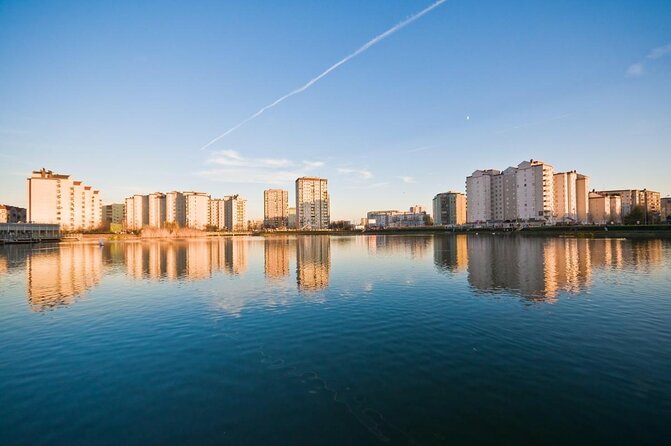
I consider this a history tour with wheels, not a standard sightseeing circuit. Warsaw was destroyed on a vast scale during World War II, then rebuilt under communist rule and reshaped again after 1989. The result is a city where old photographs often explain more than the buildings in front of you.
That is where the tour earns its keep. You are not simply shown a monument and given a date. At several stops, the guide explains what occupied the site before the war, what happened during the German occupation, and why the rebuilt neighborhood looks the way it does now.
The route also avoids making Warsaw’s past feel like a single tragic chapter. You move from the Jewish Ghetto to the 1944 Warsaw Uprising, then to postwar reconstruction, Soviet influence, and the rise of Solidarity. By the finish, the city’s changes feel connected rather than scattered.
The price is $133.08 per person. That is not a bargain if you only want a quick drive around town, but it is reasonable for a private-feeling small-group outing with hotel pickup, a specialist guide, a vintage vehicle, and walking stops across several districts. You also avoid arranging separate transport between locations.
Muranów: A Neighborhood Built Over the Ghetto
The first major stop is Muranów, a district built on the former site of the Jewish Ghetto created by Nazi Germany in 1940. At first glance, you may see ordinary postwar housing and broad streets. The power of the stop comes from learning what lies beneath that normal appearance.
Your guide explains how the Ghetto was sealed, how its residents were deported, and how the district was destroyed. The modern buildings are part of the story, too. They reflect Warsaw’s need to provide homes after the war while also covering ground marked by enormous loss.
This is a serious beginning. If you know little about Warsaw’s wartime history, the ten-minute introduction at pickup may feel brief before the tour reaches Muranów. One guide, Jan, was praised for his engaging approach, but a useful improvement for some people would be a longer scene-setting explanation before the first Ghetto stops.
If you plan to visit the POLIN Museum of the History of Polish Jews, this tour can work well before or after it. The outdoor stops give you a physical sense of place, while the museum can provide more detail and structure.
Other Warsaw days people book alongside this one:
- Warsaw: Chopin Concert in the Old Town
★ 4.8 · 2,287 reviews - Warsaw: Traditional Galar Cruise on The Vistula River
★ 4.6 · 1,640 reviews - Warsaw: Old Town Highlights Walking Tour in English
★ 4.7 · 1,516 reviews
Chłodna Street and the Wooden Bridge
At the corner of Chłodna and Żelazna Streets, you stop where the famous wooden Ghetto bridge once crossed above the road. The bridge connected two sealed parts of the Ghetto and allowed traffic to pass below. It became widely known through The Pianist.
There is no bridge to see today. Instead, the guide uses period photographs to help you picture the scene. This is one of the tour’s best methods because the modern intersection gives little visual hint of its former role.
I would pay close attention here and ask questions. The value is not in a surviving structure but in understanding how the Ghetto functioned as a controlled, divided space. A photograph held up beside the present-day street can make that contrast immediate.
Nowolipki and the Ghetto Uprising
At Nowolipki, the focus shifts to the Warsaw Ghetto Uprising of 1943. Jewish resistance fighters made a final stand against deportation, fighting for several weeks before German forces destroyed the Ghetto.
The guide places the uprising within the surrounding streets and explains how the events are remembered. This is not a stop built around a single grand monument. Instead, the memorial meaning is spread through the district, layered into a city that had to be rebuilt after almost total destruction.
Expect a sober section of the tour. The guides are praised for speaking frankly about the war and antisemitism, while still keeping the conversation open to questions. Mark, in particular, was noted for his direct treatment of these subjects.
Bielańska and the Ruins of 1944
At Bielańska, the tour broadens from the Ghetto to Poland’s wider wartime fate. After agreements between the Western Allies and Stalin, Poland fell under Soviet control. The Warsaw Uprising of 1944 became the city’s last major attempt to change that outcome.
After the uprising failed, Nazi forces systematically destroyed about 85 percent of Warsaw. The Red Army entered the ruins in January 1945. That sequence matters because it explains why the city’s old center, residential districts, and public buildings could not simply be restored as they had been.
This stop also helps separate the 1943 Ghetto Uprising from the 1944 Warsaw Uprising. They were different events, involving different groups and circumstances, even though both belong to Warsaw’s wartime story. A good guide will keep those distinctions clear, and the strongest guides on this tour appear to do so.
Same country, a completely different kind of day:
- Warsaw Concert: Chopin – Painted by Candlelights with Wine
★ 4.8 · 1,442 reviews - Warsaw: City Sightseeing Hop-On Hop-Off Bus Tour
★ 3.6 · 1,415 reviews - Warsaw: POLIN Museum of the History of Polish Jews Ticket
★ 4.7 · 1,142 reviews - #1 Pub Crawl Warsaw with Optional Premium 1 Hour Open Bar
★ 5.0 · 790 reviews
Crossing the Vistula to Praga
The route then crosses the Vistula River to Praga Północ. You get river views before entering one of Warsaw’s most distinctive districts. Praga survived the war in better condition than much of the western side of the city, so it preserves more of the feel of prewar Warsaw.
Look for Belle Époque buildings, traditional courtyards, and a strong neighborhood identity. Praga was once overlooked by many visitors, but it is now known for creative activity and a less polished character. It remains less shaped by mass tourism than the main central sights.
I especially like this part because it gives you a break from memorial sites without abandoning the theme of survival. Praga shows what a section of Warsaw can feel like when more of its older street pattern and buildings remain.
The half-hour stop is longer than several of the earlier history points, giving you more time to look around. Still, this is a short tour. You will see the district through selected locations rather than explore every courtyard or side street.
Communist Warsaw Near the Former Party Headquarters
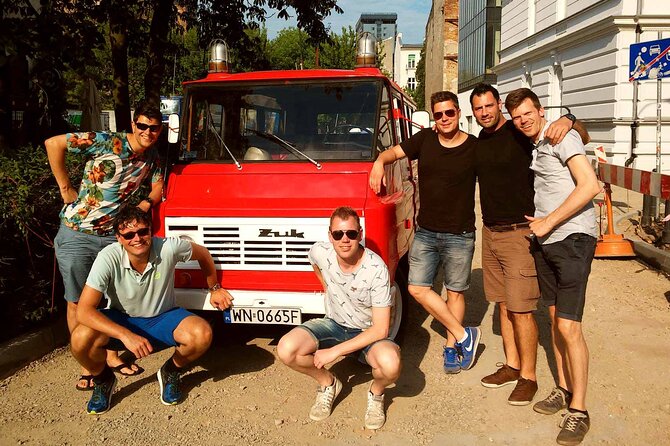
Back in Śródmieście, the tour stops near the former headquarters of the Polish Communist Party. Here, the subject is reconstruction after 1945.
Architects faced an enormous practical task: rebuild a ruined capital and provide a modern, functional city. Their designs also had to fit Soviet-inspired political demands. The streets and buildings around the stop show how modern planning and ideology were mixed together.
This section is useful because it moves beyond wartime destruction. Warsaw was not simply restored and finished. The rebuilt city reflected political control, changing architectural ideas, and the daily needs of people living under communism.
Some guides use before-and-after photographs throughout the tour. That visual aid is particularly helpful here. You can compare the destroyed city, the proposed plans, and the rebuilt streets rather than treating communist-era Warsaw as a collection of unattractive blocks.
1989 and the End of Communist Rule
The final section covers 1989, Solidarity, and the role of Pope John Paul II in the end of communist rule in Poland. The city then entered a new period of democracy and capitalism, bringing another wave of physical and social change.
This closing discussion gives the tour a clear arc. Warsaw was not only destroyed and rebuilt. It was also politically transformed, and each stage left marks on its streets and neighborhoods.
I like ending here because you finish with modern Warsaw rather than stopping in 1945. The route shows that the city’s difficult past is still part of everyday life, but it does not define the city completely.
The Zuk Minibus Is Part of the Experience
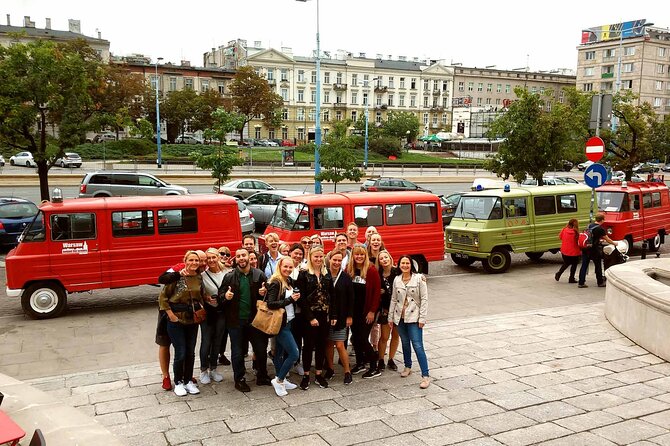
The vintage Zuk is more than transport between stops. It gives the tour a slightly quirky, period-flavored feel, and several guides use the vehicle’s character to add humor to a serious subject. Reviews describe the vans as charming, unusual, and connected to the communist era.
There are practical limits. Classic minibuses may not have air conditioning, and some do not have seat belts, which is allowed for historic vehicles. Heating is available in winter. If you are sensitive to temperature or prefer modern transport, this matters.
Each minibus carries up to eight passengers, while the full operation has five minibuses and can reach a maximum of 39 people. The small vehicle itself is intimate, but the overall departure can be larger if several minibuses run at once.
The vehicles mainly connect the stops. You will still walk at each location, so wear comfortable shoes and clothing suited to the weather. The tour is not a long walking route, but it is not a sit-down bus tour either.
Guides and the Human Side of the Tour
The strongest part of this experience is the guide. Tom is described as an engaging storyteller, while Marcin is noted for adapting the tour to questions and personal interests. Mark is praised for his extensive command of Warsaw’s past and for speaking candidly about war and antisemitism.
Artur, Arthur, Arturo, Jan, and Lucas also appear in the tour’s feedback, with repeated praise for clear English, humor, patience, and personal attention. Guide assignments can change, so you should not book on the assumption that a particular person will lead your departure.
The best guides use photographs, answer questions, and connect historical events to ordinary streets. Some have also added local touches, such as a bakery visit, a Polish café, lunch, or a local drink including cucumber vodka. Those extras are not part of the stated route, so treat them as possible guide-dependent additions rather than guaranteed inclusions.
Timing, Pickup, and Who Should Book
The advertised duration is about three hours, with a 10:00 a.m. start. The listed stop times add up to roughly two and a half hours, leaving room for hotel collection, driving between districts, and the final return. A few tour descriptions from past departures refer to four hours, so I would keep some flexibility in your schedule.
Hotel pickup and drop-off are available only for hotels on the operator’s list. After booking, the operator sends the exact collection time through the Viator message system because the route gathers people from different hotels. If your hotel is not listed, contact the operator to arrange a convenient meeting point.
The minimum number needed to run the tour is two. A solo visitor can join if another booking has at least two people. Instant booking is available for adults and children over 150 centimeters, while younger children require advance contact to check for a legally required booster seat.
This tour suits you best if:
- You want a clear introduction to Warsaw on your first day.
- You care about World War II, Jewish history, communism, or modern Poland.
- You prefer local neighborhoods and context over a checklist of famous sights.
- You enjoy an unusual vehicle and a conversational guide.
- You can handle a serious subject without needing a light, purely scenic outing.
It may not suit you if you want museum interiors, extensive time at each site, or a sleek, air-conditioned minibus. The tour visits many places, but most stops are short, and all admission tickets are listed as free because the experience is based outdoors and on guided interpretation.
Is $133.08 a Fair Price?
At $133.08 per person, this is a premium half-day activity rather than a cheap orientation drive. Its value comes from combining several districts, hotel transport, a small vehicle, and a guide who can explain the connections between them.
You are also paying for access to places that are easy to miss when exploring alone. Muranów, Chłodna Street, Nowolipki, Bielańska, Praga, and communist-era central Warsaw do not always make sense as separate stops. The tour creates a usable story from them.
To get the best value, schedule it early in your stay. You will learn the city’s layout, identify museums or neighborhoods to revisit, and gain context for later independent sightseeing. If your main goal is only to see Warsaw’s Old Town, this is more than you need.
Should You Book Warsaw Behind the Scenes?
Book it if you want Warsaw explained through its difficult, changing past rather than presented as a pretty European capital. The former Ghetto sites, Praga’s older streets, postwar reconstruction, and 1989 transition make a strong combination, and the Zuk gives the outing a memorable sense of place.
I would recommend it especially for a first visit, history-minded visitors, and anyone who wants to see areas beyond the usual center. Go in prepared for a serious opening, short walking stops, and an old-fashioned vehicle. If those sound like advantages rather than inconveniences, this is a worthwhile way to get your bearings and understand the Warsaw you are seeing.
FAQ
How long does the Warsaw Behind the Scenes tour last?
The advertised duration is approximately three hours. The listed sightseeing stops total about two and a half hours, with additional time used for hotel pickup, transport between districts, and drop-off.
What time does the tour start?
The stated start time is 10:00 a.m. The exact hotel pickup time is confirmed after booking through the Viator message system.
Is hotel pickup available?
Yes. Pickup and drop-off are available for hotels listed by the operator. If your hotel is not listed, contact the operator to arrange another convenient pickup point.
How many people can ride in each minibus?
Each minibus accommodates up to eight passengers. The operator has a fleet of five minibuses, and the overall activity can have a maximum of 39 participants.
What areas does the tour visit?
The route includes Muranów, Chłodna Street, Nowolipki, Bielańska, Praga Północ, Śródmieście, and other central Warsaw locations.
Is the tour suitable for children?
Adults and children over 150 centimeters can book instantly online. For children under 150 centimeters, contact the operator in advance to check whether a mandatory booster seat is available.
Do the vintage minibuses have air conditioning and seat belts?
The classic minibuses are not equipped with air conditioning, and some do not have seat belts. This is permitted for historic vehicles. All vehicles have heating for winter.
Can I cancel for a full refund?
You can cancel up to 24 hours before the experience start time for a full refund. Cancellations or changes made less than 24 hours before the start time are not accepted for a refund.
Just added around Warsaw
- Taste of Poland, food tour and guided walk with 12 tasting★ 5.0 · 3 reviews
- Skip-the-Line Warsaw Royal Castle Private Guided Tour★ 5.0 · 4 reviews
- Secrets of Warsaw 4-hour Bike Tour★ 5.0 · 25 reviews
- Warsaw: Live Show at Sabat Theatre★ 4.5 · 11 reviews
- Private Warsaw City Tour★ 4.9 · 4 reviews
- Warsaw: WWII Private Tour by Retro Minibus with Hotel Pickup★ 5.0 · 7 reviews
- Private Tour From Warsaw: Łowicz Mazovian Countryside★ 5.0 · 10 reviews
- Packrafting kayaking guided tour Vistula river Warsaw Poland★ 4.5 · 14 reviews
Warsaw Tours, compared.
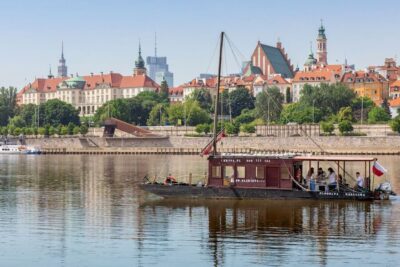
Traditional Galar Cruise on The Vistula River
Read our review →
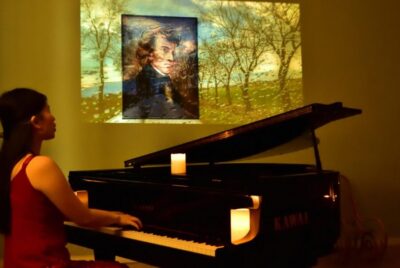
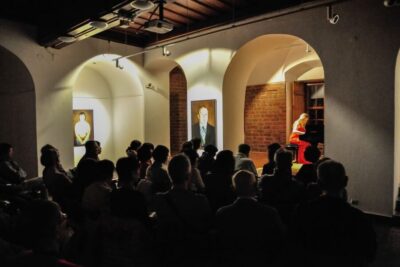
Warsaw Concert: Chopin – Painted by Candlelights with Wine
Read our review →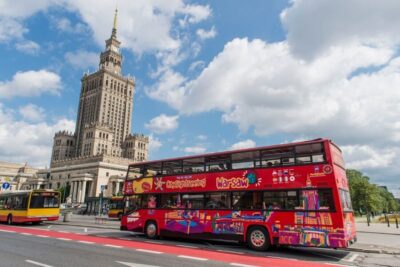
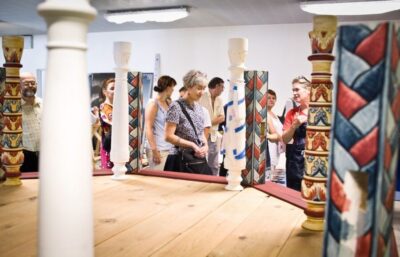
POLIN Museum of the History of Polish Jews Ticket
Read our review →
#1 Pub Crawl Warsaw with Optional Premium 1 Hour Open Bar
Read our review →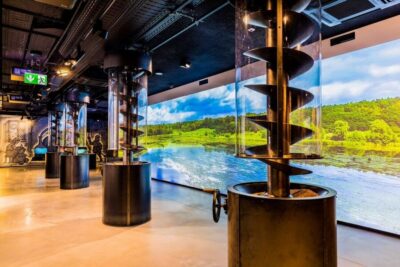
Browse the lists this tour appears in