
Reviewed · SKIP THE LINE
Skip-the-Line Warsaw Royal Castle Private Guided Tour
Warsaw’s Royal Castle is more than a grand palace. It is a symbol of a city that was nearly destroyed and then rebuilt piece by piece. This private tour pairs the castle’s royal rooms with a walk through Old Town, so you get both the polished court setting and the streets, churches, monuments, and squares that explain Warsaw’s past. The castle reconstruction story is one of the strongest reasons to book.
I like the private format, which gives you room to ask questions and shape the walk around your interests. I also like the timed, skip-the-line castle entry, since security and admission schedules can otherwise slow you down. The main drawback is the large number of listed sights for a tour lasting only two to three hours. You will see many places from outside or in passing, not study every one at length.
Key points to know before booking
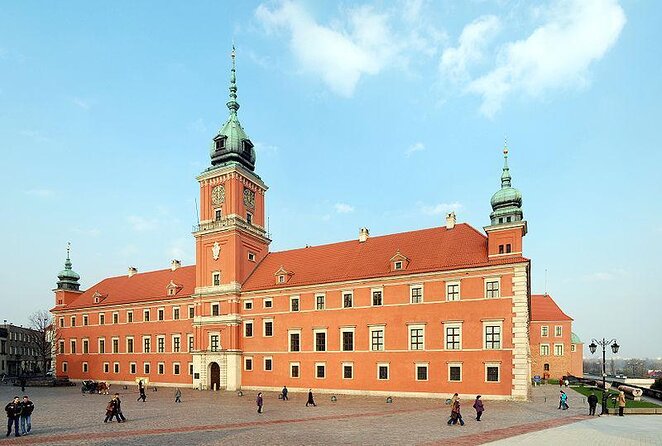
- The Royal Castle is the centerpiece: See royal rooms and learn how the castle was rebuilt after wartime destruction.
- Your guide leads a private group: English is offered, and guides such as Natalia, Eva, Czeslaw, and others have been praised for clear explanations and friendly service.
- Old Town comes with important wartime context: Reconstructed streets, palaces, churches, and monuments make the walk much more than a photo stop.
- The route covers a lot of ground: Expect Castle Square, the Barbican, Krakowskie Przedmiescie, Chopin sites, churches, and more.
- Some stops are flexible: Entry to churches and the St. Anne’s bell tower may be possible on request, while several listed sights are outside views only.
- Timing matters: Arrive on time at Sigismund’s Column because the castle entry schedule follows security rules.
Why the rebuilt Royal Castle matters
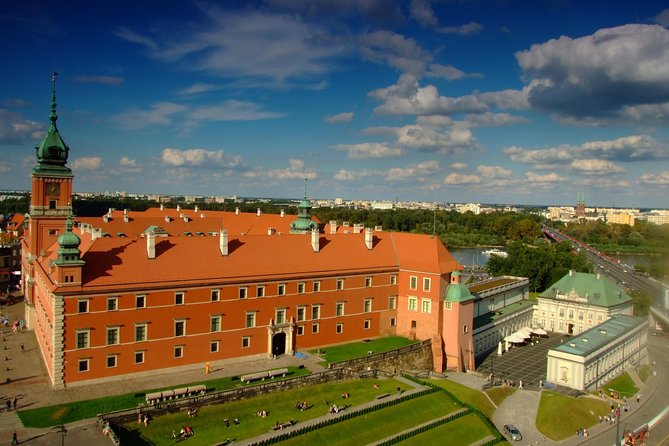
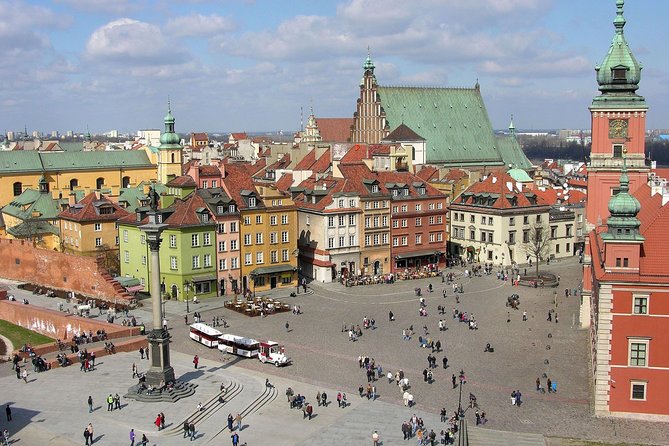
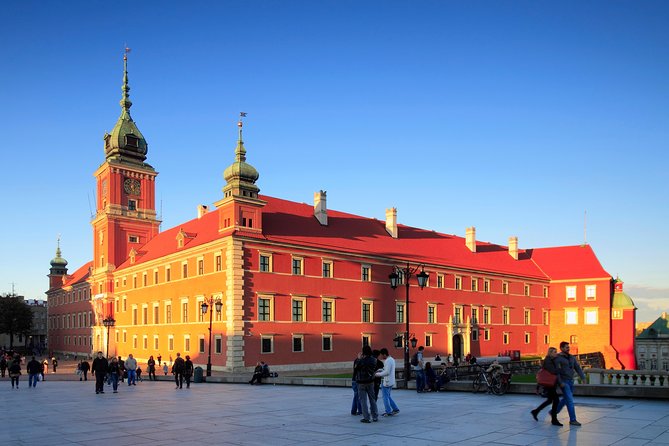
Begin at Sigismund’s Column in Castle Square, the classic meeting point beneath the red-brick castle and beside the entrance to Warsaw’s Old Town. This is a useful place to start because the square immediately shows the city’s layered story: royal power, wartime destruction, and postwar rebuilding all meet here.
The Royal Castle served for centuries as the central building of the Polish Commonwealth. It was later dynamited by German troops after the Warsaw Uprising, leaving Warsaw with the enormous task of rebuilding one of its defining landmarks.
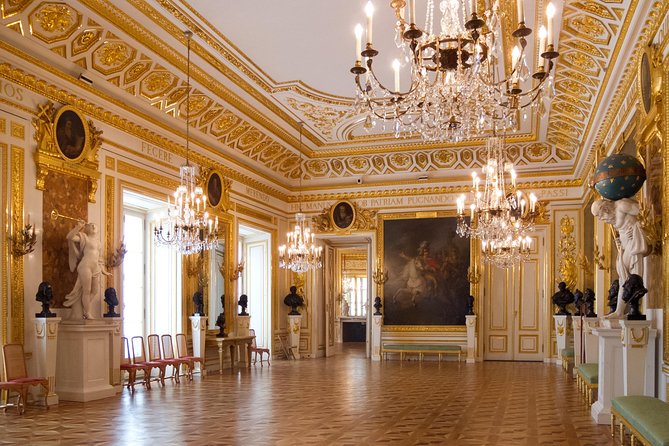
Inside, your guide takes you through the royal chambers and explains the purpose of the rooms, their decoration, and the role they played in Poland’s political life. The value here is not just seeing elegant interiors. You also learn how original relics and surviving pieces helped recreate rooms that had been destroyed.
That reconstruction story received especially strong praise from the people who took this tour. One guide, Natalia, was singled out for being on time, friendly, and able to explain the function of each room while answering questions and adjusting attention to personal interests. Another guide, Eva, made the royal chambers clear and relevant rather than turning the visit into a string of dates.
The tour is advertised as skip-the-line, but you still need to arrive punctually. The castle uses a scheduled entry system tied to security procedures. If you are delayed, contact the guide as soon as possible.
In November, special castle events can remove the Lanckoroński Gallery from the route. That is a small but useful seasonal detail if a particular collection is important to you.
A few more Warsaw trips to weigh up
- Warsaw: Skip-the-Line Royal Castle Guided Tour
★ 4.9 · 79 reviews - Warsaw: Lunch or dinner at Hard Rock Cafe with Skip-the-Line
★ 4.4 · 70 reviews - World of Illusion Museum Skip-the-Line Ticket
★ 4.0 · 55 reviews
Walking through Old Town’s rebuilt streets
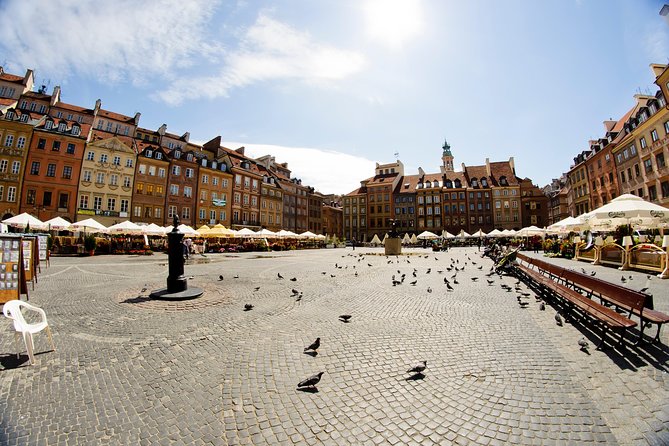
After or around the castle visit, the walk moves into Warsaw’s Old Town. The Gothic-looking lanes, Baroque buildings, churches, and tiered burgher houses may appear centuries old, but much of this district was reconstructed after the Nazis left the city in ruins.
I find this part of Warsaw most rewarding when you understand what you are looking at. The point is not that every stone is original. The point is the care taken to recreate the character of a vanished neighborhood, using plans, paintings, photographs, and surviving fragments.
At Rynek Starego Miasta, the Old Town Market Square, colorful merchants’ houses surround a lively open space. Cafes, shops, galleries, food stalls, and restaurants make it a natural place to pause, though the tour allows only about ten minutes here. You will get your bearings and hear the main story, but you may want to return later for a slower look.
Castle Square offers another strong photo stop. The King Sigismund III column rises at its center, honoring the ruler who moved Poland’s capital from Kraków to Warsaw. The column dates from the 1600s and remains one of the city’s best-known landmarks.
The Warsaw Mermaid sits in the market square, tied to a local legend and repeatedly used as a city symbol. The statue is small compared with the surrounding architecture, so the guide’s explanation gives it more meaning than a quick photograph would.
Churches, bells, and small Old Town details
The route includes several churches, though the exact interior visits depend on time and your request. St. John the Baptist Cathedral is one of Warsaw’s most important religious buildings. Originally built in the thirteenth century, it hosted royal coronations and national ceremonies.
St. Anne’s Church is known for its ornate structure and peaceful interior. Its bell tower offers one of the best close views over Old Town, with the city center visible beyond it. The climb costs relatively little, but it is not simply an automatic part of the short guided walk. Ask whether it can be included.
The Jesuit Church has a striking red exterior and an ornate interior that feels larger than you might expect from the street. The Field Cathedral of the Polish Army is more restrained, with a simpler design that many people find appealing after the heavier decoration of other churches.
The Church of the Visitationist Sisters, also called St. Joseph’s Church, has a plainer, more austere interior. Its story includes a wooden chapel that burned and was later rebuilt.
You may also see the Wishing Bell, a seventeenth-century bronze bell in a small courtyard. It is an easy sight to miss on your own, and a guide can add the local custom and story that make the stop worthwhile.
The Church of St. Mary is one of the city’s older buildings and one of the few remaining Gothic examples in Warsaw. Behind it, steps lead toward the Vistula River. Like the other church stops, entering is listed as possible on request, so do not assume there will be time for every interior.
From Krakowskie Przedmiescie to Chopin
Krakowskie Przedmiescie forms part of Warsaw’s Road of Kings, a long ceremonial route lined with historic buildings. The walk gives you a sense of how the royal center connected with churches, residences, monuments, and government buildings beyond the Old Town walls.
The Presidential Palace is a handsome Neoclassical building and the residence of the Polish president. You can view its exterior and guarded surroundings, but the tour does not promise an interior visit.
Nearby, the Carmelite Church of Our Lady of the Assumption is one of the route’s most memorable facades. Its paired columns and large stone details give it a grand Baroque appearance. The church is often linked to a story about Napoleon wishing he could move it to Paris, a colorful detail that helps bring the building to life.
At Holy Cross Church, you can see the place associated with Chopin’s heart. The church is heavily decorated, while the cross at the entrance survived the wartime bombing. This stop connects Warsaw’s architectural story with one of Poland’s most famous composers.
Chopin appears again at the multimedia Chopin Bench. Pressing the bench lets you hear his music, offering a quick and clever way to connect the composer with the city where he grew up. The stop is scheduled for about fifteen minutes, which is enough to listen without allowing the music portion to take over the entire walk.
Adam Mickiewicz Monument adds a literary note. Mickiewicz is one of Poland’s leading poets, and the monument’s surrounding steps and sculpture work make it more than a simple statue.
Same country, a completely different kind of day:
- Warsaw: Chopin Concert in the Old Town
★ 4.8 · 2,287 reviews - Warsaw: Traditional Galar Cruise on The Vistula River
★ 4.6 · 1,640 reviews - Warsaw: Old Town Highlights Walking Tour in English
★ 4.7 · 1,516 reviews - Warsaw Concert: Chopin – Painted by Candlelights with Wine
★ 4.8 · 1,442 reviews
Wartime memory beyond the castle
The tour does not treat Warsaw as a collection of pretty rebuilt facades. It also points to the cost of the city’s twentieth-century history.
The Warsaw Uprising Monument is one of the most powerful stops. Its figures convey effort, strength, and sacrifice, and the guide can place the uprising within the larger story of the city’s destruction. The scheduled visit is about ten minutes, so expect a focused explanation rather than a long memorial lecture.
The Little Insurgent is a smaller bronze statue honoring children who died during the Warsaw Rising. Its size makes the subject especially affecting. It is an emotional reminder that wartime suffering was not limited to soldiers or political leaders.
Krasinski Palace is viewed from the outside. Its facade is impressive, and the reconstruction has restored much of its former presence. The Field Cathedral of the Polish Army is also listed as an exterior stop, so keep your expectations clear: this route includes many meaningful buildings without promising entry to all of them.
The Warsaw Barbican marks part of the old medieval fortifications. This sixteenth-century defensive structure guarded the northern entrance through the Novomeijska Gate. The restored brickwork makes it an easy place to picture the old city walls, although the stop itself is brief.
New Town Square offers a quieter change of pace. It was founded by John III Sobieski to celebrate his victory over the Turks at Vienna in 1683 and is framed by historic buildings and the Baroque church of the Sisters of the Holy Sacrament.
The Vistula and the shape of the route
The itinerary also reaches the Vistula waterfront, where boulevards, waterside pubs, and open public areas give Warsaw a more relaxed side. This is not a major museum stop, but it helps you see how the city faces its river today.
Because the tour lasts two to three hours, the route should be understood as a guided overview rather than a full inspection of 27 separate attractions. Several sites are likely to be explained from outside, including the Museum of Warsaw, Krasinski Palace, the Presidential Palace, and parts of the religious route.
That is both a strength and a limitation. You cover a lot quickly and get a useful map of central Warsaw. If you want long interior visits at multiple churches, a full museum session, a bell tower climb, and detailed time at every monument, you will need to return independently or choose a longer experience.
Is $150.59 per person good value?
At $150.59 per person, this is not the cheapest way to see Warsaw Old Town. Its value depends heavily on your group size and how much you care about private guiding.
For a private group, the price pays for more than admission. You receive a dedicated English-speaking guide, a planned route, castle entry arrangements, and historical context linking the royal rooms with the reconstructed streets outside. You also avoid spending your own time working out how the castle, Old Town, churches, Chopin sites, and memorials fit together.
The cost is easier to justify if the Royal Castle is a priority and you want to ask questions along the way. It is less compelling if you only want exterior photographs, since many of the outdoor sights are free and easy to visit independently.
Group discounts may improve the calculation. A family or small group that would otherwise book separate admission and guiding can get more value from the private format than a solo visitor.
Who will get the most from this tour?
I would choose this tour if you are visiting Warsaw for the first time and want a strong orientation to the historic center. It suits people who prefer a personal guide over a large group and anyone who wants the castle explained room by room rather than visited alone.
It also works well for history-focused visitors who want the city’s royal, religious, musical, and wartime stories connected in one walk. The reviews of guides Natalia, Eva, and Czeslaw point to the qualities that matter here: clear explanations, punctuality, friendliness, and the ability to answer questions.
You should think twice if you dislike brisk sightseeing or want a slow museum visit. The route has too many possible sights to give each one equal time, and optional church entries or the St. Anne’s tower may not fit unless you request them early.
The tour is offered in English and uses a mobile ticket. It is near public transportation, and most people can participate. Free cancellation is available up to 24 hours before the start time, but late cancellations and changes are not accepted.
Should you book the Warsaw Royal Castle tour?
Book it if you want the Royal Castle to be the heart of your Warsaw visit and you value a private guide who can explain how the palace and the city were rebuilt. The mix of royal apartments, Castle Square, Old Town lanes, Chopin sites, churches, and wartime memorials gives you a useful first look at central Warsaw.
Before booking, decide what matters most. Tell the guide if you want church interiors, the St. Anne’s bell tower, extra time at the castle, or more attention to Chopin and wartime history. If you arrive on time and treat the many outdoor sights as a broad introduction rather than a series of full visits, the tour offers a well-focused way to understand Warsaw’s center.
FAQ
How long does the Warsaw Royal Castle private tour last?
The tour lasts approximately two to three hours.
What language is the tour offered in?
The tour is offered in English.
Where does the tour begin?
It begins at Sigismund’s Column in Castle Square, Warsaw.
Is this a private tour?
Yes. Only your group participates in the activity.
Is entry to the Royal Castle included?
The tour includes a guided visit to the Royal Castle, with timed entry arranged according to castle security rules. You should arrive at the meeting point on time.
Can I visit St. Anne’s Church or climb its bell tower?
These visits may be possible on request. The bell tower has a relatively inexpensive admission charge, so ask the guide if you want to include it.
What is the cancellation policy?
You can cancel up to 24 hours before the start time for a full refund. Cancellations or changes made less than 24 hours in advance are not accepted.
Just added around Warsaw
- World War II Warsaw Old Town, Military Cemetery Walking Tour★ 4.7 · 3 reviews
- Warsaw: Wolf’s Lair & Swieta Lipka Small-Group Tour + Lunch★ 5.0 · 3 reviews
- Wilanów Palace: 2-Hour Guided Tour with Entrance Tickets★ 4.8 · 8 reviews
- Warsaw Zoo Skip-the-Line Entry Ticket with Private Transport★ 4.8 · 3 reviews
- Warsaw Wolf’s Lair with St. Lipka and Mamerki Private Guided★ 4.2 · 3 reviews
- Warsaw: Vistula River Cruise with Your Music & City Views★ 4.6 · 78 reviews
- Warsaw: Private Vodka Tasting Night with Snacks and Pickup★ 5.0 · 7 reviews
- Warsaw Private Wilanow Palace & Garden Tour★ 4.6 · 30 reviews
Skip the Line, compared.
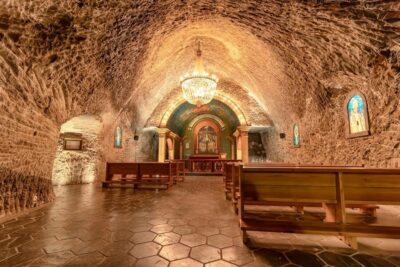
Wieliczka Salt Mine Tour & Skip the Line Ticket
Read our review →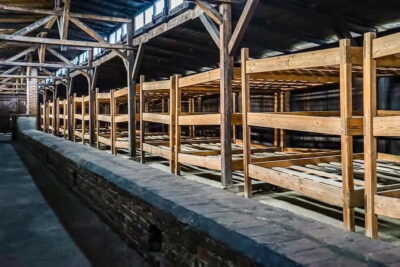
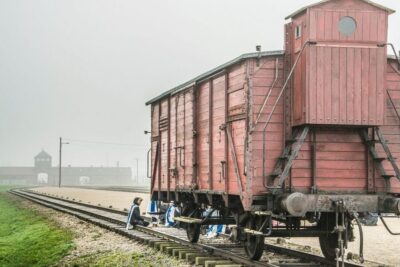
Auschwitz-Birkenau: Skip-the-Line Entry Ticket & Guided Tour
Read our review →
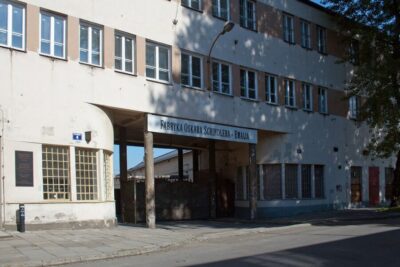
Schindler’s Factory in Krakow: Guided Tour & Skip the Line Ticket
Read our review →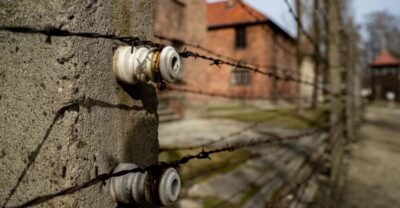
Auschwitz-Birkenau Skip-the-Line Ticket and Guided Tour
Read our review →Auschwitz-Birkenau: Skip-the-Line Entry Ticket & Guided Tour
Read our review →Auschwitz-Birkenau: Skip-the-Line Ticket and Guided Tour
Read our review →Browse the lists this tour appears in