
Reviewed · WROCLAW TOURS
Famous Islands of Wroclaw – Cathedral Island and Sand Island Private Tour
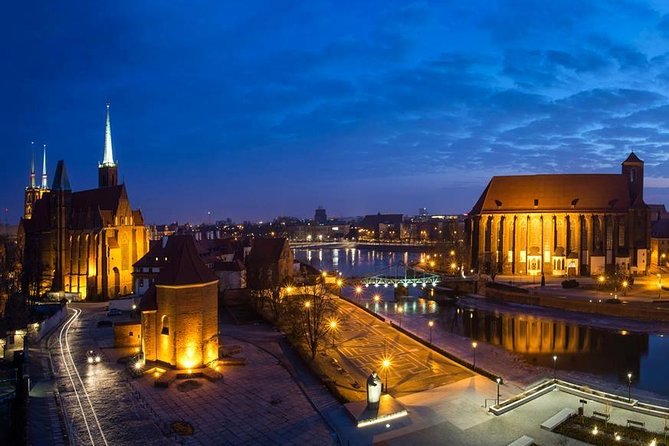
Wroclaw’s islands are where the city’s medieval power, church life, and best Gothic views come together. This private walk takes you from the Cathedral’s main entrance across Cathedral Island and on to Sand Island, with stories about escaped wrongdoers, hidden Solidarity money, old monasteries, and churches that survived centuries of change.
I like the small private format, which lets your guide explain details without the shuffle of a large group. I also like the clear route, beginning at Wroclaw Cathedral and ending at Sand Bridge, so you spend your time walking rather than finding your way between sights. The main drawback is that this is a church and history walk, not a broad city tour, and the experience depends on good weather.
Key points at a glance
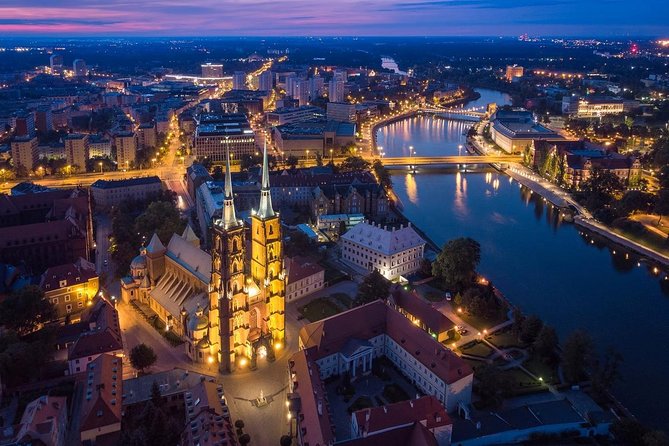
- Walk through Cathedral Island’s unusual past: Learn why dukes and clergy chose to live here, and why the island is no longer technically an island.
- See four striking churches: The route includes St. Giles, Holy Cross and Bartholomew, Our Lady on the Sand, and Wroclaw Cathedral.
- Hear the 80-million-zloty story: The Archbishop’s Palace is tied to a remarkable episode involving a cardinal and Poland’s Solidarity movement.
- Finish at Tumski Bridge and Sand Bridge: The route makes it easy to continue exploring after the tour.
- Expect a manageable walking pace: The tour lasts about 1 hour 40 minutes to 2 hours and is described as an easy walking experience.
- Book with weather in mind: You can cancel free up to 24 hours before the start, but poor weather can also affect the outing.
Why Cathedral Island is the right place to begin
The tour starts outside Wroclaw Cathedral at Plac Katedralny 18. That is a useful meeting point because you begin in the heart of the area rather than spending the first part of the tour walking in from the city center.
Cathedral Island, known locally as Ostrow Tumski, feels different from the commercial center of Wroclaw. Its streets and church buildings create a quieter setting, with the cathedral towers giving you an immediate sense of place. Your guide uses the area to explain how church authority and political power were once concentrated here.
One of the most engaging details is the island’s legal past. In medieval times, wrongdoers could escape secular justice by reaching church territory. That does not mean the island was lawless, but it does explain why this patch of Wroclaw had such unusual status.
You will also learn why dukes and clergy lived here hundreds of years ago. The value of this story is not just the date or name of a ruler. It helps you read the buildings around you as signs of authority, protection, and church influence.
The name Cathedral Island can also be slightly misleading. Your guide explains why it is not an island anymore, a small geographic detail that helps you understand how Wroclaw’s waterways and urban layout changed over time.
A few more Wroclaw trips to weigh up
- Wroclaw: 2-Hour Private Guided Tour by Electric Car
★ 4.8 · 805 reviews - Wroclaw: Private Old Town Guided Walking Tour (2 hours)
★ 4.8 · 275 reviews - 2-Hours Private Electric Car Tour with a Guide, Wroclaw
★ 4.5 · 87 reviews
St. Giles and the oldest surviving church
A few minutes into the walk, you reach the Church of St. Giles, described as the oldest existing church in Wroclaw. Even if you are not a serious church enthusiast, this stop gives the tour a useful anchor. You are looking at one of the city’s earliest surviving religious buildings, not simply another photogenic facade.
The church is part of what makes the route feel focused. Instead of rushing through a long list of monuments, you move through a compact area where each building connects to the next. Your guide can explain the churches as part of one neighborhood rather than isolated sights.
The walking is reported as easy, but you should still wear comfortable shoes. The tour lasts close to two hours, and the route includes several stops around church grounds, bridges, and old streets. No special level of fitness is stated as necessary, and most participants can take part.
The Leaning Tower, Dumpling Gate, and Botanical Gardens
The Leaning Tower of Wroclaw adds a lighter architectural note to the walk. It gives you something different from the large churches and palace buildings, and it is the sort of detail that can be easy to miss when you explore alone.
You will also see the Dumpling Gate. The name alone makes it memorable, but the larger value is the way these smaller points break up the church-heavy route. The tour is not only a procession from one grand building to another.
Near this part of the walk, you will find an entrance to the 19th-century Botanical Gardens. The garden is not included as a full stop or extended visit, so you should not book this tour expecting a garden tour. Still, its presence offers a useful option if you plan to return to Cathedral Island later for a slower visit among plants and paths.
This is one of the tour’s practical strengths. You get an introduction to several places, then you can decide which ones deserve more of your own time afterward.
The Archbishop’s Palace and the 80-million-zloty secret
The Archbishop’s Palace supplies the most dramatic modern political story on the route. Here, your guide tells how a brave cardinal hid 80 million zloty for the Solidarity movement in 1980, followed by the story of what happened to the money.
That detail gives the walk a wider time span. You are not stopping in a medieval bubble. The route connects church power in the Middle Ages with Poland’s 20th-century political struggle.
I find stories like this especially useful on a walking tour because they give you a reason to remember the building. A palace can otherwise become just another grand facade. Once you know it was linked to a dangerous act of support, you see it as part of Poland’s recent past as well as its religious history.
The information provided does not name the individual guide, so you should not expect a particular guide by name when booking. The tour is offered in English, and the private setup means the explanation is intended for your group alone.
Same country, a completely different kind of day:
- Wroclaw: E-Car Tour and Audio Guide
★ 4.6 · 1,738 reviews - Wrocław: Old Town and Ostrów Tumski Walking Tour in English
★ 4.8 · 311 reviews - Old Town Wrocław Walking Tour
★ 5.0 · 249 reviews - Wroclaw: City Tour Sightseeing By Golf Cart Shared Or Privat
★ 4.8 · 189 reviews
Holy Cross and Bartholomew, a church built in layers
Across the street is the Church of the Holy Cross and Bartholomew, a two-tier building considered one of the finest Gothic churches in the Silesia area. Its unusual stacked design is one of the most distinctive sights on the route.
The two levels are important visually and historically. Rather than seeing a standard single-volume church, you are looking at a building with a layered arrangement that rewards a closer explanation. Your guide also tells you about a copy of the Turin Shroud hidden inside.
That story may appeal to you if you enjoy the way religious tradition, objects, and architecture overlap. If you prefer secular sightseeing, this is still a worthwhile stop because the church’s structure is unusual enough to hold your attention.
The neighborhood includes other notable buildings, including Orphanotropheum, a former orphanage. The stop helps you see that Cathedral Island was not made up only of cathedrals and palaces. It also served daily social needs, including the care of children.
Crossing Tumski Bridge to Sand Island
The route ends its Cathedral Island section at Tumski Bridge. The bridge once represented the border of the church’s jurisdiction, so crossing it is more than a pleasant change of scenery. Your guide uses it to explain where one sphere of authority ended and another began.
The bridge also creates a natural transition. Behind you are the cathedral district and its church institutions. Ahead lies Sand Island, with another major church and the remains of older residential buildings.
A private walk works well here because you can ask questions while the setting changes. If you are trying to understand Wroclaw’s old center, the bridge makes the city’s layered structure easier to follow. You are moving through a former boundary, not simply taking a shortcut over the river.
The tour finishes at Sand Bridge, also called Most Piaskowy. This ending is practical. You are not returned to the starting point, but you finish near another part of the historic center and can continue independently from there.
Our Lady on the Sand and the old Augustinian quarter
On Sand Island, you see the monumental Church of Our Lady on the Sand, described as the biggest Gothic church in Wroclaw. It is the major final church stop and gives the tour a strong finish.
You will also see the former Augustinian monastery. The building helps explain the island’s religious role beyond a single church. Religious communities shaped the area, and the monastery remains part of that older story.
The charming tenement houses are another useful contrast. They are described as the only surviving remains of the old residential buildings on Sand Island. That makes them more than decorative backdrops. They offer a glimpse of how ordinary living spaces once fitted around the larger religious buildings.
The route’s four principal churches make this a strong choice if church architecture interests you. One past participant described the walk as covering four beautiful old churches and found it easy to manage. That matches the tour’s basic character: steady, compact, and focused on architecture and history rather than strenuous walking.
What the private format is worth at $75
The price is $75 per person. That is not the cheapest way to walk around Cathedral Island, especially if you are traveling alone or as a couple and are comfortable reading about the sights on your own.
The value improves if you want a guide to connect the buildings into one story. You are paying for a private experience lasting roughly 100 to 120 minutes, in English, with only your group participating. That gives you room to ask about the churches, the island’s changing geography, the cardinal’s story, or anything else that catches your eye.
A large group tour might cost less, but it can also mean less time for questions and less control over the pace. The private arrangement is most useful for families, couples, and small groups who want a calm introduction without waiting for strangers.
Group discounts are available, which may make the price more reasonable for a larger party. The tour is booked, on average, 11 days ahead, so I would not leave it until the final morning if your schedule is fixed.
Who will enjoy this walk most
I would recommend this experience to you if you want to understand Wroclaw through its churches, bridges, and old institutions. It is also a good first activity in the city because the route gives you a clear sense of one of Wroclaw’s most important historic districts.
It suits:
- First-time visitors who want a guided introduction to Cathedral Island
- Architecture fans interested in Gothic churches and unusual buildings
- History-minded visitors who enjoy stories tied to real places
- Couples and families who prefer a private pace
- People who want a short activity rather than a half-day tour
It may not suit you if you want museum interiors, extended free time, or a broad tour of all Wroclaw’s main neighborhoods. The available details focus on walking around the buildings and hearing their stories. The experience is also weather dependent, so a rainy forecast could force a date change or cancellation.
The route is offered in English and is near public transportation. Service animals are allowed, and most people can participate. Since the tour is outdoors and involves walking, check the forecast and choose sensible shoes.
Booking, cancellation, and the best time to plan
Confirmation is provided when you book. You meet outside Wroclaw Cathedral and finish at Sand Bridge, so plan your next activity from the ending point rather than assuming you will return to the cathedral.
You can cancel for a full refund up to 24 hours before the local start time. Changes or cancellations made less than 24 hours before the start are not accepted for a refund. If poor weather causes the provider to cancel, you can choose another date or receive a full refund.
I would place this tour early in your Wroclaw visit if you want the guide’s explanation to shape the rest of your sightseeing. I would also avoid putting it at the very end of a tightly planned day, since weather and the private meeting arrangement require you to be at the cathedral on time.
Should you book Famous Islands of Wroclaw?
Book it if you want a short, private walk built around Wroclaw’s finest church district. The combination of Cathedral Island, Tumski Bridge, Sand Island, four important churches, and the Solidarity money story gives you more substance than a simple photo walk.
At $75 per person, the tour makes the most sense when you value a private English-speaking guide and plan to ask questions. If you only want quick exterior views, you can explore the islands independently for less. If you want the buildings to make sense, and you prefer a relaxed route with a clear beginning and end, this is a sensible choice.
FAQ
Where does the tour begin?
The tour begins outside the main entrance of Wroclaw Cathedral at Plac Katedralny 18, 50-329 Wroclaw, Poland.
Where does the tour end?
The tour ends at Sand Bridge, also known as Most Piaskowy, in Wroclaw.
How long does the tour last?
The experience lasts approximately 1 hour 40 minutes to 2 hours.
Is this a private tour?
Yes. Only your group participates in the activity.
Is the tour offered in English?
Yes. The tour is offered in English.
What areas does the tour cover?
The route covers Cathedral Island and Sand Island, including Tumski Bridge and Sand Bridge.
Can I cancel for a full refund?
Yes. You can cancel at least 24 hours before the local start time for a full refund. Cancellations made less than 24 hours before the start are not refunded.
What happens if the weather is poor?
The experience requires good weather. If it is canceled because of poor weather, you will be offered another date or a full refund.
Just added around Wroclaw
- Wrocław: World War II and the non-existent city of Breslau★ 3.6 · 3 reviews
- Wrocław to Rock City in Adrspach and Project Riese day trip★ 5.0 · 5 reviews
- Wroclaw: WW2 Tour to Project Riese & Gross-Rosen Museum★ 4.8 · 26 reviews
- Wroclaw: University Baroque Tour★ 5.0 · 19 reviews
- Wroclaw : Walking Custom Tour with a Local Guide★ 4.8 · 3 reviews
- Wrocław: Tour of the Old Town in an Imperial E-car★ 4.3 · 13 reviews
- Wroclaw to Rock City in Adrspach and Ksiaz Castle day trip★ 4.9 · 16 reviews
- Wroclaw: Third Reich and World War Two Historical Tour★ 4.9 · 43 reviews
Wroclaw Tours, compared.
Old Town and Ostrów Tumski Walking Tour in English
Read our review →
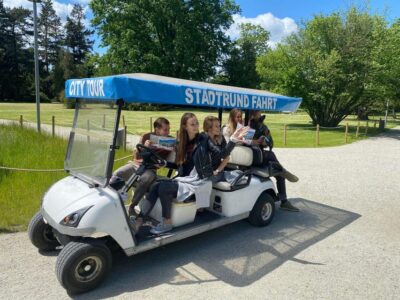
City Tour Sightseeing By Golf Cart Shared Or Privat
Read our review →

Browse the lists this tour appears in