
Reviewed · OLD TOWN WALKING TOURS
Wrocław: Old Town and Ostrów Tumski Walking Tour in English
Wrocław’s big surprise is how much European history fits into one walk. In 150 minutes, you move from the grand merchants’ houses and Gothic Town Hall of the Market Square to the cathedral island that marks the city’s oldest core. Along the way, a local guide explains why Wrocław has changed hands so often, and why its name is not easy for English speakers.
I like the mix of major sights and local detail, including the city’s bridges, hidden stories, food suggestions, and the famous little dwarfs. I also like the guides’ human touch. Names such as Łukasz, Justyna, Michał, Matt, Simon, and Zuzanna appear often in the experience, and the strongest guiding style is clear, funny, and personal rather than stiff.
The main thing to consider is the length and walking surface. Two and a half hours can stretch closer to three, and Wrocław’s handsome cobblestones are hard on tired feet. Large groups may also make it difficult to hear at times, especially without individual headsets.
Key points to know before you go
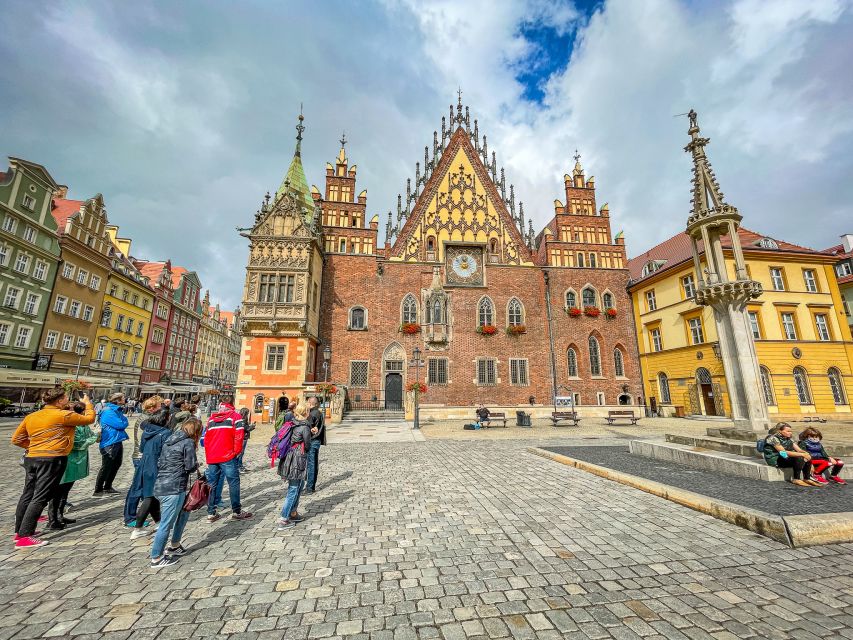
- The route links two essential districts: Wrocław’s Market Square and Ostrów Tumski, or Cathedral Island.
- The city’s past is the main story: Polish, German, religious, wartime, communist, and modern chapters all fit into the walk.
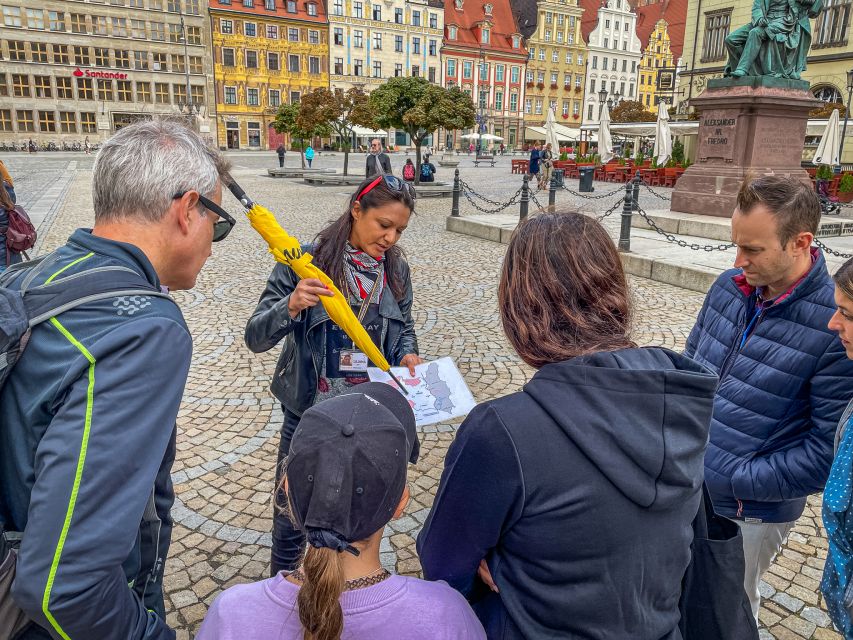
- The Fredro Statue is the meeting point: Find your Walkative guide in front of it on the Market Square.
- The guide adds practical advice: Restaurant, cafe, pub, and further sightseeing suggestions are part of the experience.
- The pace is generally gentle: Several people found it manageable with older parents, but comfortable shoes still matter.
- The $19 price is more fixed than the name suggests: It covers the reservation fee and the guide’s payment for the pay as you wish format.
Why this walk is a smart first look at Wrocław
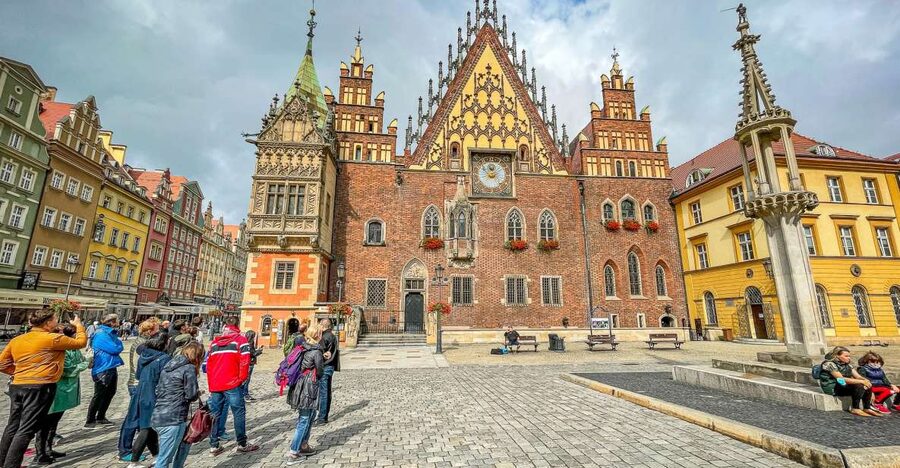
Wrocław is not a city you understand from a single postcard view. Its Market Square is easy to admire, with ornate facades and an imposing Town Hall, but the city’s real character comes from the layers beneath those pretty surfaces.
The city has been shaped by changing borders, trade, religious conflict, war, population shifts, communism, and the return of freedom. A good guide gives you a way to connect those pieces without turning the outing into a lecture.
That is the chief value here. You are not just being led from one photogenic building to the next. You are given a framework for understanding why Wrocław looks and feels the way it does today.
The walk suits a first day in town. You get your bearings on foot, learn the names of the central districts, and finish near Ostrów Tumski, where you can continue exploring at your own pace. It also works well for a short stay, since the route covers the city’s main historic areas without requiring a bus or taxi.
The tour is conducted in English, and the guides are expected to explain both the past and the present. The best examples from the guiding team, including Łukasz, Justyna, Matt, and Michał, combine clear English with humor and personal pride in the city.
More Old Town Walking Tours in Wroclaw
- Wroclaw: Private Old Town Guided Walking Tour (2 hours)
★ 4.8 · 275 reviews - Old Town Wrocław Walking Tour
★ 5.0 · 249 reviews - Wroclaw Old Town Guided Walking Tour
★ 5.0 · 100 reviews
Meeting at the Fredro Statue in the Market Square
The walk begins in front of the Fredro Statue, in Wrocław’s Market Square, known locally as Rynek. This is a sensible starting point because the square is the city’s visual center and one of its easiest places to find.
Arrive ready to walk, not wait around for a transport connection. No transportation is included, and that is not a problem here. The route is built around compact central districts where walking gives you the best view of the buildings, bridges, lanes, and public spaces.
The Market Square can be busy, especially at popular times. Look for the Walkative guide near the statue and keep an eye out for the meeting details provided with your booking.
The square itself is a useful introduction to Wrocław. Its merchant houses show the wealth created by trade, while the Town Hall gives the area its grand Gothic centerpiece. Your guide can point out the difference between the public buildings and the narrow-fronted houses that once belonged to prosperous trading families.
I would not rush through this opening section. The ornate fronts are what most people notice first, but the guide’s explanation helps you see the square as a working center of civic and commercial life rather than only a pretty backdrop.
Reading the Gothic Town Hall and merchant houses
The Old Town section focuses on architecture, civic power, and the people who made Wrocław prosperous. The Town Hall is the obvious star, with its Gothic form and elaborate exterior details.
You will learn to look beyond the general shape of the building. A guide can help you notice how the Town Hall reflects the city’s long role as a trade center and seat of local government.
The surrounding buildings add another layer. Wrocław’s facades are not all from the same period or political era, and that variety helps explain why the city can feel both Polish and Central European at once.
This is also where the tour’s storytelling style matters. Names, dates, and rulers alone can become a blur. The better guides connect them to odd incidents, local characters, changing religious beliefs, and the daily life of the people who used these streets.
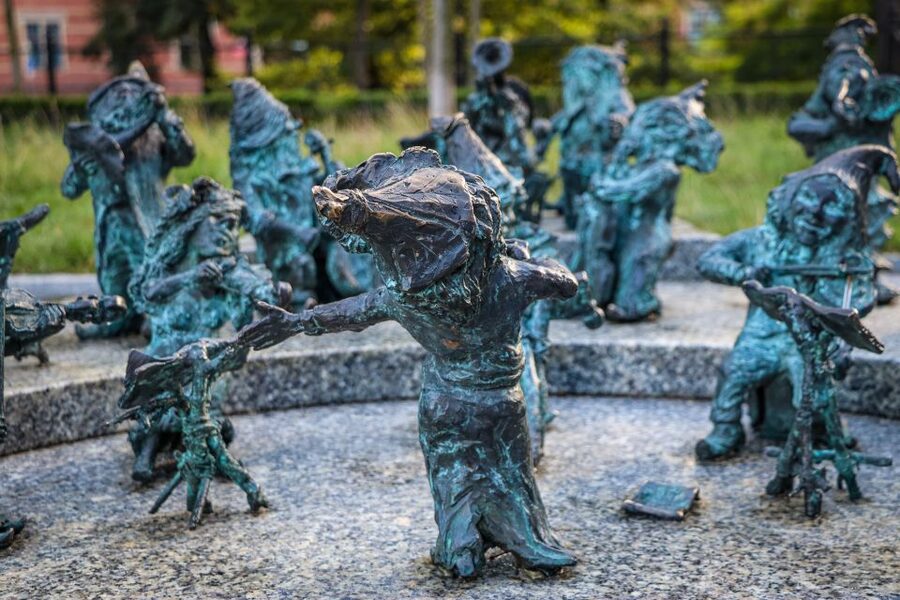
The guides are not limited to formal history. The route may include stories about Wrocław’s dwarfs, old prisoners’ graffiti, public performances, and cultural figures such as Nobel laureate Olga Tokarczuk. Those details help keep the walk grounded in the living city.
A short pause at the Market Hall may be included in the wider route. One guide used it as a practical break for shopping and facilities, and it can also give you a quick look at a place where locals buy food. Treat this as a possible stop rather than a guaranteed feature of every departure, since the exact route can depend on the guide and conditions.
Getting the name Wrocław right
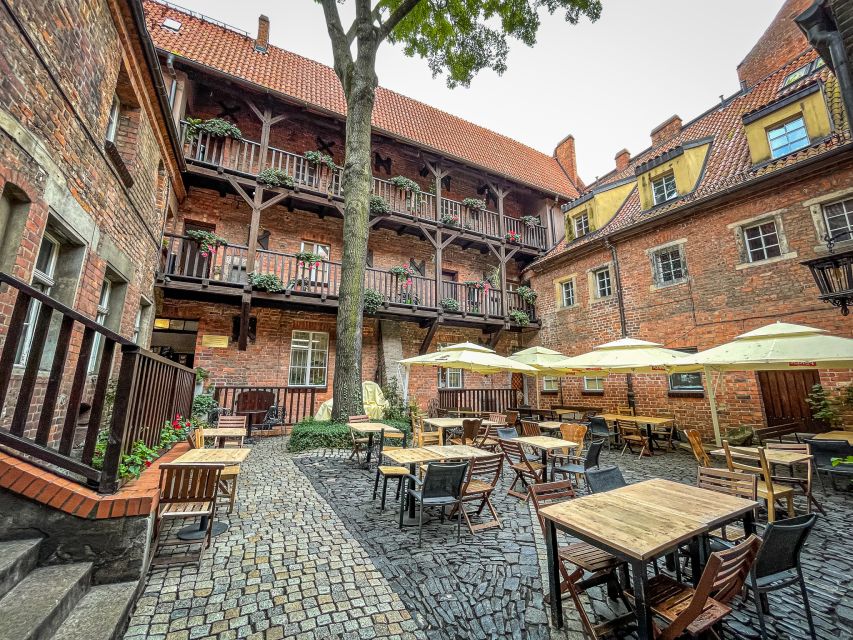
Wrocław’s name often causes confusion for English speakers. The guide explains how the Polish spelling is pronounced, which is a small lesson but a useful one.
You do not need to master Polish before arriving. Still, learning the local pronunciation helps you feel less like you are simply passing through. It also makes later conversations with people in cafes, shops, or hotels a little easier.
This detail is typical of the tour at its best. The walk deals with major events, but it also gives you small pieces of local knowledge that you can use during the rest of your stay.
The city’s name is tied to its complicated past, too. Wrocław has been known by different names in different languages and periods. That is not just a pronunciation puzzle. It reflects the city’s position in the middle of Europe and its changing political identity.
The guide’s job is to make that complexity understandable. You should come away with a clearer idea of why the city is sometimes described as a European microcosm, a place where major continental forces have repeatedly met.
Same country, a completely different kind of day:
- Wroclaw: E-Car Tour and Audio Guide
★ 4.6 · 1,738 reviews - Wroclaw: 2-Hour Private Guided Tour by Electric Car
★ 4.8 · 805 reviews - Wroclaw: City Tour Sightseeing By Golf Cart Shared Or Privat
★ 4.8 · 189 reviews - Auschwitz-Birkenau Tour from Wrocław
★ 5.0 · 129 reviews
Crossing bridges toward Ostrów Tumski
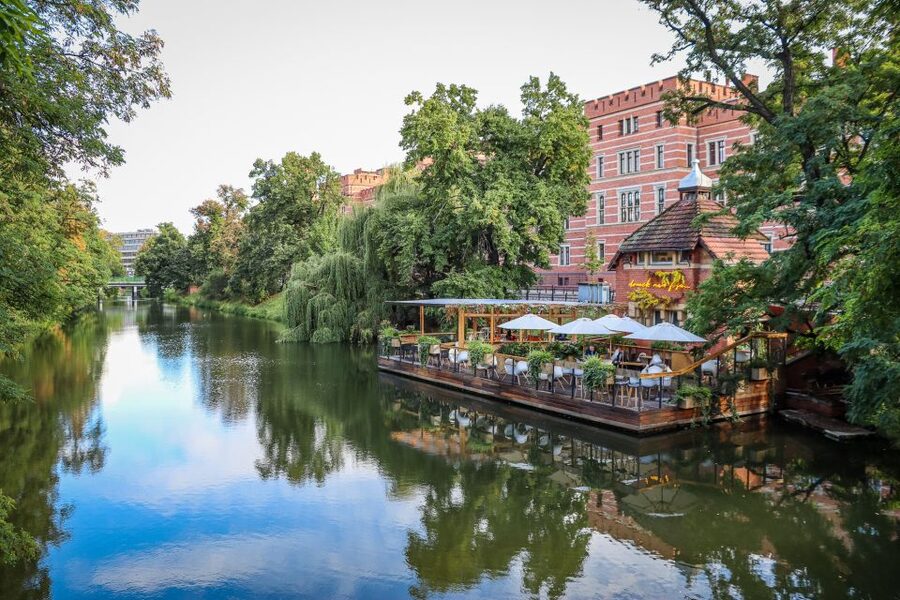
The route gradually leaves the Market Square and heads toward Ostrów Tumski. Along the way, you step across some of Wrocław’s many bridges and hear why water is such an important part of the city’s character.
The bridge section is not simply a counting game, though counting Wrocław’s bridges is one of the stated highlights. It helps you understand the city’s physical layout and its connection to the Oder River.
The change in mood is noticeable. The Market Square is formal and urban, while the approach to Cathedral Island feels more reflective. You are still in the middle of Wrocław, but the buildings and streets begin to frame the city in a different way.
Wear shoes with good support. The pace is not described as strenuous, and several families found it comfortable, including a group with two elderly parents. The cobbles are the bigger issue. After two and a half hours, uneven paving can matter more than the distance itself.
If you have mobility concerns, the tour is listed as wheelchair accessible, but it is sensible to prepare for historic paving and changing street surfaces. Weather also matters. Bring clothing suited to the forecast because most of the experience takes place outside.
Reaching Wrocław’s oldest part on Cathedral Island
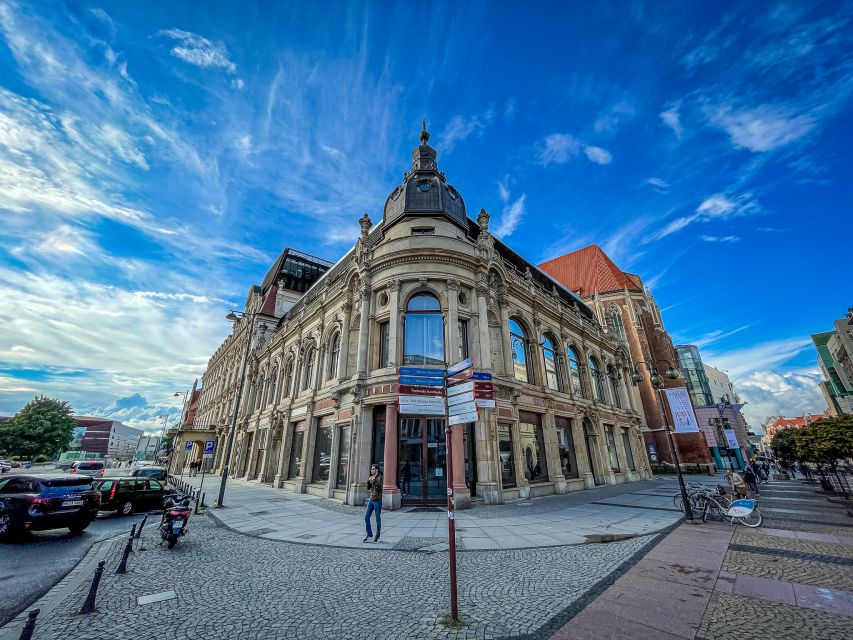
Ostrów Tumski is the historic high point of the route. Often called Cathedral Island, it is identified as the oldest part of the city and is home to several important churches and cathedrals.
This is where the long story of Wrocław becomes easier to picture. Religious buildings, bridges, and the older settlement area show how the city developed around the river and its early centers of power.
Your guide introduces the cathedrals and explains their place in the city’s past. The value is not only architectural. Religious struggle was one of the major forces that shaped Wrocław and wider Europe, so the churches provide a way to discuss belief, politics, and authority.
You should expect exterior sightseeing rather than a guaranteed interior visit. The supplied details promise views of the cathedrals and the island, not entry tickets or a guided tour inside every church.
The walk’s finish on Ostrów Tumski is practical. You are left in an area worth exploring after the official route ends, instead of being returned to the starting point with no idea where to go next. Ask your guide for suggestions if you have extra time.
Understanding war, destruction, communism, and renewal
Wrocław’s past is not a simple tale of steady growth. The city experienced wars, religious conflict, Nazi rule, the Second World War, near-total destruction, and life inside the communist bloc.
The tour uses these difficult chapters to explain how modern Wrocław came to be. That matters because the city’s present population and identity were shaped by enormous upheaval. The historic buildings you see are part of an old city, but the modern community also reflects rebuilding and major population change.
A good guide handles this material with care. The strongest guiding accounts describe a balance of facts, humor, and serious discussion. Guides such as Łukasz, Michał, and Simon are praised for explaining politics, culture, and European history in clear English without making the walk feel like a classroom.
I especially value this part for visitors who know little about Poland’s twentieth century. You get a short, usable introduction rather than a specialist seminar. If you want exact military history or detailed architectural research, you will need a museum or longer specialist tour later.
That limitation is fair. The walk is designed to give you an overview of Wrocław, not cover every century in equal detail. Its success depends on how well the guide chooses the stories that make the city understandable.
Local advice that helps after the walk
The tour can also function as a useful orientation session for the rest of your stay. Guides have offered suggestions for restaurants, cafes, pubs, affordable traditional food, vegetarian choices, and other places to visit.
This advice is most useful when you ask specific questions. Tell the guide how long you are staying and what sort of food or evening you want. The recommendations can then become more practical than a generic list of attractions.
One guide also took the group to an unusual food hall, adding a modern local stop to a route otherwise focused on history. That sort of addition may vary by guide, but it shows the advantage of having a local person rather than relying only on a map.
The walk also gives you a chance to ask about what you see but cannot immediately understand. Wrocław’s dwarfs are a familiar example. You may spot them on your own, but a guide can explain their place in the city’s culture and point out details you might miss.
You should not expect a food tour or pub crawl. Food and nightlife advice is an extra benefit, not the central service. The main product is a guided walk through the Old Town and Ostrów Tumski.
The $19 cost and the pay as you wish format
At $19 per person, this tour offers solid value if you want a broad introduction to central Wrocław. You are paying for an English-speaking guide and a 150-minute walking experience that covers two major historic areas.
The payment arrangement needs a close look. The tour uses a general pay as you wish format, but the listed $19 covers the reservation fee and the guide’s payment in this case. You are not booking a free walk and then deciding on an entirely separate tip at the end.
That makes the price easier to understand. You get a fixed booking cost, a confirmed place, and a guide-led route without paying for transportation or entrance tickets that you may not need.
The value is strongest if you are visiting Wrocław for the first time. A self-guided walk costs less, but it requires planning and gives you no one to explain the city’s complicated changes of rule, language, and population.
The price is less attractive if you prefer very small groups, private attention, or museum interiors. Group size can be large, and one person found the crowd made the walk feel cramped. Another practical complaint was difficulty hearing the guide, with a suggestion that individual audio receivers would help.
Ask a question early if you cannot hear. Stay near the guide when the group moves, especially in busy squares. The guides are generally praised for clear English and strong engagement, but outdoor sound is never perfect.
Timing, pace, and who will enjoy it most
The advertised duration is 150 minutes, but plan for a little extra time. One outing lasted closer to three hours, so do not schedule a train, meal reservation, or museum entry immediately afterward.
The pace is usually described as comfortable, with enough time for explanations and questions. It is not a quick photo stop tour. You will spend time listening, walking over cobbles, crossing bridges, and pausing around important buildings.
I would choose this for:
- First-time visitors who want a clear introduction to Wrocław
- People interested in architecture and European political history
- Families with older children or older relatives who can manage a long city walk
- Visitors who want restaurant and cafe suggestions from a local guide
- Short-stay visitors who need to cover the central sights efficiently
I would think twice if you dislike group tours, need a very short outing, or want extensive time inside churches and museums. You should also bring a coat or sun protection according to the weather, since the route is outdoors.
Wheelchair access is listed, but historic paving can still affect comfort. Contact the provider before booking if you need details about the exact surfaces or route conditions on your date.
Should you book the Wrocław Old Town and Ostrów Tumski walk?
Book it if you want the city’s main sights to make sense, not just look attractive. The best part is the connection between the grand Market Square, the bridges, the cathedral island, and the political forces that shaped Wrocław.
The guiding quality is a major reason to choose it. Guides including Łukasz, Justyna, Matt, Michał, and Zuzanna are known for clear English, humor, useful recommendations, and real affection for the city. The experience has earned a 4.8 rating from 311 reviews, which fits the pattern of strong praise for the guides and the route.
Skip it if you need a private tour, a short schedule, or a museum-heavy itinerary. Otherwise, $19 is a fair price for a long, useful first walk, provided you wear comfortable shoes and leave room in your schedule for the tour to run beyond two and a half hours.
FAQ
How long is the Wrocław walking tour?
The stated duration is 150 minutes, or two and a half hours. You should allow extra time because one reported outing lasted closer to three hours.
Where does the tour meet?
Meet the Walkative guide in front of the Fredro Statue in Wrocław’s Market Square.
Where does the tour finish?
The route finishes on Ostrów Tumski, also called Cathedral Island, which is described as the oldest part of Wrocław.
Is the tour conducted in English?
Yes. The tour has a live English-speaking guide, and English is the listed language.
What sights are included?
The walk covers Wrocław’s Old Town, the Gothic Town Hall in the Market Square, bridges leading toward Ostrów Tumski, and the cathedrals on the island.
Is transportation included?
No. This is a walking tour, and transportation is not included.
Is the tour wheelchair accessible?
Yes, the activity is listed as wheelchair accessible. Weather-appropriate clothing is recommended, and the historic route includes cobbled areas.
What does the $19 payment cover?
The $19 price covers the reservation fee and the guide’s payment for the general pay as you wish tour format. The English-speaking guide and walking tour are included.
More Walking Tours in Wroclaw
- Group city tour (walking tour) through Wroclaw in German
★ 4.9 · 89 reviews - Best of Wroclaw 3-Hour History and Culture Walking Tour
★ 4.9 · 49 reviews - Legends of Old Town 1 Hour Walking Tour in Wroclaw (English)
★ 4.9 · 20 reviews - Wroclaw: City Walk and Cruise by Luxury Solar Catamaran
★ 4.8 · 6 reviews
Just added around Wroclaw
- Best of Wroclaw 3-Hour History and Culture Walking Tour★ 4.9 · 49 reviews
- From Wrocław: Świdnica Church of Peace Private Tour★ 4.7 · 3 reviews
- From Wroclaw: Polish Pottery and Jawor Church of Peace Tour★ 4.4 · 4 reviews
- Segway Tour Wroclaw: Full Tour (Old Town + Ostrów Tumski)★ 4.8 · 15 reviews
- Cathedral & Old Town★ 5.0 · 9 reviews
- Oder river cruise and walking tour of Wroclaw★ 4.8 · 5 reviews
- Night tour through Wroclaw★ 4.9 · 38 reviews
- Wrocław: Polish Craft Beer Walking Tour with Tastings★ 4.1 · 3 reviews
Old Town Walking Tours, compared.

Bike Tour of Old Town, Jewish Quarter and the Ghetto
Read our review →

Sightseeing EcoCruise around the Old Town of Gdansk
Read our review →
Browse the lists this tour appears in