
Reviewed · WAWEL CASTLE TOURS
Wawel Castle, Old Town with St. Mary’s Church Guided Tour
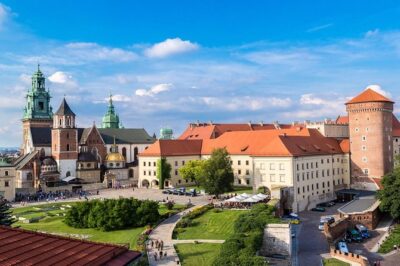
Wawel Hill gives you Krakow’s grandest history in one place: royal apartments, a cathedral of coronations, crypts filled with national figures, and the huge Sigismund Bell. I like that this tour does not stop at the castle. It carries on into the Old Town, linking royal power with university life, trade, and sacred art.
I also like the clear structure: a licensed local guide leads you through one Wawel exhibition, the cathedral, and St. Mary’s Basilica in 210 minutes. Guide Jadwiga has been singled out for making Krakow’s past easy to follow, with plenty of useful advice and memorable stories. The main drawback is pace. You cover a lot on foot, and the exact Wawel exhibition depends on availability.
Key points at a glance
- Touch the Sigismund Bell: Climb Wawel Cathedral’s tower and take part in a Krakow good-luck tradition.
- See royal interiors: Visit the State Rooms, Royal Private Apartments, or Crown Treasury, depending on availability.
- Enter St. Mary’s Basilica: See Veit Stoss’s 15th-century wooden altarpiece, one of Krakow’s finest works of Gothic art.
- Walk through medieval Krakow: Visit Collegium Maius, the Cloth Hall, and Europe’s largest medieval market square.
- Use your time well: The 210-minute route combines major sights that can be awkward to organize separately.
- Plan for the rules: Arrive 10 minutes early, cover your shoulders and knees, and wear sturdy walking shoes.
Wawel Hill: where Poland’s royal story begins
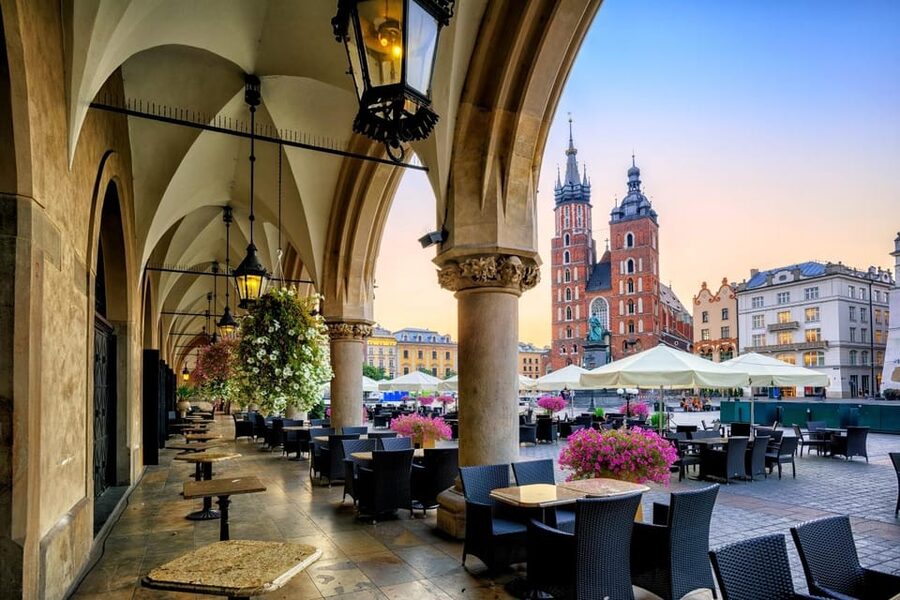
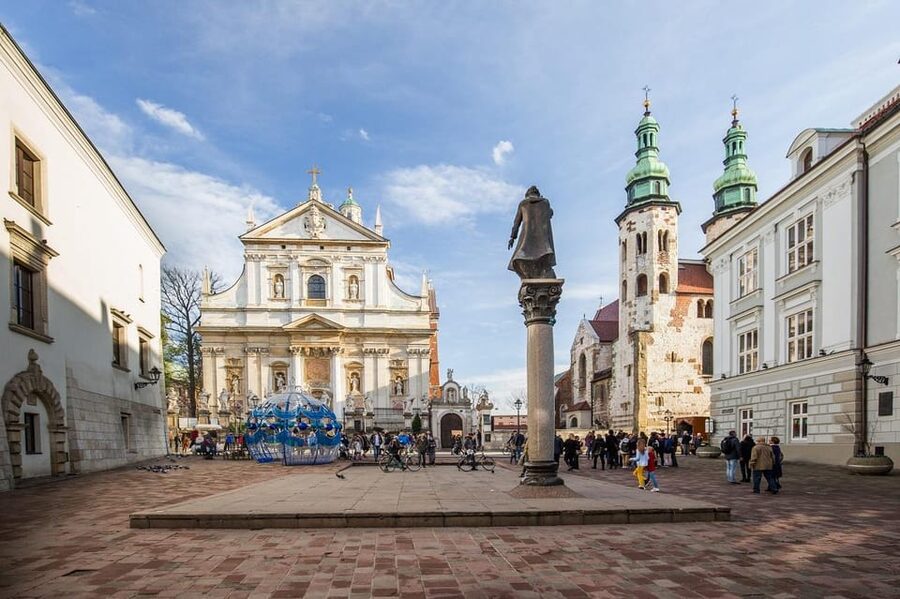
The tour starts at St. Mary Magdalene Square, beside the Piotr Skarga Monument, not on Wawel Hill itself. Look for the guide holding an excursions.city sign, and arrive at least 10 minutes early. This matters because the group cannot wait for late arrivals, and unused tickets are not refundable after departure.
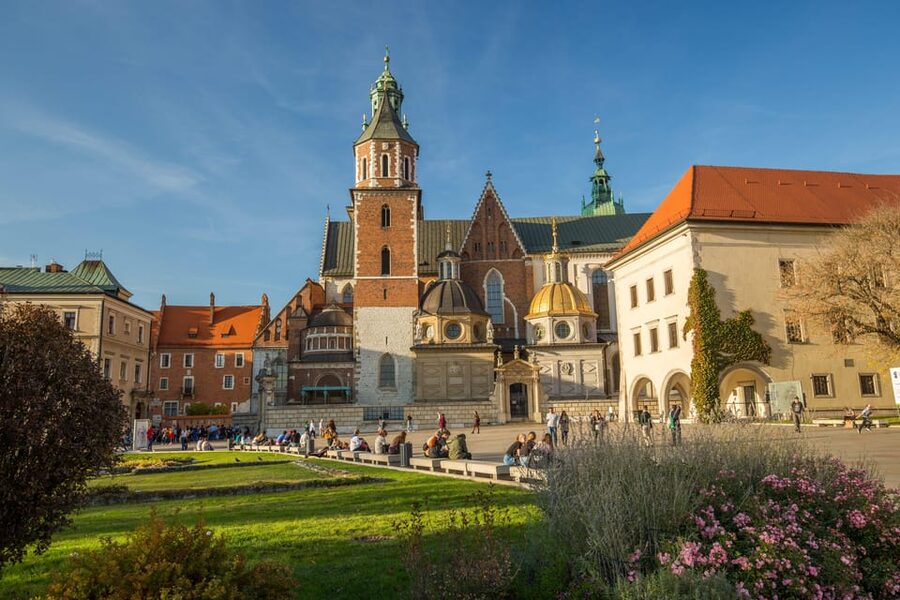
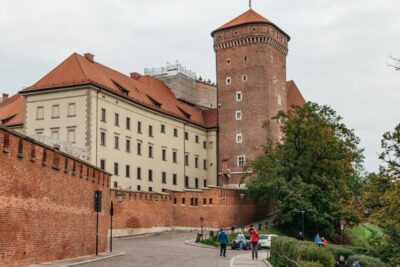
From the meeting point, you head toward Wawel, the hilltop complex that served as Poland’s royal seat for centuries. The setting helps you understand Krakow’s old power structure at once. Kings ruled from the hill, worshipped in the cathedral, and were buried beneath it.
Your guide provides the thread that ties the buildings together. Without help, Wawel can feel like a series of grand rooms and chapels. With context, the castle becomes a record of monarchy, faith, foreign influence, and national memory.
The walking route begins in the open air, so weather matters. This tour operates in rain or shine. Krakow can feel very different under clear skies and wet winter clouds, so bring suitable clothing rather than counting on ideal conditions.
More Old Town Walking Tours in Krakow
- Old Town Krakow & Wawel Castle Walking Tour
★ 5.0 · 1,508 reviews - Krakow: Bike Tour of Old Town, Jewish Quarter and the Ghetto
★ 4.9 · 1,155 reviews - Krakow: The Old Town Walking Tour
★ 4.8 · 794 reviews
Choosing your Wawel Castle exhibition
The castle portion includes skip-the-line entry to one permanent exhibition. The available choice may be the State Rooms, Royal Private Apartments, or Crown Treasury. You do not select every one of these on this tour, so check what is offered when booking if one collection is especially important to you.
The State Rooms are the obvious choice for grand ceremony. Expect Renaissance and Baroque interiors, formal decoration, paintings, sculptures, porcelain, and objects connected with royal life. This is where the castle feels most like a working residence rather than a quiet museum.
The Royal Private Apartments offer a more personal view of the monarchy. They help you picture how rulers lived away from official receptions and court rituals. The distinction between public rooms and private quarters gives the visit useful shape.
The Crown Treasury focuses on objects of power and ceremony. Military pieces and royal valuables show how monarchy was expressed through things that could be worn, carried, displayed, or used in public rites.
The collections also include Flemish tapestries commissioned by King Sigismund II Augustus and Italian Renaissance works from the Lanckoroński collection. Wawel’s Eastern art collection adds another layer, including the largest set of Ottoman tents in Europe.
You will not have unlimited time to study every object. That is the tradeoff of a guided visit covering several major sights. I like this arrangement for a first visit because your guide can point out the pieces that matter most, but art lovers who want long, quiet museum hours may prefer a separate castle visit.
Wawel Cathedral and the Sigismund Bell
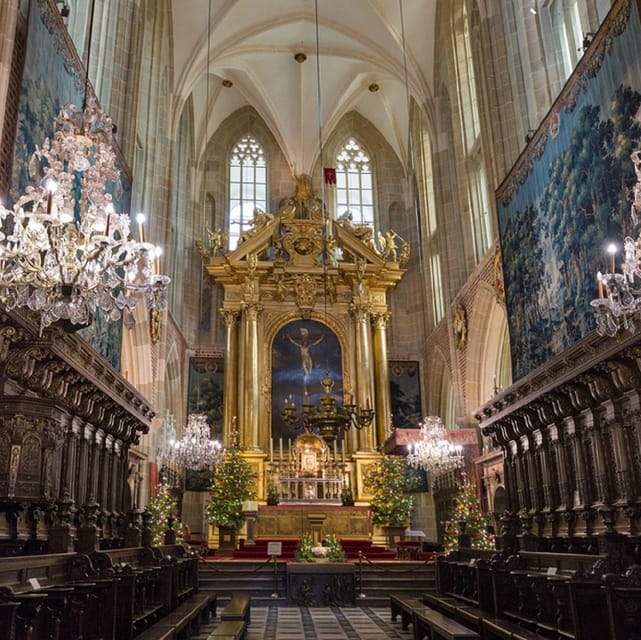
Wawel Cathedral is more than another church stop. Gothic in form and tied to Poland’s monarchy, it witnessed royal coronations, weddings, and funerals. The building gives the tour its strongest sense of ceremony and national identity.
Inside, you move among chapels, altars, and memorials while your guide explains how religious space and royal authority overlapped. Krakow’s rulers were not simply buried here after death. Their public life was marked here through formal rites.
The tower climb leads to the Sigismund Bell. Tradition says that touching the bell brings good luck, which gives this stop a small, human touch after the formal royal stories. The bell itself is the main attraction, and reaching it requires stairs, so comfortable shoes are not just a polite suggestion.
The cathedral visit continues below ground in the crypts. Kings, queens, poets, and national heroes rest there. This is a quieter section of the tour, and the stories shift from ceremony to memory. You hear how Poland has chosen to remember its rulers and cultural figures.
Because this is a place of worship, dress rules apply. Men and women must cover their knees and shoulders, so shorts and sleeveless tops are not suitable. If you are visiting Krakow in warm weather, plan clothing that works for both outdoor walking and cathedral entry.
Collegium Maius and Krakow’s life of learning
After Wawel, the tour moves into the Old Town. This change is important. You leave royal power behind and see how education helped shape Krakow’s identity.
The stop at Collegium Maius introduces the oldest building of the Jagiellonian University, founded in 1364. Its quiet courtyard contrasts with the grand castle rooms and crowded streets nearby. Your guide explains how the university became an important center of learning in Central Europe.
Nicolaus Copernicus studied at the university, linking this Krakow stop with one of Europe’s best-known astronomers. You do not need to be a specialist to enjoy the courtyard. It is simply a useful pause where the story broadens from kings and bishops to scholars and ideas.
The Old Town walk is also where the tour becomes most useful for getting your bearings. You see how the main landmarks relate to one another instead of visiting them as isolated attractions. The guide’s local advice can help you decide where to return later during your stay.
Same country, a completely different kind of day:
- From Krakow: Auschwitz-Birkenau Guided Tour & Hotel Pickup
★ 4.5 · 33,358 reviews - From Krakow: Auschwitz-Birkenau Guided Tour & Hotel Pickup
★ 4.5 · 29,340 reviews - Krakow: Auschwitz Guided Tour with Optional Hotel Pickup
★ 4.5 · 15,280 reviews - Krakow–Zakopane: Cable Car, Chocholow Baths, Cheese & Vodka
★ 5.0 · 10,720 reviews
Main Market Square and the Cloth Hall
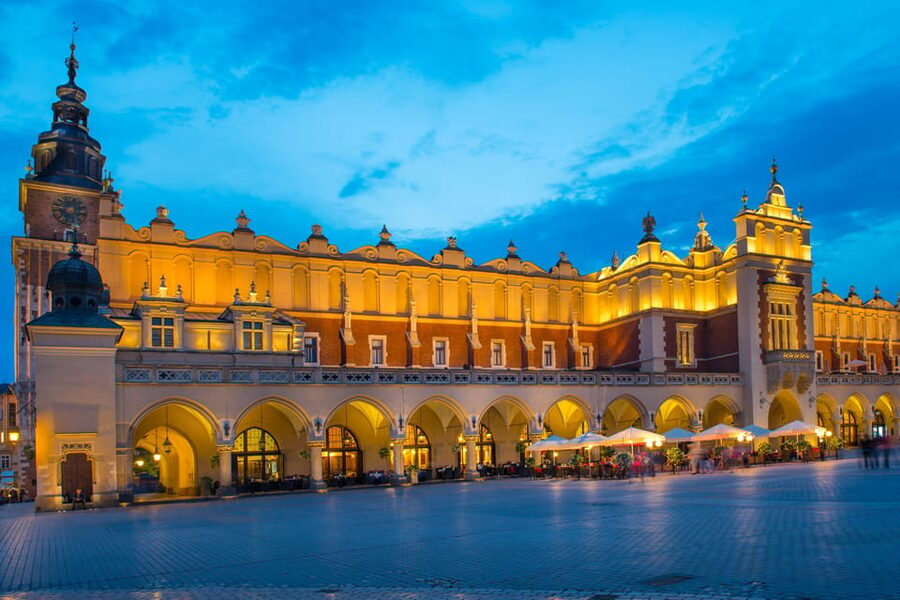
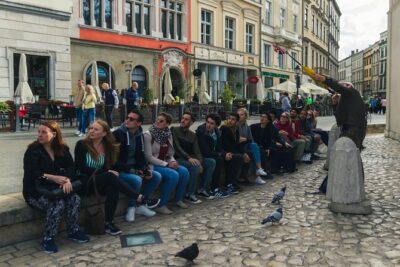
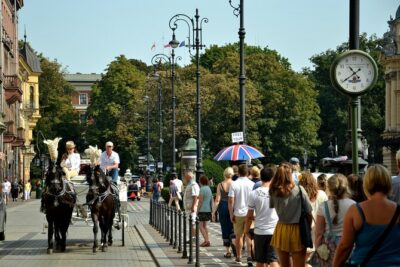
The route continues to Krakow’s Main Market Square, the largest medieval square in Europe. Its scale is easy to appreciate on foot. Townhouses frame the open space, horse-drawn carriages cross the square, and street performers add a modern layer to a place shaped by centuries of trade.
At the center is the Cloth Hall, known in Polish as Sukiennice. It once connected Krakow with distant markets where merchants dealt in salt, textiles, furs, and amber. The building still functions as a marketplace, which makes its story more convincing than a structure preserved only for display.
Your guide points out the Renaissance arcade and explains how the hall changed while keeping its commercial purpose. I like this stop because it shows that Krakow’s past was not only royal or religious. Money, goods, and merchants helped make the city important too.
The square can be busy, especially when carriages and performers share the same space. Stay close enough to hear your guide, particularly in a group of up to 30 people. The maximum group size follows museum limits, but 30 is still large enough that you may prefer to walk near the front.
St. Mary’s Basilica and Veit Stoss’s altarpiece
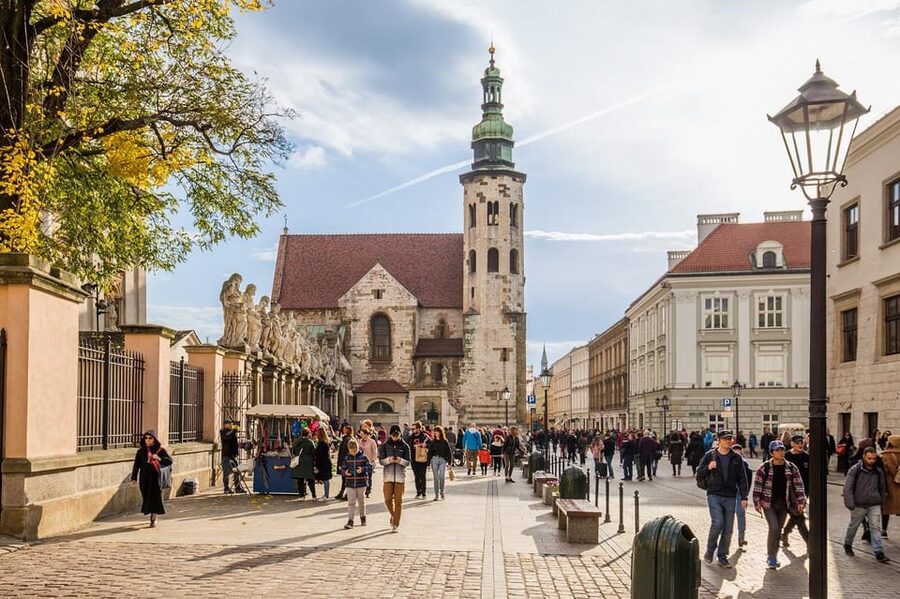
The final major stop is St. Mary’s Basilica, the church with two asymmetrical towers that dominate Krakow’s skyline. Its uneven towers are one of the city’s most recognizable views, but the interior is the real reason to enter.
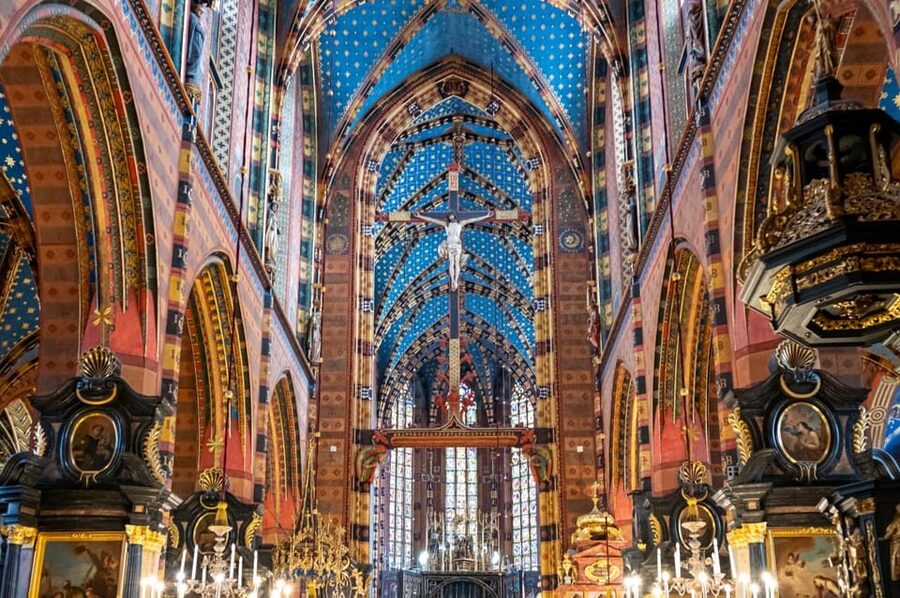
The centerpiece is the enormous wooden altarpiece carved by Veit Stoss in the 15th century. It presents biblical scenes through large figures, strong expressions, and finely worked details. Your guide helps you read the work rather than simply admire its size.
The altarpiece has survived fires, war, and other periods of upheaval. That survival adds weight to the visit, but the artwork does not need a dramatic story to hold your attention. Its scale and detail are enough to keep you looking.
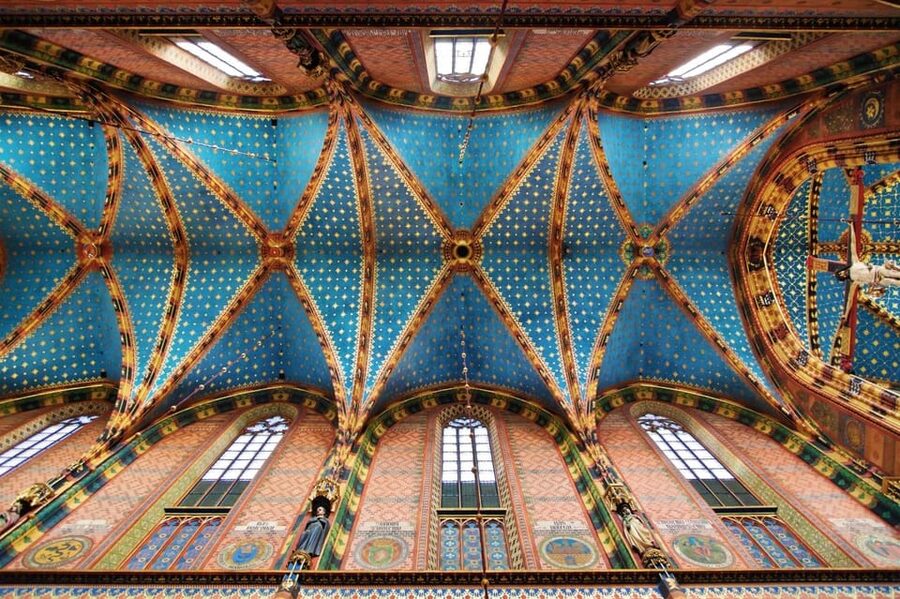
Painted vaults, stained glass, and chapels add to the effect. St. Mary’s is still a working place of worship, so expect a different atmosphere from the castle museum. You are entering a living church, not a room arranged only for tourists.
The basilica is a strong finish because it brings several themes together. Krakow’s faith, artistic skill, civic pride, and difficult past all meet inside one building. After the castle’s royal collections, the church offers a more emotional final note.
What the three and a half hours feel like
At 210 minutes, this is a substantial half-day experience rather than a quick orientation walk. You visit indoor exhibitions, climb in the cathedral tower, descend to crypts, and walk between Wawel and the Old Town.
The schedule works best if you want the main story of Krakow in one sitting. You get royal history, church art, university tradition, medieval commerce, and city landmarks without arranging separate tickets or guides.
The cost is $87 per person. That is not a budget walk, but the price includes a licensed guide, skip-the-line admission to one permanent Wawel exhibition, Wawel Cathedral, and St. Mary’s Basilica. Since the tour brings together several ticketed sights, the value depends on your priorities.
I consider it a sensible price for a first-time visitor who wants structure and interpretation. It is less attractive if you prefer to explore slowly, choose every museum room yourself, or spend most of a day in the castle alone.
Food and drinks are not included. Plan to eat before or after the tour rather than expecting a break built into the route. The long walking time also means you should start with water and shoes that can handle stairs and historic streets.
Guide language, group size, and timing
Tours are offered in English, Polish, French, German, Spanish, and Italian. The entire group tour runs in one selected language, so choose carefully when booking.
The group can include up to 30 people. This is manageable in the larger spaces, but it can feel less intimate in narrow areas or when the guide is explaining details inside a crowded church. If you want constant access to the guide, stay near the front and listen closely at transitions.
The meeting point is easy to misunderstand because it is not on Wawel Hill. Go to St. Mary Magdalene Square and find the Piotr Skarga Monument. The excursions.city sign identifies the group.
The tour has free cancellation up to 24 hours before the start, and you can reserve now while paying later. Those terms help if your Krakow schedule is still changing, but they do not protect a late arrival after the group has left.
Who will get the most from this Krakow tour
I would choose this experience for a first visit to Krakow, especially if you want the major sights explained rather than simply photographed. It suits history fans, architecture lovers, and anyone who appreciates having entrance tickets handled as part of one plan.
Families with older children may also find the mix useful. The bell, crypts, royal rooms, and large market square provide more variety than a long museum-only visit. Younger children may find 210 minutes of walking and listening demanding, particularly during the castle interiors.
This is also a good fit if you have limited time in the city. The route covers several places that define Krakow, and the guide gives you a framework for returning to the ones that catch your attention.
You should think twice if stairs are difficult, since the cathedral tower includes a climb. You should also avoid booking it in unsuitable clothing. Knees and shoulders must be covered at the cathedral and other selected sites.
Practical verdict: book it for the connections
Book this tour if you want Krakow’s most important landmarks tied into one clear story. The best parts are the contrast between Wawel’s royal rooms and St. Mary’s sacred art, the hands-on Sigismund Bell tradition, and the walk through Collegium Maius and the Cloth Hall.
Skip it if you want a slow, self-directed museum day or dislike group pacing. The exact Wawel exhibition is subject to availability, the group may reach 30 people, and the schedule leaves limited time for lingering.
For most first-time visitors, the combination is strong. You see the castle, cathedral, Old Town, and St. Mary’s Basilica in one well-packed outing, with a licensed guide to explain why each place matters. Guide Jadwiga’s clear storytelling and practical advice suggest the kind of personal touch this tour can provide, though your assigned guide will depend on the date and language you choose.
FAQ
Where does the tour meet?
Meet your guide at St. Mary Magdalene Square, beside the Piotr Skarga Monument. The guide will hold an excursions.city sign.
Is the meeting point on Wawel Hill?
No. The meeting point is in St. Mary Magdalene Square, not on Wawel Hill. Follow the location shown on your voucher.
How long does the tour last?
The tour lasts 210 minutes, or three and a half hours.
What does the Wawel Castle ticket include?
It includes skip-the-line entry to one permanent exhibition. The available option may be the State Rooms, Royal Private Apartments, or Crown Treasury, depending on availability.
Are Wawel Cathedral and St. Mary’s Basilica included?
Yes. Admission to Wawel Cathedral and entrance to St. Mary’s Basilica are included.
What languages are available?
You can book the tour in English, Polish, French, German, Spanish, or Italian. Each group tour operates in one selected language.
Is there a dress code?
Yes. For places of worship and selected museums, your knees and shoulders must be covered. Shorts and sleeveless tops are not allowed.
What happens if I arrive late?
You should arrive 10 minutes before the start. Once the group has departed, latecomers cannot join, and the tickets are non-refundable.
More Wawel Castle Tours in Krakow
- Krakow: Wawel Castle & Cathedral Guided Tour
★ 4.7 · 2,111 reviews - Krakow: Wawel Royal Hill with Optional Castle and Cathedral
★ 4.2 · 1,220 reviews - Krakow: Wawel Castle and Cathedral Guided Tour
★ 4.6 · 595 reviews - Kraków: Old Town & Wawel Castle Walking Tour in English
★ 4.8 · 532 reviews
Just added around Krakow
- From Krakow: Zakopane and Dunajec River Rafting Tour★ 4.6 · 31 reviews
- From Krakow: Zakopane and Gubałówka Cable Car Private Tour★ 4.3 · 12 reviews
- From Krakow: Zakopane Full-Day Tour with Lunch Option★ 4.4 · 62 reviews
- From Krakow: Zalipie and Painted Village Guided Tour★ 4.0 · 4 reviews
- From Krakow: Zakopane Tatra Mountains & Hot Springs Tour★ 3.0 · 29 reviews
- From Krakow: Zakopane and the Tatra Mountains★ 4.7 · 36 reviews
- From Krakow: Hot Springs and Zakopane with Gubałówka★ 4.7 · 25 reviews
- Zakopane & Tatra Mountains Private Full-Day Tour from Krakow★ 4.5 · 33 reviews
Wawel Castle Tours, compared.
Wawel Royal Hill with Optional Castle and Cathedral
Read our review →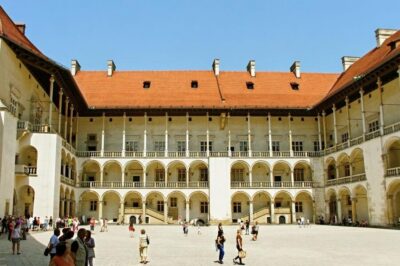
Old Town & Wawel Castle Walking Tour in English
Read our review →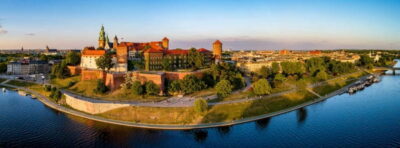
Krakow’s Essential Tour of the Old Town and Wawel Castle
Read our review →Browse the lists this tour appears in