
Reviewed · AUSCHWITZ-BIRKENAU MEMORIAL TOURS
Krakow: Auschwitz Guided Tour with Optional Hotel Pickup
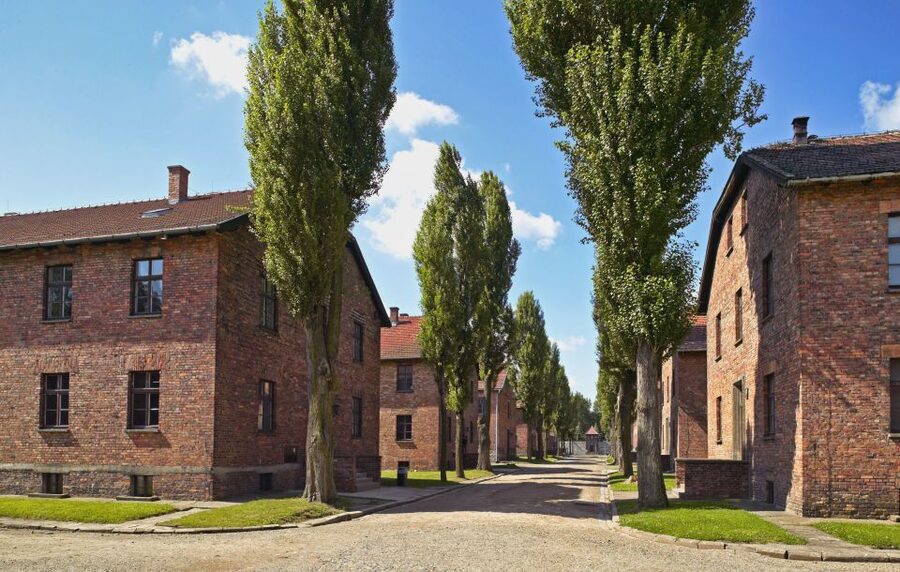
Auschwitz-Birkenau is not a sightseeing stop in the usual sense. It is a place of evidence, memory, and silence, where original barracks, prisoner belongings, the railway ramp, and the ruins of gas chambers make the Holocaust painfully real. This tour gives you a structured way to visit both sites from Krakow.
I like the clear organization, from the Krakow pickup or meeting point to the return transfer. I also like having a licensed museum guide, since the displays need careful explanation and the schedule at Auschwitz is tightly controlled. The main drawback is the pace: you may not have enough time to read every display or pause wherever you wish.
Key points
- See both Auschwitz I and Birkenau, including original prison blocks, the railway unloading ramp, and gas chamber ruins.
- Use included museum admission and skip the ticket sales line, though you still pass through security.
- Choose your transport style, from a Krakow transfer with an English-speaking driver to a self-drive option with no transfer.
- Expect a tightly managed visit, with the museum setting the start time, route, break length, and pace.
- Bring matching identification, since your full name on the booking must match your passport or ID.
- Plan for a serious day, not a casual family outing. The tour is not recommended for children under 13 or wheelchair users.
Why this visit matters
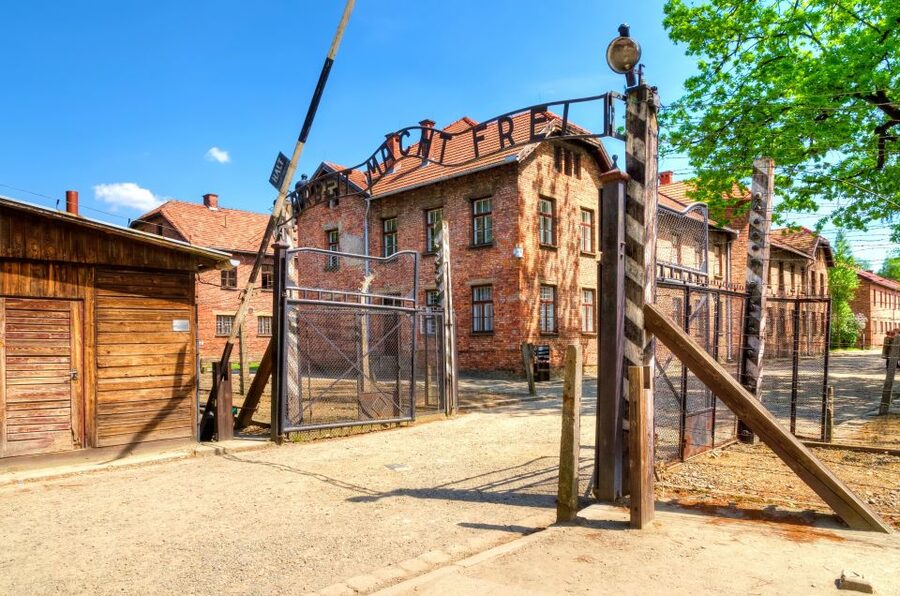
Auschwitz-Birkenau was the largest concentration camp complex created by Nazi Germany during World War II. The memorial now covers two main sites: Auschwitz I, the original camp with brick prison blocks and museum displays, and Auschwitz II-Birkenau, the much larger camp with its railway ramp, wooden barracks, and ruins of extermination facilities.
The value of visiting in person is not only visual. The museum preserves ordinary objects that once belonged to prisoners, along with the buildings and spaces where the crimes took place. A good guide helps connect those objects to the people who owned them and explains the system behind the camp.
You should approach this as an educational memorial visit. It is emotionally heavy, and the subject matter is discussed directly. The guides praised most warmly, including Agnieszka, Barbara, Marget, and others, are described as clear, respectful, and able to answer questions without turning the experience into a performance.
More Auschwitz-Birkenau Memorial Tours in Krakow
- From Krakow: Auschwitz-Birkenau Guided Tour & Hotel Pickup
★ 4.5 · 33,358 reviews - From Krakow: Auschwitz-Birkenau Guided Tour & Hotel Pickup
★ 4.5 · 29,340 reviews - Krakow: Auschwitz-Birkenau Guided Tour with Pickup & Lunch
★ 4.5 · 9,800 reviews
Choosing between transport and self-drive
The transfer option is the simplest choice for most people staying in Krakow. An English-speaking driver or host collects you at a selected city-centre hotel or at a prearranged meeting point, then takes you to the memorial in an air-conditioned vehicle. The drive is listed as about 1.5 hours each way, so transport alone takes a sizeable part of the day.
Hotel pickup is optional. If you choose it, send your hotel address to the local supplier at least 24 hours before departure and wait outside the hotel. If that address cannot be used, you will receive a nearby meeting point. Hotel drop-off is not included, even when hotel pickup is selected, so plan to return to the stated Krakow drop-off point.
A no-transport option can work well if you have a rental car or prefer to arrange your own journey. One practical account describes easy parking at both sites and a simple meeting with the organizer on arrival. The no-transport version lasts about 3.5 hours, while transport-inclusive versions can run from roughly 5.5 hours to 7 hours depending on the schedule and selected extras.
The bus transfer adds convenience and removes the worry of reaching the museum on time. It also limits your independence. You follow the operator’s schedule, and you cannot simply leave when you have had enough. For this memorial, that structure is often useful, but independent visitors should choose carefully.
The Krakow departure and the long ride south
Your exact starting point depends on the option you book. Departure times can change because the Auschwitz Museum controls visitor entry slots. You may book one time and later receive a different start time, so keep the entire day free rather than scheduling another important activity nearby.
Early departures can be especially practical. Some departures have moved to around 6 or 7 a.m., with return to Krakow early or mid-afternoon. An early start can reduce the feeling of congestion, although no time guarantees an empty memorial. One morning departure returned to Krakow around 12:15 p.m., while another full day lasted until roughly 2:30 p.m.
The driver’s role matters more than it may seem. You need clear instructions about meeting points, tickets, security, breaks, and the transfer between Auschwitz I and Birkenau. Drivers such as Konrad and Martin have been praised for keeping people informed and handling the day calmly. The overall service is generally well organized, but drive carefully and pay attention to the vehicle and road conditions. One departure ended badly in a reported road accident, a reminder that transport is never the part of a tour you can fully control.
Entering Auschwitz I
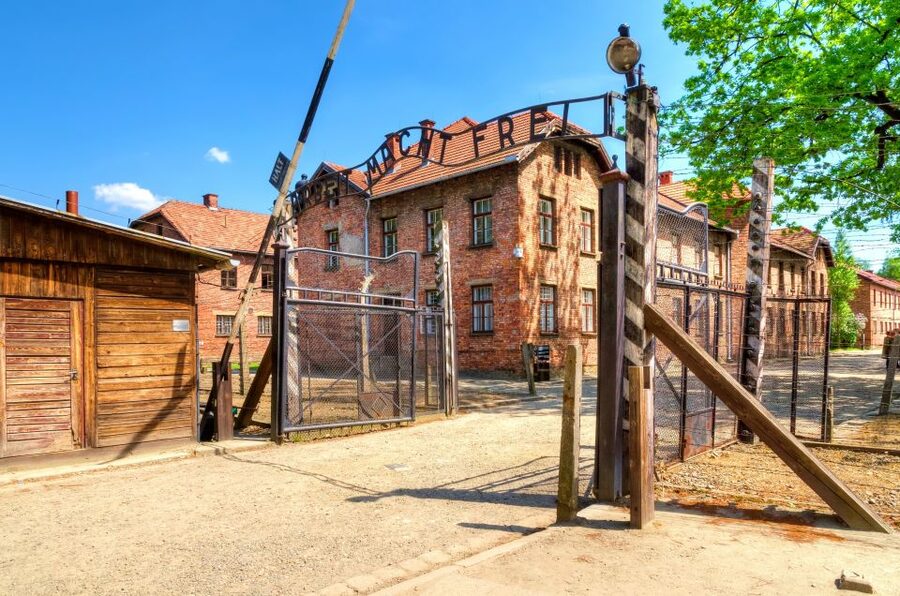
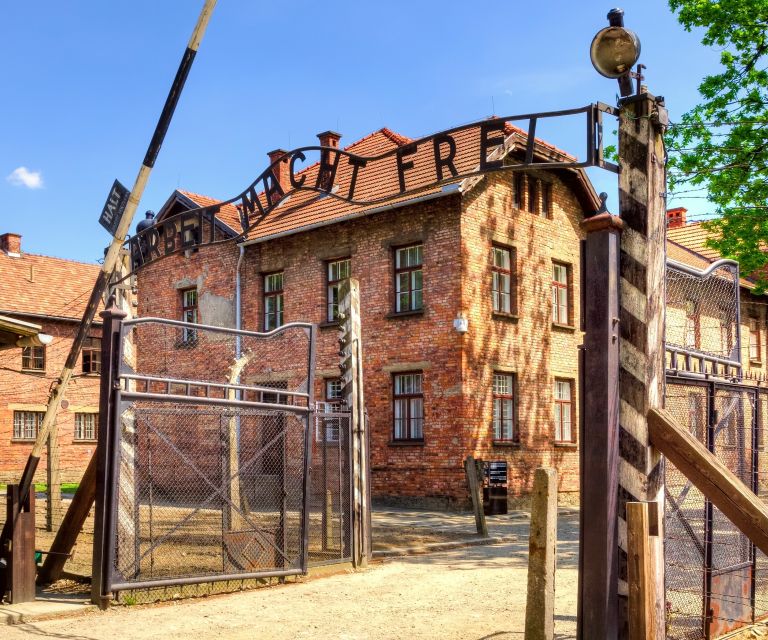
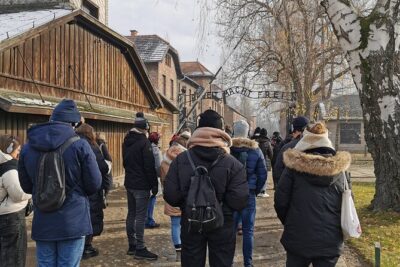
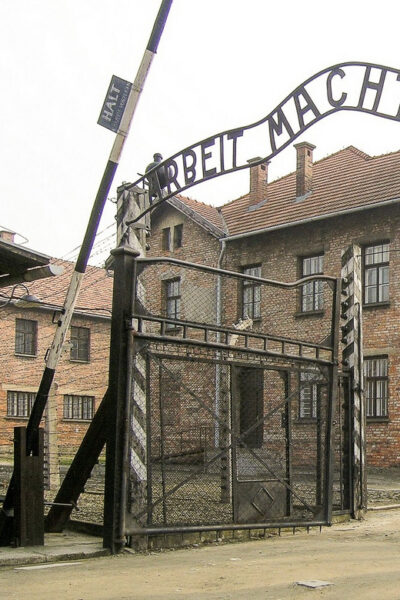
Auschwitz I is the more compact of the two memorial sites. You enter through security, then begin the guided visit through the surviving prison blocks and museum rooms. The tour at this site lasts approximately 1 hour and 20 minutes to 1 hour and 45 minutes according to the stated museum schedule, with the broader Auschwitz I visit listed at about 2.5 hours in the itinerary.
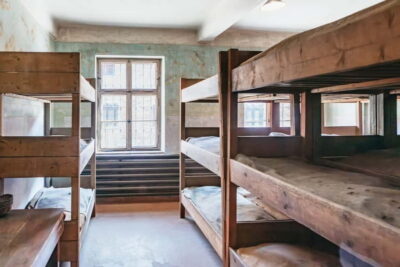
This is where you encounter many of the personal items taken from prisoners. Suitcases, shoes, and other objects of daily life are powerful because they belong to individuals, not an abstract crowd. The displays also help explain how people were transported, registered, imprisoned, and stripped of their possessions.
The original barracks give the visit a physical weight. You are not only looking at photographs or reading a timeline. You are moving through buildings that formed part of the camp itself. The guide’s explanations are important here because the museum rooms contain more information than you can absorb in one pass.
This section can feel rushed. The museum service sets the pace, and your guide cannot freely extend every stop. I suggest reading the most important panels as you go, then accepting that you will not see every word. If you try to study every display in detail, you may lose contact with the group.
Security queues are possible even with included admission. The advantage is that your ticket is arranged in advance and you avoid the line for buying tickets on the day. You still need to pass through the entrance checks.
Same country, a completely different kind of day:
- Krakow–Zakopane: Cable Car, Chocholow Baths, Cheese & Vodka
★ 5.0 · 10,720 reviews - From Krakow: Wieliczka Salt Mine Tour
★ 4.6 · 9,393 reviews - Krakow: Auschwitz-Birkenau Guided Tour Pickup/Lunch Options
★ 4.5 · 9,057 reviews - Krakow: Auschwitz-Birkenau and Salt Mine Guided Tour
★ 4.7 · 9,020 reviews
The ten-minute break
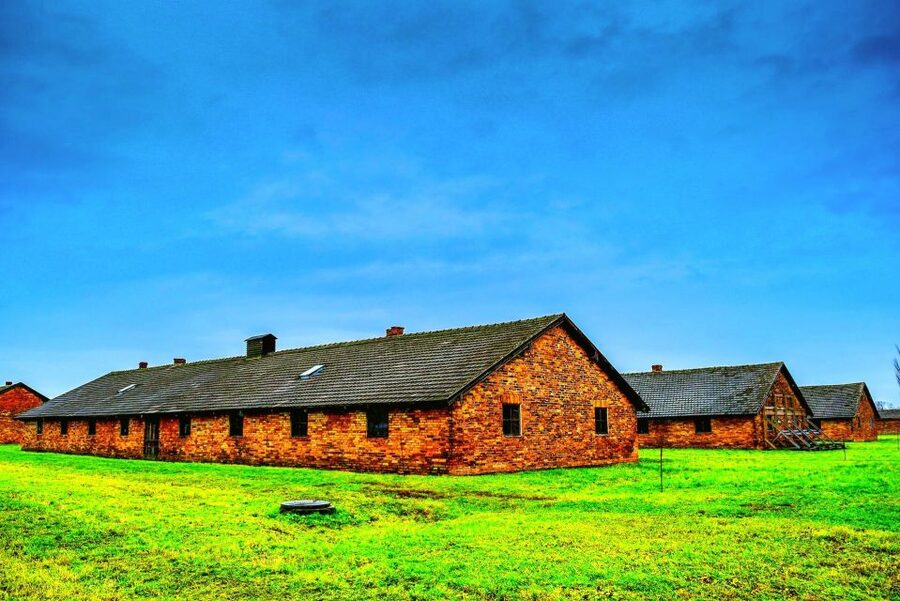
After Auschwitz I, the schedule includes a break of about ten minutes. That is enough for a quick toilet stop, but not much more when large numbers of people are moving through the site.
Some versions include a lunch box, while others do not. If lunch is included, it may be useful because the entire transport-and-visit day can last seven hours. If your option does not include food, check the booking details before you leave Krakow and carry only what the memorial permits.
Toilets are available in both parts of the memorial, except for the toilet at the Birkenau parking area. The short break is one reason to wear comfortable shoes, manage your water intake sensibly, and avoid assuming that you will have a long café-style pause.
Birkenau and the railway ramp
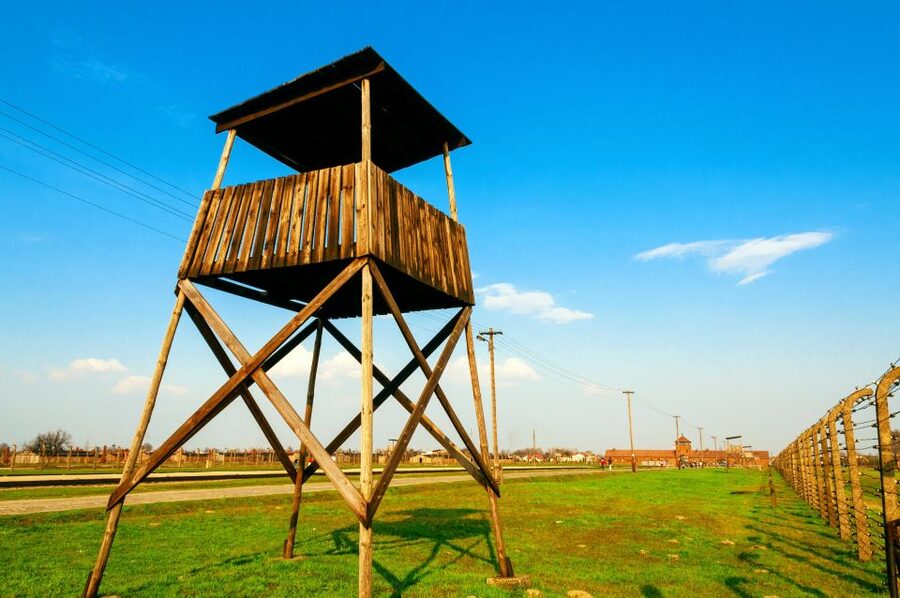
A short transfer takes you from Auschwitz I to Auschwitz II-Birkenau. Depending on the option and group arrangements, you may travel by the tour vehicle rather than using the memorial’s free shuttle. One practical detail is easy to miss: visitors booking the museum through this kind of tour may not be able to use the free shuttle between the two sites, though the tour’s own transfer handles the move.
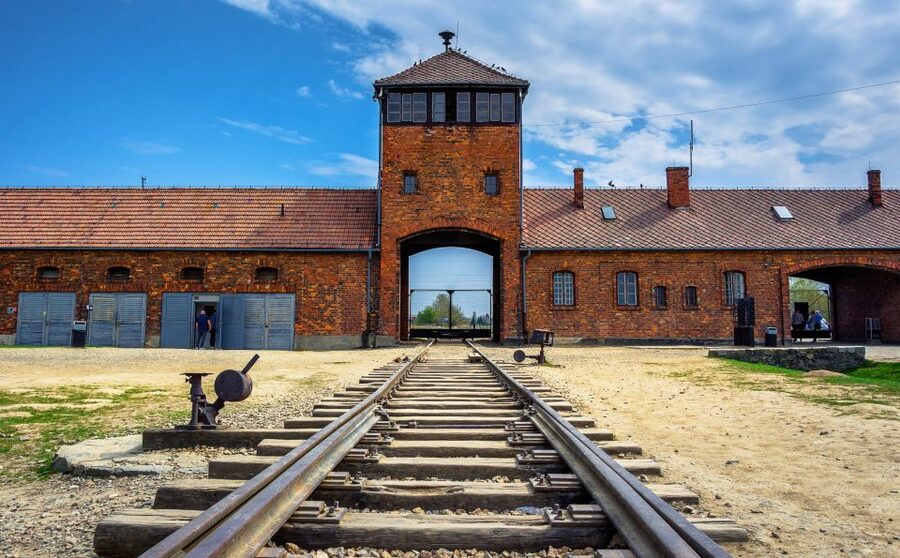
Birkenau is much larger and more open than Auschwitz I. The railway ramp is one of the site’s most important features. This is where prisoners arrived by train, and where the Nazi selection process began. Seeing the ramp in its full setting helps you understand the scale and mechanics of the camp in a way that a museum photograph cannot.
You also see the remains of barracks and the ruins of gas chambers and crematoria buildings. The ruins are not polished attractions. Their broken state is part of the meaning of the place, showing the physical remains of a system the Nazis attempted to destroy as they retreated.
The Birkenau visit lasts about one hour. That is enough for a guided orientation and the main points, but it is not enough for a slow walk across every section. The site is exposed, and conditions can change with the season. Bring a coat or rain protection when needed, and wear shoes suited to uneven outdoor ground.
The guide makes the difference
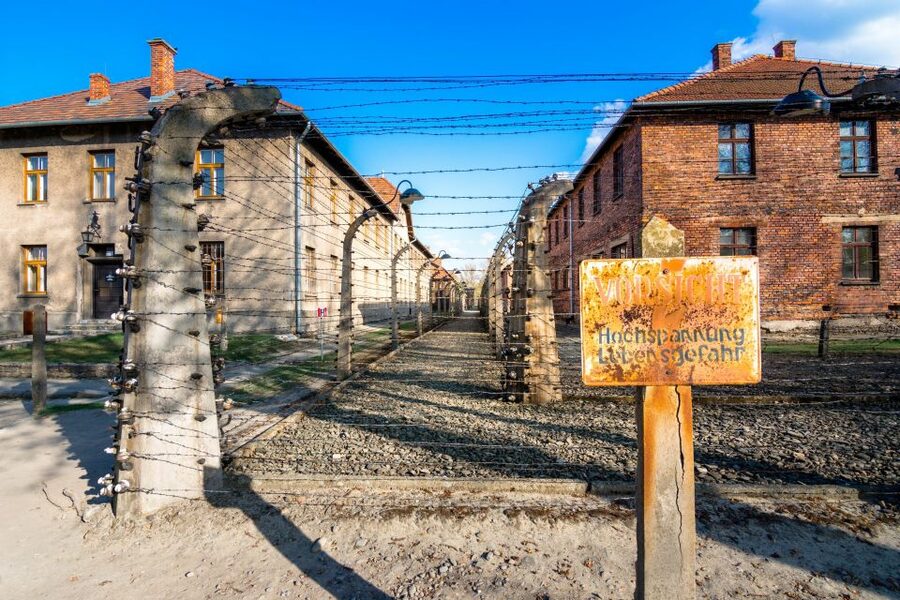
A guided visit is particularly useful here because the memorial’s importance is not always obvious from the buildings alone. A licensed guide explains what you are seeing, places the sites in historical order, and answers questions when a display raises something you do not understand.
The strongest guide descriptions focus on three qualities: clear speech, care with the subject, and strong command of the material. Agnieszka has been noted for explaining the atrocities with both detail and delicacy. Barbara has been praised for her historical insight and helpful manner. Marget has been described as clear and informative, while other guides have been commended for answering questions patiently.
Your experience will depend on the guide assigned to your departure, so no particular person can be guaranteed. The available tour languages are English, Italian, Polish, German, French, and Spanish. If too few people book a particular language, the provider may run the tour in English instead.
Some options use a live guide, while another may provide a booklet in your chosen language. I would choose the live guided version if the price difference is reasonable. The site contains difficult material, and a human guide can explain context, answer questions, and help you keep track of the route.
Is $69 a fair price?
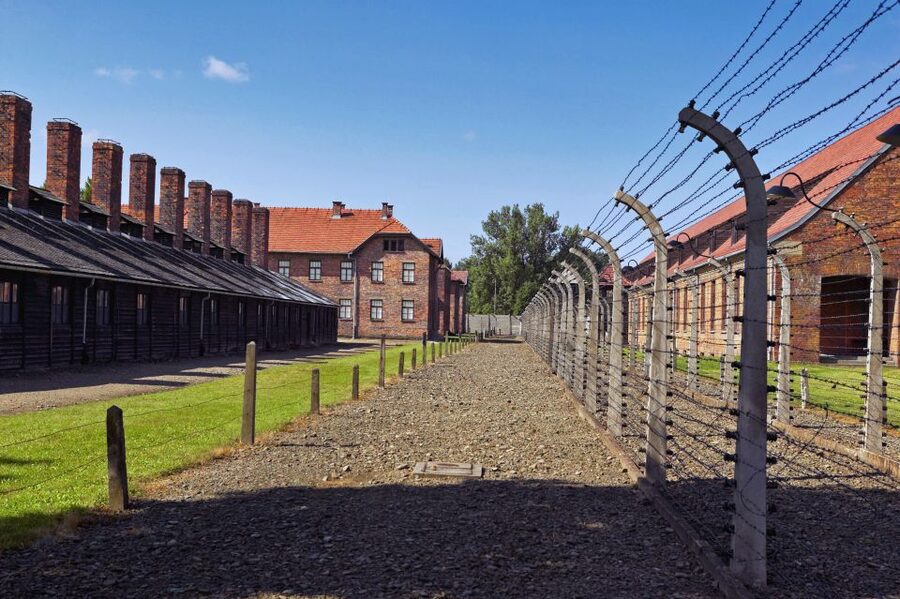
At about $69 per person, the tour can be good value if you want admission, transport from Krakow, and guidance handled in one booking. The price is not simply paying for a bus ride. It may cover the museum entrance, the licensed guide, an English-speaking driver or host, and hotel pickup if that option is selected.
Compare the price carefully with the exact version you choose. Transport may be optional. Hotel pickup may be optional. A lunch box may be optional. A self-drive visitor can reduce transport costs, but must arrange the journey, parking, timing, and arrival independently.
The value is strongest for first-time visitors who want a low-stress plan. The value is weaker for people who already have transport, want to read every panel, or prefer to spend a full day at their own pace. One booking for two people was considered expensive without hotel pickup, so check the final total rather than relying only on the headline price.
The included entrance ticket matters. Some tours in the area sell transport without museum admission, leaving you to find a ticket separately. Here, admission to Auschwitz-Birkenau is included, and you use the reserved entry rather than joining the line for on-the-day ticket sales.
What to bring and what to leave behind
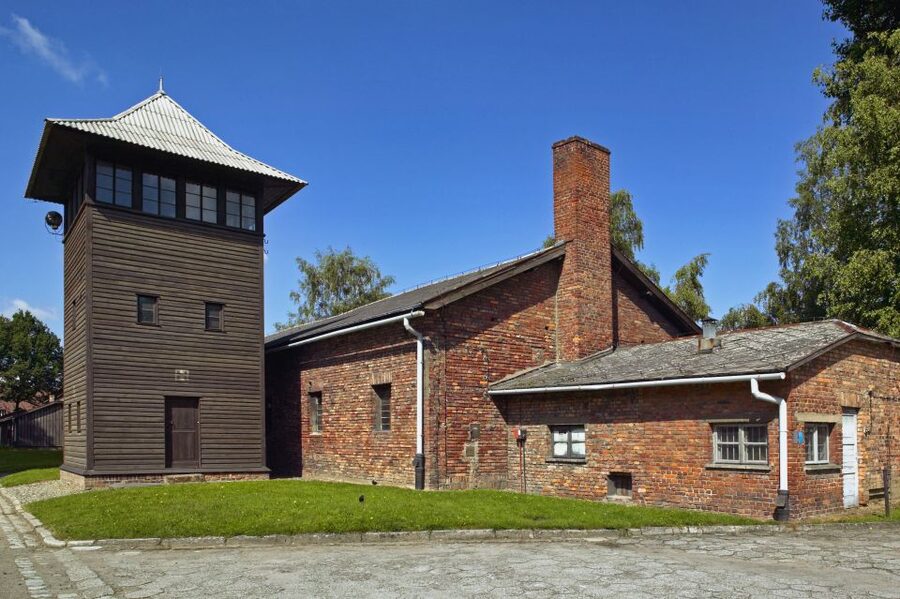
You must bring a passport or ID card. The name supplied during booking must match the name on the document exactly, or entry can be refused. Student ticket holders also need a valid student ID.
Hand luggage is limited to 30 by 20 by 10 centimetres. Larger bags must remain on the bus, so pack lightly. A small bag with your ID, phone, water, and necessary personal items is the practical choice.
The tour is not recommended for children under 13, and it is not suitable for wheelchair users. Parents or guardians make the final decision about older children, but you should think honestly about the subject matter and the long, serious schedule before bringing a young teenager.
Photography rules are not provided in the tour details, so follow the memorial’s instructions and your guide’s direction. This is a place for respect first, pictures second.
Who will appreciate this tour most?
I would recommend it to you if you are staying in Krakow and want to visit both sites without arranging every step yourself. It suits people who value clear transport instructions, reserved admission, and a guide who can explain the material in context.
It also suits visitors with limited time. The transport version can bring you from central Krakow to the memorial and back within one planned day, leaving you free from the complications of separate train, bus, or ticket arrangements.
You may prefer a different setup if you need long, quiet periods for reading or reflection. The group pace is fixed by the memorial’s visitor service, and several hours are spent moving between sites and meeting transport timings. This is a guided introduction, not an open-ended research visit.
My booking advice
Before paying, check four things: the meeting point, the expected start time, whether transport is included, and whether lunch is included. Send your hotel address on time if you want pickup, but remember that the return is to a central Krakow drop-off point rather than your hotel.
Keep the day clear because the museum may alter the entry time. Arrive with matching identification, a small bag, and sensible clothing for an outdoor visit at Birkenau. If you are driving, allow enough time to park and find the meeting place.
Should you book it?
Book this tour if you want a carefully arranged first visit to Auschwitz-Birkenau, especially from Krakow without a car. The included admission, transport option, and licensed guide remove most of the practical strain, while the visit to both Auschwitz I and Birkenau gives you the full memorial experience.
Do not book it expecting a relaxed day or complete freedom to wander. The schedule is firm, breaks are short, and the subject is painful. For most people, that structure is a fair trade for reaching both sites and learning from a guide who treats the place with care.
FAQ
Is transport from Krakow included?
Transport is included only with the option that specifically lists it. The transfer uses an air-conditioned vehicle and takes about 1.5 hours each way.
Is hotel pickup available?
Hotel pickup is available with selected options for hotels in Krakow city centre. You must send the hotel address to the local supplier at least 24 hours before departure and wait outside the hotel.
Is hotel drop-off included?
No. Hotel drop-off is not included with any option. Return transport uses one of the stated Krakow drop-off locations.
How long does the tour take?
The available versions last from about 210 minutes to 7 hours. Options without transfer can last about 3.5 hours. Transport-inclusive versions include roughly 1.5 hours each way between Krakow and the memorial.
What sites will I visit?
You will visit Auschwitz I and Auschwitz II-Birkenau. The route includes original barracks, prisoner belongings, the railway unloading ramp, surviving or ruined gas chamber and crematoria buildings, and other memorial displays.
Do I need identification?
Yes. Bring a passport or ID card. Your full name on the booking must be identical to the name on the document used at the entrance.
Can children or wheelchair users join?
The activity is not recommended for children under 13 and is not suitable for wheelchair users. Parents or guardians decide if older children should attend.
Just added around Krakow
- Tour to Wadowice: Hometown of Pope Saint John Paul II★ 4.6 · 12 reviews
- The Jewish Quarter – Walking Tour★ 5.0 · 4 reviews
- From Kraków; to Białka Thermal Baths private tour★ 5.0 · 5 reviews
- St. Mary’s Basilica and more – a short walk with a guide★ 4.7 · 56 reviews
- Krakow: Auschwitz-Birkenau and Wieliczka Salt Mine Day Trip★ 4.7 · 84 reviews
- Krakow: Skip-the-Line Wawel Castle & Old Town Guided Tour★ 4.9 · 23 reviews
- Krakow: Schindler’s Factory Guided Tour★ 4.2 · 12 reviews
- Shooting Range Experience!★ 4.8 · 66 reviews
Auschwitz-Birkenau Memorial Tours, compared.
Auschwitz-Birkenau Guided Tour & Hotel Pickup
Read our review →Auschwitz-Birkenau Guided Tour & Hotel Pickup
Read our review →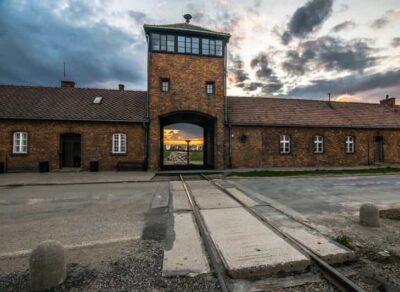
Auschwitz-Birkenau Guided Tour with Pickup & Lunch
Read our review →
Auschwitz-Birkenau Guided Tour Pickup/Lunch Options
Read our review →
Krakow to Auschwitz Birkenau Guided Tour with Transfer and Ticket
Read our review →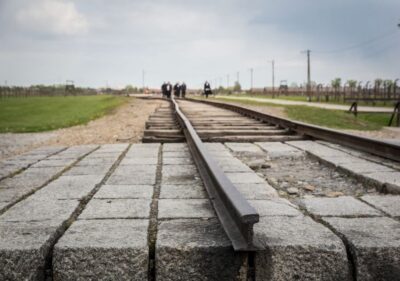
Browse the lists this tour appears in