
Reviewed · AUSCHWITZ-BIRKENAU MEMORIAL TOURS
Auschwitz-Birkenau: Guided Tour with Fast Track Ticket
Auschwitz and Birkenau are not ordinary sightseeing stops. Together, they form a place of remembrance where the scale of Nazi crimes becomes painfully clear through prison blocks, personal evidence, ruined crematoria, and the railway ramp at Birkenau. A certified museum guide gives the visit structure and context, which matters greatly at a site this large and emotionally heavy.
I like the two-camp itinerary, because seeing Auschwitz I alone gives only part of the picture. I also like the pre-booked entry and optional Krakow transport, which can remove some of the day’s practical strain. The main drawback is that the meeting point and starting time can be confusing, and the museum may change your start time the day before.
Key points at a glance
- Two very different camp sites: Auschwitz I focuses on preserved buildings and exhibits, while Birkenau shows the vast scale of the killing center.
- A guide at each camp: Museum guides lead the tour in English, Polish, German, Spanish, French, or Italian, subject to availability.
- Fast-track entry is useful, not magic: You skip the main ticket line, but waits of up to 15 minutes can still occur.
- Transport is optional: Choose Krakow pickup and transfers, or arrive independently and handle parking and the trip between camps yourself.
- Expect a moving but tightly managed visit: The pace, length, and short 10-minute break are set by the memorial’s visitor service.
- Names must match exactly: Bring your passport or ID card, and make sure your booking details use your full legal name.
Why seeing both Auschwitz sites matters
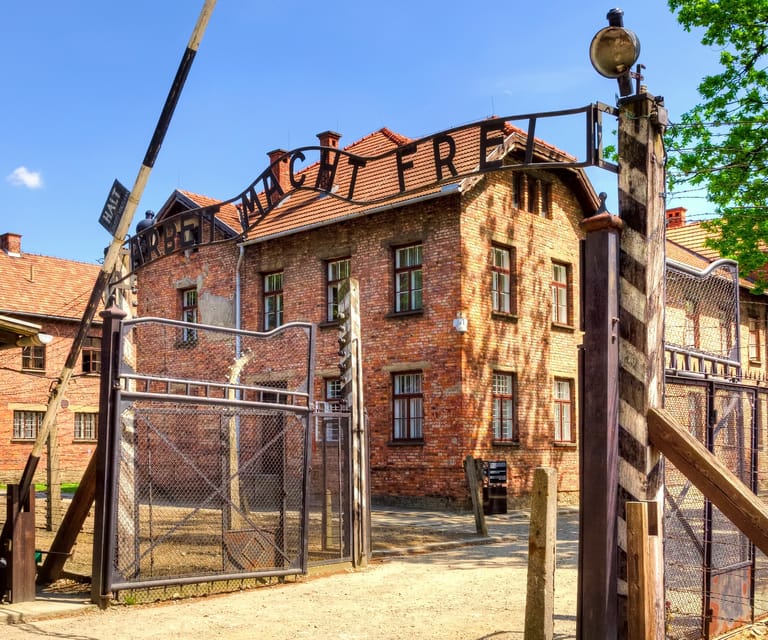
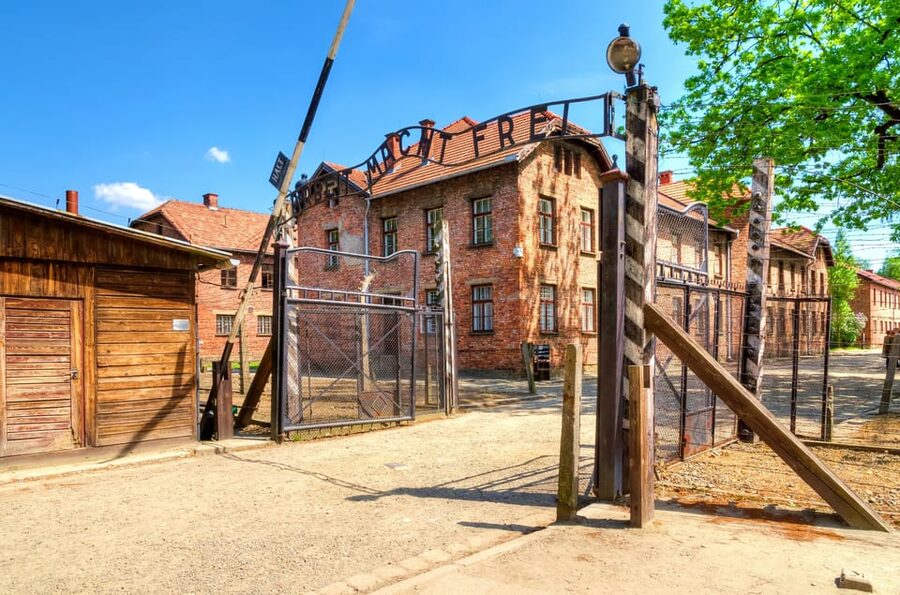
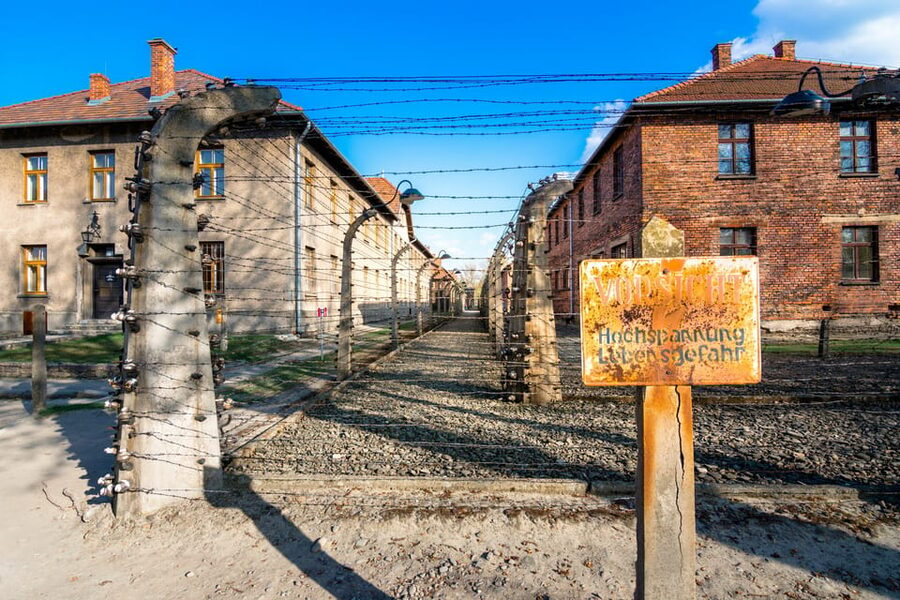
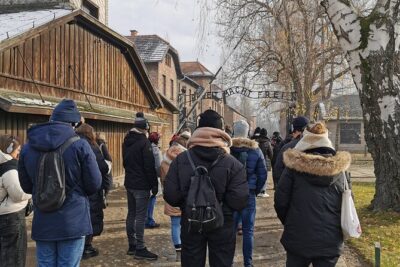
The experience begins at Auschwitz I, the older part of the complex. Its brick prison blocks now contain museum displays and historical exhibits. You walk through remaining buildings and see the physical setting in which prisoners were registered, confined, punished, and exploited.
The site is not large in the way Birkenau is large, but it can feel more intimate and concentrated. The preserved blocks and exhibits put individual lives at the center of the visit. This part helps you understand the system before you confront its full size at Birkenau.
A bus or other transfer takes you to Auschwitz II-Birkenau when transport is included. If you arrive by car, you are responsible for getting between the two camps. That detail is easy to overlook, and it matters: the camps are separate parts of the visit, not two rooms in one museum.
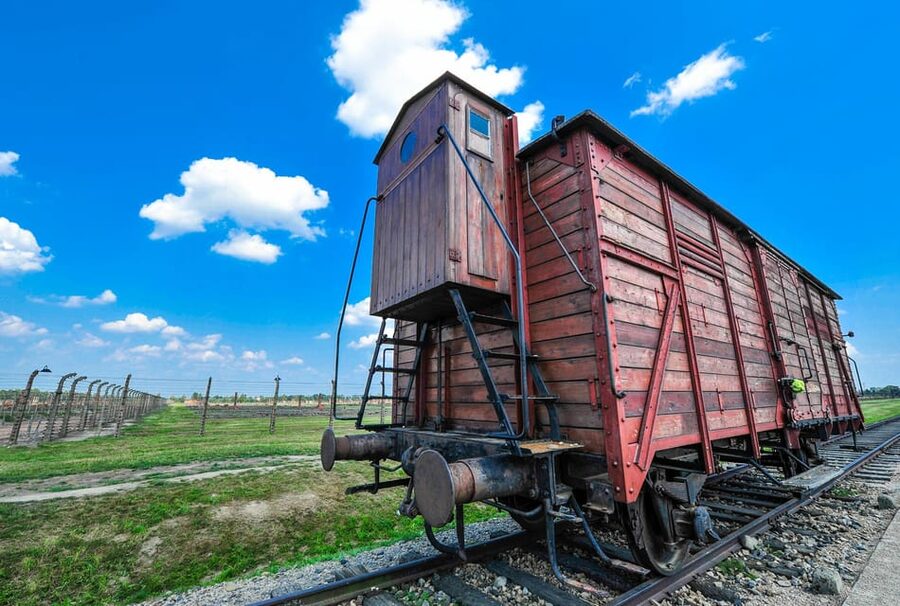
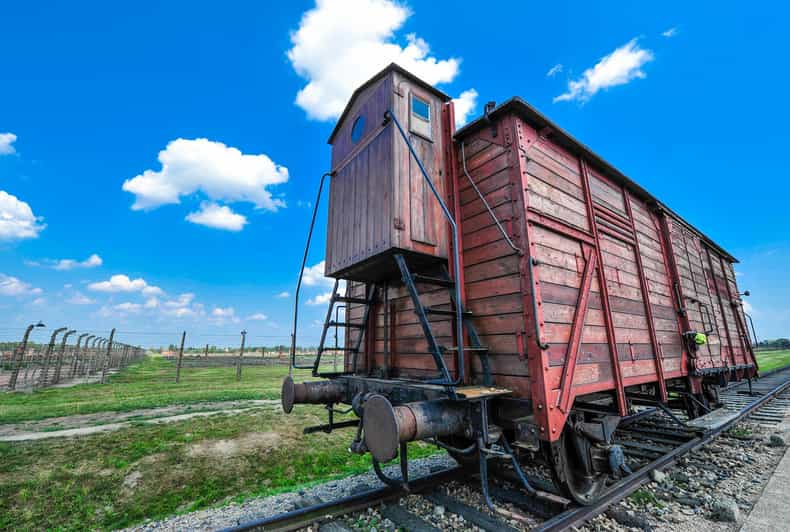
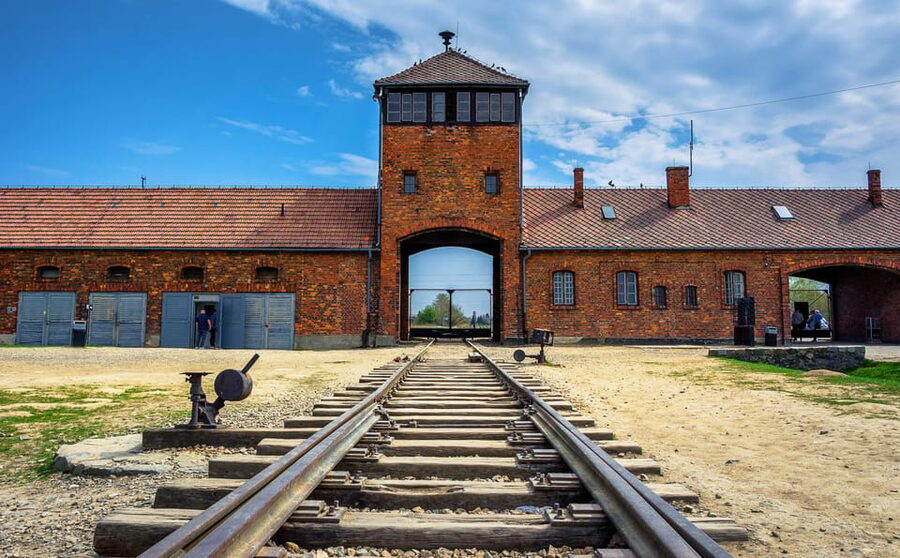
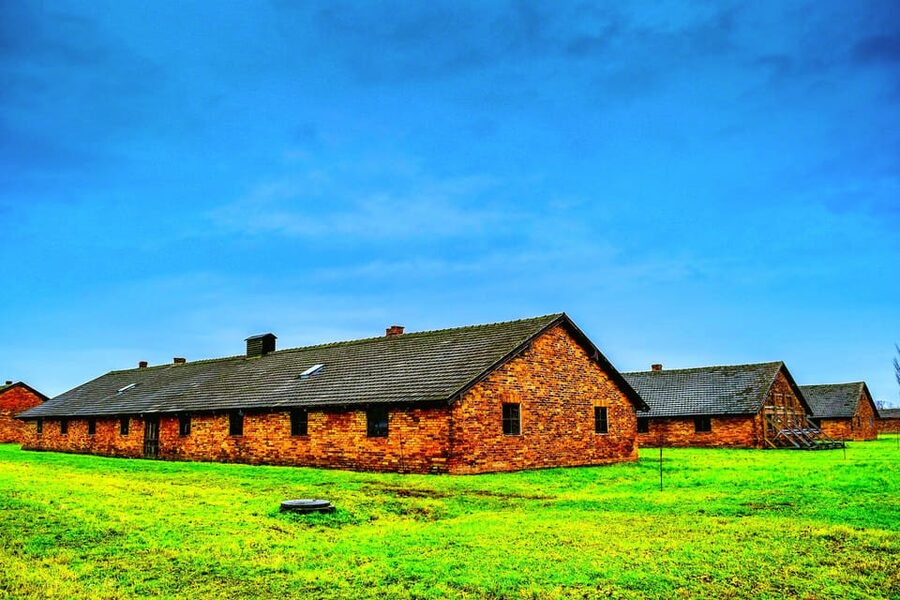
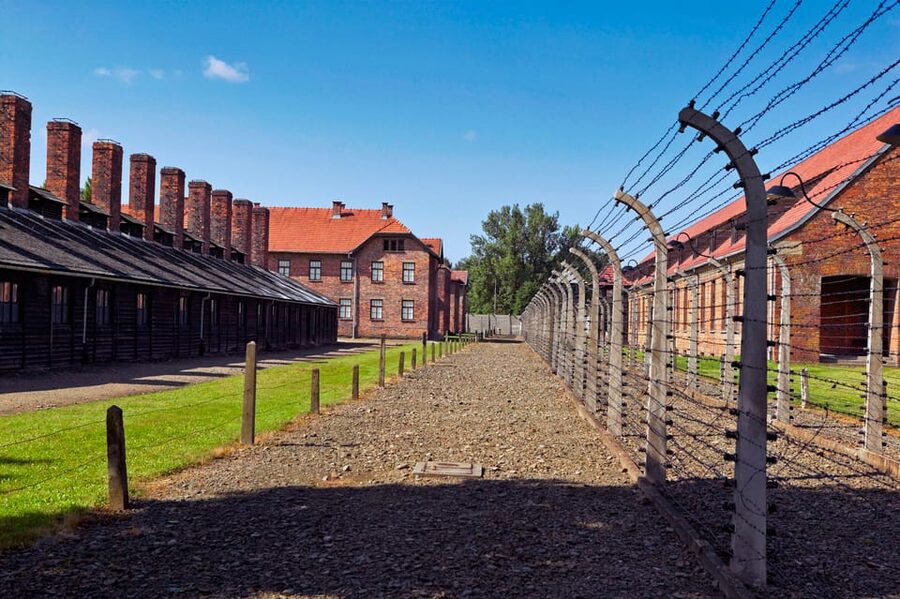
Birkenau is the vast, open section most familiar from photographs, with its railway entrance and long rows of barracks. The railway ramp is especially important because it shows how deported prisoners were brought into the camp and sorted on arrival. You also see the remains of gas chambers and crematoria buildings, along with the scale of the grounds around them.
I strongly prefer the two-part visit to a short stop at Auschwitz I alone. Birkenau gives you the physical sense of distance, size, and industrial planning that cannot be conveyed by photographs or a film. The two sites work together, and skipping one leaves your understanding incomplete.
More Auschwitz-Birkenau Memorial Tours in Oswiecim
- Auschwitz-Birkenau Skip-the-Line Guided Tour
★ 4.3 · 3,617 reviews - Auschwitz-Birkenau: Skip-the-Line Entry Ticket & Guided Tour
★ 4.4 · 3,052 reviews - Auschwitz-Birkenau Skip-the-Line Ticket and Guided Tour
★ 4.4 · 1,241 reviews
Auschwitz I, preserved blocks and difficult evidence
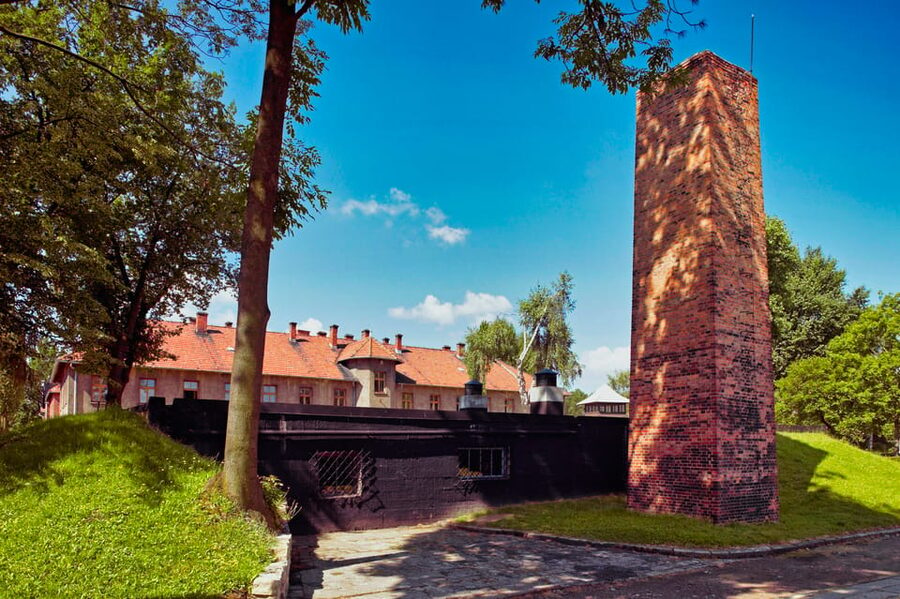
At Auschwitz I, your guide leads you through the surviving prison blocks and explains how the camp developed. You can expect a serious, structured walk rather than a casual tour with plenty of free time.
The exhibits include evidence of the people who were imprisoned and murdered there. The setting is direct and confronting. You should not expect every room to be open or every part of the grounds to be explored at your own pace, since the memorial controls the route and timing.
This is where a guide adds real value. A map or audio guide can tell you what a building was used for, but a live museum guide can connect the buildings, dates, and policies into a clear account. The guide also helps you move through the site respectfully, without treating it like a collection of photo stops.
English is available, along with German, Spanish, French, Polish, and Italian. If too few people book a particular language, the tour may be given in English instead. Keep that possibility in mind if a non-English tour is important to you.
Some guide-led visits are especially strong because of the person leading them. Martin, named in one booking account, was praised for combining detailed historical explanation with an approachable manner. That does not mean Martin will lead your departure, but it shows how much the quality of the museum guide can shape the day.
Birkenau, the railway ramp and the scale of the site
Birkenau changes the emotional weight of the visit. The grounds are far larger and more open than Auschwitz I, with the famous entrance structure, railway tracks, barracks, and remains of the extermination facilities spread across a broad area.
Your guide explains the railway ramp and the arrival process there. This is not simply a stop for a photograph. It is the point where the transport system, selection process, and physical layout of the camp come together.
You also see the remains of gas chambers and crematoria buildings. Their ruined condition is part of the story. The site was destroyed in an attempt to erase evidence, and the remains now serve as physical evidence of what happened.
The open setting can make Birkenau feel exposed, especially in poor weather. Bring clothing suited to the forecast. The instructions specifically call for appropriate clothing, and that is practical advice rather than a formality. You may be outside for extended periods, and the visit is not designed around comfort.
The pace is set by the memorial’s visitor service, not by the booking platform or local operator. That means you cannot count on stretching one stop or leaving early whenever you wish. Save the whole day, even though the stated duration ranges from three to seven hours.
Fast-track entry and the meeting point
Pre-booked admission is the main logistical reason to choose this experience. Auschwitz tickets are limited and tied to named visitors, so arranging entry ahead of time can be much easier than trying to secure a place independently at short notice.
Fast-track does not mean walking straight through without any checks. Waiting times can still reach 15 minutes, and you must pass the museum’s entry procedures. Bring your passport or ID card, and make sure the full name on it matches the booking exactly. A mismatch can lead to refused entry.
The meeting point is the weak spot. It can vary according to the option you book, and several parking areas and vehicles may be operating nearby. One practical tip is to arrive early, read the meeting instructions carefully, and look for the host who provides your tickets. Do not assume every vehicle or person carrying a booking-company logo belongs to your group.
Some departures use a host at the arrival point, followed by a museum guide inside. That distinction can cause confusion. The host handles the initial ticket handover, while the local guide is assigned once you enter the museum.
If you cannot find the group, use the contact number supplied with your booking. One person had trouble reaching the listed number, while the guide eventually called from a private phone. I would not rely on that happening, so save the instructions and allow extra time to locate the correct meeting area.
Same country, a completely different kind of day:
- Auschwitz-Birkenau: Skip-the-Line Entry Ticket & Guided Tour
★ 4.4 · 1,038 reviews - Auschwitz-Birkenau: Guided Tour and Skip-The-Line Ticket
★ 4.4 · 215 reviews - Krakow: Auschwitz-Birkenau Private Guided Tour
★ 4.3 · 167 reviews - Auschwitz-Birkenau: Museum Entry Ticket with Guided Tour
★ 4.2 · 146 reviews
Choosing Krakow transport or arriving independently
The Krakow transport option is the simpler choice if you do not have a car. It includes transport from Krakow, and it removes the need to work out parking and the transfer between Auschwitz I and Birkenau.
It also gives the day a clearer shape. You meet the driver or host, receive your instructions, and are directed through the two camp visits. Several booking accounts praised the organization and polite drivers, though one complaint raised a serious concern about a driver using one hand frequently. That is an isolated but fair reminder to judge the transport side separately from the museum tour.
Arriving independently can work well if you already have a car and want control over your arrival. But it is not the cheapest version once parking is added. One account recorded parking charges of 20 złoty at Auschwitz I and 40 złoty at Birkenau. The supplied terms also make clear that parking and transport between the camps are not included in the no-transport option.
Independent arrival can also make the meeting point harder to find. The parking areas are not all in the same place, and getting from one camp to the other is your responsibility unless the operator helps on the day. In one case, a guide gave a lift to Birkenau when a car was parked at a distant lot. Treat that as helpful service, not something guaranteed.
At $69 per person, the package offers reasonable value if you need transport and want a guide at both sites. If you already have a car, can manage the parking costs, and only want entry, a self-arranged visit may be worth comparing. The paid tour earns its price through the ticket arrangement, on-site guidance, and reduced transport hassle.
Timing, group size and the three to seven-hour range
The experience is advertised as lasting from three to seven hours. That is a wide range, so do not book it between two fixed appointments.
The museum can change the start time the day before, based on guide availability. You should receive confirmation by email, but check it carefully and keep the entire day open. This is especially important if you are connecting with another tour, train, or evening reservation.
The guided museum portion has been described as about three hours on some departures, with a 10-minute break during the visit. The total day can be longer once transport, entry procedures, and movement between the camps are included.
The small-group format is useful because it keeps the guide’s explanation close at hand without the feel of a very large crowd. Still, Auschwitz is a heavily visited memorial, and you will share the site with other groups. The guide must follow the memorial’s schedule and visitor rules, so the experience is more controlled than a flexible private walk.
The pace can be brisk. This is not a day for lingering over every display or taking a long meal break. If you need quiet time after the visit, plan it separately rather than trying to fit another major activity into the same afternoon.
What to bring and what to leave behind
Bring your passport or ID card. You may also bring a student card if you are using one as part of your booking details, but the key requirement is that your name and identification match.
Wear weather-appropriate clothing and practical shoes. The itinerary includes outdoor areas at Birkenau, and the memorial asks visitors to dress appropriately for the site.
Large bags are not allowed. The maximum stated luggage size is 30 by 20 by 10 centimeters, so pack lightly. Do not arrive with a large suitcase or oversized backpack and expect to carry it inside.
The setting calls for restraint. Photography rules and behavior expectations at memorial sites should be followed carefully, and your guide will help set the tone. This is a place to listen, observe, and remember, not a backdrop for casual entertainment.
Children under 13 are not considered suitable for this activity. It is also not suitable for wheelchair users or people with mobility impairments. Those restrictions are important because of the walking, the historic structures, and the memorial’s own visitor conditions.
Languages and the role of the museum guide
The available languages are English, German, Spanish, French, Polish, and Italian. You select a preferred language when booking, but the operator may switch to English if the minimum number for that language is not met.
The guide is the heart of the experience. Strong guides have made this visit clear, organized, and emotionally grounded. Several departures were praised for detailed explanations, useful answers to questions, and a sense that the guide covered the essential facts without wasting time.
There can be occasional coordination problems. One person found the guide late without notice, while another had difficulty identifying the correct guide because the badge did not clearly match the booking company’s branding. These are practical annoyances, not reasons to dismiss the tour, but they reinforce the need to arrive early and keep your phone available.
The overall rating is 3.9 from 433 reviews, which suggests a generally positive experience with some unevenness in meeting arrangements and transport. The strongest praise centers on the guides and the organization once the visit is underway. The weaker points concern finding the group, late changes, and independent parking.
Who should book this Auschwitz tour
I would choose this option if you are staying in Krakow, want a guided visit, and prefer to have your museum entry arranged before arriving. It is also a good fit if you want to see both Auschwitz I and Birkenau without piecing together separate tickets and transfers.
It suits adults and teenagers aged 13 or older who are ready for difficult subject matter and a serious memorial visit. You should be comfortable with a set route, outdoor walking, and a schedule controlled by the museum.
I would think twice if you need a fully flexible itinerary, dislike last-minute time changes, or want to explore alone. The non-refundable ticket terms also mean you should not book until your plans are firm.
If you are driving, compare the transport and no-transport choices carefully. Add parking and the cost or effort of reaching the second camp before deciding. The self-drive option is possible, but it is not simply the same tour minus the bus.
Should you book it?
Book it if you want the reassurance of pre-arranged admission, a guide at both camps, and optional transport from Krakow. The two-camp route is the right way to understand the site, and the best guides turn a difficult visit into a clear, respectful lesson.
Do not book it casually or squeeze it into a tight schedule. Save the day, bring identification, pack a small bag, and expect the meeting arrangements and start time to require attention. At $69, it is fair value when transport and guiding matter to you, especially if arranging Auschwitz independently feels like needless work.
FAQ
How long does the Auschwitz-Birkenau tour last?
The stated duration is three to seven hours. The exact length depends on the museum schedule, transport option, and start time. You should keep the whole day available.
Does the tour visit both Auschwitz I and Auschwitz II-Birkenau?
Yes. The itinerary includes Auschwitz I and Auschwitz II-Birkenau, including the prison blocks, gas chambers and crematoria remains, and the Birkenau railway ramp.
Is transport from Krakow included?
Transport from Krakow is included only when you select the transport option. If you choose the option without transport, you must arrange your own arrival and travel between the two camps.
Is parking included if I drive myself?
No. Parking is not included with the no-transport option. One recorded cost was 20 złoty at Auschwitz I and 40 złoty at Birkenau, though charges can change.
What languages are available?
Guided tours are offered in English, German, Spanish, French, Polish, and Italian. If the minimum number for a selected language is not met, the tour may be given in English.
Do I need identification?
Yes. Bring your passport or ID card. The name on your identification must match the full name supplied during booking, or entry may be refused.
Can I bring a large bag or suitcase?
No. Luggage larger than 30 by 20 by 10 centimeters is not permitted inside the museum.
Is the tour suitable for children or wheelchair users?
The activity is not suitable for children under 13, people with mobility impairments, or wheelchair users.
Just added around Oswiecim
- RoundTrip from Krakow to Auschwitz + Entrance Tickets★ 4.9 · 10 reviews
- Oswiecim: Auschwitz-Birkenau Skip-the-Line Entry Tickets★ 4.0 · 63 reviews
- Krakow Auschwitz-Birkenau Memorial Guided Tour Meeting Point★ 4.7 · 20 reviews
- From Krakow: Wieliczka Salt Mine & Auschwitz Guided Trip★ 4.5 · 5 reviews
- From Krakow: Roundtrip Transportation to Auschwitz Birkenau★ 4.8 · 30 reviews
- Auschwitz-Birkenau Museum Tour from Krakow★ 4.6 · 25 reviews
- Auschwitz-Birkenau: Memorial Entry Ticket and Guided Tour★ 3.9 · 54 reviews
- Auschwitz-Birkenau: Entry Ticket with Guided Tour★ 4.5 · 105 reviews
Auschwitz-Birkenau Memorial Tours, compared.
Auschwitz-Birkenau Guided Tour & Hotel Pickup
Read our review →Auschwitz-Birkenau Guided Tour & Hotel Pickup
Read our review →
Auschwitz Guided Tour with Optional Hotel Pickup
Read our review →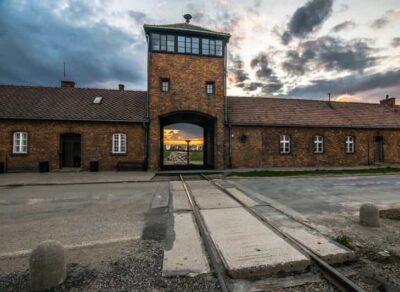
Auschwitz-Birkenau Guided Tour with Pickup & Lunch
Read our review →
Auschwitz-Birkenau Guided Tour Pickup/Lunch Options
Read our review →
Krakow to Auschwitz Birkenau Guided Tour with Transfer and Ticket
Read our review →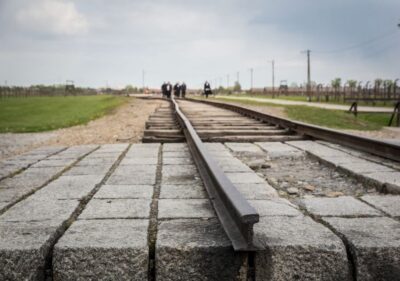
Browse the lists this tour appears in