
Reviewed · WROCLAW TOURS
III Reich & WW2 in Wroclaw. Monday, Wendsday, Friday regular tour
Wrocław’s World War II story is best understood on foot, where a synagogue site, university buildings, market squares, and church islands reveal different pieces of the city’s past. This tour links those places into a clear route from Hotel Monopol to Cathedral Island, covering Nazi rule, Jewish life, the siege of Festung Breslau, and the city’s first postwar months.
I like the focus on local history beyond the usual battlefield story, especially the White Stork Synagogue, Edith Stein, German opposition, and Jewish scientists at Wrocław University. I also like the small maximum group of 20 and the chance to ask questions, particularly when Michael is leading the walk. The drawback is its fast pace and outdoor format, which can feel demanding in cold or poor weather.
Key points to know before booking
- The route covers about 1.7 miles on foot, with stops spread across central Wrocław.
- Michael is the guide most often identified by name, and his clear explanations and willingness to answer questions are a major strength.
- The White Stork Synagogue survived the war, offering one of the tour’s most important links to Wrocław’s Jewish community.
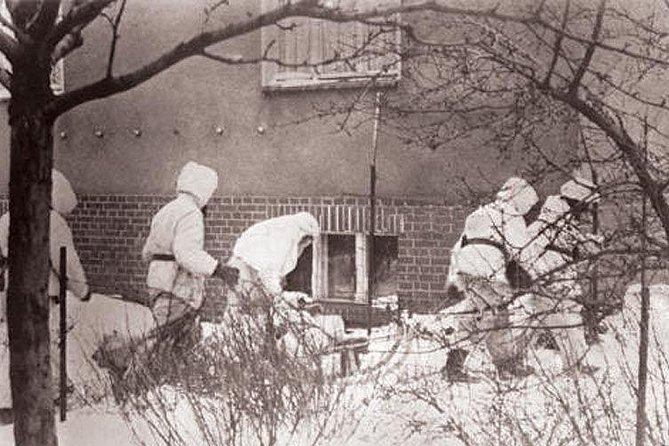
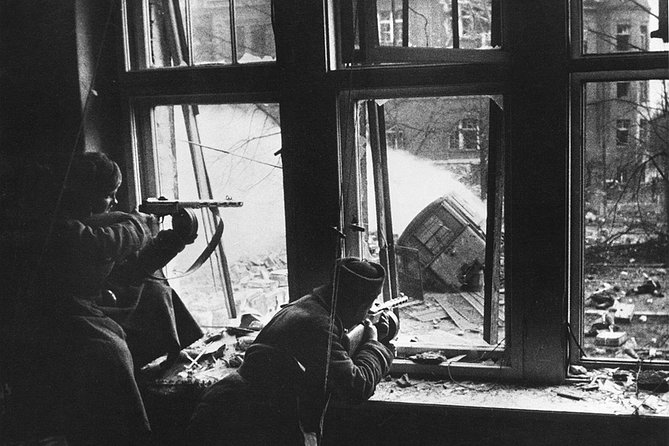
- Festung Breslau receives real attention, including the siege, destruction, and daily life during the final stage of the war.
- The tour ends at Cathedral Island, not back at Hotel Monopol, so plan your next stop from there.
- The $32.20 price is reasonable for a two-hour-plus private-feeling group walk, though admission to Wrocław University and the Parish of the Most Holy Name of Jesus is not included.
Wrocław’s wartime story begins at Hotel Monopol
The meeting point is Hotel Monopol on Ulica Heleny Modrzejewskiej, a central and easy-to-find start for a walking tour. From there, the route quickly moves into the city’s difficult past rather than spending time on general sightseeing.
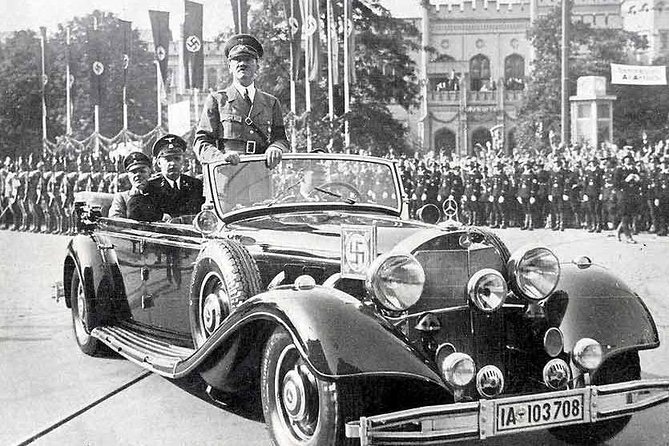
Your first stop marks the former New Synagogue, destroyed in 1938. The site is paired with a look at the former Gestapo building, giving you two sharply different reminders of the same period: the destruction of Jewish religious life and the machinery of Nazi repression.
This is a short stop, about five minutes, but it sets the tone. You are not simply being shown grand buildings. You are being asked to notice what has disappeared, what remains, and how the city’s streets carry traces of events that are no longer visible.
The tour then moves to Wolności Square for a brief explanation of how the Nazi era began in Germany. This early context matters because the walk is not limited to the final years of the war. You get a basic political frame before moving into the effects on Wrocław and its residents.
Other Wroclaw days people book alongside this one:
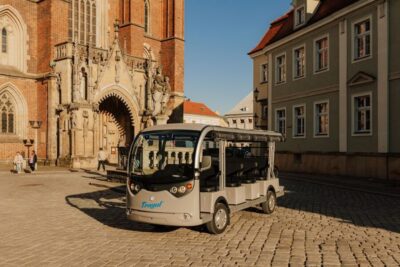
- Wroclaw: E-Car Tour and Audio Guide
★ 4.6 · 1,738 reviews - Wroclaw: 2-Hour Private Guided Tour by Electric Car
★ 4.8 · 805 reviews - Wrocław: Old Town and Ostrów Tumski Walking Tour in English
★ 4.8 · 311 reviews
The White Stork Synagogue and Wrocław’s Jewish heritage
The White Stork Synagogue is one of the most meaningful stops on the route. It survived World War II and sits in the heart of the former Jewish district, making it a useful place to discuss local Jewish life, persecution, and the Holocaust.
You will spend about ten minutes here. That is enough time for a focused explanation, but not enough for a full museum visit or a detailed architectural tour. If your main interest is Jewish history, this stop will likely be one of the strongest reasons to book, but you should see the walk as an introduction rather than a complete study of Wrocław’s Jewish community.
The value here is the local scale. Large Holocaust memorial sites can make history feel distant and abstract. At the White Stork Synagogue, the subject is tied to a particular district and a surviving building. You can better understand that Jewish life was part of Wrocław’s everyday city fabric, not an isolated chapter.
Admission is listed as free for this stop. The tour’s purpose is to explain the site and its setting, so do not assume the schedule includes an extended interior visit.
The main square and daily life under Nazi rule
At the Rynek, Wrocław’s main square, the guide shifts from institutions and persecution to ordinary life under the Nazi regime. This is a useful change of scale. You hear about how people lived under dictatorship, rather than only hearing about leaders, armies, and dates.
The square also introduces Festung Breslau, the German name for the fortified city during the final stage of World War II. The discussion covers the siege and the destruction of Wrocław, helping you read the old center with a sharper sense of what the final months meant for the city.
The stop lasts about ten minutes. It is one of the more accessible parts of the walk because you can connect the explanation to a major public space you are likely to visit anyway. At the same time, a busy square can be less quiet than a memorial or synagogue, so your attention may need to stay with the guide.
Dietrich Bonhoeffer and opposition inside Germany
The Dietrich Bonhoeffer Memorial provides a short look at German opposition to the Nazi regime. The stop lasts only about five minutes, but it adds an important correction to the idea that Germany reacted to Nazism as one united block.
This part of the route is particularly useful if you want the tour to cover more than Nazi policy and military events. It points toward people who resisted, challenged, or rejected the regime from within German society.
The visit is brief, so expect a compact explanation rather than a long biography. Still, the memorial gives the walk a wider moral and political frame before it moves toward Wrocław’s university district.
Same country, a completely different kind of day:
- Wroclaw: Private Old Town Guided Walking Tour (2 hours)
★ 4.8 · 275 reviews - Old Town Wrocław Walking Tour
★ 5.0 · 249 reviews - Wroclaw: City Tour Sightseeing By Golf Cart Shared Or Privat
★ 4.8 · 189 reviews - Auschwitz-Birkenau Tour from Wrocław
★ 5.0 · 129 reviews
Wrocław University, Jewish scientists, and education under the Reich
At Wrocław University, the guide discusses education under the Third Reich and the work of Jewish scientists connected with the institution. This stop lasts around ten minutes.
The university adds a different kind of evidence to the tour. Instead of looking only at destroyed buildings or wartime defenses, you consider what happened to teaching, research, and academic life under dictatorship. It also brings individual scholars into the story, which can make the policy of exclusion easier to understand.
Admission is not included at this point. The provided details do not establish whether the group enters the building or discusses it from outside, so you should treat the university as a scheduled historical stop, not as a guaranteed interior tour. If access matters to you, check the current arrangements before booking.
The Parish of the Most Holy Name of Jesus and the siege
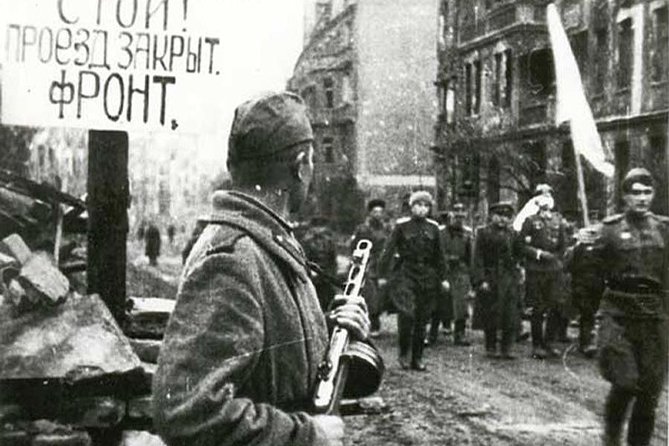
The Parish of the Most Holy Name of Jesus is tied to everyday life during the siege and the first months after the war. This is another ten-minute stop, and it helps connect the military story to the experience of civilians.
The phrase everyday life is important here. A siege is often explained through troop movements and final battles, but people inside the city also faced fear, shortages, disruption, and uncertainty. The stop then moves into the first postwar months, when the end of fighting did not mean an instant return to normal.
Admission is not included. As with Wrocław University, the available details do not promise an interior visit. You should be prepared for the guide to explain the site and its wartime role as part of the walking route.
Ossolineum and the question of education
The Ossolineum stop returns to education under the Third Reich. It lasts about ten minutes and gives the guide another place to explain how schools, scholarship, and cultural institutions operated under Nazi control.
This repetition of the education theme is useful rather than unnecessary. The university and Ossolineum let you see the subject from different angles. One points toward academic life and Jewish scientists, while the other opens a wider discussion of knowledge, institutions, and cultural continuity.
If your main interest is combat history, this section may feel slower than the stops about the siege. If you want to understand how dictatorship affected daily intellectual life, it adds depth that many standard World War II walks leave out.
Market Hall and a short pause during the siege story
At Hala Targowa, the Market Hall, the guide returns to the siege. This stop also includes a short break, making it a practical point in the route.
A break matters because the tour is a continuous walk of roughly 1.7 miles. The total distance is not extreme, but the pace can feel brisk when you are stopping often, listening closely, and walking in cold weather. One person described completing the route in frigid conditions, while another noted that a snowy afternoon did not prevent an enjoyable experience. That suggests you should dress for the forecast rather than assume the tour will slow down for winter conditions.
The Market Hall is also a sensible place to pause because it connects the siege narrative with a familiar civic building. You are still in central Wrocław, but the subject remains the strain placed on the city during wartime.
Sand Island, Edith Stein, and the final siege stories
The walk continues to Sand Island, where the guide discusses Edith Stein and returns to the siege. Stein gives the route another personal connection to Wrocław’s Jewish and religious history, while the siege discussion keeps the city’s wartime destruction in view.
This five-minute stop is short, but the sequence is effective. By this stage, you have heard about Jewish life, Nazi persecution, education, resistance, and civilian experience. Edith Stein helps bring those themes together through one local figure.
The island setting also marks a change in atmosphere as the tour moves toward the cathedral district. The route remains firmly historical, but the final section feels less like a tour of political institutions and more like a walk through the city’s religious and cultural center.
Cathedral Island gives the tour a natural finish
The tour ends on Ostrow Tumski, or Cathedral Island, with a few extra stories. This is a practical endpoint because Cathedral Island is one of Wrocław’s main areas to explore, and you can continue sightseeing after the guide leaves.
The ending is not at Hotel Monopol, so remember that the experience is a point-to-point walk. You may want to schedule Cathedral Island, its churches, or the nearby riverfront after the tour rather than before it.
Ending here also gives the route a clear shape. You begin with the destruction of the New Synagogue and the rise of Nazi power, then move through Jewish heritage, daily life, opposition, education, siege conditions, and the first postwar period. The final stories on Cathedral Island leave you with a broader view of how Wrocław changed before, during, and immediately after the war.
What the guide’s style means for your experience
Michael is the guide name most often associated with this tour. He is described as a Polish guide who explains Third Reich and World War II subjects clearly, adds local detail, and welcomes questions. That last point matters because the route covers politics as well as history, and the conversation can extend beyond fixed dates and monuments.
The best version of this walk is likely to feel personal rather than scripted. A group maximum of 20 keeps it from becoming a large street lecture, though the exact feel will depend on the day’s attendance and the individual guide.
The feedback is not uniformly glowing. One assessment found the guide disengaged and the content too general. That is worth taking seriously. The tour covers eleven stops in about two to two and a half hours, so it cannot give every subject a full treatment. If you want archive-level detail, extensive military analysis, or a long stop at each site, this will probably feel too quick.
For most people, the appeal is the combination of local places and a wide historical range. You are not only hearing about the Nazi leadership or the final battle. You are also hearing about a synagogue, university life, German opposition, Jewish scientists, civilian routines, and the difficult first months after the war.
Is $32.20 good value?
At $32.20 per person, the price is fair for an English walking tour lasting two to two and a half hours, particularly with a group limit of 20. You are paying for a guided historical route across central Wrocław, not for a museum package or a series of included admissions.
The value is strongest if you are new to Wrocław and want a framework for later independent sightseeing. The guide connects sites you might otherwise pass without understanding, and the point-to-point route saves you the work of researching how they fit together.
The value is weaker if you prefer a slow pace or already know the city’s wartime story well. Three stops list admission as not included, including Wrocław University, the Parish of the Most Holy Name of Jesus, and Ossolineum. Because the schedule does not specify interior access, you should not book expecting a series of paid building visits.
The tour is offered in English on Mondays, Wednesdays, and Fridays. It is a mobile-ticket experience, confirmation arrives at booking, and free cancellation is available until 24 hours before the start time. Poor weather or failure to meet the minimum group size can lead to a different date or a refund.
Who should book this Wrocław history walk?
I would recommend it to you if you have a strong interest in World War II, the Third Reich, Jewish heritage, or the way ordinary cities endured dictatorship and siege. It is also a good choice early in a Wrocław visit, since the route can give meaning to places you later revisit on your own.
It suits adults and older children who can manage a steady city walk. Most people can participate, service animals are allowed, and public transport is nearby. Still, you should expect outdoor walking, changing weather, and a fairly full sequence of stops.
You may want a different experience if your priority is a museum interior, a long architectural visit, or a slow, relaxed stroll. The schedule is packed, and the short stops mean the guide must keep moving.
FAQ
How long does the tour last?
The tour lasts approximately two to two and a half hours.
Where does the tour start?
It starts at Hotel Monopol, Ulica Heleny Modrzejewskiej 2, 50-071 Wrocław, Poland.
Where does the tour end?
The tour ends at Cathedral Island, also called Ostrow Tumski, in Wrocław.
Is the tour offered in English?
Yes. The tour is offered in English.
How many people can join the tour?
The maximum group size is 20 people.
Can I cancel for a full refund?
Yes. You can cancel at least 24 hours before the experience starts for a full refund. Cancellations or changes made less than 24 hours before the start time are not accepted for a refund. Poor weather or failure to meet the minimum number of participants can lead to another date or a full refund.
Should you book it?
Book this tour if you want a focused introduction to Wrocław’s World War II past, especially the Jewish district, Nazi rule, German opposition, Festung Breslau, and postwar life. Michael appears to be an excellent guide when leading the walk, and the small group format gives the history a more direct, conversational feel.
Skip it if you need extensive museum access or highly specialized military detail. For $32.20, though, this is a sensible way to spend an afternoon, provided you bring good walking shoes, dress for the weather, and accept that the route favors breadth and local context over long stops.
Just added around Wroclaw
- Wrocław: World War II and the non-existent city of Breslau★ 3.6 · 3 reviews
- Wrocław to Rock City in Adrspach and Project Riese day trip★ 5.0 · 5 reviews
- Wroclaw: WW2 Tour to Project Riese & Gross-Rosen Museum★ 4.8 · 26 reviews
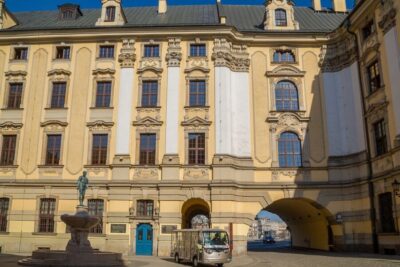
- Wroclaw: University Baroque Tour★ 5.0 · 19 reviews
- Wroclaw : Walking Custom Tour with a Local Guide★ 4.8 · 3 reviews
- Wrocław: Tour of the Old Town in an Imperial E-car★ 4.3 · 13 reviews
- Wroclaw to Rock City in Adrspach and Ksiaz Castle day trip★ 4.9 · 16 reviews
- Wroclaw To Church of Peace and Project Riese Tour★ 4.8 · 4 reviews
Wroclaw Tours, compared.
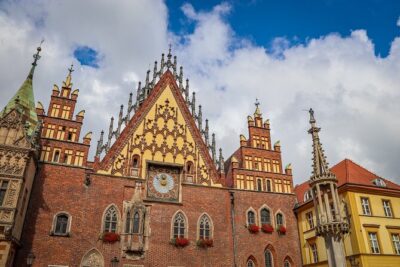
Old Town and Ostrów Tumski Walking Tour in English
Read our review →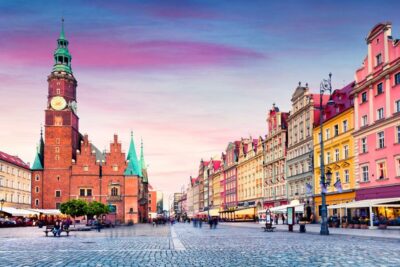
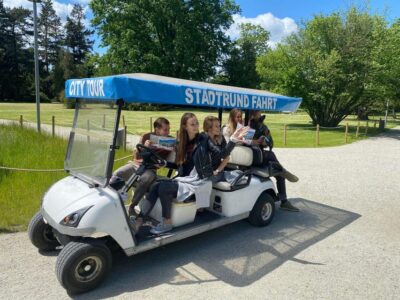
City Tour Sightseeing By Golf Cart Shared Or Privat
Read our review →

Browse the lists this tour appears in