
Reviewed · OLD TOWN WALKING TOURS
Katowice Old Town Walking Tour
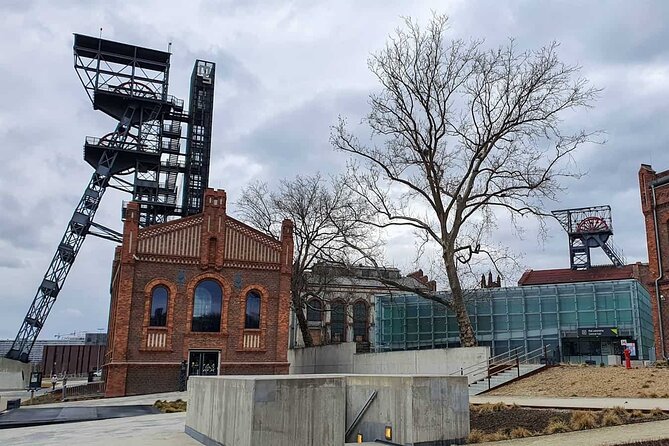
Katowice is not a city you understand by looking at one grand square. Its story comes from contrasts: Polish and German influence, Catholic and Protestant traditions, old tenements beside modern cultural venues, and a communist-era shopping center near newer city life. This walking tour connects those pieces on foot, covering about 6.5 kilometers in three hours.
I like the private format, since your group gets the guide’s full attention, and I like the clear focus on Silesian identity rather than a parade of postcard views. Guide Malwina is especially good for travelers who want facts about the region’s changing borders and culture. The main drawback is the distance: this is a serious city walk, not a short stroll, and the tour requires moderate physical fitness.
Key points to know before you book
- A 6.5-kilometer route: Expect a proper walking tour through central Katowice, with several stops and stretches between them.
- Private English-language guiding: Only your group participates, which allows room for questions and a more personal pace.
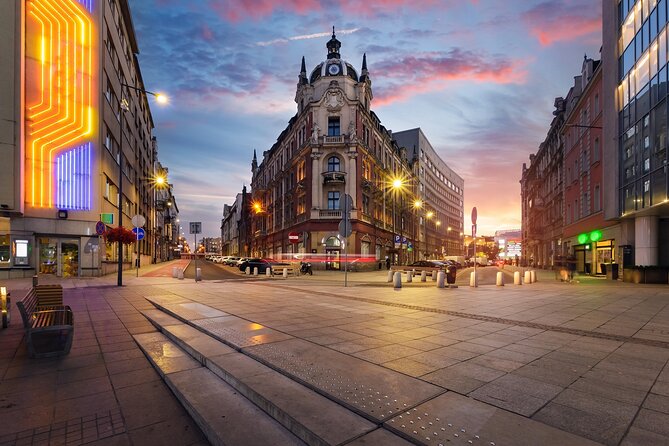
- Silesian history in plain view: Churches, monuments, theaters, Parliament, and streets of old tenements show how mixed the region’s past has been.
- Free entry at the listed stops: The tour focuses on exterior views and places where no admission ticket is required.
- A useful final pairing: The Silesian Insurgents’ Monument and Spodek bring political memory and modern city identity together.
- A good value for focused visitors: At $81.62 per person, the price makes the most sense for a private group that wants context rather than simple sightseeing.
Why Katowice makes sense as a walking tour
Katowice can feel less immediately polished than Poland’s best-known historic cities. That is part of the point. This is a place shaped by Silesia’s mixed political, religious, and cultural background, and the route uses the city center as a kind of open-air lesson.
You will not spend the whole three hours inside museums. Instead, the guide explains what you are looking at as you move between buildings, streets, monuments, and public spaces. That makes the tour useful on a first visit, especially if you want to understand why Katowice looks and feels different from other Polish cities.
The route also gives you a balance of old and new. You begin around Market Square, pass churches and institutional buildings, then reach Stawowa, the Silesian Insurgents’ Monument, and Spodek. The city’s changing identity becomes easier to follow when you see these places in one continuous walk.
More Old Town Walking Tours in Krakow
- Old Town Krakow & Wawel Castle Walking Tour
★ 5.0 · 1,508 reviews - Krakow: Bike Tour of Old Town, Jewish Quarter and the Ghetto
★ 4.9 · 1,155 reviews - Krakow: The Old Town Walking Tour
★ 4.8 · 794 reviews
Market Square and the communist shopping past
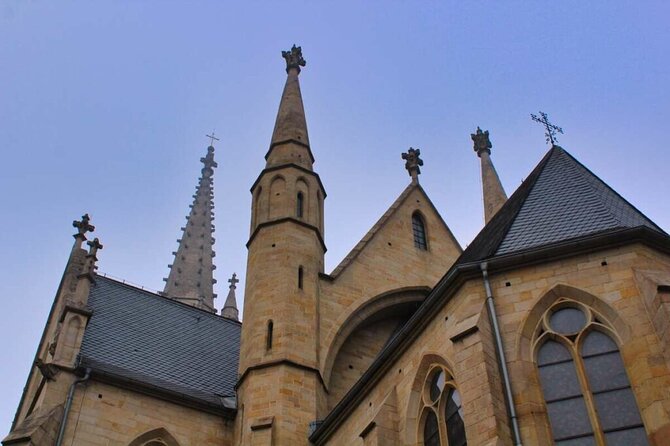
The tour starts at the Silesian Theatre, at Rynek 10. Market Square is the opening classroom, with the theater, the Skarbek and Zenit department stores, and some of the oldest buildings in the city.
The Skarbek and Zenit buildings are especially useful stops because they connect architecture with everyday life. They were once a major shopping destination in communist Poland, described as the shopping dream place of that period. That detail gives you a look at ordinary urban culture, not just political events or grand monuments.
You also get time to consider the square as a social space. The route presents it as one of Silesia’s main places for eating, drinking, and going out. The stop itself lasts about 15 minutes, so expect a brisk introduction rather than a long architectural lecture.
I like this opening because it sets the tone. You see the city’s older buildings, but you also hear about how people used the area in more recent times. If you enjoy local context, this is more useful than simply being told the dates of façades.
Immaculate Conception Church and Academy of Music
The next religious stop is the Immaculate Conception Catholic Church, also known as Kosciol Mariacki. You spend about 10 minutes here, taking in the exterior architecture and the artworks inside by leading Polish artists.
The information provided does not promise a formal interior visit or a special admission arrangement, so you should think of this as a guided look at the building rather than a full church tour. Still, the combination of outside architecture and interior art gives the stop more substance than a quick photograph.
From there, the route continues to the Academy of Music in Katowice. The stop is brief, about seven minutes, but its importance is clear: this is described as Poland’s most prestigious music academy. The guide can help place the institution within Katowice’s cultural life, even if you do not enter or attend a performance.
These two stops work well together. One points to religious art and worship, while the other points to formal music education. They show that the city’s cultural character is not limited to industrial or political history.
Silesian Parliament and the city’s informal theater life
The former Silesian Parliament is another short stop, lasting about 10 minutes. This building once served as the seat of Parliament for the Autonomous Silesian Region, giving you a direct link to Silesia’s separate political identity.
That background matters because the tour is not treating Katowice as just another Polish city center. Silesia has its own regional story, and this stop gives that story a physical address. The building helps explain why questions of local identity and changing political control come up repeatedly along the walk.
The route also includes a local favorite theater with an informal atmosphere. The supplied details do not name this theater, so you should expect the guide to identify it during the walk rather than plan around a specific performance. Its inclusion adds a useful human touch: cultural life here is not only about major institutions and official buildings.
For me, this portion is strongest when you are willing to ask questions. A private tour gives you a chance to pause and ask how the region’s political history affected daily life, language, religion, or culture. The experience is likely to be more rewarding for curious visitors than for people who only want a fixed list of monuments.
Same country, a completely different kind of day:
- From Krakow: Auschwitz-Birkenau Guided Tour & Hotel Pickup
★ 4.5 · 33,358 reviews - From Krakow: Auschwitz-Birkenau Guided Tour & Hotel Pickup
★ 4.5 · 29,340 reviews - Krakow: Auschwitz Guided Tour with Optional Hotel Pickup
★ 4.5 · 15,280 reviews - Krakow–Zakopane: Cable Car, Chocholow Baths, Cheese & Vodka
★ 5.0 · 10,720 reviews
Cathedral of Christ the King and Silesian spirituality
The Cathedral of Christ the King is described as Catholic-like on the outside but Protestant-like inside. That contrast is used to represent Silesia’s mixed origins and spiritual life.
You spend around 10 minutes here. The stop is less about a long visit and more about reading the building as a sign of the region’s layered identity. It is a strong example of how the route uses architecture to explain history without separating the two.
The wording about Catholic and Protestant character should not be taken as a technical architectural classification unless your guide explains it further. The value is in the comparison itself. You are being encouraged to notice how religious traditions overlap in Silesia, rather than placing the region in a single, simple category.
This is also one of the places where a personal guide matters. A printed route can tell you a church’s name. A guide can explain why its appearance and interior feel different, and how that connects with the region’s past.
Miarka Square, Dworcowa, 3 Maja, and Stawowa
The longest portion of the tour takes about 30 minutes and passes through Miarka Square, Dworcowa Street, 3 Maja Street, and Stawowa. Along the way, you see 19th-century tenements and the oldest high school in Katowice.
This stretch is important because it slows down the monument count and lets you experience the city as a place where people live, study, shop, and walk. The older apartment buildings provide a street-level view of Katowice’s growth, while the high school adds another layer of civic history.
Stawowa is a practical urban stop rather than a single grand sight. That is useful if you want to understand the shape of central Katowice, but it may feel less dramatic than the cathedral or Spodek. I would treat this part as the connective tissue of the tour. It gives the guide time to point out details you could easily miss while rushing between headline attractions.
The route also passes a monument honoring Silesian scouts who opposed the Nazis in 1939. The precise location is not identified in the supplied details, but its purpose is clear. It brings the Second World War into the walk through the story of young people who resisted the German invasion.
Another venue along this section is used for art exhibitions, international meetups, and other events. Its name is not given, so you will need to rely on the guide to identify it. The stop broadens the picture of Katowice as a place for present-day cultural exchange, not only a city of historic buildings.
The Silesian Insurgents’ Monument
The Silesian Insurgents’ Monument, or Pomnik Powstancow Slaskich, commemorates three Silesian uprisings. It is one of the clearest historical markers on the route.
This is where the tour’s regional focus comes into sharp view. The monument is not simply decorative public art. It points to conflict over Silesia’s political future and the region’s place within the modern Polish state.
You spend about 10 minutes here. That is enough for an explanation and photographs, but not a full political history seminar. If this subject interests you, ask the guide to explain the three uprisings and how they relate to the broader question of Silesian identity.
The monument also prepares you for the final stop. After looking at a memorial rooted in political struggle, you move to Spodek, a building that represents modern Katowice in a very different way.
Spodek, Katowice’s unmistakable symbol
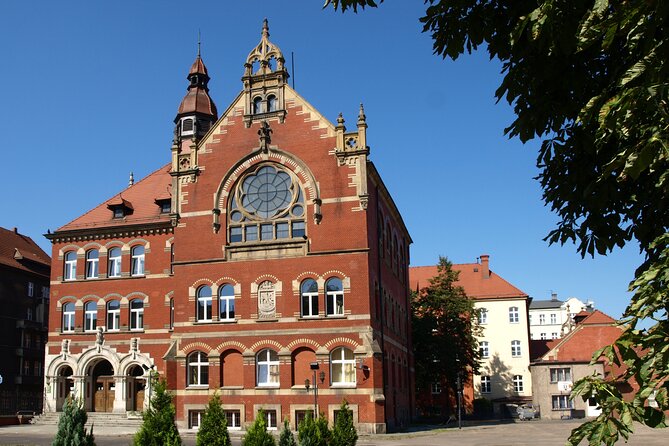
Spodek is the symbol of Katowice, and the final stop lasts about 10 minutes. Its distinctive form gives the city a memorable modern landmark after a route filled with churches, Parliament buildings, old streets, and memorials.
The short visit is likely to focus on the exterior and the building’s role in the city. No event entry is included, and no admission ticket is listed. Think of Spodek as a visual endpoint and a chance to connect the city’s older identity with its modern public image.
Ending here is smart. The route begins with Market Square and historic buildings, then finishes with a structure that many people immediately associate with Katowice. You return to the Silesian Theatre meeting point afterward, so Spodek is not the end of your transport options, only the final sightseeing stop.
What $81.62 buys you
The price is $81.62 per person. Since this is a private tour, the value depends heavily on the size of your group. For one person or a couple, it is a fairly serious expense for three hours. For a family or group of friends, the private format and possible group discounts may make the cost easier to justify.
You are paying for an English-language guide, route planning, and local explanation across a wide set of subjects. The listed stops do not require admission tickets, so the main benefit is interpretation rather than included entry.
I would book it if you want to understand Katowice’s regional character and prefer asking questions as you walk. I would skip it if you only want indoor attractions, a short route, or a low-cost orientation around the main square.
The strongest value comes from the guide. Malwina is praised for explaining how Silesia moved between Slavic and German influence, and for turning the walk into a learning session. That kind of context is hard to get from a self-guided map, especially when the route includes political and religious details.
Distance, pace, and practical planning
The tour covers about 6.5 kilometers in roughly three hours. That means you should wear comfortable shoes and be ready to remain on your feet for much of the experience. A moderate level of physical fitness is recommended.
The route is offered in English and begins at the Silesian Theatre, Rynek 10, in Katowice. It ends back at the same meeting point. The tour operates near public transportation, which is useful for reaching the start or continuing your day afterward.
This is an outdoor walking activity and requires good weather. If poor weather cancels it, you are offered another date or a full refund. The activity also requires a minimum number of travelers to operate, though the tour itself is private once confirmed and only your group participates.
Service animals are allowed. The ticket is mobile, and confirmation is sent within 48 hours of booking, subject to availability. You can cancel for a full refund up to 24 hours before the start time. Changes or cancellations made inside that 24-hour window are not accepted for a refund.
Who should book the Katowice walk
I recommend this tour most for first-time visitors who want a strong introduction to Katowice without spending the day inside museums. It also suits history-minded couples, families with older children, and small groups who like the freedom of a private guide.
You should book it if you are curious about:
- Silesia’s changing political connections
- The mix of Catholic and Protestant influence
- Katowice’s communist-era shopping culture
- The city’s theaters, music institutions, and event spaces
- The meaning behind the Silesian uprisings
- The contrast between old tenements and modern Spodek
It is less suitable if you have limited mobility, dislike long walks, or want guaranteed access inside every building. Several stops are short, and admission is not part of the experience. The tour works best as a guided city overview, not as a series of extended interior visits.
Should you book it?
Book this walk if you want Katowice explained through its streets, buildings, faiths, political memories, and modern symbols. The private setting is the biggest advantage, especially if you want to ask questions or adjust the conversation to your interests.
The price is easiest to defend for a group using the private format and any available group discount. Solo visitors may still find it worthwhile if they value personal attention, as Malwina’s detailed explanations can turn the route into a focused lesson rather than a basic city stroll.
Skip it if you want a shorter, cheaper tour or if 6.5 kilometers sounds tiring. For the right visitor, though, this is a thoughtful way to get past first impressions and understand why Katowice is one of Poland’s more complicated and interesting cities.
FAQ
Where does the Katowice Old Town Walking Tour begin?
The tour begins at the Silesian Theatre, Rynek 10, 40-003 Katowice, Poland.
Where does the tour end?
The activity ends back at the meeting point at the Silesian Theatre.
How long does the tour last?
The tour lasts approximately three hours.
How far do you walk?
The route covers about 6.5 kilometers.
Is the tour offered in English?
Yes. The tour is offered in English.
Is this a private tour?
Yes. Only your group participates.
Are admission tickets included?
The listed stops have free admission, and no separate admission charge is listed for them.
What happens if the weather is poor?
The experience requires good weather. If it is canceled because of poor weather, you are offered a different date or a full refund.
More Walking Tours in Krakow
- Creepy Krakow: 2-Hour City Walking Tour
★ 4.7 · 1,131 reviews - Krakow: Kazimierz Jewish Quarter Walking Tour
★ 4.8 · 571 reviews - Kraków: Old Town & Wawel Castle Walking Tour in English
★ 4.8 · 532 reviews - Krakow: Evening Walking Tour with Spooky Stories
★ 4.7 · 500 reviews
Just added around Krakow
- From Krakow: Zakopane and Dunajec River Rafting Tour★ 4.6 · 31 reviews
- From Krakow: Zakopane and Gubałówka Cable Car Private Tour★ 4.3 · 12 reviews
- From Krakow: Zakopane Full-Day Tour with Lunch Option★ 4.4 · 62 reviews
- From Krakow: Zalipie and Painted Village Guided Tour★ 4.0 · 4 reviews
- From Krakow: Zakopane Tatra Mountains & Hot Springs Tour★ 3.0 · 29 reviews
- From Krakow: Zakopane and the Tatra Mountains★ 4.7 · 36 reviews
- From Krakow: Hot Springs and Zakopane with Gubałówka★ 4.7 · 25 reviews
- Zakopane & Tatra Mountains Private Full-Day Tour from Krakow★ 4.5 · 33 reviews
Old Town Walking Tours, compared.
Bike Tour of Old Town, Jewish Quarter and the Ghetto
Read our review →


Sightseeing EcoCruise around the Old Town of Gdansk
Read our review →
Browse the lists this tour appears in