
Reviewed · OLD TOWN WALKING TOURS
Krakauer old town tour
Krakow’s old town gives you an unusually clear look at a medieval European center, from the Barbican and city walls to Wawel Castle above the Vistula. The tour follows the Royal Route, linking royal power, university life, church music and the city’s dragon legend in one well-planned walk.
I like the visit to Collegium Maius, where the story shifts from kings to scholars, and I like the way Wawel brings the route to a grand finish. The guide is German-speaking, and Monika has been praised for excellent German, humor and a lively presentation. The main drawback is pace: with many sights packed into 150 minutes, some sections may feel hurried.
Key points at a glance
- A full Royal Route in 150 minutes: Cover the Barbican, Main Market, St. Mary’s Basilica, Collegium Maius and Wawel Hill without arranging several separate visits.
- A preserved UNESCO center: Krakow’s old town and Wawel Castle form one of Europe’s best-preserved historic areas.
- German-language guiding: The tour is offered with a live German-speaking guide, including guides such as Monika.
- A useful mix of fact and legend: Hear about Polish kings, Copernicus, Pope John Paul II and the Wawel dragon.
- Two interior visits included: The experience includes Collegium Maius and the courtyard of Wawel’s royal palace.
- Good all-weather planning: The walk runs in rain or cold, with shelter arranged when needed.
Starting between the Barbican and St. Florian’s Gate
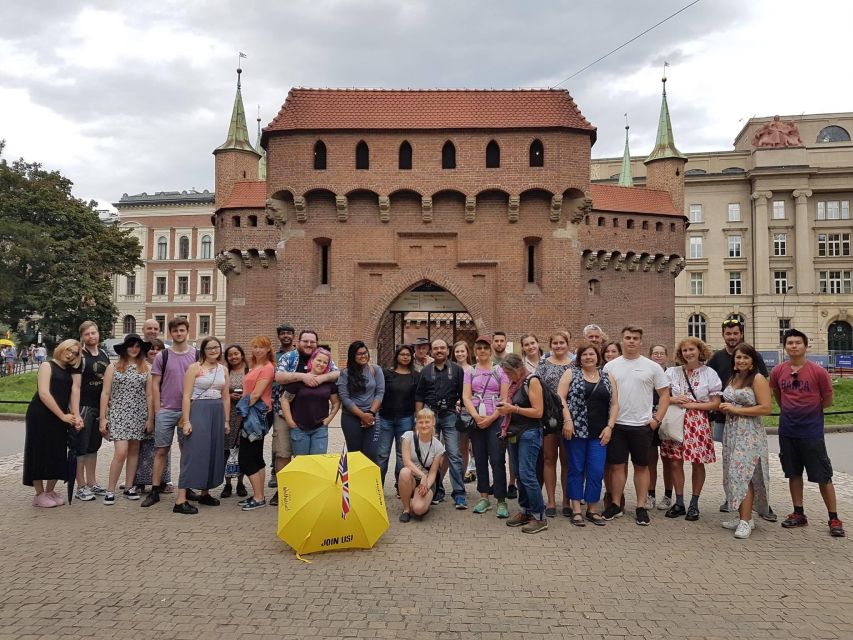
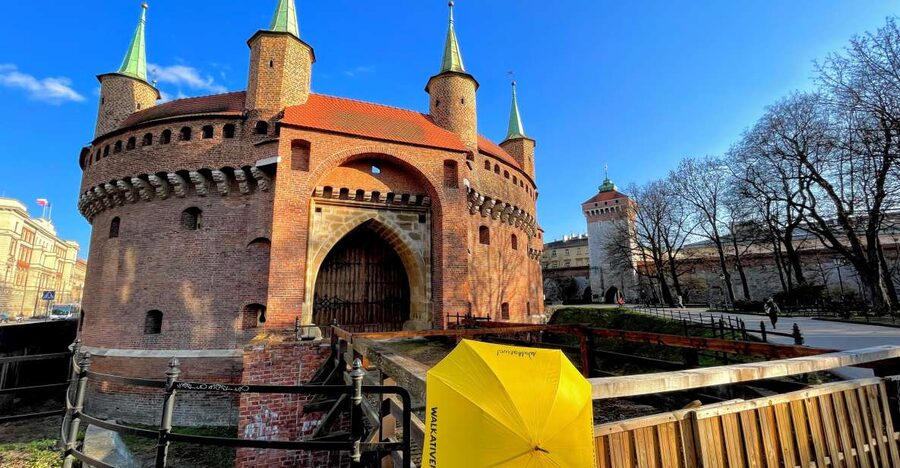
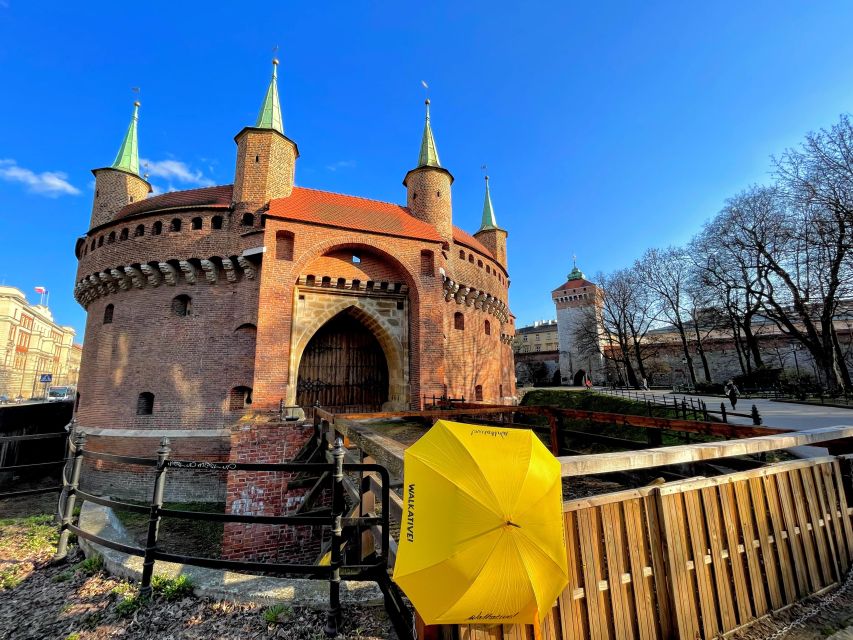
The meeting point is a small spot between the Barbican and St. Florian’s Gate, the old medieval entrance to Krakow. This is a sensible place to begin because you are immediately in the story, not waiting beside a modern transport hub or a hotel lobby.
The Barbican is a round brick fortification that once guarded the road into the city. St. Florian’s Gate then leads you toward the old town, giving the opening minutes a clear sense of how Krakow was entered and defended.
You should arrive ready to walk for two and a half hours. The route is in the historic center, and no hotel pickup or return transport is included, so you make your own way to and from the meeting point. That is normal for a central walking tour, but it matters if you are staying outside Krakow’s core.
The tour is listed as wheelchair accessible. Still, the old town includes historic streets and buildings, so you may want to confirm any particular access needs before booking.
More Old Town Walking Tours in Krakow
- Old Town Krakow & Wawel Castle Walking Tour
★ 5.0 · 1,508 reviews - Krakow: Bike Tour of Old Town, Jewish Quarter and the Ghetto
★ 4.9 · 1,155 reviews - Krakow: The Old Town Walking Tour
★ 4.8 · 794 reviews
Walking the Royal Route through Krakow
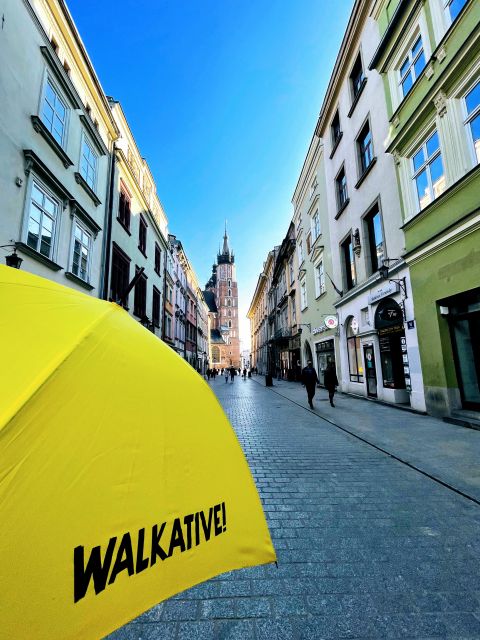
The Royal Route is the backbone of the experience. It connects the northern entrance to the city with the major royal and religious sites farther south, ending around Wawel Hill.
I like this structure because it gives you more than a string of unrelated stops. The route explains how Krakow worked: merchants gathered around the market, rulers occupied Wawel, churches shaped public life, and scholars studied at the university.
The old town survived the Second World War with its central form largely intact. As you walk, you see why Krakow was placed on the first UNESCO World Heritage list. The value is not just in one famous building. It is in the relationship between the streets, churches, market spaces, university buildings and royal complex.
Your guide’s job is especially important here. A street can look pleasant while its political or cultural role remains invisible. The tour is designed to connect those pieces, so you hear why the city mattered when Poland was one of Europe’s largest countries and Krakow served as its capital.
Main Market and the Cloth Hall
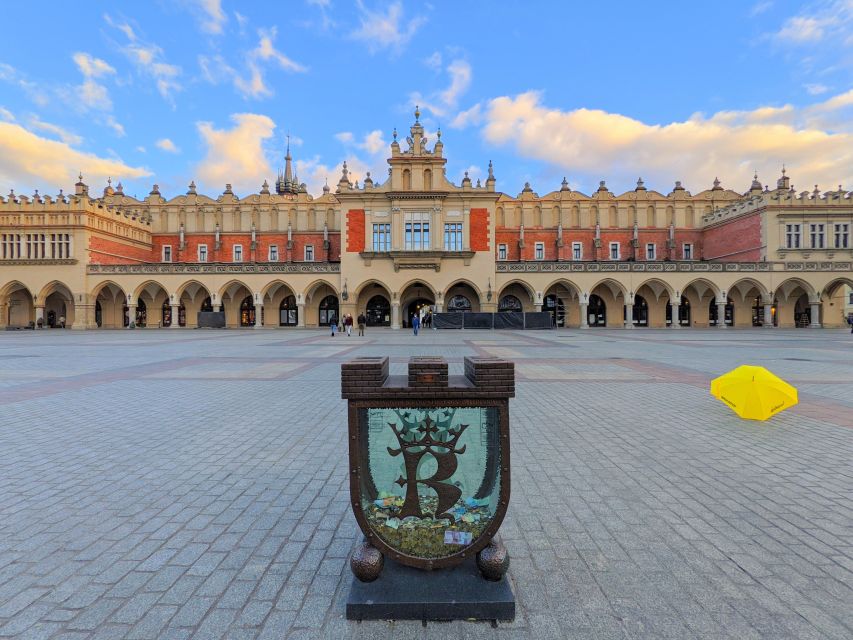
The Main Market is the visual center of the old town. Its broad square gives you room to take in the church towers, historic façades and the Cloth Hall, known in Polish as Sukiennice.
The Cloth Hall is a reminder that the market was not simply a place for pretty buildings. Trade made Krakow wealthy, and the hall helped organize commercial life in the middle of the city.
This is also one of the busiest parts of the route. You may find crowds, street activity and other tour groups sharing the square. That can make it harder to hear, particularly if the guide is speaking while the group moves. The positive side is that the Main Market shows Krakow as a living city rather than a museum set.
A tour guide can make the square easier to read. Instead of seeing only the Cloth Hall as a postcard subject, you learn how the space related to royal ceremonies, commerce and the wider city.
St. Mary’s Basilica and the trumpet call
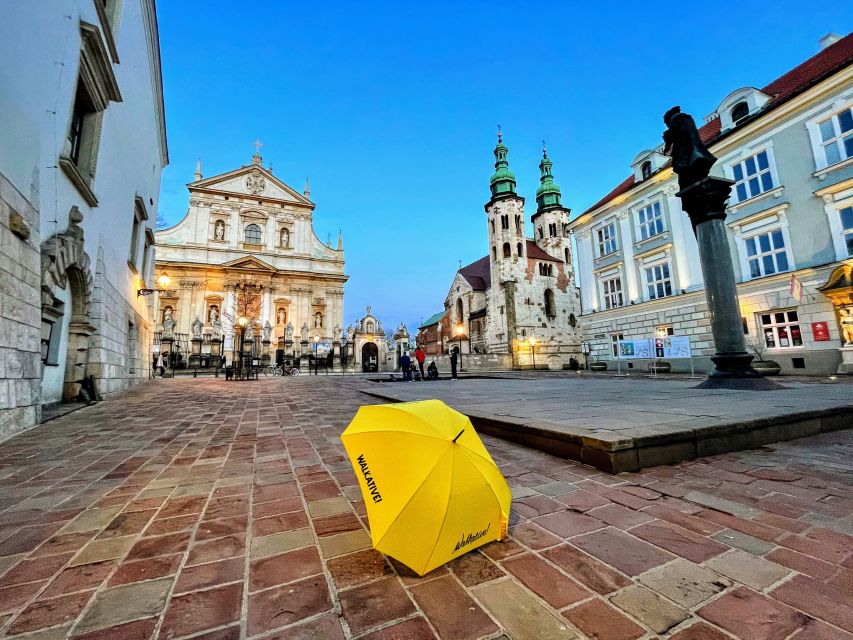
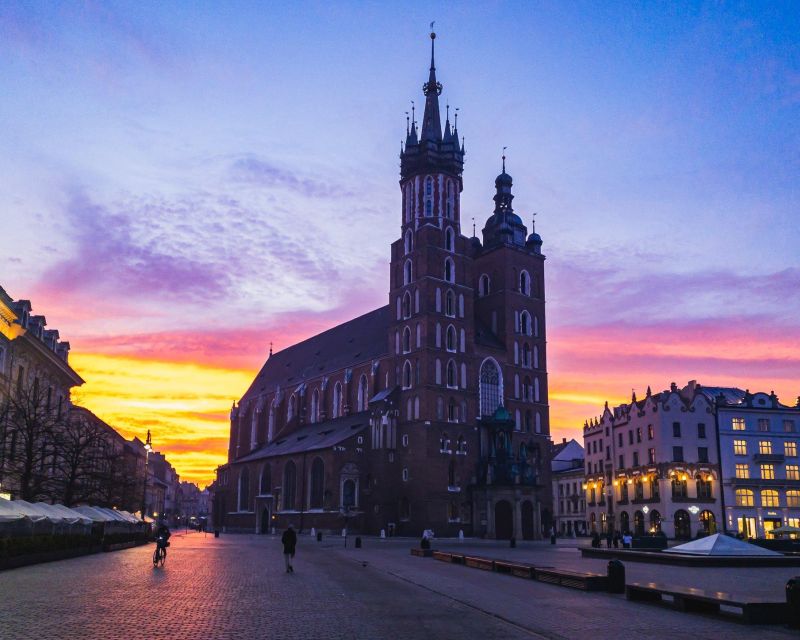
St. Mary’s Basilica is one of Krakow’s key landmarks, with its tall, uneven towers rising above the Main Market. The church is also linked to the famous trumpeter’s call, a short signal traditionally played from one of the towers.
The story behind the interrupted melody is one of the city’s best-known legends. It is exactly the kind of detail that helps a walking tour feel local rather than purely architectural. You get the building, the sound associated with it and the story that has carried through generations.
The tour description includes St. Mary’s Basilica as a principal sight, but it does not promise an extended interior visit or a timed trumpet performance. Treat this stop as part of the guided route rather than a separate church tour.
If you want to study the church at length, you may need to return on your own. The 150-minute schedule has many places to cover, so the guide must keep the group moving.
Same country, a completely different kind of day:
- From Krakow: Auschwitz-Birkenau Guided Tour & Hotel Pickup
★ 4.5 · 33,358 reviews - From Krakow: Auschwitz-Birkenau Guided Tour & Hotel Pickup
★ 4.5 · 29,340 reviews - Krakow: Auschwitz Guided Tour with Optional Hotel Pickup
★ 4.5 · 15,280 reviews - Krakow–Zakopane: Cable Car, Chocholow Baths, Cheese & Vodka
★ 5.0 · 10,720 reviews
Collegium Maius and Krakow’s scholarly past
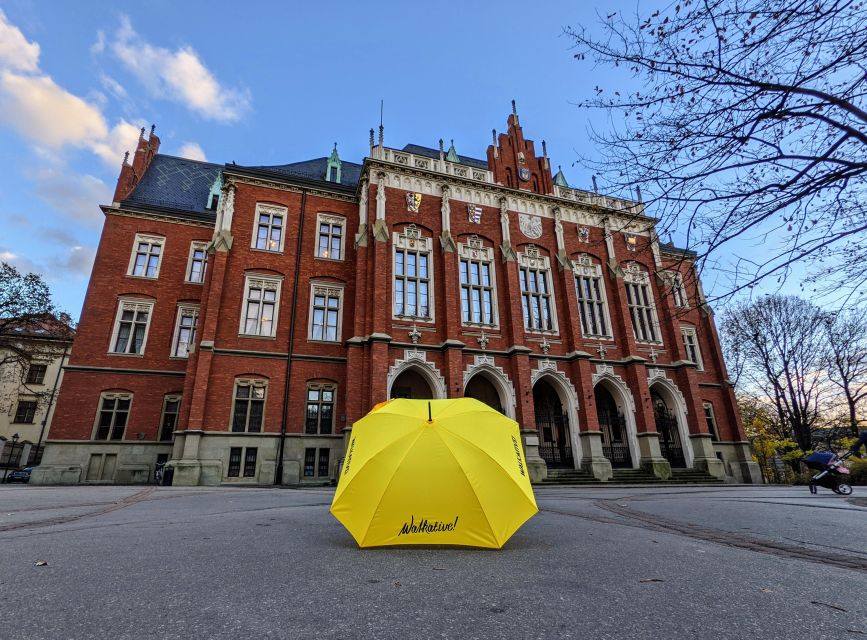
Collegium Maius is one of my favorite stops because it changes the subject from royal ceremony to education. It is the oldest building of Krakow’s university, described here as the oldest university in Central Eastern Europe.
The visit gives the tour a useful intellectual layer. Krakow was not only a seat of kings and bishops. It was also a place where scholars studied, taught and crossed paths with major European ideas.
Copernicus is connected with these streets and with the university world. The point is not to claim that every corner has a dramatic event attached to it. The value is in seeing the setting where Krakow’s academic life developed during its important 15th and 16th century period.
Collegium Maius is included as a visit, rather than only an outside photo stop. That adds value to the $26 price, since interior access gives you a better sense of the institution than a quick explanation in the street.
The schedule still matters. You should not expect a long academic lecture or a full university museum visit. Think of Collegium Maius as a focused stop within a larger city story.
The Archbishop’s Palace and the papal window
The route continues to the Archbishop’s Palace and the window associated with Pope John Paul II. This stop brings Krakow’s religious story into the modern era.
John Paul II had a strong connection with Krakow, and the papal window is remembered as a place where he appeared to people gathered outside. It gives the route a human scale after the grand market and royal buildings.
This is a good example of the tour’s broad time range. In one walk, you move from medieval fortifications to university history, royal architecture and 20th-century Catholic memory.
You do not need a specialist background to get something from this section. The guide’s role is to explain why the place matters and how it fits Krakow’s identity. The stop may appeal especially to German-speaking visitors who want context rather than a quick list of dates.
Wawel Hill, cathedral and royal courtyard
Wawel Hill is the grandest part of the route. The hill holds Wawel Cathedral and the royal castle, and it gives the tour a strong final chapter.
Wawel was the center of Polish royal power when Krakow was the capital. The castle courtyard helps you read the complex as a place of ceremony and government, not simply as a photogenic building on a hill.
The tour includes the Wawel King’s Palace courtyard and a visit connected with the castle. That is important when comparing this walk with a basic old town orientation tour, which might only point toward Wawel from a distance.
The cathedral adds another layer. Polish rulers, church leaders and national memory are all tied to this hill. Your guide can show how royal and religious authority shared the same setting.
The drawback is that Wawel comes near the end, when the group may already have covered a great deal. If you prefer to linger over interiors, art and architectural details, you will probably want to return separately. This experience gives you a well-shaped introduction, not hours inside every building.
The Wawel dragon and Krakow’s local legend
Near Wawel, the route reaches one of Krakow’s most playful symbols: the Wawel dragon. The legend tells of a creature associated with the hill and the city’s early story.
This is more than a children’s tale. City legends explain how residents connect a place with identity, danger and royal beginnings. After the serious material about kings and cathedrals, the dragon gives the walk a lighter finish.
I like that the tour includes both documentary history and folklore. A city is made from laws and buildings, but also from stories people repeat because they make a place memorable.
Do not expect a separate theatrical show or an extended storytelling session. The dragon is one element in a larger route, but it is a worthwhile final image, especially if you are exploring Krakow with children.
How the German guiding affects the experience
The live guide language is German. That makes the tour a practical choice for German-speaking visitors who want more than basic monument names and dates.
Monika is one guide associated with the experience, and her German and presentation have received especially strong praise. The useful combination here is not just language fluency. It is the reported balance of competence, humor and a friendly manner, which can make a long walking route easier to follow.
The tour has a carefully structured story. That matters in Krakow because the old town offers too many attractions to absorb without a plan. A good sequence prevents Wawel, the university and the market from blurring together.
You should also know that the route can move quickly. One recent assessment described the tour as informative but somewhat hurried, with another group waiting to follow. I would take that seriously if you want time for photographs, private questions or close study of church details.
The best approach is to listen first and photograph during natural pauses. If one building catches your eye, note it and return later rather than trying to stop the entire group.
Price, timing and what you receive
The stated price is $26 per person for 150 minutes. At that rate, the value is strong if you want a broad introduction to Krakow with a live German-speaking guide and included visits to Collegium Maius and the Wawel royal courtyard.
You are paying for structure and interpretation, not transport or food. There is no hotel pickup, return ride or snack. Since the route stays in the center, omitting transport keeps the price focused on the walking experience.
The activity is also described as a Pay What You Wish walk. Because that wording differs from the stated $26 per-person price, check the current booking details carefully before you commit. The important point is to understand the payment arrangement and not assume that the displayed figure works the same way as a fixed-price tour.
The 150-minute length is a useful middle ground. It is long enough to cover the city’s main historical arc, but short enough to fit beside another Krakow activity. You will not see every room, museum and church interior in the old town. You will get a guided framework that helps you decide what deserves a later return.
Free cancellation up to 24 hours before the start and a reserve-now, pay-later option give you some flexibility. Those terms are helpful when weather or daily plans remain uncertain.
Weather, clothing and practical comfort
The walk operates in all weather. If rain or cold arrives, the group finds shelter, but you should still dress for time outdoors.
Comfortable shoes are the sensible choice. The route links several major areas on foot, and the experience is built around walking rather than riding between sites.
Krakow’s weather can make the same tour feel very different. In cold conditions, the shelter plan is useful, but you will still move between stops. In rain, a coat with a hood is more practical than relying only on an umbrella in a crowded group.
The tour is wheelchair accessible, which broadens its usefulness. Since this is a historic center, it remains wise to ask about any specific building access needs before the day of the tour.
Who will get the most from this walk?
I would choose this tour for a first visit to Krakow, especially if you want the main sights placed in a clear historical order. It also suits German-speaking couples, families and solo visitors who prefer a live explanation to reading plaques alone.
It is a good fit if you like stories that connect kings, dragons, scholars, palaces and churches. The mixture keeps the walk from becoming a long list of dates.
You may want another option if you dislike group pacing or prefer to spend twenty minutes photographing one façade. The route has many stops, and the guide must keep moving to finish on time.
It is also not a substitute for dedicated visits to Wawel Cathedral, the castle interiors or the university collections. Use the walk to get your bearings fast, then return to the places that interest you most.
Should you book the Krakow old town tour?
Yes, if you want a lively German-language introduction to Krakow’s UNESCO-listed center at a moderate price. The strongest reasons are the logical Royal Route, the included Collegium Maius and Wawel visits, and guides such as Monika, whose humor and excellent German add real value.
Book with realistic expectations. You will cover a lot in 150 minutes, so the pace can feel quick and the tour does not include hotel transport, food or unlimited time inside each landmark.
For a first day in Krakow, this is a useful choice. It gives you the city’s main names, stories and connections, then leaves you free to return to Wawel, St. Mary’s Basilica or Collegium Maius for a slower look.
FAQ
How long does the Krakow old town tour last?
The tour lasts 150 minutes, or two and a half hours.
What language is the tour offered in?
The tour has a live German-speaking guide.
Where does the tour meet?
The meeting point is a small place between the Barbican and St. Florian’s Gate, the medieval entrance to the city.
Which major sights are included?
The route includes the medieval city walls and Barbican, Main Market, Cloth Hall, St. Mary’s Basilica, Collegium Maius, Archbishop’s Palace, Wawel Hill, Wawel Cathedral, the castle courtyard and the Wawel dragon.
Does the tour include visits inside buildings?
The activity includes a visit to Collegium Maius and the Wawel King’s Palace courtyard.
Is the tour wheelchair accessible?
Yes, the tour is described as wheelchair accessible.
What happens if it rains or becomes cold?
The tour runs in all weather. If rain or cold arrives, the group finds a roof or other shelter.
Just added around Krakow
- Tour to Wadowice: Hometown of Pope Saint John Paul II★ 4.6 · 12 reviews
- The Jewish Quarter – Walking Tour★ 5.0 · 4 reviews
- From Kraków; to Białka Thermal Baths private tour★ 5.0 · 5 reviews
- St. Mary’s Basilica and more – a short walk with a guide★ 4.7 · 56 reviews
- Krakow: Auschwitz-Birkenau and Wieliczka Salt Mine Day Trip★ 4.7 · 84 reviews
- Krakow: Skip-the-Line Wawel Castle & Old Town Guided Tour★ 4.9 · 23 reviews
- Krakow: Schindler’s Factory Guided Tour★ 4.2 · 12 reviews
- Shooting Range Experience!★ 4.8 · 66 reviews
Old Town Walking Tours, compared.
Bike Tour of Old Town, Jewish Quarter and the Ghetto
Read our review →

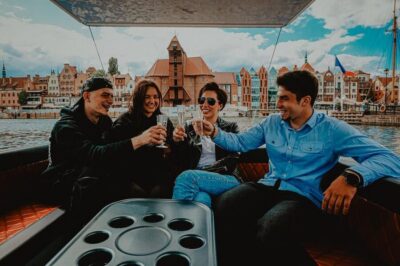
Sightseeing EcoCruise around the Old Town of Gdansk
Read our review →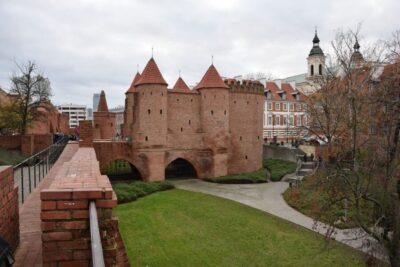
Browse the lists this tour appears in