Reviewed · GUIDED
Krakow: Nowa Huta Guided Tour in Vintage Car
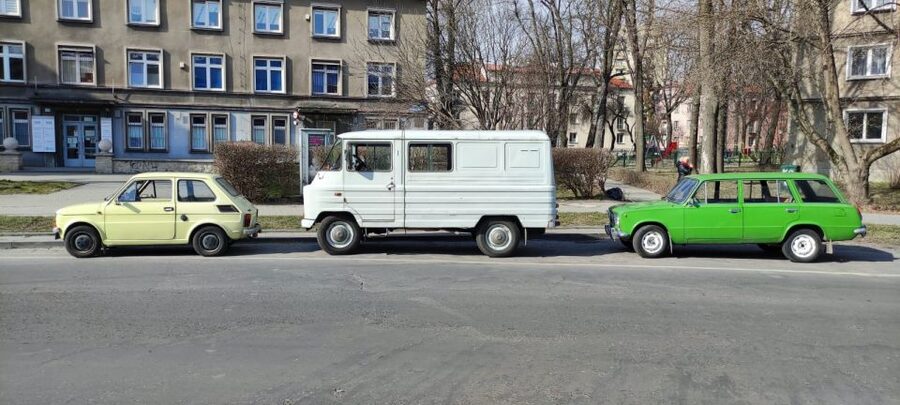
Nowa Huta was built as a Communist dream city, complete with grand avenues, planned housing, a giant steelworks, and shelters for a possible nuclear war. Seeing it from the back seat of a little Polski Fiat 126 or old Lada makes the story unusually vivid. You are not just looking at buildings. You are tracing the political plan behind them.
I like the mix of street life and serious history, especially the stop at Central Square and Roses Avenue, where Poland’s largest Lenin statue once towered over the city. I also like that the tour is led by local guides such as Mateusz, who grew up in the area and works with the Foundation of Positive Promotion of Nowa Huta. The main drawback is practical: old cars can be cramped and may not have working seatbelts, so this is more about character than modern comfort.
Key points to know before booking
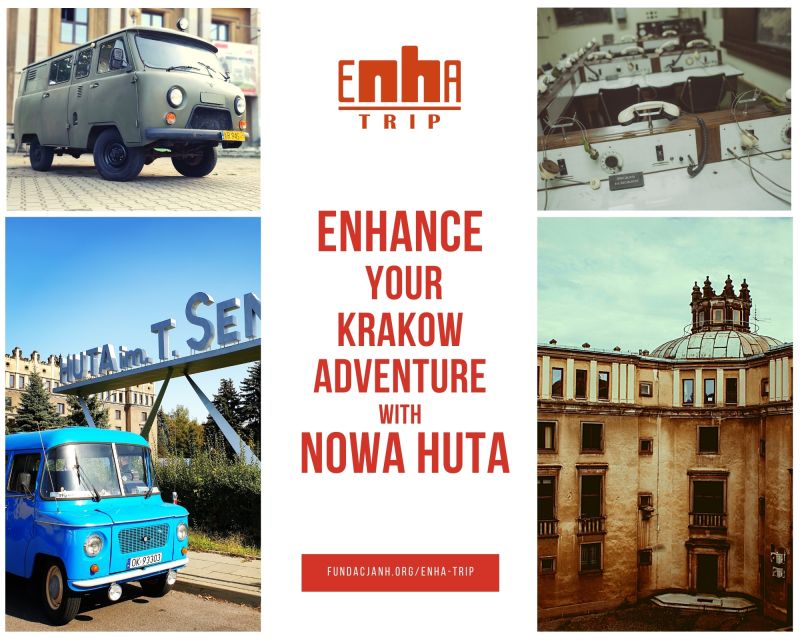
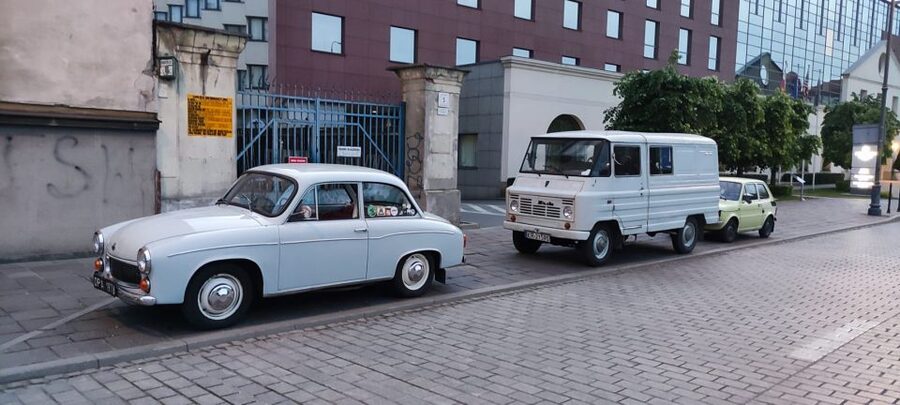
- Ride in a genuine Communist-era car: Your vehicle may be a Fiat 126, Lada 2101, Syrena, Nysa, Żuk, UAZ 452, or another period model.
- See the former Lenin statue site: Roses Avenue offers a clear lesson in propaganda, local resistance, and changing public memory.
- Walk the grand Central Square: The scale and layout reveal how Nowa Huta was designed as a model Socialist Realist city.
- Choose the extended route: Add the steelworks director’s offices or an underground Cold War bomb shelter.
- Expect a guide-led history lesson: Mateusz is often the guide, and his local connection gives the tour a personal edge.
- Allow 2.5 to 4.5 hours: The length depends on the option you choose, with some extended outings lasting about four hours.
Why Nowa Huta feels so different from Krakow’s Old Town
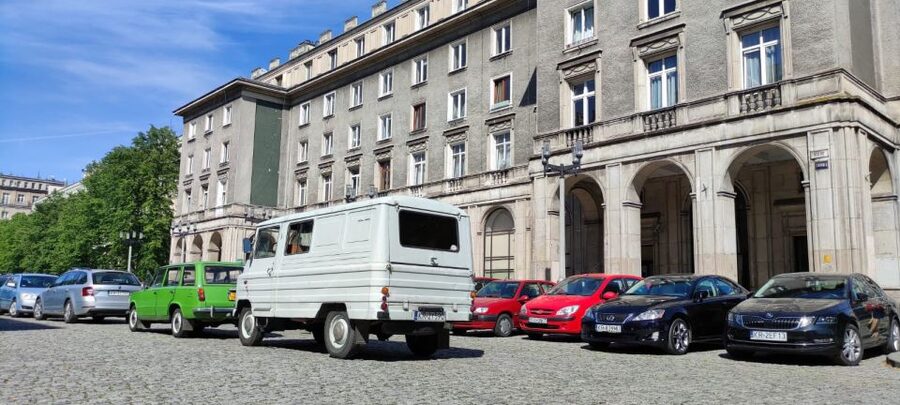
Krakow’s historic center is all medieval towers, church spires, and narrow lanes. Nowa Huta belongs to a much newer chapter. It was planned after the Second World War around the massive Lenin Steelworks, later known as the Sendzimir Steelworks, and designed to house the workers needed for the project.
The Communist authorities wanted a model industrial city. They planned wide roads, open public spaces, apartment blocks, schools, shops, parks, and civic buildings. The result was meant to prove that the new political system could create a modern, orderly home for working people.
That plan makes Nowa Huta worth the trip across the city. On your own, you can see large buildings and broad streets, but the design is hard to read without context. A guide explains why the roads are so wide, why the square has such a formal shape, and how the housing was allocated to different types of households.
The tour also shows the gap between official promises and daily life. Nowa Huta was presented as a utopian city, but it was built to serve an industrial and political purpose. The buildings, monuments, churches, and shelters all reveal different sides of that story.
A few more Krakow trips to weigh up
- From Krakow: Auschwitz-Birkenau Guided Tour & Hotel Pickup
★ 4.5 · 33,358 reviews - From Krakow: Auschwitz-Birkenau Guided Tour & Hotel Pickup
★ 4.5 · 29,340 reviews - Krakow: Auschwitz Guided Tour with Optional Hotel Pickup
★ 4.5 · 15,280 reviews
The vintage car is part of the lesson
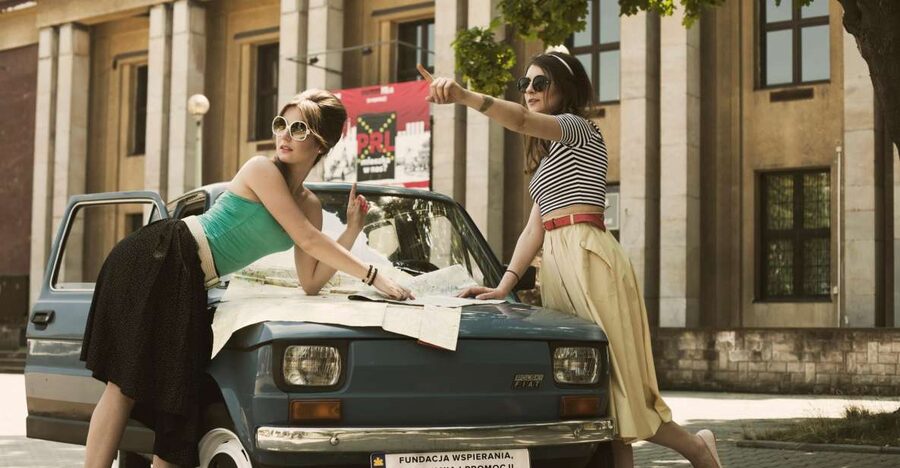
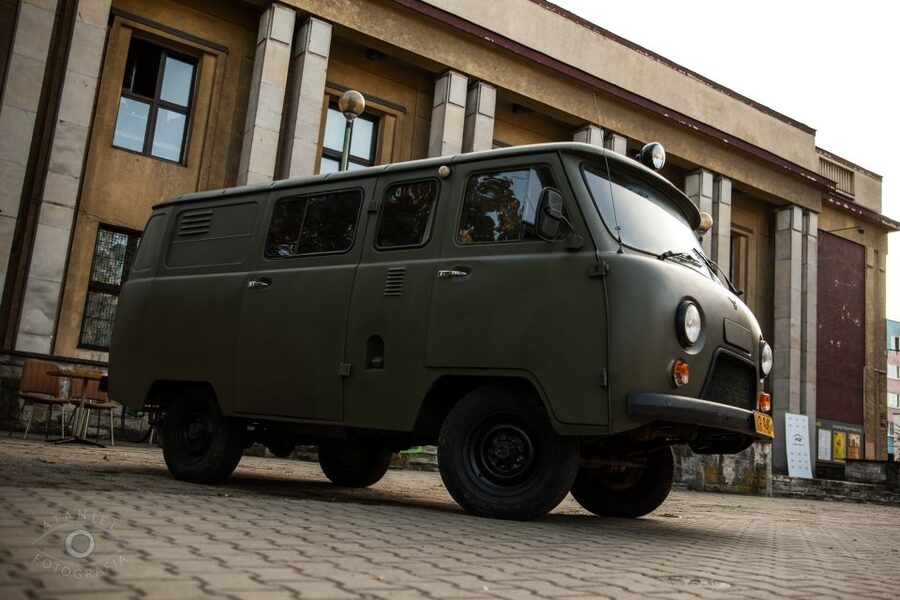
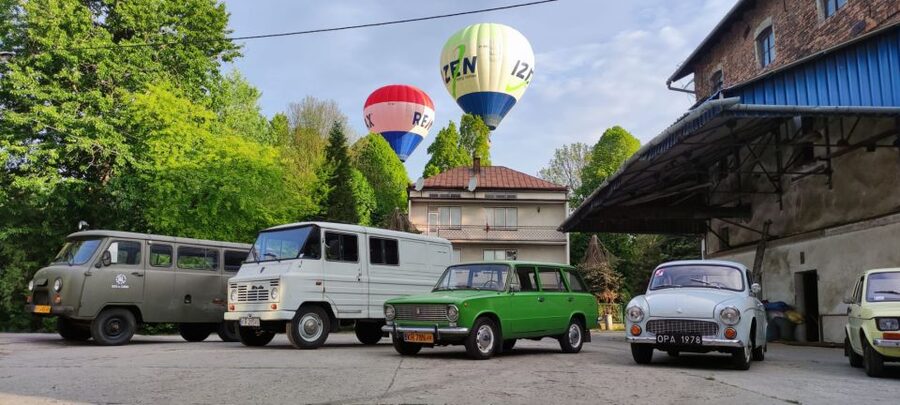
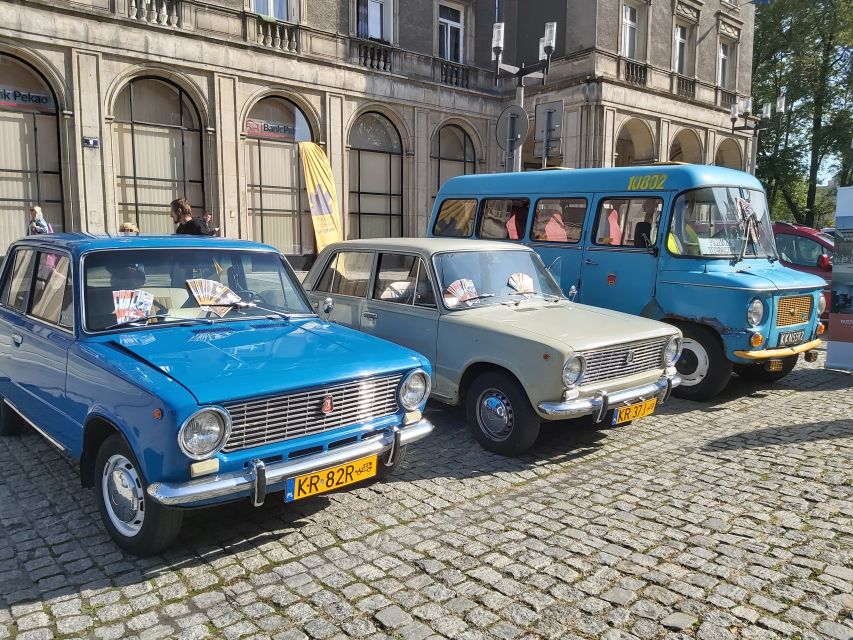
The ride is not simply a novelty added for photographs. The car helps set the mood before the history begins. You may be picked up in a small yellow Fiat 126, a green Lada, a Syrena, a Nysa, a Żuk, or even a Soviet UAZ army van.
The Fiat 126, known in Poland as the Maluch, is especially small and memorable. The Lada gives the ride a more solid Soviet feel, though passengers should not expect modern suspension or polished comfort. One account described a green Lada that needed a touch to get going, which is exactly the sort of old-car behavior that can be amusing on a sightseeing outing and less amusing if you want a smooth, quiet ride.
The cars attract attention on Krakow’s streets. That can make the pickup easy to spot, but you should also expect curious looks from passersby. The provider sends the vehicle details through WhatsApp when possible, so check the message attached to your booking voucher.
There is one important comfort point. At least some of the older cars may not have working seatbelts. Families with young children, anyone needing modern safety equipment, or people who dislike cramped seating should ask about the vehicle before booking. For most people, the car is a memorable bonus, but the history remains the real reason to go.
Central Square reveals the city’s grand Communist plan
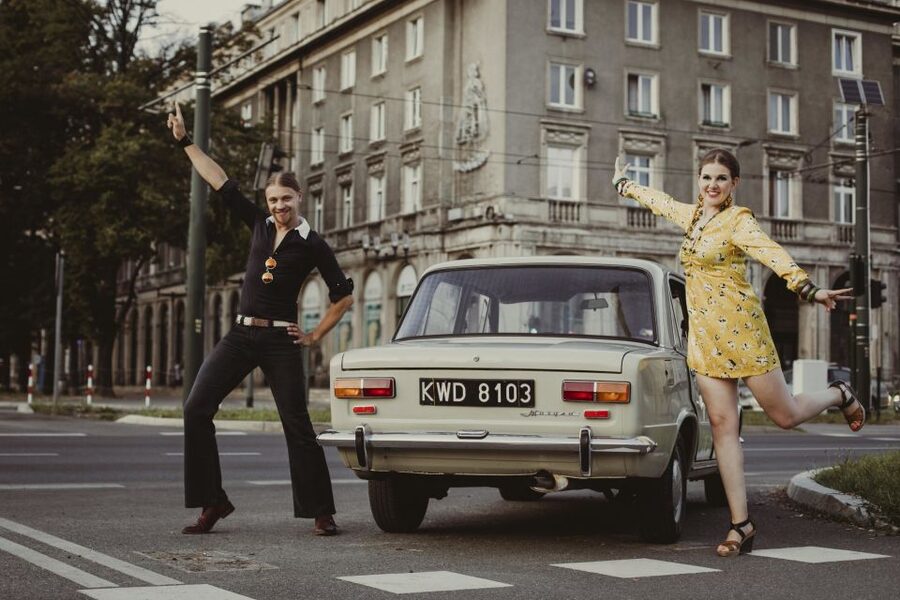
The first major stop is Plac Centralny, or Central Square. This is the heart of Nowa Huta and the best place to understand the city’s formal design.
You walk here with the guide rather than simply passing through by car. That matters, because the broad open space can seem plain at first glance. The explanation fills in the purpose behind the symmetry, the avenues, and the surrounding buildings.
Look at the scale. The square and its connecting streets were designed for parades, public gatherings, and the visual display of state power. The architecture follows Socialist Realist ideas, using monumental proportions and classical details to make an industrial workers’ city appear powerful and permanent.
The walk lasts about 20 minutes, with time for photographs and a closer look at the urban layout. It is a good early stop because you get the basic map of Nowa Huta before moving on to the steelworks area.
The trade-off is that this is an outdoor walking stop. In cold or wet weather, the open space can feel exposed. Wear sensible shoes and bring an extra layer, especially if you choose the longer option.
Roses Avenue and the missing Lenin
From Central Square, the tour continues to Aleja Róż, or Roses Avenue. This was once the site of Poland’s largest statue of Vladimir Lenin. The statue was a major symbol of Communist power, but local residents disliked it and eventually attacked it with explosives before it was removed.
The empty space is now more revealing than a surviving monument might be. Your guide uses old photographs to show what the avenue looked like when Lenin dominated the view. You can compare the present street with the former propaganda image and see how quickly public symbols can lose their authority.
A curious detail adds to the story: the Lenin statue was later bought by Sweden and moved to High Chaparral, a cowboy-themed attraction. That strange afterlife is exactly the kind of detail that makes the stop stick in your memory.
The guide also explains the name Roses Avenue and the changes to the area over time. The tour does not treat Communist history as a simple story of good versus bad. You hear about propaganda, opposition, housing, industry, and the way the district has changed since 1989.
Same country, a completely different kind of day:
- Krakow–Zakopane: Cable Car, Chocholow Baths, Cheese & Vodka
★ 5.0 · 10,720 reviews - Krakow: Auschwitz-Birkenau Guided Tour with Pickup & Lunch
★ 4.5 · 9,800 reviews - From Krakow: Wieliczka Salt Mine Tour
★ 4.6 · 9,393 reviews - Krakow: Auschwitz-Birkenau Guided Tour Pickup/Lunch Options
★ 4.5 · 9,057 reviews
The steelworks connection gives Nowa Huta its purpose
The steelworks was the reason Nowa Huta was founded. It was not an industrial plant added to an existing neighborhood. The city was planned around it, and the factory shaped work, housing, transport, and local identity.
The route takes you toward Ujastek 1, where the main extended visit takes place. The precise access depends on your selected option, but the steelworks connection is central to the whole outing. The guide explains how such a huge initiative affected the people who moved into the new district.
For me, this is where the tour moves beyond architecture. The apartment blocks and public squares begin to make sense as part of a complete state project. You learn why workers were brought in, how homes were assigned, and how the scale of the plant influenced the city around it.
The area can feel stark and atmospheric. Some industrial buildings and rooms have been closed for years, and the older interiors offer a strong sense of time passing. You should not expect a polished museum display. The appeal is seeing preserved or abandoned spaces with their original character still visible.
The director’s offices show the system from above
The extended option can include the former steelworks director’s offices. This is one of the most worthwhile additions if you want to see how the Communist system looked from the management side.
You may see offices, meeting rooms, furniture, and equipment linked to the old administration. The rooms help you picture the factory not only as a place of hard industrial labor, but also as a tightly organized institution with its own hierarchy and bureaucracy.
The guide adds meaning to objects that could otherwise seem ordinary. A desk, office layout, or piece of equipment becomes part of the story of who had authority and how decisions were made.
The visit is particularly good for anyone interested in twentieth-century political history, architecture, or industrial heritage. It is less essential if you mainly want a quick drive around Nowa Huta and a few photographs. Since it adds time, choose it when the workings of the steelworks interest you more than simply seeing the district from the road.
Underground shelters make the Cold War personal
The other extended choice is a visit to a Cold War bomb shelter or headquarters bunker. These shelters were built around the city in preparation for World War III and a possible nuclear attack.
Going underground changes the tone of the tour. The wide avenues and monumental buildings above suggest order and confidence. The bunker below shows that the authorities also expected catastrophe. Corridors, emergency rooms, and old electrical systems make the threat feel close and practical rather than abstract.
The shelter can be atmospheric, even eerie. It is not a lighthearted museum stop, and the setting may be dark, enclosed, and rough around the edges. If you dislike underground spaces, ask about the conditions before choosing this option.
I would select the bunker if you want the clearest picture of Cold War fear. Pick the director’s offices if you are more interested in power, work, and the machinery of the Communist state. If time and budget allow, some bookings may be arranged with both, but you should confirm exactly what your chosen option includes.
The first church in Nowa Huta adds a human counterpoint
The tour also stops at Our Lady Queen of Poland Church, one of the district’s important religious sites. It offers a useful contrast to the planned Socialist Realist city.
The Communist authorities intended Nowa Huta to be a proudly secular workers’ city. Residents, however, wanted a church. The building and its place in local life show that the district was not simply shaped from above. People pushed back, organized, worshipped, and created their own community identity.
The stop usually includes time for photographs, a visit, and explanation from the guide. Be respectful inside, since this remains a functioning religious space rather than a decorative monument.
This is one of the best parts of the route for understanding everyday life. The statue of Lenin tells you about official power. The church tells you about the limits of that power.
How the itinerary works from pickup to drop-off
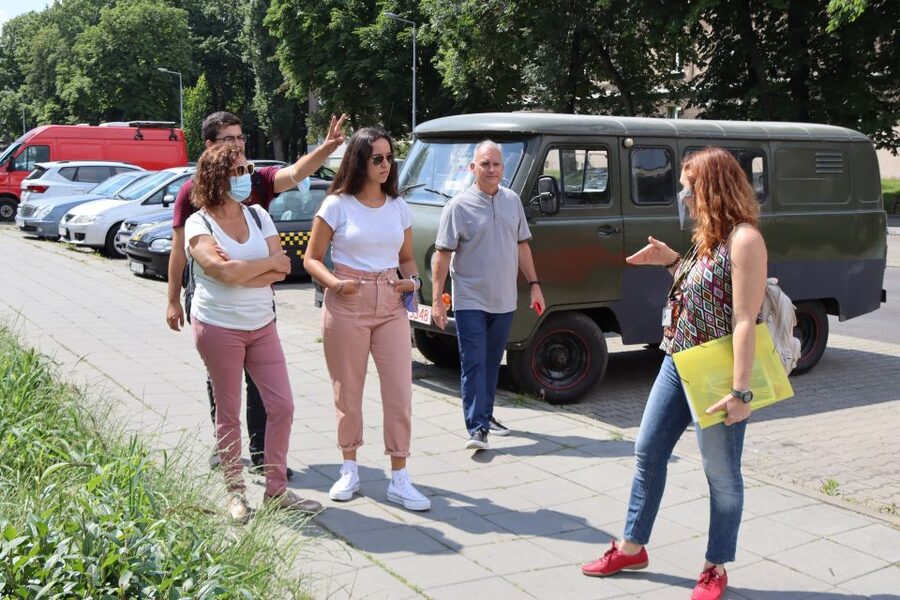
With pickup, you begin at your Krakow accommodation or at a nearby meeting point. The historic center has restrictions that prevent the vintage car from reaching every address, but pickup can be arranged at places such as Plac Matejki, Mikołaja Zyblikiewicza, or near Kopernika Street. Kazimierz pickup can be arranged from Dajwór Street.
The first drive toward Nowa Huta takes about 30 minutes. You then walk around Central Square for roughly 20 minutes before returning to the car for the next section.
The route includes several short drives of about 10 minutes between stops. These breaks are useful because they let you cover a large district without turning the tour into one long walk. Later stops include Ujastek 1, a photo stop at the Museum of the Armed Act, and the church.
The day ends with about 30 minutes in the vintage car before drop-off. Stated durations range from 150 to 270 minutes, depending on the option. The longer route is advertised at about three and a half hours, but some outings have lasted close to four hours when visits, questions, and lunch were included.
Drop-off points include Krakow, Kiss&Ride Zyblikiewicza, and Pawia 3. Confirm the exact point when arranging pickup, particularly if you are connecting with another activity.
The guide makes the difference
The Foundation of Positive Promotion of Nowa Huta organizes the experience, and that local connection is important. Guides such as Mateusz bring photographs, explain changes to buildings, and answer questions about the district’s past and present.
Mateusz is often praised for clear English, energy, humor, and a strong personal connection to Nowa Huta. He grew up in the area and has worked to preserve its old objects and places. That gives him a useful perspective: he can explain both the official story and the details that rarely appear on a standard city tour.
The language options are English, Polish, and Russian. Polish or Russian tours need to be arranged at least 48 hours ahead and depend on availability.
A private group is available. That is worth considering if you want to ask many questions, are traveling with family, or prefer a slower pace at the bunker or steelworks offices. The shared format may be enough for most people, but the small-scale feel is one of the experience’s strengths.
Price, lunch, and practical value
At about $75 per person, this is not the cheapest way to spend an afternoon in Krakow. You are paying for private-style transport, a specialist guide, and access to places that are difficult to interpret or arrange alone.
The value is strongest if you choose an extended option. The steelworks offices and underground shelter give you access to the most distinctive parts of the experience. The basic route still works if you mainly want the architecture, Lenin story, church, and vintage car, but the added visits make the price easier to justify.
Lunch may be available as an upgrade. The meal described by the provider is Polish food in a local restaurant, with mixed pierogi served in a place popular with residents. Food and drinks are not included unless you select the lunch option, so check your booking details.
The tour includes the classic car, an English-speaking local guide, and hotel pickup and drop-off when the private option is chosen. Other museum admission is not included. It is best to treat this as a focused history outing, not a general Krakow sightseeing pass.
Who should book this Nowa Huta tour?
I would recommend it to you if you enjoy modern European history, political change, architecture, industrial sites, old cars, or places that sit outside the usual Krakow route. It also suits repeat visitors who have already seen Wawel Castle, the Main Market Square, and Kazimierz.
Families with teenagers may find the combination of tanks, bunkers, cars, and political history more engaging than a conventional museum. The guide-led format also helps younger visitors understand why the district looks so different from central Krakow.
You may want another activity if you need a wheelchair-friendly route, modern transport, or a very quiet ride. The old vehicles can be cramped, and the shelters may be uncomfortable for anyone who dislikes enclosed spaces.
Free cancellation is available up to 24 hours before the start, and you can reserve while paying later. That helps if your Krakow plans are still shifting, but you should still check the exact starting time and pickup point before confirming.
FAQ
How long does the Nowa Huta vintage car tour last?
The available options last from 150 to 270 minutes, or about two and a half to four and a half hours. The extended tour is described as about three and a half hours, though visits and lunch can make the outing longer.
What kind of car will I ride in?
The vehicle may be a Polski Fiat 126, Lada 2101, Syrena, Nysa, Żuk, UAZ 452, or another Communist-era car. The provider can send car details through WhatsApp.
Is hotel pickup included?
Pickup and drop-off are included when the private option is chosen. Some central historic streets cannot be reached by car, but alternative meeting points can be arranged.
Can I meet the guide in Nowa Huta?
Yes. You may choose to meet the guide directly in Nowa Huta instead of using the pickup service.
What languages are available?
The tour is offered in English, Polish, and Russian. Polish or Russian tours should be requested at least 48 hours in advance and depend on availability.
Is the tour private?
A private group option is available. Other booking formats may also be offered, depending on availability at your selected time.
What is included in the tour?
The experience includes a local English-speaking guide and transport in a classic car. Private bookings include hotel pickup and drop-off. The selected extended option includes admission to either the steelworks director’s offices or the Cold War bomb shelter.
Are museum tickets included?
Other museum entrance tickets are not included. The steelworks offices and Cold War shelter tickets are included only when that option is selected.
Is lunch included?
Food and drinks are not included unless you choose the lunch option. The lunch option includes Polish food at a local restaurant.
Can I cancel the booking?
You can cancel up to 24 hours in advance for a full refund. The reserve-now, pay-later option is also available.
Should you book it?
Book this tour if you want Krakow’s twentieth-century story, not another pass through the medieval center. The strongest choice is the extended version with the underground shelter or steelworks director’s offices, especially if the Cold War and Communist Poland interest you.
The car is fun, photogenic, and wonderfully odd, but the real value comes from the guide and the access to Nowa Huta’s political and industrial past. If you can accept a cramped vintage vehicle and a few rough-edged sites, this is one of the clearest ways to understand why this unusual district matters.
Just added around Krakow
- Tour to Wadowice: Hometown of Pope Saint John Paul II★ 4.6 · 12 reviews
- The Jewish Quarter – Walking Tour★ 5.0 · 4 reviews
- From Kraków; to Białka Thermal Baths private tour★ 5.0 · 5 reviews
- St. Mary’s Basilica and more – a short walk with a guide★ 4.7 · 56 reviews
- Krakow: Auschwitz-Birkenau and Wieliczka Salt Mine Day Trip★ 4.7 · 84 reviews
- Krakow: Skip-the-Line Wawel Castle & Old Town Guided Tour★ 4.9 · 23 reviews
- Krakow: Schindler’s Factory Guided Tour★ 4.2 · 12 reviews
- Shooting Range Experience!★ 4.8 · 66 reviews
Guided, compared.
Auschwitz-Birkenau Guided Tour & Hotel Pickup
Read our review →Auschwitz-Birkenau Guided Tour & Hotel Pickup
Read our review →
Auschwitz Guided Tour with Optional Hotel Pickup
Read our review →
Auschwitz-Birkenau Guided Tour with Pickup & Lunch
Read our review →
Auschwitz-Birkenau Guided Tour Pickup/Lunch Options
Read our review →
Krakow to Auschwitz Birkenau Guided Tour with Transfer and Ticket
Read our review →