
Reviewed · AUSCHWITZ-BIRKENAU MEMORIAL TOURS
Private Guided Tour to Auschwitz & Birkenau from Krakow
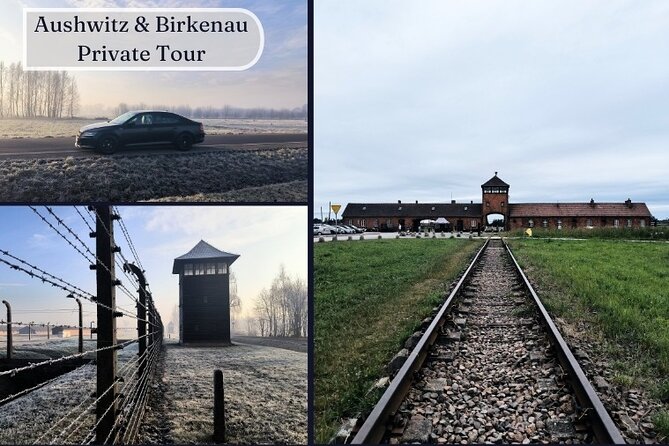
A visit to Auschwitz and Birkenau is not a sightseeing outing. It is a carefully guided encounter with the machinery of Nazi mass murder, and seeing both camps matters. This private Krakow tour pairs reserved entry and door-to-door transport with an official museum guide, while driver Oskar handles the long road between Krakow and the memorial.
I like the private pickup for up to three people, especially when you want a quiet morning and no need to find a bus departure point. I also like Oskar’s practical help, from cold drinks in the car to efficient movement through ticket checks and, when needed, a food stop on the way back.
The main drawback is that the museum guide is assigned by the state museum, not by the private company. One part of the visit felt rushed to a customer, with trouble hearing the guide, so you should treat the guiding quality as partly outside the driver’s control.
Key points to know before booking
- Hotel pickup in Krakow: Oskar collects you directly from your hotel or another agreed location.
- Two separate camp sites: You visit Auschwitz I and the much larger Birkenau site, about 3 kilometers apart.
- Official museum guide: The memorial site provides the guide. The private driver does not lead the indoor camp tour.
- Private group of up to three: You share the vehicle only with your own party.
- Six to seven hours total: The day includes the Krakow drive, museum entry, guided visits, and return.
- $461.96 per group: For three people, that works out to about $154.65 each, before any separate food costs.
Why both Auschwitz sites matter
Auschwitz was not one single camp. The name refers to a large complex, with Auschwitz I serving as the original camp and Auschwitz II-Birkenau later becoming the vast killing center most often pictured in photographs.
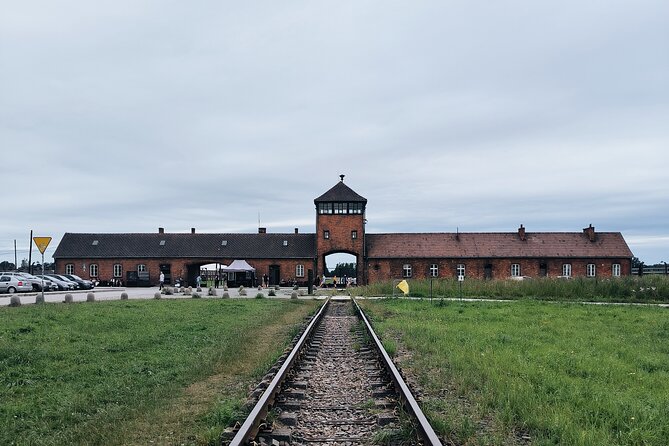
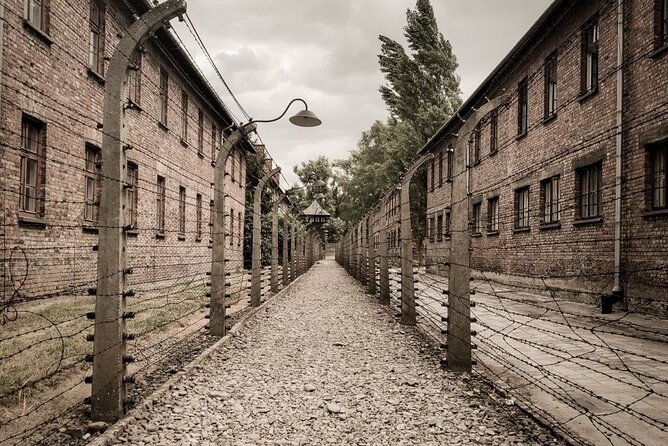
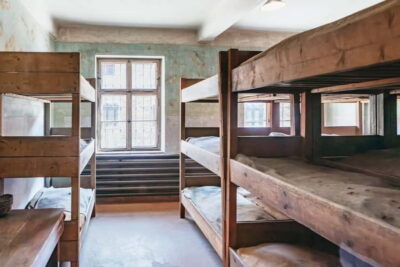
You need both parts to understand the scale and development of the camp system. Auschwitz I shows the early concentration camp structure, museum displays, and brick buildings. Birkenau shows the huge size of the later camp, its railway arrival area, wooden barracks, and the remains of the killing facilities.
The two sites are close, but they feel very different. Auschwitz I is more contained and built-up. Birkenau is broad and exposed, with long distances between the entrance, barracks, unloading area, and ruins. The contrast helps explain how the Nazi system expanded from imprisonment and forced labor into planned mass extermination.
Plan for a serious day, not a quick photo stop. The subject is painful, and the walking can be tiring. You may spend about two hours at Auschwitz I and about one hour at Birkenau, though the precise schedule is controlled by the museum and assigned guide.
More Auschwitz-Birkenau Memorial Tours in Krakow
- From Krakow: Auschwitz-Birkenau Guided Tour & Hotel Pickup
★ 4.5 · 33,358 reviews - From Krakow: Auschwitz-Birkenau Guided Tour & Hotel Pickup
★ 4.5 · 29,340 reviews - Krakow: Auschwitz Guided Tour with Optional Hotel Pickup
★ 4.5 · 15,280 reviews
Starting from Krakow with a private driver
The day begins with pickup at your Krakow hotel or another location you arrange. This is one of the tour’s strongest practical features. You do not need to make your way across the city to a coach terminal, and you avoid the uncertainty of arranging separate transport to the memorial.
Oskar is the driver associated with this experience, and Aleksandra has also helped with some tours. Their role is transport and support, not the formal museum presentation. Oskar has been described as friendly, flexible, and willing to explain places along the route and talk about life in Poland.
That distinction matters. You are not hiring a private historian to lead every part of the day. You are hiring a private Krakow to Auschwitz transfer with tickets and museum arrangements included. The educational tour inside the memorial comes from an official Auschwitz guide.
The vehicle has been described as clean, with drinks provided. Oskar has also made short stops to point out something of interest and offered a food stop when the group had not had time for breakfast. On the return, a Polish sausage stop was arranged for one group. These extras are not the core of the tour, but they can make a long, demanding day easier.
The drive also gives you a chance to ask practical questions about Poland. That personal contact is useful, though you should not expect the driver’s conversation to replace the formal camp tour.
Auschwitz I: the original camp complex
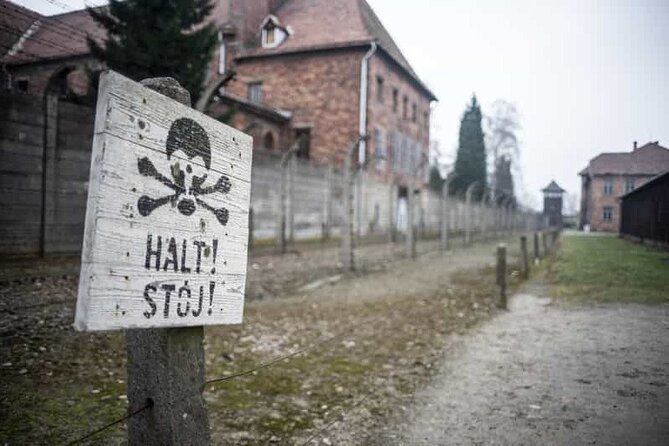
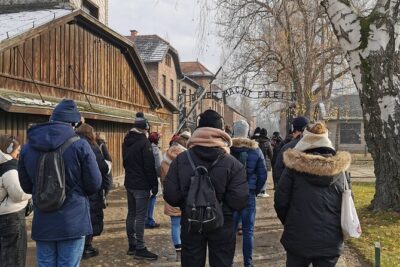
At Auschwitz I, you enter the older camp area, first created as a concentration camp for Polish prisoners and later used for people from many nationalities. The familiar gate and brick buildings are here, along with the museum sections that document deportations, imprisonment, forced labor, and murder.
The official guide leads you through the site. Because the museum controls the guides, group size, route, and timing, the private company cannot guarantee a particular guide or presentation style. Most of the value comes from having the place explained in context rather than walking among the buildings without preparation.
You should expect a sober, structured visit. This is not a place for casual conversation or wandering at your own pace. The guide sets the rhythm, and you need to stay close enough to hear.
One important practical point is sound. If you have hearing difficulty, remain near the guide and speak up early if you cannot hear. One person found the tour rushed and hard to follow, so it is sensible to ask for a clearer position in the group rather than wait until the end.
The museum visit can be emotionally difficult. Exhibits and buildings make the numbers personal, and the orderly setting can be disturbing precisely because it reveals how carefully the system was organized. Give yourself quiet time afterward. You may not want to move straight into ordinary sightseeing.
The Judenrampe and the arrival process
The tour also includes a very short stop at the Judenrampe, the railway unloading point used from 1942 until May 1944. It lies between Auschwitz I and Birkenau and was the first arrival point for many deported Jews before the railway was extended into Birkenau.
The stop itself is listed at only about three minutes, so do not expect a long lecture or a separate museum visit. Its importance comes from what happened there. SS officers carried out selections, dividing arrivals between those chosen for forced labor and those sent directly to the gas chambers.
That brief pause can help you understand that deportation did not end when the trains arrived. People were processed, judged, and separated within moments. The stop is short, but the context is central to understanding Birkenau.
Same country, a completely different kind of day:
- Krakow–Zakopane: Cable Car, Chocholow Baths, Cheese & Vodka
★ 5.0 · 10,720 reviews - Krakow: Auschwitz-Birkenau Guided Tour with Pickup & Lunch
★ 4.5 · 9,800 reviews - From Krakow: Wieliczka Salt Mine Tour
★ 4.6 · 9,393 reviews - Krakow: Auschwitz-Birkenau Guided Tour Pickup/Lunch Options
★ 4.5 · 9,057 reviews
Rudolf Höss’s house and the closeness of the crime
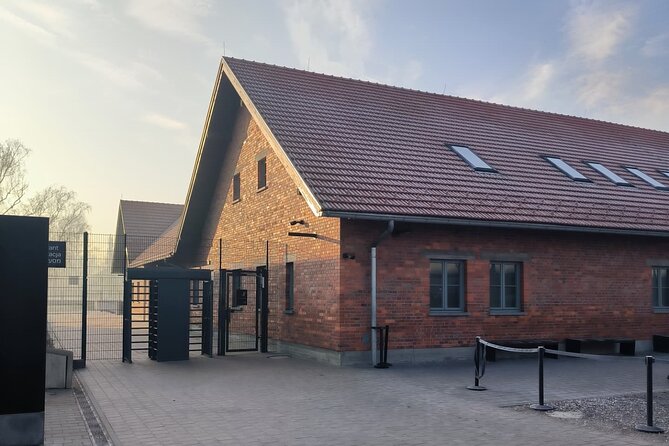
The route includes the former home of Rudolf Höss, the Auschwitz commandant, where he lived with his family from 1940 to 1944. The building was close to the camp, a fact that makes the site especially unsettling.
Höss oversaw the camp’s development and helped establish systematic mass murder using Zyklon B gas. He was later captured, tried in Poland, sentenced to death, and hanged at Auschwitz in 1947.
The house adds a human scale to the history, but not in a comforting way. It shows how the camp’s violence existed beside ordinary domestic life. A family residence could sit near the place where people were imprisoned and killed, separated by routine and deliberate denial.
Because the stop is described without a separate admission time, treat it as a brief exterior or route-side point rather than a full interior visit. The value lies in its location and the explanation around it.
Birkenau: the scale becomes clear
Auschwitz II-Birkenau is the larger and more open section of the memorial, about 3 kilometers west of Auschwitz I. It was established in 1941 and became the main site for mass extermination within the Auschwitz complex.
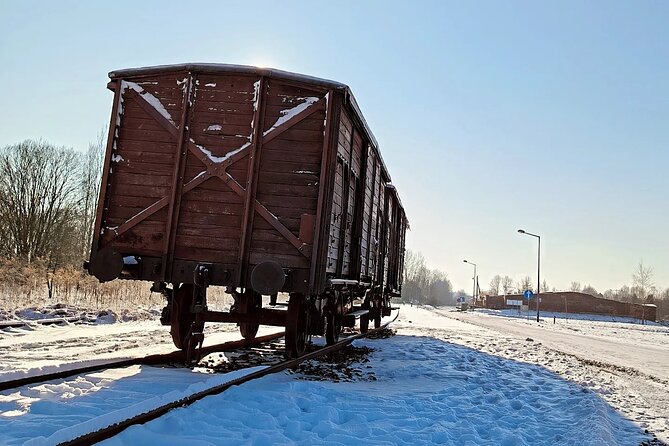
Here, the railway arrival area leads toward the selection point. The camp once contained many barracks, gas chambers, and crematoria. About 1 million people died at Birkenau, mainly Jews, along with Roma, Poles, prisoners of war, and others persecuted by the Nazi regime.
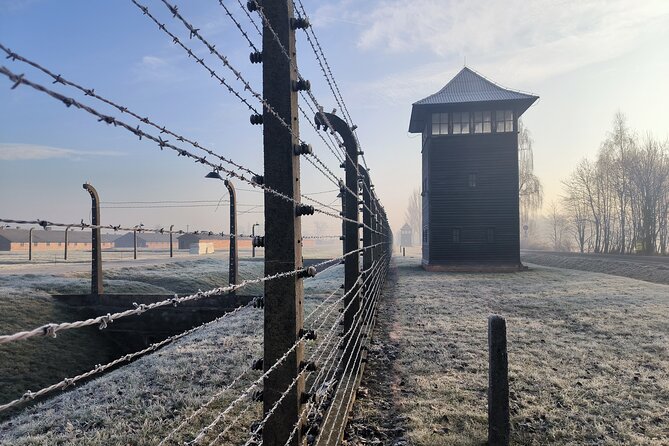
The physical size is part of the lesson. You can see why comfortable shoes matter. The ground is uneven in places, the distances are long, and much of the site is exposed. Weather can change the experience sharply, so bring suitable clothing and be ready for sun, cold, or rain.
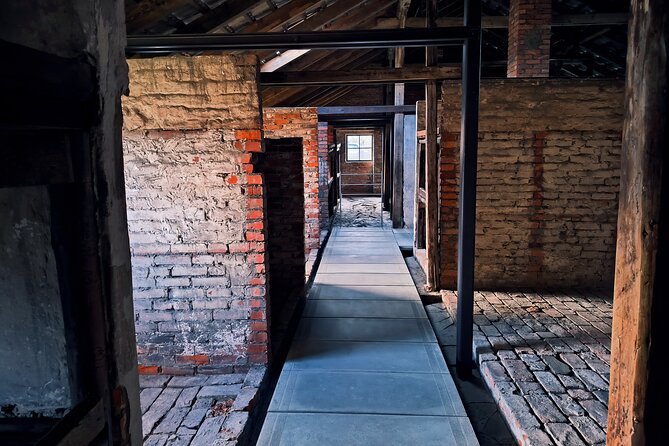
The remaining barracks and ruins do not tell the whole story by themselves. The guide’s explanation connects the railway, selection area, barracks, forced labor, and killing facilities into one system. Without that structure, the site can feel like a collection of scattered buildings. With it, you begin to grasp how transport, registration, forced labor, and murder worked together.
Allow about an hour at Birkenau, though the actual time can vary. The memorial schedule may feel tight, especially if you want to pause often. That is a fair criticism of any scheduled group visit, not necessarily a problem with the driver. If you need a slower, more private pace, ask about timing before booking.
What the private format is really worth
The $461.96 price covers a private group of up to three people. For three, the cost is about $154.65 per person. For two, it is about $230.98 each, and for one person the per-person cost is high.
That makes the tour most attractive to a couple, family, or small group that values privacy and convenience. You are paying for the vehicle, pickup, return, reserved arrangements, and a driver focused on your party. You are not paying for a fully private museum guide, since the Auschwitz guide is assigned by the memorial.
The value is strongest when your Krakow schedule is tight, you do not want to arrange several transport steps, or you prefer help from door to door. A private car also gives you a calmer ride back after a difficult visit. You can talk quietly, stop for food if arranged, or simply sit without managing a crowded coach.
The value is weaker if your main goal is the lowest possible price. A group coach or public transport option may cost less, though it will not offer the same pickup service or personal attention from the driver.
This tour is normally reserved well ahead, with bookings averaging about 43 days in advance. That is useful planning information. If your Krakow dates are fixed, reserve early rather than assume you can arrange the visit at the last minute.
Who should choose this Auschwitz tour
I would choose this experience if you want the simplest transport from Krakow and are traveling with one or two other people. It is also a good fit if you want a driver who can answer questions about Poland during the road time, while accepting that the museum itself controls the formal guide.
It suits first-time visitors who want both Auschwitz I and Birkenau in one organized day. Seeing only one section would leave out important parts of the story, so the combined route is worth the time.
You should think twice if you dislike fixed schedules or need long periods alone at memorial sites. The official guide sets the pace, and the day lasts about six to seven hours. The experience is emotionally heavy, too. Do not place a noisy party activity immediately afterward if you can avoid it.
The tour is available in English. Service animals are allowed, and the activity is described as suitable for most people. You should still prepare for substantial walking and ask about any specific mobility needs before booking, since the information provided does not describe detailed accessibility arrangements.
Booking, cancellation, and simple preparation
Pickup is available directly from your hotel or another agreed place. Contact is handled through the booking system or WhatsApp, which is useful for confirming the meeting details.
You receive confirmation when you book. Free cancellation is available up to 24 hours before the local start time. Changes or cancellations inside that 24-hour window are not accepted for a refund.
Wear shoes you can walk in for several hours. Bring water, though drinks have been provided in the vehicle, and carry weather-appropriate clothing. Eat beforehand if you can, since the morning may be busy and food stops are a helpful extra rather than a guaranteed part of the listed program.
Most of all, give the day room in your schedule. You may want time after returning to Krakow to sit quietly and process what you have seen.
Should you book it?
Book this tour if door-to-door transport, a small private group, and help from a reliable driver matter more to you than finding the absolute lowest price. Oskar’s personal care, clean vehicle, drinks, flexible conversation, and willingness to help with food can make the logistics far easier.
Go in with clear expectations: the driver is not the museum guide, and the official guide is assigned by Auschwitz. The visit may feel tightly timed, and the subject is painful. Still, the combination of Auschwitz I and Birkenau gives you the essential full picture, making this a practical choice for a serious, well-organized day from Krakow.
FAQ
How long does the tour from Krakow take?
The full experience lasts approximately 6 to 7 hours, including pickup, transport, the visits to Auschwitz I and Birkenau, and the return to Krakow.
Does the tour include both Auschwitz I and Birkenau?
Yes. The program includes the main Auschwitz site and Auschwitz II-Birkenau, which are about 3 kilometers apart.
Who provides the guide inside the camp?
An official guide assigned by the Auschwitz State Museum leads the museum visit. The private driver handles transport, ticket arrangements, and support before and after the museum tour.
How many people can join the private tour?
The price covers one private group of up to three people. Only your own group participates in the private transport and tour arrangement.
Is hotel pickup available?
Yes. Pickup is offered directly from your hotel or another agreed location. You can contact the provider through your booking or WhatsApp.
Can I cancel for a full refund?
Yes, if you cancel at least 24 hours before the experience start time. Cancellations or changes made less than 24 hours before the local start time are not accepted for a refund.
Just added around Krakow
- From Krakow: Zakopane and Dunajec River Rafting Tour★ 4.6 · 31 reviews
- From Krakow: Zalipie and Painted Village Guided Tour★ 4.0 · 4 reviews
- From Krakow: Zakopane and Gubałówka Cable Car Private Tour★ 4.3 · 12 reviews
- From Krakow: Zakopane Full-Day Tour with Lunch Option★ 4.4 · 62 reviews
- From Krakow: Zakopane Tatra Mountains & Hot Springs Tour★ 3.0 · 29 reviews
- From Krakow: Zakopane and the Tatra Mountains★ 4.7 · 36 reviews
- From Krakow: Hot Springs and Zakopane with Gubałówka★ 4.7 · 25 reviews
- Zakopane & Tatra Mountains Private Full-Day Tour from Krakow★ 4.5 · 33 reviews
Auschwitz-Birkenau Memorial Tours, compared.
Auschwitz-Birkenau Guided Tour & Hotel Pickup
Read our review →Auschwitz-Birkenau Guided Tour & Hotel Pickup
Read our review →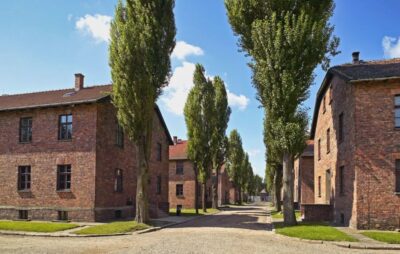
Auschwitz Guided Tour with Optional Hotel Pickup
Read our review →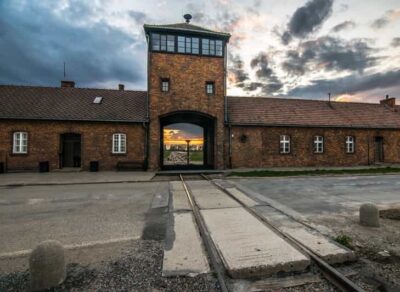
Auschwitz-Birkenau Guided Tour with Pickup & Lunch
Read our review →
Auschwitz-Birkenau Guided Tour Pickup/Lunch Options
Read our review →
Krakow to Auschwitz Birkenau Guided Tour with Transfer and Ticket
Read our review →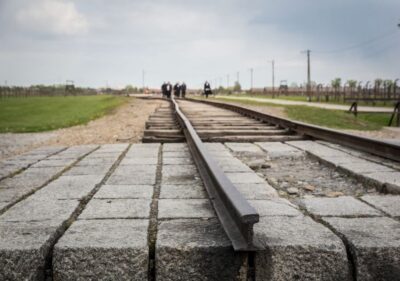
Browse the lists this tour appears in