
Reviewed · KAZIMIERZ JEWISH QUARTER TOURS
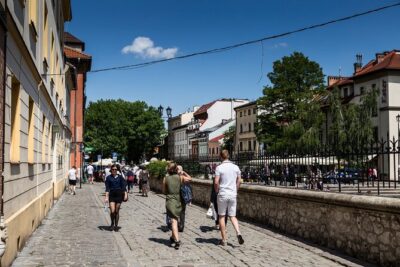
The Jewish Quarter – Walking Tour
Krakow’s Kazimierz is much more than a pretty district of cafés and restored buildings. It is where Jewish and Christian communities lived side by side for centuries, and this walk explains how that shared world changed through war and the Holocaust. I like the clear historical story and the many real locations tied to Schindler’s List. I also like that guide Z, known as Zee, can adjust the walk when you want to see more.
The main consideration is time. Two hours is enough for a strong introduction, but not enough to explore every synagogue interior or museum at length. Admission tickets and public transportation are not included, so you should treat this as a guided orientation walk rather than a complete museum visit.
Key points to know before you go
- Kazimierz beyond the postcard view: Learn how Jewish and Christian communities shared one part of Krakow for centuries.
- A serious World War II focus: The walk connects local streets and memorials with the destruction of Jewish life in Poland.
- Several synagogue landmarks: See the Tempel, Kupa, Izaak, Remuh, Popper’s, and Old Synagogue sites.
- Schindler’s List locations: The route points out numerous places used in the film.
- Guide Z, or Zee: The English-speaking licensed guide is known for adding extra stops when requested.
- Simple two-hour format: At $33 per person, you pay for guiding, not entry tickets or transport.
Why Kazimierz tells Krakow’s larger story
I find this tour’s central idea especially useful: you cannot understand Jewish Krakow by looking at Jewish buildings alone. Kazimierz developed through contact between Jewish and Christian communities, and the streets still show that overlap.
The walk begins around Kazimierz’s Main Square, giving you a sense of the district before the details begin. From there, the story reaches back to the 11th century and explains why Jewish communities chose Poland for settlement. One striking point is that, during the 16th century, around 75 percent of the world’s Jewish population lived in Poland. That figure makes Poland central to Jewish history, not a side chapter.
You will also hear how Krakow changed over time. The modern city may not immediately look multicultural, yet the older story is far more varied. Jewish religious life, Christian institutions, trade, family life, political change, and wartime destruction all meet in this compact area.
That context matters. Without it, a synagogue can look like an attractive old building. With it, you begin to understand the people, institutions, and traditions that once filled these streets.
More Kazimierz Jewish Quarter Tours in Krakow:
- Krakow: Jewish Quarter and Former Ghetto Tour
★ 4.9 · 1,441 reviews - Krakow: Bike Tour of Old Town, Jewish Quarter and the Ghetto
★ 4.9 · 1,155 reviews - Krakow: Kazimierz Jewish Quarter Walking Tour
★ 4.8 · 571 reviews
Miodowa Street and the old city boundary
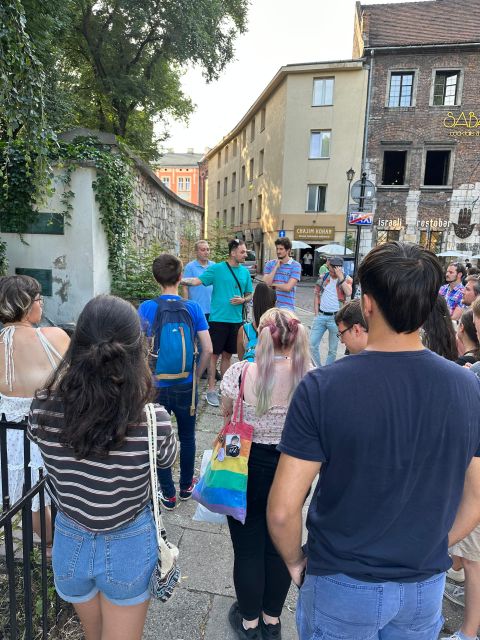
Miodowa Street brings the tour into the physical shape of historic Kazimierz. The route refers to the former city walls of Kazimierz, a reminder that this was once a distinct city rather than simply another Krakow neighborhood.
I like stops such as this because they make history easier to picture. Political boundaries are often invisible today, but old walls help explain how communities were organized and how close different parts of the city stood to one another.
Do not expect a long architectural lecture at every stop. The value is in the connections. A street, wall, square, and religious building become parts of one story instead of isolated sights.
Six synagogues, six different points of reference
The route includes the Tempel Synagogue, Kupa Synagogue, Izaak’s Synagogue, Remuh Synagogue, Popper’s Synagogue, and the Old Synagogue. Even if you do not enter every building, seeing them in sequence helps you understand the scale and variety of Jewish life in Kazimierz.
The Tempel Synagogue is one of the major landmarks on the walk. Its inclusion helps place religious practice within the wider story of the district. The Kupa and Izaak synagogues add further examples of the institutions that served Jewish residents.
The Old Synagogue is especially important as a historical marker. It is one of the key Jewish sites in Kazimierz and helps anchor the route in the district’s older past.
Remuh Synagogue and the Jewish Cemetery provide a different experience. Here, the focus moves from community institutions to remembrance and burial traditions. The cemetery gives the past a more personal scale, with names and memorial traces replacing broad historical dates.
Entry tickets are not part of the $33 price. That is worth noting before you book. The walk can still be useful without entering every site, but you should budget separately if you want interior visits.
Szeroka Street and the heart of Jewish Kazimierz
Szeroka Street is one of the best-known parts of the Jewish Quarter, and it gives the route a strong visual center. The street helps you picture Kazimierz as a place of worship, commerce, family life, and public gatherings.
I would pay attention here to the way the guide links buildings to people. A street becomes more meaningful when you know that Jewish life was not limited to prayer. It included homes, schools, businesses, charitable work, and neighborhood customs.
The tour also includes the birthplace of Helena Rubinstein. That stop adds a personal and international thread to the story. Rather than presenting Jewish history only through wartime suffering, the route points to individual lives and achievements connected to Krakow.
This balance is important. The Holocaust must be addressed directly, but a tour about Jewish Krakow should also show the life that existed before the destruction.
A few more Krakow trips to weigh up
- Old Town Krakow & Wawel Castle Walking Tour
★ 5.0 · 1,508 reviews - Creepy Krakow: 2-Hour City Walking Tour
★ 4.7 · 1,131 reviews - Krakow: The Old Town Walking Tour
★ 4.8 · 794 reviews - Kraków: Old Town & Wawel Castle Walking Tour in English
★ 4.8 · 532 reviews
The 16th-century mikveh
One of the more unusual stops is a mikveh, a ritual cleansing bathhouse for women dating from the 16th century. It offers a glimpse into religious practice that you might otherwise miss while walking between larger synagogues.
This is the sort of detail I value on a guided walk. Major landmarks are easy to find, but smaller sites often explain how people actually lived. A ritual bath is not simply another old structure. It points to customs, community rules, and the role of women within religious life.
Because the tour lasts only two hours, expect an explanation rather than a long on-site study. Still, it gives you a reason to look more closely at a place you could easily pass without noticing.
Memorials, resistance, and the Holocaust
The World War II section is one of the most serious parts of the experience. The route includes the Nissenbaum Family Foundation monument and a statue honoring a man who tried to stop the Holocaust.
These sites shift the tone of the walk. Earlier stops explain Jewish settlement and community life. Here, the guide addresses persecution, destruction, and individual acts of courage.
I appreciate that the route does not treat the Holocaust as an isolated museum subject. The memorials are placed within the neighborhood where Jewish life once took place. That physical connection can make the history feel less remote.
The walk is not designed as a full Holocaust course, and two hours cannot cover every stage of World War II in Poland. Still, it gives you a grounded introduction to what happened in Krakow and why the Jewish Quarter carries such emotional weight.
If you prefer a light sightseeing stroll, this may feel heavy. That is not a flaw, but you should know the subject is central to the experience.
Schindler’s List locations in the real neighborhood
Film locations are a practical way into history, especially if you have seen Schindler’s List. The tour points out numerous places used in the movie, allowing you to connect a fictional production with actual streets and buildings.
The film references are useful because they give you visual anchors. You can remember a corner, façade, or street from the movie, then place it within the broader history of Krakow’s Jewish community.
At the same time, I would not book this walk expecting a film-only tour. The movie is one strand of the route, not its entire purpose. The greater focus is the history of Jewish people in Poland, the relationship between Jewish and Christian communities, and the events of World War II.
That makes this a good choice if the film sparked your interest but you want more than filming trivia. It also works if you have never seen the movie, since the historical explanation does not depend on it.
A guide who can shape the two-hour walk
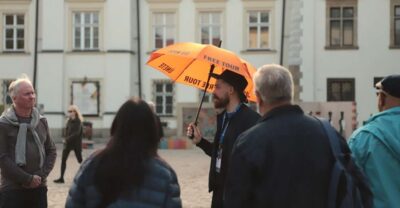
Guide Z, also referred to as Zee, leads the experience in English and is identified as a licensed guide. That matters in a subject where accuracy, tone, and context are important.
The strongest practical feature is flexibility. If you have other ideas about what you want to see, you can ask. One couple specifically found that Z went beyond their requested sights, which suggests the walk can respond to your interests rather than follow a rigid script.
You should still be realistic about the time. A two-hour route with this many locations will move at a steady pace. You may pause at the major sites, while smaller stops receive shorter explanations. If you want a slow architectural study or extended time inside synagogues, a private or longer visit may suit you better.
The English-language format keeps the tour focused. No other languages are listed, so this is best for people comfortable receiving a detailed historical explanation in English.
What the $33 price really covers
At $33 per person, the main thing you are buying is a licensed guide’s time and interpretation. The price does not include admission tickets or public transportation.
I think the value is strongest for a first visit to Kazimierz. You get the district’s main historical framework, several synagogue landmarks, the mikveh, cemetery and memorial sites, Helena Rubinstein’s birthplace, and film locations in a single two-hour walk.
The price is less attractive if you plan to wander independently and only want exterior photos. Kazimierz is easy to explore at street level, and you can see many buildings without joining a tour.
The guide makes the difference. A good explanation connects the sites and helps you understand what changed across centuries. It also saves you from assembling that story one plaque at a time.
Because entry is extra, decide in advance if you want to visit any interiors. The tour itself can help you choose which buildings deserve a later visit.
Meeting point and practical planning
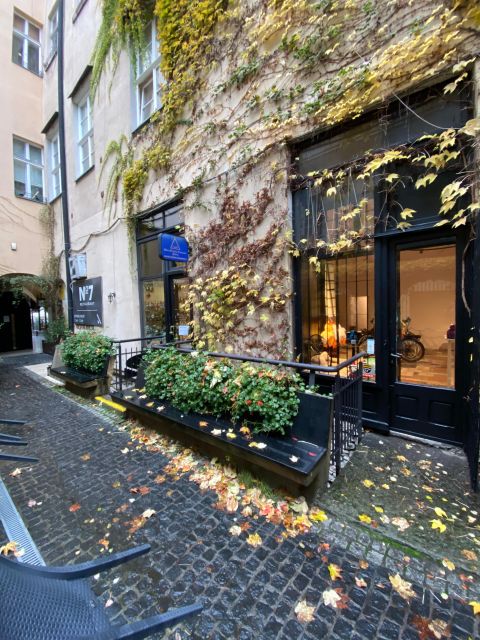
The meeting point is at Restaurant No7. Enter the building and look for the ZeeTour office in the courtyard. It is the second shop on the left.
This is a detail worth writing down. The meeting place is not simply a landmark on the street, so allow time to locate the courtyard before the walk begins.
The activity lasts two hours, with starting times available according to the date you choose. Public transportation is not included, and no transport is needed as part of the tour itself.
The experience is listed as wheelchair accessible. If you need specific assistance, it is sensible to confirm the details with the provider before booking, since the route includes historic streets and multiple sites.
The cancellation policy is friendly: you can cancel up to 24 hours in advance for a full refund. You can also reserve now and pay later, which helps if you are still arranging your Krakow schedule.
Who will get the most from this walk
I would recommend this tour to you if you want a clear introduction to Jewish Krakow and prefer learning through actual streets rather than a classroom-style talk.
It is particularly useful for:
- First-time visitors to Kazimierz
- People interested in Jewish and Christian life in Krakow
- Anyone studying World War II history
- Film fans who want to locate Schindler’s List scenes
- Visitors who want a guide to help choose later synagogue or museum visits
- Couples and families who prefer a short, focused activity
You may want something else if your priority is a long synagogue interior visit, a museum collection, or a slow photography walk. This route covers many subjects, so its strength is breadth and connection rather than extended time at one site.
The tour also suits people who want to ask questions. Since Z can adapt the route when requested, you can raise particular interests instead of waiting for the standard script to cover them.
My take on the experience
I like this walk because it treats Kazimierz as a living historical district, not a display of old buildings. The best moments are likely to come from the connections: the old city boundary, the synagogues, the mikveh, the cemetery, the memorials, and the film locations all point to different parts of the same story.
The strongest praise attached to guide Z is consistent: Emma described the tour as a good starting point for understanding Jewish history in Poland and World War II, while Sinni called it the best tour they had taken in Krakow so far. Lori also found that Z went beyond the requested sights. Those details suggest that the guide’s explanations and willingness to add more are central to the experience.
The drawbacks are straightforward. Two hours passes quickly, tickets cost extra, and the wartime material is difficult. You will not leave having studied every site in depth, but you should leave with a much better sense of why Kazimierz matters.
Should you book the Jewish Quarter Walking Tour?
Book it if you want a guided introduction to Krakow’s Jewish Quarter, especially if Jewish history, World War II, or Schindler’s List interests you. The $33 price is reasonable when you value a licensed English-speaking guide who can connect many sites and respond to your questions.
Skip it if you only want independent sightseeing or plan to spend most of your time inside museums and synagogues. For everyone else, this is a focused first step into Kazimierz, with enough detail to help you explore the district more thoughtfully afterward.
FAQ
How long does the Jewish Quarter Walking Tour last?
The tour lasts two hours.
What language is the tour offered in?
The tour is offered in English with a live English-speaking guide.
What is included in the price?
The $33 price includes guiding services with a licensed guide.
Are admission tickets included?
No. Admission tickets are not included and must be paid for separately.
Is public transportation included?
No. Public transportation is not included.
Where does the tour meet?
Meet at Restaurant No7. Enter the building and find the ZeeTour office in the courtyard. It is the second shop on the left.
Just added around Krakow
- Tour to Wadowice: Hometown of Pope Saint John Paul II★ 4.6 · 12 reviews
- From Kraków; to Białka Thermal Baths private tour★ 5.0 · 5 reviews
- St. Mary’s Basilica and more – a short walk with a guide★ 4.7 · 56 reviews
- Krakow: Auschwitz-Birkenau and Wieliczka Salt Mine Day Trip★ 4.7 · 84 reviews
- Krakow: Skip-the-Line Wawel Castle & Old Town Guided Tour★ 4.9 · 23 reviews
- Krakow: Schindler’s Factory Guided Tour★ 4.2 · 12 reviews
- Shooting Range Experience!★ 4.8 · 66 reviews
- Schindler’s Factory Skip the Line Ticket & Guided Tour★ 4.0 · 5 reviews
Kazimierz Jewish Quarter Tours, compared.
Bike Tour of Old Town, Jewish Quarter and the Ghetto
Read our review →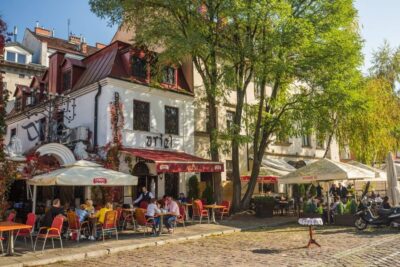
Kazimierz, Schindler’s Factory & Ghetto Guided Tour
Read our review →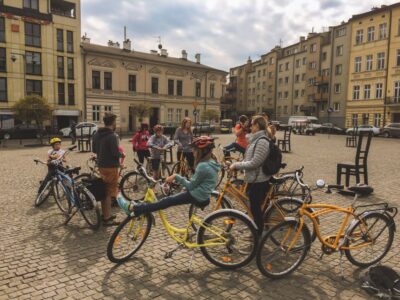
Bike Tour of the Old Town, Kazimierz, and the Ghetto
Read our review →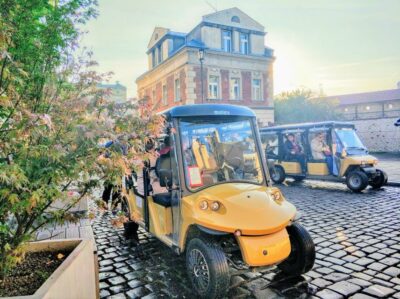
Jewish Quarter and Ghetto Electric Golf Cart Tour
Read our review →
Browse the lists this tour appears in