
Reviewed · WAWEL CASTLE TOURS
Wawel Castle, Cathedral, Old Town and St. Mary’s Basilica
Wawel Hill packs Poland’s royal story into one compact visit. You’ll move from Renaissance State Rooms and Ottoman tents to the Cathedral where kings were crowned, then walk down into Kraków’s Old Town for the Cloth Hall, Collegium Maius, and St. Mary’s Basilica. The chance to touch the Sigismund Bell for good luck is a fine bit of local ritual, if time allows.
I like the way this tour joins Kraków’s grandest sights instead of treating the castle and Old Town as separate errands. I also like the guides’ strong command of royal history and art. The main caution is pace: three and a half hours, plenty of walking, and a group of up to 30 can leave too little time for the Cathedral tower or crowded sights.
Key points at a glance
- Wawel’s State Rooms: See Renaissance interiors, major tapestries, Italian paintings, porcelain, weapons, and Eastern art.
- The Sigismund Bell: Climb the Cathedral tower for city views and a traditional good-luck touch, though the schedule may be tight.
- Royal burial place: Visit Wawel Cathedral and its crypts, where Polish rulers and important national figures are buried.
- Old Town essentials: Walk through the Main Market Square, Cloth Hall, Collegium Maius, and historic streets with a local guide.
- Veit Stoss altar: Enter St. Mary’s Basilica to study one of Kraków’s great Gothic works.
- Two-part format: The castle and Old Town sections may use different guides, with a coordinator helping you reach the second meeting point.
Why this route works for a first Kraków visit
If you have only a short stay in Kraków, this tour gives you the city’s central story in one booking. Wawel explains royal Poland, while the Old Town shows how that power shaped daily life, trade, education, and religion.
The 210-minute format is long enough to cover the essential sights but short enough to fit around other plans. You should still treat it as a serious walking tour, not a quick introduction. The route includes museum interiors, church spaces, stairs, and outdoor streets.
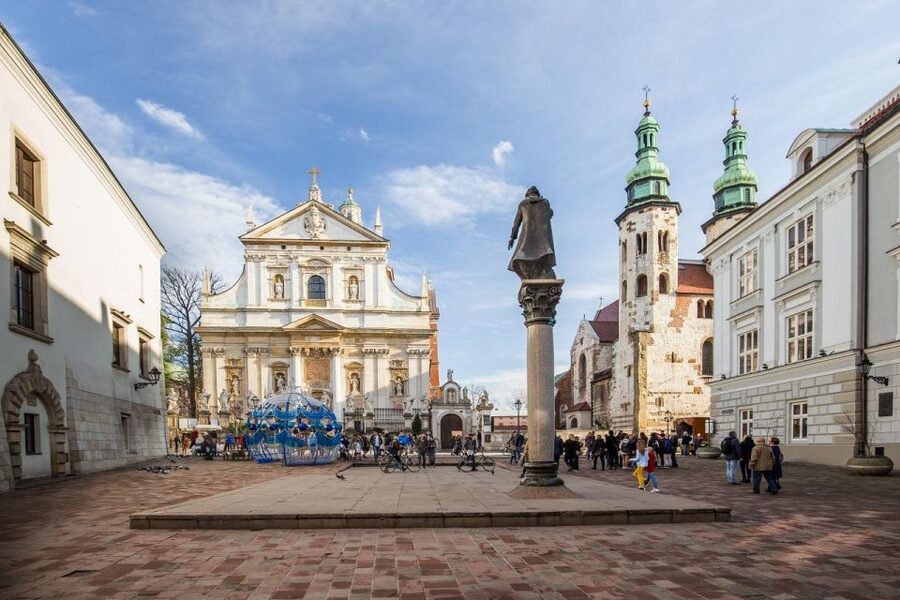
The tour begins at St. Mary Magdalene Square, by the Piotr Skarga Monument. This is not on Wawel Hill, so check your voucher carefully and arrive at least 10 minutes early. Your guide will hold a Wawel Castle and Cathedral Guided Tour sign.
The group can reach 30 people, which is the museum limit. That is not a tiny private walk, but it is manageable when the guide speaks clearly and keeps the group together. Language choices are English, French, German, Italian, and Polish, and you choose one language when booking.
More Old Town Walking Tours in Krakow
- Old Town Krakow & Wawel Castle Walking Tour
★ 5.0 · 1,508 reviews - Krakow: Bike Tour of Old Town, Jewish Quarter and the Ghetto
★ 4.9 · 1,155 reviews - Krakow: The Old Town Walking Tour
★ 4.8 · 794 reviews
Wawel Castle and the State Rooms
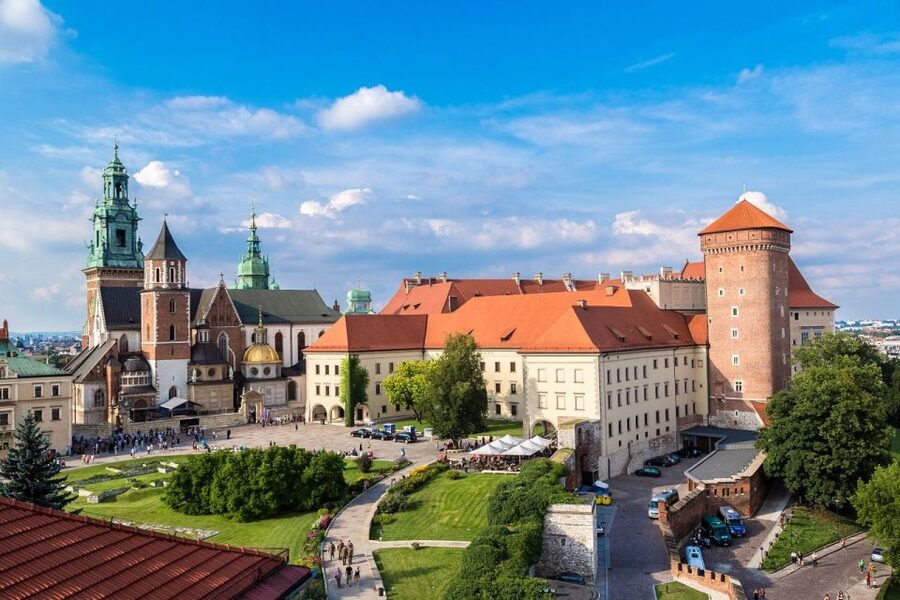
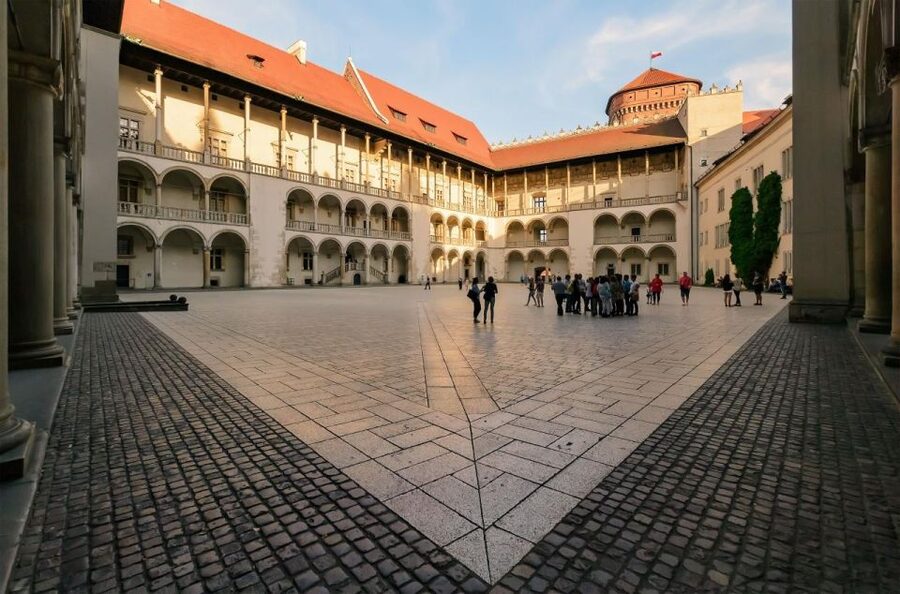
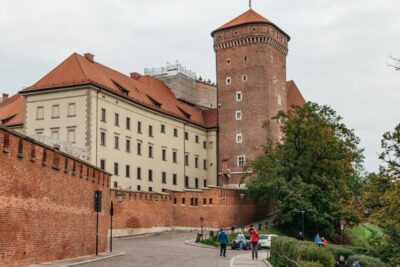
Wawel Castle is the strongest part of the tour for anyone interested in royal life, art, or Polish identity. The castle served as the center of royal power, and its rooms now form part of a major museum collection.
You’ll see elegant State Rooms with Renaissance details and elaborate wall hangings. The guide helps you look beyond polished rooms and connect them with the ceremonies, rulers, and court life that once filled them.
One useful feature is fast-track entry to one permanent Wawel Castle exhibition. The exact exhibition depends on availability, so do not assume you will see every gallery in the complex. That point matters because Wawel is not one single museum room. It is a large collection of exhibitions, and your ticket covers the selected permanent display arranged for your visit.
The collections reach well beyond royal furniture. You might see porcelain, weaponry, Eastern art, and Italian paintings from the Lanckoroński collection. The Eastern collection includes Europe’s largest collection of Ottoman tents, an unusual detail that shows Poland’s long contact with cultures to the south and east.
I like this breadth. You are not simply walking through a palace and admiring chandeliers. You are seeing evidence of diplomacy, military contact, trade, collecting, and taste. The guide’s role matters here because individual objects can seem disconnected without context.
The amount of explanation can also affect the next section. One German-language tour led by Jadwiga was praised for detailed treatment of the castle, but the visitor felt the Cathedral received too little time and the tower could not be visited. That is a fair warning: a careful guide can make the castle rewarding, yet the schedule may not stretch to every extra stop.
Wawel Cathedral and the royal crypts
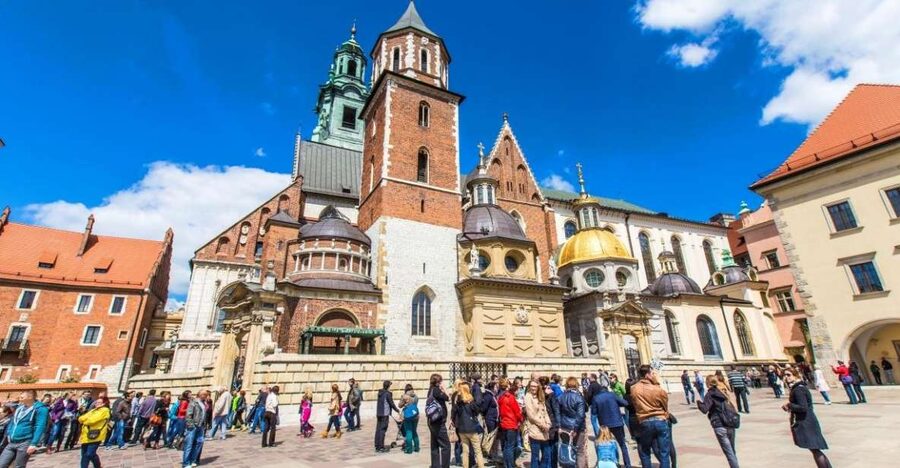
Wawel Cathedral has a different mood from the castle. This is the place where Polish monarchs were crowned, married, and buried. Its chapels, domes, and decorative details turn the building into a record of royal ceremony and national memory.
Your guide explains the Cathedral as more than a church you pass through on the way to the castle. It is a place tied to Poland’s rulers and major public figures. The royal crypts add weight to the visit, since they hold the remains of the country’s kings and other important figures.
The tower offers another rewarding feature: a climb to see the Sigismund Bell and look over Kraków. The traditional act is to touch the bell for good luck. The views give you a useful sense of the city’s layout, especially after seeing the castle up close.
Here you need to keep expectations realistic. The supplied schedule includes the tower and bell, but the tour’s timing can make that part difficult. Crowds, church access, and the group’s time in the State Rooms may limit how long you have. If touching the bell and seeing the panorama are your top priorities, ask the guide early how the timing looks.
The Cathedral also has a dress code. Your shoulders and knees must be covered, so shorts and sleeveless tops are not suitable. This rule applies to places of worship and selected museums, and it is worth planning for before you leave your hotel.
Walking into Kraków’s Old Town
The Old Town section takes you from royal history into the city’s public heart. You’ll walk through the UNESCO-listed center, including the Main Market Square and the Cloth Hall.
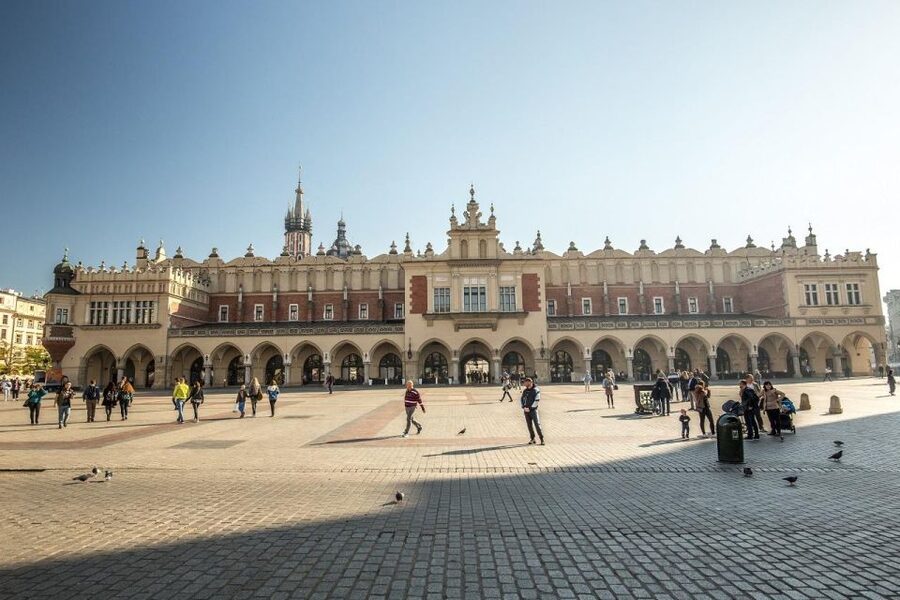
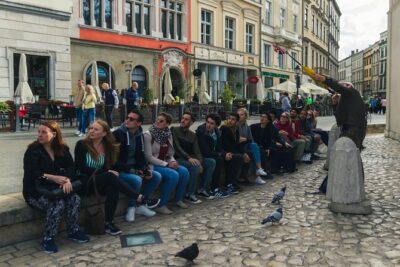
The square is the kind of place where the city’s past and present meet. Your guide explains royal processions, merchants’ guilds, and Kraków’s golden age while you look at the buildings around the square. That background helps you understand why the center is arranged as it is, rather than treating the square as a photo stop.
The Cloth Hall recalls the trading role of the square. It is easy to admire its exterior and move on, but a guide can explain how merchants and guilds helped make Kraków prosperous. The stories also give the later castle rooms more meaning. Royal power depended on the city’s money, trade, and civic institutions.
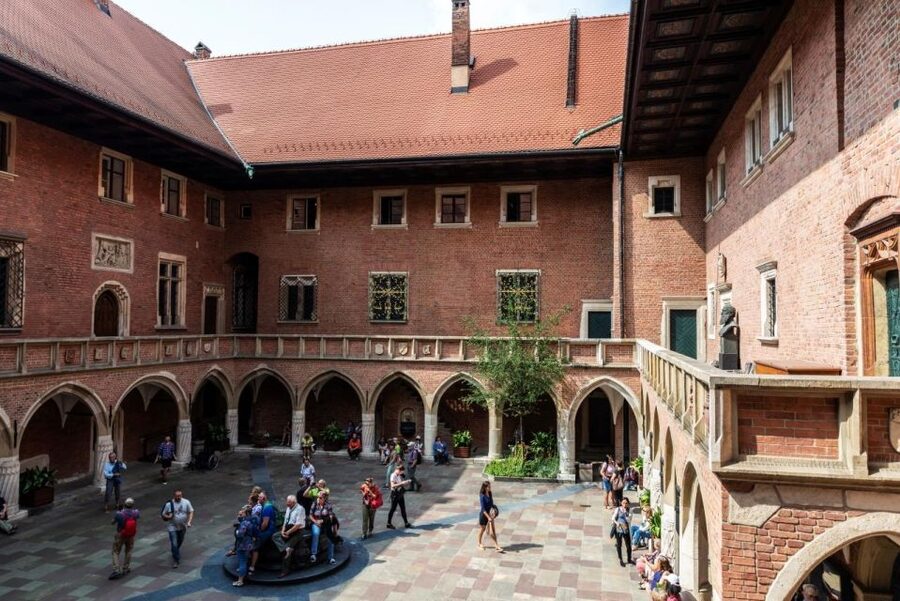
You’ll also see Collegium Maius, the oldest university building in Poland. The stop connects Kraków with education and science, especially through the story of Nicolaus Copernicus, its most famous student.
This part of the route is less controlled than the castle interiors. The streets and square can be crowded, and it may be hard to pause for every architectural detail. One tour participant felt there were too many people to wait for clear views at some points. I would treat this as a walking overview, not a quiet architectural study.
A practical advantage is that the guide supplies a story as you walk. You do not need to memorize dates before arriving. You can focus on the street pattern, buildings, and public spaces while the guide links them together.
Same country, a completely different kind of day:
- From Krakow: Auschwitz-Birkenau Guided Tour & Hotel Pickup
★ 4.5 · 33,358 reviews - From Krakow: Auschwitz-Birkenau Guided Tour & Hotel Pickup
★ 4.5 · 29,340 reviews - Krakow: Auschwitz Guided Tour with Optional Hotel Pickup
★ 4.5 · 15,280 reviews - Krakow–Zakopane: Cable Car, Chocholow Baths, Cheese & Vodka
★ 5.0 · 10,720 reviews
St. Mary’s Basilica and the Veit Stoss altar
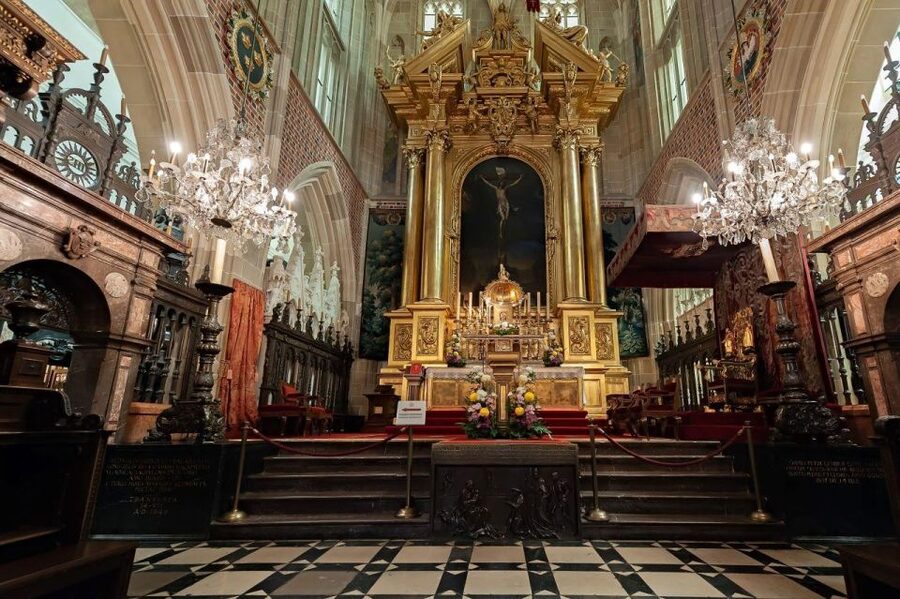
The final major stop is St. Mary’s Basilica, one of Kraków’s most important churches. Entry is included, so you are not limited to looking at the exterior from the square.
Inside, the focus is the Gothic altar by Veit Stoss. It is a major work of medieval art, filled with carved figures and scenes that tell religious stories. The guide points out details that are easy to miss when you first step inside.
This is where the tour’s art and history strands come together. At the castle, you see royal taste and court collections. In the Cathedral, you see the role of kings and national ceremony. At St. Mary’s, you encounter the visual language of medieval faith and the civic importance of a great parish church.
Your guide’s explanation is especially useful here. A large Gothic altar can appear crowded with figures, but the arrangement has meaning. A good guide helps you read the scenes rather than simply admire the craftsmanship.
The Old Town portion can be conducted by a second guide. Beata K. led one small second section and was able to add personal tips and answer questions at length. Another participant described being met between the two portions and guided to the next meeting point. This handoff is practical, though it means the experience may not feel like one continuous private tour.
Some German-language departures are limited by day. If language is important to you, check the available date before paying. English, French, Italian, and Polish options may offer more flexibility, but the exact schedule should be confirmed during booking.
Guides, group size, and the pace
The guides are the heart of this experience. Jadwiga received strong praise for her German explanations and her willingness to answer private questions. Anna was described as pleasant and made a French-language visit feel complete. Beata K. was especially effective with a very small Old Town group, adding extra tips because there was more time for conversation.
The tour is led by a certified local expert in Kraków’s royal history. That qualification matters most in Wawel Castle, where the objects and rooms need explanation. The guide also helps you place the Old Town sights in a wider story about rulers, merchants, students, and worship.
The format can change during the day. The castle and Cathedral form the first part, then the Old Town and Basilica may begin from the original area or another meeting point. A coordinator can lead you between sections, but you should listen carefully to instructions.
Three and a half hours sounds generous, yet the route covers a lot. Expect regular walking and some stairs. The tour is not suitable for wheelchair users, and the listing gives no indication that a step-free alternative is available.
A group of 30 is acceptable for a major museum visit, but it affects how close you can stand to the guide and how long the group takes to move. If you prefer a quiet, slow look at each object, a private visit or separate self-guided museum time may suit you better.
Is $87 a fair price?
At $87 per person, this is not Kraków’s cheapest walking tour. The value comes from the number of major interiors included: a Wawel Castle permanent exhibition, Wawel Cathedral, and St. Mary’s Basilica, along with a guided walk through the Old Town.
You are also paying for a licensed guide and skip-the-ticket-line access to the castle exhibition. That can save time at a place where waiting and ticket arrangements may interrupt your day. Lunch is not included, so plan to eat before or after the tour.
I see the price as reasonable for a first visit if you want interpretation rather than a simple list of sights. It is less attractive if you already know Wawel well, want to choose every museum room yourself, or prefer to spend long periods photographing and reading labels.
The main value question is how much you care about the Cathedral tower and the quality of the explanation. The guides have been praised for clear, detailed storytelling, but time constraints can reduce the Cathedral portion. You should book this for the overall route, not only for the bell.
Who should book this tour?
I would choose this tour for a first-time visitor who wants Kraków’s main historic sights organized into one morning or afternoon. It suits you if you enjoy art, royal history, church architecture, and guided context.
It also works well for couples and families who do not want to plan separate tickets for every major sight. The five language options help international visitors, although German departures may be less frequent.
I would hesitate if you have limited mobility, dislike stairs, or want a slow museum visit. I would also think twice if you have already toured Wawel Castle and only want the Old Town. In that case, the combined price and time may be more than you need.
Should you book Wawel Castle and Old Town together?
Book it if you want a broad, well-organized introduction to Kraków and value a guide who can explain why the sights matter. The strongest elements are Wawel Castle’s collections, the royal Cathedral, and St. Mary’s Basilica with the Veit Stoss altar.
Go in ready for walking, crowds, a possible guide change, and a firm schedule. Arrive early at the Piotr Skarga Monument, dress properly for religious sites, and ask about tower timing at the start. If those conditions suit you, $87 buys a useful route through the center of Kraków, with much more meaning than a quick look at the buildings alone.
FAQ
Where does the tour meet?
Meet at St. Mary Magdalene Square by the Piotr Skarga Monument. The guide will hold a Wawel Castle and Cathedral Guided Tour sign.
Is the meeting point on Wawel Hill?
No. The meeting point is not on Wawel Hill, so check the exact location on your voucher before setting out.
How long does the tour last?
The stated duration is 210 minutes, or three and a half hours.
What languages are available?
Tours are available in English, French, German, Italian, and Polish. Each group tour is conducted in one language selected at booking.
What is included in the price?
The price includes a guided tour with a certified local expert, fast-track access to one permanent Wawel Castle exhibition, entrance to Wawel Cathedral, and entry to St. Mary’s Basilica.
Does the tour include lunch?
No. Lunch is not included.
Can I visit the Sigismund Bell?
The route includes a climb to the tower, panoramic views, and the chance to touch the Sigismund Bell for good luck. The available time can vary, so ask the guide about the tower early in the tour.
Is the tour suitable for wheelchair users?
No. The activity is not suitable for wheelchair users.
What happens if I arrive late?
You should arrive at least 10 minutes before the scheduled start. Once the group has entered, late joining is not possible and the ticket is non-refundable.
Can I cancel the booking?
Yes. You can cancel up to 24 hours before the activity for a full refund. A reserve-now-and-pay-later option is also available.
More Wawel Castle Tours in Krakow
- Krakow: Wawel Castle & Cathedral Guided Tour
★ 4.7 · 2,111 reviews - Krakow: Wawel Royal Hill with Optional Castle and Cathedral
★ 4.2 · 1,220 reviews - Krakow: Wawel Castle and Cathedral Guided Tour
★ 4.6 · 595 reviews - Kraków: Old Town & Wawel Castle Walking Tour in English
★ 4.8 · 532 reviews
Just added around Krakow
- From Krakow: Zakopane and Dunajec River Rafting Tour★ 4.6 · 31 reviews
- From Krakow: Zakopane and Gubałówka Cable Car Private Tour★ 4.3 · 12 reviews
- From Krakow: Zakopane Full-Day Tour with Lunch Option★ 4.4 · 62 reviews
- From Krakow: Zalipie and Painted Village Guided Tour★ 4.0 · 4 reviews
- From Krakow: Zakopane Tatra Mountains & Hot Springs Tour★ 3.0 · 29 reviews
- From Krakow: Zakopane and the Tatra Mountains★ 4.7 · 36 reviews
- From Krakow: Hot Springs and Zakopane with Gubałówka★ 4.7 · 25 reviews
- Zakopane & Tatra Mountains Private Full-Day Tour from Krakow★ 4.5 · 33 reviews
Wawel Castle Tours, compared.
Wawel Royal Hill with Optional Castle and Cathedral
Read our review →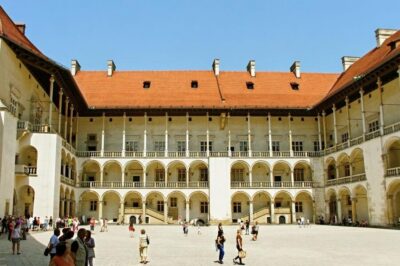
Old Town & Wawel Castle Walking Tour in English
Read our review →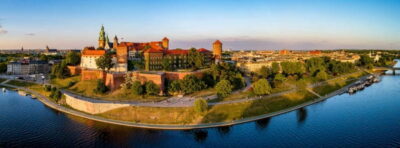
Krakow’s Essential Tour of the Old Town and Wawel Castle
Read our review →Browse the lists this tour appears in