
Reviewed · HISTORICAL TOURS
Lodz: Jewish Heritage Private Tour
Łódź’s Jewish story is written across the city, from the stark railway memorial at Radegast Station to the peaceful rows of memory trees in Survivors’ Park. This private tour connects those places with the lives of the people who helped shape industrial Łódź before the war. I especially like the visit to the Jewish cemetery, Poland’s largest Jewish necropolis, and the chance to see Manufaktura, the former factory complex of Jewish businessman Israel Poznański. The main caution is that the tour’s tone can depend heavily on your guide, so ask for a guide with strong expertise in Jewish life and Holocaust history.
The four-hour route is a good use of a first day in Łódź because hotel pickup, transport, and a private guide are included. Marek, Krys, and Krzysztof have each received especially strong praise for clear explanations, flexibility, and wide knowledge of the city. Still, confirm how transportation will work, since one booking expected the guide to drive between stops and instead received a more limited arrangement.
Key points at a glance
- Radegast Station brings the Holocaust story into sharp focus: This was the final departure point for trains carrying Jews from western Europe and nearby ghettos into the Wartheland region.
- The Jewish cemetery deserves more than a quick look from outside: If you want to enter, say so clearly when arranging the tour.
- Over 600 memory trees mark survival: Survivors’ Park links personal testimony with the liquidation of the Litzmannstadt Ghetto.
- Manufaktura connects Jewish history with Łódź’s industrial rise: The restored factory once belonged to Israel Poznański.
- Piotrkowska Street gives the tour a lighter finish: Shops, pubs, restaurants, and commemorative sculptures show present-day Łódź.
- Private touring gives you room to ask questions: Guides have adjusted routes for requests, though the quality and viewpoint may vary by guide.
Why Łódź needs a Jewish heritage tour
Before World War II, more than 200,000 Jews lived in Łódź. They made up roughly one third of the city’s population, making Jewish life central to the city’s culture, commerce, and daily rhythm.
That fact matters because Łódź is not a place where Jewish history appears in one tidy old quarter. The story is spread across factories, cemeteries, railway sites, streets, and memorials. You need a guide to connect the dots, explain what has disappeared, and show how Jewish residents helped build the industrial city.
I like the private format here because you can stop and ask what a name, building, or memorial means instead of waiting for a group to move on. The tour also places Jewish history within the wider story of Łódź. Several guides have gone beyond the core subject to discuss Polish history, architecture, books, film, and famous residents.
That wider context is useful, but it also creates a possible mismatch. If you want a tour told specifically from Jewish perspectives, say that when you book and at the start of the morning. One critical experience found the guide’s comments about Jewish remembrance at Radegast inappropriate and felt the tour did not meet the promised focus. The private setup gives you a chance to establish your expectations early.
A few more Poland trips to weigh up
- Gdansk: City Cruise on Historical Polish Boat
★ 4.8 · 2,913 reviews - Warsaw: POLIN Museum of the History of Polish Jews Ticket
★ 4.7 · 1,142 reviews - Gdańsk: Sunset Cruise on a Historic Polish Boat
★ 4.9 · 977 reviews
Radegast Station and the Litzmannstadt Ghetto
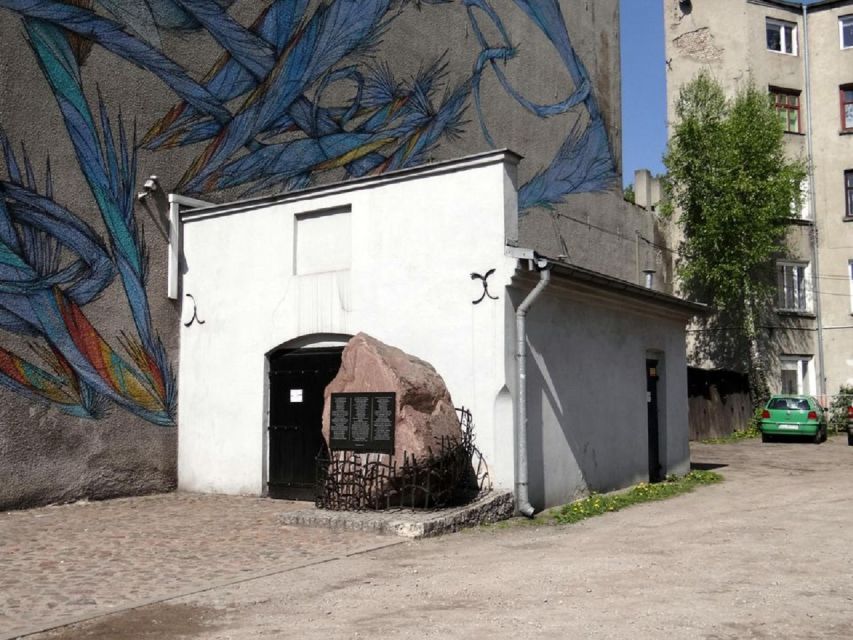
Radegast Station is one of the most important stops because it turns a huge historical crime into a specific place. Trains left here carrying Jews from western European countries and provincial ghettos in Wartheland. The station was the final point before deportation from the Łódź ghetto.
Your guide will explain the area of the Litzmannstadt Ghetto and the Holocaust’s effect on Łódź’s Jewish population. The setting is not a conventional sightseeing stop. It is a memorial site, and the tone should be quiet and serious.
I find this part of the route most useful when the guide explains the difference between the prewar city, the ghetto, and the later deportations. Without that background, a railway memorial can feel hard to read. With it, the station becomes a key part of the city’s geography and memory.
Give yourself time to look closely at the memorial details and written material. This is also the place where the guide’s approach matters most. You want a calm, respectful explanation of the site and of the different ways people remember the Holocaust. If a particular aspect of remembrance matters to you, raise it directly rather than assuming the tour will take a single viewpoint.
The Jewish cemetery, Poland’s largest Jewish necropolis
The Jewish cemetery is one of the tour’s major rewards. It is described as the largest Jewish necropolis in Poland, and it offers a direct connection to the Jewish community that lived in Łódź before the war.
The cemetery is more than a stop for photographs. It gives you a sense of the community’s size, family networks, and place in the city. Your guide can help explain what you are seeing and why the site matters within Łódź’s Jewish story.
There is one practical point you should settle before the tour begins. The route may include seeing the cemetery from outside, while entering may require a specific request. Tell your guide that you want to go inside if that is important to you. The tour description includes entrances as an extra cost, so ask about any fee before setting out.
I would not treat this as a quick drive-by. If you are choosing this experience mainly for Jewish heritage, the cemetery is one of the stops worth protecting with enough time. The private format should make that easier, since you can tell the guide which locations matter most to you.
Children’s Martyrdom Monument and Survivors’ Park
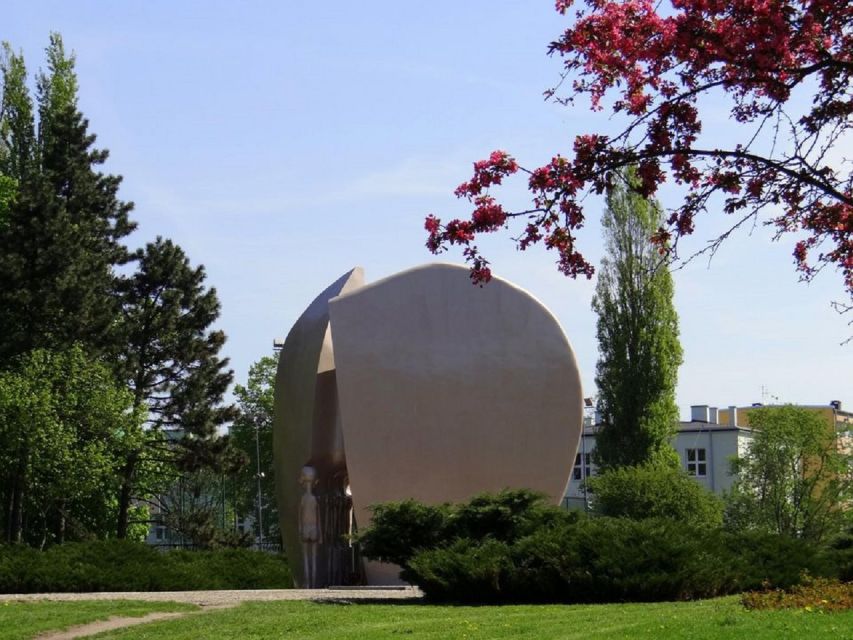
The route also passes the Children’s Martyrdom Monument, often called the Monument of the Broken Heart. It honors Polish children who died or were murdered while imprisoned in the camp on Przemysłowa Street.
This stop broadens the tour beyond the Jewish community alone. The Holocaust and wartime occupation affected different groups in different ways, and the monument points to the suffering of Polish children. Your guide can place it beside the Jewish story without treating the histories as interchangeable.
Survivors’ Park offers a quieter pause. It commemorates the liquidation of the ghetto and contains more than 600 memory trees planted by people who survived the Litzmannstadt Ghetto. Those trees give the memorial a personal scale. Instead of only reading dates and names, you see a place shaped by people who returned to mark their survival.
I like this part of the tour because it creates a pause between the heavier memorial sites. You can rest, look at the trees, and consider the link between the ghetto’s destruction and the lives that continued afterward.
Same country, a completely different kind of day:
- From Krakow: Auschwitz-Birkenau Guided Tour & Hotel Pickup
★ 4.5 · 33,358 reviews - From Krakow: Auschwitz-Birkenau Guided Tour & Hotel Pickup
★ 4.5 · 29,340 reviews - Krakow: Auschwitz Guided Tour with Optional Hotel Pickup
★ 4.5 · 15,280 reviews - Krakow–Zakopane: Cable Car, Chocholow Baths, Cheese & Vodka
★ 5.0 · 10,720 reviews
Reicher Synagogue, a rare piece of prewar Łódź
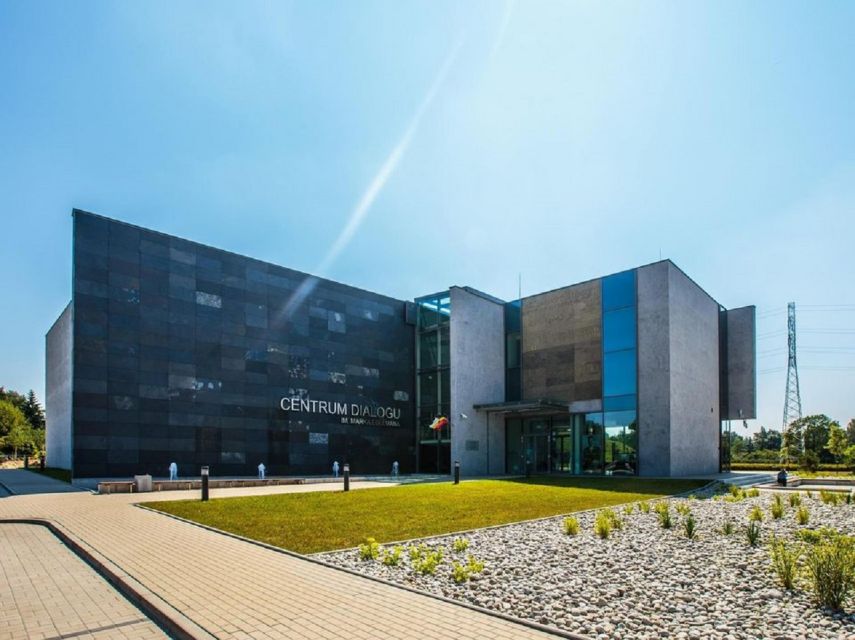
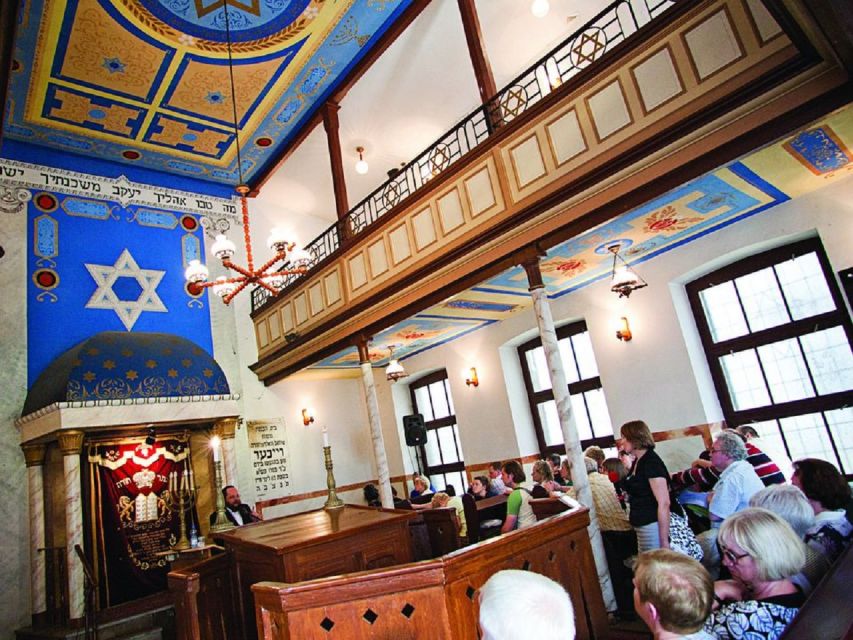
Reicher Synagogue is described as the only remaining prewar synagogue in Łódź. It survived the occupation years by being used as a salt warehouse, a detail that says much about both survival and loss.
The building is important not simply because it is old. It is one of the few physical reminders of Jewish religious life that remains in the city. A guide can help you picture the network of synagogues and community institutions that once served Łódź’s large Jewish population.
Do not expect this stop to recreate the prewar community. One surviving building cannot do that. Its value is more modest and more honest: it gives you a tangible place from which to discuss what was once present and what was destroyed.
Ask whether the visit includes going inside and whether an entrance fee applies. Entrances are not included in the $46 price, and the exact access arrangements are not specified.
Manufaktura and Israel Poznański’s industrial fortune
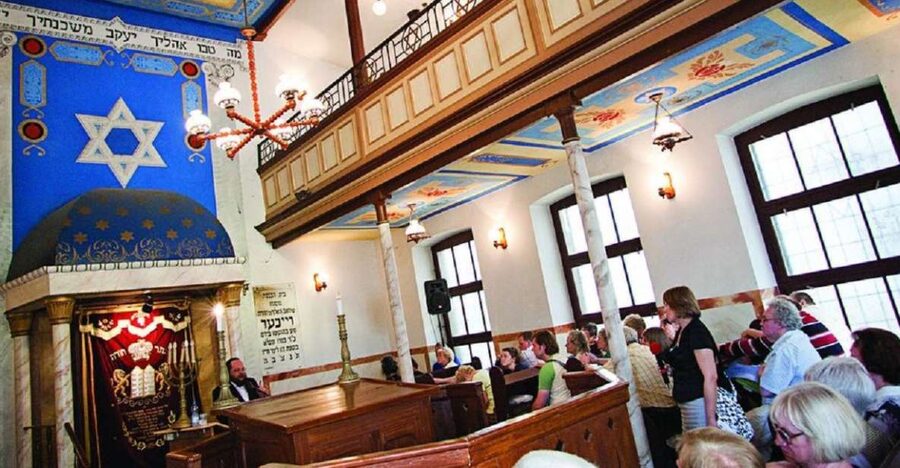
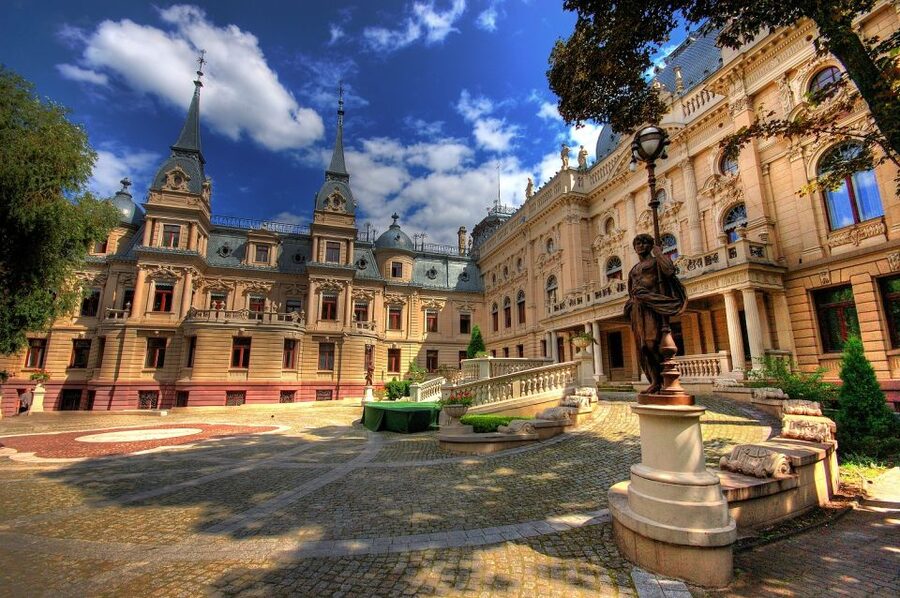
Manufaktura changes the mood and widens the story. This renovated industrial complex once belonged to Israel Poznański, a Jewish businessman whose factory helped define Łódź’s rise as a textile center.
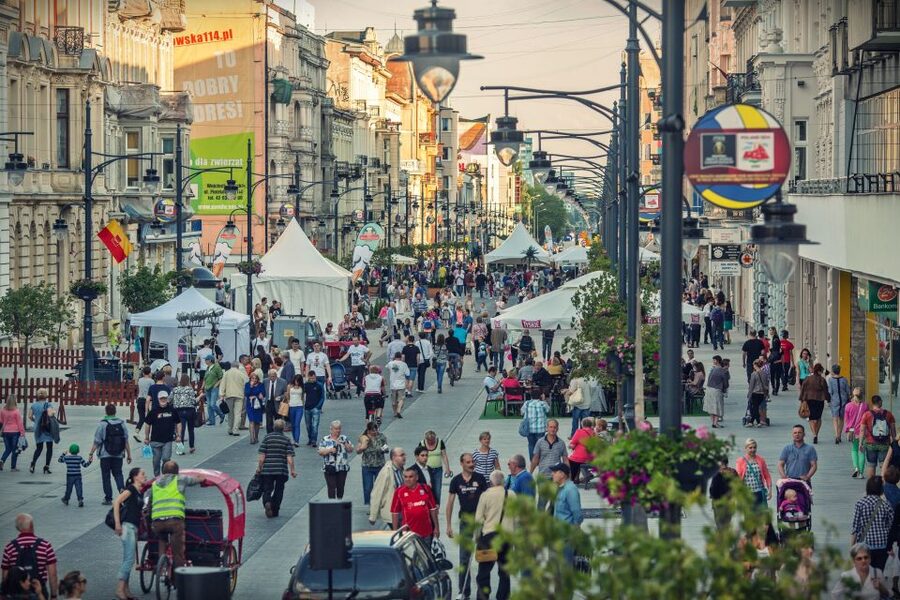
Today, the complex has an open-air plaza surrounded by large brick buildings. Its fountains and shops make it one of the city’s popular public spaces, but the old industrial setting still gives you a sense of the scale of Łódź’s factory age.
This is one of the tour’s best links between Jewish heritage and the city’s economic history. Jewish residents were not only part of a religious minority discussed through wartime suffering. Figures such as Poznański were also involved in building the industrial city that people see today.
The restored complex is not a preserved factory floor in the traditional museum sense. It is a modernized place, and much of its current use is commercial. That can disappoint you if you expect an untouched historic site. Still, it makes a useful stop because the brick buildings and former factory grounds show how industry shaped Łódź.
Piotrkowska Street, Łódź’s long urban stage
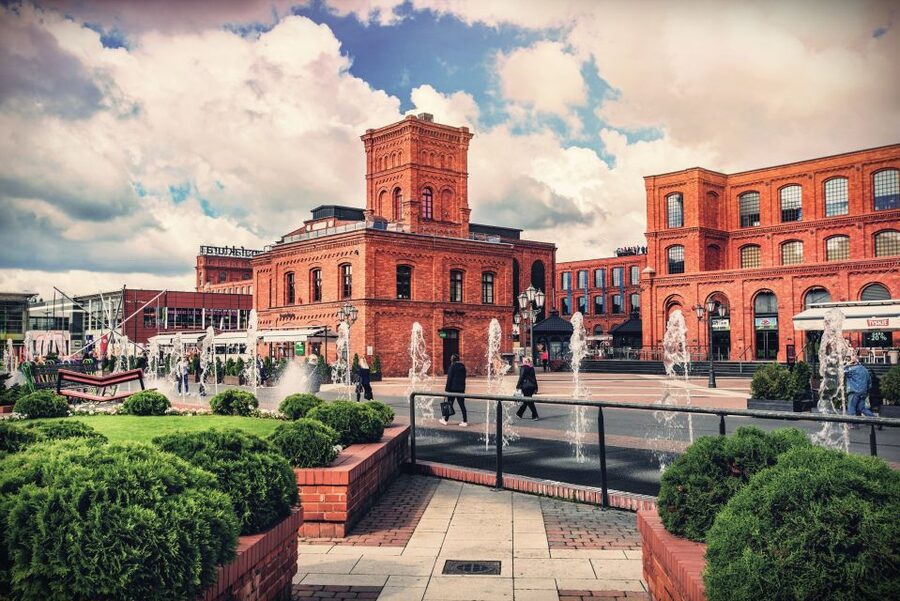
The tour finishes on Piotrkowska Street, Poland’s longest promenade. This is a good ending after several memorial sites because it brings you back to everyday city life.
The avenue is lined with shops, pubs, restaurants, and sculptures honoring famous inhabitants of Łódź. Your guide can point out what to explore after the tour, which makes this more than a final photo stop. You can use the advice to plan lunch, an evening walk, or further sightseeing.
I like the contrast. The morning or early afternoon deals with deportation, destruction, and remembrance. Piotrkowska shows a city still moving, eating, shopping, and making new memories. The street does not erase the past, but it gives you a place to continue thinking about Łódź as a living city rather than only a memorial site.
Ask your guide for specific suggestions before you part. Several guides have tailored tours to personal interests, and this is the natural moment to learn what else fits your time in Łódź.
What the private format really adds
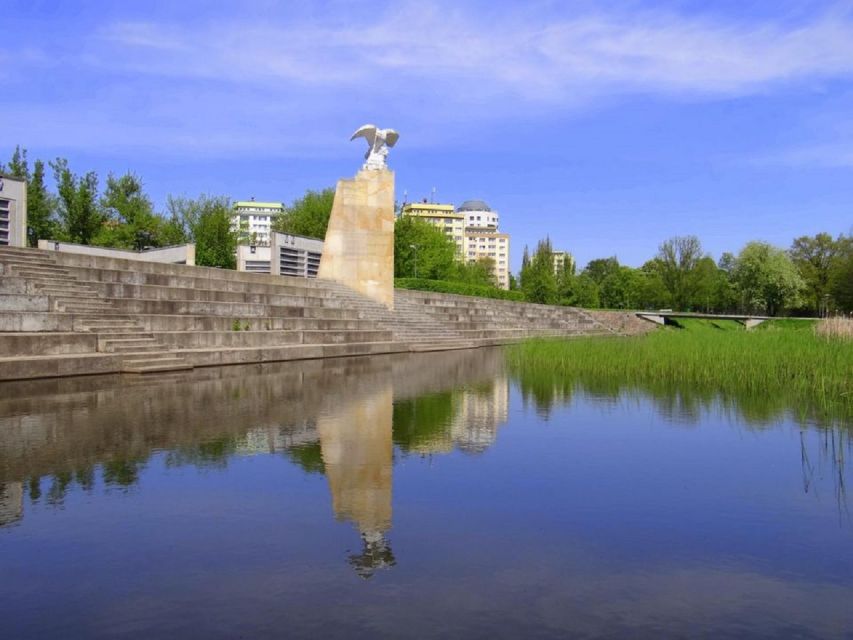
The private group is the strongest practical feature. You are not locked into a fixed group conversation, and you can ask for more detail at the cemetery, spend longer at a memorial, or add a location that matters to you.
Marek has been praised for adapting the tour to personal interests and adding places beyond the main route. Krys has combined Jewish history with film, books, architecture, and the wider story of Łódź. Krzysztof has been singled out for an entertaining manner and strong knowledge of both Jewish history and the city as a whole.
Those strengths suggest that you should arrive with questions. Ask about the prewar community, the ghetto, the factories, or the city’s changing architecture. A private tour gives your guide a chance to shape the explanation around your interests instead of delivering the same speech to everyone.
There is also a limitation. The guide is the experience. The published language options are English, German, Russian, and Polish, but the depth and tone can vary. If the Jewish focus is your main reason for booking, contact the provider ahead of time and state that clearly.
Transportation also deserves a quick check. Hotel pickup and drop-off, transport, and a guide are included, but one booking expected the guide to provide a car or bus for the entire route and found that was not the case. Confirm whether the transport is private and what type of vehicle will be used.
Is $46 a fair price for four hours?

At $46 per person, this is a reasonable price for a private four-hour tour if you are traveling with at least one companion and want door-to-door convenience. Hotel pickup, drop-off, transportation, and a live guide are included, which saves you the work of arranging several out-of-town or spread-out stops yourself.
The value is strongest for a first visit. Radegast Station, the cemetery, Survivors’ Park, Reicher Synagogue, Manufaktura, and Piotrkowska Street cover a lot of ground in four hours. You also get a guide to explain why each place matters, rather than simply receiving a list of addresses.
Remember that entrances are not included. Since access to the cemetery or other sites may involve a fee, budget a little extra and ask what you will pay before the tour begins.
You can cancel up to 24 hours in advance for a full refund, and the reserve now, pay later option lets you hold the booking without paying immediately. Starting times depend on availability, so check the schedule that suits your day.
Who should book this Łódź tour?
I would choose this tour if you want a focused introduction to Łódź’s Jewish past but also want to understand the city’s factories, streets, and wider Polish story.
It suits you especially well if:
- You have only one day or a short stay in Łódź.
- You prefer a private guide to a large group.
- You want hotel pickup and arranged transportation.
- You care about memorial sites and want historical explanation on location.
- You would like to adjust the route around personal interests.
- You want help deciding what to see after the four-hour tour.
It may be less suitable if you want a specialist tour told only through Jewish religious or family history. The experience includes the Jewish community, the Holocaust, Polish children imprisoned during the war, industrial history, and modern Łódź. That broad scope is a strength for many people, but you should set your expectations before booking.
The rating is 4.7 from 14 reviews, with repeated praise for guides who are friendly, flexible, clear, and entertaining. The strongest names to request are Marek, Krys, or Krzysztof, based on the available feedback. Do not assume every guide will offer the same depth or interpretation.
Should you book it?
Book this tour if you want the main Jewish and Holocaust memorial sites placed in the wider story of Łódź. The cemetery, Radegast Station, Survivors’ Park, and Reicher Synagogue give the tour real substance, while Manufaktura and Piotrkowska Street keep it from becoming a nonstop memorial circuit.
Before you go, confirm the transport arrangement, ask to enter the cemetery, and explain that you want a respectful, Jewish-history-focused guide. With those points settled, $46 buys a useful private introduction to a city whose past is spread across many different places.
FAQ
How long does the Jewish heritage tour last?
The tour lasts four hours.
What is the price of the tour?
The listed price is $46 per person.
Is the tour private?
Yes. The experience is offered for a private group.
Where does the tour begin?
Your guide meets you in the lobby of your hotel.
Is hotel transportation included?
Yes. Hotel pickup and drop-off and transportation are included.
Which languages can the guide speak?
Guides are available in English, German, Russian, and Polish.
Are entrance fees included?
No. Entrances are not included in the tour price.
Can I cancel the tour for a refund?
Yes. You can cancel up to 24 hours in advance for a full refund.
Just added around Poland
- Guided Winter Kayak Tour in Gdańsk & Hot Chocolate Treat★ 5.0 · 51 reviews
- Gdansk Highlights Bicycle Tour★ 5.0 · 65 reviews
- Electric Scooter Tour: Old Town Tour – 1,5-Hour of Magic!★ 5.0 · 19 reviews
- Elblag Canal Tour from Gdansk★ 4.5 · 22 reviews
- Delicious Gdansk Craft Beer Tour★ 5.0 · 4 reviews
- DAILY Stutthof Concentration Camp with Guide and Transport★ 4.5 · 10 reviews
- #1 Polish Vodka Tasting Experience in Gdansk★ 5.0 · 87 reviews
- Cruises on the Motlawa River★ 4.5 · 66 reviews
Historical Tours, compared.
POLIN Museum of the History of Polish Jews Ticket
Read our review →
Gdańsk City Sights & History Guided Walking Tour in English
Read our review →

Small-Group Historical Guided Tour of Warsaw with pick up/drop off. Public Tour.
Read our review →Browse the lists this tour appears in