
Reviewed · WALKING TOURS
Creepy Krakow: 2-Hour City Walking Tour
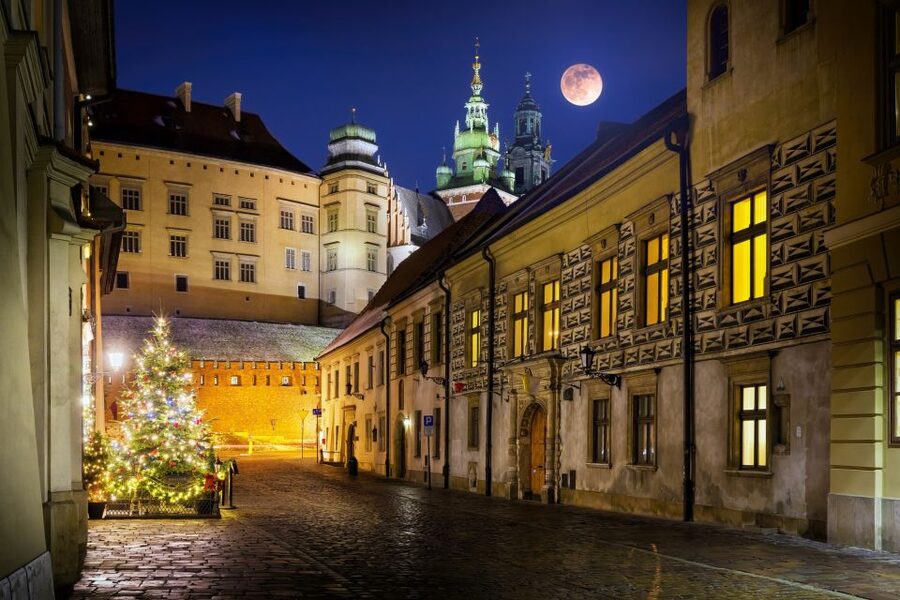
Krakow looks almost too pretty by day: a grand square, bright churches, handsome towers, and polished old buildings. After sunset, the same streets take on a different mood. This two-hour evening walk uses Krakow’s legends, crimes, and darker folklore to show you the city from its less tidy side.
I like two things especially. First, the stories are not limited to ghosts. Guides such as Navia, Tomasz, Anna, Stefan, and Susanna mix murder, witchcraft, law, politics, local customs, and true-life horror. Second, the route uses major sights you may already have seen, including St. Mary’s Basilica and the Cloth Hall, then gives them a fresh night-time meaning.
The main drawback is simple: this is an outdoor tour in Krakow after dark, and the weather can be rough. Snow, rain, and bitter cold have not stopped the tour from being enjoyable, but you need warm shoes and a proper coat. It is also aimed at ages 15 and over, so families with younger children should choose another evening activity.
Key points to know before booking
- Dark stories with real historical context: Expect ghosts and vampires, but also crime, punishment, witchcraft, politics, and true events.
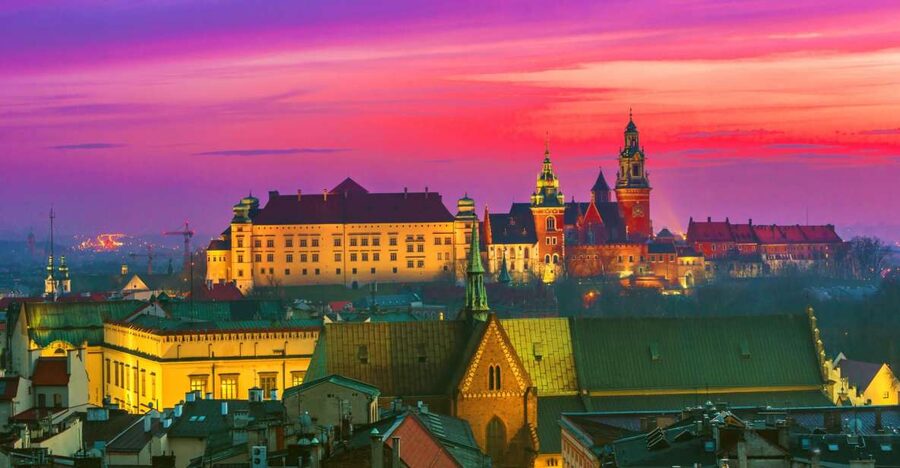
- A night route through Krakow’s icons: See St. Mary’s Basilica, the Cloth Hall, Florian Gate, Collegium Maius, and Wawel after sunset.
- A guide-led storytelling experience: The best guides use humor, questions, personal touches, and vivid delivery to keep the group involved.
- Not a strenuous walk: The route has many stops and pauses, with some sections lasting only a few minutes between story points.
- A strong value at $24: Two hours costs about $12 per hour, reasonable for a live guide and a focused introduction to Krakow’s darker past.
- Best for older teens and adults: The subject matter includes murder, the undead, and gruesome events, and children under 15 are not suitable.
Why Krakow is better after sunset
The appeal here is not simply being frightened. Krakow’s Old Town is already easy to visit on a standard daytime walk, so a night tour needs a clear reason to exist. This one gives you a theme that changes how you read familiar places.
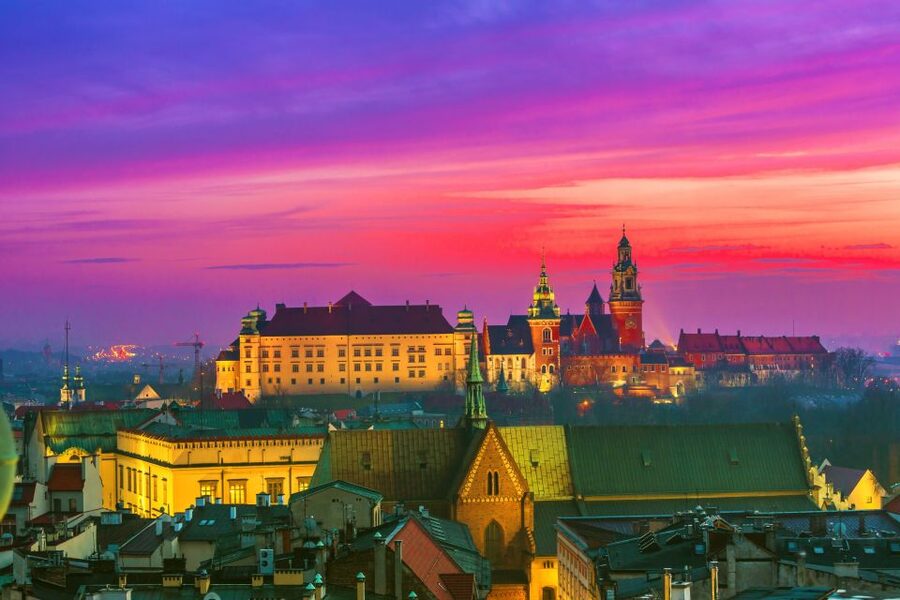
The lights around the Main Market Square pick out church towers, arcades, and stone façades while leaving plenty of shadow between them. That setting helps the stories, but the guide does more than lower their voice and point at dark corners. The stronger parts connect folklore to the way Krakow once dealt with criminals, outsiders, suspected witches, and people believed to be dangerous.
You can expect a blend of legend and fact. Some stories concern ghosts, killers, vampires, or the undead. Others explain how older beliefs grew from real fears and harsh social rules. The balance matters. If you want a serious academic account of Polish history, this is not that. If you want entertaining stories with enough context to make them memorable, the format works well.
The tone also seems to depend on your guide. Navia is described as lively, approachable, and especially good at combining gruesome tales with humor. Tomasz is known for an energetic delivery and a strong feel for local history. Anna has kept groups interested through rain and cold, while Susanna has been praised for creating plenty of laughs alongside the creepy material.
A few more Krakow trips to weigh up
- Old Town Krakow & Wawel Castle Walking Tour
★ 5.0 · 1,508 reviews - Krakow: The Old Town Walking Tour
★ 4.8 · 794 reviews - Krakow: Kazimierz Jewish Quarter Walking Tour
★ 4.8 · 571 reviews
Meeting outside Hotel Polski
The tour begins in front of Hotel Polski pod Białym Orłem, generally referred to as Hotel Polski. This is a useful place to start because it puts you right beside the historic Old Town, close to the city’s main sights.
You should arrive ready to walk and listen. There is no food or drink included, and the experience is designed as a continuous guided outing rather than a pub stop or theatrical performance. Pets, oversized luggage, alcohol, and drugs are not allowed.
The meeting point is outdoors, so check the start time when you book and dress for the forecast. A night that feels mild at dinner can become cold once you are standing still for a story. Several accounts of the tour mention cold or wet weather, yet also note that the many pauses and steady movement made it manageable.
Florian Gate and the medieval edge of the city
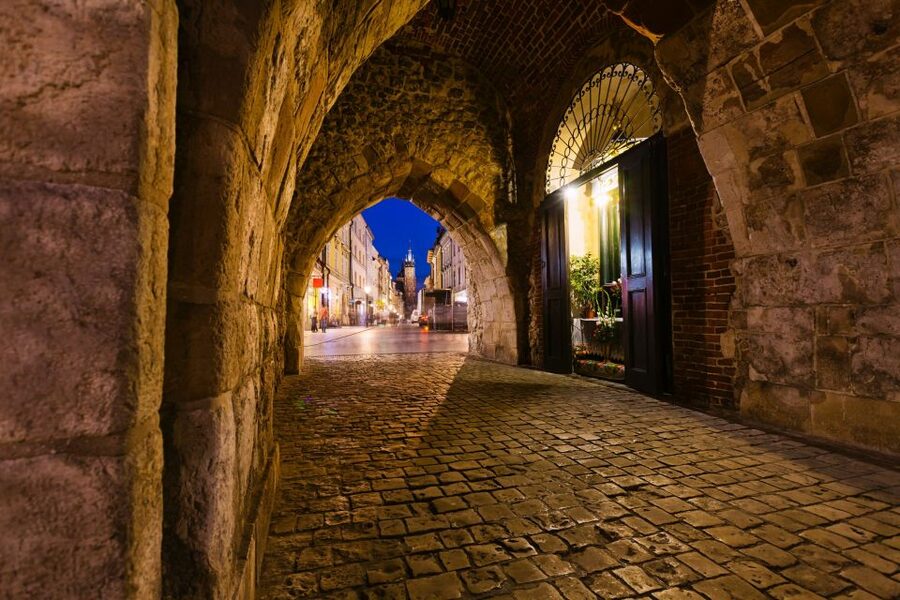
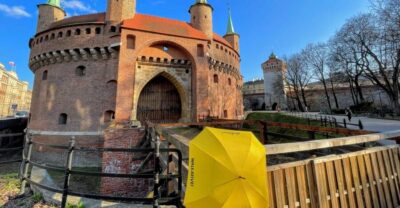
One of the early points of interest is Florian Gate, marked by its Polish Gothic towers. It is a fitting setting for a tour about old fears and city defenses. Even without entering a building, you get a sense of Krakow as a walled medieval city, where gates controlled movement and danger was imagined beyond the walls.
The stop is more than a photo opportunity. The route uses these familiar structures as a stage for tales about the city’s past. You may hear stories that show how crime, punishment, superstition, and public order once overlapped.
This is one of the tour’s strengths: you are not led from one unrelated ghost story to another. The buildings help anchor the tales. Look closely at the masonry, towers, and narrow streets as your guide speaks. In daylight, you may have passed through without thinking much about who was allowed in, who was kept out, and how vulnerable a medieval city could feel after nightfall.
St. John Street and the old center
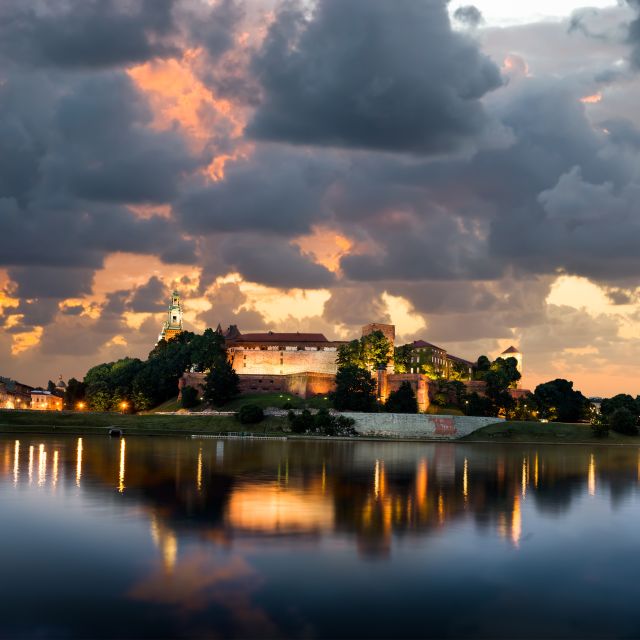
The walk continues along St. John Street and into the heart of Krakow. This section connects several major sights, including the Cloth Hall, the Town Hall Tower, Collegium Maius, City Hall, Maria Magdalena’s Square, and Katyński’s Square.
That list may sound like a standard sightseeing route, but the focus is different. You are not getting a full architectural lecture at every stop. Instead, each location becomes a doorway into a darker story or a strange piece of local tradition.
The frequent stops are useful. The walk is not an endurance test, and you are not expected to keep moving for two hours without a break. One account describes the longest stretch between stops as roughly five minutes, while another mentions a small pause during the tour. That makes this a good choice if you want an evening activity but do not want a fast-paced march.
You should still expect cobbled or uneven city streets and outdoor standing. The tour is listed as wheelchair accessible, but the practical ease of any walking route can depend on the crowd, weather, and street conditions on the night you attend.
Same country, a completely different kind of day:
- From Krakow: Auschwitz-Birkenau Guided Tour & Hotel Pickup
★ 4.5 · 33,358 reviews - From Krakow: Auschwitz-Birkenau Guided Tour & Hotel Pickup
★ 4.5 · 29,340 reviews - Krakow: Auschwitz Guided Tour with Optional Hotel Pickup
★ 4.5 · 15,280 reviews - Krakow–Zakopane: Cable Car, Chocholow Baths, Cheese & Vodka
★ 5.0 · 10,720 reviews
The Cloth Hall, St. Mary’s Basilica, and the power of familiar places
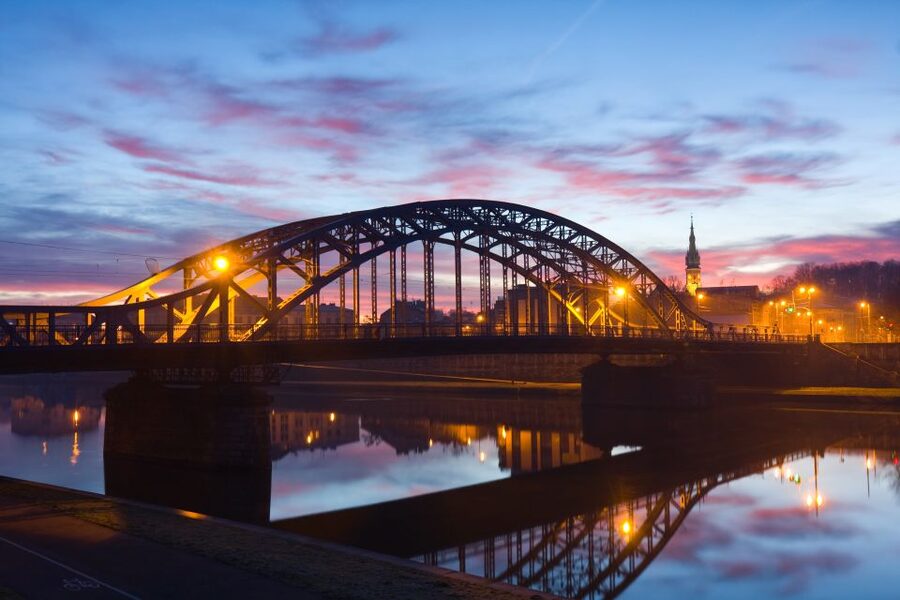
The Cloth Hall and St. Mary’s Basilica are among Krakow’s most recognizable sights. At night, their lighting gives the guide a strong visual backdrop, and the tour asks you to look at them less as postcard subjects and more as places shaped by old beliefs, violence, and public memory.
St. Mary’s Basilica dates from the 14th century, and its Polish Gothic towers dominate the square. You stop outside rather than taking part in a church visit. That distinction is important if you want interiors, art, or a detailed religious tour. The value here is the atmosphere and the stories attached to the setting.
The Cloth Hall offers a similar contrast. By day, it is one of the city’s cheerful centerpieces. At night, the arcades and surrounding square can feel more enclosed, especially when your guide describes events from earlier eras. I like this method because it does not require you to chase obscure locations across Krakow. The familiar center becomes the setting for material you would probably miss on a standard city introduction.
Guides also appear to keep the group involved with questions. One guide has used discussions about law and the formation of modern Poland to make the darker material more than simple entertainment. That approach gives you something to think about after the laughter fades.
Myths, murder, witchcraft, and the undead
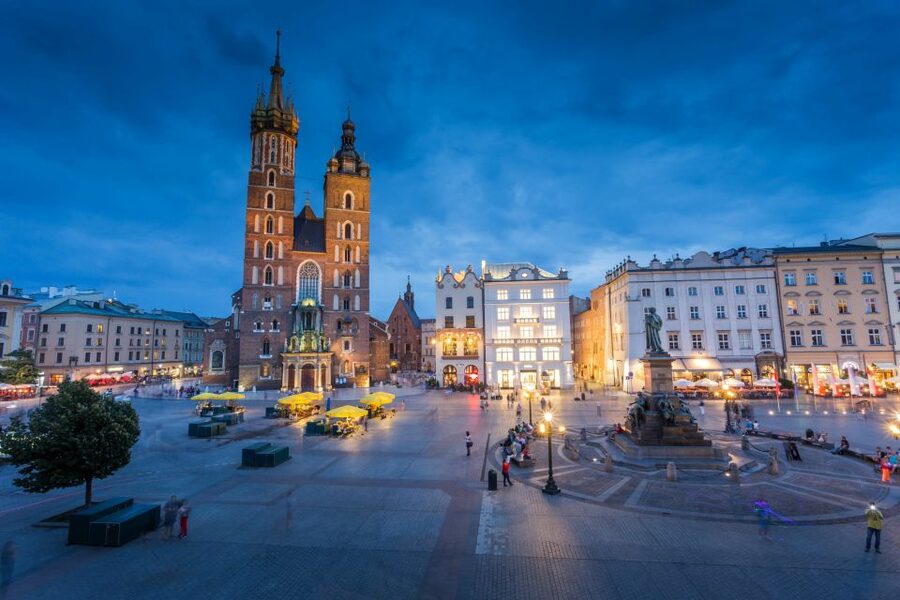
The subject matter is broad. You may hear stories involving murder, witchcraft, ghosts, vampires, and the undead, along with criminal history and local myths. Some tales are gruesome, so this is not a gentle folklore walk for anyone who dislikes descriptions of violence or death.
At the same time, the tone is not relentlessly grim. Humor is a major part of the experience. Several guides have been praised for being funny even while discussing dark subjects, and the mix helps keep the evening from becoming heavy.
I would describe the tour as macabre rather than terrifying. The occasional goosebumps come from the setting, the timing, and the story delivery. Do not book it expecting haunted-house effects, actors, props, or jump scares. The supplied details point to a live guide telling stories at real locations.
The variety is another plus. The tales range across different periods of Krakow’s past, from the city’s early days to more recent events. That gives the evening a wider reach than a tour built around one famous legend. You may leave with an interest in reading more about a particular crime, custom, or belief, which is a good sign for any history-focused activity.
Maria Magdalena’s Square and Katyński’s Square
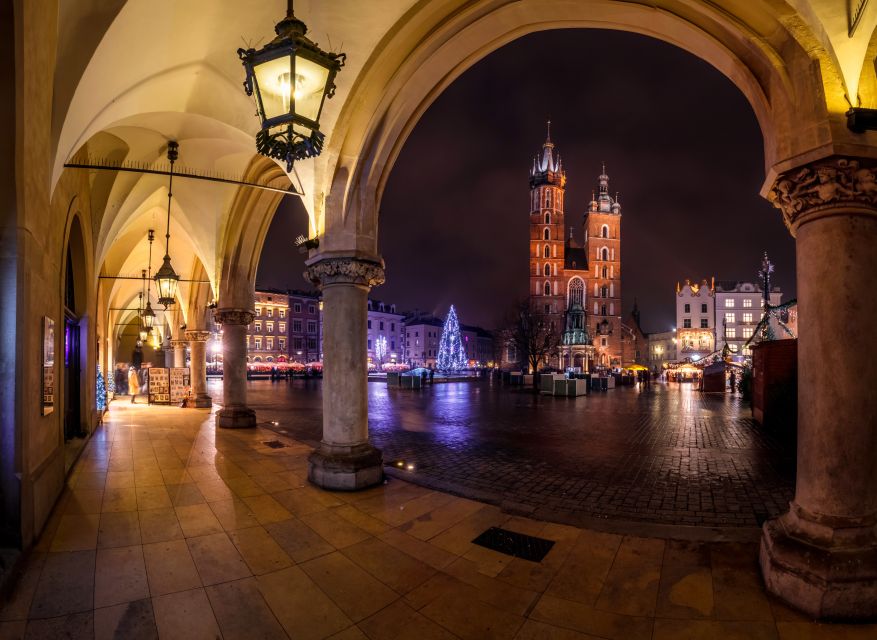
The route also includes Maria Magdalena’s Square and Katyński’s Square. These stops help break up the better-known central sights and give the guide room to show you places that may not appear on your first daytime walk.
The value of these smaller points is not necessarily a long list of monuments. It is the chance to see how stories spread across the city. A square can hold a local memory, a warning, or a tale that does not fit neatly into the usual royal and religious version of Krakow.
This is where the guide’s skill matters most. A weak storyteller could make a quiet square feel like a pause between attractions. A strong one can make you notice a corner, statue, or building detail that you would otherwise ignore. The best accounts of this tour repeatedly point to engaging delivery, easy conversation, and a willingness to answer questions.
Group size can vary, but at least one description notes a small group and an intimate feel. That is helpful for a storytelling walk because you can hear the guide clearly and ask questions without turning the event into a large crowd lecture.
Collegium Maius, City Hall, and Krakow’s intellectual side
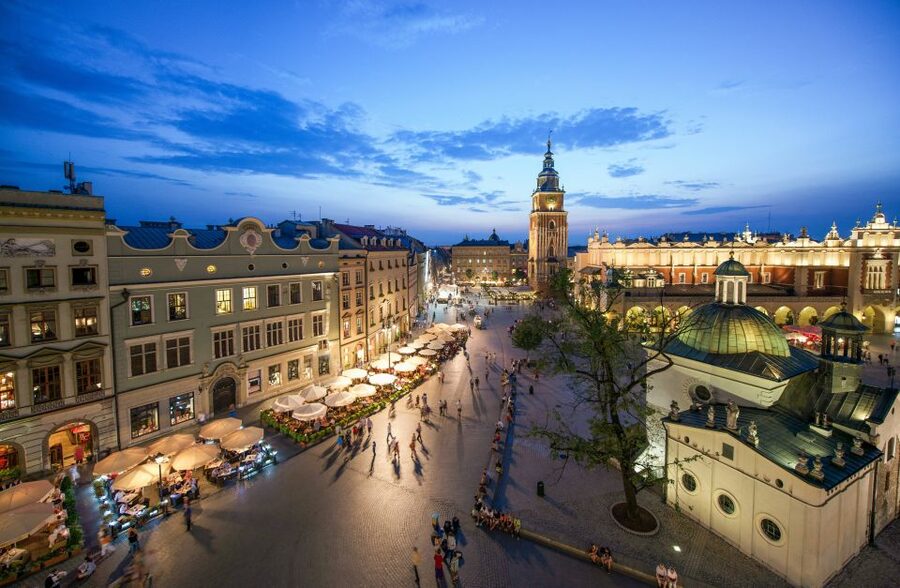
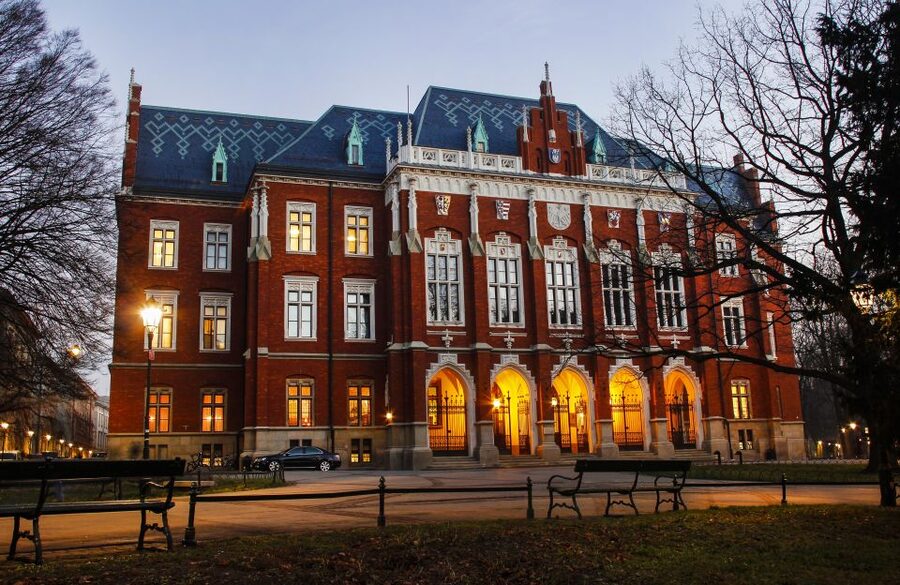
Collegium Maius and City Hall add another layer to the route. Krakow is often presented through its royal connections, churches, and market square, but these places point toward education, civic power, and the rules that shaped everyday life.
The tour can use those themes to explain how the city judged wrongdoing and made sense of events it could not explain. This is also where the material about Polish society and politics may appear. You should not expect a complete course in Polish political history, but the darker stories can raise useful questions about justice, authority, and public fear.
I appreciate that the tour is not restricted to supernatural tales. The most effective stories seem to connect the strange with the practical. A ghost story is entertaining, but it becomes more interesting when you also learn why people believed it, who benefited from the belief, or what real event may have helped create it.
Wawel Castle, the Vistula, and the dragon
The walk finishes at Zamek Królewski na Wawelu, or Wawel Royal Castle. From this area, you take in views toward the Vistula River and learn where the legendary city dragon was said to have lived.
The dragon is one of Krakow’s best-known legends, so it makes a satisfying closing point. After stories of criminals, spirits, and darker local traditions, the final stop connects the supernatural side of the city to one of its most famous symbols.
Ending at Wawel also gives you useful orientation. If this is your first evening in Krakow, you finish near one of the city’s major landmarks rather than being left at an obscure street corner. You can continue exploring independently, find a restaurant, or walk back toward the center.
The route is not a castle tour, and you should not expect entry into Wawel’s rooms or exhibitions. The focus is the area outside, the river views, and the legend tied to the hill.
Is $24 a fair price for two hours?
At $24 per person, the cost works out to about $12 per hour. That is fair if you value a live guide who does the research, selects the stories, keeps the group moving, and gives familiar sights a new purpose.
The price is less attractive if you only want a quick ghost story or a short photo walk. You are paying for two hours, and the subject matter may not suit you if you prefer art, food, or formal architecture.
I see the best value for a first visit. A standard daytime tour can explain the main monuments, while this evening route adds local legends, crime, folklore, and unusual details. It also helps you notice places you might otherwise pass without a second look.
Food and beverages are not included, so plan your dinner separately. The tour itself does not appear to depend on paid admissions, and the walking format keeps the price below many longer sightseeing activities.
Who should book it, and who should skip it?
I would book this for adults, older teenagers, history fans, true-crime followers, and anyone who wants something different after a day of churches and museums. It also suits repeat visitors who already know the Main Market Square and want a new angle on it.
You do not need to be especially fit. The steady route includes many stops, and the longest walking sections may be brief. Still, you should be comfortable outdoors for two hours, including periods of standing.
Skip it if you want a quiet, solemn history tour, a family activity for young children, or a formal interior tour of Krakow’s landmarks. Children under 15 are not considered suitable, and the stories can be macabre.
Guide quality will shape the night. Names that appear often in the strongest experiences include Navia, Tomasz, Anna, Susanna, Stefan, Alicja Wrobel, Damian, Brenda, and Tommy, the tour’s creator. A good guide turns the material into a conversation rather than a memorized speech, so it is worth paying attention to the language and start time available when you book.
Practical details for a smoother evening
The activity lasts two hours and is led by a live guide in English, Polish, Italian, or Spanish. It is listed as wheelchair accessible, and there is no food or drink included.
You can cancel up to 24 hours before the start for a full refund. The reserve-now, pay-later option lets you hold a place without paying immediately, which is useful when your Krakow plans are still shifting.
Do not attend under the influence of alcohol or drugs. Disruptive behavior can lead to removal from the tour without a refund. A warm coat, comfortable footwear, and weather protection are sensible choices, especially in the colder months.
Should you book Creepy Krakow?
Book it if you want storytelling with substance, not just a spooky walk. The combination of Gothic landmarks, criminal history, folklore, humor, and the night-time setting gives you a memorable way to see Krakow’s Old Town.
At $24, it is good value for two hours, especially if you enjoy history presented through unusual stories. Just dress for the weather, expect outdoor stops, and remember that this is a guide-led walk rather than a haunted attraction. If that sounds like your kind of evening, Creepy Krakow is an easy addition to a Krakow itinerary.
FAQ
How long is the Creepy Krakow walking tour?
The walking tour lasts two hours.
Where does the tour begin?
The meeting point is in front of Hotel Polski pod Białym Orłem, also called Hotel Polski.
Where does the tour finish?
The tour finishes at Zamek Królewski na Wawelu, or Wawel Royal Castle.
What language is the tour offered in?
Live guides lead the tour in Polish, Italian, English, or Spanish.
What sights are included on the route?
The route includes Old Town locations such as St. Mary’s Basilica, the Cloth Hall, the Town Hall Tower, Florian Gate, Collegium Maius, City Hall, Maria Magdalena’s Square, Katyński’s Square, Wawel, and views toward the Vistula River.
Is the tour suitable for children?
No. The activity is not suitable for children under 15.
Is the walking tour wheelchair accessible?
Yes, the activity is listed as wheelchair accessible.
Are food and drinks included?
No. Food and beverages are not included.
Can I cancel for a refund?
Yes. You can cancel up to 24 hours in advance for a full refund.
Can I reserve now and pay later?
Yes. The reserve-now, pay-later option allows you to book without paying immediately.
Just added around Krakow
- Tour to Wadowice: Hometown of Pope Saint John Paul II★ 4.6 · 12 reviews
- The Jewish Quarter – Walking Tour★ 5.0 · 4 reviews
- From Kraków; to Białka Thermal Baths private tour★ 5.0 · 5 reviews
- St. Mary’s Basilica and more – a short walk with a guide★ 4.7 · 56 reviews
- Krakow: Auschwitz-Birkenau and Wieliczka Salt Mine Day Trip★ 4.7 · 84 reviews
- Krakow: Skip-the-Line Wawel Castle & Old Town Guided Tour★ 4.9 · 23 reviews
- Krakow: Schindler’s Factory Guided Tour★ 4.2 · 12 reviews
- Shooting Range Experience!★ 4.8 · 66 reviews
Walking Tours, compared.
Gdańsk City Sights & History Guided Walking Tour in English
Read our review →
Old Town & Wawel Castle Walking Tour in English
Read our review →Browse the lists this tour appears in