
Reviewed · WALKING TOURS
Taste of Poland, food tour and guided walk with 12 tasting
Warsaw’s best food lesson may come one bite at a time. This three-hour walk links the Royal Castle, Old Town, Barbican, and New Town with 12 stops for Polish food and drink, including pierogi, soup, hunter’s stew, schabowy, cakes, and nalewka. I like the mix of local dishes and city landmarks, and I like that guide Maria adds family stories and practical Warsaw advice. Come hungry, but know this is not a suitable choice for vegetarians, vegans, or anyone with gluten intolerance.
The small group is limited to 10 people, which should make it easier to ask questions and keep the pace friendly. The main tradeoff is that the tour moves between several restaurants and cafés rather than focusing on one long sit-down meal, so the food comes in stages and the exact rhythm may vary.
Key points at a glance
- Twelve tastings fill three hours: Expect Polish starters, soups, main dishes, desserts, a hot drink, and a shot of traditional nalewka.
- The route covers two historic districts: You walk from the Royal Castle through Old Town and the Barbican before finishing in New Town.
- Maria brings family stories to Warsaw’s streets: The tour combines food facts, personal anecdotes, and suggestions for the rest of your visit.
- The portions are generous: A very light breakfast, or no breakfast at all, is sensible before this experience.
- You take home useful extras: The package includes a chocolate bar, dumpling recipe, tour photos, and a list of things to do in Warsaw.
- Dietary limits matter: Vegetarian and vegan diets cannot be accommodated, and the activity is not suitable for people with gluten intolerance.
A Polish meal spread across Warsaw
The clever idea here is simple: instead of eating one large meal in one place, you sample a broad section of Polish cooking while walking through central Warsaw. The food gives the sightseeing a purpose, and the walking gives you time between courses.
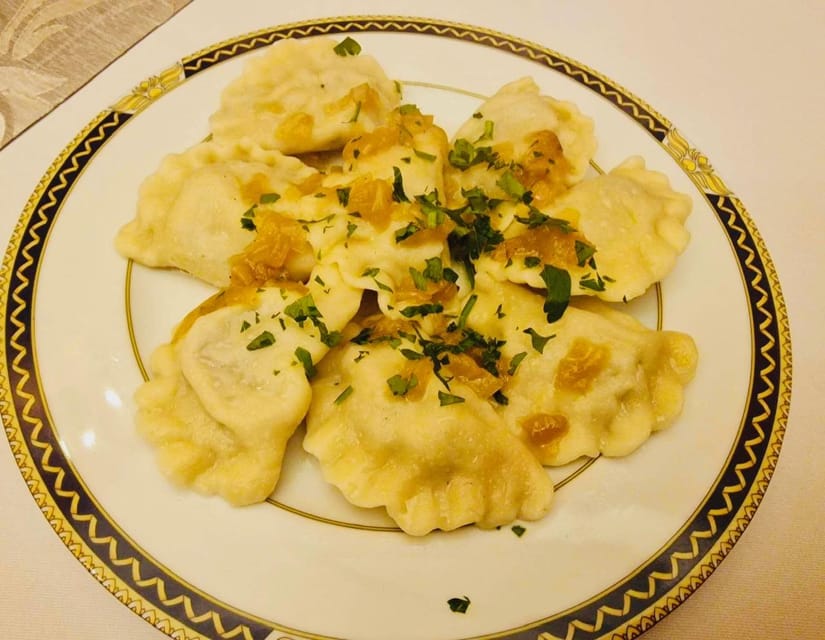
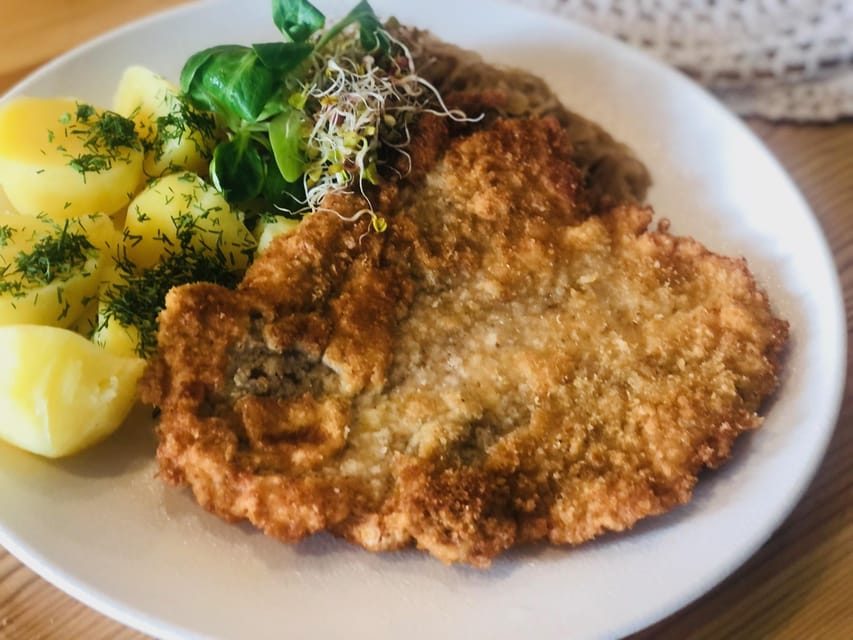
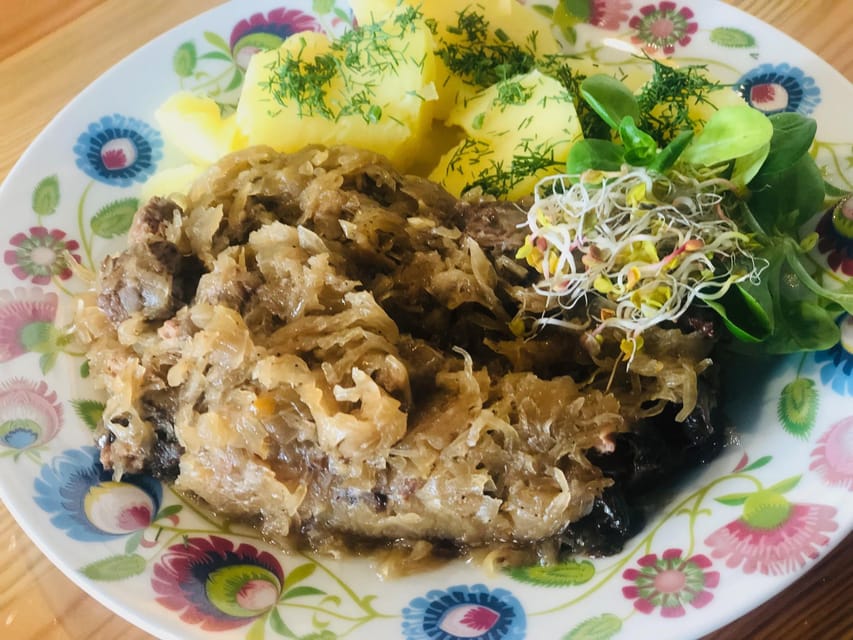
You can expect the tasting list to move from small starters to more filling dishes and then dessert. Artisan cheese and pâté set the tone early. Later come filled dumplings, traditional soups, hunter’s stew, and schabowy, a Polish-style breaded cutlet usually served with potatoes or another familiar side.
The final stretch turns sweet. Polish cakes arrive with a hot drink, followed by a small serving of nalewka, a traditional fruit liqueur. You also receive a chocolate bar to take home, a modest but pleasant reminder of the meal.
This is not a tour for cautious nibbling. The food is described as generous, and one useful rule comes through clearly: arrive with an empty stomach. If you eat a full breakfast first, you may spend the rest of the morning negotiating with your appetite.
A few more Warsaw trips to weigh up
- Warsaw: Polish Vodka Museum Tour with Tasting
★ 4.6 · 788 reviews - Warsaw’s No 1 cooking class-Polish dumplings with liqueur tasting
★ 5.0 · 576 reviews - Half-Day Polish Food Walking Tour with Guide and Dinner
★ 4.5 · 381 reviews
Meeting at Professor Zachwatowicz’s monument
The tour starts at the bronze, life-size monument to Professor Jan Zachwatowicz, located at street level near Sigismund’s Column and the city walls. This is a practical starting point because you are already beside some of Warsaw’s most recognizable sights.
Arrive on time. The group is small, but a late arrival can be awkward when the walk is moving between food stops. If you expect to be delayed, contact the provider rather than assuming the group can wait.
The tour is conducted in English. Maria is identified in the feedback as the guide, and her approach includes stories about her family and Warsaw. That personal angle matters on a food walk. Polish dishes are not just menu items, and family connections can give you a better sense of when and why certain foods are served.
The Royal Castle and the first Polish bites
The first sightseeing stop is the Royal Castle, with about 10 minutes for a photo stop, orientation, and guided commentary. You should not expect a full castle visit or museum tour. Instead, this is a quick introduction to the setting before the food takes over.
The first restaurant stop provides local snacks for about 15 minutes. One account of the experience describes this opening as a Polish breakfast, followed by an explanation of the city and its food traditions. That makes the early tasting more than a quick sample. It sets up the dishes that follow and gives you a first chance to ask Maria questions.
The short stops help keep the tour moving, though they also mean you should not expect long conversations at every restaurant. The strength of the format is variety. You get several food settings and a broad taste of Polish cooking without spending three hours at a single table.
Old Town stories between the courses
From the opening food stop, the walk continues through Warsaw’s Old Town. The scheduled visit here lasts about 15 minutes and includes sightseeing and guided commentary.
The Old Town is one of the best places in the city for a first walk, and pairing it with food makes the route easier to remember. You are not simply moving from one restaurant to another. You are hearing about Warsaw while seeing the streets, squares, and buildings that give the center its shape.
The guide’s firsthand knowledge is one of the strongest parts of the experience. Maria shares family anecdotes alongside information about Warsaw, so the history lesson has a personal scale. You also receive recommendations for places to visit during the rest of your stay, which can be especially useful if this is one of your first activities in the city.
Same country, a completely different kind of day:
- Warsaw: Chopin Concert in the Old Town
★ 4.8 · 2,287 reviews - Warsaw: Traditional Galar Cruise on The Vistula River
★ 4.6 · 1,640 reviews - Warsaw: Old Town Highlights Walking Tour in English
★ 4.7 · 1,516 reviews - Warsaw Concert: Chopin – Painted by Candlelights with Wine
★ 4.8 · 1,442 reviews
Pierogi, soup, and the dishes that define Poland
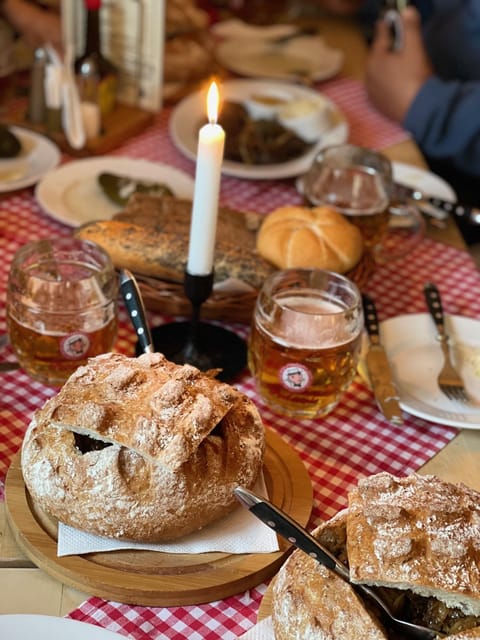
A later restaurant stop focuses on regional food, followed by more tasting stops at local restaurants. This is where the meal becomes substantial.
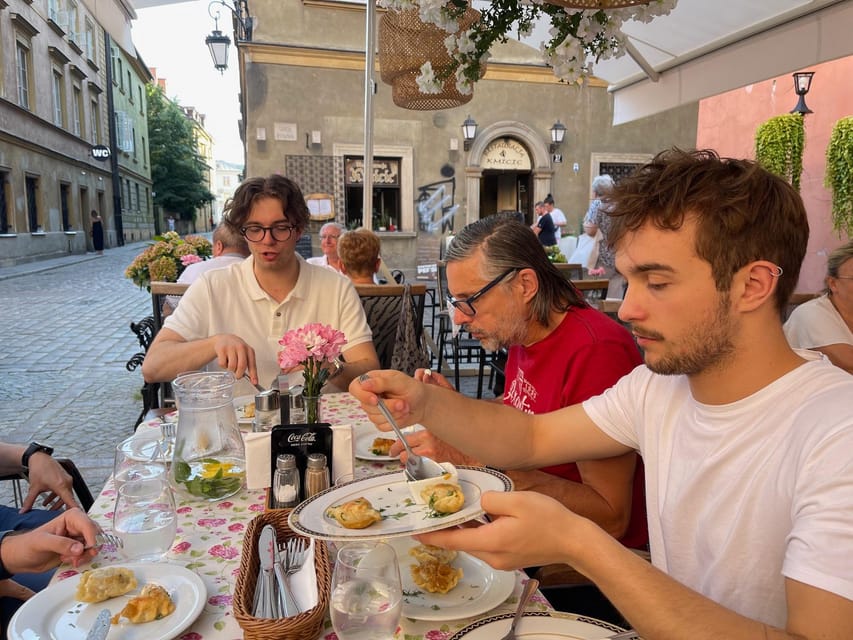
Pierogi are the obvious star for many first-time visitors. The tour includes dumplings with a variety of fillings, and you receive a recipe for Polish dumplings afterward. That recipe is a useful touch because it turns a quick holiday taste into something you can try again at home.
Traditional soups also appear. Polish soup can be hearty, sour, creamy, or packed with vegetables and meat, depending on the recipe. The supplied details do not name each soup, so you should treat this part as a selection rather than expect one specific bowl.
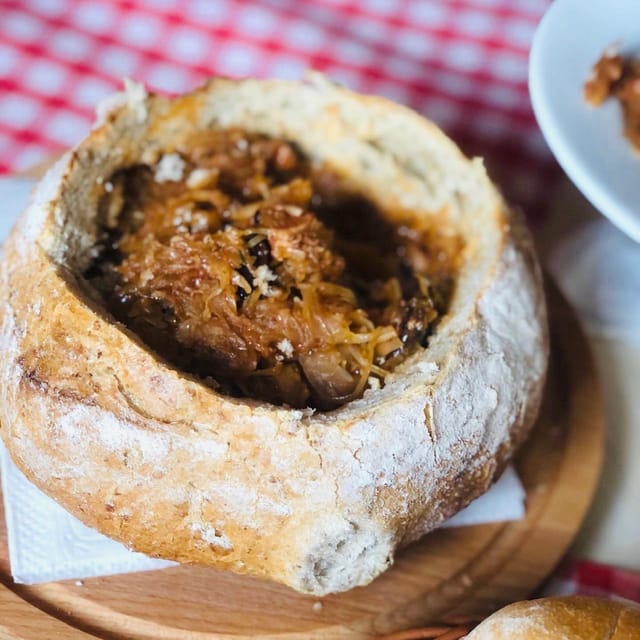
Hunter’s stew brings another side of Polish cooking. It is a filling dish with a strong connection to home-style food, and it adds variety after the lighter starters and dumplings. The tour also includes schabowy, a breaded Polish cutlet served with potatoes in the described meal. This gives you a familiar reference point while showing how a simple meat-and-potato plate fits into Polish cooking.
The advantage is breadth. In one afternoon, you can try foods that might otherwise require several restaurant visits. The drawback is that you may not have much control over the menu, especially if you have strong dislikes or dietary restrictions.
The Barbican and a useful pause for digestion
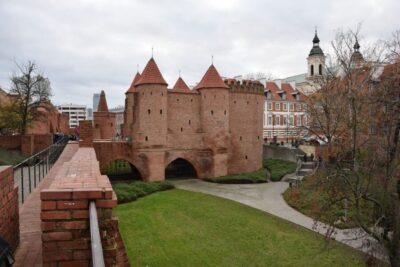
The route reaches the Warsaw Barbican for another photo stop and about 10 minutes of walking and sightseeing. The old defensive walls make a natural bridge between the food stops and the next part of the tour.
This section also gives you a little time to digest. The walking is described as manageable rather than strenuous, with food stops spaced through the route. That balance suits anyone who wants to see the city without turning the tour into a hard-paced exercise.
Dress for the weather. Much of the experience takes place outdoors, and the food stops do not remove the need for comfortable clothing and sensible shoes. The tour is wheelchair accessible, but a participant who needs detailed route information should confirm the exact conditions before booking.
More restaurant stops and a full stomach
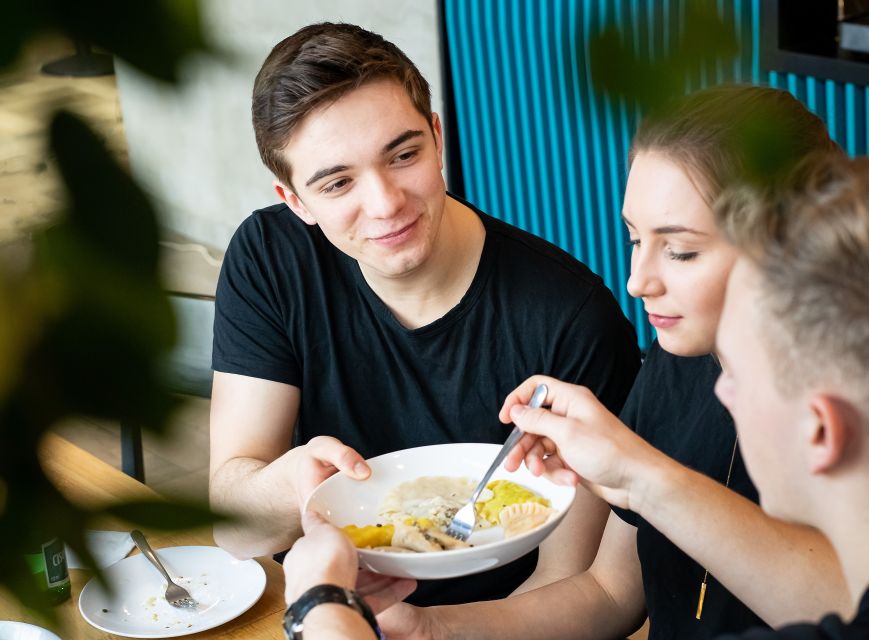
After the Barbican, the group visits another local restaurant for about 15 minutes, then spends roughly 30 minutes at a further restaurant for food tasting. These are among the longer food breaks, giving you more time to eat and listen.
The 30-minute stop is important because the menu is not made up of tiny samples alone. By this point, you may have tried cheese, pâté, dumplings, soup, and meat dishes. The meal builds in stages, so the later stop can feel like a proper course rather than another quick bite.
The number of stops also helps you compare different parts of Polish food culture. You can notice the contrast between a small snack, a warm soup, a dumpling dish, and a heavier main course. For a first visit, that range is more useful than ordering one famous dish and calling it a Polish meal.
Extra drinks are not included. The package does include a hot beverage and a shot of traditional Polish liqueur, but plan to pay separately if you want additional drinks along the way.
Polish cakes, hot drinks, and nalewka
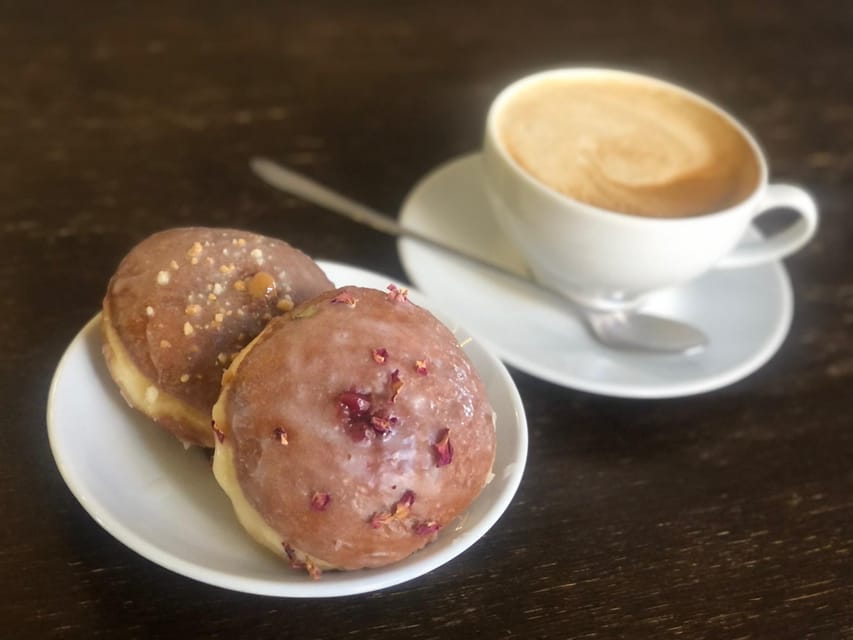
The dessert stop takes place at a local café for about 15 minutes. You receive Polish cakes and a hot drink, with two types of dessert described in the food account. This is a welcome change of pace after the savory dishes.
Nalewka comes near the end. It is a traditional fruit liqueur, usually served in a small measure, and it gives the tasting a distinctly Polish finish. Since it is alcohol, tell the guide if you do not want the shot. The included tasting is part of the package, but you are not required to drink it.
Dessert is also where the tour feels most social. A café stop gives you a chance to compare favorites, ask final food questions, and gather suggestions for the rest of your time in Warsaw.
New Town and the final chocolate
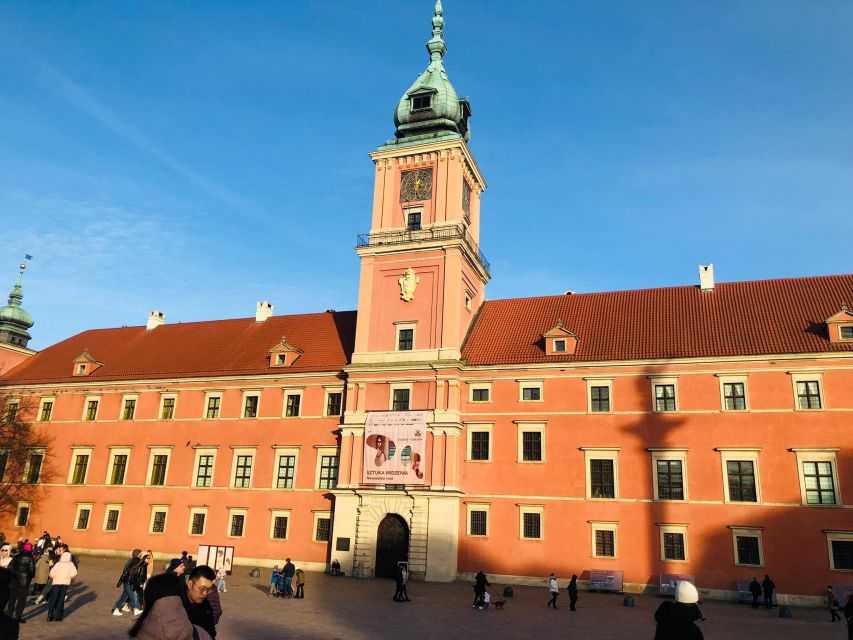
The walk finishes through New Town, with about 10 minutes of guided sightseeing, ending at the market square on Rynek Nowego Miasta. This is a useful endpoint because you are left in another central area rather than returned to the starting monument.
By the end, you receive a chocolate bar to take home. You also get a link to photos taken during the tour, a recipe for Polish dumplings, and a list of recommended things to do in Warsaw. These extras give the tour value beyond the meal itself.
The recommendations may be especially handy if you schedule this experience early in your visit. You can use the guide’s suggestions to shape the next day or two, rather than treating the tour as an isolated afternoon.
What the $111 price really buys
At $111 per person, the experience is not cheap if you compare it with buying one Polish lunch. That comparison misses the point, though. The fee covers a three-hour guided walk, 12 food and drink tastings, a hot drink, nalewka, a chocolate bar, photos, a dumpling recipe, and a list of Warsaw suggestions.
The price makes more sense for you if you want a food introduction and a city orientation in the same booking. You would otherwise pay separately for several dishes, a guide, and perhaps another walking tour. The small group, limited to 10 participants, also gives the experience a more personal scale than a large coach outing.
Still, the value depends on your appetite and preferences. Someone who dislikes pâté, meat, soup, or alcohol may not get the full benefit. The current dietary information says vegetarian and vegan meals cannot be provided, and the experience is not suitable for people with gluten intolerance. Confirm your needs before paying, particularly because an older comment describes a plant-based option while the current activity information says dietary substitutions are not available.
Free cancellation is available up to 24 hours before the start time, and you can reserve now and pay later. Those policies help if your Warsaw schedule is still changing, but they do not change the basic food restrictions.
Who should book this food walk?
I would choose this tour for a first or second day in Warsaw. You get a quick orientation to the Old and New Towns, a broad introduction to Polish dishes, and direct suggestions for what to do next.
It suits people who enjoy trying several dishes instead of ordering one safe meal. It also works well for couples, friends, and solo visitors who prefer a small group and like asking questions while they eat.
Families should consider the three-hour length and the number of food stops. The walk is not described as strenuous, but the food is plentiful, and younger children may not enjoy every traditional dish.
I would skip it if you need a vegetarian, vegan, or gluten-free menu. I would also skip it if you want a detailed museum visit, because the Royal Castle and other landmarks receive short guided stops rather than long indoor tours.
My verdict on the Taste of Poland tour
Book this experience if you want a generous Polish tasting menu combined with a compact Warsaw walk. The strongest features are the range of dishes, the personal guiding style associated with Maria, and the practical extras you can use after the tour.
The best advice is to schedule it early, arrive hungry, and wear weather-ready shoes. At $111, it is a worthwhile package for people who value food, local stories, and first-day orientation in one outing. It is not the right pick for restricted diets or for anyone looking for a formal historical tour with extended time inside the sights.
FAQ
How long does the Taste of Poland tour last?
The tour lasts three hours.
How many tastings are included?
The experience includes 12 food and drink tastings, including a hot beverage and a shot of traditional Polish liqueur.
What foods might I try?
The tastings can include artisan cheese, pâté, pierogi with different fillings, traditional soups, hunter’s stew, schabowy, Polish cakes, and nalewka.
Where does the tour begin?
It begins at the bronze, life-size monument to Professor Jan Zachwatowicz near Sigismund’s Column and the city walls.
Where does the tour finish?
The tour ends at Rynek Nowego Miasta in Warsaw’s New Town.
Is the tour suitable for vegetarians or vegans?
No. The stated information says vegetarian and vegan diets cannot be accommodated.
Is the tour suitable for someone with gluten intolerance?
No. People with gluten intolerance are listed as not suitable for this activity.
What extras are included?
You receive a chocolate bar, a link to photos taken during the tour, a recipe for Polish dumplings, and a list of recommended things to do in Warsaw.
More Walking Tours in Warsaw
- Warsaw: Old Town Guided Walking Tour
★ 4.9 · 599 reviews - Warsaw: Warsaw Ghetto Private Walking Tour with Hotel Pickup
★ 4.9 · 369 reviews - Old Town Warsaw Walking Tour
★ 4.5 · 333 reviews - Warsaw: Jewish History Guided Walking Tour in English
★ 4.7 · 324 reviews
Just added around Warsaw
- Skip-the-Line Warsaw Royal Castle Private Guided Tour★ 5.0 · 4 reviews
- Secrets of Warsaw 4-hour Bike Tour★ 5.0 · 25 reviews
- Warsaw: Live Show at Sabat Theatre★ 4.5 · 11 reviews
- Private Warsaw City Tour★ 4.9 · 4 reviews
- Warsaw: WWII Private Tour by Retro Minibus with Hotel Pickup★ 5.0 · 7 reviews
- Private Tour From Warsaw: Łowicz Mazovian Countryside★ 5.0 · 10 reviews
- Packrafting kayaking guided tour Vistula river Warsaw Poland★ 4.5 · 14 reviews
- Lublin & Majdanek Small-Group Tour from Warsaw with Lunch★ 5.0 · 5 reviews
Walking Tours, compared.
Gdańsk City Sights & History Guided Walking Tour in English
Read our review →
Browse the lists this tour appears in