
Reviewed · GOLF CART TOURS
Gdansk: 2H City Sightseeing Tour LIVE GUIDED by Buggy/Golf cart
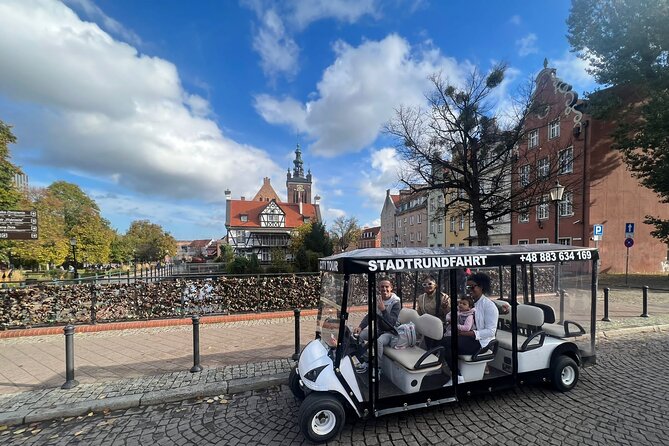
Gdańsk’s story is far too big for its postcard-sized Old Town. This electric golf buggy tour connects the rebuilt medieval center with the shipyard, the European Solidarity Centre, the Museum of the Second World War, and churches most visitors would not reach on foot in one outing. It is a fast, comfortable introduction to a city shaped by trade, war, communism, and the sea.
I like two things right away: you cover a surprising amount of ground without wearing out your feet, and the live guide can explain how Gdańsk changed after the destruction of 1945. The included drink, which may be water, coffee, or beer, is a small but welcome touch. The main consideration is pace: most stops are brief photo and explanation points, not full museum visits.
The essential points before you book
- A broad city overview in about two hours: You see the main historic streets, the shipyard district, key churches, and modern museums in one compact ride.
- The amber altar is the one substantial interior visit: The 15-minute stop at St. Bridget’s Church includes admission and gives you time to see its remarkable amber altar.
- Local storytelling is a major part of the experience: Guides including Michael, Maciej, Noris, and Mariana explain both older events and more recent Polish history.
- Pickup is convenient but limited: Pickup and drop-off are available within 2 kilometers of Neptune’s Fountain, not from the ports.
- Expect an open-air ride: The buggy is comfortable, but it can feel chilly in autumn, so bring an extra layer.
- The tour works best as your first Gdańsk activity: It helps you decide which churches, museums, and neighborhoods deserve a longer visit later.
Why the buggy works so well in Gdańsk
Gdańsk’s center looks compact on a map, but the sights are spread across several districts. The grand buildings around Long Market are close together. The shipyard, the Solidarity Square monuments, the Old Town churches, and the Museum of the Second World War require more time and energy to connect on foot.
The buggy solves that problem. You sit while the guide handles the route, then stop for short explanations and photographs. The electric vehicle also suits Gdańsk’s narrow streets and keeps the outing quieter and cleaner than a standard sightseeing bus.
This is not a hop-on, hop-off service. You stay with the group and follow a tightly planned route. The experience is best understood as a moving introduction rather than a series of full visits.
The tour is offered in English, with a live guide. The maximum group size is listed as 30 people, though the ride may be arranged across more than one cart. Guides named in the feedback include Michael, Maciej, Noris, and Mariana. The strongest part of the guiding is the connection between major historical events and ordinary life in Gdańsk. Michael, in particular, has shared family memories tied to the Nazi and Soviet periods, adding a personal layer to the facts.
More Golf Cart Tours in Gdansk
- Gdansk: City Sightseeing Tour by Golf Cart/Buggy Guided Tour
★ 4.9 · 510 reviews - Gdansk: Shared or Private City Tour Sightseeing By Golf Cart
★ 4.8 · 233 reviews - Gdańsk: City Sightseeing Tour by Buggy/Golf Cart LIVE GUIDED 1H
★ 5.0 · 208 reviews
Neptune’s Fountain and the Royal Road
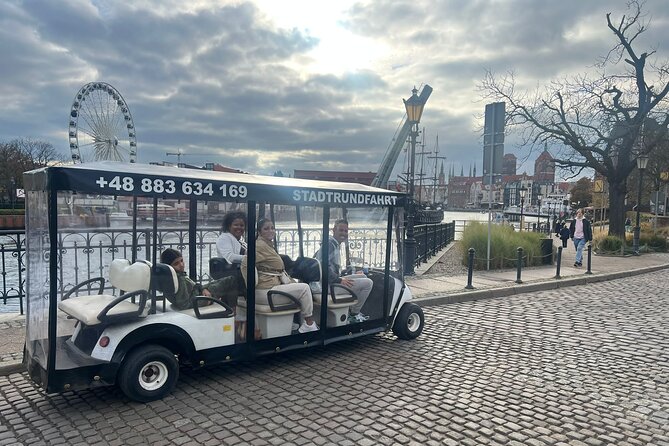
The tour begins at Neptune’s Fountain on Długi Targ, the Long Market. Pickup is also available from a hotel or another address within 2 kilometers of the fountain, provided the street allows vehicle access.
Neptune is a fitting starting point. Gdańsk grew wealthy through trade and its position on the Baltic, and the sea god remains one of the city’s best-known symbols. You get a few minutes here for photographs before moving into the architectural heart of the city.
The route continues past the Main Town Hall and Arthur’s Court. The old Town Hall dates from the 14th century and now forms part of the Museum of Gdańsk. Arthur’s Court began as a gathering place for merchants and later served as the city’s stock exchange. These buildings help explain Gdańsk’s old commercial power, even if the stops are too short for an interior visit.
At Długi Targ, you have about seven minutes, one of the longer pauses in the central district. This is the place to take in the grand facades and understand the shape of the historic center. The Renaissance Green Gate closes the square toward the Motława River. It was built as a royal residence in the 16th century, though Polish kings did not use it as often as its name might suggest.
The Gdańsk Shakespeare Theatre comes next. Its folding roof is the unusual feature, and it links the city to the English theatrical tradition that once reached Baltic ports. You will see the building from the outside, with a short explanation rather than a performance or theater tour.
Gates, towers, and the Old Town edge
The next section moves through the old defensive and ceremonial entrances. Katownia, or the Old Prison Tower, once formed part of the city’s prison and torture complex. Its brick towers dominate what was known as the Coal Market.
The Golden Gate marks the formal entrance to Długa Street. Royal processions once passed through here on the way to the representative center of the city. The Highland Gate, part of the 16th-century Gatehouse Complex, traditionally marked the beginning of the Royal Road. Today it also serves as a tourist information point.
The Great Armoury is one of the most decorative buildings on the route. Its Dutch Mannerist design dates from the 16th and 17th centuries, and its elaborate facade makes a good contrast with the austere brick churches nearby. The building now belongs to the city’s art academy.
A modern pause follows at the Millennium Tree, a polished stainless-steel sculpture commemorating 1,000 years of Gdańsk. Then you pass the monument to King John III Sobieski, an equestrian statue originally made for Lviv and transferred to Gdańsk in 1965.
This stretch shows why the buggy is useful. The route is not limited to one pretty square. It links formal gates, prison architecture, monuments, and working city streets in quick succession.
Old Town churches and the Great Mill
The tour then leaves the most photographed part of the center and reaches Gdańsk Główny railway station, opened in 1900. The station is a useful orientation point, especially if you are arriving or leaving by train.
St. Joseph’s Church and St. Elizabeth’s Church provide brief glimpses of the city’s religious history. Both date back centuries and suffered serious damage during the Second World War before reconstruction. The Old Town Hall, roughly 400 years old, is one of the few historic buildings in Gdańsk to survive the wartime destruction with its structure intact.
The Great Mill is one of the more surprising stops. It was once the largest industrial plant in medieval Europe, powered by the Radunia Canal. After rebuilding, it became home to the city’s amber museum. The tour only allows a few minutes here, so consider returning if amber interests you.
St. Catherine’s Church is described as the oldest church in Gdańsk. It was Protestant from 1545 until the end of the Second World War, then returned to Catholic use. Like so many buildings in Gdańsk, its present appearance reflects both a long medieval past and postwar rebuilding.
Same country, a completely different kind of day:
- Gdansk: City Cruise on Historical Polish Boat
★ 4.8 · 2,913 reviews - Gdańsk: Sunset Cruise on a Historic Polish Boat
★ 4.9 · 977 reviews - Gdańsk City Sights & History Guided Walking Tour in English
★ 4.8 · 876 reviews - Gdansk: Firearm Shooting Experience with Instructor
★ 4.8 · 866 reviews
St. Bridget’s Church and the amber altar
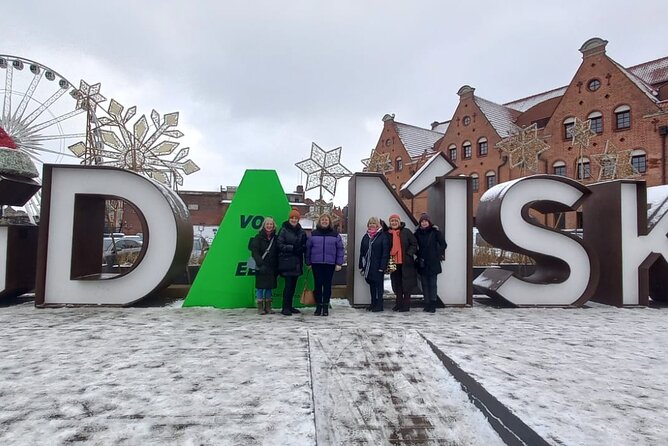
St. Bridget’s Church is the interior highlight. You get about 15 minutes inside, and admission is included.
The church is closely tied to the Solidarity movement. During martial law, it served as a sanctuary for Solidarity leaders. It was almost destroyed during the Second World War and rebuilt in the 1970s.
The reason to pay attention here is the amber altar. It is described as twice the size of the famous Amber Room and more than three times as high. Whether or not you care about church decoration, this is an unusual piece of Gdańsk craftsmanship and a useful reminder that amber is not just a souvenir industry here. The city’s connection to Baltic amber reaches back through trade, art, jewelry, and local identity.
This stop also gives the guide time to slow down. Most of the route allows only a minute or two at each sight. At St. Bridget’s, you can actually look around rather than simply raise your camera and move on.
The Polish Post Office and the Solidarity story
The Polish Post Office Museum marks one of the first acts of the Second World War in Europe. The defense of the post office began on September 1, 1939, as part of the German invasion of Poland. A monument nearby honors the defenders.
The route then turns to the European Solidarity Centre, one of Gdańsk’s most important modern institutions. It preserves the story of Solidarity, the Polish movement that challenged communist rule. The building itself is modern, but the subject is rooted in the shipyard strikes and the political changes that followed.
At Solidarity Square, the Three Crosses Monument commemorates shipyard workers killed during the December 1970 events. Three steel crosses with anchors rise 42 meters and weigh about 140 tons. The monument was made by shipyard workers and sits near the historic Gate No. 2.
You will have a few minutes here, enough to hear the basic story and take in the scale of the memorial. If you want the full account, return later to the European Solidarity Centre. Four minutes cannot replace a museum visit, but it can tell you why this corner of Gdańsk matters.
Sala BHP and the Gdańsk Shipyard
Sala BHP is another major Solidarity site. The August strike took place here, and Lech Wałęsa signed the 1980 agreements in this building. It is closely connected with the birth of the Solidarity movement.
The planned stop is about 15 minutes, giving you more time than most locations on the route. That makes it one of the better places to ask questions. If Polish 20th-century history is your main interest, this portion may be the most valuable part of the tour.
The Gdańsk Shipyard follows. Formerly known as the Lenin Shipyard, it became internationally famous after Solidarity was founded there in September 1980. The yard occupies land beside the Martwa Wisła and Ostrów Island, and its working industrial setting offers a very different view from the ornate facades of Long Market.
I particularly like this change of scenery. Gdańsk is not only a restored old town. Its modern identity was forged in factories, protests, churches, and negotiations. The buggy lets you connect those places without spending half the day walking between them.
The Second World War Museum and the riverfront
The Museum of the Second World War is included in the route as an exterior orientation stop, with about two minutes allocated. Its exhibitions opened in 2017, and the institution focuses on the Second World War.
You should not expect to visit the galleries during this tour. The brief stop is enough to identify the museum and understand where it fits in the city. If the war’s history is central to your visit, plan a separate visit with several hours available.
The Baltic Symphony Hall comes next on Ołowianka Island. The Polish Baltic Philharmonic occupies historic, rebuilt, and expanded buildings that once formed a municipal power plant. This is another example of Gdańsk adapting old industrial structures to new cultural uses.
The riverfront section continues to St. John’s Church, a Gothic building from the 14th century and now also a cultural center. The church was among the last major Gdańsk monuments to be reconstructed after the war. You then pass the Great Crane on the Motława River, the city’s defining medieval port structure and the largest medieval port crane in Europe.
The Crane is one of the few stops where you will probably want to return on foot. The riverfront deserves a slower look, especially if you want photographs or time beside the water.
St. Mary’s Church, the Royal Chapel, and Market Hall
St. Mary’s Church is the grandest church on the route. Dating from 1502, it is the largest Gothic brick building in the world. The tour allows only two minutes, so the guide’s explanation is the main benefit. You will not have time for a full interior visit or a climb unless you return later.
Beside it, the Royal Chapel offers a sharp visual contrast. Built in the 17th century in Baroque style, it has a central dome and a richly decorated facade. Its lighter, more colorful appearance makes it easy to distinguish from the enormous brick mass of St. Mary’s.
St. Nicholas Church is one of the oldest churches in Gdańsk, with a history reaching back to the 12th century. It is also described as the only church in the city to survive the Second World War. The final stop is the historic Market Hall, built in 1896 and regarded as Gdańsk’s oldest shopping center.
The tour returns to Neptune’s Fountain, unless you arrange a different drop-off within 2 kilometers of the fountain. That makes the route easy to combine with lunch, shopping, or a second look at the Long Market.
What the $51.97 price gets you
At $51.97 per person, this is not the cheapest way to see Gdańsk’s center. You can walk around Long Market and view many facades for free. The value comes from the distance covered and the live explanation linking the sights.
You are paying for roughly two hours of transport, a guide, pickup and drop-off within the stated area, taxes, a drink, and admission to St. Bridget’s Church. You also save the time needed to walk from the central streets to the shipyard and back.
The price makes the most sense in three situations:
- You have only one morning or afternoon in Gdańsk.
- You have limited mobility or simply prefer not to walk long distances.
- You want a clear orientation before choosing which museums and churches to visit in detail.
It is less suitable if you want long museum visits, extended photography stops, or a slow architectural walk. The route is wide, not deep.
Timing, weather, and practical details
The stated duration is about two hours to two hours and 15 minutes. The tour needs good weather, and poor conditions may lead to a rescheduled outing or a full refund.
The buggy is open to the air. Bring a warm layer in autumn, since the ride can feel chilly even when walking conditions seem comfortable. The included drink may be water, coffee, or beer. If it is not offered during the ride, ask the guide, since it is part of the experience.
Pickup is available from a hotel, lodging address, or another point in the historic center within 2 kilometers of Neptune’s Fountain. You should be ready 10 minutes before departure and provide the exact address. Streets with restricted vehicle access may require a nearby alternative meeting point.
This service does not pick up at the ports. That matters for cruise passengers. You must make your own way to central Gdańsk, and Gdynia is a different city about 25 kilometers away. Traffic can also cause a small delay, so avoid arranging a tight return connection immediately after the tour.
The tour is offered in English, and service animals are allowed. Most people can take part, and the maximum listed group size is 30.
Who should book this Gdańsk tour?
I would choose it as a first activity, not as a replacement for exploring Gdańsk on foot. It gives you a map in your head: Long Market is the ceremonial center, the shipyard is the political heart of modern Poland, and the churches preserve the city’s older identity.
It suits families, older visitors, cruise passengers who can reach the center, and anyone with limited time. It also works well for visitors who want local stories rather than a silent sightseeing ride.
History fans will appreciate the balance between medieval trade, wartime destruction, Nazi and Soviet rule, and Solidarity. Architecture fans will see Dutch Mannerism, Gothic brickwork, Baroque decoration, industrial buildings, and modern memorials in one outing.
You may want something else if you prefer to spend 20 minutes inside every church or museum. The stop list is long, and the short pauses mean you will often hear more than you see in detail.
Should you book it?
Book this tour if you want a fast, well-explained orientation to all of Gdańsk, especially beyond the polished streets of the Main Town. The strongest elements are the personal historical storytelling, the shipyard and Solidarity section, and the included visit to St. Bridget’s amber altar.
Skip it if your main goal is slow sightseeing or lengthy museum time. For most first-time visitors with two hours to spare, though, the buggy offers solid value: you cover the city’s major chapters, save your legs, and finish with a useful list of places to revisit at your own pace.
FAQ
Where does the tour start and end?
The standard meeting point is Neptune’s Fountain on Długi Targ in Gdańsk. The tour can end there or at a location of your choice within 2 kilometers of the fountain.
Is hotel pickup available?
Yes. Pickup is available from a hotel, lodging address, or another chosen location within 2 kilometers of Neptune’s Fountain, subject to vehicle access. You should provide the exact address and wait there 10 minutes before the scheduled start.
Does the tour pick up at the port?
No. Port pickup is not offered. Cruise passengers need to make their own way to the meeting point in central Gdańsk.
Is the tour offered in English?
Yes. The experience includes a live guide in English.
Is admission to any attraction included?
Admission to St. Bridget’s Church is included. The other listed stops are sightseeing stops with no admission ticket included or required for the brief visit.
What happens if the weather is poor?
The tour requires good weather. If it is canceled because of poor conditions, you will be offered another date or a full refund. You can also cancel for a full refund up to 24 hours before the scheduled start time.
More 2-Hour Experiences in Gdansk
- Gdansk Old Town 2-Hour Walking Tour
★ 4.5 · 94 reviews - Creepy Krakow: 2-Hour City Walking Tour
★ 4.7 · 1,131 reviews - Wroclaw: 2-Hour Private Guided Tour by Electric Car
★ 4.8 · 805 reviews - Wroclaw: Private Old Town Guided Walking Tour (2 hours)
★ 4.8 · 275 reviews
Just added around Gdansk
- Guided Winter Kayak Tour in Gdańsk & Hot Chocolate Treat★ 5.0 · 51 reviews
- Gdansk Highlights Bicycle Tour★ 5.0 · 65 reviews
- Electric Scooter Tour: Old Town Tour – 1,5-Hour of Magic!★ 5.0 · 19 reviews
- Elblag Canal Tour from Gdansk★ 4.5 · 22 reviews
- #1 Polish Vodka Tasting Experience in Gdansk★ 5.0 · 87 reviews
- Delicious Gdansk Craft Beer Tour★ 5.0 · 4 reviews
- DAILY Stutthof Concentration Camp with Guide and Transport★ 4.5 · 10 reviews
- Cruises on the Motlawa River★ 4.5 · 66 reviews
Golf Cart Tours, compared.
City Sightseeing Tour Eco Electric Buggy Golf Cart
Read our review →
Extended City Sightseeing Tour – Eco Buggy Golf Cart
Read our review →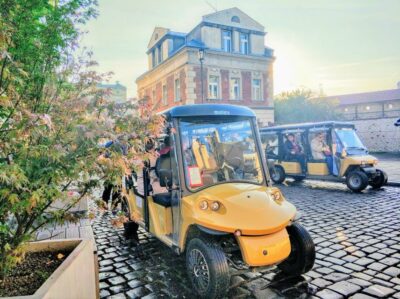
Jewish Quarter and Ghetto Electric Golf Cart Tour
Read our review →City Sightseeing Tour Eco Electric Buggy Golf Cart
Read our review →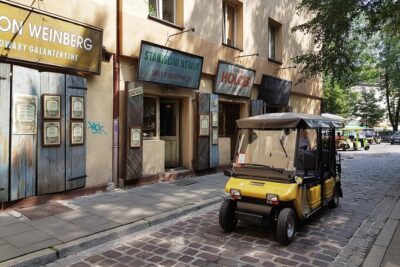
Krakow Grand City Tour by golf cart – All 3 districts
Read our review →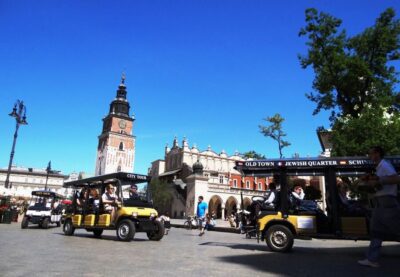

Shared or Private City Tour Sightseeing By Golf Cart
Read our review →Browse the lists this tour appears in