
Reviewed · GDANSK TOURS
SUP Private Tour in Motlawa River
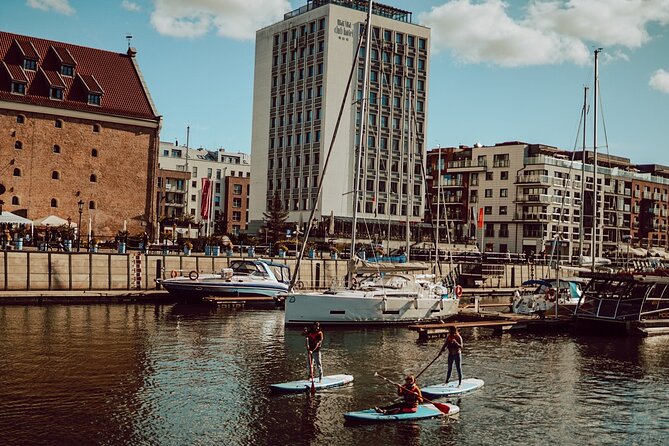
Gdansk’s waterfront looks different from a paddleboard. From the Motlawa, the medieval gates, old warehouses, bridges, and ships sit at eye level instead of high above you on a crowded riverside walk. This private SUP trip gives you a playful way to see the city’s Hanseatic center while moving at a gentle pace.
I like the private format, since your group gets the whole board tour rather than being folded into a large outing. I also like the mix of local stories and practical sightseeing: guide Hania is a native Gdansk resident, and the route links famous sights with less obvious details about trade, grain storage, lead, and city defenses.
The main consideration is balance. You do not need special skills, but you do need reasonable steadiness on a paddleboard. Weather can also cancel the outing, and the tour is aimed at warm-weather conditions rather than rainy-day sightseeing.
Key points at a glance
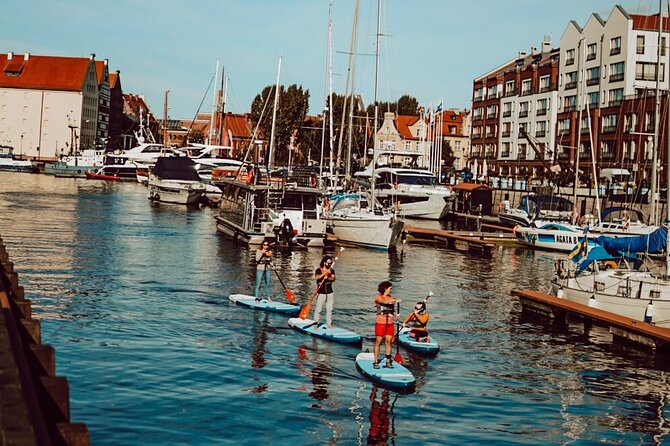
- A fresh view of central Gdansk: Paddle beneath and beside landmarks including the Crane, Green Gate, St. Mary’s Gate, and Cow Gate.
- A private English-language outing: Only your group takes part, with guide Hania leading the experience.
- A history route on the Motlawa: The tour connects Hanseatic waterfront buildings with Granary Island, Ołowianka Island, SS Soldek, and old fortifications.
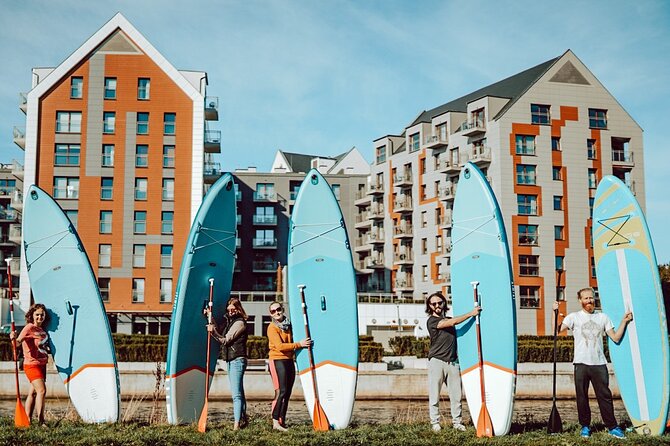
- Equipment is supplied: Your board, paddle, leash, and life vest are included.
- A manageable time commitment: The experience lasts approximately 1 hour 40 minutes to 2 hours 30 minutes, with several departure times available.
- Best in suitable weather: Poor conditions can lead to a new date or a full refund.
Why see Gdansk from a paddleboard?
Gdansk is built around its water. The Motlawa once carried grain, timber, metals, and other goods into one of the Baltic’s major ports. On foot, you see the handsome waterfront from the promenade. On a SUP board, you get close to the working side of the river, where bridges, ships, gates, and embankments make more sense as parts of one old port.
I find that this kind of tour works best when you already want to see the historic center but do not need another standard walking route. You still pass major sights, yet the activity itself gives the outing a clear purpose. The paddleboard adds movement and a little comic potential if your balance is not perfect.
The route is private, which matters here. A small personal group can move at its own pace and listen to Hania’s explanations without trying to hear over a large crowd. The published duration ranges from roughly 100 to 150 minutes, so you should leave room in your day rather than scheduling a museum visit immediately afterward.
The tour begins at Kamienna Grobla, at the Motlawa River in Gdansk, and ends back at the same meeting point. The starting location is near public transportation, though you should still allow time to reach Kamienna Grobla and get ready before the water portion begins.
A few more Gdansk trips to weigh up
- Gdańsk: Old Town Private Walking Tour with Legends and Facts
★ 4.9 · 245 reviews - Gdansk: Shared or Private City Tour Sightseeing By Golf Cart
★ 4.8 · 233 reviews - Gdansk: Private Top City Tour by Electric Cart & Live Guided
★ 4.9 · 114 reviews
Getting started at Dlugie Pobrzeze
The first sightseeing point is the Motlawa embankment, known as Dlugie Pobrzeze. This is where Gdansk’s old waterfront character is easiest to read. The riverside buildings and gates reflect the city’s role in the Hanseatic trading world, when merchants connected Baltic ports with markets farther west.
The stop is listed at about 15 minutes. From the water, you can look back at the long embankment and understand why the river was central to Gdansk’s wealth. This opening section should also help you settle into the board and paddle rhythm before the route reaches its most recognizable landmarks.
Do not expect a formal museum lesson at each point. The value is in seeing the places in sequence, with the river tying them together. The water gives you a clean view of the waterfront without requiring you to weave through pedestrians.
The Crane and the old port skyline
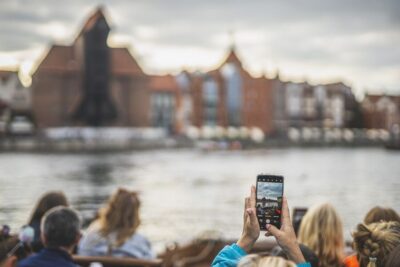
The Crane is one of Gdansk’s defining symbols. Its timber lifting machinery once helped load and unload ships, and the building is a reminder of the city’s trading age. From the Motlawa, you see the Crane in the setting that gives it meaning: directly beside the historic harbor.
The stop lasts about 10 minutes. That is enough for a focused look and some photographs, but not a long visit inside the building. The admission is included in the sense that the tour passes the sight from the river, not that it provides entry to an interior museum.
This is one of the strongest parts of the trip for first-time visitors. You get a classic Gdansk image, but from an angle that a walking tour cannot provide. Keep your camera secure and do not let photography distract you from your balance.
Granary Island and Gdansk’s grain trade
The route continues to Wyspa Spichrzow, or Granary Island. For centuries, this island was the center of Gdansk’s trade. By 1643, it had 315 granaries, with storage capacity said to reach 250,000 tons of grain and enough harbor activity to serve more than 200 ships.
That scale explains why Gdansk became one of the Baltic’s most important ports and one of Europe’s wealthiest cities. The island is also a useful place to see how the city is changing. Former trade space is being brought back into public use through major construction projects.
The stop is around 10 minutes. You will not explore the island on foot, so the best reason to visit by SUP is the broad view across the water toward its old and renewed waterfront. Some people may prefer a longer land visit here, especially if they want to study the buildings closely. For a compact city tour, though, the river perspective gives you an efficient look at a large historic area.
Same country, a completely different kind of day:
- Gdansk: City Cruise on Historical Polish Boat
★ 4.8 · 2,913 reviews - Gdańsk: Sunset Cruise on a Historic Polish Boat
★ 4.9 · 977 reviews - Gdańsk City Sights & History Guided Walking Tour in English
★ 4.8 · 876 reviews - Gdansk: Firearm Shooting Experience with Instructor
★ 4.8 · 866 reviews
Wartka Bridge and Ołowianka Island
The Wartka Bridge opened in June 2017 and links the main town near the Hilton hotel with Ołowianka Island. The bridge stop is brief, about five minutes, but it adds a modern piece to a route otherwise shaped by older trade and defense works.
Ołowianka gets its name from ołów, the Polish word for lead. Lead brought upriver from Silesia was stored here during the Teutonic period. Later, the island’s warehouses were used as granaries, and some of those buildings remain beside the Philharmonic Hall and the Royal Granary.
You spend about 10 minutes around Ołowianka. This is a good example of why the tour is more than a simple paddle along postcard views. You are seeing how raw materials, storage buildings, music venues, bridges, and public spaces have occupied the same river island at different times.
The route may appeal especially to anyone who likes cities through their working infrastructure. You get stories about what was stored where, not only names and dates attached to attractive facades.
SS Soldek, a ship with a modern Polish story
SS Soldek is a steamship and the first ship built in post-1945 Polish Gdansk. It now serves as a living museum. The stop lasts about five minutes, giving you a close water-level look at a ship that belongs to the city’s more recent industrial story.
This is a useful change of period. The Crane and granaries point back to the old trading port, while SS Soldek shows Gdansk as a shipbuilding and maritime city in the modern era. You should not expect time for a full museum visit during this tour, since the activity ends back at its starting point and keeps moving along the river.
Still, seeing the vessel from a paddleboard is part of the appeal. The board puts you close to the hull and waterline, a more immediate view than you get from a distant riverside path.
The gates of Gdansk from the water
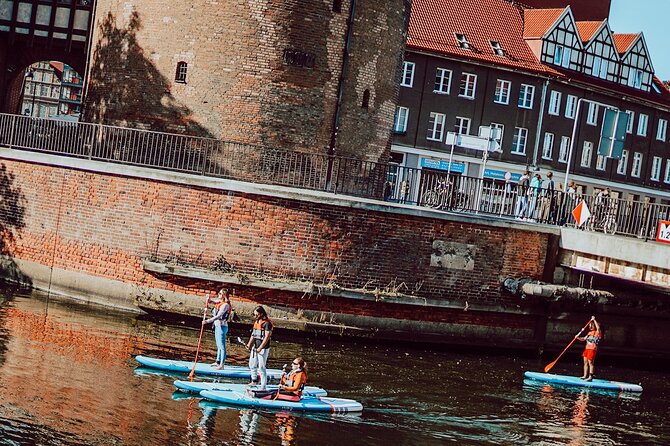
Several short stops focus on Gdansk’s waterfront gates. Brama Mariacka, or St. Mary’s Gate, is a shadowy Gothic passage leading toward one of the city’s most beautiful streets. It is scheduled for about five minutes.
The Green Gate is larger and more ceremonial. Its four-arched facade was built as a palace for Polish monarchs, though no Polish king ever stayed there. The building later had a political connection to Lech Wałęsa, who used it as an office before moving to the European Solidarity Centre.
You get about five minutes at the Green Gate. That is brief, but the water offers an excellent approach. The gatehouse was designed for the waterfront, and viewing it from the Motlawa makes its scale and position clear.
The route also passes Brama Krowia, or Cow Gate, at the Motlawa end of Ogarna Street. Its name probably refers to the road once used to drive cattle. This is a smaller detail, but it gives you the sort of everyday clue that can make old-city history feel less distant.
These three gate stops are quick, so I would not book the SUP outing as your only introduction to central Gdansk. Use it alongside time on foot. The walking route lets you enter the streets and inspect the gates up close, while the paddleboard shows how those entrances faced and served the river.
Old fortifications and the return route
Near the end, the tour reaches the Motlawa channel fortifications. Gdansk was once protected by a bastion fort, and a stone lock in the Motlawa could be used to flood the area around the city. About 10 minutes is set aside to see what remains.
This is a quieter finish than the Crane or Green Gate, but it adds a defensive chapter to the trading story. The river was not only a route for commerce. It was also part of the city’s protection system.
The fortifications help round out the route. You have seen where grain and lead were stored, how ships were handled, how bridges connected the islands, and how water could be used against an attacking force. You then paddle back to Kamienna Grobla, completing the loop at the original meeting point.
What the $50.85 price gives you
At $50.85 per person, this is not the cheapest way to look at Gdansk. You are paying for more than equipment, though. The price covers a private outing, an English-speaking guide, the board, paddle, leash, and life vest, plus a route that links many central landmarks in one continuous experience.
The private setup improves the value for couples, families, or a small group of friends who want an activity shaped around their own party. If you are comparing it with a standard boat cruise, the SUP gives you more physical involvement and a lower viewpoint. If you are comparing it with a walking tour, it adds a memorable activity and a fresh angle on familiar buildings.
The value is less clear if you mainly want long, detailed visits at individual sights. The stops are short, and the tour does not include bottled water or entry to museums. Bring your own water, and plan separate visits to the Crane, SS Soldek, or other attractions if you want to go inside.
Balance, clothing, and practical comfort
The basic equipment is supplied: SUP board, paddle, leash, and life vest. The activity does not require special skills, but balance is important. If you have never used a stand-up paddleboard, expect a short adjustment period and do not treat the sightseeing route as a race.
The tour is offered in English. Hania, the named guide, is a native Gdansk resident who knows the city well and brings local enthusiasm to the history. The personal guiding is one of the strongest reasons to choose this over simply renting a board and going out alone.
Bring water because bottled water is not included. You should also account for the fact that this is a water activity, not a dry walking tour. The supplied information confirms that the experience requires good weather. If conditions are poor, you are offered another date or a full refund.
Most people can participate, and the activity is near public transportation. The important personal question is not advanced fitness. It is whether you feel comfortable trying a balance-based activity while looking around at a historic city.
Who will get the most from this tour?
I would recommend it most strongly to you if you meet one or more of these descriptions:
- You want to see Gdansk in a way that is more active than a walking tour.
- You enjoy city history tied to trade, ships, bridges, and working waterfronts.
- You are visiting in suitable warm-weather conditions.
- You prefer a private group instead of a large shared excursion.
- You like having a local guide who can add personal context.
- You have enough balance and comfort for a stand-up paddleboard.
It may be a weaker match if you want a fully dry activity, need a guaranteed indoor plan, or hope to spend a long time at each attraction. It is also not ideal if your schedule has no flexibility, since weather can affect the departure.
The five available ratings are all at the top level, with especially strong praise for the unusual viewpoint, the easy and relaxing nature of the paddling, and Hania’s friendly, informative guidance. Those points fit the practical reality of the tour: you are not signing up for a demanding expedition. You are signing up for a light outdoor activity that turns Gdansk’s waterfront into the main attraction.
Should you book the Motlawa SUP tour?
Book it if you want history with movement. The best parts are the close views of the Crane, Green Gate, bridges, ships, and waterfront gates, along with the chance to hear about Gdansk from a guide who grew up there.
I would pair it with a normal walking tour or independent exploration. See the streets and interiors on foot, then use the SUP to understand how the old city faced the river. At $50.85 per person, that combination makes the outing feel worthwhile, especially for a private group looking for something more personal than a sightseeing cruise.
Skip it if you dislike balancing on a board or need a weather-proof plan. For everyone else, this is a relaxed, distinctive way to connect Gdansk’s Hanseatic past, modern shipbuilding story, and river defenses in one compact trip.
FAQ
Where does the SUP tour start?
The tour starts at Kamienna Grobla, 80-700 Gdansk, Poland.
Where does the activity end?
The tour ends back at the meeting point at Kamienna Grobla.
How long does the tour last?
The experience lasts approximately 1 hour 40 minutes to 2 hours 30 minutes.
Is the tour private?
Yes. Only your group takes part in this private activity.
Is the tour offered in English?
Yes. The SUP tour is offered in English.
What equipment is included?
The tour includes a SUP board, paddle, leash, and life vest.
What happens if the weather is poor?
If poor weather causes cancellation, you can choose a different date or receive a full refund. You can also cancel up to 24 hours before the start time for a full refund.
Just added around Gdansk
- Gdansk, Gdynia, and Sopot: 8-Hour Private Sightseeing Tour★ 4.9 · 13 reviews
- Westerplatte private tour led by Expert-Guide (door to door)★ 5.0 · 5 reviews
- Whisky Tasting in Gdańsk★ 5.0 · 3 reviews
- Gdansk EVERYDAY Vodka Tasting Tour★ 5.0 · 6 reviews
- Westerplatte – 2h private trip by luxury car|★ 5.0 · 4 reviews
- Private WW2 Tour of Westerplatte,Gdansk and Stutthof Including Lunch★ 5.0 · 12 reviews
- Torun – City of Copernicus Private Tour★ 4.5 · 5 reviews
- Undercover City Games: Gdynia★ 5.0 · 34 reviews
Gdansk Tours, compared.
Gdańsk City Sights & History Guided Walking Tour in English
Read our review →

Sightseeing EcoCruise around the Old Town of Gdansk
Read our review →

Browse the lists this tour appears in