
Reviewed · GDANSK TOURS
Solidarity Tour
Gdansk’s Solidarity story began not in a palace or grand square, but among cranes, workshops, workers, and political pressure. This private three-hour tour takes you into that setting, from the European Solidarity Center to BHP Hall and the former shipyard.
I like two things right away. First, the museum admission is included, so you get the full exhibition rather than only a quick look from outside. Second, the route moves beyond the usual old-town sights into docks, warehouses, and the former shipyard, where the story feels tied to a real place. The main consideration is the price: at $114.45 per person, it makes the most sense for people who value a private guide and focused historical context.
Key points to know before booking
- The European Solidarity Center takes about two hours, making it the main event rather than a short museum stop.
- BHP Hall recalls the 1980 Gdansk Agreement, signed by Lech Wałęsa and the authorities of communist Poland.
- The former shipyard adds a physical sense of place, with old industrial areas now changing around new clubs, galleries, and entertainment venues.
- This is a private activity, so only your group joins the tour.
- Bozena and Sebastian receive especially warm praise for their energy, personal approach, and ability to explain difficult history clearly.
- The route runs in all weather, and moderate physical fitness is recommended.
Why Solidarity matters in Gdansk
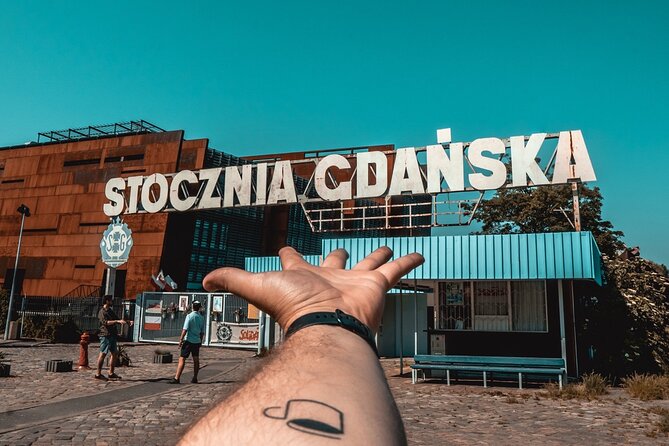
To understand Gdansk, you need more than its handsome streets and colorful facades. The city is also the birthplace of a workers’ movement that challenged communist rule and helped change Poland’s future.
Solidarity grew from disputes over workers’ rights, but it soon became much larger. It brought together shipyard workers, intellectuals, church figures, and ordinary people who wanted greater freedom and a stronger voice in public life. This tour explains that process in the places where it happened.
I find that setting important. A museum can explain dates and political shifts, but walking through the shipyard area gives those events a physical anchor. You are not simply hearing about a movement in the abstract. You are seeing the gates, buildings, and industrial spaces connected with it.
The subject is serious. Expect stories about communism, political pressure, protest, negotiation, and the difficult path toward a free Poland. The experience is educational and often moving, but it is not designed as light sightseeing.
Other Gdansk days people book alongside this one:
- Gdansk: City Cruise on Historical Polish Boat
★ 4.8 · 2,913 reviews - Gdańsk: Sunset Cruise on a Historic Polish Boat
★ 4.9 · 977 reviews - Gdańsk City Sights & History Guided Walking Tour in English
★ 4.8 · 876 reviews
Two hours inside the European Solidarity Center
The European Solidarity Center at Plac Solidarności is the tour’s central stop. You spend about two hours inside, with admission included in the price.
That timing matters. Two hours gives your guide enough room to explain the main events without reducing the museum to a quick walk past display cases. The museum focuses on the struggle for a free Poland and on how people lived through the uneasy years of communism.
You can expect the visit to place Solidarity within a wider story. The movement did not appear from nowhere, and its impact reached beyond the shipyard and beyond Poland. The tour connects the people involved, the pressure they faced, and the effects of their actions.
A guide makes a real difference here. Bozena has been praised for an energetic, engrossing presentation, while Sebastian is known for giving a large amount of information and taking questions along the way. If you prefer a museum visit with a clear human voice rather than a silent march through exhibits, this format should suit you.
The museum is also the part of the tour most likely to appeal to first-time visitors who know only the broad outline of Solidarity. You do not need to arrive with a detailed grasp of Polish political history. The guide helps organize the story and explains why the movement mattered.
The drawback is simple: two hours inside one museum can feel long if your main goal is Gdansk’s architecture, food, or waterfront scenery. This is a focused historical experience. You should book it because you want to understand the subject, not because you are trying to squeeze in as many unrelated attractions as possible.
BHP Hall and the Gdansk Agreement
The next stop is Sala BHP, or BHP Hall, for about 20 minutes. Admission is free, and the visit adds a key setting to the museum’s broader account.
This is where Lech Wałęsa signed the Gdansk Agreement with the contemporary authorities of the Polish People’s Republic. The agreement is closely linked with the shipyard strikes and the rise of Solidarity, so seeing the hall helps connect political change with the workers who pressed for it.
Twenty minutes is enough for a compact stop, though it leaves less room for a long independent visit. The value comes from your guide’s explanation and from being in the room itself. If you enjoy places where one specific event gives a building its importance, BHP Hall will likely be one of the most memorable parts of the route.
This stop also breaks up the museum visit. After spending most of your time indoors, you move to a place tied directly to negotiation and decision-making. It makes the story feel less like a sequence of museum panels and more like a chain of real locations.
Walking through the former shipyard
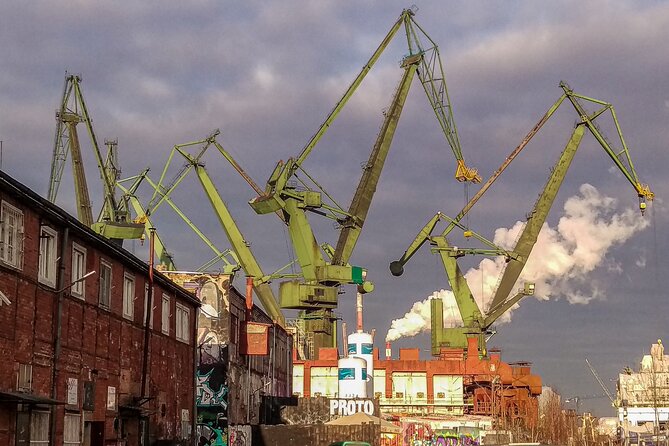
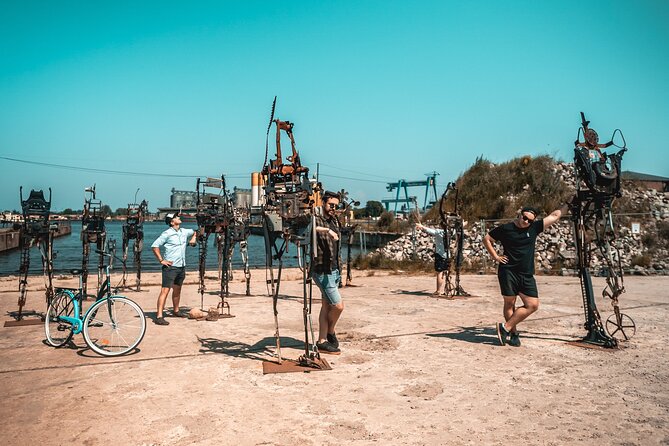
The final scheduled stop takes about 40 minutes in the Gdansk Shipyard. The shipyard is still functioning, but it is changing. Old industrial areas now share space with clubs, galleries, and new entertainment centers.
That mix gives the walk a useful present-day angle. You see a working area with a past that shaped Poland, but you also see how Gdansk is reusing and reshaping parts of it. The old warehouses and docks are not just background scenery. They help explain the setting in which the movement grew.
This part of the tour is less about entering a single landmark and more about reading the surroundings. A local guide can point out what belongs to the shipyard’s working past and what reflects its newer role in the city.
The route also reaches important sites such as the Lenin Gates. The gates are among the most recognizable places connected with the Solidarity story, and they make a strong visual link between the shipyard and the movement.
Do not expect a polished heritage park. The area is changing, and that change is part of what you are seeing. Depending on the weather and the condition of the surroundings, the walk may feel more industrial than scenic. Dress for the forecast, since the experience operates in all weather.
Moderate physical fitness is recommended. The tour lasts about three hours and includes time on foot through museum and shipyard areas. No special level of athletic ability is stated, but comfortable clothing and shoes are sensible choices.
Same country, a completely different kind of day:
- Gdansk: Firearm Shooting Experience with Instructor
★ 4.8 · 866 reviews - Gdansk: Guided Round-Trip Cruise to Westerplatte
★ 4.3 · 865 reviews - Gdańsk: Sightseeing EcoCruise around the Old Town of Gdansk
★ 4.6 · 719 reviews - Main Town Gdańsk Walking Tour
★ 5.0 · 644 reviews
What the private format adds
This is a private tour, meaning only your group participates. That changes the feel considerably compared with a large city walk.
You can ask questions as the story unfolds, and the guide can spend more time on the subjects that interest you. Sebastian has been praised for welcoming questions, while Bozena has been praised for her personal and energetic manner. One especially useful feature of the private format is flexibility within the visit.
There was an occasion when a booking error required a change to the planned route. Bozena adjusted the stops and added alternatives that gave the group a broader view of the shipyard and Gdansk. That suggests the guide can respond sensibly when plans need to shift, though you should not assume every booking includes extra stops beyond the stated route.
The private arrangement is especially useful for couples, families, or small groups with different levels of prior knowledge. Someone who knows little about communist Poland can ask for background, while someone with more familiarity can pursue finer points.
The trade-off is cost. The listed price is $114.45 per person, which is high for a three-hour city activity if you measure value only by time or number of stops. But it includes a two-hour museum admission, a private guide, beverages, and a focused route through places that are not part of a standard old-town stroll.
For a larger private group, group discounts may improve the value. The tour is offered in English and uses a mobile ticket, which keeps the practical side simple.
The guides are a major part of the experience
A history tour can succeed or fail on the guide’s ability to make complicated events understandable. Here, the strongest praise centers on Bozena and Sebastian.
Bozena is described as energetic, polite, personable, and deeply engaged with the subject. That matters in a museum where the dates, institutions, and political changes can become hard to track. Her role is not just to point at exhibits but to give them order and meaning.
Sebastian is praised for his strong command of the subject, generous explanations, and friendly manner. The ability to ask questions is particularly useful on a Solidarity tour because the political background is not always simple.
The guide’s personal style may vary. Some people prefer a lively storyteller, while others want a quieter, more academic approach. The available feedback points toward guides who are warm and engaged rather than distant or purely scripted.
The experience has received a five-star rating from 25 reviews, with 100 percent recommending it. That is a strong record, especially for a tour covering a difficult political period. Still, the right choice depends on your interests. If you want a broad introduction to Gdansk’s many eras, this tour is too narrowly focused. If you want to understand Solidarity, the guide-led approach is its greatest strength.
Who will get the most from this tour
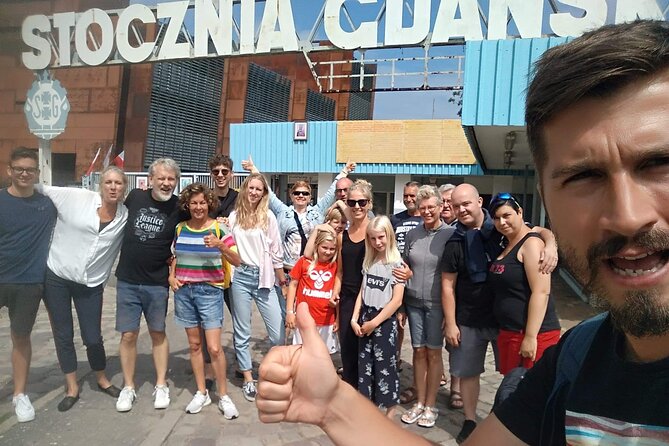
I would suggest this tour to you if you want to understand why Gdansk matters in modern European history. It suits anyone interested in communism, workers’ movements, political change, or the story of Poland’s path toward freedom.
It is also a good choice if you have already seen the main old-town sights and want a different side of the city. The docks, warehouses, shipyard, and Lenin Gates show Gdansk away from its postcard center.
Families with older children and teenagers may find the private format helpful because the guide can explain the story at a suitable pace. The subject matter is serious, so it may be less suitable for very young children who need a more active or entertainment-focused outing.
History-minded visitors should appreciate the balance between museum time and outdoor walking. You get context indoors, then visit the locations that give the history a physical shape.
I would be more cautious if your schedule is tight. The museum alone takes two hours, and the complete activity lasts about three hours. Since the tour begins and ends at the European Solidarity Center, you need to plan your day around that location rather than treating this as a quick stop between other central attractions.
Practical details worth knowing
The tour starts at the European Solidarity Center, Plac Solidarności 1, in Gdansk, and returns to the same meeting point. That makes arrival and departure straightforward, particularly if you want to continue exploring the shipyard area afterward.
The activity is offered in English. Beverages are included, while alcoholic drinks are available to buy separately and are not included in the price.
You receive confirmation when booking. Free cancellation is available up to 24 hours before the local start time. Changes or cancellations made less than 24 hours before the start are not accepted for a refund.
Plan for all weather. The museum provides indoor shelter, but the BHP Hall and shipyard portions include movement between sites and time outdoors. Comfortable shoes and suitable clothing are practical, not optional extras.
Should you book the Solidarity Tour?
Book it if Solidarity is a key reason you are visiting Gdansk, or if you want a clear explanation of Poland’s communist period and the movement that challenged it. The included museum admission, private guide, BHP Hall, Lenin Gates, and shipyard walk give you more than a single museum visit.
The strongest reason to choose this experience is the guide. Bozena and Sebastian bring energy, personal attention, and room for questions, qualities that help with a complex subject. The shipyard setting adds something a book or a standard old-town tour cannot.
Skip it if you want a relaxed sightseeing walk with pretty streets and little historical detail. At $114.45 per person, it asks you to pay for depth and privacy. For the right audience, that is a fair exchange. For everyone else, Gdansk offers cheaper ways to spend three hours.
FAQ
Where does the Solidarity Tour start?
It starts at the European Solidarity Center, Plac Solidarności 1, 80-863 Gdańsk, Poland.
Where does the tour finish?
The activity ends back at the European Solidarity Center, the starting point.
How long does the tour last?
The tour lasts approximately three hours.
Is admission to the European Solidarity Center included?
Yes. Admission to the European Solidarity Center is included, and the museum visit lasts about two hours.
Is this a private tour?
Yes. Only your group participates in the activity.
Is the tour offered in English?
Yes. The tour is offered in English.
Are drinks included?
Beverages are included. Alcoholic drinks are not included, but they are available to purchase.
What happens if the weather is poor?
The tour operates in all weather conditions, so you should dress appropriately. Moderate physical fitness is recommended.
Can I cancel for a full refund?
Yes. You can cancel at least 24 hours before the experience start time for a full refund. Cancellations or changes made less than 24 hours before the start are not accepted.
Just added around Gdansk
- Gdansk, Gdynia, and Sopot: 8-Hour Private Sightseeing Tour★ 4.9 · 13 reviews
- Westerplatte private tour led by Expert-Guide (door to door)★ 5.0 · 5 reviews
- Whisky Tasting in Gdańsk★ 5.0 · 3 reviews
- Gdansk EVERYDAY Vodka Tasting Tour★ 5.0 · 6 reviews
- Westerplatte – 2h private trip by luxury car|★ 5.0 · 4 reviews
- Private WW2 Tour of Westerplatte,Gdansk and Stutthof Including Lunch★ 5.0 · 12 reviews
- Torun – City of Copernicus Private Tour★ 4.5 · 5 reviews
- Undercover City Games: Gdynia★ 5.0 · 34 reviews
Gdansk Tours, compared.
Gdańsk City Sights & History Guided Walking Tour in English
Read our review →

Sightseeing EcoCruise around the Old Town of Gdansk
Read our review →

Browse the lists this tour appears in