
Reviewed · CITY TOURS
Torun – City of Copernicus Private Tour
Toruń gives you medieval Poland in a compact, walkable package, with Gothic brick towers, old merchant houses, and the home of astronomer Nicolaus Copernicus. This private day trip from Gdańsk makes the long ride worthwhile by pairing a local guide with door-to-door transport.
I like the three-hour guided walk, which gives you time to connect Toruń’s buildings with its story rather than simply photograph them. I also like the private format: your own group travels in a private vehicle, and hotel pickup is available across Gdańsk, Sopot, and Gdynia. The catch is the distance. With roughly two hours each way, the day is efficient rather than leisurely, and lunch needs clear communication.
Key points to know before booking
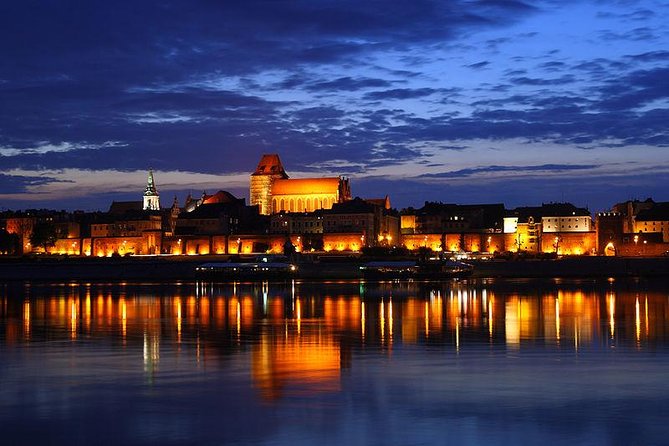
- Toruń’s medieval center survived largely intact, earning UNESCO World Heritage status in 1997.
- The Leaning Tower, Old Town Hall, Artus Court, and castle ruins fit into one carefully planned walking route.
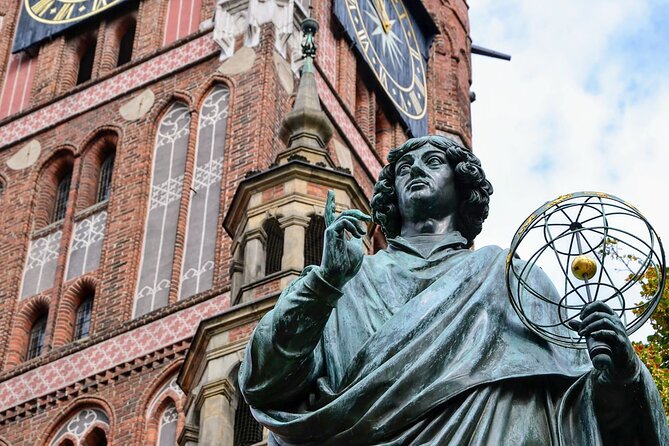
- Copernicus’s birthplace gives the tour a clear theme beyond architecture.
- Mirek Kopec may be your driver, and previous service details describe him as courteous, friendly, and full of stories about Poland.
- One hour is intended for lunch or shopping, but food and drinks are not included.
- Children under seven travel free, provided you notify the operator about them when booking.
Why Toruń is worth the long ride from Gdańsk
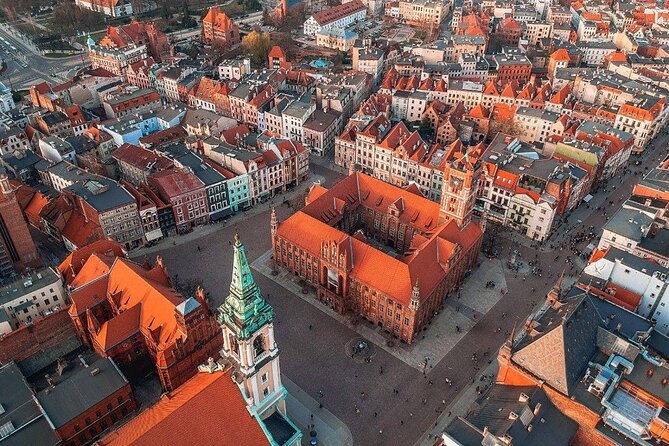
Toruń sits on the Vistula River, south of Gdańsk, and its appeal is easy to understand once you begin walking through the old center. The medieval street plan remains largely intact, and much of the architecture is made from the red brick so closely associated with northern Poland and the old Hanseatic world.
The city was spared the worst destruction of the Second World War. That matters here. You are not looking at a modern reconstruction of a medieval town, but at a place where the street layout and many major buildings survived. Toruń joined the UNESCO World Heritage list in 1997 because of this unusually complete medieval setting.
The tour also gives the city a strong personal thread through Nicolaus Copernicus. He was born here, and the walk connects his home and early life with the wider world of merchants, churches, fortifications, and Teutonic power. You get both the famous name and the city that shaped it.
The trade-off is travel time. The drive from the Tri-City area takes about two hours each way, so this is best viewed as a focused day trip rather than a relaxed weekend visit. If Toruń is high on your Poland wish list, the private vehicle and local guide make the journey practical. If you want several hours of unstructured wandering, the schedule may feel tight.
A few more Gdansk trips to weigh up
- Gdańsk: Old Town Private Walking Tour with Legends and Facts
★ 4.9 · 245 reviews - Gdansk: Shared or Private City Tour Sightseeing By Golf Cart
★ 4.8 · 233 reviews - Gdansk: Private Top City Tour by Electric Cart & Live Guided
★ 4.9 · 114 reviews
A private ride from Gdańsk, Sopot, or Gdynia
Pickup begins at about 9 a.m. from your hotel or apartment in Gdańsk, Sopot, or Gdynia. You need to provide the exact meeting point when booking. Transport is by private vehicle, and the tour is limited to your own group.
That arrangement is especially useful for families or small groups. You do not need to reach a central departure point, and you can ask questions during the drive. The operator identifies the vehicle service as part of the experience, not as a separate transfer.
Mirek Kopec is one driver named in the tour’s service history. His role appears to go beyond simply steering the vehicle. He has been described as courteous and friendly, sharing stories and facts about Poland along the way. Your driver may differ, but this gives you a good idea of the kind of personal contact the journey can include.
The ride itself takes up a large share of the day. Allow roughly two hours from the Tri-City area to Toruń and another two hours back. The advertised duration is about eight hours, with a return around 4 p.m. on the schedule described by the operator.
That leaves about four hours in Toruń: three hours with a local guide and about one hour for lunch or shopping. It is a sensible structure, but you should not expect to see every museum or linger at every church.
Starting at the Leaning Tower and medieval walls
The walking tour begins with the Leaning Tower, one of the most recognizable pieces of Toruń’s medieval fortifications. It was part of the city walls, and its tilt gives the opening stop an immediate visual hook.
This is a good first stop because it introduces two sides of Toruń at once. You see the city as a defended medieval settlement, but you also see the practical, slightly quirky character that makes the old center fun to explore. The tower is not just an isolated photo stop. It belongs to the larger system of walls, gates, and urban defenses.
From here, the route moves toward the Old Town’s major civic buildings. The guide explains how power worked in the medieval city, where merchants, town officials, religious institutions, and military orders all left their mark.
Old Town Hall and Artus Court
The Regional Museum in Toruń is based in the Old Town Hall, one of the central landmarks on the walk. The building represents the city’s civic and commercial importance, and it gives you a way to picture Toruń as more than a collection of handsome façades.
Artus Court adds another layer. Across northern Europe, buildings with this name were linked to merchants and urban social life. Here, the stop helps explain Toruń’s place within the Hanseatic trading network.
The exact balance between exterior viewing and interior time can depend on the guide and the day’s pace. The tour includes an entrance ticket to St. John’s Cathedral, but the supplied details do not promise admission to every museum or building along the route. If a particular interior matters to you, ask the guide how much time is available before the walk begins.
Same country, a completely different kind of day:
- Gdansk: City Cruise on Historical Polish Boat
★ 4.8 · 2,913 reviews - Gdańsk: Sunset Cruise on a Historic Polish Boat
★ 4.9 · 977 reviews - Gdańsk City Sights & History Guided Walking Tour in English
★ 4.8 · 876 reviews - Gdansk: Firearm Shooting Experience with Instructor
★ 4.8 · 866 reviews
The New Town and red-brick churches
Toruń’s adjacent New Town was founded in 1264 and joined the Hanseatic League twelve years later. That detail gives the area a clear identity. It was not simply an overflow district. It was a planned part of a growing commercial city.
As you move through the New Town, look for the red-brick merchant houses and the Gothic church towers. The late Gothic Church of St. James is a key sight. Its architecture helps you read the city in a wider regional context, where brick was both a practical building material and a mark of northern European Gothic design.
I like this part of the route because it shifts the focus away from the two famous names, Copernicus and the Leaning Tower. You get a better sense of how ordinary commerce and church life filled out the city. The guide’s explanations matter here, since a short walk through brick streets can otherwise become a blur of similar-looking façades.
The route remains concentrated in the historic center, so comfortable walking shoes are sensible. The provided details do not give a precise walking distance or accessibility plan, but the experience is built around a three-hour city walk.
Teutonic castle ruins and a complicated past
The ruins of the Teutonic Order’s castle bring military history into the picture. The castle was destroyed by Toruń’s residents in 1454, a striking reminder that the city’s relationship with the Teutonic Order was not peaceful or simple.
Ruins can sometimes feel like a quick photo stop, but here they connect directly to Toruń’s political past. The city was caught between local interests, merchant power, and the authority of the Teutonic Order. Your guide can place the destruction in that larger story, making the broken walls easier to understand.
This is one reason a private guided walk is more useful than a self-guided dash through the center. You can ask why the residents turned against the castle and how the city’s political position changed. The supplied information does not specify how long you spend at the ruins, so expect the guide to fit them into the larger three-hour circuit rather than treat them as a full museum visit.
Copernicus’s birthplace and the science connection
The house associated with Nicolaus Copernicus is the tour’s headline stop. Copernicus was born in Toruń, and the visit links his life and work in astronomy to the city’s medieval setting.
The value here is not just seeing a famous person’s birthplace. Copernicus is often presented as a name from science textbooks, but Toruń gives him a physical setting: a trading city on the Vistula, surrounded by churches, merchant homes, defensive walls, and Gothic civic buildings.
Your guide explains his life and work, adding context that a simple plaque cannot provide. The tour is promoted in English, and a professional guide is included. One local guide previously led a full three-hour walk and presented Toruń’s history in an engaging way. The guide’s name is not provided, so you should not expect to request a particular Toruń guide.
The Copernicus theme works best if you already have some interest in science or Polish history, but you do not need specialist knowledge. The stop is part of a broader city tour, not a technical lecture on astronomy.
St. John’s Cathedral and the final gingerbread stop

Entrance to St. John’s Cathedral is included. The church adds a major religious building to a route already filled with civic, military, and domestic architecture.
Take time to notice how the cathedral fits into the rest of the old city. Toruń’s story is not told by one monument. It is spread across churches, town halls, merchant houses, fortifications, and the streets connecting them. The guide’s job is to bring those pieces together.
The tour also includes a chance to sample Toruń’s famous gingerbread. Gingerbread is one of the city’s best-known specialties, so this is a fitting finish to the walk. Food and drinks are not included in the price, and the details do not specify the exact tasting arrangement, so think of this as a local taste connected to the city’s identity rather than a full food tour.
You also have about one hour of free time for lunch or shopping. This point deserves attention. One customer found the available time too short and had trouble getting a lunch break, while the operator later clarified that the hour is meant to be included. To avoid confusion, confirm the lunch plan with your guide at the start of the Toruń visit.
What $302.83 per person buys you
At $302.83 per person, this is not a budget day trip. The price makes more sense for a private group than for one person traveling alone, especially because the package includes hotel pickup and drop-off, private transport, a professional guide, a private tour, and the cathedral entrance.
You are paying for convenience as much as sightseeing. The operator handles the long drive from the Tri-City area, connects you with a local Toruń guide, and brings you back to your accommodation. Group discounts may improve the value for families or several friends sharing the experience.
For a solo visitor, the cost is harder to justify unless door-to-door service and a private guide are very important. For a small group, the practical value rises because you avoid arranging a rental car, navigating the route, and finding a guide once you arrive.
The price does not include food or drinks. Budget time and money for lunch, and do not assume the one-hour break includes a meal. The tour is primarily a cultural sightseeing experience with transport, not an all-inclusive excursion.
Who will get the most from this day trip
I would choose this tour if you are staying in Gdańsk, Sopot, or Gdynia and want to see a second Polish city without changing hotels. It suits people who prefer a clear route, local explanations, and private transport over independent planning.
It also works well for families, since children under seven are free when declared at booking. The private format gives your group more space to ask questions and manage the pace, although the fixed eight-hour frame still limits how long you can linger.
History fans will appreciate the mix of medieval civic life, the Teutonic Order, church architecture, Hanseatic trade, and Copernicus. The tour also suits first-time visitors who want the main sights in one organized visit.
I would hesitate if you want a slow lunch, extensive museum time, or several hours alone in the old town. The journey is long, and three hours with the guide passes quickly. The overall rating is 4.4 from five submitted ratings, with especially strong praise for the drivers’ courtesy and the Toruń guide’s historical explanations, but the lunch and limited free time are real planning concerns.
Practical details that affect the day
The tour is offered in English and begins at 9 a.m. Confirmation is provided when you book. Pickup is available from hotels and apartments in Gdańsk, Sopot, and Gdynia, but you must give the exact pickup point.
Most people can take part, and the activity is private, meaning only your group participates. Children under seven are free if you inform the operator about them.
Free cancellation is available up to 24 hours before the start time for a full refund. Changes or cancellations made less than 24 hours before departure are not accepted for a refund, and the cut-off follows local time.
Should you book the Toruń private tour?
Book it if Toruń is one of your priorities and you want the simplest way to reach it from the Tri-City area. The strongest parts are the private vehicle, the three-hour local walk, the concentration of major sights, and the clear Copernicus theme.
Before you go, confirm three things: your exact pickup point, the planned lunch hour, and how much free time you will have after the guided walk. If you accept the long drive and keep your expectations focused on the old town’s main monuments, this is a useful and well-organized introduction to Toruń. If you want a leisurely day, consider staying overnight in Toruń instead.
FAQ
Where can I be picked up for the tour?
Pickup is available from your hotel or apartment in Gdańsk, Sopot, or Gdynia. You need to provide the meeting point when booking.
What time does the tour start?
The listed start time is 9 a.m.
How long does the experience last?
The tour lasts about eight hours. The schedule described includes roughly two hours of driving each way, three hours with a Toruń guide, and about one hour for lunch or shopping.
Is the tour private?
Yes. Only your group participates in the private tour, and transport is provided by private vehicle.
Is the tour offered in English?
Yes. The experience is offered in English.
Are children under seven charged?
Children under seven are free. You should inform the operator about children when booking.
Are food and drinks included?
No. Food and drinks are not included. The schedule provides about one hour for lunch or shopping, so confirm the lunch arrangements with the guide at the start of the Toruń visit.
Just added around Gdansk
- Gdansk, Gdynia, and Sopot: 8-Hour Private Sightseeing Tour★ 4.9 · 13 reviews
- Westerplatte private tour led by Expert-Guide (door to door)★ 5.0 · 5 reviews
- Whisky Tasting in Gdańsk★ 5.0 · 3 reviews
- Gdansk EVERYDAY Vodka Tasting Tour★ 5.0 · 6 reviews
- Westerplatte – 2h private trip by luxury car|★ 5.0 · 4 reviews
- Private WW2 Tour of Westerplatte,Gdansk and Stutthof Including Lunch★ 5.0 · 12 reviews
- Undercover City Games: Gdynia★ 5.0 · 34 reviews
- Aiport Gdansk Transfer to Malbork Castle or Stutthof★ 5.0 · 3 reviews
City Tours, compared.
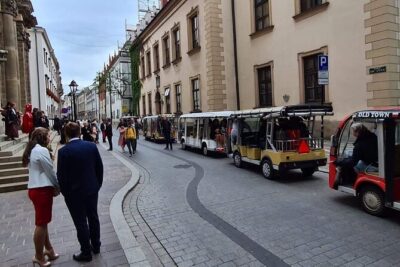
City Sightseeing Tour Eco Electric Buggy Golf Cart
Read our review →


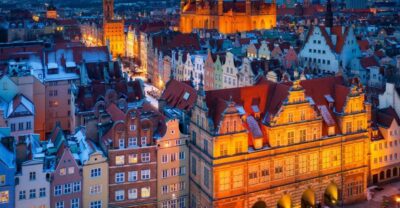
Gdańsk City Sights & History Guided Walking Tour in English
Read our review →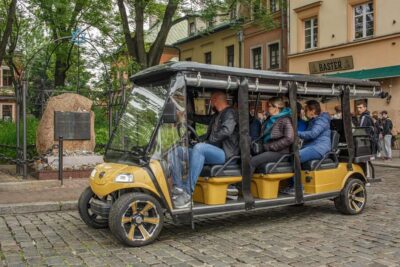
Extended City Sightseeing Tour – Eco Buggy Golf Cart
Read our review →
Browse the lists this tour appears in