
Reviewed · CITY TOURS
Undercover City Games: Gdansk
Gdansk becomes your escape-room board in this outdoor spy mission. You begin at the Four Quarters Fountain, receive your assignment, then work through Old Town clues that lead to Neptune’s Fountain, Swan Tower, the Great Armoury, the Jan III Sobieski Monument, and the Green Gate.
I like the way the game makes you look closely at the city, rather than simply follow a guide from one monument to the next. I also like the flexible rhythm: your host sets up the mission and meets you again at the end, while your team handles the route and puzzles at its own pace.
The main caution is that this is still a timed walking game. Cobblestones, map reading, and clue solving can compete with sightseeing, especially after dark or if someone in your group walks slowly. Google Maps and comfortable shoes are sensible backup tools.
Key points to know before booking
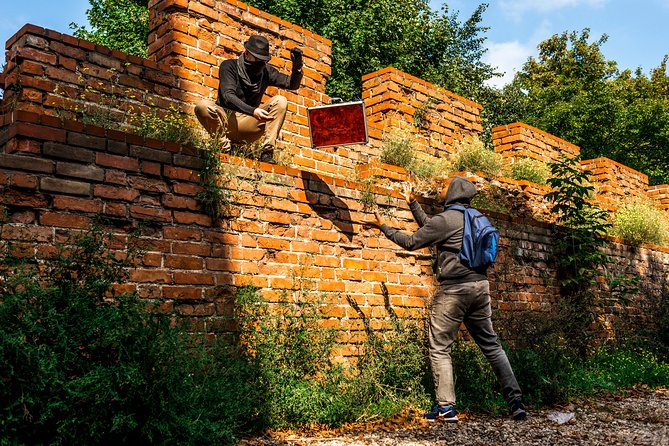
- A spy story with real Old Town sights: The mission sends you through Gdansk’s best-known central landmarks, plus less obvious corners along the route.
- About 1 hour 45 minutes: You get a compact introduction to the center, not a full historical tour.
- Your group controls the middle of the game: A host starts and ends the activity, but you solve the mission independently between those meetings.
- Good for mixed-age groups: Families, teens, corporate teams, friends, and bachelorette groups can all play together or compete in smaller teams.
- The game rewards navigation as well as brains: A phone with Google Maps can help if you miss a turn or struggle to locate a clue.
- Daylight is preferable: Some tasks may be harder to spot after dark, even though an evening game is possible.
Turning Gdansk Old Town into a spy mission

The premise is simple and effective. You are a team of secret agents trapped in Gdansk, trying to escape with help from a local intelligence agency. The city supplies the backdrop, the map supplies the route, and the clues give you a reason to study details you might otherwise walk past.
This is not a conventional walking tour with a guide talking continuously. Your host gives you the instructions and sends you off with the mission. You then visit marked points, solve puzzles, and carry out spy tasks. At the finish, you return to the starting point.
That setup gives the activity a useful middle ground. You get human help at the beginning and end, but you are not tied to a guide’s walking speed or speech. It also creates friendly competition. Larger groups can split into teams, compare scores, and see who completes the mission most effectively.
The game is offered in English and takes about 1 hour 45 minutes. That makes it a good first or second activity in Gdansk. You can use it to get your bearings early in a stay, then recognize the same streets and buildings when you explore on your own later.
A few more Gdansk trips to weigh up
- Gdansk: City Cruise on Historical Polish Boat
★ 4.8 · 2,913 reviews - Gdańsk City Sights & History Guided Walking Tour in English
★ 4.8 · 876 reviews - Gdansk: City Sightseeing Tour by Golf Cart/Buggy Guided Tour
★ 4.9 · 510 reviews
Starting at the Four Quarters Fountain
The meeting point is the Four Quarters Fountain on Grobla I, close to the center of Gdansk Old Town. This is where you meet the host, receive the opening briefing, and learn how the mission works.
The host is an important part of the experience. A good start matters because the game depends on understanding the rules, reading the map, and knowing how to submit answers or complete tasks. Past hosts have included Alasdair, Aly, and Damian, all praised for being friendly, energetic, and ready to help when a team got off track.
The briefing also sets the mood. You are not merely handed a list of buildings. You are given a reason to move through the city as agents, with secret contacts, codes, and tasks shaping the walk.
From there, the activity becomes self-directed. That means you should make sure everyone in your party understands the plan before setting off. If you have a strong navigator in the group, let that person handle the map while others focus on clues and visual details.
Neptune’s Fountain and the heart of the city
Neptune’s Fountain is one of the most recognizable sights in Gdansk. It sits beside the Artus Court and the Long Market, in the grand central area where many first-time visitors naturally begin their Old Town visit.
As a game stop, it does more than provide a photo opportunity. A clue here asks you to examine the setting, not just glance at the fountain and move on. The surrounding architecture gives you plenty to notice, and the task helps turn a familiar landmark into part of the mission.
This is also where the game’s approach becomes clear. You are learning about Gdansk in small, usable pieces rather than sitting through a long explanation. The facts are meant to make you curious enough to look more closely at the buildings and symbols around you.
The drawback is easy to understand: a competitive team may rush. If you want photographs or time to admire the square, build that into your pace. The activity is designed to keep you moving, but you do not have to treat every pause as lost time.
Swan Tower and the less familiar side of the route
Swan Tower takes the game away from the most obvious postcard views. It adds a quieter point of interest and helps show that Gdansk Old Town is more than the Long Market and its grand façades.
This is one of the useful features of the route. You visit the famous sights, but the clues also lead you toward places you might miss on a standard first walk. The route gives you a practical reason to turn a corner, check a detail, or study a building from a different angle.
The task here may test observation and orientation more than book knowledge. That is good news if your group includes people who do not know much about Gdansk. You do not need to arrive as a history expert. You need patience, teamwork, and a willingness to inspect what is around you.
Keep your phone available. One family group found that Google Maps was a lifesaver when the team had trouble finding some destinations. The map supplied by the game is part of the challenge, but digital help can prevent a wrong turn from eating too much of your allotted time.
Same country, a completely different kind of day:
- Gdańsk: Sunset Cruise on a Historic Polish Boat
★ 4.9 · 977 reviews - Gdansk: Firearm Shooting Experience with Instructor
★ 4.8 · 866 reviews - Gdansk: Guided Round-Trip Cruise to Westerplatte
★ 4.3 · 865 reviews - Gdańsk: Sightseeing EcoCruise around the Old Town of Gdansk
★ 4.6 · 719 reviews
The Great Armoury and Gdansk’s grand architecture

The Great Armoury, or Wielka Zbrojownia, brings the game back to one of the city’s most striking buildings. Its elaborate exterior makes it a rewarding stop even if you are focused on solving a clue.
This part of the route shows why the activity works best as an introduction to the city. You are not only chasing codes. You are moving between major buildings and picking up enough context to understand that Gdansk’s center was shaped by trade, defense, civic pride, and changing political fortunes.
The game format can help children and teenagers stay involved. Instead of asking them to listen quietly while adults study façades, it gives them a job. Younger children may find some clues difficult, so the bonus-point tasks can be a useful way to give them a role. A nine-year-old in one family took ownership of the bonus work and enjoyed the mission even when the main clues were too hard.
For adults, the attraction is the balance between play and place. You get a reason to pay attention, but the building itself remains the star.
The Jan III Sobieski Monument and a change of focus
The Jan III Sobieski Monument adds a different kind of stop. It is not simply another colorful Old Town façade. The monument brings a figure from Polish history into the route and gives the mission a chance to connect the city’s streets with the wider story of Poland.
A short city game cannot explain every period in detail, and this is not intended to replace a museum visit or a full historical walk. Its value is more modest and practical. You receive prompts that help you notice the place, then you can decide which parts deserve more reading later.
That approach suits curious people who prefer to learn in motion. You may finish with a few questions about Gdansk’s monuments and buildings, which is a better result than collecting a blur of dates you forget by dinner.
If your team becomes too focused on the score, pause for a moment and look around. The activity is most rewarding when the puzzle serves the city, not the other way around.
Green Gate and the return through Old Town
The Green Gate, or Brama Zielona, is the final listed landmark. Its position near the waterfront gives the last section of the route a strong sense of place and ties together the central streets you have crossed during the mission.
By this point, the group usually understands the game’s logic. You know how to read the clues, how to divide tasks, and how quickly you need to move. The final stop can therefore feel more satisfying than the first because your team has developed its own method.
You then return to the Four Quarters Fountain, where the host closes the mission. This is a useful chance to ask questions about the places you passed and compare results with other teams if your group split up.
The route covers a manageable area, but do not confuse that with a slow stroll. The streets are cobbled, and the timed format may require a brisk pace. Supportive shoes matter. Anyone with serious walking problems may find the activity uncomfortable.
How the clues and team play work
The clues are designed to be varied, so you are not repeating the same puzzle at every stop. Expect a mix of decoding, observation, map work, and spy-style tasks. One memorable task involved finding a person reading a book about Kazakhstan and delivering a secret code to collect something needed for the mission.
That sort of interaction is what separates this game from a self-guided phone scavenger hunt. You are not only staring at a screen. You may need to interpret the scene around you and decide which person, object, or detail fits the clue.
The social side can be especially good for groups. Eight people can split into two teams, while a larger party of 11 can play in three groups. A family can cooperate rather than compete, and a corporate group can use the score to add a light contest without making the event too serious.
There is a tradeoff. Competition and a time limit can make some people hurry past the city. If your goal is a relaxed architectural walk, this may feel too active. If your group likes puzzles and shared goals, the clock adds useful energy.
Timing, navigation, and daylight
The game lasts approximately 1 hour 45 minutes, but your experience will depend on how quickly your team solves clues and moves between points. The route is map-led, so basic navigation skills help.
I would play during daylight if you have a choice. Tasks can be harder to see after dark, and the Old Town’s details are easier to appreciate when you can clearly inspect signs, façades, statues, and public spaces. An evening start can still work, but plan for a little more patience.
Arrive ready to walk. Wear supportive shoes, especially if you are not used to cobbled streets. The activity is near public transportation, and service animals are allowed. Most people can take part, but the operator does not recommend it for anyone with serious walking difficulties.
The game requires good weather. If poor weather forces cancellation, you are offered another date or a full refund. You can also cancel for a full refund up to 24 hours before the start time. Last-minute changes are not accepted within that 24-hour window.
Is $26.02 good value?
At $26.02 per person, this costs more than simply wandering around Old Town with a free map. You are paying for the game design, the host’s briefing and finish, the story, and the work that turns a city walk into a group activity.
For a family, the price can make sense because it gives children and teens a clear purpose. For a corporate group or bachelorette party, it can replace a more formal guided activity while adding teamwork and competition. Two adults who prefer museums and independent wandering may find the cost less compelling, especially if they do not enjoy timed puzzles.
The strongest value comes when you play early in your stay. The route introduces the main center and some less familiar spots, so you can use that knowledge during the rest of your visit. It also gives a group a shared memory without requiring anyone to spend the whole time listening.
The group limit is 24 people. That is large enough for organized group events but small enough for separate teams to function. If you are booking a large party, splitting into smaller groups can make the puzzles more engaging and the competition clearer.
Who should book this Gdansk game?
You should consider it if you enjoy solving problems, walking through cities, and learning history in short bursts. It works especially well for families with older children and teens, groups of friends, work outings, and bachelorette parties.
It also suits people who have already taken a standard sightseeing walk and want a different way to revisit the center. The clues make you notice details you may have missed on a normal stroll.
I would be more cautious if you want a slow, photo-heavy tour, dislike maps, or have limited mobility. An 84-year-old participant completed the game, but the pace and cobblestones can still be demanding. A good navigator and a phone with Google Maps will make the outing easier.
Should you book Undercover City Games: Gdansk?
Book it if you want an active introduction to Gdansk rather than a traditional lecture. The best parts are the well-spaced route, varied tasks, friendly hosts, and the way major sights connect with quieter corners of Old Town.
Skip it if your ideal sightseeing day means stopping often, reading every plaque, and moving without a clock. For everyone else, $26.02 buys a clever way to get oriented, work as a team, and see Gdansk with your eyes open. Choose daylight, wear good shoes, and let the strongest navigator handle the map.
FAQ
Where does Undercover City Games: Gdansk start?
The activity starts at the Four Quarters Fountain, Grobla I 8, 80-834 Gdańsk, Poland.
Where does the game finish?
The activity ends back at the Four Quarters Fountain, the starting point.
How long does the Gdansk city game last?
The game lasts approximately 1 hour 45 minutes.
Which sights are included?
The route includes Neptune’s Fountain, Swan Tower, the Great Armoury, the Jan III Sobieski Monument, and the Green Gate. You also visit other points and may see lesser-known parts of Old Town along the way.
Is the game available in English?
Yes. The experience is offered in English.
Can I cancel for a refund?
You can cancel up to 24 hours before the start time for a full refund. If poor weather causes the operator to cancel the activity, you will be offered another date or a full refund.
Just added around Gdansk
- Guided Winter Kayak Tour in Gdańsk & Hot Chocolate Treat★ 5.0 · 51 reviews
- Gdansk Highlights Bicycle Tour★ 5.0 · 65 reviews
- Electric Scooter Tour: Old Town Tour – 1,5-Hour of Magic!★ 5.0 · 19 reviews
- Elblag Canal Tour from Gdansk★ 4.5 · 22 reviews
- #1 Polish Vodka Tasting Experience in Gdansk★ 5.0 · 87 reviews
- Delicious Gdansk Craft Beer Tour★ 5.0 · 4 reviews
- DAILY Stutthof Concentration Camp with Guide and Transport★ 4.5 · 10 reviews
- Cruises on the Motlawa River★ 4.5 · 66 reviews
City Tours, compared.
City Sightseeing Tour Eco Electric Buggy Golf Cart
Read our review →



Gdańsk City Sights & History Guided Walking Tour in English
Read our review →
Extended City Sightseeing Tour – Eco Buggy Golf Cart
Read our review →
Browse the lists this tour appears in