
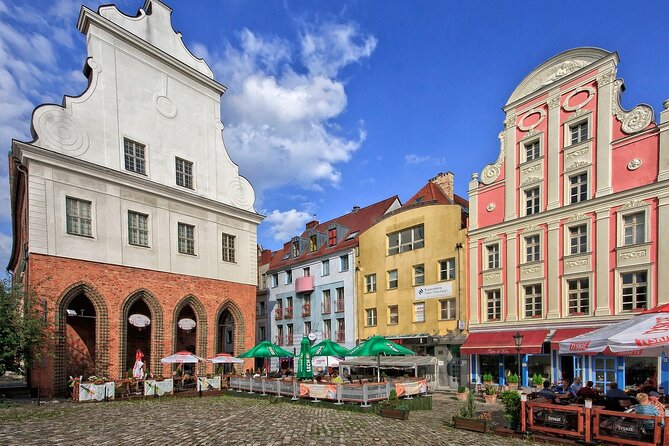
Reviewed · WALKING TOURS
Szczecin Walking Tour: Explore Top Sights & Hidden Gems
Szczecin’s best sights sit within an easy central route, and this two-hour walking tour gives you a useful first look without making you wrestle with a map. You move from the striking Karłowicz Philharmonic to the cathedral, castle, and Oder waterfront, with a few extra stops kept as surprises.
I like the small group limit of 15, since it gives you a fair chance to ask questions. I also like the quick mix of architecture, church art, royal history, and port scenery. The drawback is the pace: 20 minutes at several major stops is enough for an introduction, not a full visit inside each one.
Key points to know before booking
- Four major sides of Szczecin: See modern architecture, Gothic religious art, a ducal castle, and the riverfront in one route.
- A useful first-day tour: The walk helps you get your bearings before exploring the city on your own.
- English guidance at 10:00 am: Start at Kino Pionier 1907 and return to the same meeting point.
- Maximum group of 15: Smaller groups make it easier to hear the guide and ask about local places.
- No separate attraction charge: Admission tickets are included, and each listed stop is marked free of charge.
- Guide quality is central: Previous tour experiences praised clear explanations, friendly answers, and Glenn’s energetic approach.
Why this short Szczecin walk works well
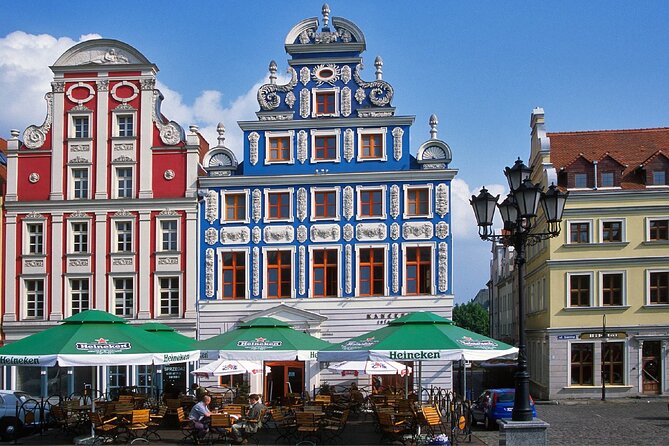
Szczecin is not always the first Polish city on a visitor’s list, which is part of its appeal. You get a substantial city center, a strong maritime connection, grand civic buildings, and traces of Pomeranian rule, but the main sights can be hard to arrange when you are new to town.
This tour tackles that problem with a simple route. You meet at Kino Pionier 1907, al. Wojska Polskiego 2, at 10:00 am, then walk through central Szczecin with an English-speaking guide. The route ends back at the starting point, so you are not left guessing how to return.
The tour lasts about two hours. That is long enough to give you a clear outline of the city, but short enough to fit around lunch, an afternoon museum visit, or onward plans. I would use it early in a Szczecin stay, when basic orientation has the greatest value.
The strongest part is the guide’s role. Previous experiences describe guides who explained the city’s past clearly, answered questions patiently, and kept the group involved. One guide, Glenn, was praised for his energy and good interaction with the group. Since the tour is offered in English, you can ask about the buildings, local areas, or places worth returning to later.
The walk is not designed as a series of long interior visits. Instead, it gives you a broad view of Szczecin’s center and waterfront. If you want detailed museum time, a full architectural lecture, or a slow church visit, you will need to add those separately.
A few more Poland trips to weigh up
- Warsaw: Old Town Highlights Walking Tour in English
★ 4.7 · 1,516 reviews - Old Town Krakow & Wawel Castle Walking Tour
★ 5.0 · 1,508 reviews - Creepy Krakow: 2-Hour City Walking Tour
★ 4.7 · 1,131 reviews
The Karłowicz Philharmonic: a sharp modern beginning
The Karłowicz Philharmonic makes a memorable first stop because its design is so different from the older buildings that follow. Named for Polish composer Mieczysław Karłowicz, the concert hall is known for its bold modern form, created by Spanish architect Alberto Veiga and Portuguese architect Fabrizio Barozzi.
You have about 20 minutes here. That should give the guide time to explain the building’s cultural role and point out its unusual design, while you take in the contrast between new Szczecin and the historic center.
I like this as an opening stop because it prevents the tour from becoming a procession of old churches and royal buildings. The philharmonic introduces the city as a living cultural place, not simply a collection of monuments.
The limitation is straightforward: 20 minutes is a viewing stop, not a concert experience. Admission is free as part of the tour, but the information provided does not promise entry to a performance or a detailed interior visit. If the building interests you as a concert venue, ask your guide what is happening during your stay.
St. James Cathedral and Szczecin’s religious past
The Archcathedral Basilica of St. James the Apostle brings the route into an older and more solemn setting. Dating to the 12th century, the Gothic church is one of Szczecin’s key religious buildings, with detailed architecture and stained-glass windows.
The guide allows around 20 minutes here. That is a sensible amount of time for a first look at the building’s history and design. You can expect an explanation of its place in the city and a chance to appreciate the interior details, though the schedule does not allow for a long, unhurried church visit.
This stop adds needed depth to the route. After the clean lines of the philharmonic, the cathedral shows how much older layers of Szczecin remain part of the city center. It also gives you a chance to ask about religious traditions and the building’s long role in local life.
I would pay close attention to the stained glass and Gothic details, then make a note if you want to return later. The tour’s purpose here is to help you recognize why the basilica matters. It is not a substitute for spending a quiet hour examining every chapel and architectural feature.
Admission is listed as free, so you do not need to budget an extra entrance fee for this stop. As with any active place of worship, follow the guide’s advice about respectful behavior and photography if those matters arise during the visit.
Pomeranian Dukes’ Castle and the city’s ruling families
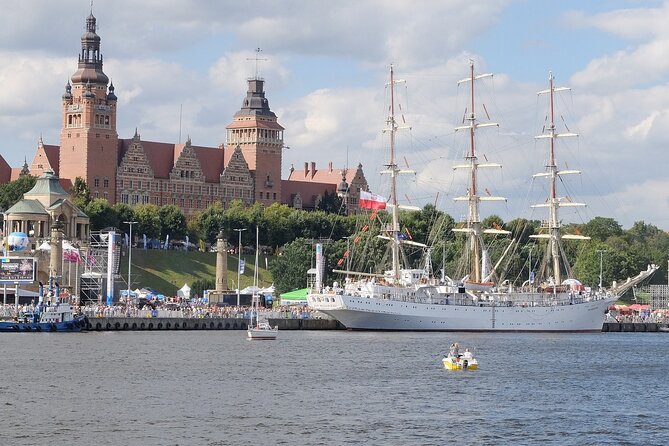
The Pomeranian Dukes’ Castle shifts the story from religion to regional power. Originally built in the 14th century, the castle recalls the rulers who shaped Pomerania and gives the city a strong link to its ducal past.
You have roughly 20 minutes at the castle. The guide can explain its role, its architectural changes, and its current use as a place for museums, exhibitions, and events. The castle is not just an exterior monument. It remains part of Szczecin’s cultural life.
This is another place where the tour provides orientation rather than a full admission visit. The included admission is listed as free, but the experience details do not specify entry into every museum or exhibition. If a particular display catches your attention, ask about returning after the walk.
I find the castle especially useful for putting Szczecin on the map. The city’s story is not only Polish, and the castle helps explain the importance of the wider Pomeranian region. You get a sense of royal ceremony and political change without spending the whole morning inside one site.
The short stop also keeps the overall route moving. You will see the castle, understand why it matters, and then continue toward the river rather than spending too much of your limited city time in one building.
Same country, a completely different kind of day:
- From Krakow: Auschwitz-Birkenau Guided Tour & Hotel Pickup
★ 4.5 · 33,358 reviews - From Krakow: Auschwitz-Birkenau Guided Tour & Hotel Pickup
★ 4.5 · 29,340 reviews - Krakow: Auschwitz Guided Tour with Optional Hotel Pickup
★ 4.5 · 15,280 reviews - Krakow–Zakopane: Cable Car, Chocholow Baths, Cheese & Vodka
★ 5.0 · 10,720 reviews
Lastadia and the Oder waterfront
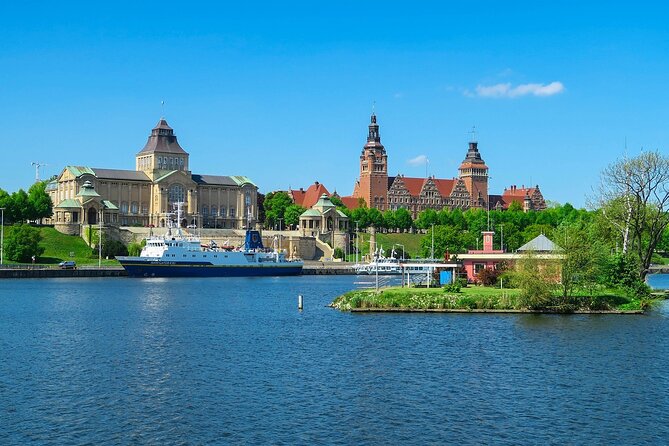
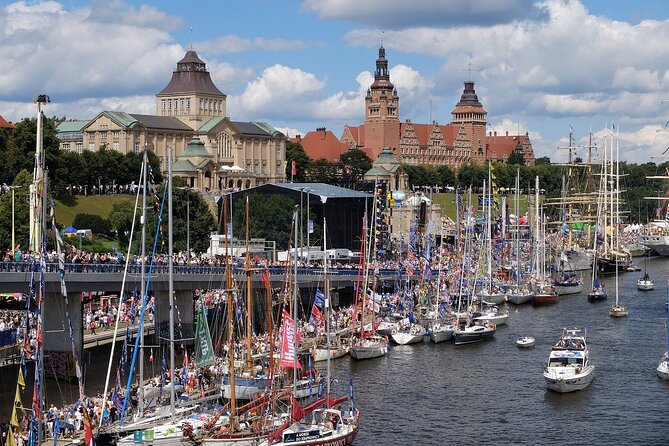
Lastadia Łasztownia gives the tour a change of mood. This waterfront area grew from cargo handling and shipbuilding, and its connection to the Oder River helps explain Szczecin’s maritime character.
The scheduled time here is about 30 minutes, longer than at the philharmonic, cathedral, or castle. That extra time makes sense. A waterfront is best understood while walking, looking across the river, and taking in the relationship between the city and its port.
You can expect a promenade, river views, and a mix of older warehouses and newer uses. The area now includes restaurants, cafes, and art spaces, so it offers a useful place to return for a meal or a slower stroll after the tour.
This is likely to be one of the most relaxed sections of the morning. The historic center gives you formal buildings and church towers. Lastadia gives you open views and a clearer feel for the city’s working connection to water.
The supplied details do not promise a meal stop, so plan to continue walking rather than arriving hungry and expecting a restaurant break. You may have time to look around, but the group remains on a schedule.
The waterfront can also make the route feel more spacious. If you take photographs, this is the section where you are likely to want a little extra time. The guide’s explanations can help connect the river views with Szczecin’s former industrial activity.
The Wheel of Szczecin and the extra stops
The Wheel of Szczecin is listed for about 30 minutes and adds a more recreational note to the route. The supplied details do not explain whether the tour includes a ride or simply a visit, so you should not assume that a ticket for a rotation is part of the experience.
That uncertainty is worth keeping in mind when you book. The tour includes a professional guide, a two-hour guided walk, and admission tickets, while the listed stops are marked free of charge. Still, the exact format of the Wheel of Szczecin stop is not spelled out.
The route also includes several additional stops that are not named in advance. This can make the walk feel less rigid and gives the guide room to respond to the group, but it means you cannot plan around every sight before arrival.
I would treat the surprise stops as a bonus, not the main reason to book. The known route already covers the major themes: music, religion, regional rule, port life, and modern leisure. The extra points should add texture rather than carry the whole tour.
What the two-hour pace feels like
The listed timing adds up to the full two hours: 20 minutes at the philharmonic, 20 at St. James Cathedral, 20 at the castle, and 30 each at Lastadia and the Wheel of Szczecin. Walking time between stops is folded into the overall schedule, so you will not spend the entire two hours standing at the five named locations.
This is a city overview with guided context, not a deep examination of each attraction. You should expect a steady walk, short explanations, questions, and occasional photo opportunities.
The pace should suit most people who can take part in a normal walking tour. The tour information says most people can participate, and it is near public transportation. Service animals are allowed.
Wear comfortable shoes and bring anything you normally need for an outdoor city walk. The experience is on foot, and the waterfront portion may feel different from the more built-up central streets. No special equipment is listed.
The 10:00 am start is useful. You get an early look at the center, then have the rest of the day to revisit the cathedral, castle, waterfront, or another place your guide points out. I would note down recommendations as you go, since the tour’s practical value is partly in helping you plan the next day or two.
Group size, guides, and the human side of the walk
The maximum group size is 15. That is not a private tour, but it is small enough to avoid the worst problems of a large city group. You should be able to hear the guide and ask questions without needing to fight for attention.
The guide makes or breaks a short tour. The strongest feedback centers on clear explanations, friendliness, and time for questions. One small group had only two participants, which allowed for plenty of conversation. Group size can vary, of course, but the cap gives you a reasonable expectation of access.
Glenn is one guide specifically associated with the experience. His approach was described as motivated, interactive, and fun. That matters on a route with several short stops, since energy helps keep the morning from feeling like a list of dates and building names.
You should still expect some variation from one guide to another. The tour is offered in English, but each guide will have a different way of telling the city’s story. If you enjoy asking about local places, food, museums, or the best area for an evening walk, this format gives you a natural chance to do so.
Is $32 a fair price for two hours?
At $32 per person, the value depends on what you want from a city tour. You are paying for a professional English-speaking guide, navigation, a fixed route through several important parts of Szczecin, and admission tickets where applicable.
That is fair if you are new to the city and want to spend your first morning efficiently. Booking an average of 15 days ahead also suggests that you should not leave your plans until the last minute if the 10:00 am slot matters to you.
The price is less compelling if you prefer to walk independently. Szczecin’s central sights can be visited without a guide, and the listed admissions are free. The real purchase here is not entry access. It is the guide’s explanation, the route planning, and the chance to ask questions while you get oriented.
I would compare this with the cost of losing half a day to wrong turns or missing the connection between the main sights. For a first visit, that time saving can make the fee worthwhile. For a repeat visit, you may prefer to spend the money on a specific museum or a longer private experience.
Gratuities are not included, but they are optional. Free cancellation is available up to 24 hours before the 10:00 am start time. Cancellations made less than 24 hours before the start are not refunded, and late changes are not accepted.
Who should book this walk?
I would recommend it to first-time visitors who want a fast, organized introduction to Szczecin. It suits people who like hearing the story behind buildings rather than simply photographing them, and it works well for anyone who wants local suggestions before setting off alone.
It is also a good fit if you have only part of a day in the city. The route covers a surprising range of subjects in two hours, from modern music halls to medieval religion, ducal power, and the Oder waterfront.
Families and mixed-age groups may appreciate the short stops and the lack of complicated transport. The tour information says most people can participate, though you should consider your own comfort with a two-hour walk.
I would hesitate if your main goal is extensive time inside the castle or cathedral. The schedule moves on quickly, and the guide has to serve the whole group. You should also look elsewhere if you want a private, highly customized route.
The final call: book for orientation and local context
Book the Szczecin Walking Tour if you want a clear first map of the city in human form. The route covers the city’s key sights, adds the waterfront, and gives you an English-speaking guide who can explain what you are seeing and answer questions.
The best reasons to choose it are the small group cap, the broad range of stops, and the helpful 10:00 am timing. Glenn’s lively style and the reports of patient answers add confidence, though your exact guide may differ.
Skip it if you are happy navigating alone or want long interior visits. For everyone else, $32 is a reasonable fee for a focused introduction, especially at the beginning of a Szczecin stay.
FAQ
Where does the Szczecin walking tour start?
The tour starts at Kino Pionier 1907, al. Wojska Polskiego 2, 70-471 Szczecin, Poland.
What time does the tour begin?
The start time is 10:00 am.
How long does the walking tour last?
The tour lasts approximately two hours.
Where does the tour finish?
The activity ends back at the meeting point.
Is the tour offered in English?
Yes. The tour is offered in English.
How many people can join the tour?
The maximum group size is 15 travelers.
Can I cancel for a full refund?
Yes. You can cancel up to 24 hours before the experience start time for a full refund. Cancellations or changes made less than 24 hours before the start are not accepted for a refund.
Just added around Poland
- Guided Winter Kayak Tour in Gdańsk & Hot Chocolate Treat★ 5.0 · 51 reviews
- Electric Scooter Tour: Old Town Tour – 1,5-Hour of Magic!★ 5.0 · 19 reviews
- Elblag Canal Tour from Gdansk★ 4.5 · 22 reviews
- Gdansk Highlights Bicycle Tour★ 5.0 · 65 reviews
- #1 Polish Vodka Tasting Experience in Gdansk★ 5.0 · 87 reviews
- Delicious Gdansk Craft Beer Tour★ 5.0 · 4 reviews
- DAILY Stutthof Concentration Camp with Guide and Transport★ 4.5 · 10 reviews
- Cruises on the Motlawa River★ 4.5 · 66 reviews
Walking Tours, compared.
Gdańsk City Sights & History Guided Walking Tour in English
Read our review →
Browse the lists this tour appears in