
Reviewed · JEWISH GHETTO TOURS
Past Meets Present in Warsaw’s Jewish Ghetto
Warsaw’s Jewish Ghetto is best understood on foot, one memorial and street at a time. This 2.5-hour walk follows the former Jewish quarter from the Jewish Historical Institute to Mila 18, Umschlagplatz, and the POLIN Museum area, giving you the geography behind events that can otherwise feel distant and abstract.
I like the small maximum group of 10, which leaves room for questions, and I like the focus on places rather than a long indoor museum visit. Guide Mona is described as gentle, personable, and deeply informed about the uprising. The main drawback is the walking: this is a serious route through a large historic area, and it is not recommended if you have mobility or walking problems.
Key points to know before booking
- Mila 18 gives the uprising a precise address: You visit the mound marking the deaths of the resistance leaders, including Mordechai Anielewicz.
- The route connects ordinary life with wartime destruction: Nalewki Street and Długa show where shops, workshops, and stalls once filled the northern Jewish quarter.
- Umschlagplatz is one of the tour’s hardest stops: The monument marks the departure point for Jews sent to Treblinka.
- The group stays small: A maximum of 10 people makes it easier to hear the guide and ask personal questions.
- The ending is practical: The walk finishes at Willy Brandt Square, with suggestions for a nearby coffee stop.
- The history is handled with both honesty and hope: Mona’s approach, based on the available feedback, combines emotion with clear explanation.
Why this walking tour matters in Warsaw
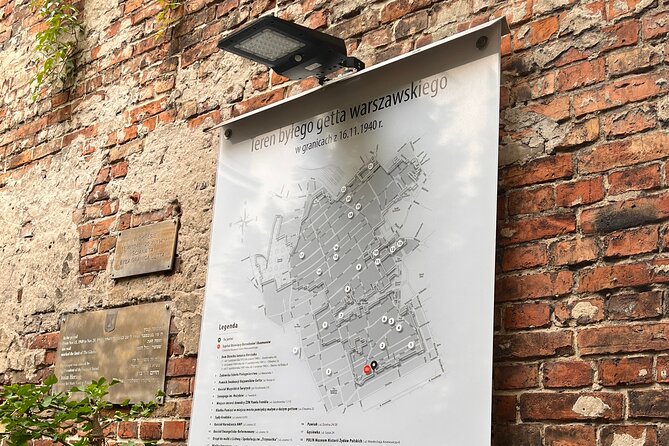
Warsaw’s wartime story is not confined to one preserved old quarter. Much of the former ghetto was destroyed, rebuilt, or altered, so you need a guide to connect today’s streets with the city that existed before and during the war.
That is the chief value of this experience. You are not simply looking at plaques. You are moving through locations that once held homes, businesses, public life, resistance, deportation points, and memorials. The route helps you picture the Jewish quarter as a lived-in part of Warsaw, not only as a place of death.
The tour is offered in English and includes a certified guide. It costs $112.43 per person, which is a substantial price for a 2.5-hour walk. I would judge that cost mainly by the quality of the guiding and the size of your group. With no attraction admissions included, you are paying for interpretation, route planning, and the chance to ask questions in a small group.
That price makes more sense if you want a focused introduction to the subject and do not want to organize the route yourself. It makes less sense if you are happy to read memorial plaques independently or already know Warsaw’s wartime geography.
More Jewish Ghetto Tours in Warsaw
- Warsaw: Warsaw Ghetto Private Walking Tour with Hotel Pickup
★ 4.9 · 369 reviews - Warsaw: Ghetto, Jewish Cemetery & POLIN Museum Private Tour
★ 4.8 · 132 reviews - Tour of the Warsaw Ghetto
★ 5.0 · 119 reviews
Starting at the Jewish Historical Institute
The meeting point is at the Monument of Słowacki, near Plac Bankowy, at 00-142 Warsaw. From there, the route goes first to the Jewish Historical Institute, known in Polish as Żydowski Instytut Historyczny.
The building once served as one of the centers of Jewish social life in the ghetto. Today, the institute holds an important archive of Jewish documents. The scheduled stop is about 15 minutes, and admission is free.
Do not expect this part to function as a full museum visit. The time is short, so the guide’s role is to explain why the building matters and how documentary records help preserve a community that the Nazis tried to erase. This is a useful opening because it begins with Jewish life and institutions, not only with wartime suffering.
You may want to arrive a few minutes early. The meeting point and first stop are different places, and the tour begins promptly enough that a late arrival could be awkward.
Nalewki and Długa: seeing the quarter as a neighborhood
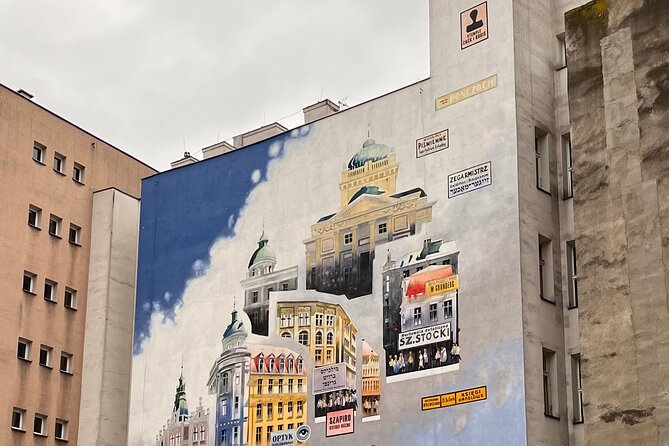
The next stop is the crossing of Nalewki Street and Długa Street, scheduled for about 10 minutes. Before the war, Nalewki was one of the main streets in the northern Jewish quarter. Shops, manufactories, and stalls made it a center of business and daily activity.
This is an important correction to the way many people first picture the ghetto. It was not an empty memorial zone. It had commerce, work, families, movement, and social life. Learning that history at a street crossing gives you a better sense of the neighborhood that existed before the war.
The stop is free and brief. Its value depends on the guide’s ability to help you connect the present street plan with the former quarter. Mona’s strength, according to the comments provided, is her ability to explain the subject while remaining approachable and open to questions.
Krasinski Garden and the edge of the ghetto
The walk continues to Krasinski Garden, or Ogród Krasińskich, for about 20 minutes. The garden was a calm public place for Warsaw residents, but during World War II it lay outside the ghetto.
That detail makes the stop more than a pleasant pause. A park can look neutral today, yet its wartime position mattered. The boundary between inside and outside the ghetto was not only a line on a map. It affected movement, access, escape, and the daily choices people were forced to make.
This is also one of the few parts of the route described as an oasis of calm. If you need a moment to absorb the earlier information, the garden provides one. Still, the tour remains a walking history lesson rather than a leisure stroll, so do not mistake this stop for a long rest break.
Same country, a completely different kind of day:
- Warsaw: Chopin Concert in the Old Town
★ 4.8 · 2,287 reviews - Warsaw: Traditional Galar Cruise on The Vistula River
★ 4.6 · 1,640 reviews - Warsaw: Old Town Highlights Walking Tour in English
★ 4.7 · 1,516 reviews - Warsaw Concert: Chopin – Painted by Candlelights with Wine
★ 4.8 · 1,442 reviews
The POLIN square and the Ghetto Heroes Monument
The route then reaches the square by the POLIN Museum, where the Monument to the Ghetto Heroes is located. The stop lasts about 30 minutes, making it one of the longer pauses.
The monument is one of Warsaw’s most important places of remembrance for the Jews murdered during the war and for those who fought in the Warsaw Ghetto Uprising. Each year on the uprising anniversary, Varsovians place daffodils here. That small floral gesture has become a public act of memory and keeps the site connected to present-day Warsaw.
You will not enter the POLIN Museum as part of this tour. The attraction admission is not included, and the itinerary lists this as an outdoor stop. If you want a full museum visit, plan that separately and allow several additional hours. The walk gives you context for the museum, but it does not replace it.
I especially like the order here. After seeing where Jewish social and commercial life once took place, you arrive at a major memorial with a clearer sense of what was lost. The guide can also explain the uprising in human terms, rather than presenting it as a detached military episode.
Mila 18 and the mound of the resistance leaders
At Mordechaja Anielewicza Street, the tour visits Anielewicz Mound at Mila 18. The stop is scheduled for about 30 minutes.
Mila 18 was associated with the leadership of the Warsaw Ghetto Uprising. The mound commemorates the deaths of those leaders, including Mordechai Anielewicz. This is one of the route’s most powerful locations because it ties the uprising to a specific place and to the people who directed the resistance.
The site also makes clear how little of the original ghetto remains in a simple, preserved form. A mound and memorial marker carry the memory of an event that took place amid buildings, streets, and lives that were later destroyed.
This is the point where the tour’s emotional side may be strongest. One account describes Mona as gentle and highly informed, guiding a family member through both the facts and the feelings surrounding the uprising. That combination matters. A guide who gives only dates can leave you cold, while a guide who offers only emotion can blur the history. The best moments here appear to balance both.
Umschlagplatz and the deportations to Treblinka
The stop at Umschlagplatz lasts about 15 minutes. The monument marks the place from which Jews were transported to Treblinka extermination camp. Approximately 300,000 Jewish people died at Treblinka.
This is not a site to rush through. The word Umschlagplatz refers to the assembly and transfer point used for deportations. The monument marks a place where people were gathered before being sent away, often without knowing the full fate awaiting them.
Because the stop is relatively short, you will want to listen closely. The guide’s explanation is the main substance here. There is no admission ticket, and the power of the place comes from its location and the account attached to it.
The route’s progression from neighborhood life to resistance and then deportation creates a clear historical arc. It also avoids reducing the ghetto to one event. You see a community, a prison, a site of revolt, and a departure point for mass murder.
Ending at Willy Brandt Square
The final stop is the Willy Brandt Monument, at Skwer Willy’ego Brandta. The scheduled time is about 15 minutes, and the tour ends here.
The memorial recalls Willy Brandt’s tribute to the murdered Jews of Warsaw and to all victims of World War II. Brandt is remembered in connection with his gesture of humility and remembrance in Warsaw, and the monument gives the walk a later political and moral frame.
This ending is deliberately different from Mila 18 and Umschlagplatz. Instead of closing only with the events of the war, it points toward how later generations confront that past. The tour does not pretend that a memorial can repair the damage, but it shows how remembrance remains part of public life.
The provider says the guide offers recommendations for where to get coffee in the neighborhood after the walk. Coffee is not included, but the suggestion is useful. After two and a half hours of serious history and steady walking, a quiet café stop can help you process what you have seen.
Group size, pace, and practical comfort
The maximum group size is 10 people. That is small enough for a more personal feel, and it should make it easier to hear the guide outdoors. One comment describes a private tour, so private arrangements may sometimes be available, but the stated group limit is 10 rather than a promise of a private booking.
Most people can take part, and the route is near public transportation. Still, this is not a light sightseeing walk. The tour lasts about 2 hours and 30 minutes, includes several outdoor stops, and moves through a broad historic area.
Wear comfortable shoes and dress for the weather. That advice is not decorative. You will spend the experience on foot, and the tour is specifically not recommended for people with mobility or walking problems. Service animals are allowed.
The meeting and ending points are not the same. You begin near Plac Bankowy and finish at Willy Brandt Square near Mordechaja Anielewicza Street. Check the end point before making evening plans, especially if you need to return to a hotel on the other side of central Warsaw.
Who will get the most from this experience
I would choose this walk if you want a guided introduction to Jewish Warsaw and prefer streets, monuments, and memorials to a long indoor presentation. It suits visitors who want to ask questions and who value a human guide’s explanation of difficult events.
It is also a good choice if Warsaw’s wartime history feels hard to place on a map. The route links the Jewish Historical Institute, Nalewki and Długa, Krasinski Garden, the POLIN square, Mila 18, Umschlagplatz, and Willy Brandt Square in one continuous story.
You may want something else if your main goal is to spend hours inside the POLIN Museum. This walk does not include museum admission. You may also find the price high if you are primarily looking for transportation or a quick introduction, since the experience is a walking tour with free-entry stops.
The strongest reason to book is the guide. The comments describe Mona as personable, gentle, and able to handle both factual questions and the emotional weight of the subject. That is exactly what I would want here. The strongest reason to hesitate is the physical demand and the serious tone.
Should you book Past Meets Present in Warsaw’s Jewish Ghetto?
Book it if you want the former ghetto explained through specific places, not just read about in a guidebook. The route is focused, the group is limited to 10, and Mona’s style appears particularly suited to visitors who want an honest but humane account of the uprising and the destruction of Jewish Warsaw.
At $112.43 per person, it is not a bargain walk. You are paying for a certified English-speaking guide and a carefully connected route rather than entrance tickets. For a first visit to this part of Warsaw, I think the personal explanation can justify the price, especially if you have questions or are traveling with family.
Skip it if walking is difficult, if you want a full indoor museum experience, or if you prefer to study memorials independently. For everyone else, this is a serious, moving way to understand a critical part of Warsaw, with enough present-day context to keep the city from being reduced to its wartime past.
FAQ
Where does the tour begin?
The tour begins at the Monument of Słowacki near Plac Bankowy, at 00-142 Warszawa, Poland.
Where does the tour end?
It ends at Willy Brandt Square, near Mordechaja Anielewicza Street in Warsaw.
How long does the tour last?
The tour lasts approximately 2 hours and 30 minutes.
What language is offered?
The tour is offered in English.
Who leads the experience?
A certified guide leads the tour. Mona is identified as the guide associated with the experience.
How many people can join?
The maximum group size is 10 people.
Is admission to the stops included?
The listed stops have free admission. The POLIN Museum is visited from the outside, and museum admission is not included.
Is coffee included?
No. Coffee and tea are not included, though the guide provides recommendations for a nearby coffee stop at the end.
Is the tour suitable for people with walking difficulties?
The tour is not recommended for people with mobility or walking problems.
Can I cancel for a full refund?
Yes. You can cancel at least 24 hours before the local start time for a full refund. Cancellations or changes made less than 24 hours before the start are not refunded or accepted.
Just added around Warsaw
- World War II Warsaw Old Town, Military Cemetery Walking Tour★ 4.7 · 3 reviews
- Warsaw: Wolf’s Lair & Swieta Lipka Small-Group Tour + Lunch★ 5.0 · 3 reviews
- Wilanów Palace: 2-Hour Guided Tour with Entrance Tickets★ 4.8 · 8 reviews
- Warsaw Zoo Skip-the-Line Entry Ticket with Private Transport★ 4.8 · 3 reviews
- Warsaw Wolf’s Lair with St. Lipka and Mamerki Private Guided★ 4.2 · 3 reviews
- Warsaw Private Wilanow Palace & Garden Tour★ 4.6 · 30 reviews
- Warsaw: Vistula River Cruise with Your Music & City Views★ 4.6 · 78 reviews
- Warsaw: Private Vodka Tasting Night with Snacks and Pickup★ 5.0 · 7 reviews
Jewish Ghetto Tours, compared.

Bike Tour of Old Town, Jewish Quarter and the Ghetto
Read our review →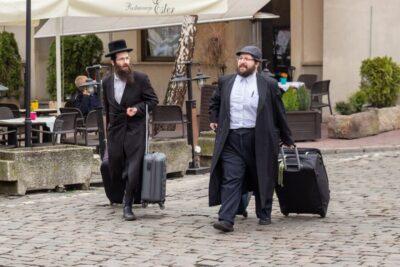
Kazimierz, Schindler’s Factory & Ghetto Guided Tour
Read our review →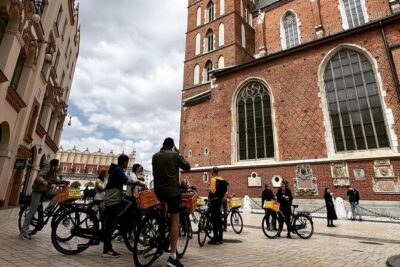
Full Bike Tour – the Old Town, Jewish Qtr & the Ghetto NEW BIKES
Read our review →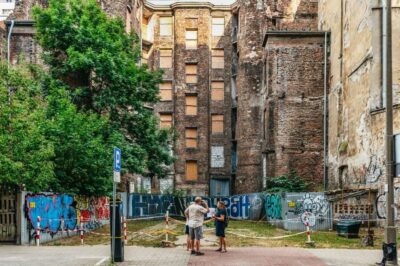
Warsaw Ghetto Private Walking Tour with Hotel Pickup
Read our review →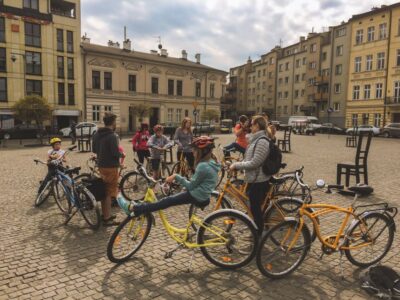
Bike Tour of the Old Town, Kazimierz, and the Ghetto
Read our review →
Browse the lists this tour appears in