
Reviewed · HISTORICAL TOURS
Jewish heritage in Warsaw
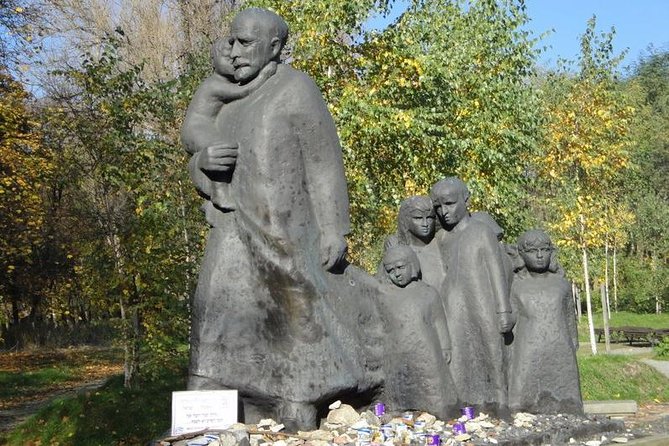
Warsaw’s Jewish story is written into ordinary streets, memorial stones, a surviving synagogue, and the quiet paths of the Jewish Cemetery. This private tour connects those places in about five hours, helping you understand how a community that once shaped Warsaw was destroyed and how its memory is preserved today.
I like the hotel pickup and drop-off, which saves you from sorting out transport between scattered sites. I also like the mix of major memorials and less obvious stops, especially Praga Polnoc and the Jewish Historical Institute. The main concern is the vehicle: one booking resulted in a cramped car with too little legroom, so ask about the vehicle if anyone in your group needs extra space.
Key points to know before booking
- A five-hour private tour for up to four people gives your group a more personal pace than a large coach outing.
- Renata Kopczewska leads the experience, with a strong focus on the history of Warsaw’s Jewish community and World War II.
- The Jewish Cemetery is closed on Saturdays, so choose another day if this stop matters to you.
- Nozyk Synagogue is Warsaw’s only synagogue to survive World War II and is still used for worship.
- Several entrance fees are extra, including the Jewish Cemetery, Nozyk Synagogue, and Jewish Historical Institute.
- The tour includes hotel pickup and return, but confirm the vehicle size before booking, especially for four adults.
Why this tour gives Warsaw’s Jewish story shape
Warsaw’s Jewish heritage cannot be understood from a single museum. The important places are spread across the city, and many are easy to miss if you explore on your own. A memorial may occupy a plain square, a former Jewish building may now serve another purpose, and a cemetery marker may carry more meaning than its simple appearance suggests.
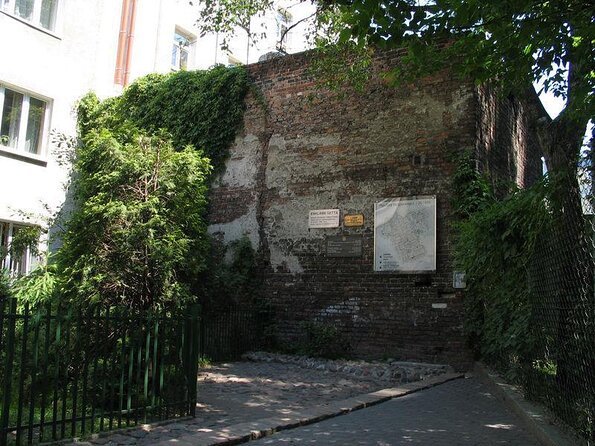
This tour links those pieces. You begin with the former Warsaw Ghetto and its uprising memorials, then move to the Jewish Cemetery, Umschlagplatz, Nozyk Synagogue, Praga Polnoc, and the Jewish Historical Institute. The route combines sites of remembrance with surviving buildings and archival material.
I would choose this experience if you want a focused introduction rather than a general Warsaw city tour. It is especially useful for a first visit, when you may not yet know how the ghetto, deportation sites, religious buildings, and prewar Jewish life fit together.
The private format matters here. Your group of up to four people travels together, and you can ask questions as the story develops. The guide is listed as Renata Kopczewska, and the strongest feedback about her points to clear explanations, warm conversation, and a willingness to answer questions rather than simply recite dates.
A few more Warsaw trips to weigh up
- Warsaw: POLIN Museum of the History of Polish Jews Ticket
★ 4.7 · 1,142 reviews - Warsaw: Chopin Concert at Historical Venue in Old Town
★ 4.7 · 445 reviews - Small-Group Historical Guided Tour of Warsaw with pick up/drop off. Public Tour.
★ 4.5 · 343 reviews
Warsaw Ghetto memorials: Mila 18 and the heroes monument
The first hour focuses on the former Warsaw Ghetto. The ghetto itself was destroyed after the uprising, so you should not expect a preserved historic district with intact streets and buildings. Instead, the area is marked by memorials and the surviving traces of a vanished community.
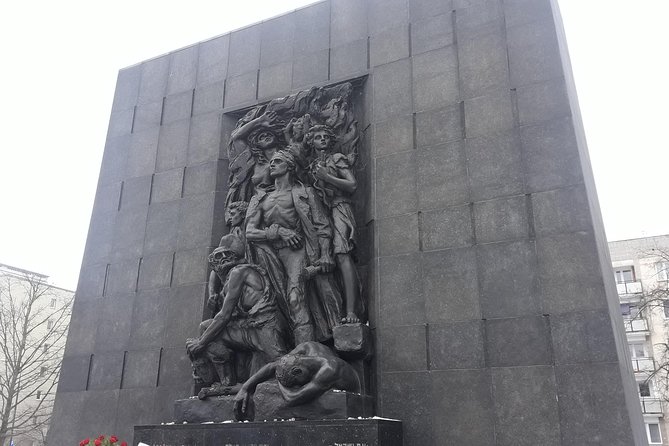
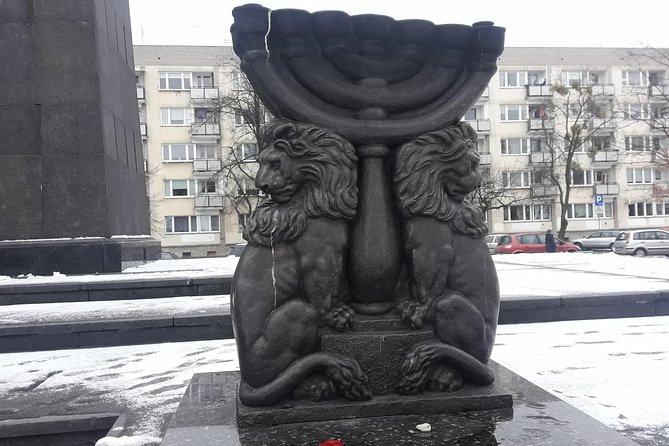
The monument dedicated to the Heroes of the Ghetto is the central point. It commemorates the people who fought during the uprising and has become one of Warsaw’s most important places of remembrance. Your guide can help you read the site as more than a sculpture, explaining the destruction around it and the events that gave the monument its meaning.
You also visit Mila 18, associated with the underground resistance during the uprising. The site is marked by a memorial mound. It is a powerful place precisely because so little of the original setting remains.
Another stop is the Shmul Zygelbojm memorial. Zygelbojm was a Jewish member of the Polish government-in-exile who protested the destruction of European Jewry. Including this memorial broadens the story beyond military resistance and deportation. It points to the desperate attempts to make the outside world understand what was happening.
This portion of the tour is emotionally heavy. The open spaces and modern buildings can make the destruction feel abstract if you visit without context. A guide helps connect the memorials to the people and events they represent.
The Jewish Cemetery and its weathered matzevot
The Jewish Cemetery offers a different kind of encounter. Here, the focus shifts from wartime destruction to the long life of Warsaw’s Jewish community. Preserved matzevot, or Jewish gravestones, carry names, dates, symbols, and inscriptions that reveal something about the people buried there.
The cemetery also shows the community’s contribution to Polish literature, science, and art. You are not simply looking at old stones. You are reading a record of Warsaw’s Jewish citizens, their families, professions, beliefs, and place in Polish society.
The visit lasts about 45 minutes. That is enough time for an introduction and a meaningful walk, but not enough to inspect every section. Wear comfortable shoes, since the tour requires walking and the overall activity calls for moderate physical fitness.
The cemetery is closed on Saturdays. This is the most important scheduling tip in the entire tour. If you are visiting over a weekend, plan this experience for Sunday or another day rather than assuming the site will be available.
Admission to the cemetery is not included. The tour price covers the guide, fuel surcharge, and transport, but you should budget separately for entrance fees. Since fees can change, confirm the current amount when booking.
Umschlagplatz, the departure point for Treblinka
Umschlagplatz is a short 15-minute stop, but its importance is enormous. This was the site of the former railway station from which about 300,000 Jews from the Warsaw Ghetto were deported to the Treblinka death camp during the summer of 1942.
The memorial is shaped as a stark, enclosed space. On its walls are 300 first names in alphabetical order, a symbolic list of people beginning their final journey. The design avoids trying to represent every person individually, yet it makes the scale of the deportations personal through names.
You will want to give this stop your full attention, even though it is brief. The short visit is not a weakness in itself. Umschlagplatz is a place for quiet reflection, while the guide supplies the historical setting.
The stop is free, so there is no admission decision to make. Its location also fits naturally into the private vehicle route, saving you the effort of working out connections between memorial sites.
Same country, a completely different kind of day:
- Warsaw: Chopin Concert in the Old Town
★ 4.8 · 2,287 reviews - Warsaw: Traditional Galar Cruise on The Vistula River
★ 4.6 · 1,640 reviews - Warsaw: Old Town Highlights Walking Tour in English
★ 4.7 · 1,516 reviews - Warsaw Concert: Chopin – Painted by Candlelights with Wine
★ 4.8 · 1,442 reviews
Nozyk Synagogue, a living place of worship
Nozyk Synagogue is one of the most valuable stops because it is not only a memorial. It is the only synagogue in Warsaw that survived World War II, and it remains in use.
Built at the beginning of the 20th century, the synagogue gives you a physical link to Jewish religious life before the war and to the community that continues in Warsaw today. That makes it different from a monument or museum. You are seeing a functioning place of worship, not just a preserved shell.
The visit lasts about 15 minutes. The synagogue entrance fee is not included. On Saturdays, it is open for prayers only, and no admission fee is charged then. Because Sabbath access follows a different pattern, check the arrangements before you go if your schedule includes Saturday.
This is also a stop where respectful behavior matters. Follow the guide’s instructions, dress appropriately, and remember that the building still serves a religious purpose.
Praga Polnoc and the buildings that survived
Praga Polnoc adds useful contrast to the tour. Much of central Warsaw was badly destroyed, while Praga was not damaged to the same extent. As a result, some Jewish-related buildings survived, even though their original uses have changed.
You may see the former student dormitory where Menachem Begin lived as a student. Begin later became prime minister of Israel, but here the focus is on his connection to Warsaw and the city’s Jewish educational life.
Another preserved building once served as a shelter for poor people and orphans. It is now a puppet theater. A former mikveh, or Jewish ritual bath, also survived and is now used as a high school.
These sites can be easy to overlook without someone pointing them out. They are not presented as a single museum complex, and their current uses may hide their former purpose. That is exactly why this part earns its place on the route. You see how history can survive in altered buildings rather than only in formal memorials.
The Praga Polnoc visit lasts about 30 minutes and is free. Do not expect every building to be open for a full interior tour. The value is in seeing the locations and understanding what they once were.
The Jewish Historical Institute and the surviving ghetto archive
The final major stop is the Jewish Historical Institute, housed in the former Judaistic Library. The building survived World War II, although the nearby Great Synagogue was destroyed.
Traces of the fire from the Great Synagogue can still be seen on the floor. This detail gives the building a physical connection to the destruction nearby. You are not only looking at documents behind glass. The structure itself carries evidence of what happened around it.
The institute also presents a map of prewar Poland showing former shtetles, along with an exhibition of ghetto archives. Those archives survived through extraordinary circumstances and preserve records of Jewish life and the Warsaw Ghetto.
Allow about 45 minutes here. This is the stop most likely to reward careful attention, since names, documents, maps, and written records require time. If you prefer to move quickly from one landmark to another, you may find the museum portion slower. If you want evidence and personal records, it is one of the most important parts of the tour.
Museum admission is extra. The price of the tour does not cover entrance fees to museums, so plan for that separately.
What the $270 group price really means
The listed price is $270 per group of up to four people. For four people, that works out to $67.50 per person. For two people, the effective cost is $135 each, so the value depends heavily on your group size.
You are paying for a private guide, hotel pickup and drop-off, fuel, and a five-hour route covering several parts of Warsaw. That is a reasonable structure for a group of four that wants a dedicated vehicle and guide. It is less attractive for a solo visitor or couple comparing it with a public walking tour.
The biggest value is time. These sites are spread out, and arranging them independently requires transport planning, opening-hour checks, cemetery scheduling, and research into what each memorial means. The private format also lets you ask questions along the way.
Lunch is not included, and entrance fees are extra. The tour operates in a morning window listed as 9:00 AM to 1:00 PM, while the experience itself lasts about five hours, so confirm the exact pickup time when reserving. The activity ends back at the meeting point, with hotel drop-off included.
One practical warning comes from the vehicle. A previous booking involved a very small car with uncomfortable legroom. That may have been connected to a last-minute replacement during high season, but you should still ask for the vehicle details if your group includes four adults, tall people, or anyone prone to back or leg pain.
How demanding is the day?
This is not a strenuous walking tour, but it is not completely effortless. You move between several stops, walk through the cemetery, and spend time standing at memorials and museums. Moderate physical fitness is requested.
The private car reduces the strain of city transport and gives you a place to sit between sites. Still, the vehicle’s size matters. Pickup is convenient, but comfort depends on what car is assigned.
The five-hour length is well judged for the subject. A shorter tour would risk rushing the cemetery and museum. A longer version could become emotionally tiring, given the focus on deportation, mass murder, and the destruction of Warsaw’s Jewish community.
Who will appreciate this experience most?
I would recommend this tour to you if you want:
- A focused look at Jewish Warsaw rather than a general city overview
- A private guide who can answer questions as you go
- Hotel pickup and drop-off
- A route that combines memorials, a cemetery, a synagogue, surviving buildings, and museum material
- Help understanding places connected with the film The Pianist
- A five-hour introduction without arranging separate taxis or public transport
It is less suitable if you want a relaxed sightseeing drive with little walking or if you prefer to spend a full day inside museums. It may also be poor value for one person, since the $270 fee is charged per group rather than per seat.
The tour is also serious in tone. You will visit sites connected with the Warsaw Ghetto, the uprising, deportation to Treblinka, mass graves, and wartime destruction. That is the reason to book it, but you should be prepared for a demanding subject.
Should you book the Jewish heritage tour in Warsaw?
Book it if you want the city’s Jewish story presented as a connected account rather than as isolated sights. The combination of Mila 18, Umschlagplatz, and Nozyk Synagogue gives you the major wartime and religious landmarks, while the cemetery, Praga Polnoc, and Jewish Historical Institute add the longer story of community life and survival.
I especially like the way the route includes places that are easy to miss, such as the former mikveh and the building linked with Menachem Begin. Renata Kopczewska’s personal guiding style is another reason to consider it, especially if you value explanations and conversation.
Before paying, confirm the vehicle size, the exact start time, current entrance fees, and the day of your visit. Avoid Saturday if seeing the Jewish Cemetery is essential. With those details settled, this is a strong choice for a small group that wants efficient transport, serious historical context, and a thoughtful introduction to Jewish Warsaw.
FAQ
How long does the Jewish heritage tour in Warsaw last?
The tour lasts approximately five hours.
How many people can join the private tour?
The price covers one private group of up to four people.
Is hotel pickup and drop-off included?
Yes. Hotel pickup and drop-off are included, and the activity ends back at the meeting point.
Is the Jewish Cemetery open on Saturdays?
No. The Jewish Cemetery is closed on Saturdays.
Are entrance fees included in the tour price?
No. Entrance fees for the Jewish Cemetery, Nozyk Synagogue, and Jewish Historical Institute are not included. Lunch is also not included.
Is cancellation free?
Yes. You can cancel for a full refund if you cancel at least 24 hours before the experience start time. Changes or cancellations made less than 24 hours before the start time are not accepted for a refund.
Just added around Warsaw
- World War II Warsaw Old Town, Military Cemetery Walking Tour★ 4.7 · 3 reviews
- Warsaw: Wolf’s Lair & Swieta Lipka Small-Group Tour + Lunch★ 5.0 · 3 reviews
- Wilanów Palace: 2-Hour Guided Tour with Entrance Tickets★ 4.8 · 8 reviews
- Warsaw Zoo Skip-the-Line Entry Ticket with Private Transport★ 4.8 · 3 reviews
- Warsaw Wolf’s Lair with St. Lipka and Mamerki Private Guided★ 4.2 · 3 reviews
- Warsaw: Vistula River Cruise with Your Music & City Views★ 4.6 · 78 reviews
- Warsaw: Private Vodka Tasting Night with Snacks and Pickup★ 5.0 · 7 reviews
- Warsaw Private Wilanow Palace & Garden Tour★ 4.6 · 30 reviews
Historical Tours, compared.

POLIN Museum of the History of Polish Jews Ticket
Read our review →
Gdańsk City Sights & History Guided Walking Tour in English
Read our review →

Small-Group Historical Guided Tour of Warsaw with pick up/drop off. Public Tour.
Read our review →Browse the lists this tour appears in