
Reviewed · OLD TOWN WALKING TOURS
Multi-ethnic Warsaw – guided walk through the old town
Warsaw’s Old Town is more than a pretty square rebuilt after wartime destruction. This private walk uses its streets to explain how German-born families and other immigrants helped shape the city’s trade, architecture, science, and culture. Guide Marzena is especially good at turning a short route into a lively, well-organized lesson.
I like the focused two-hour length and the way the walk links grand buildings with the people behind them. I also like the finish at E. Wedel, a Warsaw chocolate institution with more than 150 years of history. The main drawback is that this is a brisk overview, not a deep museum visit, and public transport plus any food or drink are not included.
Key points at a glance
- A private walk from Rynek Starego Miasta to E. Wedel: Your group has the guide to itself.
- German-born families take center stage: You learn why people from German-speaking lands settled in Warsaw and built new lives there.
- Saxon-era city building gets proper attention: Churches, gardens, and representative buildings help explain Warsaw’s changing form.
- Marzena is a strong guide choice: Her talks are praised for clear explanations, warmth, detailed answers, and a good sense of fun.
- The route connects culture with commerce: Entrepreneurs, publishers, architects, artists, scientists, and poets all enter the story.
- Free cancellation is available until 24 hours before departure: Bad weather may lead to a new date or a full refund.
Why Warsaw’s mixed heritage makes this walk worthwhile
Many first-time walks through Warsaw focus on kings, war damage, and reconstruction. Those subjects matter, but this tour takes a different route through the city’s past. It asks who helped Warsaw grow and how people from outside Poland became part of its civic life.
The focus on German-born families gives you a useful lens. Over the centuries, immigrants from German-speaking countries settled in Warsaw and made it their home. They were not simply names on a family tree. They worked as entrepreneurs, industrialists, architects, publishers, artists, academics, and poets.
That makes the subject practical rather than abstract. As you move from the Old Town toward the Royal Route, you can connect personal careers with streets, buildings, firms, and institutions that still shape the city. I like this approach because it shows Warsaw as a place built by many hands.
The tour also gives attention to the Saxon period, when construction and urban planning changed the city. You hear about buildings, churches, and gardens rather than looking only at isolated monuments. That wider view helps you understand why Warsaw’s central streets have the form they do.
More Old Town Walking Tours in Warsaw
- Warsaw: Chopin Concert in the Old Town
★ 4.8 · 2,287 reviews - Warsaw: Old Town Highlights Walking Tour in English
★ 4.7 · 1,516 reviews - Warsaw: Old Town Guided Walking Tour
★ 4.9 · 599 reviews
Starting at Rynek Starego Miasta
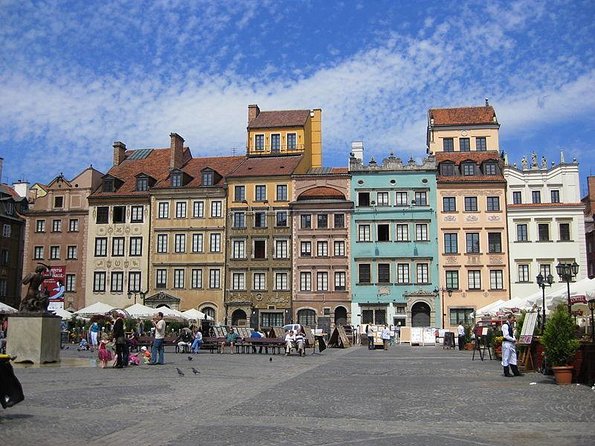
The meeting point is Rynek Starego Miasta, Warsaw’s Old Town Market Square. This is a sensible place to begin. It puts you in the heart of historic Warsaw, surrounded by colorful façades and a compact street plan that is easy to explore on foot.
The first section takes about 15 minutes. The guide sets up the main theme by explaining why people from German-speaking countries came to Warsaw and how they made the city their home. You will hear about some of the best-known German-born families connected with Warsaw’s past.
The value here is the framing. Instead of seeing the Old Town as a finished postcard, you begin to see it as a meeting place shaped by movement, work, and settlement. The subject also adds balance to a city story that can otherwise feel narrowly focused on Polish royalty or twentieth-century destruction.
The walk does not include a paid admission at this stop. It is an outdoor introduction, so wear shoes suited to cobbled or uneven city streets and be ready to listen while standing or walking.
Royal Castle, churches, and the Saxon building boom
The next 15 minutes bring you toward the Royal Castle in Warsaw and its museum. The tour does not list museum admission as part of the experience, so treat this as an exterior and city-setting stop rather than a guided visit inside the castle.
The Royal Castle area gives the guide a strong stage for discussing representative buildings, churches, and gardens. These places helped define Warsaw’s architectural character, and they also show how rulers, planners, religious groups, and private builders shaped the city.
The Saxon period receives special attention here. You learn about intensive construction and urban development, including the forces that changed Warsaw’s central spaces. That context is useful because grand buildings rarely explain themselves. A guide can point out how they relate to the wider city rather than leaving you with a list of dates.
I would not book this walk expecting a detailed castle tour. If the interiors are your main reason for visiting, plan a separate museum visit. If your goal is to understand how the city developed around its major landmarks, this stop does its job in a short time.
Krakowskie Przedmieście and the people behind the city
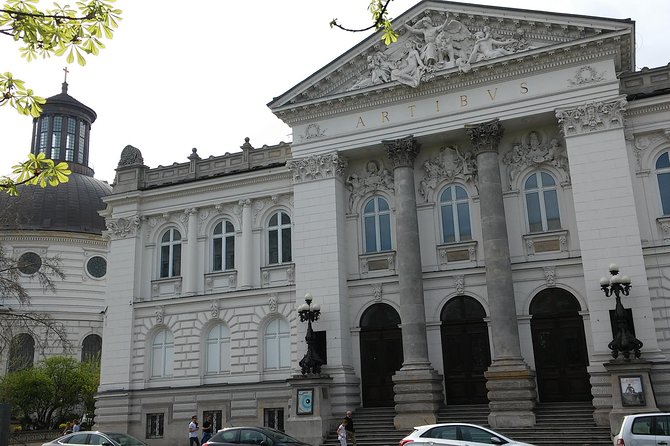
Krakowskie Przedmieście is the longest stop, at about 30 minutes, and likely the intellectual center of the walk. This historic route gives the guide room to connect architecture with the people who helped Warsaw grow.
You hear about entrepreneurs and industrialists who supported business, along with architects who shaped the built city. Publishers, artists, scientists, and poets also enter the picture. The point is not just that famous Poles lived or worked here. It is that professional skill and cultural work helped keep Warsaw moving forward.
This part should appeal to you if you enjoy social history more than a simple parade of monuments. The walk looks at how expertise can affect a city. A publisher helps ideas circulate. An architect changes how streets and squares function. An artist or poet adds to the city’s cultural identity. An industrialist affects jobs and trade.
The tour also points out brands founded in earlier periods that remain visible in Warsaw’s cityscape today. That detail gives the past a firm connection to the present. You are not being asked to admire history from a distance. You are shown how old names, businesses, neighborhoods, and streets still appear in daily city life.
Marzena’s style seems well suited to this material. Her strongest qualities are clear explanation, warmth, and the ability to answer questions in detail. That matters here because the subject covers several fields and can become confusing without a guide who keeps the story in order.
Same country, a completely different kind of day:
- Warsaw: Traditional Galar Cruise on The Vistula River
★ 4.6 · 1,640 reviews - Warsaw Concert: Chopin – Painted by Candlelights with Wine
★ 4.8 · 1,442 reviews - Warsaw: City Sightseeing Hop-On Hop-Off Bus Tour
★ 3.6 · 1,415 reviews - Warsaw: POLIN Museum of the History of Polish Jews Ticket
★ 4.7 · 1,142 reviews
Saxon Gardens and a greener side of the route
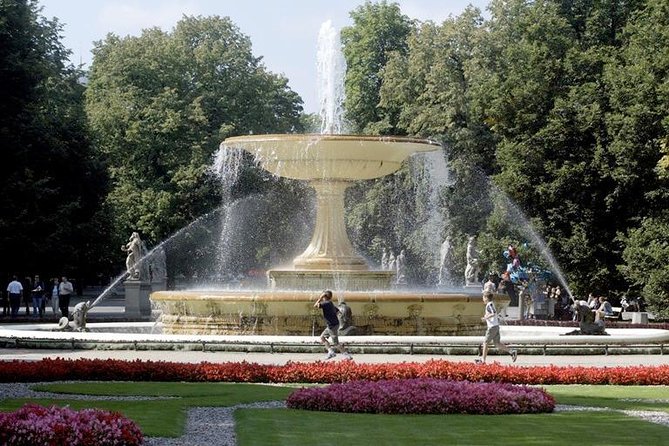
Saxon Gardens receives about 15 minutes. This stop adds open space to a walk otherwise centered on streets, façades, and institutions.
The gardens also return you to the Saxon period and its urban building work. You learn how planned public spaces fit into the changing city. This is a good reminder that urban development is not only about constructing palaces and churches. Gardens and open areas also affect how people experience a capital.
The stop may feel brief if you want time to wander or sit. The walk is built around explanation, not an extended garden visit. Still, the change of pace is welcome, and the setting gives the guide another way to show how Warsaw’s public spaces developed.
The Evangelical Augsburg Church
The Evangelical Augsburg Lutheran Church gets another 15-minute stop. You admire the church and hear about its eventful history.
This is one of the tour’s clearest links to the multi-ethnic theme. The presence of a Lutheran church in central Warsaw helps make the story of German-speaking settlers more concrete. Religious buildings can show how a community established itself, maintained its traditions, and became part of the wider city.
The tour does not promise an interior visit or a religious service. Expect a guided look at the church and its place in Warsaw’s story. If you are interested in how faith communities fit into the city’s social history, this should be one of the more meaningful stops.
University of Warsaw and the city’s cultural engine
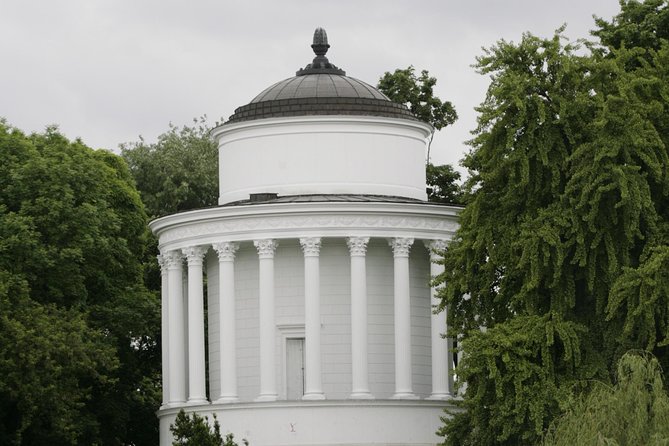
The University of Warsaw section lasts about 15 minutes. Here, the focus shifts toward institutions, education, architecture, and the people who helped develop Polish intellectual and cultural life.
You see representative buildings that contributed to Warsaw’s architectural identity. The guide also returns to architects, publishers, artists, scientists, and poets. This repetition is useful, not wasteful. It reinforces the idea that Warsaw’s development depended on networks of professional and creative work.
The stop also brings back the theme of recognizable brands and streets named for important Poles. You begin to notice that a city’s identity survives in ordinary details: a business name, a street sign, or a familiar institution. I like that the tour encourages you to keep looking after the walk ends.
As with the Royal Castle, this is not a full university tour. You will get context about the buildings and the figures tied to them. If you want interiors or a long academic history, allow extra time elsewhere.
Ending with more than chocolate at E. Wedel
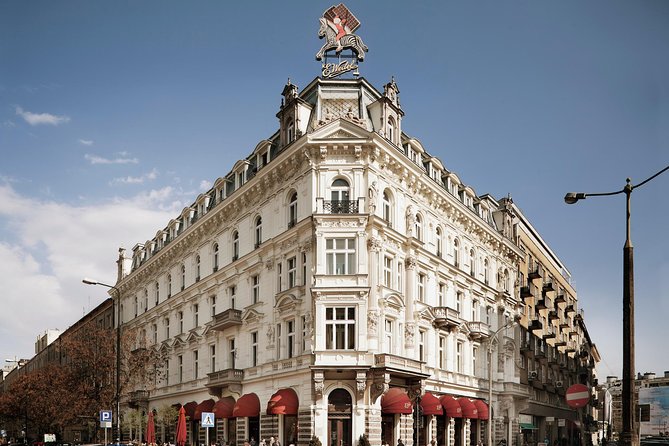
The final stop is Pijalnia Czekolady E. Wedel at Szpitalna 8. The walk ends at this Emil Wedel chocolate house, where the company’s story reaches back more than 150 years.
This is a smart ending. After two hours of families, buildings, commerce, and culture, you finish with a brand that connects Warsaw’s business history to something you can still see and taste today. The café gives the tour a lighter final note without abandoning its main theme.
Only a licensed tour is included. The information does not include a chocolate, coffee, or dessert, so plan to pay separately if you want something from the café. That is not a serious flaw, but it is worth knowing before you arrive.
The end point on Szpitalna is also practical for continuing your day in central Warsaw. You can stop for a treat, explore nearby streets, or use public transport afterward. Transport tickets are not included in the tour price.
The guide can make or break this short format
The experience is led by a licensed guide, and Marzena is the guide name most closely associated with the strongest feedback. She is described as warm, well prepared, vivid in her explanations, and willing to answer questions in detail.
That combination matters because two hours is not much time for such a broad subject. A dry list of names would quickly become hard to follow. A guide who responds to the group can adjust the level of detail and keep the walk enjoyable.
The tour is private, so only your own group takes part. This is a real advantage if you want to ask questions about German-speaking communities, architecture, business history, or particular streets. It may also suit a group with mixed interests, since the guide can spend more time on the subjects that catch your attention.
The tradeoff is that private tours often make the most sense when several people share the booking. At $70.01 per person, the value depends on your group size and on how much you value personal attention. For one or two people, it is a larger spend than a standard public walk. For a family, association, or small private group, the focused guide time may justify the price.
Timing, walking, and practical details
The stated duration is about two hours. The listed stops add up to two hours, so expect a fairly active schedule with short explanations at each place and time spent walking between them.
You start at Rynek Starego Miasta and finish at the E. Wedel café on Szpitalna 8. Public transport tickets are not included, though the starting area is near public transportation. Since the main experience is on foot, check the route to the meeting point before you set out.
Most people can take part, but the information does not specify a detailed accessibility plan or the exact walking distance. If you have mobility concerns, ask PolinTours before booking so you can confirm that the route and pace suit you.
Booking confirmation normally arrives at once unless you book within 12 hours of departure. In that case, confirmation comes as soon as possible, subject to availability. You can cancel for a full refund up to 24 hours before the start time. Changes or cancellations inside that window are not accepted for a refund.
The walk requires good weather. If poor conditions cancel it, you are offered another date or a full refund.
Who should book this Warsaw walk
I would choose this experience if you want a short, private introduction to Warsaw that goes beyond royal landmarks. It suits you especially well if you enjoy social history, architecture, business, literature, and the stories of immigrant communities.
It is also a good fit for German-speaking visitors who want to explore the connection between German-born families and Warsaw. The guide has led groups in German, and the feedback connected with Marzena highlights how well she handles questions and varied interests.
Families and small organizations may get good value from the private format. You can ask questions without competing with a large group, and the route ends at a pleasant café rather than simply stopping beside another monument.
I would look elsewhere if you want extensive museum access, a long visit inside the Royal Castle, or a slow-paced photography walk. This is a brisk, interpretive tour. Its strength is the story tying people, places, and businesses together.
Should you book Multi-ethnic Warsaw?
Book it if you want a compact Old Town walk with a clear theme and a personal guide. The strongest reasons are the private format, Marzena’s warm and detailed guiding style, the attention to German-born families, and the way the route links Warsaw’s past with brands and streets you can still find today.
At $70.01 per person, compare the price with your group size and priorities. You are paying for a licensed guide and a tailored experience, not admissions or transport. For a small group that wants conversation and context, it is a solid choice. For a solo visitor seeking the cheapest way to see the Old Town, it may feel costly.
FAQ
How long is the Multi-ethnic Warsaw walk?
The walk lasts approximately two hours.
Where does the tour start?
It starts at Rynek Starego Miasta, 00-272 Warszawa, Poland.
Where does the tour end?
It ends at Pijalnia Czekolady E. Wedel, Szpitalna 8, 00-031 Warszawa, Poland.
Is this a private tour?
Yes. Only your group participates in the activity.
Are transport tickets included?
No. Public transport tickets are not included.
Is admission to the listed attractions included?
The tour information lists admission as free at each stop. The experience includes a licensed tour, but it does not specify an interior museum visit or separate paid admission.
Can I cancel for a full refund?
Yes. You can cancel at least 24 hours before the start time for a full refund. Poor weather may result in a different date or a full refund.
More Walking Tours in Warsaw
- Half-Day Polish Food Walking Tour with Guide and Dinner
★ 4.5 · 381 reviews - Warsaw: Warsaw Ghetto Private Walking Tour with Hotel Pickup
★ 4.9 · 369 reviews - Old Town Warsaw Walking Tour
★ 4.5 · 333 reviews - Warsaw: Jewish History Guided Walking Tour in English
★ 4.7 · 324 reviews
Just added around Warsaw
- World War II Warsaw Old Town, Military Cemetery Walking Tour★ 4.7 · 3 reviews
- Warsaw: Wolf’s Lair & Swieta Lipka Small-Group Tour + Lunch★ 5.0 · 3 reviews
- Wilanów Palace: 2-Hour Guided Tour with Entrance Tickets★ 4.8 · 8 reviews
- Warsaw Zoo Skip-the-Line Entry Ticket with Private Transport★ 4.8 · 3 reviews
- Warsaw Wolf’s Lair with St. Lipka and Mamerki Private Guided★ 4.2 · 3 reviews
- Warsaw: Vistula River Cruise with Your Music & City Views★ 4.6 · 78 reviews
- Warsaw: Private Vodka Tasting Night with Snacks and Pickup★ 5.0 · 7 reviews
- Warsaw Private Wilanow Palace & Garden Tour★ 4.6 · 30 reviews
Old Town Walking Tours, compared.
Bike Tour of Old Town, Jewish Quarter and the Ghetto
Read our review →

Sightseeing EcoCruise around the Old Town of Gdansk
Read our review →
Browse the lists this tour appears in