
Reviewed · HISTORICAL TOURS
Warsaw History and Reality Walking Tour
Warsaw’s story is not simply old buildings and royal monuments. It is a story of near-total wartime destruction and determined rebuilding, told along a compact route from the Vistula to the city center. This walk adds the personal details that can make a first look at Warsaw click, including the mermaid’s wartime meaning, the workers’ district built during reconstruction, and the city’s favorite royal thoroughfare.
I like the small maximum group of 10, which should make it easier to ask questions and hear Mona, also referred to as Monika, without being lost in a crowd. I also like the University of Warsaw Library rooftop garden, included with the viewing terrace ticket, because it gives you a welcome change from church interiors and stone streets, along with views toward the river and city.
The main consideration is pace. In about two and a half hours, you cover several major areas, but the stops are brief. If you want to enter every church, examine every monument, or spend a long time in the Old Town, you will need to return on your own.
Key points at a glance
- A Warsaw story shaped by rebuilding: Learn how the city restored its Old Town and created a district for workers involved in that enormous task.
- A rooftop break with a view: The University of Warsaw Library garden is open from April through October and includes the tour’s viewing terrace.
- A thoughtful route through central Warsaw: The walk connects the mermaid statue, St. Anne’s Church, Old Town, Krakowskie Przedmiescie, and Marshal Pilsudski Square.
- Mona’s style is personal and flexible: Her tours are known for local stories, extra stops when practical, restaurant suggestions, and patient answers.
- A genuinely small group: The tour accepts no more than 10 people, a useful size for a history-focused walk.
- Good weather matters: The walk may be rescheduled or refunded if poor weather prevents it from running.
Why Warsaw’s rebuilding makes this walk different
Many city walks lead you from one handsome building to the next. This one has a stronger question at its center: how did Warsaw become a functioning capital again after World War II?
That question changes how you see the Old Town. The cobblestones, church facades, and tiered burgher houses look historic because they were rebuilt to reflect the earlier city. The achievement is impressive, but it also asks you to look more closely. You are not seeing an untouched medieval quarter. You are seeing a carefully reconstructed one, created from surviving plans, paintings, photographs, and memory.
The walk also points to the people behind the rebuilding. One stop covers the first Warsaw district rebuilt after the war, intended for workers who helped restore the Old Town. That is a useful correction to the usual monument-focused tour. It puts labor, housing, and daily life beside royal squares and national memorials.
Mona’s approach appears best suited to this kind of storytelling. Her tours are described as personal and adaptable, with attention to overlooked places away from the main streets. She has also guided visitors through Warsaw’s Evangelical-Augsburg Cemetery, where she focuses on tombstone art, symbolism, old trees, and the lives of people connected to the city. That background suggests a guide who looks for human stories, not just dates.
A few more Warsaw trips to weigh up
- Warsaw: POLIN Museum of the History of Polish Jews Ticket
★ 4.7 · 1,142 reviews - Warsaw: Chopin Concert at Historical Venue in Old Town
★ 4.7 · 445 reviews - Small-Group Historical Guided Tour of Warsaw with pick up/drop off. Public Tour.
★ 4.5 · 343 reviews
Starting beside Warsaw’s mermaid
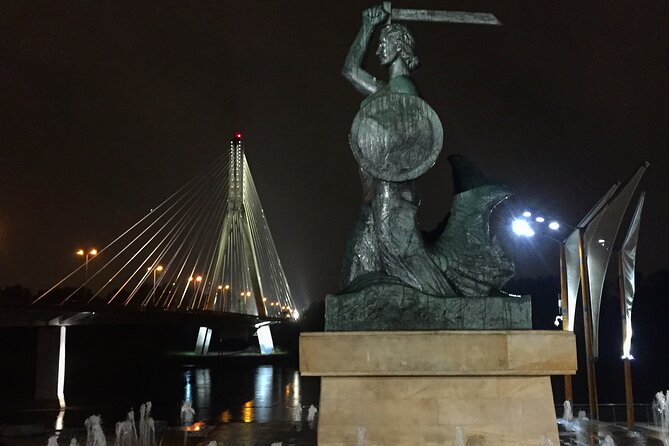
The meeting point is the Mermaid’s Statue on Generała George’a Smitha Pattona, near the Vistula. The mermaid, or Syrenka, is not a decorative mascot tacked onto a city logo. She appears on Warsaw’s coat of arms and serves as a symbol of the city.
The opening stop takes about 10 minutes and is free. Mona explains why the mermaid became Warsaw’s emblem and identifies the model used by the sculptor. The statue also carries a World War II connection, giving the tour an early reminder that Warsaw’s symbols acquired new meaning during the city’s hardest years.
This is a smart place to begin. You get a clear visual marker, a bit of folklore, and a wartime link before moving into the city’s architecture. The river setting also helps you understand Warsaw as a city divided and connected by the Vistula.
Do not expect a long museum-style talk here. Ten minutes is enough for the central story, not every version of the mermaid legend. If you enjoy photographing statues, you will have time for that, but the value lies in the explanation rather than the stop itself.
The University Library’s garden from April to October
The University of Warsaw Library is one of the walk’s most distinctive stops. Its design combines a working library with a public green space, using forms that respect the shape of the Vistula embankment. The rooftop garden is open from April through October.
The stop lasts about 40 minutes, making it the longest pause on the route. That gives you time to understand the building, enjoy the garden, and use the viewing terrace included with the experience. From above, you can look toward the river and across the city.
I like this stop because it breaks up the historical sequence. After hearing about war, reconstruction, and old monuments, you get a modern building that reflects present-day Warsaw. It also gives your feet a short break without wasting time in a café. Coffee and tea are not included, so plan on buying those separately if you want one.
Season matters here. If you book from November through March, the rooftop garden is closed according to the stated schedule. The tour still has plenty to offer, but this particular outdoor feature will not be available in its full form. Ask about the viewing terrace when you receive your confirmation if this stop is a major reason for booking.
Seeing the first rebuilt workers’ district
Between the library and the historic center, the route includes Warsaw’s first district rebuilt after World War II. It was meant to house workers who helped reconstruct the Old Town.
The exact stop is not fully identified in the supplied details, so you should think of it as a guide-led area rather than a named landmark with a formal entrance. Its importance comes from what it represents. Warsaw’s restoration required more than architects and official plans. It required people who needed homes, transport, and a place to live while they rebuilt the capital.
This part may be especially useful if you want to understand how reconstruction affected ordinary residents. The Old Town can feel like a polished historic set unless you connect it to the housing and labor needed to bring it back. Mona’s strength, based on the way her tours are described, is likely to be the local context around such places.
Same country, a completely different kind of day:
- Warsaw: Chopin Concert in the Old Town
★ 4.8 · 2,287 reviews - Warsaw: Traditional Galar Cruise on The Vistula River
★ 4.6 · 1,640 reviews - Warsaw: Old Town Highlights Walking Tour in English
★ 4.7 · 1,516 reviews - Warsaw Concert: Chopin – Painted by Candlelights with Wine
★ 4.8 · 1,442 reviews
St. Anne’s Church and Castle Square
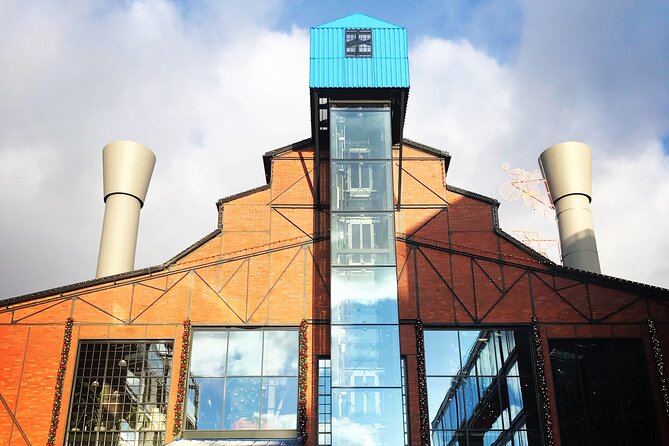
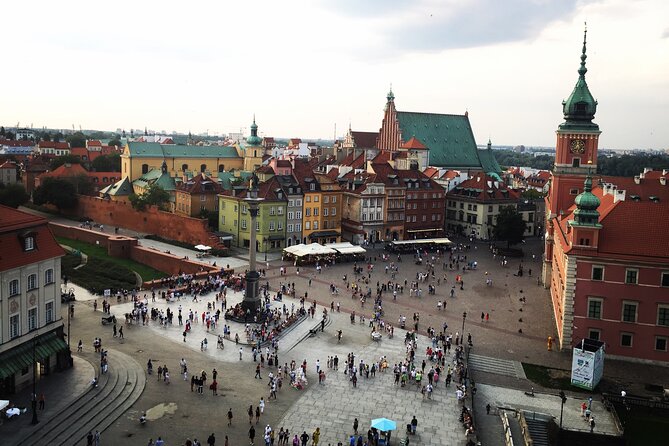
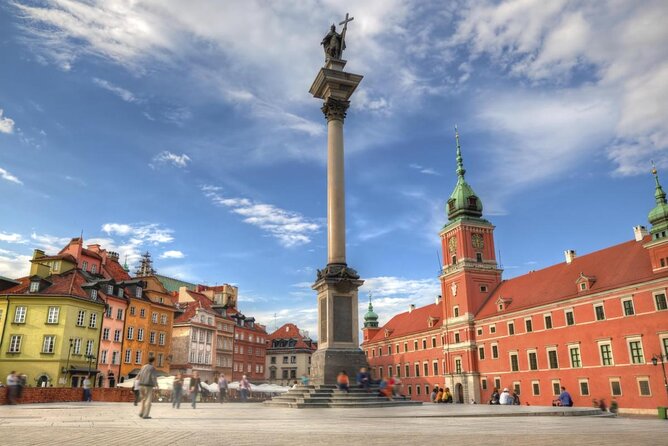
The walk then reaches St. Anne’s Church, one of Warsaw’s notable baroque churches. The stop takes about 15 minutes and also includes a look at Royal Castle Square and the restored tenement houses of the Old Town.
St. Anne’s is a good transition point. It brings together religious architecture, royal Warsaw, and the rebuilt city in one compact view. The church is free to visit as part of the walking stop, but 15 minutes is a short window. You may see the main interior and hear the key points, rather than study every chapel and artwork.
Royal Castle Square is one of the most recognizable urban spaces in Warsaw. It is also a place where the contrast between appearance and reality matters. The houses and façades were beautifully restored, but much of what you see reflects a reconstruction of the past rather than an uninterrupted survival of it.
That is not a flaw. It is the central lesson of Warsaw. The restored architecture is valuable precisely because it records an act of civic will. Your guide can help you notice details you might otherwise treat as mere decoration.
Cobblestones and stories in the Old Town
The Old Town section lasts about 30 minutes. You walk through Gothic streets and narrow lanes, past churches and tiered burgher houses, while looking at façade details and a favorite meeting place for couples.
This is the most postcard-friendly part of the walk, but it should not be reduced to pretty streets. The reconstructed Old Town shows how Warsaw chose to present its past. Its lanes and buildings were restored to bring back the atmosphere of the earlier quarter, and the result is one of the city’s essential sights.
Thirty minutes is enough for an introduction. You can get a feel for the street pattern, hear why particular corners matter, and mark places to revisit later. It is not enough for a slow architectural survey. If you enjoy close study of doorways, signs, courtyards, and church art, save time after the tour.
The cobblestones also make practical footwear important. Wear comfortable shoes with a steady sole. The distance is not presented as extreme, and most people can participate, but uneven streets can make a fast walk tiring.
Krakowskie Przedmiescie and the Royal Route
From the Old Town, the tour follows Krakowskie Przedmiescie, part of Warsaw’s roughly 2.5-mile Royal Route. This historic line links important buildings and monuments and gives you a sense of how the city center developed beyond the Old Town walls.
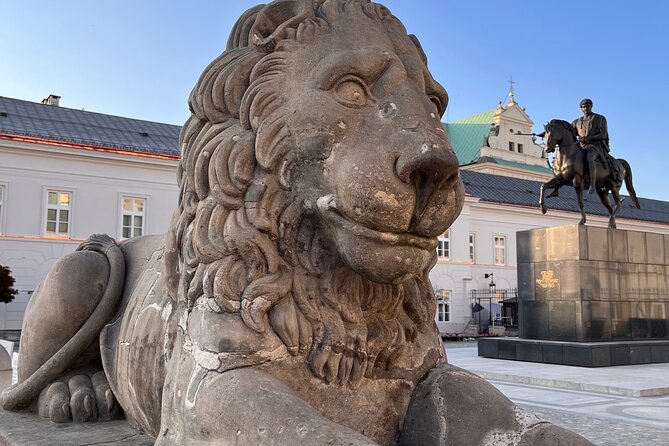
The stop lasts about 10 minutes, but the route itself provides a larger setting for the walk. One featured point is the Presidential Palace, a neoclassical building where the Polish president resides. Four lions sculpted by Camillo Laudini guard the building, and the site also connects to Frederic Chopin, who played there publicly at the age of eight.
This is a good example of the tour’s broad range. Within a few minutes, you move from royal-era architecture to the modern Polish state and then to a childhood episode in the life of one of Poland’s most famous composers.
The short scheduled stop means you should not expect a full treatment of every building along Krakowskie Przedmiescie. Think of it as a guided introduction. If the Royal Route interests you, use the tour to decide which sections deserve a longer return walk.
Marshal Pilsudski Square and the Unknown Soldier
The final listed stop is Marshal Pilsudski Square, a large parade ground with the Tomb of the Unknown Soldier. The square remains important for public meetings, concerts, and civic events, and the Saxon Garden lies behind the memorial.
This is a fitting ending because the square shifts the focus from neighborhood streets to national memory. The Unknown Soldier memorial is a place of remembrance, while the open square has hosted public life. The nearby garden offers a softer finish after the traffic and hard surfaces of the central route.
The tour ends at the Roman Catholic Church of the Visitants on Krakowskie Przedmiescie 34, at the Cardinal Stefan Wyszynski Statue. That is useful to know because you are not returned to the starting point. You finish in a central area with more of the Royal Route nearby, but you should plan your next move from the end point rather than the mermaid statue.
What Mona adds beyond the landmarks
The strongest reason to consider this walk is the guide. Mona, also identified as Monika, is described as patient, flexible, and comfortable with different ages and interests. She has adjusted routes, added stops, answered follow-up questions, and offered restaurant suggestions at the end of a walk.
That flexibility matters in a group capped at 10. You can ask about a building, a person, or a detail that catches your eye without holding up a large coach group. The experience also seems suited to people who want local context rather than a memorized list of dates.
Mona’s other Warsaw tours focus on places such as the Evangelical-Augsburg Cemetery. There, she draws attention to old tombstones, artistic details, decorative symbols, historic trees, and the people who shaped the city. Those subjects suggest a guide who can connect public monuments with private lives.
Still, guide-led experiences depend on the day, group, and weather. If your ideal tour is a fixed script with long interior visits, this may feel too conversational. If you prefer questions, stories, and room for small adjustments, the format should suit you better.
Is $114.39 a fair price?
At $114.39 per person, this is not a budget walk. The ticket includes the viewing terrace, while the listed stops themselves have no admission charge. You are paying mainly for the guide’s time, English-language interpretation, route planning, small-group setting, and historical explanation.
The value depends on how you use the two and a half hours. For a first visit, the route gives you a strong framework: Warsaw’s symbol, modern architecture, reconstruction housing, baroque church, Old Town, Royal Route, presidential history, and national remembrance. That is a lot of ground in a short period.
The price is easier to justify if you want a private-feeling experience with no more than 10 people and appreciate an adaptable guide. It is harder to justify if you only want to be shown the Old Town, since you can walk many of these streets without paying for entry.
I would view this as a context-heavy orientation walk, not a cheap sightseeing loop. It may save you time by explaining why the city looks the way it does and by pointing you toward places to explore later.
Timing, weather, and who should book
The experience is offered in English and uses a mobile ticket. Confirmation arrives within 48 hours, subject to availability. It runs near public transportation, allows service animals, and most people can participate.
The tour requires good weather. If conditions force cancellation, you can receive another date or a full refund. You can also cancel for a full refund up to 24 hours before the start time. Changes or cancellations inside that 24-hour window are not accepted, so keep an eye on the local forecast.
I would recommend it to:
- First-time visitors who want Warsaw’s main central sights tied to one clear story.
- People interested in World War II and postwar rebuilding.
- Visitors who prefer a small group to a large organized walk.
- Families or mixed-age groups who value questions and flexible explanations.
- Anyone who wants local restaurant suggestions after the walk.
I would be more cautious if you have limited walking stamina, need long seated breaks, or want extensive time inside each church and monument. The route covers several areas, and the stop times are tightly set.
Should you book the Warsaw History and Reality Walking Tour?
Book it if you want to understand why Warsaw’s restored center looks both historic and newly made. The best parts are the link between wartime destruction and reconstruction, the University Library rooftop garden, and Mona’s personal way of adding local stories and practical suggestions.
Skip it if your main goal is a slow architectural study or a series of lengthy interior visits. You will need to return to the Old Town, the Royal Route, or the library on your own for that.
For most first-time visitors who value clear history, a small group, and a guide who can adapt, this is a useful opening walk. Choose a season when the rooftop garden is open if that feature matters to you, wear practical shoes, and leave room in your day to continue exploring after the final stop.
FAQ
How long is the Warsaw History and Reality Walking Tour?
The tour lasts approximately 2 hours and 30 minutes.
What language is the tour offered in?
The tour is offered in English.
How much does the tour cost?
The listed price is $114.39 per person.
Where does the tour begin?
It begins at the Mermaid’s Statue on Generała George’a Smitha Pattona in Warsaw.
Where does the tour end?
It ends at the Roman Catholic Church of the Visitants, Krakowskie Przedmiescie 34, at the Cardinal Stefan Wyszynski Statue.
How many people can join the tour?
The maximum group size is 10 people.
Is the University of Warsaw Library rooftop garden open all year?
No. The rooftop garden is open from April through October.
Is admission included?
The tour includes an entrance ticket for a viewing terrace. The listed stops have no admission ticket charge. Coffee and tea are not included.
Can service animals participate?
Yes. Service animals are allowed.
Can I cancel for a full refund?
Yes. You must cancel at least 24 hours before the experience start time for a full refund.
What happens if bad weather cancels the tour?
You will be offered a different date or a full refund if poor weather causes the cancellation.
Just added around Warsaw
- World War II Warsaw Old Town, Military Cemetery Walking Tour★ 4.7 · 3 reviews
- Warsaw: Wolf’s Lair & Swieta Lipka Small-Group Tour + Lunch★ 5.0 · 3 reviews
- Wilanów Palace: 2-Hour Guided Tour with Entrance Tickets★ 4.8 · 8 reviews
- Warsaw Zoo Skip-the-Line Entry Ticket with Private Transport★ 4.8 · 3 reviews
- Warsaw Wolf’s Lair with St. Lipka and Mamerki Private Guided★ 4.2 · 3 reviews
- Warsaw: Vistula River Cruise with Your Music & City Views★ 4.6 · 78 reviews
- Warsaw: Private Vodka Tasting Night with Snacks and Pickup★ 5.0 · 7 reviews
- Warsaw Private Wilanow Palace & Garden Tour★ 4.6 · 30 reviews
Historical Tours, compared.
POLIN Museum of the History of Polish Jews Ticket
Read our review →
Gdańsk City Sights & History Guided Walking Tour in English
Read our review →

Small-Group Historical Guided Tour of Warsaw with pick up/drop off. Public Tour.
Read our review →Browse the lists this tour appears in