
Reviewed · MUSEUMS
Palace of Culture & Science + Warsaw Uprising Museum: SMALL GROUP /inc. Pick-up/
The most useful feature here is the pairing of two very different Warsaw landmarks: the Palace of Culture and Science, a huge communist-era building that still divides local opinion, and the Warsaw Uprising Museum, an emotional, multimedia account of the city’s 1944 revolt. Together, they give you both the political story imposed on Warsaw and the human story of a city fighting for its future.
I like the door-to-door transport, especially for a four-hour morning outing, and I like the choice of a Palace guide followed by an audio guide at the museum. The main point to check before booking is group size: the tour is promoted as limited to eight people, while the additional booking information allows up to 15.
Key points to know
- Two sharply different views of Warsaw: See Soviet-style architecture at the Palace, then examine the city’s wartime destruction and resistance at the museum.
- Hotel or apartment pickup: You do not need to find a meeting point or work out public transport between the stops.
- About four hours total: Each main visit is listed at roughly 90 minutes, with transfers included.
- Several guide languages: The Palace tour is offered in Polish, English, German, Italian, Spanish, French, Hebrew, and Russian.
- A very broad museum audio-guide menu: The Warsaw Uprising Museum offers audio guides in many languages, including English, Polish, French, German, Italian, Spanish, Japanese, Chinese, and others.
- Check the group promise: The main description says eight passengers maximum, but the booking notes say up to 15 people per booking.
Why these two places belong together
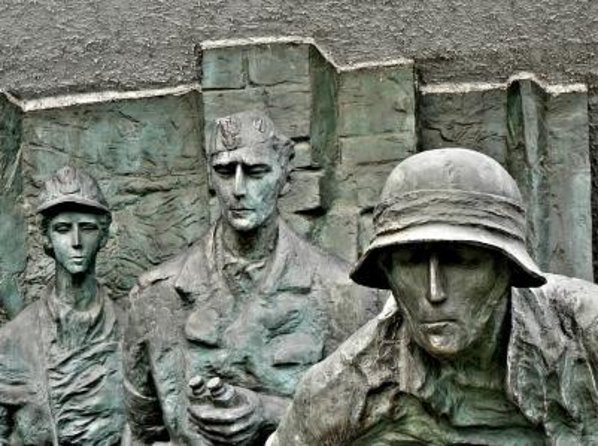
Warsaw can feel like several cities layered on top of one another. The Palace of Culture and Science points to the postwar communist period. The Warsaw Uprising Museum looks back to 1944, when the city rose against German occupation and paid an enormous price.
This tour links those stories without asking you to make your own way across town. That matters because the museum and Palace offer very different kinds of sightseeing. One is an architectural landmark with a controversial political past. The other is a museum built around testimony, objects, sound, film, and the fate of ordinary people.
You should not expect a light sightseeing morning. The Palace can be fun and visually striking, especially if you enjoy architecture and city views. The museum is heavier. It asks you to think about why the uprising began, what the fighters hoped to achieve, and how thoroughly Warsaw was destroyed.
The experience is listed at about four hours, with around 90 minutes at each stop. That is enough time for a strong introduction, though not enough to study every display in detail. If you prefer to read every panel and take your time with each film, you may want a separate museum visit later.
A few more Warsaw trips to weigh up
- Warsaw: POLIN Museum of the History of Polish Jews Ticket
★ 4.7 · 1,142 reviews - Warsaw: Polish Vodka Museum Tour with Tasting
★ 4.6 · 788 reviews - Warsaw: Museum World of Illusion Entry Ticket
★ 3.9 · 666 reviews
Starting at the Palace of Culture and Science
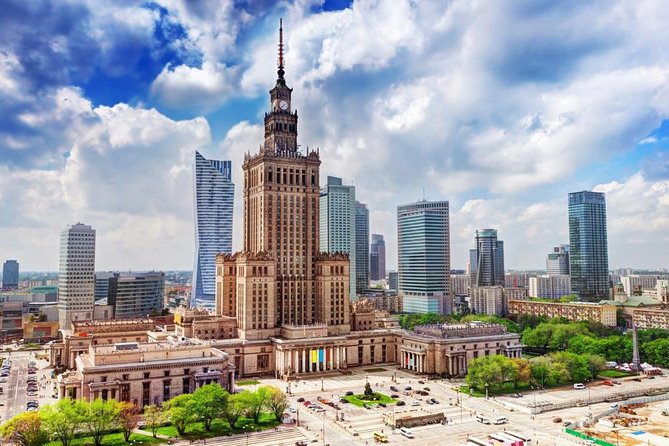
You will recognize the Palace before you reach it. This enormous building dominates central Warsaw, and its size is part of the message. It contains more than 3,000 rooms, including offices, theaters, cinemas, restaurants, university space, conference halls, concert halls, and even a swimming pool.
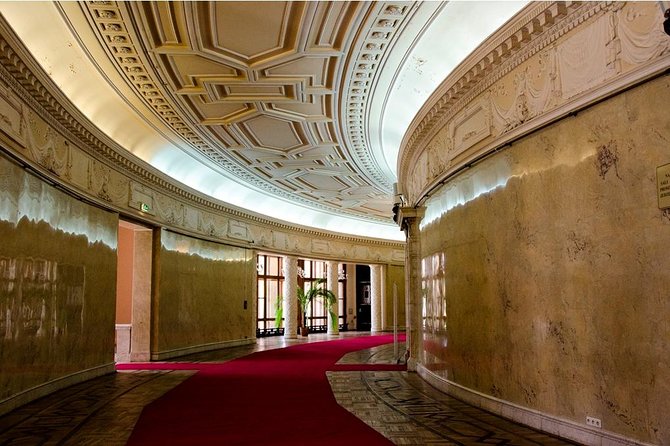
The building is a major example of 1950s social realism. Inside, you can expect marble, mosaics, large windows, and an atmosphere that feels unlike the newer parts of Warsaw. The scale can be startling. This was not designed to blend quietly into the city.
For many Varsovians, the Palace carries difficult memories. It was a gift from Stalin’s Soviet Union, and some locals see it as a symbol of domination rather than a beloved monument. Others accept it as part of modern Warsaw, a city that has gathered many architectural and political layers over time.
That tension makes the Palace more interesting than a simple photo stop. You are not only looking at an unusual tower. You are looking at a building that still raises a basic question: can a structure tied to oppression become part of the identity of the city that received it?
The guided visit is offered in eight languages, which is helpful if you want more than a quick look around. The guide can explain the building’s purpose and show how its grand interiors fit the social realist style. A driver or coordinator is also available to assist during the outing.
About the city view
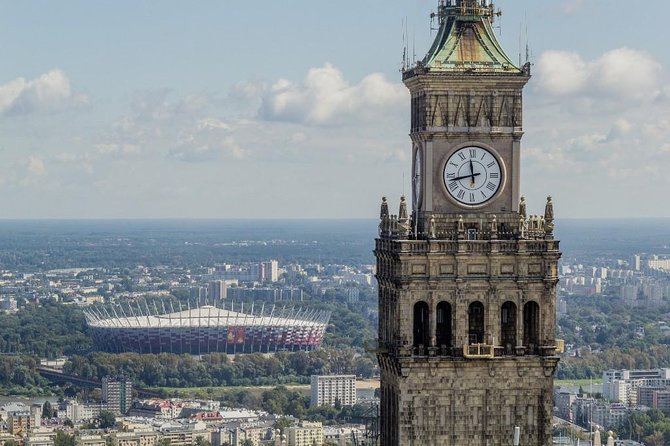
The Palace is known for its high observation area, and the supplied details from the experience mention a view from the top. However, the exact inclusion of observation-deck entry is not stated as clearly as the general Palace admission. I would confirm this before paying if the view is your main reason for booking.
A practical tip is to check access conditions in advance. One account describes buying tickets online to avoid a morning queue and paying 20 Polish złoty for adults and 15 złoty for students. It also notes a broad 360-degree view from the top. Another account found one of the two elevators under maintenance in December, which caused a delay.
Those details do not necessarily describe this exact tour arrangement, so treat them as planning information rather than a guarantee. The useful lesson is simple: ask if the tour includes the observation terrace, and ask how the visit works if an elevator is out of service.
The view, when available, gives you a quick sense of Warsaw’s scale and mix of old, rebuilt, communist, and contemporary buildings. It is particularly useful early in your stay because you can begin to understand how the city fits together.
Following Warsaw’s 1944 story at the museum
The Warsaw Uprising Museum is the emotional center of the experience. The 1944 uprising began when Polish resistance fighters tried to liberate Warsaw from German occupation before Soviet forces took control of the city. The museum asks you to consider the hopes behind that decision and the terrible cost that followed.
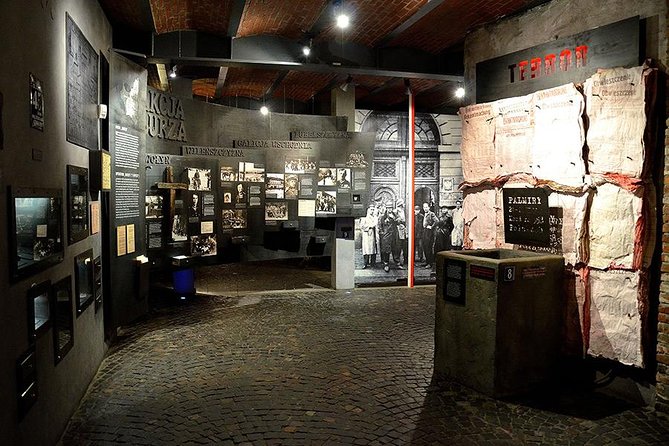
The museum is not arranged like a quiet room of paintings and labels. It uses multimedia displays to create a strong sense of time and place. You might encounter film footage, photographs, sound, personal accounts, and objects connected with the uprising. The effect is designed to make the events feel immediate rather than distant.
Warsaw before the war had been known as a major cultural, religious, and architectural center. It had grand tenements, fast growth, a modern sewage system, and a varied population. The destruction that followed was nearly total in many areas. A whole generation, including very young people who might have shaped the country’s future, was lost.
That context is important. The museum is not only about military action. It is about a city and its people. You see why the uprising was seen by some as a chance for freedom, while also confronting the question of whether the price was too high.
The audio guide lets you move through the exhibition in your own language. English is available, along with Azerbaijani, Bulgarian, Chinese, Croatian, Czech, Danish, Finnish, French, Georgian, Hebrew, Spanish, Indonesian, Japanese, Macedonian, Dutch, German, Polish, Portuguese, Russian, Romanian, Slovak, Slovenian, Swedish, Ukrainian, Hungarian, and Italian.
An audio guide is a good fit here because the material can be dense and personal. You can pause, replay, and give yourself a moment when a display hits hard. The tradeoff is that you are not relying on one live guide to adjust the pace or answer every question as you go.
Same country, a completely different kind of day:
- Warsaw: Chopin Concert in the Old Town
★ 4.8 · 2,287 reviews - Warsaw: Traditional Galar Cruise on The Vistula River
★ 4.6 · 1,640 reviews - Warsaw: Old Town Highlights Walking Tour in English
★ 4.7 · 1,516 reviews - Warsaw Concert: Chopin – Painted by Candlelights with Wine
★ 4.8 · 1,442 reviews
How the four-hour schedule works
The advertised start time is 9:30 a.m. Pickup is provided from your hotel or apartment, followed by transport to the Palace of Culture and Science. The Palace visit is listed at about 90 minutes.
Afterward, the vehicle takes you from the Palace to the Warsaw Uprising Museum. That transfer is included, so you avoid navigating Warsaw’s public transport while keeping your morning focused on the two sights. The museum visit is also listed at approximately 90 minutes.
Transport back to your hotel or apartment is included at the end. In practice, the exact finish time can vary with pickup, traffic, elevator access, and the pace of the group. Keep a little flexibility if you have a fixed lunch booking or another timed activity afterward.
The four-hour format works best if you want an introduction rather than an exhaustive museum day. You will see the main character of both places, hear the essential background, and leave with a clearer sense of Warsaw’s past.
Small group, with one important qualification
The headline benefit is a small group limited to eight passengers. That should make pickup easier and allow you to hear the guide without the feel of a large coach tour. It also suits visitors who want help but do not want to spend the morning in a crowd.
There is a mismatch in the supplied booking details. The additional information says a maximum of 15 people per booking, while the tour description says eight passengers. It is also described as a private activity for your group only.
Those phrases may refer to different booking arrangements, but they are not identical promises. If having a group of eight or fewer is important to you, contact Visiting-Warsaw.Com before booking and ask for the confirmed maximum for your date.
The minimum booking is two people. Most people can participate, according to the supplied information, but no detailed accessibility description is provided. If you have mobility needs or need a specific vehicle arrangement, ask before confirming.
What the $111.23 price represents
At $111.23 per person, this is not the cheapest way to see either attraction. You are paying for convenience and coordination as much as for entry. The price includes pickup and return transport, the transfer between sights, Palace admission and guiding, museum audio guides, taxes, local charges, and a driver or coordinator.
That package can make sense if your hotel is outside the central area, you have limited time, or you would rather not work out the route between two major sights. It also has value for visitors who want a planned history-focused morning without committing to a full-day excursion.
The value is weaker if you are already staying near the Palace, comfortable with Warsaw’s public transport, and mainly want the observation view. In that case, buying Palace tickets directly and visiting the museum on your own may cost less and give you more control over timing.
The museum’s audio guide is included, which is useful if you would otherwise pay for one separately. The Palace language options are also generous. Photos and postcards are not included, but those are optional purchases rather than a serious gap in the package.
The tour has free cancellation if you cancel at least 24 hours before the local start time. Changes or cancellations inside that window are not accepted for a refund.
The best fit for your Warsaw plans
I would choose this experience if you want a structured history morning and prefer a vehicle to public transport. It is especially suitable for first-time visitors who want help making sense of Warsaw’s complicated 20th-century story.
It also fits:
- Couples or friends who want a private or very small-group arrangement
- History fans who value context over casual sightseeing
- Visitors staying outside the immediate center
- People who need museum audio support in a language other than English
- Anyone who wants a city view and a serious museum visit in one morning
I would think twice if you dislike emotionally difficult museums. The Warsaw Uprising Museum deals with occupation, death, destruction, and the loss of young lives. It is worthwhile, but it is not a breezy stop between coffee and shopping.
I would also avoid booking it solely for the Palace observation deck until you confirm that the viewing area is included. The Palace itself is part of the visit, but the precise arrangement for the top-level view deserves clarification.
Practical advice before you go
Give the provider your exact hotel or apartment details so pickup is clear. The tour does not require you to reach a public meeting point, which is one of its strongest practical features.
Ask two questions before booking:
- Is the group maximum eight people on my date, or can it be as many as 15?
- Does the Palace admission include the observation terrace and city view?
Bring a phone with the mobile ticket available. The confirmation is stated to arrive within 48 hours, subject to availability, so do not leave the booking until the last minute if your Warsaw schedule is tight.
Wear comfortable shoes. The tour includes two substantial indoor visits and movement between transport, the Palace, and the museum. You will get more from the museum if you allow yourself time to stop and listen rather than rushing from display to display.
Should you book this Warsaw history tour?
Book it if you want convenience, a planned route, and a clear contrast between communist Warsaw and the city’s wartime resistance. The included transport removes a fair amount of fuss, and the combination of a live Palace guide with a museum audio guide gives each stop an appropriate style.
Skip it if you are comfortable arranging both visits independently or if the observation deck is your only priority. The group-size wording also needs confirmation. For the right person, $111.23 buys a focused, well-organized morning. For an independent sightseer, it may be more service than you need.
FAQ
What time does the tour start?
The stated start time is 9:30 a.m.
How long does the experience last?
The tour lasts approximately four hours. The Palace visit and Warsaw Uprising Museum visit are each listed at about 90 minutes, with transport included.
Is hotel pickup included?
Yes. Door-to-door pickup is provided from your hotel or apartment, and transport back is included at the end.
What languages are available for the Palace visit?
The guided Palace visit is available in Polish, English, German, Italian, Spanish, French, Hebrew, and Russian.
What languages are available for the museum audio guide?
The audio guide is available in many languages, including English, Polish, French, German, Italian, Spanish, Portuguese, Russian, Japanese, Chinese, Dutch, Swedish, Ukrainian, Hungarian, and others listed by the provider.
Can I cancel for a full refund?
Yes, if you cancel at least 24 hours before the experience start time. Cancellations or changes made less than 24 hours before the start are not refunded.
Just added around Warsaw
- World War II Warsaw Old Town, Military Cemetery Walking Tour★ 4.7 · 3 reviews
- Warsaw: Wolf’s Lair & Swieta Lipka Small-Group Tour + Lunch★ 5.0 · 3 reviews
- Wilanów Palace: 2-Hour Guided Tour with Entrance Tickets★ 4.8 · 8 reviews
- Warsaw Zoo Skip-the-Line Entry Ticket with Private Transport★ 4.8 · 3 reviews
- Warsaw Wolf’s Lair with St. Lipka and Mamerki Private Guided★ 4.2 · 3 reviews
- Warsaw: Vistula River Cruise with Your Music & City Views★ 4.6 · 78 reviews
- Warsaw: Private Vodka Tasting Night with Snacks and Pickup★ 5.0 · 7 reviews
- Warsaw Private Wilanow Palace & Garden Tour★ 4.6 · 30 reviews
Museums, compared.

Auschwitz-Birkenau Museum and Memorial Guided Tour from Krakow
Read our review →
POLIN Museum of the History of Polish Jews Ticket
Read our review →


Krakow Schindler’s Factory Museum Guided Tour in English
Read our review →
Auschwitz Birkenau Museum Guided Tour with Pickup
Read our review →
Browse the lists this tour appears in