
Reviewed · CITY TOURS
Private Warsaw City Tour by Retro Minibus with Hotel Pickup
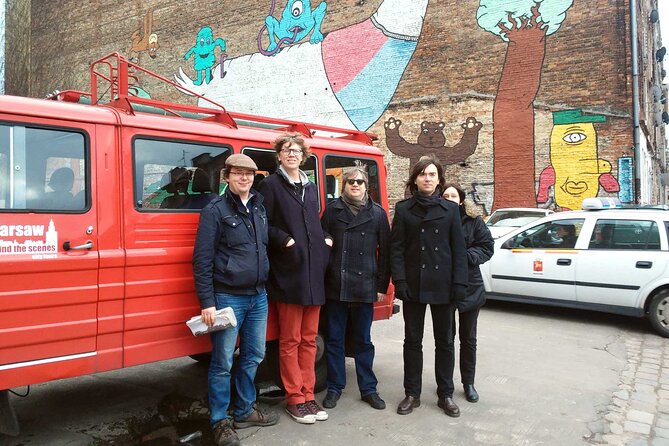
Warsaw is a city best understood in layers, and this private tour lets you choose which layers matter most. You might trace the Old Town’s rebuilt streets, cross the Vistula to prewar Praga, or follow the painful story of the Jewish Ghetto and Warsaw Uprising in a classic Żuk minibus, the boxy Polish workhorse known locally as the Beetle.
I like the private format, since your guide can adjust the route instead of giving you a fixed circuit. I also like the hotel pickup and drop-off, especially on a first day when you want a quick sense of how Warsaw fits together. The main thing to consider is that the minibus is mainly transport between stops, so you should expect substantial walking.
Key points to know
- Classic Żuk minibus: Ride in a piece of communist-era Polish motoring, with a wooden floor and a wonderfully old-fashioned feel.
- Your choice of focus: Pick among the Old Town, Royal Route, Praga, Łazienki, the Jewish Ghetto, communist Warsaw, and WWII sites.
- Private group of up to eight: You get a personal guide and do not share the activity with another group.
- Walking matters: The vehicle links the sights, but much of the explaining and sightseeing happens on foot.
- Strong history focus: Guides can connect rebuilt streets, wartime destruction, communist rule, and modern Warsaw.
- Practical comfort limits: The vintage vehicles have heating in winter but no air conditioning, and some lack seat belts as permitted for historic vehicles.
Why the Żuk makes this Warsaw tour different
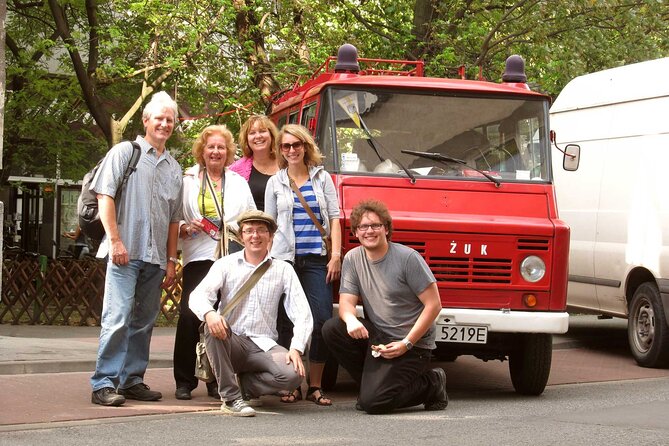
A standard city drive can leave Warsaw looking like a string of monuments viewed through glass. This experience gives the vehicle itself a role in the story. The Żuk was produced in communist Poland, gets about ten miles per gallon, and has a wooden floor. It is not polished modern transport, and that is precisely the point.
You ride between locations in a small vehicle that feels tied to the city’s recent past. The contrast is useful: Warsaw has rebuilt medieval-looking streets, grand postwar avenues, surviving prewar courtyards, and huge communist-era buildings. The Żuk helps tie those periods together.
Each minibus holds up to eight people, and the tour is private. That size matters. You can ask why a street looks the way it does, pause longer at a memorial, or change the emphasis if one subject catches your attention. The operator has a fleet of five minibuses, so a larger private party may be accommodated across vehicles, though each individual minibus has the eight-person limit.
The listed price is $167.76 per person. That is not a bargain city bus ride, but it can make sense for a small group that wants a private guide, hotel transport, and a custom route. The value improves when several people share the private booking and use the three hours to cover areas that would be awkward to connect alone.
A few more Warsaw trips to weigh up
- Private Tour: Warsaw City Sightseeing by Retro Fiat
★ 5.0 · 562 reviews - Warsaw: Warsaw Ghetto Private Walking Tour with Hotel Pickup
★ 4.9 · 369 reviews - Private Tour: Warsaw’s Jewish Heritage by Retro Fiat
★ 5.0 · 208 reviews
Start with Warsaw’s rebuilt Old Town
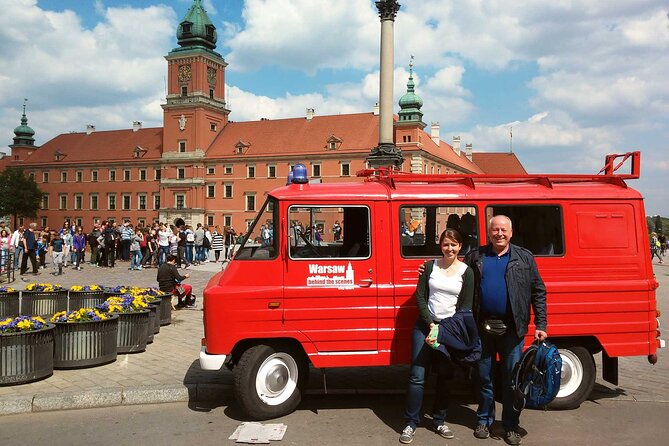
The Old Town is the natural starting point if you want a broad introduction. Castle Square gives you the city’s royal doorway, and your guide can explain how Warsaw developed along old trade paths and how rulers connected to both Poland and Sweden shaped its story.
From there, the walking route can lead toward the Gothic Cathedral, narrow side streets, old tenement houses, and a viewpoint near the former riverside. The Market Square makes a pleasant pause, with colorful façades and restaurants around the open space.
The key fact here is easy to miss on a quick visit: Warsaw’s Old Town looks historic because it was rebuilt after World War II. A guide helps you notice the difference between old material and careful reconstruction. The streets are designed to suggest the medieval city, but the story behind them is modern and difficult.
Look for the Warsaw mermaid on the Market Square. If timing is lucky, you might also hear a barrel organ player performing old songs. The tour includes no admission charge for this walk, and the main cost is your guide’s interpretation.
Allow for a lot of walking on uneven streets. Two hours is listed as a possible amount of time for this stop, but the entire experience lasts about three hours, so your guide will need to shape the visit to fit your chosen priorities.
Follow the Royal Route from Krakowskie Przedmieście
The Royal Route offers a different view of Warsaw. Krakowskie Przedmieście is lined with palaces, churches, manor houses, and major institutions. It links the Old Town and Royal Castle area with the Presidential Palace, Warsaw University, and the Polish Academy of Sciences at Staszic Palace.
The route continues south along Nowy Świat. A famous palm tree marks the far end, an amusing modern contrast to the formal buildings and royal associations. This is a good choice if you want architecture, public life, and a sense of Warsaw as Poland’s capital rather than a narrow focus on wartime events.
I would combine the Royal Route with the Old Town if this is your first visit. Together, they give you a useful orientation: the older royal center, the grand avenue southward, and the institutions that keep the capital functioning today.
The limitation is time. The suggested duration for the Royal Route is two hours, yet the whole tour is only about three hours. Tell your guide before departure if you want a walking-heavy visit, since you cannot reasonably give every suggested area a full two-hour treatment in one outing.
Cross the Vistula to Praga Północ
Praga Północ sits on the eastern bank of the Vistula and offers one of the tour’s sharpest contrasts. Crossing the river gives you views toward the wilder riverside, then the minibus enters an area known for surviving much of the wartime destruction that reshaped central Warsaw.
Here, prewar buildings, Belle Époque details, and small courtyards give you clues to the city before 1939. Some courtyards are noisy, worn, and plain rather than picture-perfect. That is part of their value. Praga has an atmosphere different from the carefully rebuilt Old Town.
The district has also become more artistic and fashionable, but it has not been presented as a fully commercial tourist zone. If you want to see ordinary urban texture and older buildings without spending the whole tour on grand monuments, Praga is a smart choice.
The suggested visit lasts one hour. You may walk through courtyards and streets, so comfortable shoes matter. This is also a good place to ask direct questions about how Warsaw changed after the war, since Praga’s surviving fabric provides a useful comparison with the reconstructed center.
Same country, a completely different kind of day:
- Warsaw: Chopin Concert in the Old Town
★ 4.8 · 2,287 reviews - Warsaw: Traditional Galar Cruise on The Vistula River
★ 4.6 · 1,640 reviews - Warsaw: Old Town Highlights Walking Tour in English
★ 4.7 · 1,516 reviews - Warsaw Concert: Chopin – Painted by Candlelights with Wine
★ 4.8 · 1,442 reviews
Slow down in Łazienki Royal Gardens
Łazienki offers the tour’s greenest pause. The park began in the 17th century as a baths park for nobleman Stanisław Herakliusz Lubomirski. In the 18th century, Poland’s last monarch, Stanislaus II Augustus, reshaped it with palaces, villas, classical follies, and monuments.
The park became public in 1918 and now serves as a setting for music, art, and culture. Peacocks and many squirrels add a lighter note after the heavier subjects of the Ghetto and wartime Warsaw.
Choose Łazienki if you want royal architecture and open space, or if you need a break from dense streets. The suggested duration is 90 minutes, so this stop can easily absorb much of your tour. You will want to walk, not simply photograph the entrance from the minibus.
There is no admission charge listed for the park. Still, time is the tradeoff. A visit here means less time in Praga, Muranów, or the communist-era center. I would choose it for a first orientation if you enjoy parks and palaces, but not if your main reason for booking is twentieth-century history.
Read the city through the Warsaw Jewish Ghetto
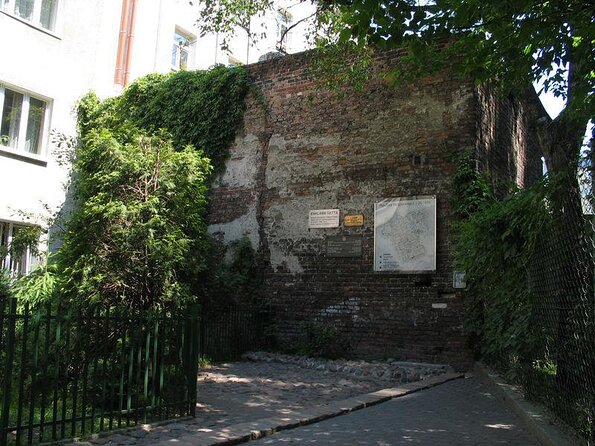
Muranów can look like an ordinary neighborhood of square apartment blocks. That surface appearance is exactly why a guide matters. Beneath the modern streets lies the site of the Jewish Ghetto created by the German Nazis in 1940.
Your guide can point out the remaining traces and explain the Warsaw Ghetto Uprising of 1943. The resistance lasted three weeks, ending with the destruction of the Jewish district as the final part of the community faced deportation to an extermination camp.
This is not a stop for casual sightseeing. The physical setting is quiet and modern, while the events connected to it are devastating. A good guide helps you understand what disappeared, where people were forced to live, and why the landscape of Muranów does not immediately reveal its past.
The suggested duration is two hours. That makes it one of the more serious, detailed choices, and you should tell the operator or guide in advance if this is your main subject. The visit is especially suited to someone who wants historical context rather than a quick memorial photograph.
See communist Warsaw through the Żuk
The minibus has particular meaning when the chosen focus is communist Warsaw. The tour can trace the period from the end of World War II and the reconstruction of the capital through the 1960s and 1970s, then toward the first free elections on June 4, 1989.
The point is not just to see communist buildings. You can learn how daily life worked under a centrally directed economy and look for surviving objects, spaces, and traces from that period. The Palace of Culture and Science is the obvious visual anchor, though admission is not included if you choose to go inside.
This subject works well for anyone trying to understand why Warsaw can feel both old and startlingly modern. Postwar rebuilding and communist planning changed the city’s scale, streets, and public spaces. Your guide can connect those choices to the political system that shaped them.
The suggested duration is two hours, again much longer than the full tour. Treat the options as themes, not a promise that every site will receive the stated time on the same three-hour outing.
Follow the Warsaw Uprising and World War II
The WWII program is the most concentrated choice. It can cover street fighting, the Warsaw Uprising, the Jewish Ghetto, resistance, occupation, and the Soviet advance that Poles often describe with painful complexity as liberation in 1945.
The Warsaw Uprising Monument provides a strong starting point. From there, the route may connect surviving bullet holes, fragments of the Ghetto wall, Umschlagplatz, rubble sites, Soviet tanks, and aircraft. Archival photographs shown alongside the streets help you compare the present city with wartime images.
This is where the private format has its greatest practical value. You can ask about battles, individual heroes, political changes, and everyday life under occupation without being limited to a set script. The subject is grim, but it explains why so much of Warsaw had to be rebuilt and why certain empty spaces and monuments matter.
The WWII program is listed at three hours, which matches the full length of the experience. If you choose it, plan to make it your main theme rather than trying to add the Royal Route, Łazienki, and Praga in the same sitting.
Walking, comfort, and the vintage tradeoff
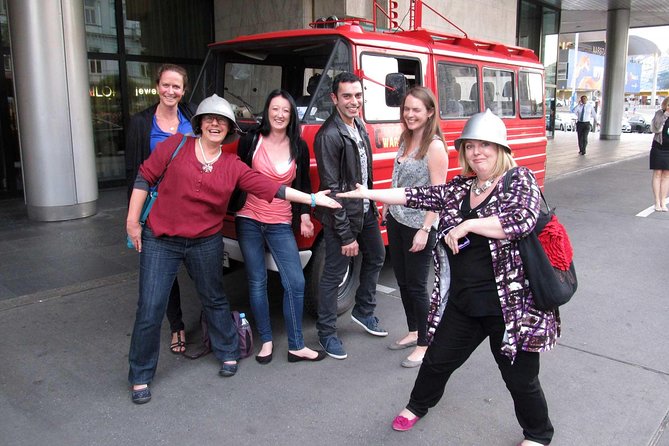
The tour is often described as a minibus experience, but you should not picture three hours of continuous riding. The vehicle mainly moves you between locations, while the sightseeing and commentary continue on foot. One guide received praise as a very good driver-guide, while another guest specifically wished for more time in the minibus after doing a lot of walking.
Wear comfortable clothing and solid walking shoes. The classic vehicles do not have air conditioning, and some do not have seat belts, which is permitted for historic vehicles. They do have heating for winter, but a hot summer day may make the lack of air conditioning noticeable.
Children taller than 150 centimeters can be booked online. Polish law requires a booster seat for shorter children, so you must contact the operator in advance to check availability. Service animals are allowed, and the activity is near public transportation, though hotel pickup and drop-off are included.
The tour is offered in English with live commentary. Guides named in past experiences include Artur, Art, and Marek Sidorenko, but you should not assume a particular person will lead your departure. One especially personal touch described by a group was a small vodka tasting on a chilly December day, so you might ask the operator if such a stop is possible, but it is not a stated standard inclusion.
Is $167.76 per person good value?
For one person, the price is high compared with a public walking tour. You are paying for a private vehicle, a private guide, hotel transport, and the ability to shape the route. That becomes more reasonable for a couple, family, or group of friends sharing the experience.
The tour works best when you decide what you want before pickup. If you want a broad city introduction, combine the Old Town, Royal Route, and perhaps a short look at Praga. If history drives your visit, choose the Jewish Ghetto or WWII program and give it the full three hours.
The vehicle is not luxurious. No air conditioning and limited seat-belt provision are real drawbacks. The charm is historical character, not comfort. You are choosing an unusual way to move through Warsaw, not a smooth modern coach.
Free cancellation is available if you cancel at least 24 hours before the local start time. Changes or cancellations inside that window are not accepted for a refund.
Who should book this private Warsaw tour?
I would choose this tour if you have limited time, want hotel pickup, or are traveling with people who prefer a private pace. It is also useful on your first day, when a guide can help you understand the city’s geography before you explore independently.
History-minded visitors should consider the Jewish Ghetto, communist Warsaw, or WWII focus. Architecture lovers may prefer the Old Town and Royal Route. Anyone curious about everyday Warsaw should make room for Praga Północ.
I would hesitate if you want a long, relaxed ride in a comfortable vehicle, or if you dislike walking. The Żuk is small, old, and part of the experience. Its limits are clear, but so is its personality.
FAQ
How long is the private Warsaw tour?
The experience lasts approximately three hours.
Is hotel pickup and drop-off included?
Yes. Hotel pickup and drop-off are included, and the tour operator will contact you to confirm the pickup details.
How many people can ride in one minibus?
Each minibus accommodates up to eight passengers. The operator has a fleet of five minibuses.
Which languages are offered?
The tour is offered in English and includes live commentary from a local guide.
Can I choose which parts of Warsaw to see?
Yes. The private format lets you design your own itinerary with the guide. Suggested themes include the Old Town, Royal Route, Praga Północ, Łazienki Royal Gardens, the Warsaw Jewish Ghetto, communist Warsaw, and WWII history.
Is the Palace of Culture and Science admission included?
No. Admission to the Palace of Culture and Science is not included.
Can children join the tour?
Adults and children over 150 centimeters can book instantly online. Children under 150 centimeters require a booster seat under Polish law, so you must contact the operator in advance to check availability.
Should you book it?
Book this tour if you want a personal introduction to Warsaw with a strong history focus, especially when hotel pickup and a private vehicle save you time. Choose one main theme before you start, and be ready to walk.
Skip it if your priority is air-conditioned transport, guaranteed seat belts, or a low-cost sightseeing circuit. For the right group, the Żuk, the flexible guide, and the chance to connect Old Town, Praga, wartime Warsaw, and communist Poland make this an engaging first look at a complicated city.
Just added around Warsaw
- World War II Warsaw Old Town, Military Cemetery Walking Tour★ 4.7 · 3 reviews
- Wilanów Palace: 2-Hour Guided Tour with Entrance Tickets★ 4.8 · 8 reviews
- Warsaw: Wolf’s Lair & Swieta Lipka Small-Group Tour + Lunch★ 5.0 · 3 reviews
- Warsaw Zoo Skip-the-Line Entry Ticket with Private Transport★ 4.8 · 3 reviews
- Warsaw Wolf’s Lair with St. Lipka and Mamerki Private Guided★ 4.2 · 3 reviews
- Warsaw: Vistula River Cruise with Your Music & City Views★ 4.6 · 78 reviews
- Warsaw: Private Vodka Tasting Night with Snacks and Pickup★ 5.0 · 7 reviews
- Warsaw Private Wilanow Palace & Garden Tour★ 4.6 · 30 reviews
City Tours, compared.
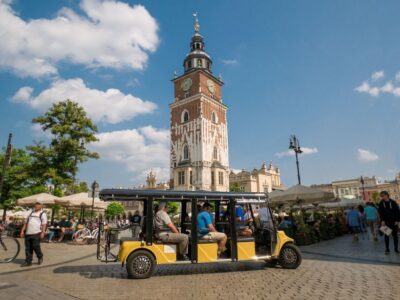
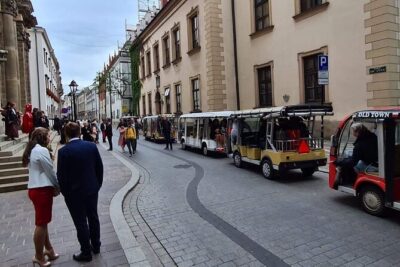
City Sightseeing Tour Eco Electric Buggy Golf Cart
Read our review →
Gdańsk City Sights & History Guided Walking Tour in English
Read our review →
Extended City Sightseeing Tour – Eco Buggy Golf Cart
Read our review →
Browse the lists this tour appears in