
Reviewed · WALKING TOURS
Walk through the Warsaw Old and New Town: like Phoenix from the ashes
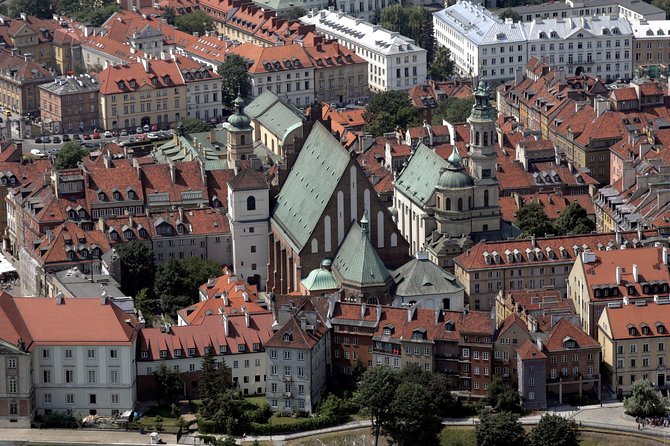
Warsaw’s Old Town looks old, but much of it rose from wartime rubble. That is the central idea of this walk: you follow a rebuilt city that refuses to look defeated, from Krakowskie Przedmiescie to the Warsaw Uprising Monument. Along the way, you connect Chopin, Marie Curie, Polish kings, the Second World War, and the city’s stubborn return to life.
I like the route for two reasons. First, it links the headline sights with the human stories behind them, including Chopin’s heart at Holy Cross Church and Marie Curie’s birthplace. Second, the private format gives your group the guide’s full attention. The possible drawback is pace: two hours covers many stops, so you mostly look and listen from outside rather than tour interiors.
Key points at a glance
- A two-hour route through two historic districts: Walk from the Copernicus Monument through Krakowskie Przedmiescie, the Old Town, and into the New Town.
- Warsaw’s remarkable reconstruction: Learn how the Old Town was rebuilt after wartime destruction and why a Venetian painter mattered to that work.
- Personal stories beyond royal history: Visit the church holding Chopin’s heart and the birthplace of Marie Curie.
- A private group experience: Only your party takes part, which makes it easier to ask questions and adjust the conversation.
- A serious final stop: The walk ends at the Warsaw Uprising Monument, linking the city’s medieval center with its modern struggle.
- Useful practical limits: The price is $72.87 per person, admission fees are not included, and the guide details identify the service as German-speaking even though the booking information says English is offered.
Why Warsaw’s Old Town is more than an old-looking square
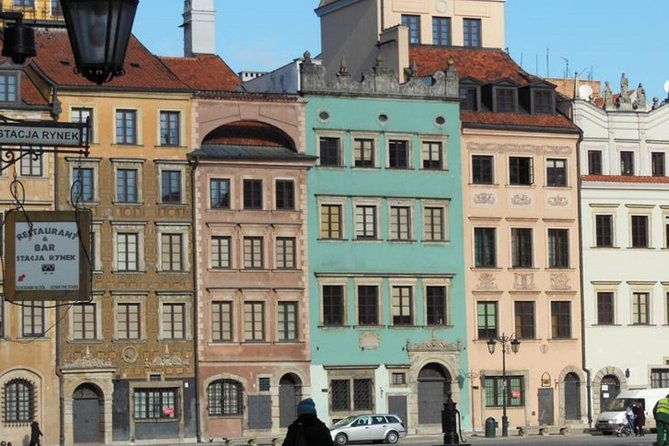
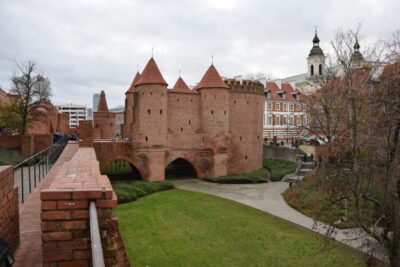
The most striking thing about this walk is the contrast between appearance and reality. Warsaw’s Old Town has colorful facades, narrow lanes, a market square, and a Royal Castle that look as though they have been here unchanged for centuries. Yet the tour explains that the district was rebuilt after wartime destruction.
That makes the route more meaningful than a quick photo stop. You are not simply admiring pretty buildings. You are learning how a city decided what to restore, how the work was financed, and how paintings by a Venetian artist helped guide the reconstruction. The Old Town is also recognized as a UNESCO World Heritage Site, giving the walk a strong architectural and cultural focus.
I especially like that the story does not stop with kings and grand buildings. You also hear about the Warsaw Uprising, Chopin, Marie Curie, and the role of the Russian army during the Second World War. Those subjects give you a better sense of Warsaw as a place shaped by artists, scientists, monarchs, soldiers, and ordinary citizens.
A few more Warsaw trips to weigh up
- Warsaw: Old Town Highlights Walking Tour in English
★ 4.7 · 1,516 reviews - Warsaw: Old Town Guided Walking Tour
★ 4.9 · 599 reviews - Half-Day Polish Food Walking Tour with Guide and Dinner
★ 4.5 · 381 reviews
Starting at the Copernicus Monument on Krakowskie Przedmiescie
Your meeting point is the Nicolaus Copernicus Monument on Krakowskie Przedmiescie. Look for the guide holding a PolinTours sign. The guide accompanies your group for roughly two hours and leads the walk south to north through a compact central area.
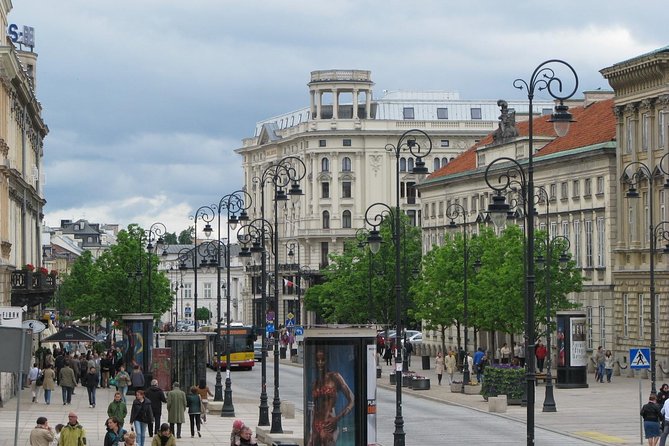
Krakowskie Przedmiescie is a good starting point because it places you on one of Warsaw’s best-known historic streets from the first minute. The route begins with a broad sense of the city before narrowing into church courtyards, university grounds, palace fronts, and the Old Town.
The guide details describe the tour as German-speaking, while the booking information says it is offered in English. If language matters to you, confirm the language at booking so there is no confusion on the day.
Chopin’s heart at Holy Cross Church
The stop at Holy Cross Church is brief, about five minutes, but it carries unusual emotional weight. This is where you learn about Frédéric Chopin, Warsaw’s most famous composer, and the church where his heart rests.
That detail gives the walk a personal center. Chopin spent much of his life away from Poland, yet the story brings him back to Warsaw in a physical way. You do not need a long museum visit to understand why this site matters. A short explanation from the guide connects the composer to the city and gives you a memorable detail to carry through the rest of your visit.
The stop is mainly an exterior or short visit in the context of the walking schedule, and admission is listed as free. Since only a few minutes are assigned here, you should not expect a concert, a full church tour, or a long discussion of Chopin’s music.
The University of Warsaw and the royal center
At the University of Warsaw, the group looks at the oldest part of the university. The stop lasts about five minutes, so the focus is on orientation and context rather than a full campus tour.
The route then reaches the Tomb of the Unknown Soldier, where you hear about the Saxon kings and their estate in Poland. This is one of the places where the walk shifts from individual stories to national memory. The tomb gives the tour a solemn note, while the Saxon connection helps explain how royal power once shaped this part of the city.
Next comes the Presidential Palace, the seat of Poland’s president. The guide covers its unusual history, making this more than a quick look at an official building. You see how the same central route has carried religious, academic, royal, military, and political meaning over time.
These stops are short, and that is both their strength and their limit. You get a broad introduction without losing much time, but you will need a separate visit if you want to enter buildings or study their architecture in detail.
Same country, a completely different kind of day:
- Warsaw: Chopin Concert in the Old Town
★ 4.8 · 2,287 reviews - Warsaw: Traditional Galar Cruise on The Vistula River
★ 4.6 · 1,640 reviews - Warsaw Concert: Chopin – Painted by Candlelights with Wine
★ 4.8 · 1,442 reviews - Warsaw: City Sightseeing Hop-On Hop-Off Bus Tour
★ 3.6 · 1,415 reviews
Castle Square and the youngest Old Town in the world
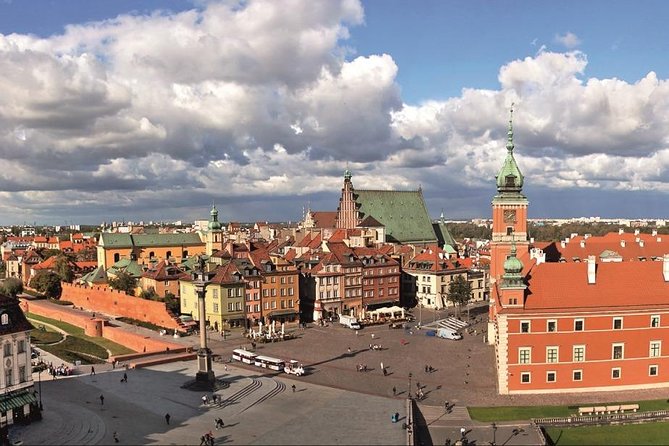
Castle Square is the major turning point. Here you enter Warsaw’s Old Town and hear the full story of its reconstruction. The tour covers the Royal Castle, the rebuilding effort, its financing, and the part played by a Venetian painter.
The phrase youngest Old Town in the world captures the oddity of the place. The buildings are designed to look historic, but the district’s present form is the result of careful rebuilding. For you, that means the visual pleasure of an old European square comes with a lesson in memory and choice. What gets rebuilt? What gets changed? How does a city make a damaged center feel like its own again?
You also learn about Poland’s first democratic constitution in Europe. This adds political depth to the Royal Castle stop. Instead of seeing the castle only as a royal residence, you connect it with constitutional government and the country’s long effort to define its political future.
The 15-minute stop is among the longest on the route, and rightly so. Castle Square is a place where several themes meet: monarchy, democracy, wartime destruction, reconstruction, and national identity.
St. John the Baptist Cathedral and the war front
At the Archcathedral Basilica of St. John the Baptist, the guide explains how the Second World War front ran through the church. That is a powerful detail because it places the conflict inside a building normally associated with worship and ceremony.
The stop also covers the Polish struggle during the Warsaw Uprising and the role of the Russian army. This is one of the most serious parts of the walk. Warsaw’s wartime story is not simplified into a single victory narrative. You hear about resistance, destruction, and the difficult military and political setting around the uprising.
The scheduled time is about ten minutes. That is enough for a focused explanation, but not enough to cover every chapter of the uprising or the cathedral’s architecture. If wartime Warsaw is your main interest, use this walk as an introduction and plan extra time at a dedicated museum or memorial site.
Gnojna Gora and a look toward the Vistula
The stop at Gnojna Gora gives you a view toward the Vistula River. It is short, around five minutes, but it breaks up the denser sequence of churches, squares, and monuments.
A viewpoint is useful here because it reminds you that Warsaw is not only a collection of historic facades. The river helped shape the city’s location and identity. You also get a moment to pause and take in the wider setting before returning to the Old Town’s lanes.
Do not expect a long scenic overlook session. This is a brief orientation stop within a tightly timed walk. Still, the change of view helps the route feel less like a checklist.
The Old Town Market Square and its legends
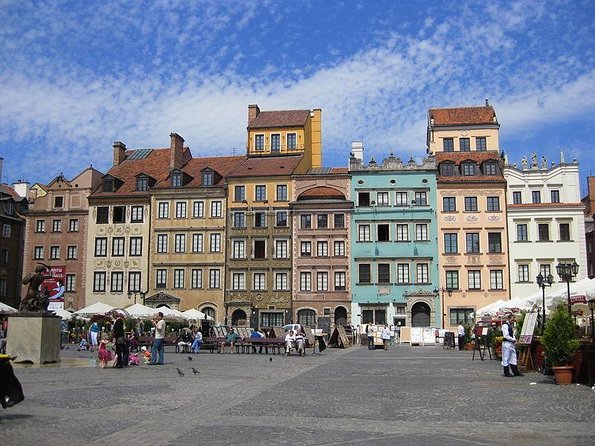
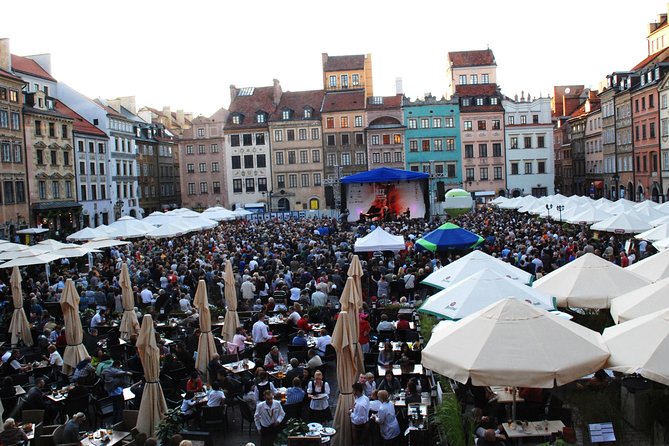
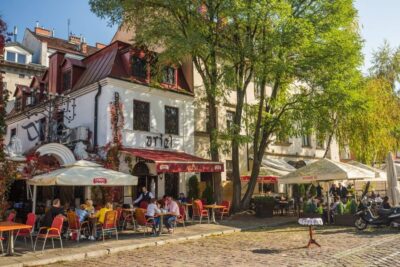
The Rynek Starego Miasta, or Old Town Market Square, is where the route slows down for picturesque streets, famous landmarks, legends, and authentic local stories. The market square is one of the most recognizable places in Warsaw, but a guide can help you look past the colorful buildings and identify the stories attached to them.
This is also a good place to appreciate the reconstruction in practice. The square’s charm depends on small details: the arrangement of the facades, the corners leading into side streets, and the way the buildings frame the open center. A short guided walk helps you understand that the effect was planned and rebuilt, not simply preserved by chance.
The tour does not promise food, shopping time, or an extended stop at a café. Snacks are not included. If you want a break, you may need to arrange it before or after the walk rather than count on the schedule.
Crossing into the New Town
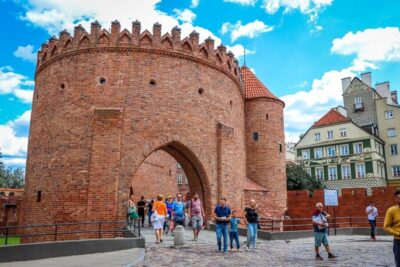
From the Old Town, the route passes through a city gate into the New Town. This transition is easy to miss when exploring alone, but it gives the walk a clear structure.
You move from the royal and medieval center into another historic district with its own churches, streets, and landmarks. The New Town is not treated as an unrelated add-on. It forms the next part of Warsaw’s urban story and leads naturally toward the final memorial.
Because the walk covers both districts in only two hours, you should expect a guided overview rather than a slow architectural study. The benefit is range. You see how the old center connects to the later district without spending a full day on one square.
Marie Curie’s birthplace
The Maria Sklodowska-Curie Museum marks one of the most personal stops on the New Town section. Here you learn about Marie Curie’s birthplace and her connection to Poland.
This stop broadens the story of Warsaw. The route has already introduced a composer, monarchs, presidents, soldiers, and religious figures. Curie adds science and international achievement. Her birthplace also gives the guide a chance to discuss a famous Pole through a specific address rather than through a distant monument.
Admission to the museum is not included. That matters when you compare the price with other city walks. You can see the birthplace as part of the route, but entering the museum may cost extra. The tour schedule allows about ten minutes, so check the opening arrangements separately if you want a full museum visit.
Ending at the Warsaw Uprising Monument
The walk ends at the Field Cathedral of the Polish Army and the Warsaw Uprising Monument on plac Krasińskich. This is a strong ending because it brings the wartime story back into view after the lighter moments of markets, legends, and city views.
The monument gives you a clear place to continue exploring on your own. It also leaves you with a more serious understanding of why Warsaw’s reconstruction matters. The restored streets are not just attractive scenery. They exist alongside memories of resistance, loss, and political struggle.
The endpoint is different from the starting point, so you should allow time to orient yourself afterward. Transport is not included, though the tour is near public transportation. If you are planning a museum visit or another appointment, do not schedule it too tightly after the walk.
What $72.87 gets you
At $72.87 per person, this is not the cheapest way to stroll through central Warsaw. The price is easier to justify if you value a private guide, a connected historical story, and the chance to ask questions throughout the walk.
Only your group participates, which is important. A private format can make short stops more useful because the guide can explain what interests you most instead of giving the same fixed talk to a large crowd. A solo booking may also become a one-on-one experience. One customer who ended up alone with the guide described it as a wonderful private tour and said it greatly increased their understanding of Poland and Warsaw.
Still, the cost does not cover snacks, transport, or admissions. The route is mainly a guided walk, with buildings and landmarks viewed along the way. I would choose it for the interpretation, not for included entry tickets.
Group discounts may improve the value for families or small parties. Since confirmation arrives at booking and free cancellation is available until 24 hours before the start time, you have some flexibility, but changes made inside that window are not accepted.
Who will enjoy this walk most
I would recommend this tour to you if you want a first look at central Warsaw that combines famous sights with the city’s wartime recovery. It suits people who prefer a clear narrative to wandering without context, especially if Chopin, Marie Curie, royal Poland, or the Warsaw Uprising interest you.
The private format also works well if your group has specific questions or different levels of background knowledge. Most people can take part, service animals are allowed, and the route is near public transportation.
I would be more cautious if you want long interior visits, free time for photos, or a relaxed café break. The schedule moves quickly, and most stops last between five and fifteen minutes. The language point also deserves attention: the tour details identify a German-speaking guide, while the offering is marked as English, so confirm which language you will receive.
Should you book the Warsaw Old and New Town walk?
Book it if you want a compact, private introduction to Warsaw’s central story and you value explanation more than admission tickets. The route covers an impressive range, from Chopin’s heart and the Royal Castle to Marie Curie’s birthplace and the Warsaw Uprising Monument.
Skip it if you already know the Old Town well or plan to spend your time inside museums and churches. For a first visit, though, the walk gives you a useful framework. You can return later to the places that caught your attention, now understanding why a city rebuilt from ashes can still feel firmly rooted in its past.
FAQ
How long does the walking tour last?
The tour lasts approximately two hours.
Where does the tour start?
It starts at the Nicolaus Copernicus Monument on Krakowskie Przedmiescie in Warsaw. Look for the guide with a PolinTours sign.
Where does the tour end?
The tour ends at the Warsaw Uprising Monument on plac Krasinskich.
Is this a private tour?
Yes. Only your group participates in the activity.
What language is the tour offered in?
The booking information says the tour is offered in English, while the tour details describe the guide as German-speaking. Confirm the language when booking.
Are admission tickets included?
No. Admissions are not included. The Maria Sklodowska-Curie Museum specifically lists admission as not included, while the other listed stops show free admission.
Is transportation included?
No. Transport is not included. The route is near public transportation.
Can I cancel for a full refund?
Yes, if you cancel at least 24 hours before the experience start time. Cancellations made less than 24 hours before the start time are not refunded, and changes inside that period are not accepted.
Just added around Warsaw
- World War II Warsaw Old Town, Military Cemetery Walking Tour★ 4.7 · 3 reviews
- Warsaw: Wolf’s Lair & Swieta Lipka Small-Group Tour + Lunch★ 5.0 · 3 reviews
- Wilanów Palace: 2-Hour Guided Tour with Entrance Tickets★ 4.8 · 8 reviews
- Warsaw Zoo Skip-the-Line Entry Ticket with Private Transport★ 4.8 · 3 reviews
- Warsaw Wolf’s Lair with St. Lipka and Mamerki Private Guided★ 4.2 · 3 reviews
- Warsaw: Vistula River Cruise with Your Music & City Views★ 4.6 · 78 reviews
- Warsaw: Private Vodka Tasting Night with Snacks and Pickup★ 5.0 · 7 reviews
- Warsaw Private Wilanow Palace & Garden Tour★ 4.6 · 30 reviews
Walking Tours, compared.
Gdańsk City Sights & History Guided Walking Tour in English
Read our review →
Browse the lists this tour appears in