
Reviewed · MUSEUMS
Skip-the-Line Polin Museum Warsaw Jewish History Tour
The heart of this experience is the POLIN Museum, where a licensed guide leads you through 1,000 years of Jewish life in Poland, followed by the physical places tied to the Warsaw Ghetto on the longer option. You move from carefully designed exhibits to streets, walls, cemeteries, and memorials where the history becomes much harder to keep at a distance.
I like the way the tour joins the museum with the former ghetto instead of treating them as separate sights. I also like the guide-led format: Yulia, one named guide associated with the experience, is praised for explaining the key points in two hours and holding the attention of a six-year-old. The main drawback is the price, $167.97 per person, which makes the four-hour private format easier to justify than the shorter museum-only choice.
Key points to know before booking
- The four-hour option adds the Warsaw Ghetto walk, while the two-hour option does not include it.
- POLIN’s main exhibition covers a millennium, not only the Nazi occupation and Holocaust.
- The Jewish Cemetery visit lasts about an hour and includes admission.
- Skip-the-line means the ticket desk only, not the museum entrance or security checks.
- Nozyk Synagogue is still functioning, but entry is not included and may be possible only by request.
- The tour is private, so only your own group takes part.
Why POLIN is the right place to begin
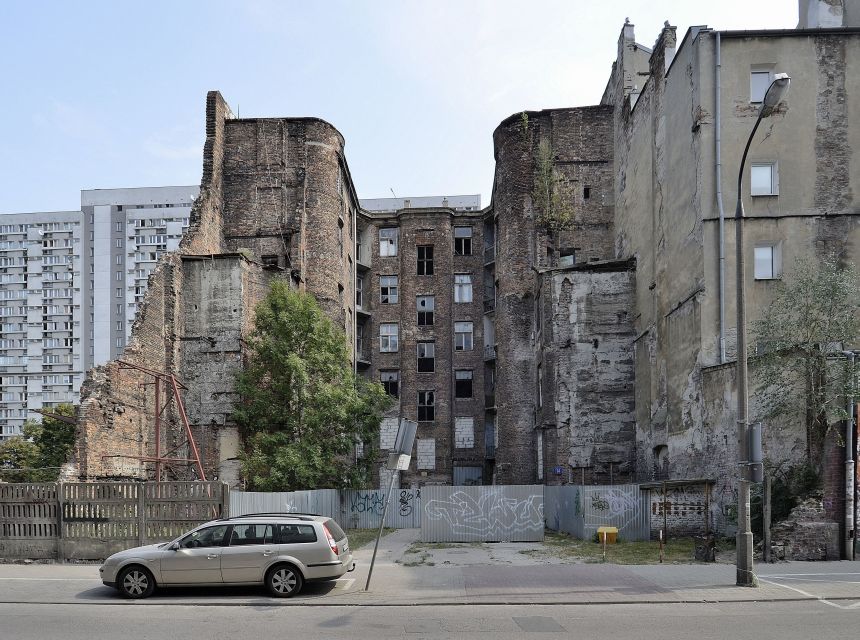
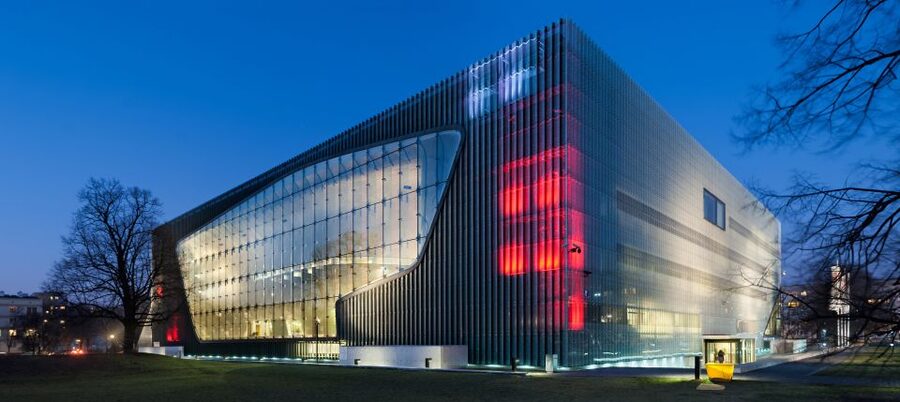
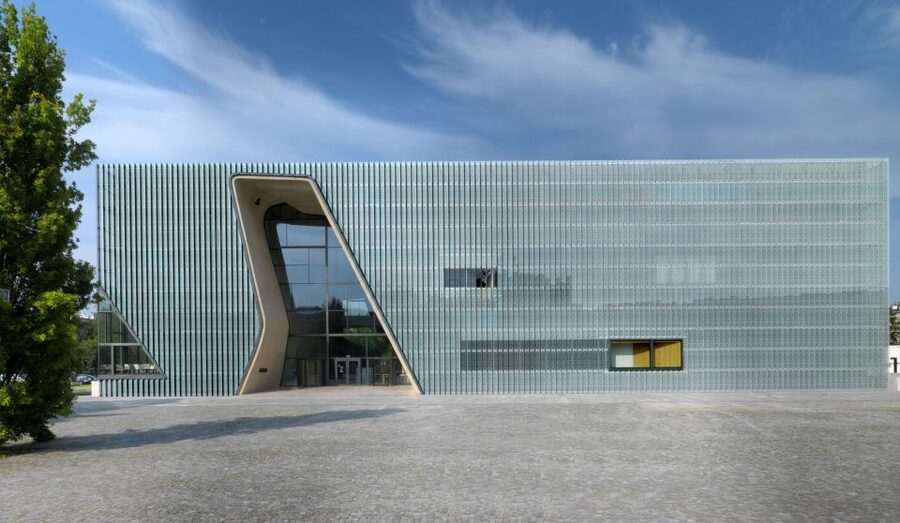
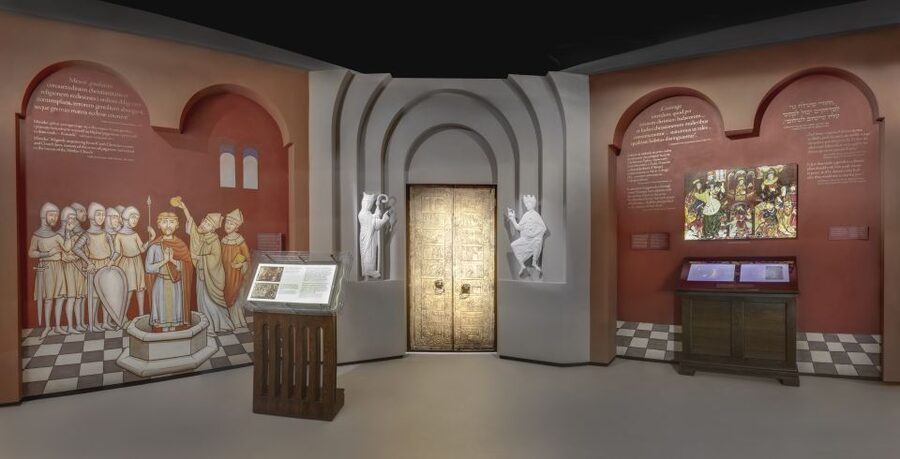
POLIN Museum of the History of Polish Jews is not a small memorial room focused on one tragic chapter. Its main exhibition follows Jewish life in Poland across roughly 1,000 years, showing how communities formed, worked, prayed, learned, and shaped the country before the devastation of World War II.
That wider frame matters. If you begin only with the ghetto and Holocaust, it is easy to see Jewish history in Poland as a story that starts with persecution and ends with destruction. POLIN gives you the long story first. The war remains central, but it is placed within the larger civilization that the Nazis tried to erase.
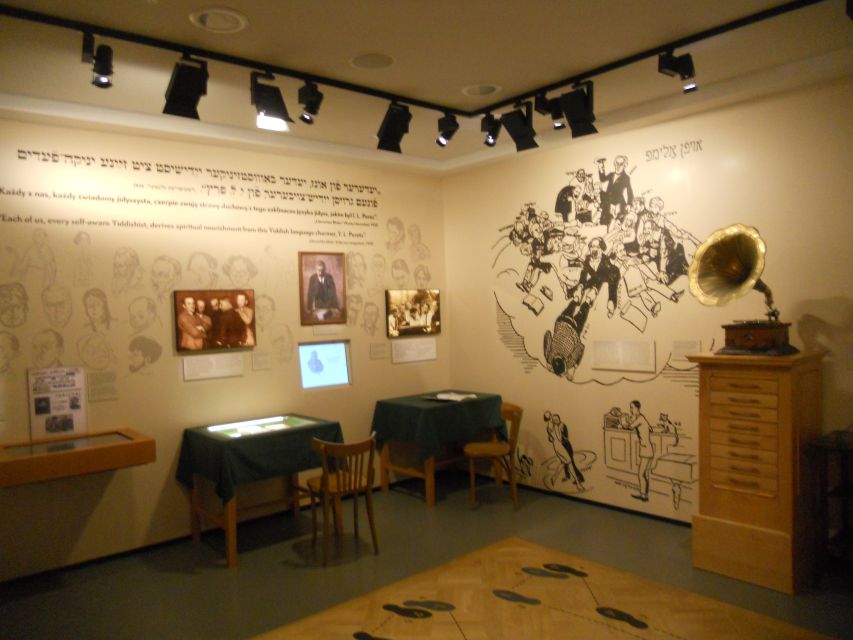
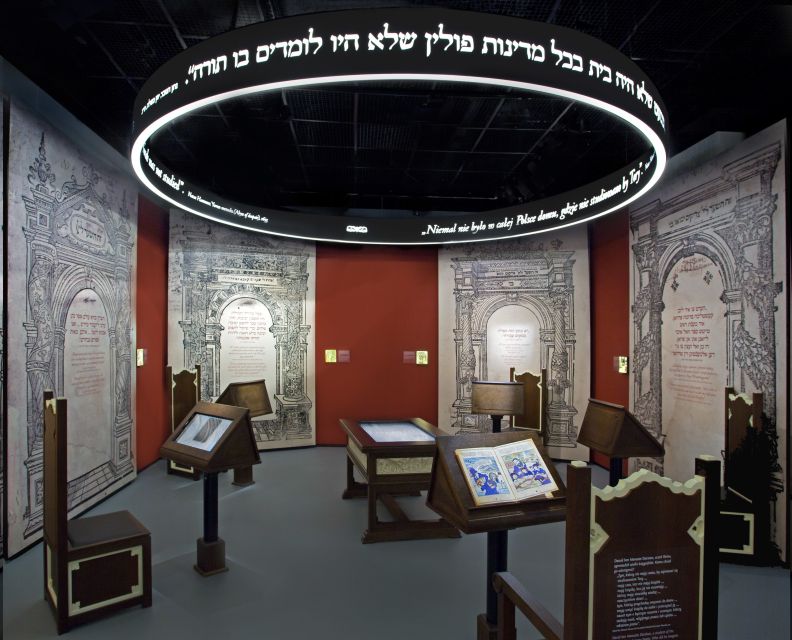
The museum uses artifacts, photographs, documents, films, screens, and objects that you can touch. Drawers hide extra material, so you are not simply walking past glass cases and reading labels. The visual setup helps keep the visit moving, though you could spend a full day here if you tried to read and listen to everything.
That is where a guide earns the fee. In two hours, your guide cannot cover every panel. The useful goal is to identify the main turning points, explain what you are seeing, and point out which displays deserve your time later if you decide to return on your own.
The ticket covers the main exhibition, the ongoing temporary exhibition, and the Heritage Gallery. The skip-the-line benefit lets you avoid the ticket office queue, but you still pass through the regular entrance and security checks. It is a practical time saver, not an all-access pass.
A few more Warsaw trips to weigh up
- Warsaw: POLIN Museum of the History of Polish Jews Ticket
★ 4.7 · 1,142 reviews - Warsaw: Polish Vodka Museum Tour with Tasting
★ 4.6 · 788 reviews - Warsaw: Museum World of Illusion Entry Ticket
★ 3.9 · 666 reviews
What the four-hour route adds to the museum visit
The longer tour pairs about two hours inside POLIN with about two hours on foot around former Jewish Ghetto sites. That combination is the strongest version of the experience because the museum supplies context, while the walk shows how little of the old district remains and how thoroughly the city has changed.
The route begins at Ludwika Zamenhofa 11, near the museum area. The full sequence can vary by the selected option, and the number of attractions depends on the duration you book. The two-hour choice focuses on POLIN and does not include the Warsaw Ghetto walking tour.
Expect a serious subject and a fair amount of walking in the four-hour format. The stops are not just photo points. Your guide explains what happened in each place and helps connect the remaining fragments to the much larger district that once existed.
Palace of Culture and Science: a Warsaw landmark outside the main story

The Palace of Culture and Science is included as an exterior stop. Poland’s tallest building is a huge, symbolic piece of Warsaw architecture, and its scale makes a quick orientation point useful at the start or along the route.
There is no admission charge for this stop, and the visit is brief in practical terms. Do not book this tour for access to the building or a long architectural visit. Its value is visual and geographic, a reminder that Warsaw contains layers from the prewar city, wartime destruction, postwar reconstruction, and the modern capital.
The Ghetto Heroes Monument and the weight of the subject
At the Monument to the Ghetto Heroes, you pause for about 15 minutes. The monument honors Polish Jews and recalls persecution under the German occupation during World War II.
This is one of the most important stops because it gives the walking portion a clear moral center. The memorial is powerful without needing much decoration around it. A guide can add the historical links that a brief visit alone may leave unclear, especially the difference between daily life in the ghetto, resistance, deportation, and the destruction of the district.
Allow yourself a quiet moment here. It is not a stop to rush through while checking the next address.
Same country, a completely different kind of day:
- Warsaw: Chopin Concert in the Old Town
★ 4.8 · 2,287 reviews - Warsaw: Traditional Galar Cruise on The Vistula River
★ 4.6 · 1,640 reviews - Warsaw: Old Town Highlights Walking Tour in English
★ 4.7 · 1,516 reviews - Warsaw Concert: Chopin – Painted by Candlelights with Wine
★ 4.8 · 1,442 reviews
The Jewish Cemetery and Janusz Korczak’s symbolic grave
The Jewish Cemetery, established between 1799 and 1806, is one of the longer stops, with about an hour scheduled. Admission is included.
The cemetery contains marble and sandstone tombstones known as masebas. Their carved symbols and ornaments offer a direct look at Jewish burial traditions and the people who lived in Warsaw before the war. The setting is described as scenic and nostalgic, but the emotional effect is more complex than a pleasant walk among old stones.
The symbolic grave of Janusz Korczak is a key point. Korczak was a writer and teacher who died at Auschwitz. His story gives the cemetery stop a human focus, especially for families or anyone interested in education, children, and moral courage during the occupation.
You should expect this part to be slower than the memorial stops. An hour gives your guide time to explain the cemetery and lets you look closely at the tombstones rather than treating the grounds as a quick detour.
Seeing the Ghetto Wall fragment
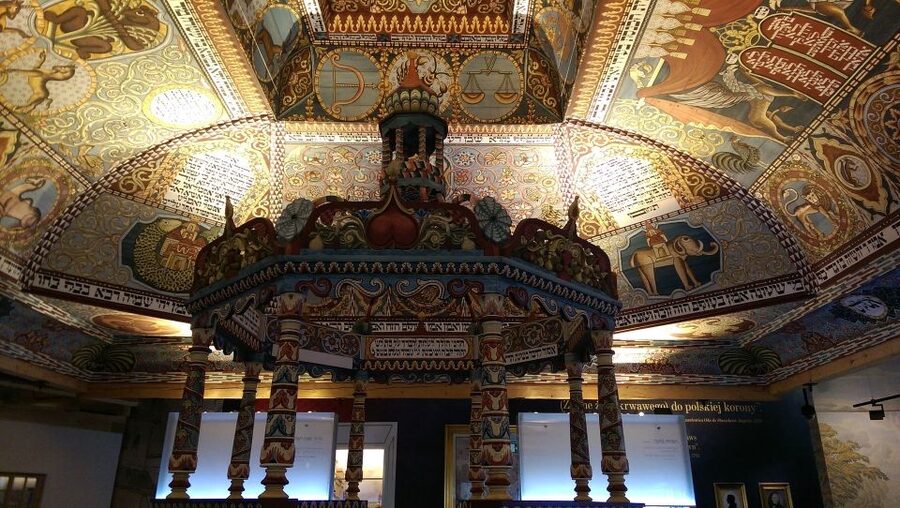
A surviving fragment of the Ghetto Wall offers one of the most physical moments of the walk. You can see the wall’s height, touch its construction, and hear ordinary city life on the other side, an especially stark contrast to the people once confined within it.
The fragment is small compared with the original ghetto. That is part of the lesson. You are not looking at a complete preserved district, but at a remnant surrounded by a living city. The wall helps make the scale of confinement more real, even though the modern surroundings can make the past feel distant.
This is a short stop of about 15 minutes. It works best when your guide explains what the wall meant in daily life, rather than leaving you with only the physical remains.
The former Warsaw Ghetto in context
The Warsaw Ghetto was established in October and November 1940. It covered only about 2.4 percent of Warsaw’s land area, yet more than 450,000 Jews were forced into this cramped district under German rule.
The walking route helps you understand that the ghetto was not a single preserved attraction. It was a large area, much of which was destroyed, rebuilt, or absorbed into modern Warsaw. You may pass ordinary streets where the visible clues are limited, so the guide’s commentary is essential.
This is also why the four-hour route is more useful than a museum visit alone for many people. POLIN explains the long story and the historical setting. The walk then shows the uneven remains: a monument, a cemetery, a wall fragment, a synagogue, streets, and public spaces with very different appearances today.
Nozyk Synagogue and the Jewish Historical Institute
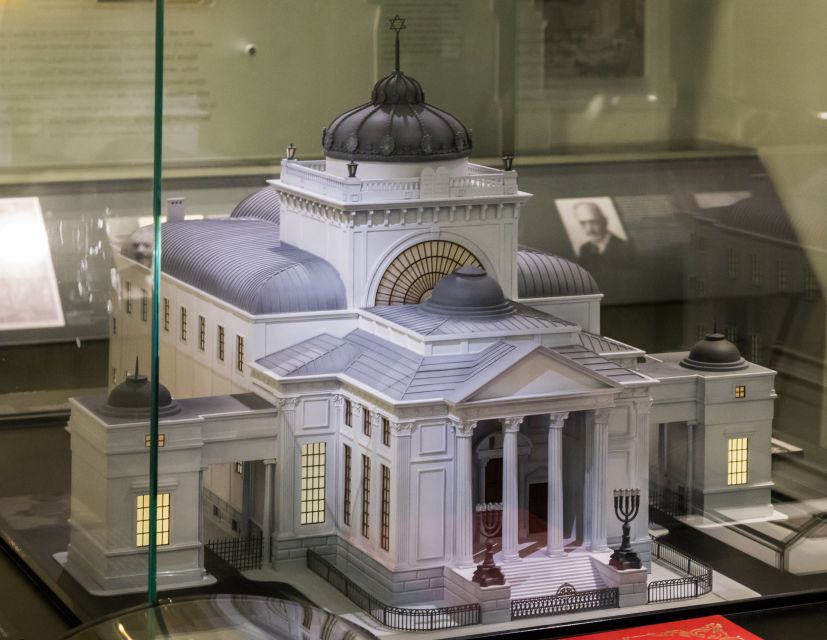
Nozyk Synagogue is the only surviving synagogue from the roughly 400 that existed in Warsaw before World War II. It has been refurbished and remains a functioning synagogue, which gives the stop a living connection rather than making it only a historic shell.
Entry is not included. Access may be possible by request, so you should not assume that the group will go inside. Even from outside, the synagogue is an important stop, but if entering is a priority, clarify the arrangements before booking.
The Jewish Historical Institute holds records, photographs, videos, and objects connected with the Warsaw Ghetto during the Nazi occupation. The tour information identifies it as related to this experience, but it does not specify a separate admission visit or a fixed time inside. Treat it as a point of historical orientation unless your guide confirms otherwise.
Prozna Street and Grzybowski Square
Prozna Street takes about 20 minutes on the route toward the uprising museum area. For someone focused on the Nazi occupation and Holocaust, it is a useful street-level stop because the setting connects ordinary urban space with wartime memory.
Grzybowski Square adds another layer. The square was part of the Jewish Ghetto during World War II, and today you may find the Jewish theater, a memorial garden, and a fountain nearby. The modern square does not recreate the ghetto, but that contrast is exactly why a guide matters. You see a present-day public place while learning what stood there during the occupation.
These stops are less dramatic than the wall or cemetery. I would see them as connective tissue in the longer walk, helping you grasp the size of the former district and the way Warsaw’s current streets sit over a destroyed past.
How the guide changes the experience
The tour includes a licensed guide fluent in the language selected at booking. The format is private, meaning only your group participates. That matters in a museum where people often need to pause, ask questions, or move at a different pace.
Yulia is specifically praised for making the material clear in two hours and for keeping a six-year-old engaged during the museum and ghetto walk. That does not mean the subject is light. It means the explanations can be adjusted for a family group without stripping away the seriousness.
The guide also helps you avoid a common problem at POLIN: trying to absorb every display at once. The museum is large and visually full. A focused route through its main ideas is more useful than racing through every gallery with no sense of priority.
Is $167.97 per person good value?
At $167.97 per person, this is not a budget museum visit. The price pays for a private tour, a licensed guide, POLIN admission, and the longer walking route if you select the four-hour option. Group discounts are available, which may improve the cost for a larger private party.
The four-hour format offers the clearest value. You get the museum, the central historical explanations, and the physical sites that make the story easier to understand. For a couple or family that wants structure and personal guidance, the price may be reasonable, especially if you would otherwise need to arrange museum tickets and a separate ghetto walk.
The two-hour choice is harder to assess as a bargain because it excludes the Warsaw Ghetto walking tour. It can make sense if your time is tight or you mainly want a guided introduction to POLIN. If you already plan to visit the museum independently, paying for a private guide may not be necessary.
The tour is booked an average of 51 days ahead, so advance planning is sensible. Confirmation arrives when you book, and you should check your email the day before for important information.
Who should book this Warsaw Jewish history tour?
I would recommend it most strongly to first-time visitors who want a clear introduction to Jewish history in Poland and the Warsaw Ghetto. It also suits families, since the guide can explain difficult subjects in a way that keeps younger children involved without turning the visit into a lesson stripped of meaning.
Choose the four-hour version if you want the full connection between POLIN and the city. It suits anyone who values context, prefers a private guide, or worries that a large museum may be hard to approach alone.
Choose two hours if you need a compact museum visit and accept that the ghetto sites are left out. You should not select the short option expecting a walking tour of the former ghetto.
The subject is heavy, and the cemetery, wall fragment, and memorial will not feel like ordinary sightseeing. That is not a flaw, but you should plan your day with enough quiet time afterward rather than placing this tour between several rushed attractions.
Final verdict: choose the longer route if the history is your reason for coming
Book this experience if you want POLIN explained by a private licensed guide and want the museum connected to the streets and surviving traces of the former ghetto. The strongest features are the guide’s ability to make a large museum manageable, the thoughtful two-part structure, and the chance to see places such as the Ghetto Heroes Monument, Jewish Cemetery, Nozyk Synagogue, and Ghetto Wall fragment.
I would choose the four-hour tour for the best value and the fullest understanding. Choose the two-hour version only when time is limited or the museum itself is your main goal. The price is high, but the private format and included museum admission make more sense when you use the added walking tour.
FAQ
Where does the tour start?
The meeting point is Ludwika Zamenhofa 11, 00-153 Warszawa, Poland.
How long is the experience?
The tour lasts approximately two to four hours, depending on the option selected.
Does the two-hour tour include the Warsaw Ghetto walk?
No. The walking tour of the Warsaw Ghetto is included with the four-hour option only.
Is the tour private?
Yes. Only your group participates in the activity.
Is the tour offered in English?
Yes. It is offered in English, and the guide is fluent in the language selected when booking.
What does skip-the-line entry at POLIN include?
The ticket lets you skip the line at the museum ticket office. You still need to pass through the entrance and security checks.
What POLIN areas does the ticket cover?
Admission includes the main exhibition, the ongoing temporary exhibition, and the Heritage Gallery.
Is entry to Nozyk Synagogue included?
No. Admission is not included. Entry may be possible by request.
More Skip the Line in Warsaw
- Warsaw: Skip-the-Line Royal Castle Guided Tour
★ 4.9 · 79 reviews - Warsaw: Lunch or dinner at Hard Rock Cafe with Skip-the-Line
★ 4.4 · 70 reviews - World of Illusion Museum Skip-the-Line Ticket
★ 4.0 · 55 reviews - Skip-the-Line Polin Museum Warsaw Jewish History Tour
★ 5.0 · 14 reviews
Just added around Warsaw
- World War II Warsaw Old Town, Military Cemetery Walking Tour★ 4.7 · 3 reviews
- Warsaw: Wolf’s Lair & Swieta Lipka Small-Group Tour + Lunch★ 5.0 · 3 reviews
- Wilanów Palace: 2-Hour Guided Tour with Entrance Tickets★ 4.8 · 8 reviews
- Warsaw Zoo Skip-the-Line Entry Ticket with Private Transport★ 4.8 · 3 reviews
- Warsaw Wolf’s Lair with St. Lipka and Mamerki Private Guided★ 4.2 · 3 reviews
- Warsaw: Vistula River Cruise with Your Music & City Views★ 4.6 · 78 reviews
- Warsaw: Private Vodka Tasting Night with Snacks and Pickup★ 5.0 · 7 reviews
- Warsaw Private Wilanow Palace & Garden Tour★ 4.6 · 30 reviews
Museums, compared.
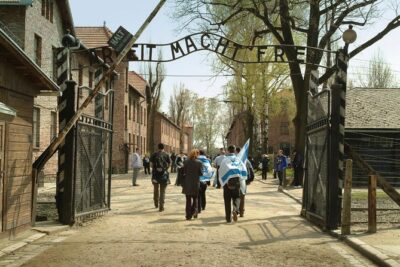
Auschwitz-Birkenau Museum and Memorial Guided Tour from Krakow
Read our review →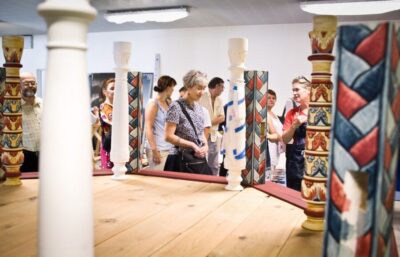
POLIN Museum of the History of Polish Jews Ticket
Read our review →



Krakow Schindler’s Factory Museum Guided Tour in English
Read our review →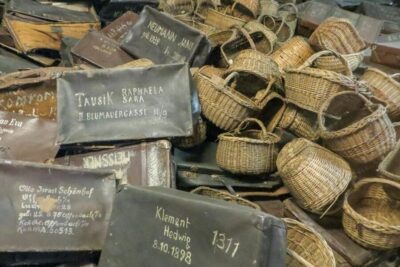
Auschwitz Birkenau Museum Guided Tour with Pickup
Read our review →
Browse the lists this tour appears in