
Reviewed · CITY TOURS
Warsaw: Behind the Scenes City Tour with Hotel Pickup
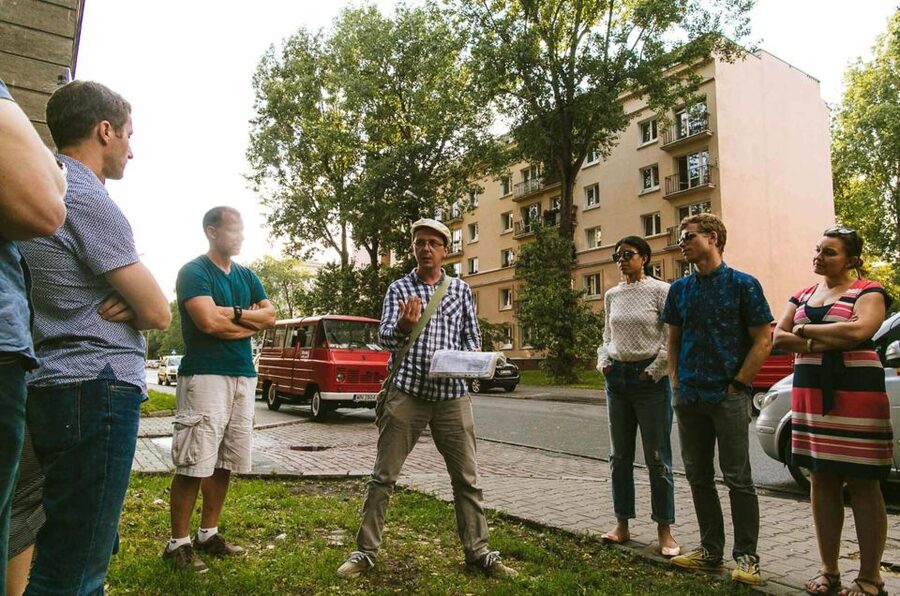
Warsaw’s story comes into focus when you leave the polished center and ride into the neighborhoods where war, communism, and renewal left their mark. This three-hour Żuk minibus tour takes you to the remnants of the Jewish Ghetto, uprising sites, reconstructed Muranów, and old Praga, with an English-speaking guide explaining what you are seeing.
I like the small groups of up to eight and the way the route reaches places you would be unlikely to find on a standard city walk. I also like the conversational guiding style reported by visitors who toured with Marcin, Konrad, Mark, Marius, and others. The main consideration is comfort: these historic vehicles may lack air conditioning and seat belts, and walking is part of the tour.
Key points to know
- Ride through history in a classic Żuk: The communist-era minibus is not just transport. It gives the outing a playful, distinctive character.
- See Warsaw beyond the rebuilt center: The route includes the former Jewish Ghetto, Muranów, uprising locations, and Praga.
- Connect the past to modern city life: Your guide explains how wartime destruction, Soviet planning, and post-1989 growth still shape Warsaw.
- Expect a personal guide-led outing: Each vehicle carries no more than eight people, allowing room for questions and changes in emphasis.
- Plan for short walks: The minibus moves between locations, but each stop includes time on foot, so comfortable shoes matter.
- Know the vehicle limits: Historic buses are heated in winter but are not air-conditioned, and some do not have seat belts.
Why the Żuk makes this Warsaw tour different
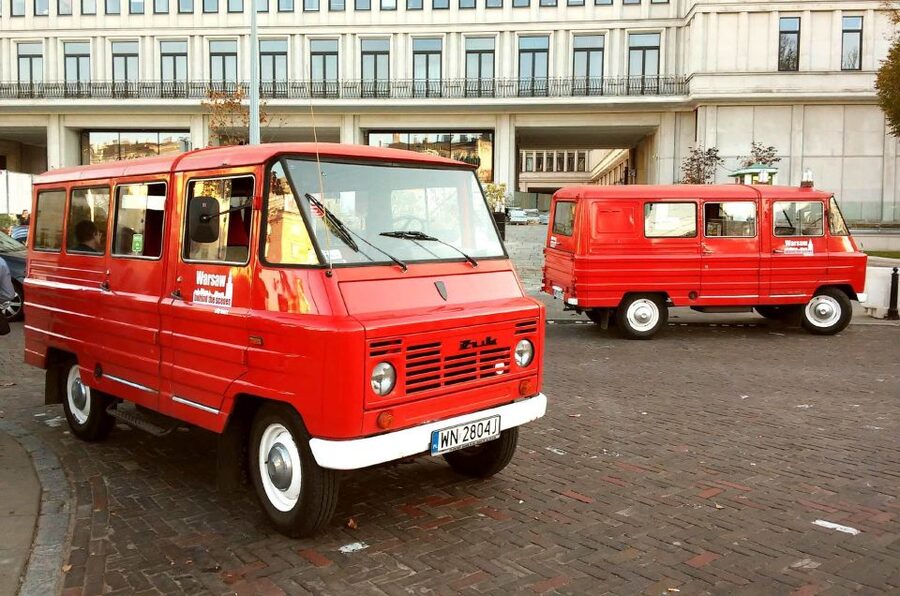
The vehicle is the first clue that this is not a routine sightseeing loop. The Żuk was a familiar Polish work vehicle during the communist period, and its boxy shape and old-fashioned interior turn the ride itself into part of the subject.
You are not simply looking through a tour bus window at famous landmarks. The minibus carries you between districts while your guide explains how Warsaw changed around you. That setting helps connect ordinary transport with the decades of state socialism the tour discusses.
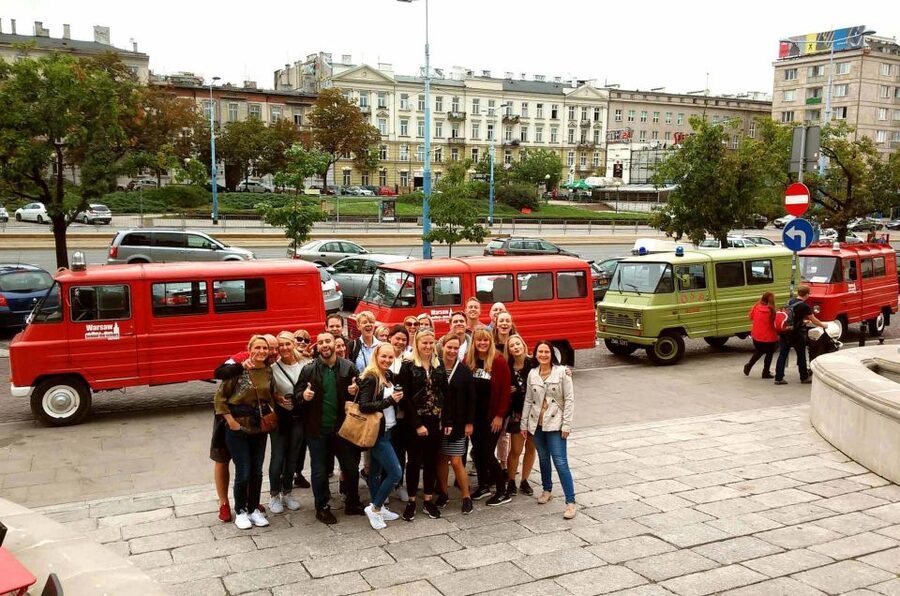
Each minibus seats up to eight people, and the operator has a fleet of five vehicles. That keeps the group small enough for a more relaxed conversation. If you are the only booking, the outing may run like a private tour, as happened for one pair who found that the guide adapted the route to their interests.
The Żuk does have limits. These are classic vehicles, not modern coaches. Some do not have seat belts, which is permitted for historic vehicles, and none has air conditioning. In hot weather, that can matter. In winter, heating is provided.
A few more Warsaw trips to weigh up
- Warsaw: City Sightseeing Hop-On Hop-Off Bus Tour
★ 3.6 · 1,415 reviews - Private Tour: Warsaw City Sightseeing by Retro Fiat
★ 5.0 · 562 reviews - Warsaw: Afternoon Public City Tour with Pickup and Drop-off
★ 4.4 · 421 reviews
Starting with Warsaw’s long, difficult story
The tour begins with a broad explanation of Warsaw’s past. That opening matters because the city can be confusing to read at street level. You may see a reconstructed historic façade beside a postwar apartment block, then a monumental avenue or modern glass building, without knowing why the city looks this way.
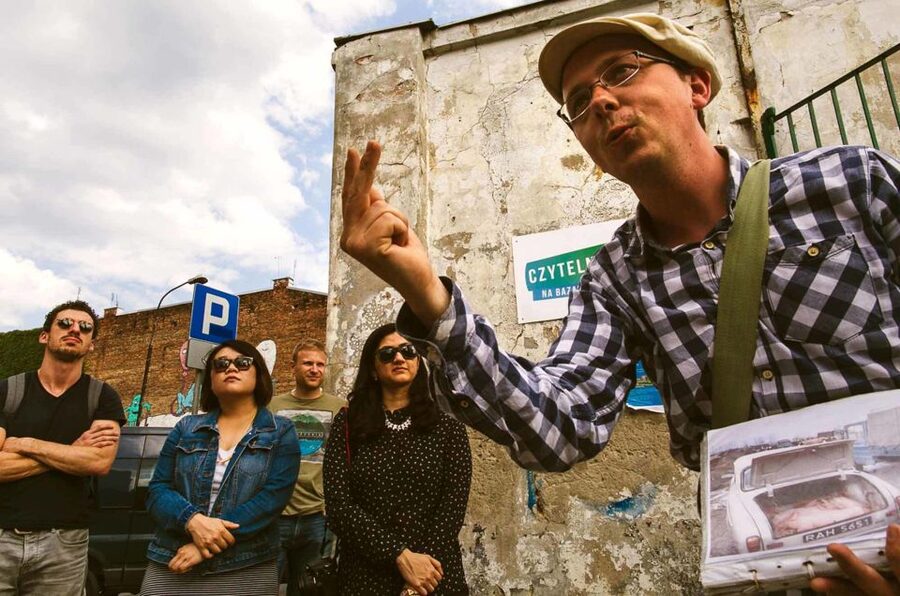
Your guide sets out the basic sequence: prewar Warsaw, World War II, the destruction of the city, communist rule, and the changes that followed 1989. The best guides on this experience, including Marcin, Konrad, Mark, and Marius, are described as warm, clear, and willing to make the discussion interactive rather than delivering a long speech.
I like this approach for a first or second day in Warsaw. You get a framework that helps every later museum visit and independent walk make more sense. The guide can also respond to what you have already seen. One past participant explained that the route was adjusted to avoid repeating subjects from the previous day, a useful sign if you have limited time.
The subject matter is serious, especially when the tour turns to Nazi occupation and wartime destruction. Yet the guiding style is not presented as grim from beginning to end. Humor, conversation, and the odd little bus keep the experience human.
Muranów and the former Jewish Ghetto
One of the most important parts of the route is the area of the former Jewish Ghetto. Today, the streets do not always make the wartime boundaries or destruction easy to understand. A guide can point out the remaining traces and explain how this part of Warsaw was altered beyond recognition.
The tour also covers the events connected with both major uprisings. The wording is important here because Warsaw’s wartime story includes more than one uprising, and each belongs to a different chapter. Your guide helps place those events in time and explains how they affected the city and its people.
Muranów is especially valuable because it shows what happened after the war. The district was rebuilt on top of the ruins, with postwar planners shaping a new neighborhood rather than restoring the old one exactly as it had been. As you walk and listen, you can compare the city that existed before the war with the city created afterward.
This is one of the tour’s strongest features. You are not only shown memorials or told dates. You are asked to read the built environment, including gaps, rebuilt streets, and changes in scale. I would pay close attention here, because Warsaw’s story is written into the arrangement of its buildings as much as into its museums.
Crossing the Vistula to old Praga
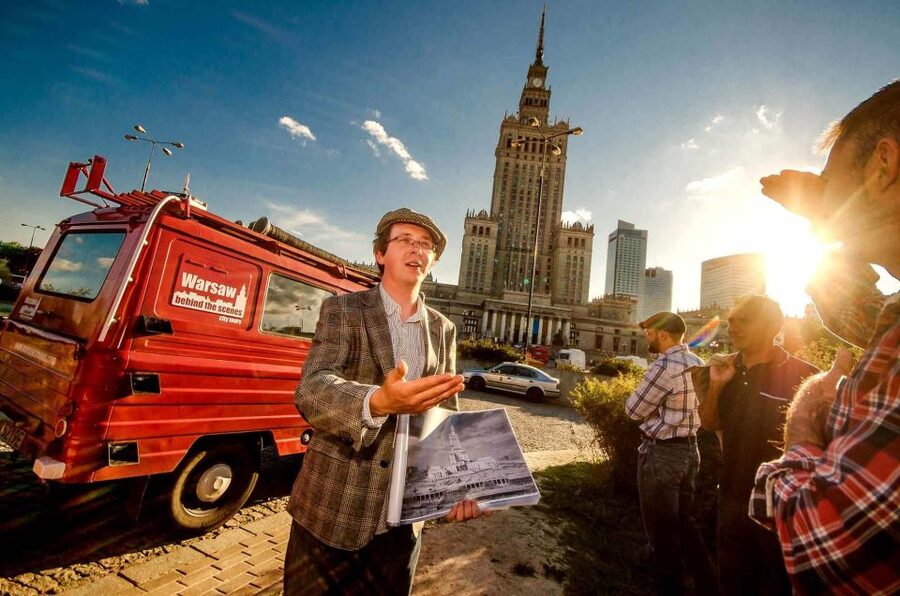
The Żuk then crosses the Vistula River to Praga, one of the most distinctive parts of the outing. Praga escaped much of the wartime destruction that hit the western side of Warsaw, so it retains older buildings and street patterns that are harder to find elsewhere in the city.
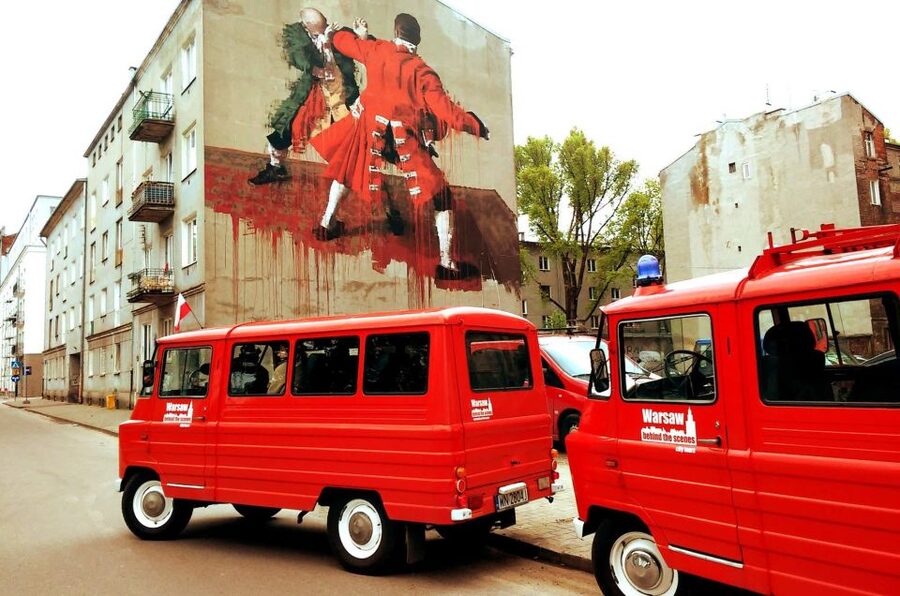
That survival gives Praga a different feel from the reconstructed center. The district was once regarded as one of Warsaw’s roughest areas, but it has also become a creative quarter with murals, workshops, and original architecture. The point is not to present Praga as a theme park. Its appeal comes from the mix of old fabric, newer cultural activity, and visible change.
Your guide provides the context needed to understand that contrast. Without local explanation, you might simply see aging buildings, colorful walls, and creative businesses. With the historical background, you can see how Praga’s survival shaped its present character.
The route does not turn the district into a long walking expedition. The minibus is used mainly to move between locations, with walking sections at each stop. That makes it a good choice if you want a broad look at Praga without spending half a day on foot, but it is not a replacement for a slow, independent neighborhood walk.
Same country, a completely different kind of day:
- Warsaw: Chopin Concert in the Old Town
★ 4.8 · 2,287 reviews - Warsaw: Traditional Galar Cruise on The Vistula River
★ 4.6 · 1,640 reviews - Warsaw: Old Town Highlights Walking Tour in English
★ 4.7 · 1,516 reviews - Warsaw Concert: Chopin – Painted by Candlelights with Wine
★ 4.8 · 1,442 reviews
Soviet planning and Warsaw after 1945
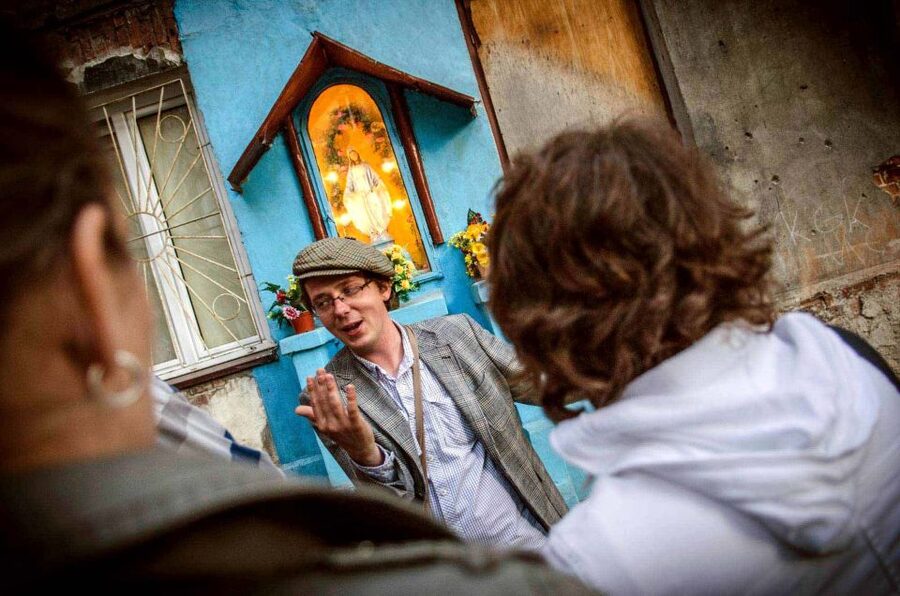
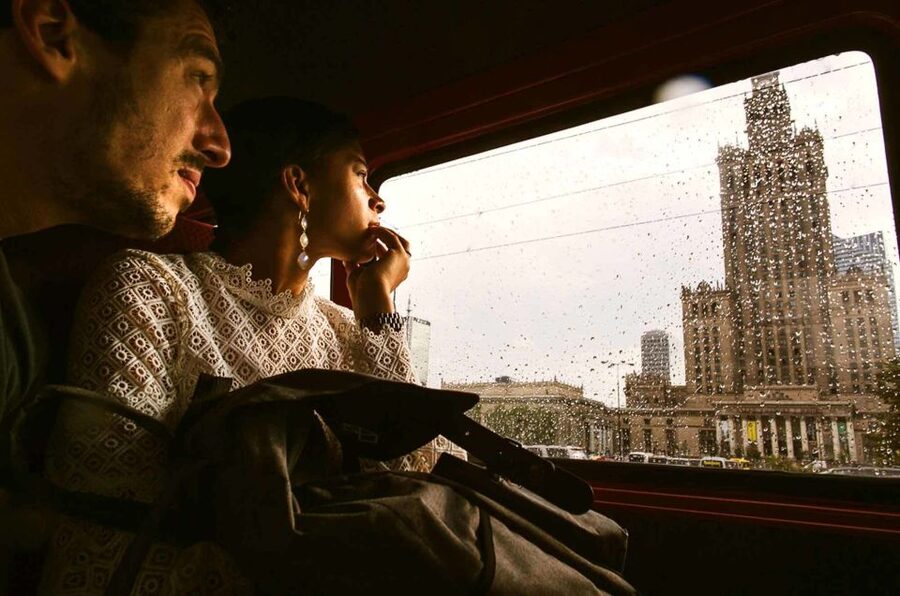
Another strong section examines the city built after the war. Warsaw had to be reconstructed on a huge scale, and planners created new neighborhoods, broad avenues, and monumental buildings under the influence of Soviet ideology.
The tour helps you see those choices as part of daily life rather than as abstract political history. Street widths, apartment blocks, public spaces, and monumental architecture all reflect decisions made during a particular period. Some areas were rebuilt to suggest an older Warsaw, while others were designed for a new socialist city.
This part is especially useful if you have already noticed that Warsaw does not have one consistent architectural style. The city is a patchwork of prewar survivals, wartime scars, carefully reconstructed areas, communist-era planning, and post-1989 development.
I appreciate that the tour does not stop at the fall of communism. It continues into modern Warsaw, a capital marked by rapid growth, new ideas, and renewed cultural activity. The result is a more complete picture: the city is not only a memorial to wartime suffering, nor only a modern business center.
What the guide adds to the experience
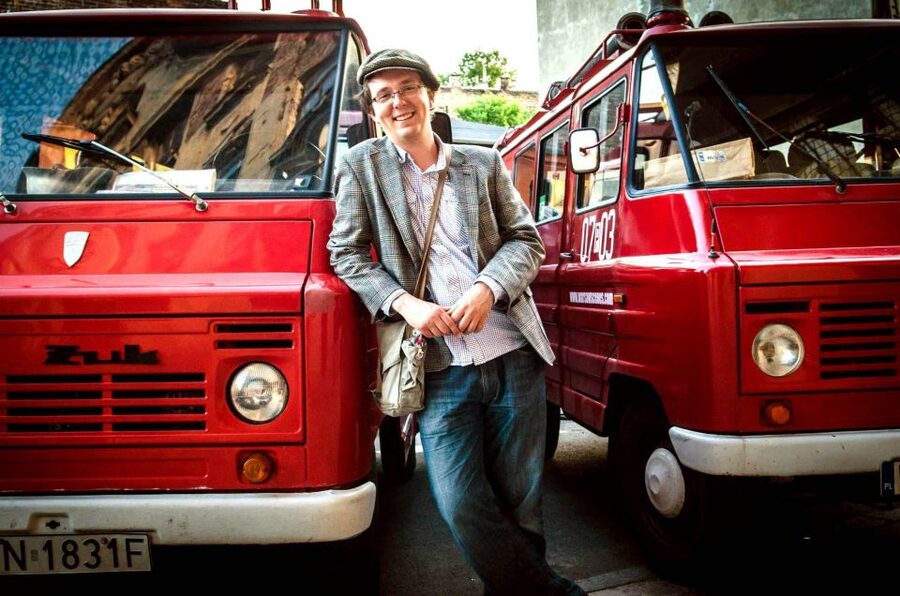
The guide is the key variable on any history tour, and the feedback attached to this experience is unusually consistent. Names that appear in past bookings include Marcin, Konrad, Mark, Marius, Lukas, Artur, and Wojtek. The descriptions of their work repeatedly point to strong English, warmth, humor, and a real ability to explain Poland’s past in a personal way.
That does not mean every guide will use exactly the same route or tone. It does mean you should expect more than a list of dates. The best moments come when you can ask about something you have just seen, compare it with another part of Warsaw, or request more attention to a particular period.
Several accounts also describe the tour as flexible. One guide adapted the outing to avoid repetition, and another remained open to specific wishes even with only two people booked. That flexibility is worth having in a small group, especially if you are interested in architecture, Jewish Warsaw, wartime history, or communist-era life.
The outing can also be social. You share the Żuk with other people, and the compact setting makes conversation easy. If you prefer complete privacy, check availability carefully, since this is designed as a small-group experience rather than a guaranteed private vehicle.
The food stop question
Some past outings included a stop for a traditional Polish lunch, a coffee, cake, beer, or a small vodka tasting. One particularly memorable account describes a local specialty and an obligatory beer at a hip, less touristy place.
However, the stated inclusions are hotel pickup and drop-off, an English-speaking guide, and the Żuk ride. Food and drinks are not listed as standard inclusions. I would therefore treat any lunch or tasting as a possible bonus, not part of the guaranteed price. Bring money if you want to eat or drink during the outing, and ask your guide what is planned at the start.
This uncertainty is minor, but it matters when you are budgeting. The real value of the tour lies in the route, vehicle, and guiding rather than in a meal.
Is $129 a fair price?
At $129 per person, this is not the cheapest way to see Warsaw. You can walk through central districts for little or no cost, and public transport will take you across the city for a modest fare.
The price makes more sense if you value three things: hotel pickup, a very small group, and access to districts that are difficult to connect efficiently on your own. You are paying for a focused route and interpretation, not just a ride past major sights.
The three-hour length is also useful. It gives you a substantial introduction without consuming an entire day. If you have only a short stay, the tour can help you decide which areas deserve a return visit. If you already know Warsaw well, the lesser-seen route and historical connections may still justify the cost.
I would be less likely to recommend it to someone who wants a polished, air-conditioned vehicle or a tour centered only on famous monuments. In that case, the Żuk’s age and the walking between stops may feel like compromises rather than pleasures.
The rating is 4.9 from 57 reviews, and the praise focuses on the same elements that matter most: the guides, the unusual bus, the historical detail, and the access to places people would not easily find alone. That consistency gives the price a reasonable case, particularly for first-time visitors who want orientation with substance.
Practical details before you book
Pickup and drop-off are included at accommodation within 1 kilometer of Warsaw’s city center. You need to provide complete accommodation details when booking. If your hotel lies outside that area, do not assume pickup is included.
The tour is conducted in English and lasts three hours. Starting times vary, so check the available options for your date.
Luggage and large bags are not allowed. Pack lightly and leave suitcases at your accommodation. Pets are also not permitted.
The tour is not suitable for wheelchair users. Children must be over 150 centimeters to book instantly online. Polish law requires a booster seat for children under that height, so contact the operator in advance to ask about availability.
Wear comfortable clothes and walking shoes. The Żuk handles the driving between stops, but you will get out and walk at several points. Summer heat may be noticeable because there is no air conditioning, while winter rides are supported by heating.
Free cancellation is available up to 24 hours before departure, and you can reserve now and pay later. That gives you some flexibility, but it does not remove the need to check the pickup area, group size, child-height rule, and vehicle conditions.
Who will like this tour most?
I would recommend it to a first-time visitor who wants Warsaw explained through its neighborhoods rather than presented as a checklist of monuments. It is also a strong fit for anyone drawn to World War II, the Jewish Ghetto, the two uprisings, communist-era planning, or post-1989 change.
The tour suits people who enjoy conversation and local context. The guides have been praised for making the experience feel personal, and the small vehicle encourages questions. Solo visitors and couples may also find the social setup pleasant, especially if they like meeting other people during a city break.
Families need to check the 150-centimeter minimum carefully. Younger children may not be able to join unless a suitable booster is available, and the serious wartime material may not suit every child.
You should think twice if you need step-free access, carry large bags, dislike short walks, or require modern vehicle comforts. The historic transport is a major attraction, but it is also the clearest practical limitation.
Should you book the Żuk tour?
I would book this tour if you want Warsaw’s difficult past connected to the city you see today. The former Ghetto and Muranów give the wartime story weight, Praga adds a look at surviving old Warsaw, and the discussion of communist planning explains why the modern city feels so varied.
The strongest reason to choose it is the combination of small-group guiding and unusual access. You are not left to guess what a rebuilt district or surviving street tells you. You get a guide who can turn those details into a clear story.
Book it early in your stay if you want help finding your bearings and choosing what to explore later. Skip it if you prefer a modern coach, a purely scenic ride, or a self-guided day at a slower pace. For most history-minded visitors who can manage the Żuk’s basic comforts, $129 buys a memorable and useful introduction to Warsaw.
FAQ
How long does the Warsaw Żuk minibus tour last?
The tour lasts three hours.
What language is the tour conducted in?
The tour has a live English-speaking guide.
Is hotel pickup included?
Pickup and drop-off are included from accommodation within 1 kilometer of Warsaw’s city center. You need to provide full accommodation details.
How many people fit in each minibus?
Each Żuk minibus accommodates up to eight passengers. A fleet of five minibuses is available.
Are food and drinks included?
Food and drinks are not included in the listed inclusions. Some past outings included a lunch, coffee, cake, beer, or vodka tasting, but you should confirm current arrangements and budget separately for anything you eat or drink.
Can children under 150 centimeters join?
Children under 150 centimeters cannot book instantly online. Contact the operator in advance to ask if a mandatory booster seat is available.
Is the tour suitable for wheelchair users?
No. The experience is not suitable for wheelchair users.
Are the minibuses air-conditioned?
No. The classic vintage minibuses are not equipped with air conditioning. Some do not have seat belts, while all vehicles have heating for winter.
Just added around Warsaw
- World War II Warsaw Old Town, Military Cemetery Walking Tour★ 4.7 · 3 reviews
- Warsaw: Wolf’s Lair & Swieta Lipka Small-Group Tour + Lunch★ 5.0 · 3 reviews
- Wilanów Palace: 2-Hour Guided Tour with Entrance Tickets★ 4.8 · 8 reviews
- Warsaw Zoo Skip-the-Line Entry Ticket with Private Transport★ 4.8 · 3 reviews
- Warsaw Wolf’s Lair with St. Lipka and Mamerki Private Guided★ 4.2 · 3 reviews
- Warsaw: Vistula River Cruise with Your Music & City Views★ 4.6 · 78 reviews
- Warsaw: Private Vodka Tasting Night with Snacks and Pickup★ 5.0 · 7 reviews
- Warsaw Private Wilanow Palace & Garden Tour★ 4.6 · 30 reviews
City Tours, compared.
City Sightseeing Tour Eco Electric Buggy Golf Cart
Read our review →
Gdańsk City Sights & History Guided Walking Tour in English
Read our review →
Extended City Sightseeing Tour – Eco Buggy Golf Cart
Read our review →
Browse the lists this tour appears in