
Reviewed · MUSEUMS
Warsaw: Cold War Museum Entry Ticket
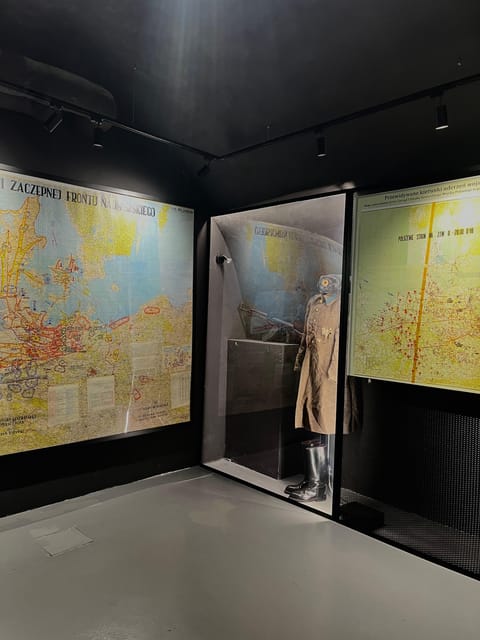
Warsaw’s Cold War Museum puts you inside a former communist militia station, a setting that gives the subject real weight. This is also the place where high school graduate Grzegorz Przemyk was beaten to death during martial law. Inside, original devices, maps, uniforms, films, touchscreens, and VR missions explain how Poland experienced the long contest between the Western and Soviet blocs.
I especially like the three VR games, which let you act as a Cold War secret agent, and the space-flight section, complete with a hologram of a space station. The autonomous robot guide is a clever extra, particularly for families and younger visitors. The main consideration is the museum’s strong Polish anti-communist viewpoint. It presents the struggle as a Polish contribution to the defeat of Soviet communism, rather than as a fully neutral academic survey.
Key points at a glance
- A former militia station: The museum’s location connects the exhibition to Poland’s period of martial law and political repression.
- More than 50 multimedia displays: Expect touchscreens, interactive tables, VR goggles, films, and other digital features alongside physical objects.
- Three Cold War VR games: You can take the role of an agent trying to disrupt Soviet invasion plans.
- A Polish view of the conflict: The story gives special attention to Ronald Reagan, Pope John Paul II, and General Ryszard Kukliński.
- Space history with a hologram: The exhibition links Cold War rivalry to the race beyond Earth.
- Robot-led assistance: An autonomous robot can guide you through the museum in English or Polish.
Why the building matters before you see the exhibits
The museum sits about 40 meters from Warsaw’s Old Market Square, so it is easy to add to a walk through the historic center. You do not need transportation arranged for you, and the ticket is shown at the museum entrance.
The building is not just a convenient shell. During the Polish People’s Republic, this address housed a communist militia station. It later became associated with the death of Grzegorz Przemyk, a young man beaten by militia officers during martial law. That fact changes the mood as soon as you understand where you are.
I find this setting more effective than a museum placed in a modern shopping complex or a generic gallery. The Cold War was not only about speeches, missiles, and spy gadgets. It affected police stations, schools, churches, homes, and ordinary streets. Here, the location helps connect large political events with personal suffering.
You should allow time to read. The museum uses many digital displays, and the material is not limited to quick labels beside objects. If you rush from screen to screen, you will miss much of the political context.
A few more Warsaw trips to weigh up
- Warsaw: POLIN Museum of the History of Polish Jews Ticket
★ 4.7 · 1,142 reviews - Warsaw: Polish Vodka Museum Tour with Tasting
★ 4.6 · 788 reviews - Warsaw: Museum World of Illusion Entry Ticket
★ 3.9 · 666 reviews
A Polish story of the Cold War
The museum covers the full Cold War period and includes the countries involved in the struggle between the two blocs. Its central message, though, is distinctly Polish. It presents Poland’s role in the victory of the capitalist world over Soviet communism.
That viewpoint gives the museum a clear voice. You will learn about resistance, political pressure, military secrecy, religious influence, and the actions of people who challenged Soviet power. The exhibition pays particular attention to three major figures from the final two decades of the Cold War: US President Ronald Reagan, Pope John Paul II, and General Ryszard Kukliński.
For many Polish visitors, those figures carry strong national and personal meaning. John Paul II represents the moral and religious force that helped inspire opposition in communist Poland. Reagan represents the American political challenge to the Soviet Union. Kukliński represents military and intelligence activity against the communist system.
I like that the museum does not pretend to have no point of view. You can understand the story more clearly when the institution tells you where it is coming from. At the same time, you should keep the framing in mind. The exhibition is best for people who want to understand the Polish anti-communist interpretation, not for someone seeking a completely even treatment of every political decision on both sides.
Original objects give the displays some weight
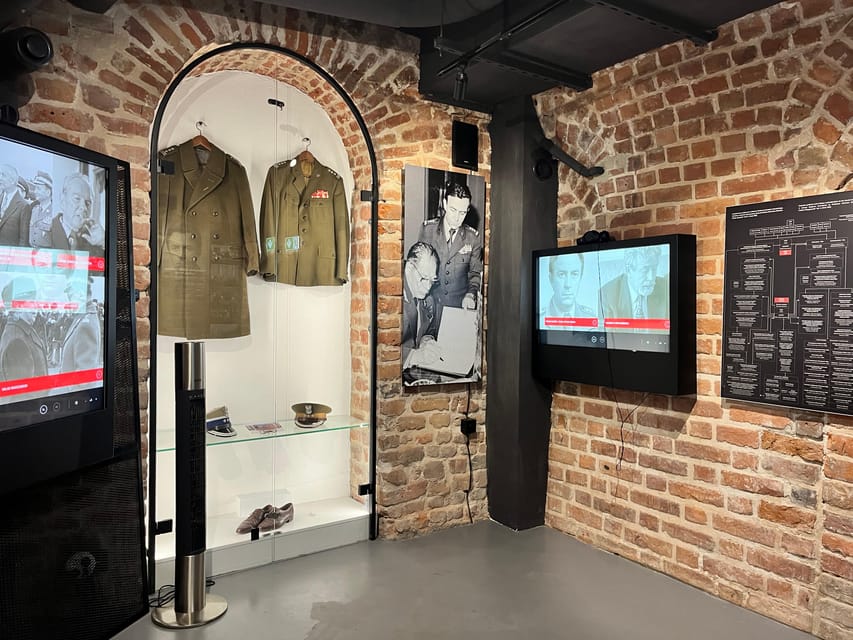
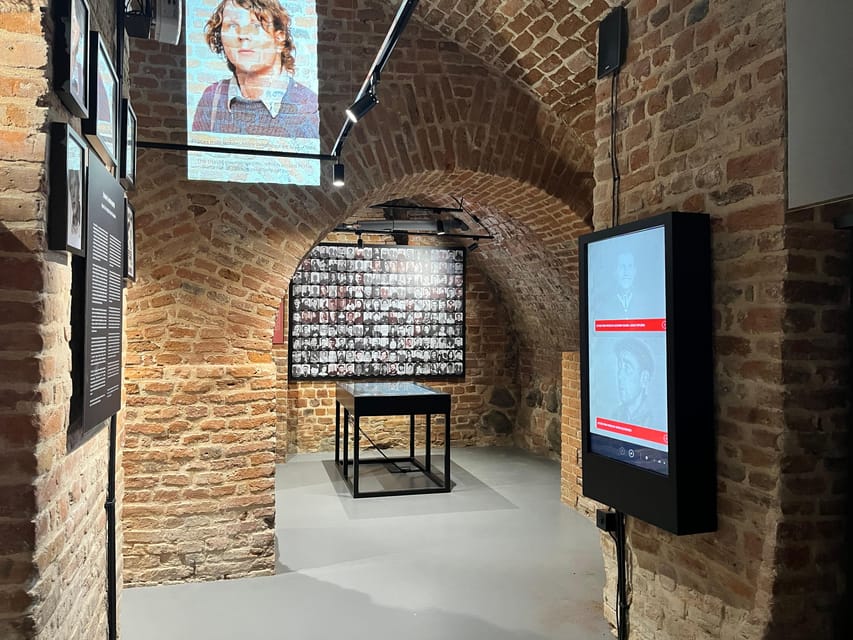
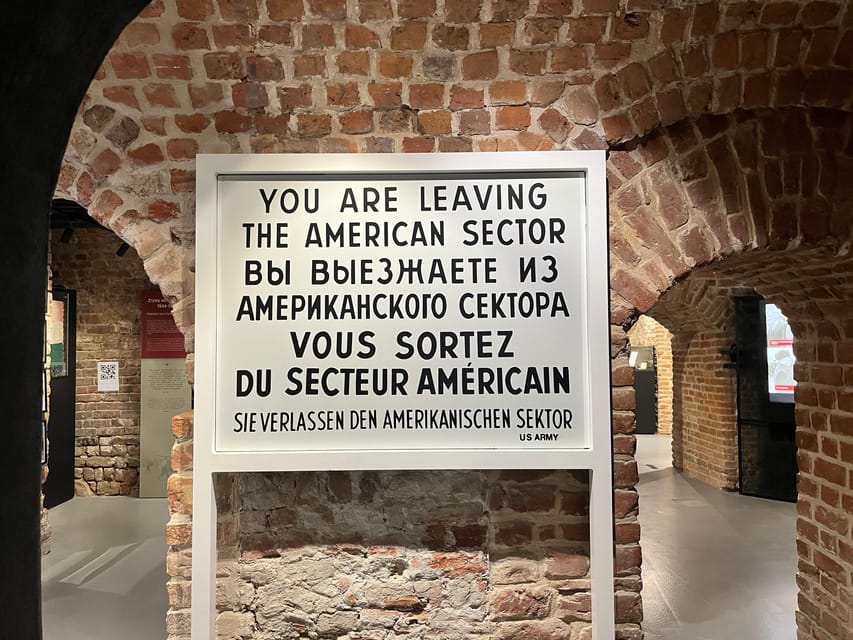
The museum includes original devices, maps, uniforms, and other physical material from the Cold War period. These objects help keep the exhibition grounded when the digital displays become dense.
A map can show the division of Europe in a way that a paragraph cannot. A uniform can suggest the structure and authority of the institutions that enforced the system. A device can show how technology served military, intelligence, or communications needs.
The objects are especially useful for visitors who prefer something tangible. The museum has a great deal of multimedia, but it is not simply a room full of screens. The physical pieces give you pauses between interactive displays and help make the period feel less abstract.
The exhibition also presents influential people and key events through descriptions and portraits. One recent visitor described the museum as a compact presentation of Cold War history with many figures and important people included. That is a fair way to think about it. You get a broad survey rather than a single narrow subject such as the Berlin Wall or the Cuban Missile Crisis.
More than 50 multimedia stations keep the visit active
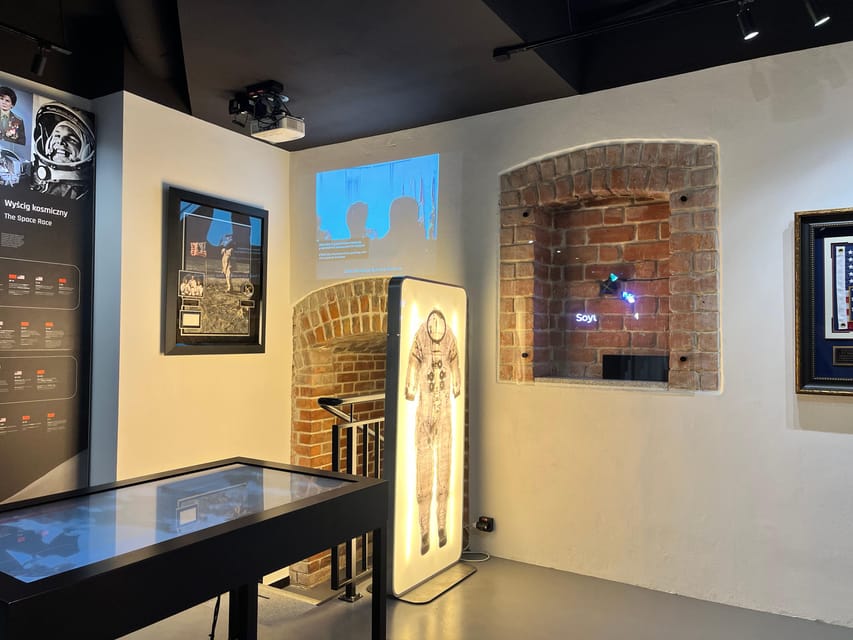
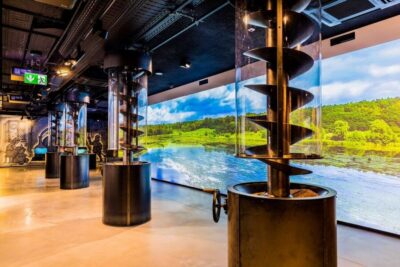
The exhibition uses more than 50 multimedia elements, including touchscreens, interactive tables, VR goggles, and a cinema. This makes the museum quite different from a traditional room where you simply walk past display cases.
The touchscreens let you control the pace. You can spend longer on a person, event, or country that interests you, then move on when the material becomes too specialized. Multimedia tables are useful when you want to see connections between places and events.
The cinema offers a change of rhythm. A film can bring together images and information that are harder to absorb from separate labels. The exact running order and timing of every feature are not specified, so you should treat the visit as a self-guided exhibition rather than a fixed show with scheduled stops.
There is also a multimedia quiz about the Cold War. This is a welcome touch because it turns passive reading into a small test of what you have understood. It can be fun for families, but adults who already know the period may find some questions easy.
The amount of technology is a strength, but it can also be a weakness. If you prefer quiet museums with a small number of carefully chosen objects, the number of screens may feel busy. If you enjoy interactive learning, the format should keep your attention better than a standard historical display.
Same country, a completely different kind of day:
- Warsaw: Chopin Concert in the Old Town
★ 4.8 · 2,287 reviews - Warsaw: Traditional Galar Cruise on The Vistula River
★ 4.6 · 1,640 reviews - Warsaw: Old Town Highlights Walking Tour in English
★ 4.7 · 1,516 reviews - Warsaw Concert: Chopin – Painted by Candlelights with Wine
★ 4.8 · 1,442 reviews
The three VR missions are the museum’s most playful feature
The VR section lets you play three games connected to Cold War espionage and military planning. The premise includes taking the role of a secret agent trying to compromise Soviet invasion plans.
This is more than a decorative game room. The VR missions give you a sense of uncertainty and pressure, even if only in a simplified form. You are not just reading that intelligence work involved secrecy and risk. You are asked to make decisions inside a digital scenario.
A visitor who likes the museum for its historical information can treat the games as a break from reading. A younger visitor may remember the VR activity more clearly than a long political explanation. Families can use it as a way to keep different age groups involved.
The limitation is that VR cannot explain the full moral and political complexity of espionage. It gives you a role and a task, but it is still an interpretation designed for interaction. I would enjoy the missions as part of the visit, not use them as the main reason to study Cold War history.
The activity includes access to all attractions within the exhibition, so you do not pay an extra charge for the VR section.
Space flights show another side of superpower rivalry
The space-flight display broadens the subject beyond Europe and military confrontation. The Cold War race into space was a contest of engineering, national prestige, propaganda, and scientific ambition.
You will see material about the history of space flights and a hologram of a space station. The hologram gives the section a modern visual hook, while the larger story reminds you that rockets and satellites were tied to the same rivalry that shaped military policy.
I like this section because it gives visitors another way into the period. You may not care about political ideology, but you may be interested in spacecraft, technology, or the race between the United States and the Soviet Union. The space exhibit shows how the Cold War reached far beyond borders on Earth.
It also creates a useful contrast with the museum’s Polish political story. The space race was global and highly visible, while the museum’s account of Poland often focuses on underground activity, faith, military information, and domestic resistance.
The autonomous robot guide is useful, but not a human tour
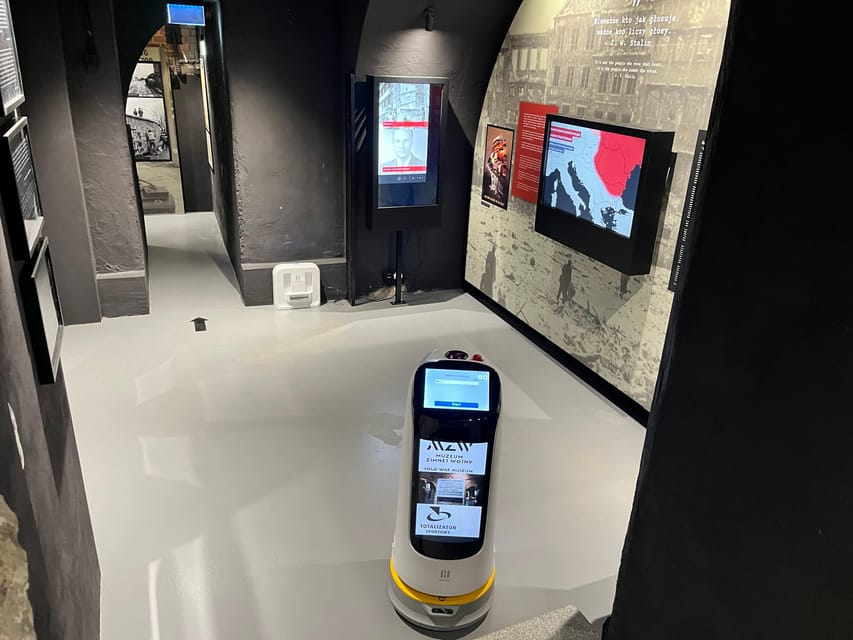
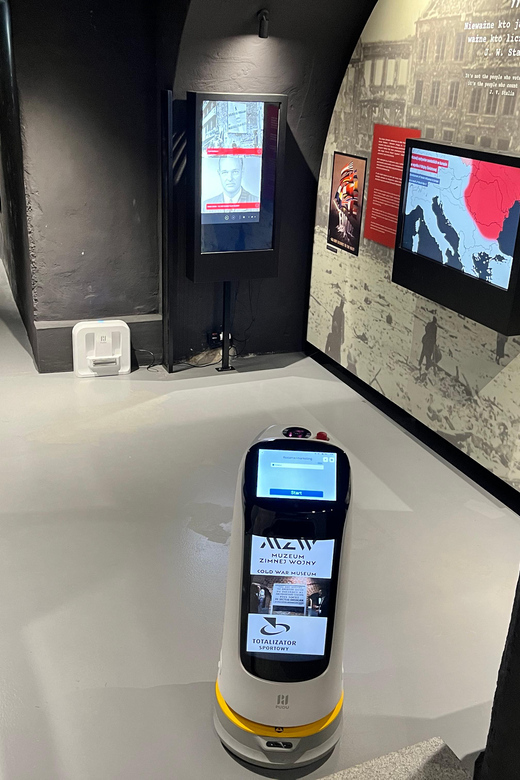
The Cold War Museum is the first and only museum in Poland described as having an autonomous robot serving as a guide. The robot can accompany you through the exhibition and is available as part of admission.
This is a practical feature for visitors who want help without joining a scheduled group. It may also make the museum more approachable for children. The robot adds a little humor to a serious subject and fits the exhibition’s focus on technology.
You should know what it is not. The ticket does not include a human guide, and no personal guide service is listed as part of the experience. A host or greeter is available in English and Polish, while the museum’s additional languages are English and Polish.
If you want to ask detailed follow-up questions about Polish politics, military intelligence, or individual events, a human historian would offer more flexibility. The robot is best viewed as an autonomous aid and an attraction in its own right.
How long to plan, and what the three-month validity means
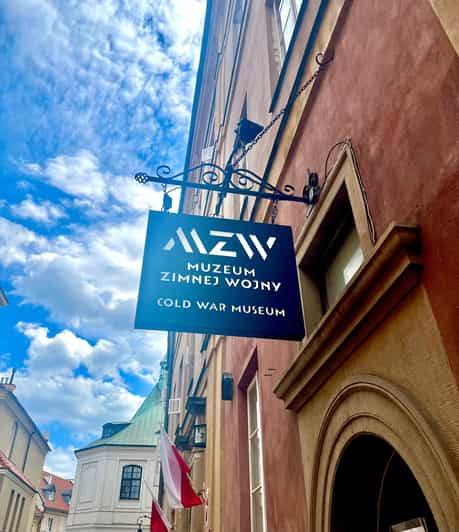
The ticket costs $12 per person, which is a reasonable price for a museum that includes every exhibition attraction, the VR games, the quiz, the cinema, and the robot guide. You are not paying separately for each interactive feature.
The supplied duration is three months, but that refers to ticket validity, not the length of a single museum visit. You can check available starting times when booking, and the ticket remains valid for three months according to the activity terms.
The exact time needed inside is not stated. I would avoid squeezing the museum into a very short gap because the exhibition contains more than 50 multimedia elements and covers the full Cold War period. Your pace will depend on how much you read and how long you spend with the interactive attractions.
The location makes a short visit possible if you are already near Old Market Square, but the content rewards patience. The ticket also allows you to reserve now and pay later, with free cancellation up to 24 hours before the visit for a full refund.
Who should visit, and who may want something else
I would choose this museum if you have a strong interest in:
- Polish history after the Second World War
- The conflict between the United States and the Soviet Union
- Cold War espionage and military strategy
- Ronald Reagan, Pope John Paul II, or Ryszard Kukliński
- Interactive museum technology
- Space exploration
- Family activities that go beyond reading labels
The museum is open to Polish and foreign visitors of all ages. English and Polish are supported, which makes it practical for international visitors.
You may want to think twice if you need step-free access. The experience is listed as unsuitable for wheelchair users. Smoking, vaping, food, drinks, alcohol, and drugs are not allowed inside.
Four-legged visitors are welcome, making this one of the few Warsaw museums where you can visit with a dog. That is an unusual and useful detail, although you should still follow any instructions from staff at the entrance.
My verdict on the $12 ticket
I would book the Cold War Museum if you want history presented through action, images, and technology rather than through display cases alone. The VR missions, space hologram, quiz, and robot guide give the visit a lively shape, while the original uniforms, maps, devices, and the former militia station keep it connected to real events.
The main caution is the museum’s viewpoint. You are receiving a clear Polish account of the struggle against Soviet communism, with major attention given to Reagan, John Paul II, and Kukliński. That focus is valuable, but you should pair it with another source if you want a fully balanced international history.
At $12, the package offers good value, especially since all exhibition attractions are included. It is an easy addition to a walk near Old Market Square, and the three-month ticket validity gives you flexibility. I would make the call this way: book it for Polish Cold War history, strong multimedia, and hands-on features. Skip it only if you dislike interactive museums, need wheelchair access, or want a neutral academic treatment with a human historian leading the way.
FAQ
Where is the Cold War Museum located?
The museum is in Warsaw’s Mazovia Province, about 40 meters from Old Market Square.
How much does admission cost?
The listed price is $12 per person.
How long is the ticket valid?
The ticket is valid for three months. This is the booking validity period, not a stated length for the museum visit itself.
What does the ticket include?
Admission includes access to the exhibitions, all attractions within the exhibition, and the autonomous robot guide.
Is transportation included?
No. Transportation is not included, so you must make your own way to the museum.
Is a human guide included?
No human guide is included. A host or greeter is available in English and Polish, and the museum has an autonomous robot guide.
Are the VR games included?
Yes. Access to all attractions within the exhibition is included, including the three VR games.
Is the museum available in English?
Yes. English and Polish are the listed languages.
Can I visit with a dog?
Yes. Four-legged visitors are welcome at this museum.
Is the museum suitable for wheelchair users?
No. The experience is listed as unsuitable for wheelchair users.
Just added around Warsaw
- World War II Warsaw Old Town, Military Cemetery Walking Tour★ 4.7 · 3 reviews
- Warsaw: Wolf’s Lair & Swieta Lipka Small-Group Tour + Lunch★ 5.0 · 3 reviews
- Wilanów Palace: 2-Hour Guided Tour with Entrance Tickets★ 4.8 · 8 reviews
- Warsaw Zoo Skip-the-Line Entry Ticket with Private Transport★ 4.8 · 3 reviews
- Warsaw Wolf’s Lair with St. Lipka and Mamerki Private Guided★ 4.2 · 3 reviews
- Warsaw: Vistula River Cruise with Your Music & City Views★ 4.6 · 78 reviews
- Warsaw: Private Vodka Tasting Night with Snacks and Pickup★ 5.0 · 7 reviews
- Warsaw Private Wilanow Palace & Garden Tour★ 4.6 · 30 reviews
Museums, compared.
Auschwitz-Birkenau Museum and Memorial Guided Tour from Krakow
Read our review →
POLIN Museum of the History of Polish Jews Ticket
Read our review →


Krakow Schindler’s Factory Museum Guided Tour in English
Read our review →
Auschwitz Birkenau Museum Guided Tour with Pickup
Read our review →
Browse the lists this tour appears in